
Reviewed · MT FUJI TOURS
Full Day Tour to Mount Fuji in Spanish
Mount Fuji is the star, but this Spanish-language day trip gives you much more than a single photo stop. You’ll trace volcanic water from Shiraito Falls, visit lakes shown on Japanese currency, walk through old villages, and see shrines tied to Fuji’s climbing tradition.
I like the way the route mixes big views with local culture, and I like the small-group format, capped at nine people. Guides including Dario, Tito, Riomy, and Min explain Japanese culture and religion in Spanish, and the route can shift with the weather. The tradeoff is simple: it is a long day, and Fuji may hide behind clouds.
Key points before you book
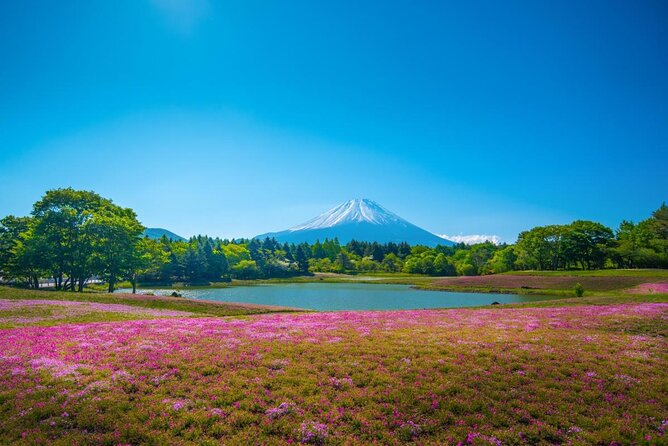
- Eleven Fuji-area stops in one day: The route covers waterfalls, four of the Fuji Five Lakes, a forest, a pagoda, a shrine, a village, and a lava cave.
- Spanish-speaking guidance: Dario and the other guides explain local customs, religion, and history in Spanish, with a friendly, informal approach.
- Weather-aware planning: The order of stops may change according to cloud cover and daylight, giving you a better chance of seeing Mount Fuji.
- Small maximum group: The stated limit is nine people, which should make questions and photo help easier than on a large coach tour.
- Good value at $96.17: Snacks, drinks, taxes, and admission to Iyashi no Sato and Fugaku Wind Cave are included. Lunch is not.
- A full day from Mishima: Meet at the Tokai Bus Mishima Information Office at 8:00 a.m. and return there after roughly 10 to 11 hours.
Why this route is more than a Fuji photo hunt
Many Mount Fuji outings revolve around one famous viewpoint. This one treats the mountain as the center of a much bigger story. You see how eruptions shaped waterfalls and caves, how pilgrims approached the mountain, and how nearby communities rebuilt after disaster.
The Spanish explanations matter here. A view is easy to admire for five minutes, but the right background helps you understand why a shrine matters, why a village was rebuilt, and why Fuji appears on Japanese money. Dario is especially active in adapting the route, and the guides have been praised for giving useful cultural details without turning every stop into a lecture.
The tone is meant to feel like an outing with friends rather than a formal classroom. That can make a long day more relaxed, especially if you want to ask questions about Japan beyond Mount Fuji.
You should still set your expectations properly. The trip does not promise a clear view of Fuji. Clouds can cover the summit or the whole mountain, and the operator may change the order of stops because of weather and daylight. The payoff is that the day still has plenty to offer if Fuji refuses to pose.
A few more Mt Fuji half-days to weigh up
- From Tokyo: Mount Fuji Full-Day Sightseeing Trip
★ 4.5 · 4,970 reviews - Mount Fuji Full-Day Private Tour from Tokyo (Customizable)
★ 4.9 · 1,470 reviews - From Tokyo: Must-Visit Mount Fuji Highlight Full-Day Tour
★ 4.7 · 532 reviews
Start in Mishima at 8:00 a.m.
Your meeting point is the Tokai Bus Mishima Information Office at 17-1 Ichibanchō, Mishima, Shizuoka 411-0036. The activity returns to this same meeting point at the end of the day.
The early start is practical. With eleven planned stops and several drives between them, there is no spare time for a late departure. I would arrive early, confirm the meeting point, and bring a phone with the mobile ticket ready.
The tour lasts about 10 to 11 hours. That makes it a full day rather than a quick side trip. The route includes roughly seven and a half hours of scheduled sightseeing stops, with the rest of the time used for driving, changes in the route, and lunch.
The group limit is nine people. That is a useful middle ground: more social than a private outing, but far more manageable than a full-size bus. The exact vehicle arrangement can vary, and one account describes guides using two buses, so you should follow the operator’s meeting instructions on the day.
Shiraito Falls: Fuji’s water in motion
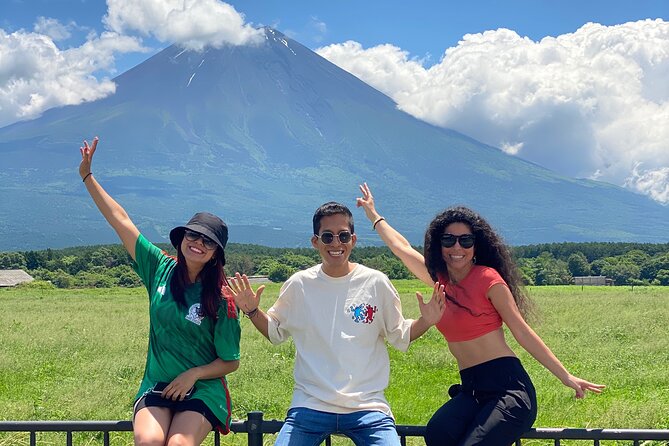
The first stop is Shiraito Falls, where water pours in fine strands over a wide volcanic rock face. The falls were formed by past eruptions of Mount Fuji, and their clear water comes from Fuji and the surrounding mountains.
You get 30 minutes here, with no admission charge. That is enough for a look, photos, and a short explanation, but not a long walk through the area. The value of this stop is its direct link between geology and scenery. Instead of seeing Fuji only as a distant cone, you begin to see what the volcano does beneath the surface.
Motosuko Lake and the ¥1,000 bill view
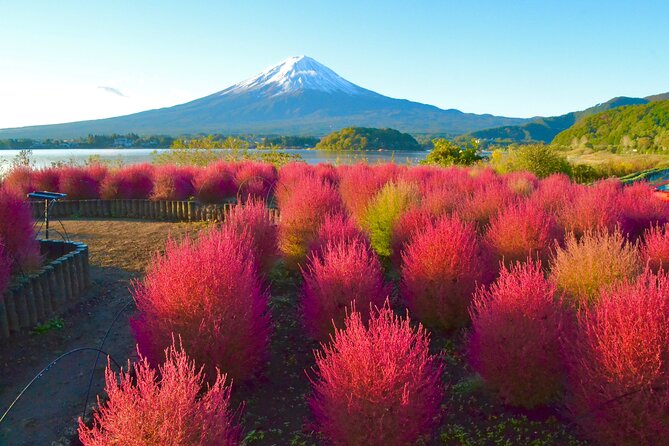
Lake Motosu is one of the most recognizable water views in the Fuji area because its scenery appears on the back of the ¥1,000 note. The stop lasts 30 minutes and has no separate admission fee.
This is a quick viewpoint rather than a full lakeside outing. If you collect Japanese notes, check the image before the tour so you can compare the printed view with the real one. Clear weather matters here, since the appeal depends on the relationship between water, mountain, and sky.
More Mt Fuji days out:
- Mt Fuji and Hakone 1-Day Bus Tour Return by Bullet Train
★ 5.0 · 26,383 reviews - Mt Fuji & Hakone Cruise, Drum Show Bullet Train 1 Day from Tokyo
★ 4.0 · 7,413 reviews - Tokyo Mt Fuji 5th St & Hakone Cruise Bus Tour w/Bullet Train
★ 4.4 · 5,024 reviews - Tokyo: Mt. Fuji Tour, Hakone Ropeway, Owakudani, Lake Ashi
★ 4.7 · 4,002 reviews
Saiko Iyashi no Sato Nemba, a rebuilt village
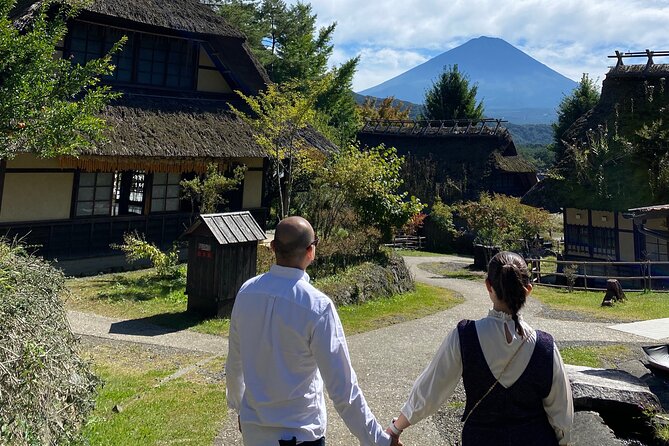
At Saiko Iyashi no Sato Nemba, you spend about an hour in an old mountain settlement that was destroyed and rebuilt decades later. The setting between the mountains gives the village a different feel from the open lake viewpoints.
Admission is included. This is one of the more substantial stops, and it gives the guide room to explain how rural life, traditional buildings, and community memory connect. You are not simply stopping for another Fuji angle.
An hour is helpful because the village deserves more than a quick photograph. Still, the pace remains fixed by the rest of the route, so you will not have unlimited time to inspect every building or browse at length.
Saiko Lake beside Aokigahara
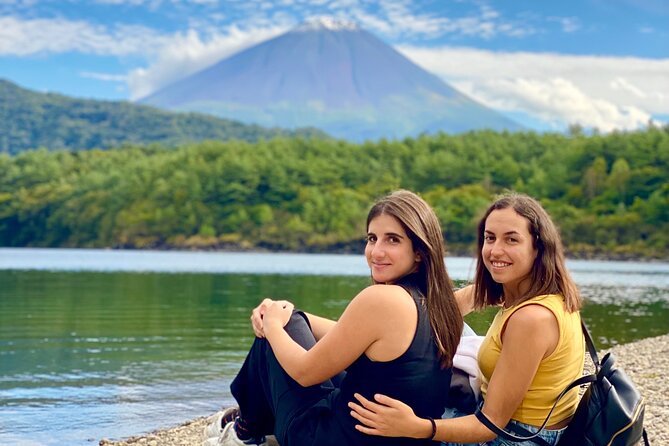
Saiko Lake is visited for about 30 minutes. It lies beside Aokigahara Forest and has also been used as a setting for films.
The stop adds another side of the Fuji area: a quieter lake framed by dense woodland. Since it is close to Aokigahara, the guide can connect the two places without treating them as unrelated sights. There is no admission charge.
Do not expect a long lake walk. This is a short scenic pause, useful for photos and for understanding how the lakes and forest fit together geographically.
Aokigahara Forest and its difficult reputation
Aokigahara is often called the Forest of Suicides, a phrase that points to painful stories connected with the area. The tour spends about 45 minutes here and presents it as a real forest, not a horror attraction.
That distinction matters. You can expect the guide to discuss the forest’s sad reputation, but the place should be approached with care and respect. The visit is not just about dramatic storytelling. It is also a chance to see the wooded terrain associated with Fuji’s volcanic past and the nearby lakes.
Some people may find this stop emotionally heavy. If you prefer a day focused only on cheerful scenery, this is the part of the route to consider carefully. The subject is part of the area’s modern story, but it will not suit every mood.
Lake Kawaguchiko and two less obvious viewpoints
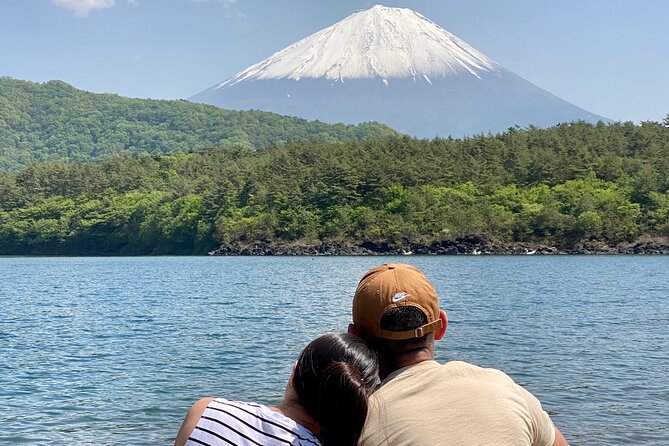
The tour spends about 50 minutes around Lake Kawaguchiko, one of the best-known places near Mount Fuji. The guide has developed two lesser-known spots around the lake and uses them to show participants views beyond the standard stopping points.
The exact locations are not specified, so do not book this expecting a named attraction with a guaranteed panorama. Their value is that the guide can choose according to conditions and show you places he has explored over time.
Kawaguchiko is also a key test of the tour’s weather strategy. On a clear day, the lake gives you classic Fuji photographs. On a cloudy day, the guide may use the available views or adjust the order so that changing light gives you a better chance later.
Oshino Hakkai and traditional food
Oshino Hakkai is an old village known for its variety of traditional Japanese foods. You spend about 45 minutes here, with no separate admission fee listed.
This stop brings food into the day, but it is not the included lunch. You will need to pay for lunch yourself, and the tour information does not name a specific restaurant or set menu. Snacks and drinks are included, which helps during the long route, but plan your lunch budget separately.
The village is a good place to sample or browse traditional foods if you wish. Forty-five minutes is enough for a quick look and some buying, though anyone who likes to eat slowly or shop carefully may want more time.
Chureito Pagoda and Fuji’s famous postcard view
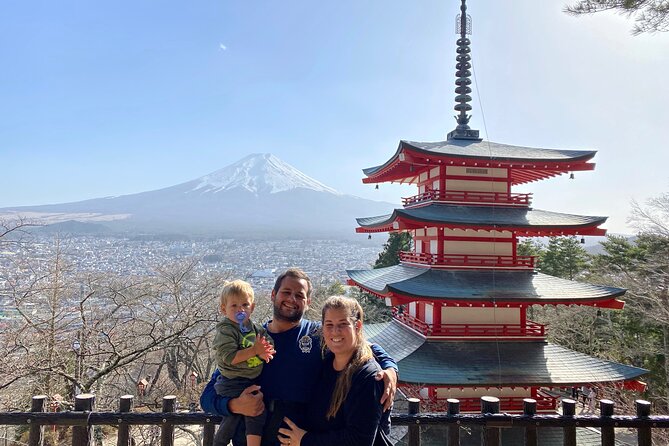
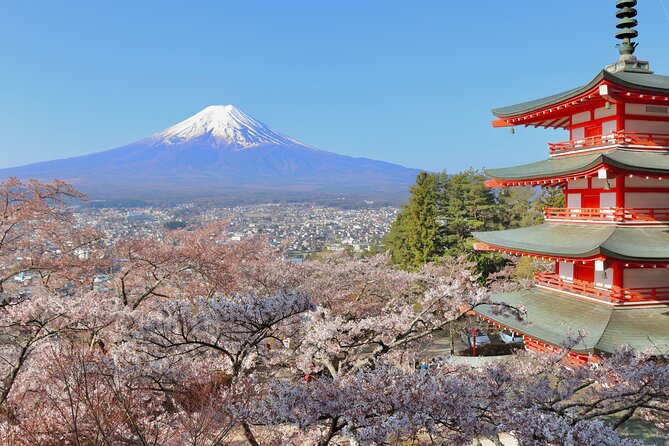
Chureito Pagoda is perhaps the most widely recognized viewpoint on the route. It is closely linked with the image of Japan seen in guidebooks: a red pagoda, Mount Fuji, and the city of Fujiyoshida below.
The stop lasts 45 minutes and has no admission charge. The time is useful, but you should be ready for some walking and steps if the usual viewpoint is part of the visit. The exact amount of walking is not stated, so comfortable shoes are a sensible choice.
Weather again controls the result. When Fuji is visible, this can be the day’s strongest photo stop. When clouds cover the mountain, the pagoda and city view still have value, but the famous three-part composition will be incomplete.
Kitaguchi Hongu Fuji Sengen Jinja and the climbing tradition
Kitaguchi Hongu Fuji Sengen Jinja Shrine is dedicated to Mount Fuji and the people who climb it. It also serves as a traditional starting point for an ascent toward the mountain.
You get 30 minutes here. That is a short visit, but the shrine gives the day a needed religious and historical frame. Fuji is not only a scenic subject. It has long been tied to worship, pilgrimage, and mountain practice.
Your guide can help explain the meaning of the shrine and its connection to climbers. This is one of the places where a Spanish explanation adds more than a quick photo and a name on a map.
Yamanakako, the largest of the five lakes
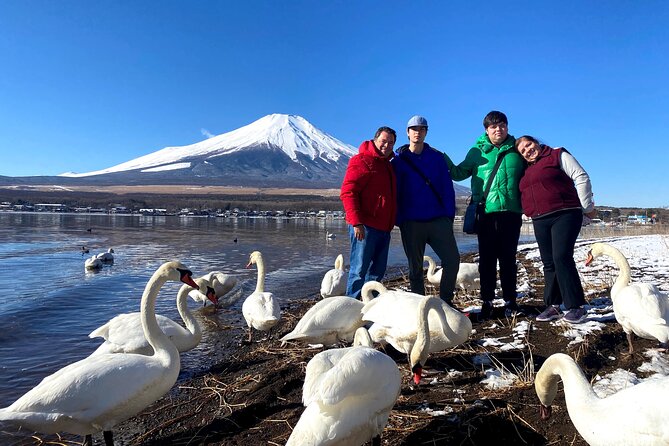
Yamanakako is the largest of the five lakes around Mount Fuji, and the tour allows 30 minutes. Its waters are home to swans, koi, and other birds, which you may be able to feed.
This is a gentler stop after the pagoda and shrine. It gives you time to watch the water and wildlife rather than hurry from one monument to the next. The experience depends on what is present at the time, so do not expect a guaranteed bird encounter or a long feeding session.
The lake also helps complete the geographic story. Instead of visiting one famous lake and moving on, you see several bodies of water that formed part of the Fuji region’s identity.
Fugaku Wind Cave and Fuji’s volcanic past
The final listed stop is Fugaku Wind Cave, a natural underground formation created by past eruptions of Mount Fuji. The cave still contains traces of volcanic lava, and admission is included.
The visit lasts about 30 minutes. Underground sites can feel quite different from the open viewpoints, and this one gives the tour a physical look at the forces that shaped the region. Shiraito Falls showed volcanic water above ground. The wind cave shows volcanic rock below it.
Cave conditions may feel cool, so a light layer is useful even if the day is warm. The supplied information does not give a temperature, so I would not pack for a specific reading. Just be ready for a change from lakeside sunshine to an underground setting.
How the Spanish guide service affects the day
The strongest feature for Spanish speakers is the cultural explanation. The guides are Japanese-Peruvian and explain Japanese culture and religion in Spanish, making it easier to ask questions and follow the meaning of each stop.
Dario is repeatedly singled out for knowing the route well and changing the plan according to cloud cover and daylight. Tito, Riomy, and Min are also named as guides who help with explanations and attention during the day. The style is described as friendly and light, with information kept useful rather than overly long.
A practical benefit is help beyond the formal route. One account describes receiving answers to later Japan trip questions, though that should be treated as a pleasant possibility rather than a promised service.
The photography help is another plus connected with Dario. He is noted for having a talent for taking photos, which can be useful at Chureito Pagoda, Kawaguchiko, or any stop where timing and framing matter.
What the $96.17 price includes
At $96.17 per person, this is a reasonably priced full-day outing if you want transport, a Spanish guide, and many Fuji-area sights in one package. You are paying not only for admission, but also for the time and route planning needed to connect eleven stops spread across the region.
The included items are:
- Snacks
- Drinks
- All fees and taxes
- Admission to Saiko Iyashi no Sato Nemba
- Admission to Fugaku Wind Cave
Lunch is not included. That is the main extra cost to plan for, along with any food purchases at Oshino Hakkai. Other listed stops have free admission, so you are not likely to face a string of small entrance charges during the day.
The value is strongest if you are staying in or near Mishima and want to cover a wide area without arranging several separate transfers. It is less attractive if you want a slow visit to only one lake, or if your main goal is a long hike.
Who should book this full-day outing?
I would choose this trip if you speak Spanish and want cultural context along with scenery. It suits first-time visitors who want to see many sides of Mount Fuji without planning a complicated route through Shizuoka and Yamanashi.
It also fits photographers who can accept changing conditions. The route offers several different compositions, and the guide’s weather-based choices may improve your chances of catching Fuji between clouds.
Families and most people with ordinary mobility should be able to participate, since the activity states that most participants can take part. Still, this is a long day with many stops, vehicles, and some potentially uneven or stepped areas. Anyone who needs a slower pace should ask the operator before booking.
I would hesitate if you dislike early starts, do not want to pay for lunch separately, or feel uncomfortable visiting Aokigahara because of its sad association. I would also avoid treating this as a guaranteed Fuji-viewing tour. The mountain may be hidden.
Cancellation and planning details
You receive confirmation at booking, and the activity uses a mobile ticket. It runs near public transportation, with the stated start at the Mishima bus information office.
Free cancellation is available until 24 hours before the 8:00 a.m. start time for a full refund. Within 24 hours, cancellations and changes are not accepted for a refund.
The tour requires good weather. If poor weather causes cancellation, you are offered another date or a full refund. The activity also needs a minimum number of participants, and if that number is not reached, you are offered another date, another experience, or a full refund.
Should you book it?
Book this tour if you want a broad, well-paced introduction to Mount Fuji with Spanish explanations, small-group attention, and a route that covers far more than one lookout. The mix of lakes, village life, religion, volcanic geology, and difficult modern history gives the day real range.
Skip it if you want guaranteed clear skies, a serious hike, or a relaxed visit to just one place. For most Spanish-speaking visitors based around Mishima, the price is fair for the number of stops and included admissions. Just bring a lunch budget, start ready at 8:00 a.m., and let the weather decide how the Fuji hunt unfolds.
FAQ
Where does the Mount Fuji tour start?
The tour starts at the Tokai Bus Mishima Information Office, 17-1 Ichibanchō, Mishima, Shizuoka 411-0036, Japan.
What time does the tour begin?
The stated start time is 8:00 a.m.
How long does the experience last?
The tour lasts approximately 10 to 11 hours.
Where does the tour end?
The activity ends back at the meeting point in Mishima.
How many people can join the tour?
The activity has a maximum of nine participants.
Is lunch included?
No. Lunch is not included, although snacks and drinks are provided.
Are entrance fees included?
All fees and taxes are included. Admission is specifically included for Saiko Iyashi no Sato Nemba and Fugaku Wind Cave.
What happens if bad weather cancels the tour?
If poor weather causes cancellation, you are offered a different date or a full refund.
Just added around Mt Fuji
- Ramen Cooking Class at Lake Kawaguchiko (Short Course)★ 5.0 · 42 reviews
- Private Fuji Full-day Car Tour with Hotel Pickup -Local Guide★ 5.0 · 12 reviews
- Fujisan Sushi Making Lesson★ 5.0 · 16 reviews
- Private Local Hiking to enjoy the nature and culture of Mt.Fuji★ 5.0 · 22 reviews
- Cute & Fun E-Car tour following guide around Lake Kawaguchiko★ 5.0 · 54 reviews
- Early Morning Kayaking With Views of Mt Fuji at Lake Kawaguchiko★ 5.0 · 69 reviews
- Sushi Cooking Class at Sushi Factory -KIWAMI- Mt.Fuji★ 5.0 · 23 reviews
- Hidden Fuji drive tour with a Local English speaking guide★ 5.0 · 43 reviews
Mt Fuji Tours, compared.
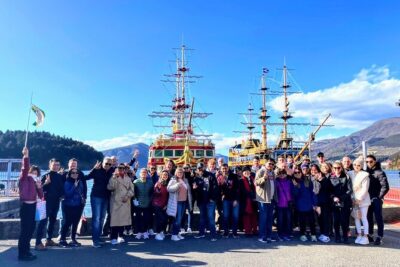
Mt Fuji and Hakone 1-Day Bus Tour Return by Bullet Train
Read our review →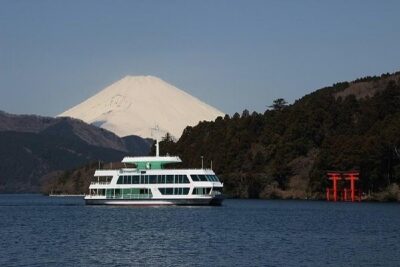
Mt Fuji & Hakone Cruise, Drum Show Bullet Train 1 Day from Tokyo
Read our review →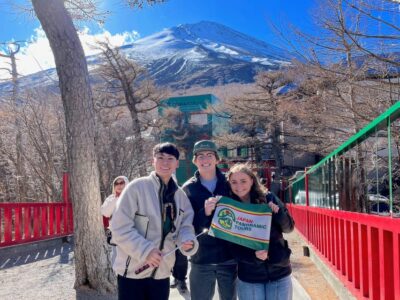
Tokyo Mt Fuji 5th St & Hakone Cruise Bus Tour w/Bullet Train
Read our review →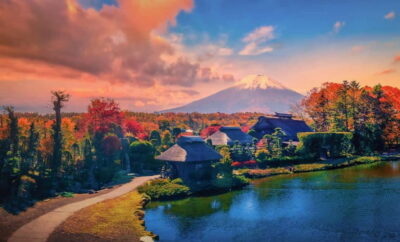
Mt. Fuji Tour, Hakone Ropeway, Owakudani, Lake Ashi
Read our review →
Mt.Fuji,Kawaguchiko Oishi Park,Arakurayama Sengen Park
Read our review →
Mt. Fuji 5th Station & Hakone Cruise 1-Day Bus Tour
Read our review →
Mt Fuji Top 5 Spots Day Tour: Arakurayama Park,Oshino Hakkai
Read our review →Browse the lists this tour appears in