
Reviewed · NAGOYA TOURS
Nagoya: Toyota Commemorative Museum Guided Tour
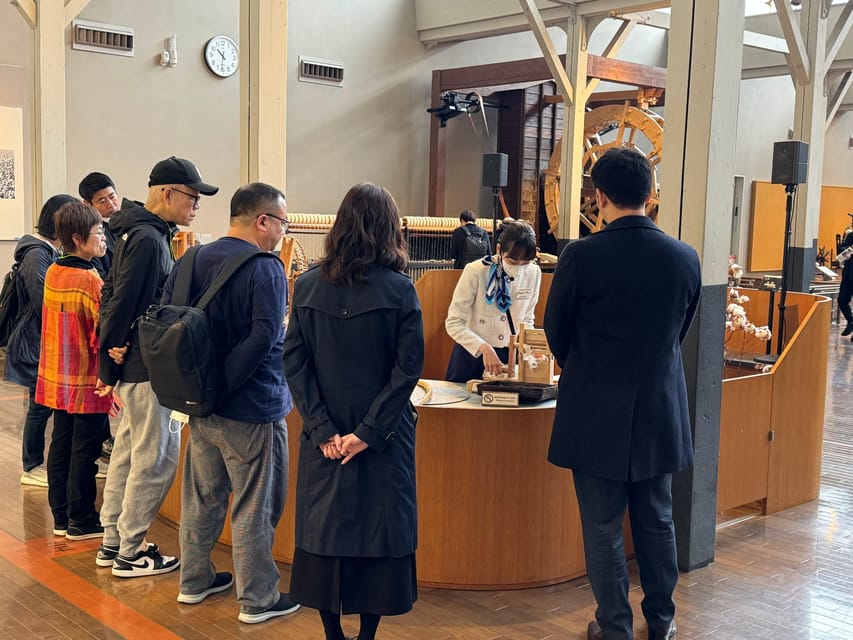
Toyota’s story begins not with a car, but with a working automatic loom. At the Toyota Commemorative Museum of Industry and Technology, you see Sakichi Toyoda’s textile inventions operate before following the company into automobile production, where machines press, weld, and assemble parts in front of you. It gives Toyota’s rise a clear human and mechanical story.
I like the live demonstrations, which turn factory technology into something you can understand, and I like the link between Nagoya, Aichi Prefecture, and Toyota’s growth. Guides such as Kono add useful local context and explain why the company matters beyond its cars.
The main consideration is time. The 90-minute route gives you the essentials, but the 3-hour option is a better fit if you want to hear detailed explanations and study both pavilions without rushing. The museum also involves walking and is not suitable for wheelchair users or people with mobility impairments.
Key points to know before you go
- Start with the G-type automatic loom: See the machine that helped shape Toyota’s industrial beginnings.
- Watch real machinery operate: Pressing, welding, and assembly displays show how cars are made.
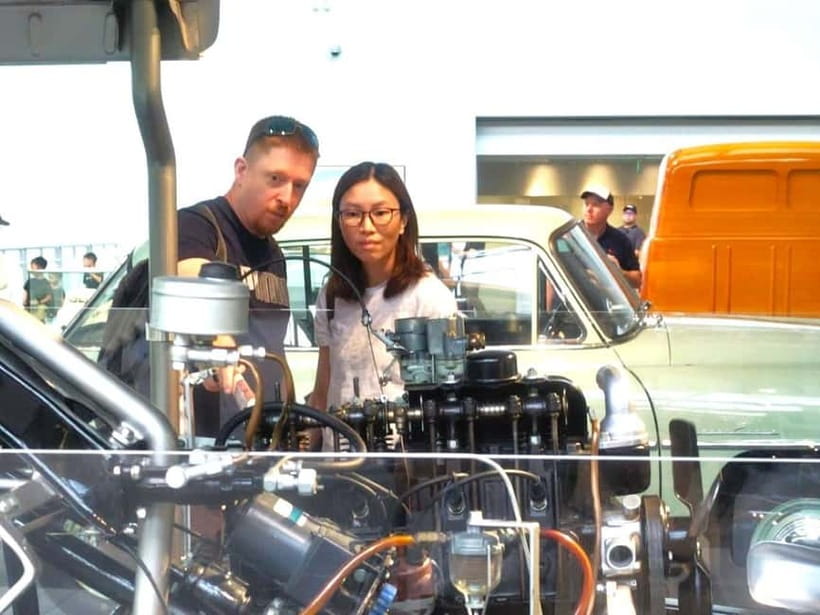
- See the Toyoda Model AA: Toyota’s first passenger car is one of the museum’s major visual highlights.
- Choose your pace carefully: The visit lasts 90 minutes or up to 3 hours, depending on the course.
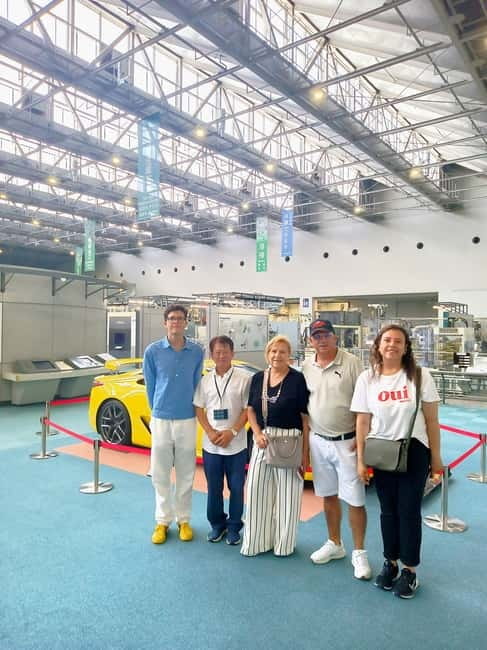
- Meet inside the museum: Find the guide beside the ticket counter and look for a yellow DeepExperience sign.
- Do not confuse the museums: This is in Nagoya, not the Toyota Kaikan Museum or Toyota Automobile Museum.
A factory story that begins with thread
The most useful way to understand Toyota is to begin before Toyota made automobiles. In the Textile Machinery Pavilion, you see how Sakichi Toyoda’s work with looms created the technical and business foundation for the company that came later.
The museum is housed in a preserved red-brick factory building. That setting matters. You are not simply looking at polished objects in a modern gallery. The old industrial structure gives the machinery a sense of place and makes the company’s early work feel tied to Nagoya’s manufacturing past.
The first section focuses on textile machinery, with historic looms shown in operation. The G-type automatic loom is the key exhibit. It was designed to improve textile production and could stop when a thread broke, helping reduce waste and improve efficiency. The demonstration makes the idea much easier to grasp than a written panel alone.
I especially like this opening because it prevents the automobile story from becoming a simple parade of famous cars. You see that Toyota’s early success grew from solving practical factory problems. The company’s later approach to manufacturing becomes easier to understand once you have watched these earlier machines work.
Your guide explains the machinery while operators bring it to life. That combination is important. The machines are large, noisy, and mechanical, but the live explanation helps you follow what each moving part is doing. You are encouraged to pay attention to the process, not just the age or appearance of the equipment.
More museums and galleries in Nagoya:
- Tokyo: teamLab Planets TOKYO Digital Art Museum Entry Ticket
★ 4.6 · 9,779 reviews - Osaka Castle: Museum and Tower Entry Ticket
★ 4.5 · 2,380 reviews - Tokyo: Samurai Ninja Museum Guided tour and Experience
★ 4.6 · 1,010 reviews
The G-type loom gives Toyota’s beginning a human scale
Sakichi Toyoda’s loom is more than an old industrial object. It represents the kind of problem-solving that shaped the company’s identity. The machine was built to make textile work more efficient and reliable, and the museum lets you see the result rather than asking you to imagine it.
For you, the value is practical. If you already know Toyota for hybrid cars or production methods, this section fills in the missing first chapter. If you are not especially interested in industrial machinery, the demonstration still gives the tour a strong beginning because you can watch the mechanism perform its job.
The textile section also helps explain why the museum is called the Museum of Industry and Technology, rather than simply a Toyota car museum. The focus is on invention, production, and manufacturing systems. Cars are important, but they are part of a longer story.
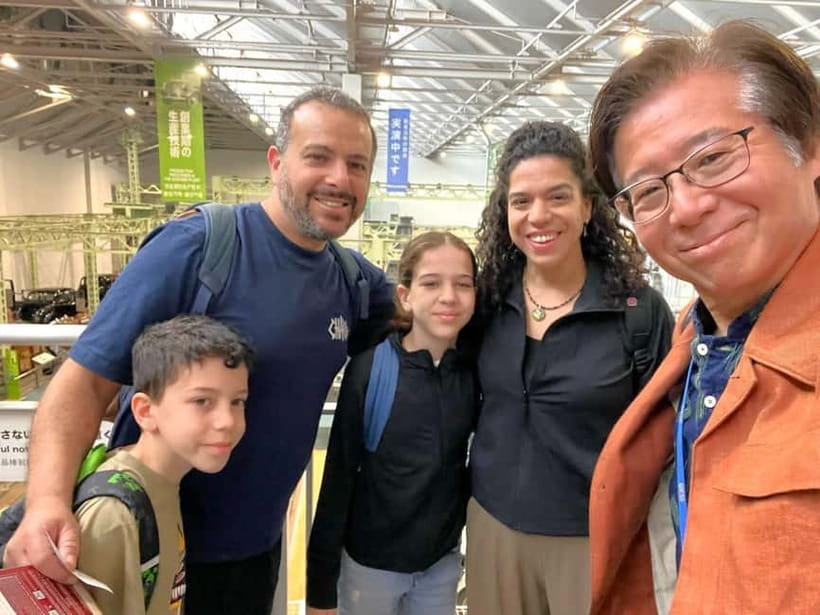
An English-speaking guide keeps the technical material accessible. Kono, one guide praised for clear explanations and a warm manner, has been noted for connecting Toyota’s development with Nagoya and Aichi Prefecture. That local link is worth hearing because the company’s story is closely tied to the region.
From textile machinery to automobile production
The transition into the Automotive Pavilion shows how Toyota moved from textile machinery into car manufacturing. Here, the scale changes. You move from looms and thread to metal panels, vehicle bodies, engines, and production processes.
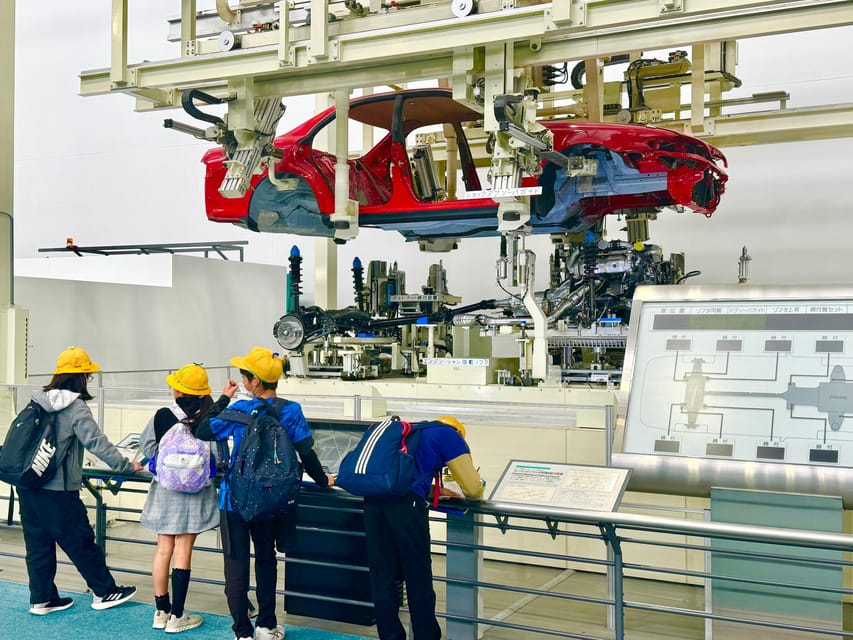
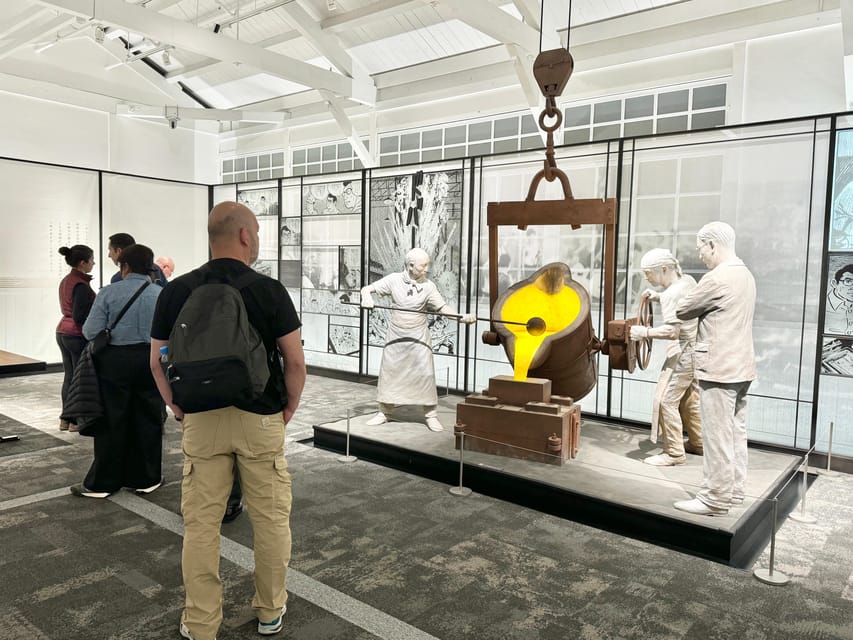
The museum presents automotive manufacturing as a chain of connected stages. You can watch demonstrations of pressing, welding, and assembly, with operators showing how different components are formed and joined. These displays make the factory process easier to picture than a finished car alone ever could.
The pressing section focuses on shaping metal. Welding shows how parts are joined. Assembly brings the separate pieces into a working vehicle. Seeing those stages together gives you a better sense of how much planning sits behind an automobile that looks simple once it is parked on the street.
I like that the tour does not treat manufacturing as background information. It makes production the main subject. Your guide can point out how key components were developed and made, while the machinery provides the physical proof.
The machinery can also be the most demanding part of the visit. Some equipment is large, and the tour requires you to move through working displays rather than sit for a long presentation. Comfortable shoes are a sensible choice, especially for the 3-hour course.
The Toyoda Model AA puts the story on wheels
The Toyoda Model AA is one of the museum’s clearest milestones. It represents Toyota’s first passenger car and gives the automobile section a strong focal point.
A historic car can sometimes feel disconnected from the machinery around it. Here, the Model AA works differently. After seeing the processes used to shape, join, and assemble vehicle components, you can look at an early Toyota passenger car with a better sense of how it came into being.
The vehicle also marks a change in the company’s direction. The museum shows how Toyota moved from textile technology toward automobiles and then continued developing its production methods. You see the car not only as a classic vehicle, but as part of a larger industrial shift.
The display includes other milestones in Toyota’s automotive development. The emphasis is on technological change over time, so the visit is useful even if you are more interested in engineering than in collecting cars.
Do not expect a large automobile collection devoted only to rare or glamorous models. This experience is about Toyota’s industrial development, so the machinery and explanations are just as important as the vehicles. If your main goal is to see many historic cars, a different museum may suit you better. This museum gives you the production story behind them.
A few more Nagoya half-days to weigh up
- From Nagoya: Gujo, Hida Takayama, and Shirakawa-go Day Tour
★ 4.4 · 398 reviews - Ghibli Park 1-Day Bus Tour from Nagoya
★ 4.5 · 277 reviews - From Nagoya: Hida Takayama & Shirakawa-go Tour w/Opt. Lunch
★ 4.5 · 256 reviews - Hiking the Historic Nakasendo Trail [1 Day Tour from Nagoya]
★ 5.0 · 104 reviews
Why the live demonstrations matter
Static displays can explain a machine, but moving equipment gives you a much better sense of its purpose. When the loom operates, you can see the speed and coordination involved in textile production. When automotive machinery works, you can follow how force, timing, and precision shape a car component.
The operators are a central part of the experience. They bring the machinery to life while the guide explains what you are seeing. That arrangement keeps the visit from becoming a silent walk through old equipment.
For me, this is where the guided format earns its price. Admission is included in the tour, but the extra value comes from having someone organize the story and explain the technical displays in English. At $77 per person, the cost is not trivial for a museum visit, especially if you choose the shorter course.
The price makes more sense if you want context, live demonstrations, and a structured explanation. A visitor who mainly wants to walk through the building quickly may find a regular museum visit more economical. A visitor who wants the machinery explained, and who might otherwise miss the meaning of the exhibits, gets more from the guided option.
Private or small-group arrangements are available. That can make it easier to ask questions and keep track of the story, though the exact group size depends on the booking option you select.
The 90-minute course or the 3-hour version
You have two practical choices. The 90-minute guided course covers the museum’s main themes, including the Textile Machinery Pavilion and the Automotive Pavilion. It suits a busy Nagoya schedule and gives you a focused introduction.
I would allow at least the full 90 minutes rather than trying to squeeze it between tight train connections. The demonstrations and explanations need time, and the museum is more rewarding when you can stop to watch a machine instead of hurrying past it.
The 3-hour course gives you a slower, more detailed visit. It is the better choice if you enjoy industrial design, Japanese business history, automobiles, or the mechanics of production. You have more room to ask questions and take in the connections between textile machinery and automobile manufacturing.
The longer course may feel excessive if you are only mildly interested in Toyota. It is also worth remembering that the museum is not designed as a short photo stop. The machinery is the point, and the longer option works best when you want to study it.
Photography is allowed, but flash photography is prohibited in certain areas. Bring a camera if you like documenting technical displays, but be ready to follow instructions around operating machinery.
Planning your visit in Nagoya
The museum is in Nagoya city. You are responsible for getting to and from the site, as transportation is not included.
Inside, the meeting point is next to the ticket counter. Look for the guide holding a yellow sign with the DeepExperience logo. This detail is useful because the building includes multiple exhibit areas, and meeting beside the ticket counter gives you a clear starting point.
Check the available starting times when you book. The activity is offered in English, with private and small-group options available. The guide assigned to your tour may vary, although Kono is one guide specifically praised for explaining Toyota’s place in Nagoya and Aichi.
The museum closes on Mondays. If Monday is a national holiday, it closes on the following day instead. Check the operating day before you build the visit into a museum-heavy itinerary.
Wear comfortable shoes and bring water. The experience is not suitable for wheelchair users or people with mobility impairments, so you should consider this carefully before booking. That limitation is important, particularly for the longer course.
Who will get the most from this museum tour?
You will likely enjoy this experience if you want to understand how a major Japanese company developed over time. It suits visitors who like technology, manufacturing, Japanese business, automobiles, and local history.
It also works well for families with older children who can follow a mechanical explanation. The live machines offer more to watch than a room of written panels, though the amount of technical information may be less suitable for very young children.
Car enthusiasts will appreciate the Toyoda Model AA and other automotive milestones. Still, you should come for the manufacturing story as much as the vehicles. The tour is not simply a display of cars.
I also recommend it to first-time visitors who want a stronger connection with Nagoya. The guide’s explanation of Toyota’s importance to the city and the wider Aichi region gives the museum a local angle. You leave with a better understanding of why Toyota is such a major part of the area’s identity.
You may want to skip the guided version if you have limited interest in machinery or if $77 feels too high for a 90-minute museum visit. In that case, a shorter independent visit may offer better value, if available under the museum’s own admission arrangements. The supplied tour price is best judged as payment for the guide, structure, and live interpretation, not admission alone.
Souvenirs and the final impression
Before leaving, you can look for Toyota-related souvenirs tied to the company’s technology and history. These are more distinctive than generic car merchandise because they connect with the museum’s focus on industry and invention.
The strongest impression comes from the link between the two pavilions. You begin with thread, looms, and Sakichi Toyoda’s inventions. You finish with automobile production, historic cars, and newer work involving hybrid and hydrogen fuel cell vehicles.
The environmental section gives the story a modern direction. Toyota’s development did not stop with conventional automobiles, and the museum presents the company’s work on hybrid and hydrogen fuel cell vehicles as part of its continuing technological effort.
Should you book the Toyota museum tour?
Book it if you want more than a quick look at Toyota cars. The working machinery, the G-type loom, the Toyoda Model AA, and the step-by-step production displays give you a clear account of how the company grew from textile manufacturing into a global automobile business.
Choose the 90-minute course if your Nagoya schedule is tight. Choose the 3-hour course if you enjoy technical detail or want time with the guide and the demonstrations.
At $77 per person, this is a specialist guided experience rather than a bargain museum outing. I think it earns that price for visitors who value explanation and live demonstrations, especially in a private or small group. I would not book it without checking the walking requirements, Monday closure, meeting point, and exact museum location.
Most important, make sure you are booking the Nagoya museum. This is not the Toyota Kaikan Museum in Toyota City and not the Toyota Automobile Museum in Nagakute City. If you have the right museum and the right expectations, it offers one of the clearest ways to understand Toyota’s long industrial story.
FAQ
Where does the Toyota Commemorative Museum Guided Tour take place?
It takes place at the Toyota Commemorative Museum of Industry and Technology in Nagoya city on Honshu, Japan.
Is this the Toyota Kaikan Museum?
No. This tour visits the Toyota Commemorative Museum of Industry and Technology in Nagoya. It is not a visit to the Toyota Kaikan Museum in Toyota City.
Is this the Toyota Automobile Museum?
No. The tour does not visit the Toyota Automobile Museum in Nagakute City.
Where is the meeting point?
Meet next to the ticket counter inside the Toyota Commemorative Museum of Industry and Technology. The guide will hold a yellow sign with the DeepExperience logo.
How long does the guided tour last?
You can choose a 90-minute course or a 3-hour in-depth course, depending on availability.
What language is the tour conducted in?
The live tour guide service is offered in English.
What is included in the price?
Admission to the Toyota Commemorative Museum of Industry and Technology is included, along with access to both the Textile Machinery Pavilion and the Automotive Pavilion.
Is transportation included?
No. Transportation to and from the museum is not included.
Can I take photographs?
Photography is allowed, but flash photography is prohibited in certain areas.
Is the museum open on Mondays?
The museum is closed on Mondays. If Monday is a national holiday, it closes on the following day instead.
Just added around Nagoya
- Walking Small-Group Nagoya City Tour★ 5.0 · 13 reviews
- Nagoya Endoji Food and Cultural Tour★ 5.0 · 12 reviews
- Pub Crawl in Nagoya★ 5.0 · 15 reviews
- Sumo Tournament Experience in Nagoya★ 5.0 · 12 reviews
- Nagoya Street Food Walking Tour of Osu★ 5.0 · 28 reviews
- Nagoya: 2026 Hida Takayama Shirakawa-go Light-up Winter Tour★ 3.5 · 16 reviews
- Private Full-day Nagoya City Tour★ 5.0 · 22 reviews
- Specialties of Nagoya Food Tour★ 5.0 · 12 reviews
Nagoya Tours, compared.
![Hiking the Historic Nakasendo Trail [1 Day Tour from Nagoya]](https://media3.thejapanesetraveller.com/wp-content/uploads/hiking-the-historic-nakasendo-trail-1-day-tour-from-nagoya-400x267.jpg)
Hiking the Historic Nakasendo Trail [1 Day Tour from Nagoya]
Read our review →
Nagoya Highlight Tour guided by a friendly local
Read our review →
Japanese Traditional Sweets making and Tea Ceremony
Read our review →
Magome-juku, Tsumago-juku & Ena-kyo 1d Bus Tour from Nagoya
Read our review →
Nagoya Full-day Private Custom Tour with National Licensed Guide
Read our review →Browse the lists this tour appears in