
Reviewed · OSAKA TOURS
Osaka : 3/4/5 Hours Private Tour With Local Guide
Osaka is easiest to understand when you move through its neighborhoods rather than simply ticking off monuments. This private tour links Osaka Castle, Shinsekai, Den Den Town, Kuromon Market, Dotonbori, and Amemura, giving you a quick lesson in the city’s past, food, pop culture, and daily life.
I like the hotel pickup and the personal pace. Guides such as Hugo, Arnaud, and Francois have helped people learn the railway system, find small restaurants, choose local foods, and adjust the route around family interests. The main consideration is walking: four hours can mean roughly 17,000 steps, and transport, food, and attraction tickets cost extra.
Key points
- Hotel pickup saves valuable time: Meet your guide at the reception of your Osaka hotel if it falls within the designated pickup area.
- Six very different Osaka districts fit into one outing: Move from castle grounds to working-class Shinsekai, anime-focused Den Den Town, seafood stalls, neon Dotonbori, and youthful Amemura.
- The route can bend around your interests: Ask for food, history, second-hand video games, family activities, or help with trains.
- You get practical Osaka training: Guides can show you how to use the subway and railway system, a real benefit on your first day.
- Food is optional and paid separately: You might stop for Shinsekai specialties or unusual Japanese foods at Kuromon Market.
- The 3, 4, and 5 hour choices matter: Three hours gives you a brisk introduction, while five hours allows more conversation and side trips.
Why this private Osaka tour works well on day one
I see this as a get your bearings fast experience. You are not confined to one neighborhood or a single type of attraction. Instead, the route shows how Osaka shifts from a historic power center to old entertainment quarters, specialist shopping streets, food arcades, and modern youth culture.
The private format is the biggest advantage. You can ask questions as they come up, stop when something catches your eye, or spend less time in an area that does not interest you. Guides have adjusted outings for nine-year-old children, teenagers, families, first-time rail users, and people seeking local food.
You also get help that a standard sightseeing route often skips. Hugo has shown people how to read railway connections, find Japanese-only menus, locate second-hand video game shops, and plan later day trips. That advice can be worth more than another rushed photo stop, especially if Osaka is your first Japanese city.
The tradeoff is that this is an active tour. You walk through large outdoor areas, transfer by train, and move between districts. Osaka’s summer heat, winter cold, rain, or your own energy level can affect the day, so wear comfortable shoes and choose the duration honestly.
A few more Osaka half-days to weigh up
- Osaka Go Karting Tour with Funny Costume
★ 5.0 · 2,658 reviews - Osaka Castle: Museum and Tower Entry Ticket
★ 4.5 · 2,380 reviews - Osaka: Shinsekai Food Tour with 13-15 Dishes at 5 Eateries
★ 4.8 · 2,204 reviews
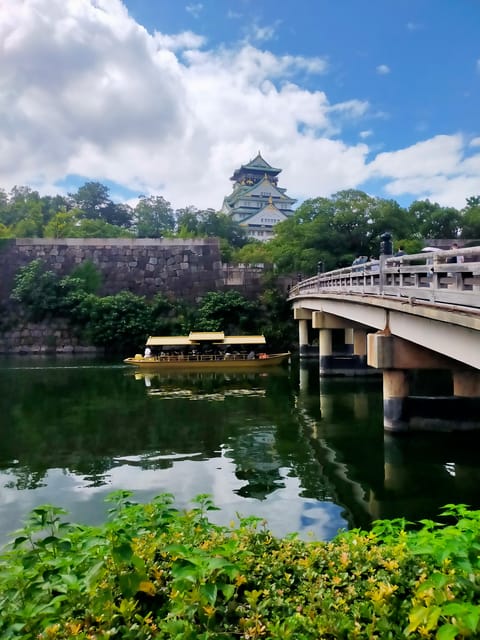
Osaka Castle begins with a park walk
The outing starts at your hotel, then you travel by train toward Osaka Castle. The castle grounds are surrounded by a large park, and the approach is part of the experience rather than a quick dash to the main building.
Your guide explains how the castle connects to major events in Japanese history. You will hear the story in a more conversational way, with room to ask about the figures, conflicts, and customs that shaped Osaka. Several people have found this setting especially useful because the guide explains the grounds and their stories rather than treating the castle as a backdrop for photographs.
The castle stop is scheduled for about an hour, including walking. That is enough for an introduction, but it is not a museum-focused visit with time to inspect every display. Tickets to attractions are not included, so ask your guide how your chosen timing fits with any admission you want to purchase.
I like starting here because the park gives you breathing room before the denser neighborhoods later in the route. It also gives your guide a chance to learn what you want from the rest of the afternoon. If history is your priority, you can ask for more context here. If food or pop culture matters more, the tour can keep moving.
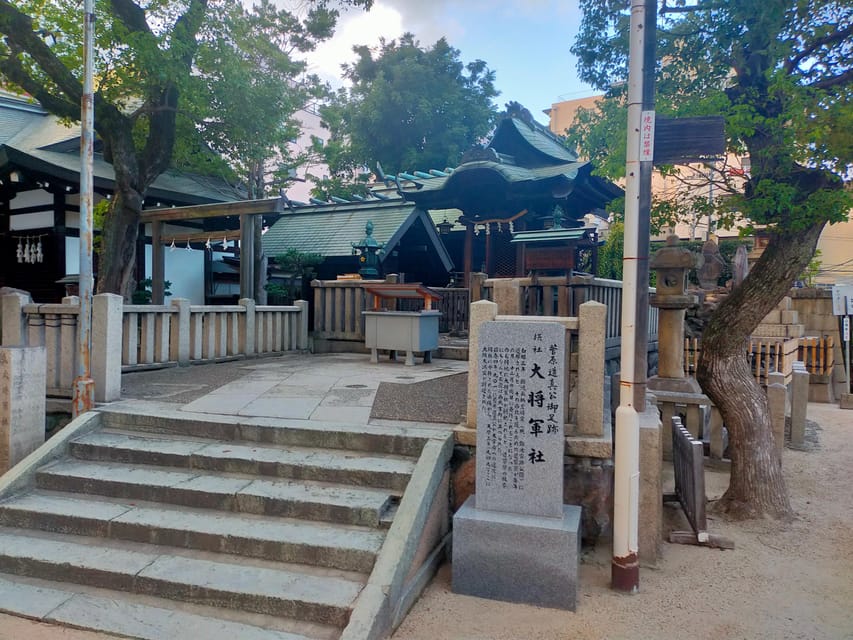
Shinsekai shows an older side of Osaka
Next comes Shinsekai, a working-class district with an unusual past and distinctive architecture. It feels different from the polished image many people have of Japan. This is a place to look at the street layout, older buildings, signs, restaurants, and the character of a neighborhood shaped by ordinary working life.
The planned stop lasts about 30 minutes, but the private setup makes this section flexible. If you want a snack, your guide can suggest a local specialty. Food is optional and paid separately, so you can decide based on appetite, budget, and time.
This is one of the most useful stops for anyone who wants more than famous landmarks. Your guide can explain local customs and everyday life while pointing out details you might pass without understanding. The value comes from connecting what you see on the street with the way Osaka developed.
Shinsekai can also be a good place to ask about food etiquette and ordering. Several guides have helped people choose local dishes and deal with menus written only in Japanese. That practical assistance can remove much of the guesswork from eating in Osaka later.
Den Den Town brings games, anime, and odd surprises
From Shinsekai, the route continues through Nipponbashi Den Den Town, Osaka’s electronic and pop-culture district. This is a sharp change of mood. You may find electronic shops, anime and figurine stores, maid cafes, old video games, and second-hand shops in the same general area.
The stop is listed at about 30 minutes, so set your expectations accordingly. You can get a strong introduction and note places to return to, but serious collectors may want a separate visit. If you are interested in retro games or Japanese character goods, tell your guide before the tour so the time can be used well.
This section is particularly good for mixed groups. A history-minded parent can enjoy the contrast with Osaka Castle, while a teenager or gaming fan gets a stop built around personal interests. One family specifically appreciated being shown second-hand video game shops, which became a memorable part of the day.
I would not treat Den Den Town as a passive sightseeing stop. Ask questions about what you are seeing, how the shops differ, and where you should return later. The private format works best when you make your interests clear.
Same base, a completely different sort of day:
- Osaka Food Tour: 13 Dishes at 5 Local Eateries
★ 5.0 · 2,149 reviews - Hungry Osaka Street Food Tour:15 Tastings & 3 Drinks with a Local
★ 5.0 · 1,727 reviews - Osaka: teamLab Botanical Garden Entry Ticket
★ 4.5 · 1,710 reviews - Osaka: Tea Ceremony Experience
★ 4.9 · 1,426 reviews
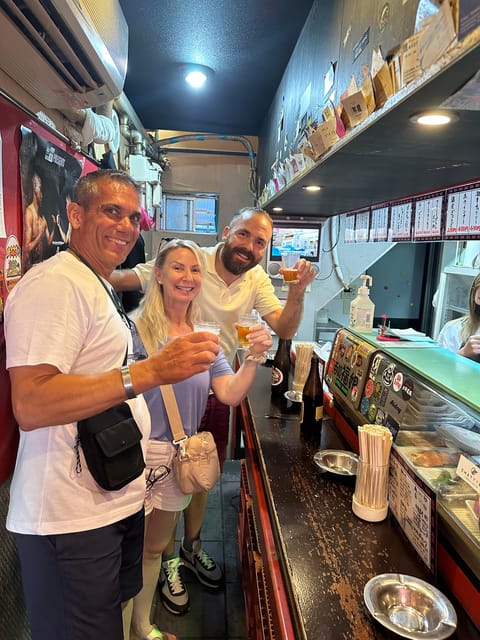
Kuromon Market is your chance to taste Osaka
Kuromon Ichiba Market is the food center of the route, with a focus on seafood and street food. You walk through a market where stalls and shops offer foods you may not encounter outside Japan. The experience is visual even if you decide not to eat, but tasting something makes the stop more useful.
Your guide can point out unusual Japanese foods, explain what you are buying, and help you choose portions. Food and drinks are not included, so carry room in your budget. You do not need to turn the stop into a full meal, but a few small tastings can add up quickly.
The scheduled time is about 30 minutes. That works for a market introduction, a few photographs, and one or two bites. It is short if you want to browse every aisle or eat a large lunch, so tell your guide if food is one of your main goals.
I like this stop because it puts Osaka’s food reputation into practical terms. Instead of receiving a lecture about local cuisine, you can look, ask, choose, and taste. If you have allergies or strong dietary limits, explain them clearly before ordering, since the tour description does not promise a particular food selection.
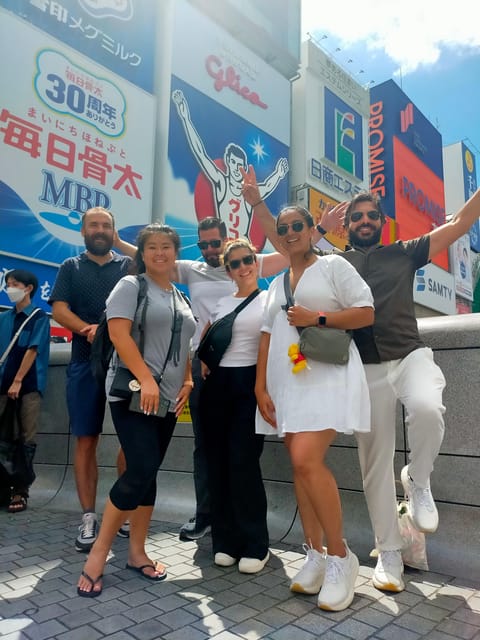
Dotonbori delivers the famous Osaka picture
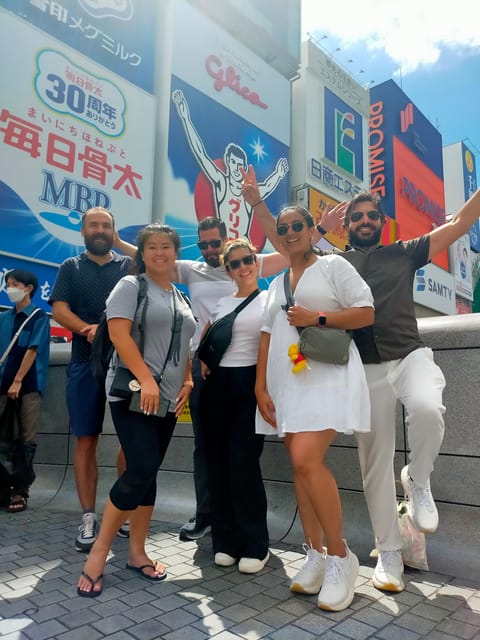
The route then reaches Dotonbori, the entertainment district known for its famous running-man sign. This is the most instantly recognizable part of the outing, with bright signs, canalside views, restaurants, and plenty of people moving through the area.
Your guide helps you see past the photo stop. You can learn what the district offers, where to look, and how to make sense of the signs and food displays. The planned visit lasts around 30 minutes, enough for the essential sights and an orientation to the area.
Dotonbori is also a good place to ask for dinner advice. Your guide shares addresses and suggestions for the rest of your stay, though the tour does not include restaurant reservations or meals. Use the time to mark down places you want to revisit at a quieter hour.
This area can feel crowded, loud, and highly commercial. That is not a flaw if you want Osaka’s famous entertainment face, but it may be less appealing if you prefer quiet streets. The benefit of a guide is that you can understand the district quickly and then move on rather than losing your afternoon to aimless wandering.
Amemura finishes with youth culture
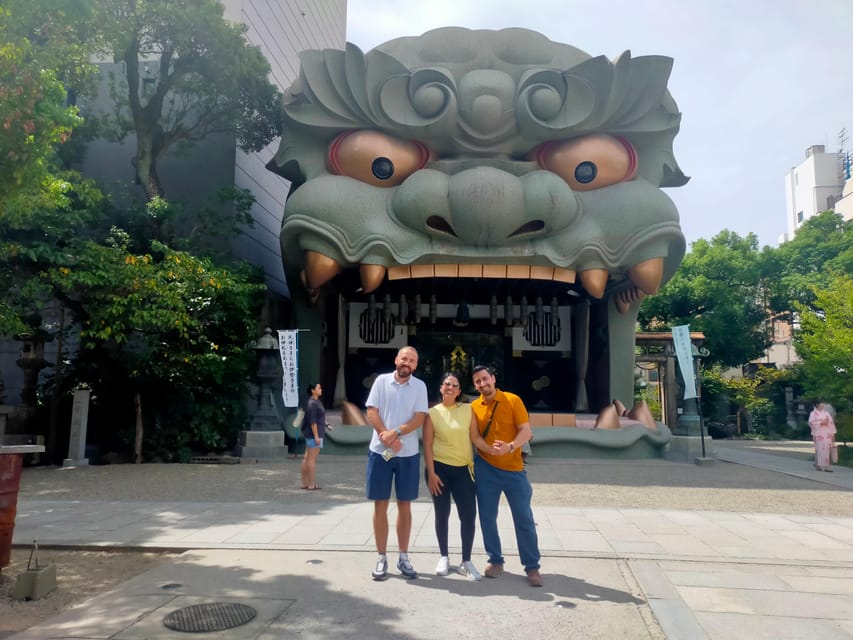
The final neighborhood is Amemura, short for American Village, and centered around Triangle Park, also called Sankaku Park. This trendy district is popular with local young people and offers another clear contrast with Osaka Castle and Shinsekai.
The stop gives you a look at fashion, street culture, and the city’s younger side. Your guide can explain why the neighborhood appeals to local youth and point out places you might want to explore later. It is less about one grand sight and more about observing how Osaka changes from district to district.
Ending here makes sense if you want to continue your evening independently. You finish near a lively part of the city rather than being returned to a fixed sightseeing bus route. The exact end point is listed as Osaka, so confirm the final meeting or drop-off details with your guide.
What the private format adds
A private tour is only as good as the guide’s ability to listen. In this case, the strongest pattern is personal adjustment. Hugo has changed the emphasis around food, railway skills, history, day trips, children, and shopping. Arnaud and Francois have also been praised for discussing interests at the hotel before setting out.
That matters because the published route covers a lot. You cannot explore every market stall, castle room, shop, and side street in three to five hours. A private guide helps you decide what deserves your limited time.
The guides also bring an unusual perspective for people curious about life in Japan as a foreign resident. Hugo has explained customs, beliefs, modern life, and the experience of living in Osaka. This can make the city feel less like a collection of named attractions and more like a place where people work, eat, shop, and socialize.
You should speak up early. Tell the guide if you want more history, unusual food, anime, architecture, shopping, family-friendly stops, or transport practice. The more specific you are, the more useful the customization becomes.
Walking, trains, cost, and timing
At $116 per person, this is not the cheapest way to see Osaka. The price makes more sense for a private group that values personal attention, a flexible route, and practical help with trains and food. For a solo visitor or a couple, the cost is harder to justify if you are comfortable navigating independently.
Transportation is not included, even though trains are part of the route. You also pay separately for food, drinks, and any attraction admission. Plan for those extras rather than treating the listed price as the full cost of the outing.
The duration ranges from three to five hours. Choose three hours if you want a fast introduction or have limited time. Four hours is the sensible middle choice for the full neighborhood sequence, while five hours gives you more room for questions, snacks, photographs, and personal detours.
The day involves substantial walking and train transfers. One four-hour outing reached about 17,000 steps for one person, so comfortable footwear matters. The activity is listed as wheelchair accessible, but you should still discuss your route and mobility needs in advance because the day includes parks, markets, streets, and railway travel.
Pickup is included when your hotel is in the designated Osaka zone. The guide meets you in front of the hotel reception, which is simple and reassuring on your first morning. Free cancellation is available up to 24 hours before the start, and you can reserve now and pay later.
Who should book this Osaka introduction
I would choose this tour for a first day in Osaka, especially if the railway system feels intimidating. You get a working lesson in moving around the city while seeing major districts, and you can use the guide’s restaurant and day-trip advice for the rest of your stay.
It also suits families and mixed-interest groups. A child can enjoy games or colorful shopping streets, a parent can ask about history, and everyone can share market tastings. The private setting avoids forcing the whole group through a fixed explanation at one speed.
Food-focused visitors should book it if they want help choosing local specialties rather than a formal cooking class. Pop-culture fans should request extra time in Den Den Town. History fans should ask for a fuller Osaka Castle explanation and accept that the later stops will be shorter.
I would skip it if you prefer exploring alone, already understand Japanese rail stations, or want to spend several hours inside one museum or attraction. This is an orientation tour across many districts, not a specialist tour of Osaka Castle, Japanese cuisine, or anime shops.
Should you book it?
Book this private outing if you want a friendly local guide, a broad first look at Osaka, and useful advice you can apply immediately. The best value comes from the human help: learning the trains, finding food, asking endless questions, and reaching places you might miss on your own.
Choose the four or five hour option if you want the complete route without racing. Choose three hours only if your schedule is tight. Wear good shoes, budget separately for food and transport, and tell your guide your priorities before meeting.
For a first Osaka day, I think the combination of castle grounds, old Shinsekai streets, Den Den Town, Kuromon Market, Dotonbori, and Amemura gives you a useful cross-section of the city. It is busy, varied, and sometimes tiring, but that is Osaka doing what Osaka does best.
FAQ
How long is the private Osaka tour?
You can choose a duration of 3, 4, or 5 hours, depending on availability and your preferred starting time.
What places are included?
The route includes Osaka Castle Park, Shinsekai, Nipponbashi Den Den Town, Kuromon Ichiba Market, Dotonbori, and Triangle Park in Amemura.
Is hotel pickup included?
Yes. Your guide meets you in front of your hotel reception if the hotel is within the designated Osaka pickup zone.
Are train fares included?
No. Transportation is not included, so you pay separately for train travel during the tour.
Are food and drinks included?
No. Food and drinks are paid for separately. You may choose to stop for local snacks, regional foods, seafood, or other Japanese specialties.
Are attraction tickets included?
No. Tickets to attractions are not included in the tour price.
Which languages are available?
Live guiding is available in English, French, and Spanish.
Is the tour wheelchair accessible?
Yes. The activity is listed as wheelchair accessible. Because the route includes walking, markets, parks, and trains, discuss your specific needs with the guide before the tour.
Just added around Osaka
- Discover Real Osaka: A Cultural Walk with Food & Drink★ 5.0 · 13 reviews
- Osaka 6hr Private Walking Tour with Government Licensed Guide★ 5.0 · 174 reviews
- Private Airport transfer Kansai Intl. Airport(KIX) to OSAKA CITY★ 4.5 · 12 reviews
- From Osaka/Kyoto: Kyoto & Nara Day Trip with Optional Lunch★ 4.5 · 79 reviews
- Osaka: Namba Local Food Walking Tour (Taste 15 Dishes)★ 5.0 · 20 reviews
- Osaka Delights: Traditional Japanese Food Tour★ 4.5 · 33 reviews
- Badminton in Osaka & Kyoto with Locals!★ 5.0 · 15 reviews
- From Osaka or Kyoto: Kyoto and Nara 1-Day Bus Tour★ 3.5 · 141 reviews
Osaka Tours, compared.


Shinsekai Food Tour with 13-15 Dishes at 5 Eateries
Read our review →
Osaka Food Tour: 13 Dishes at 5 Local Eateries
Read our review →
Hungry Osaka Street Food Tour:15 Tastings & 3 Drinks with a Local
Read our review →



Hotspots & Hidden Gems Walking Tour Private or Group
Read our review →Browse the lists this tour appears in