
Reviewed · OSAKA TOURS
Osaka: Traditional Mochi Pounding Experience with Tasting
Mochi pounding is not a quiet cooking class. You mash hot, sticky rice, swing a wooden mallet, and help turn plain grains into a springy Japanese treat. The one-hour session in central Osaka combines a short cultural introduction with plenty of hands-on work, so you learn by doing rather than simply watching.
I like the small group size of four, which gives you a real turn with the tools instead of standing behind a crowd. I also like the tasting stage, where you try fresh mochi with kinako, sweet red bean paste, nori, and sweet soy sauce. The main consideration is physical: pounding mochi takes more stamina than it looks, and the compact room may feel snug at busy times.
Key points
- You pound the rice yourself: Use traditional tools to transform steamed glutinous rice into mochi.
- The history lesson lasts about 10 minutes: You get useful cultural context without sacrificing much making time.
- Fresh mochi comes with several toppings: Try sweet, salty, nutty, and savory combinations with tea.
- Groups are limited to four people: This works well for families, couples, and solo visitors.
- Guides help with photos: Staff members such as Seina, Taka, Misaki, Moe, Grace, and Aiko are praised for friendly support and English communication.
- The entrance can be easy to miss: Look for the river or canal-side entrance rather than relying only on Dotonbori Street.
Why Mochi Pounding Makes a Good Osaka Activity
Osaka is famous for food, but many food experiences here involve eating at a counter or wandering through a market. This one puts you in the kitchen, or at least close to the traditional workbench. You see the rice change texture under your hands and finish with food you helped make.
That physical change is the heart of the activity. Steamed glutinous rice begins as a mass of separate grains. With repeated mashing and pounding, it becomes smooth, stretchy, and sticky. The process looks simple, but timing and teamwork matter. One person pounds while another turns and moistens the rice, with the guide keeping everyone safe and on pace.
You also get a brief explanation of mochi’s place in Japanese food culture. The introduction lasts around 10 minutes, which is enough to explain the origins and significance of the dish without turning the session into a lecture. I appreciate that balance. You come away with context, then spend most of your hour taking part.
More food tours in Osaka:
- Osaka: Shinsekai Food Tour with 13-15 Dishes at 5 Eateries
★ 4.8 · 2,204 reviews - Osaka Food Tour: 13 Dishes at 5 Local Eateries
★ 5.0 · 2,149 reviews - Hungry Osaka Street Food Tour:15 Tastings & 3 Drinks with a Local
★ 5.0 · 1,727 reviews
The First 10 Minutes: A Short Cultural Introduction
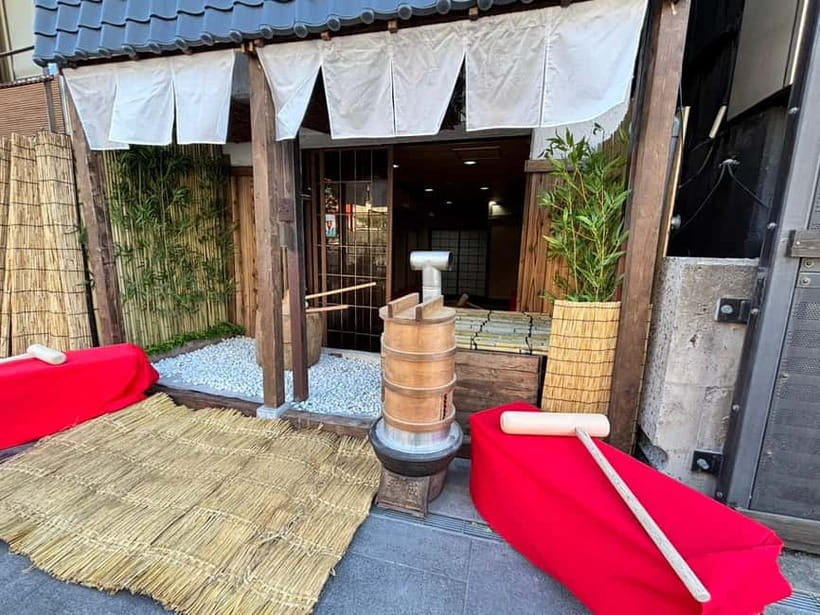
The session begins with an explanation of mochi and the pounding method. This opening helps you understand why the activity uses a mortar and pestle style setup rather than modern kitchen equipment.
The cultural background matters because mochi is more than a sweet snack. It is tied to Japanese food traditions and special occasions, and the pounding method shows how older households and communities prepared it. You do not need prior cooking experience, and the guides explain the stages before asking you to handle the rice.
English and Chinese instruction is available. The guides are also praised for clear English, cheerful energy, and patient help. Names that appear in the host team include Seina, Taka, Misaki, Moe, Grace, Aiko, and Pari. Staff may vary, but you can expect instruction designed for international visitors.
The short opening is especially useful for children. Young participants get a reason for the activity before they start swinging the mallet, while adults receive enough background to place the food in context. If you prefer a long culinary lecture, this will feel brief. For most people, that is a benefit.
From Steamed Rice to Soft, Sticky Mochi
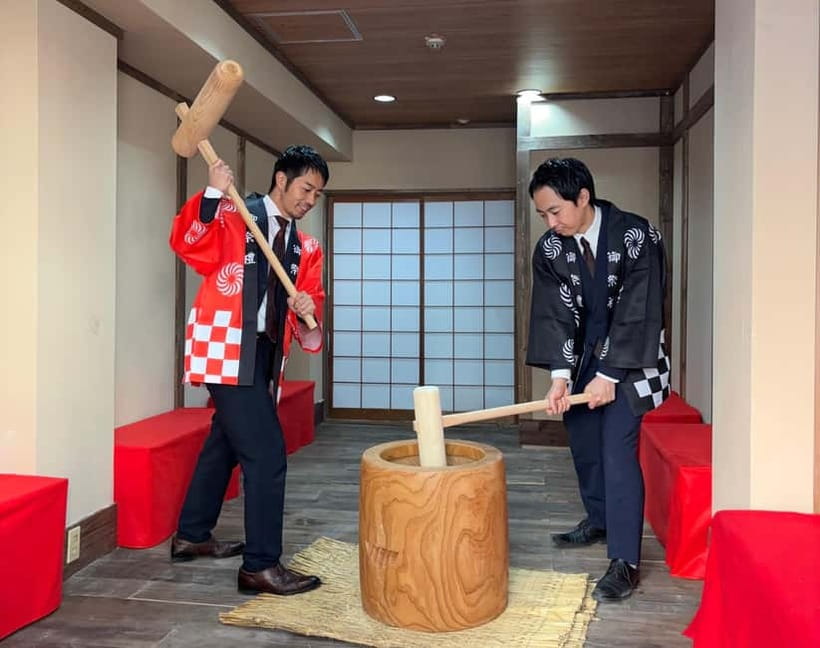
After the introduction, you work with steamed glutinous rice. The first stage involves mashing the rice, helping break it down before the main pounding begins. This is a useful detail for families because smaller children or anyone less comfortable with the mallet can still take part.
The pounding itself is the memorable part. You use traditional tools under the guide’s direction, taking turns and learning the rhythm. The activity is interactive, but it is not a free-for-all. The staff guide the process so that everyone gets a chance and the tools are used safely.
Do not underestimate the effort. Several people found the work more tiring than expected, and that is worth knowing before you arrive. You are not signing up for a workout, but repeated pounding requires energy, especially if you want to take more than one turn.
The reward comes quickly. As the rice becomes smooth and elastic, you can see the result of your work. This is more satisfying than simply being handed a finished confection. You have handled the rice, helped create the texture, and watched a basic ingredient become something distinctly Japanese.
Shaping Your Mochi Before the Tasting
Once the rice has reached the right texture, you help form the mochi. This part can be messy because the dough is sticky, but that is part of the fun. Wear comfortable clothing suitable for hands-on food work, and expect to use your hands rather than simply observing a demonstration.
The shaping stage gives the activity a calmer rhythm after the pounding. You can focus on the feel of the dough and the final appearance of each piece. Perfect shapes are not the point. The guides are there to show you what to do, and the finished pieces are for tasting.
Photography is another small but useful touch. Staff members regularly offer to take pictures and videos, which is helpful if you are traveling alone or want a photograph of the pounding itself. Solo participants can join without feeling left out, while families can get a record of the whole group taking turns.
The setting is described as a small, clean room near the Dotonbori canal or riverfront. The limited group size helps, but the space is not a large studio. If you want lots of room to move, keep that in mind. The compact setting also creates a friendly atmosphere, with the guides able to give personal attention.
A few more Osaka half-days to weigh up
- Osaka Go Karting Tour with Funny Costume
★ 5.0 · 2,658 reviews - Osaka Castle: Museum and Tower Entry Ticket
★ 4.5 · 2,380 reviews - Osaka: teamLab Botanical Garden Entry Ticket
★ 4.5 · 1,710 reviews - Osaka: Tea Ceremony Experience
★ 4.9 · 1,426 reviews
Fresh Mochi With Kinako, Red Bean, Nori, and Soy
The tasting is not an afterthought. You try the mochi you helped make with several classic Japanese seasonings and toppings, along with tea.
Kinako gives the mochi a dry, nutty coating. Sweet red bean paste brings a familiar Japanese dessert flavor. Nori adds a savory seaweed note, while sweet soy sauce offers a salty-sweet finish. The range is useful because mochi itself has a fairly plain flavor. The toppings show how much the final taste depends on what you pair with the dough.
You may find that a topping you normally avoid works better with fresh mochi. One participant discovered a new appreciation for red bean when it was combined with cream. The tasting also lets you compare sweet and savory styles instead of assuming mochi is only a dessert.
Plan your appetite. The mochi is filling, and you may eat a substantial amount by the end. It makes sense to avoid booking this immediately after a large meal. Tea helps balance the stickiness and gives you a simple pause between flavors.
The texture is different from packaged mochi bought in a shop. Freshly pounded mochi is notably soft and sticky. That is a major reason to choose this activity over simply purchasing a box of sweets. You are tasting the ingredient at the moment it has been made.
A Strong Choice for Families and Solo Visitors
The family option welcomes all ages and is designed to keep both children and adults involved. Children can help mash, pound, shape, and taste, while adults can take on the heavier work when needed. The guides are attentive with young participants and adapt the session so each person has a share.
For a multigenerational group, this is an unusually practical activity. Teenagers, parents, and grandparents can all participate without anyone needing specialist cooking skills. The one-hour duration also keeps the outing manageable for children who may lose interest during a longer class.
The adult option is for ages 13 and up and is intended for a more detailed cultural experience. The core activity remains the same, but the plan you choose matters, so select the option that fits your group before booking.
Solo visitors can also fit in well. The group limit is four, and the hosts help create a friendly setting among people who may have arrived separately. Staff can take photos, explain each stage, and make sure you are not left watching from the side.
Couples will find it easy to share the work, although the pounding is done in turns. If you want a private class for a larger group, note that the advertised group size is limited to four participants. That limit is good for hands-on time, but it may not suit a large party wishing to attend together.
Finding the Entrance Near Dotonbori
The central location is convenient, but the entrance deserves special attention. Several directions point to the river or canal side rather than the main Dotonbori Street frontage. One useful clue is an entrance by the river, with a handwritten sign near a hotel on a parallel street.
Give yourself a few extra minutes to locate the door. Dotonbori can be crowded and visually noisy, and a small entrance is easy to pass. Check the meeting details for the plan you book because the meeting point may vary between options.
Transportation to and from the activity is not included. You arrange your own way there, which is normal for a short central Osaka activity, but it means you should not assume a transfer is part of the booking. The location works well as a break during sightseeing around Dotonbori.
The canal-side setting adds a pleasant sense of place, even though this is an indoor activity. You can combine it with nearby food, shopping, and evening walks. Just avoid scheduling it so tightly that a few minutes spent finding the entrance makes you late.
Is $31 a Fair Price for One Hour?
At $31 per person, this is not the cheapest snack stop in Osaka. You could buy mochi for much less. The value comes from the instruction, the cultural explanation, the use of traditional tools, the chance to make the food yourself, and the generous tasting at the end.
The small group limit improves that value. In a group of up to four, you have a genuine opportunity to pound and shape the mochi. A larger class might cost less, but you could spend much of the hour watching someone else work.
I think the price makes sense for anyone seeking an activity rather than another meal. It is also good value for a family because all ages can participate and the session creates a shared memory without taking half a day. Solo visitors get more than a tasting, plus help with pictures.
The value is weaker if you dislike sticky textures, have no interest in Japanese food traditions, or want a polished restaurant-style dessert experience. This is hands-on work, and the result will not look factory-perfect. You are paying for the process as much as the food.
Timing, Clothing, and Cancellation
The activity lasts one hour and is offered year-round, with starting times depending on availability. That makes it easy to place between other Osaka plans, but you should allow a little time for finding the entrance.
Wear comfortable clothing that is suitable for a hands-on activity. The rice and dough are sticky, and you will be working with traditional equipment. No special materials or ingredients are needed because they are provided.
You can cancel up to 24 hours in advance for a full refund. A reserve-now, pay-later option is also available, which helps if you are still arranging your Osaka schedule. These policies are useful, but the key practical step is choosing the correct plan for your age group before confirming.
Who Should Book This Mochi Experience?
I would recommend it most strongly to families, food-focused visitors, solo visitors, and anyone who wants a short cultural activity with a clear result. It gives children a physical task, adults useful context, and everyone something to eat at the end.
It is also a good choice if you have already seen Osaka’s major sights and want to do something less passive. You do not need to commit to a full cooking day. In one hour, you learn the basics, take a turn with the mallet, shape the dough, and sample several flavors.
Think twice if you have limited hand strength or do not enjoy group participation. The guides can help, but the central point is active work. The room is small, and the experience is social rather than private.
The consistently high rating, 4.9 from 306 ratings, matches the main strengths of the activity: friendly hosts, clear instruction, fresh food, and a good balance between learning and fun. The strongest praise centers on the staff’s warmth and the chance to make every stage yourself.
Should You Book It?
Book this if you want to understand mochi through your hands, not just your taste buds. The one-hour format is compact, the four-person limit gives you useful time with the tools, and the toppings make the final tasting more interesting than a single sweet sample.
For families, it is one of the easier Osaka activities to share across age groups. For solo visitors, the friendly guides and photo help remove the usual problem of doing an interactive activity alone. Just wear practical clothes, leave time to find the canal-side entrance, and arrive with room for a filling snack.
If you want a quiet, elegant dessert stop, choose a shop instead. If you want a lively lesson, a little exercise, and fresh mochi made by your own hands, this is worth the $31.
FAQ
How long does the mochi pounding experience last?
The experience lasts one hour, including the cultural introduction, mochi preparation, pounding, shaping, and tasting.
How many people can join the activity?
The experience is offered as a small group with a maximum of four participants.
Is the activity suitable for children?
Yes. The family experience welcomes all ages and is designed to involve both children and adults. The adult experience is for participants aged 13 and up.
What toppings are included with the mochi tasting?
You can taste the freshly made mochi with kinako, sweet red bean paste, nori, and sweet soy sauce. Tea is also served.
What languages do the instructors speak?
Instruction is available in English and Chinese.
Is transportation included?
No. Transportation to and from the activity location is not included. The meeting point may vary depending on the option booked.
Just added around Osaka
- Discover Real Osaka: A Cultural Walk with Food & Drink★ 5.0 · 13 reviews
- From Osaka/Kyoto: Kyoto & Nara Day Trip with Optional Lunch★ 4.5 · 79 reviews
- Osaka 6hr Private Walking Tour with Government Licensed Guide★ 5.0 · 174 reviews
- Private Airport transfer Kansai Intl. Airport(KIX) to OSAKA CITY★ 4.5 · 12 reviews
- Osaka: Namba Local Food Walking Tour (Taste 15 Dishes)★ 5.0 · 20 reviews
- Osaka Delights: Traditional Japanese Food Tour★ 4.5 · 33 reviews
- From Osaka or Kyoto: Kyoto and Nara 1-Day Bus Tour★ 3.5 · 141 reviews
- 1 Day Takoyaki Making and Osaka Castle Walking Tour★ 5.0 · 15 reviews
Osaka Tours, compared.


Shinsekai Food Tour with 13-15 Dishes at 5 Eateries
Read our review →
Osaka Food Tour: 13 Dishes at 5 Local Eateries
Read our review →
Hungry Osaka Street Food Tour:15 Tastings & 3 Drinks with a Local
Read our review →

Hotspots & Hidden Gems Walking Tour Private or Group
Read our review →Browse the lists this tour appears in