
Reviewed · OSAKA TOURS
Osaka: UTAGE Japanese Taiko Live Show
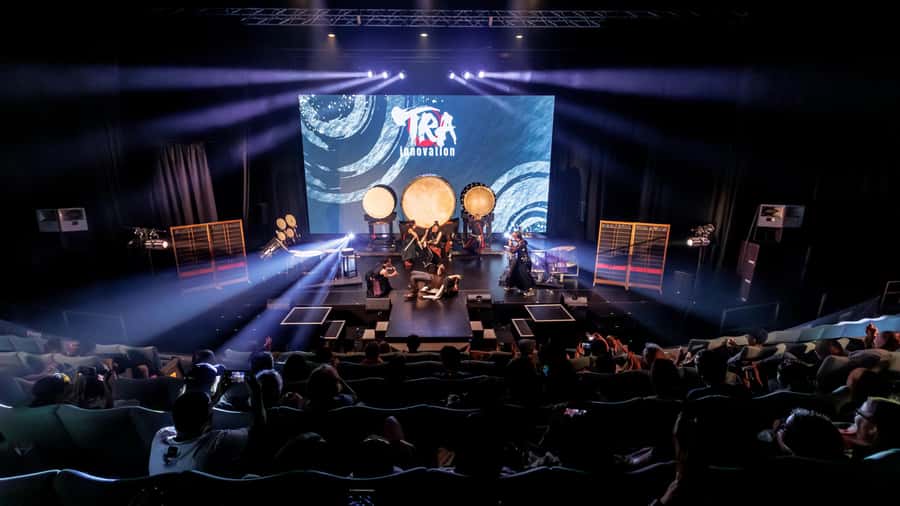
The first thunderous hit from the 180-centimeter taiko drum sets the tone for UTAGE. This is not a quiet cultural display where you sit back and politely clap. TRAinnovation places traditional Japanese instruments beside computer music, lighting, visual effects, and plenty of audience interaction. The result is a compact, high-energy show with the musicians only a few metres away.
I like the small theatre setting, which can make the performance feel almost private, and I like the chance to step forward and play one of the large drums for a song. The main consideration is timing: the doors close once the show begins, so arrive at least five minutes early. The performance is in Japanese, though the music, gestures, and visual action do much of the explaining.
Key points to know before booking
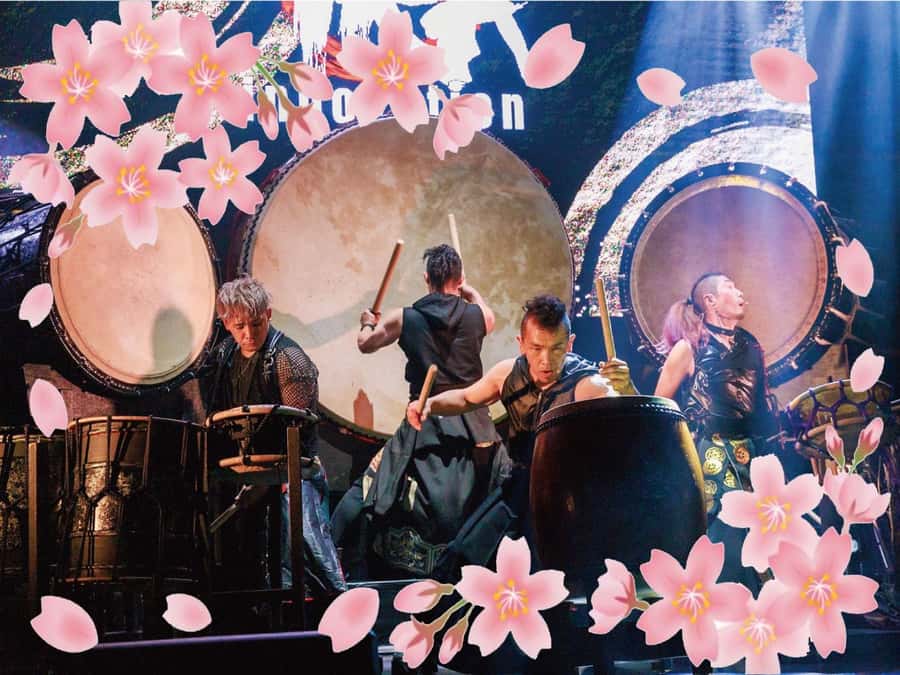
- A 180 cm taiko drum: You get to see one of Kansai’s largest large drums used as part of the performance.
- Traditional instruments with modern sound: Taiko, shamisen, shakuhachi, and shinobue are mixed with computer music.
- Audience participation: You may be invited onstage to play Japanese instruments for one song.
- Close-up theatre seating: A reported setup places about 30 people in three rows, with the band just a few metres away.
- Family-friendly energy: The show uses music, movement, humour, and visual elements to hold the attention of adults and children.
- More than a concert: Photos with the musicians and traditional props downstairs may extend the visit after the main show.
What UTAGE is really offering
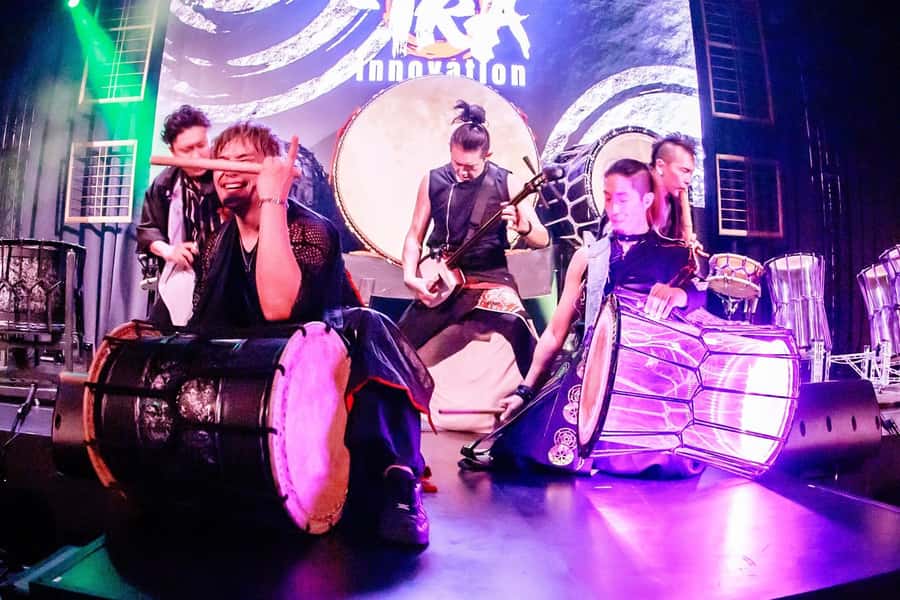
UTAGE is best understood as a modern stage show built around Japanese instruments. The traditional side includes taiko drums, shamisen, shakuhachi, and shinobue. The modern side brings in computer music and visual production, giving the performance a pop-concert feel rather than the formal mood of a museum demonstration.
That mix matters because you do not need prior knowledge of Japanese music to enjoy the evening. You can simply respond to the beat, watch the musicians work, and notice how each instrument changes the sound. The taiko supplies physical force, the shamisen adds a sharp, stringed tone, and the flutes bring a lighter, more airy color.
The performers are associated with TRAinnovation, a band described as having won a world number one indie band title. The supplied information does not name individual musicians, so you should not expect a personal guide-led tour or a lecture about each performer. This is a stage production, with the musicians communicating through playing, movement, smiles, and direct engagement with the audience.
The show is presented in Japanese. That may sound limiting, but there is little spoken information you need to follow. If you want detailed explanations of instrument construction or Japanese musical history, this is not the right format. If you want an accessible performance with strong visual and musical impact, the language barrier should be minor.
More shows in Osaka:
- Osaka: Sumo Show & Experience w/ Optional Kimono & Hot Pot
★ 4.5 · 609 reviews - Osaka: Sumo Stage Show with Bento or Snack + Fight & Photo
★ 4.3 · 364 reviews - Osaka: English Stand Up Comedy Show at Osaka Comedy Club
★ 4.7 · 203 reviews
Inside the theatre, the close seating changes everything
The seating is one of UTAGE’s strongest features. One detailed account describes roughly 30 people seated in three rows, with the band only a few metres away. That is a very different experience from watching a large concert from the back of an auditorium.
From close range, you can see the performers’ arm movements, expressions, and effort. A taiko performance is physical, and proximity helps you feel the work behind each strike. You are not just hearing a low rumble from a distant stage. You are watching the players coordinate their bodies, timing, and force.
A small audience can also make the evening feel personal. The musicians are able to look toward the crowd, invite people to respond, and bring selected participants into the action. One useful detail is that even a very small audience is treated with the same enthusiasm as a full house. That is good news if you happen to visit on a quiet night.
The tradeoff is that a compact theatre may feel more intense than a conventional concert hall. The sound of a large drum at close range can be powerful. If you prefer a calm, low-volume cultural activity, choose something else. UTAGE is built around impact.
The 180 cm drum is the visual and musical anchor

The huge taiko drum is the obvious star attraction. With a diameter of 180 centimetres, it is introduced as one of the largest drums in Kansai. That fact gives you a useful sense of scale before the playing even begins: this is not a small ceremonial drum tucked into the corner of a stage.
Taiko drums are physical instruments, and the performance makes that clear. The players use broad movements and precise timing, turning the drum into both a musical instrument and a visual centerpiece. Even if you know very little about Japanese drumming, the combination of size, rhythm, and movement is easy to appreciate.
The large drum also gives UTAGE its strongest cultural connection. You are seeing a traditional Japanese instrument used in a setting that also includes electronic sound and stage effects. Rather than presenting tradition as something frozen in the past, the show places it in a current entertainment format.
One of the nicest features is the chance to play a large drum yourself for one song. The information describes this as a limited-time participation opportunity, so it is not guaranteed that every person will take a turn. If you are invited, expect an active moment rather than a long workshop. The point is to join the show, feel the instrument, and share the stage with the musicians.
If you are shy, you can still enjoy the performance without volunteering. If you are travelling with children, the possibility of joining in can give them something to anticipate. Participation adds a playful edge, but the show does not depend on it.
Shamisen, shakuhachi, and shinobue add contrast
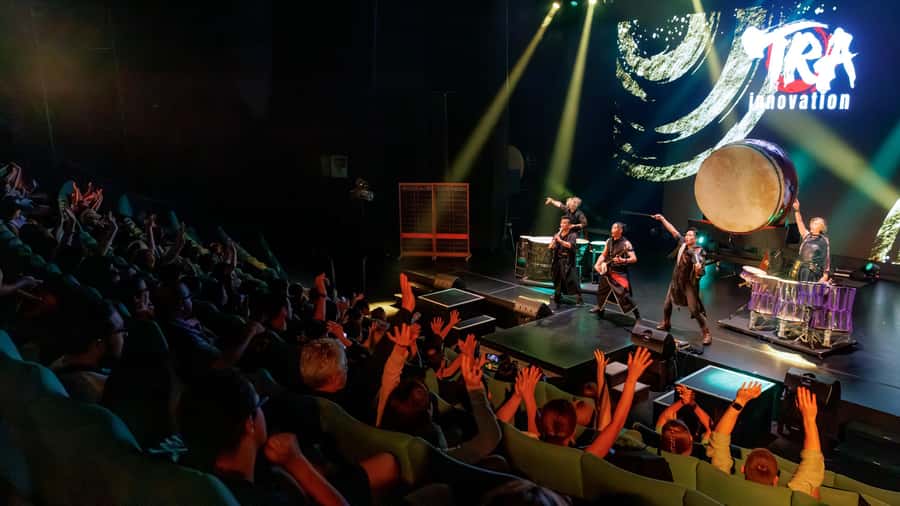
The taiko provides the biggest physical punch, but the other instruments keep the sound from becoming one long drum solo. The shamisen, a traditional Japanese three-stringed instrument, brings a bright, pointed sound. Its tone can cut through the lower rumble of the drums and give the music a quick, lively character.
The shakuhachi and shinobue bring the flute family into the program. Their sounds offer a useful contrast to the percussion, giving the musicians room to shift mood and texture. You get a broader introduction to Japanese instruments than you would from a show focused only on taiko.
This variety is especially helpful for first-time visitors. You do not need to decide in advance which instrument you prefer. The program lets you hear several traditional sounds in one sitting, then places them alongside contemporary electronic elements.
The modern music is not just background decoration. It helps connect the old instruments to a present-day stage format. Some people will appreciate this fresh approach. Others may prefer a more traditional concert with no computer music or visual production. UTAGE is clearly aimed at the former group.
A few more Osaka half-days to weigh up
- Osaka Go Karting Tour with Funny Costume
★ 5.0 · 2,658 reviews - Osaka Castle: Museum and Tower Entry Ticket
★ 4.5 · 2,380 reviews - Osaka: Shinsekai Food Tour with 13-15 Dishes at 5 Eateries
★ 4.8 · 2,204 reviews - Osaka Food Tour: 13 Dishes at 5 Local Eateries
★ 5.0 · 2,149 reviews
The audience is part of the production
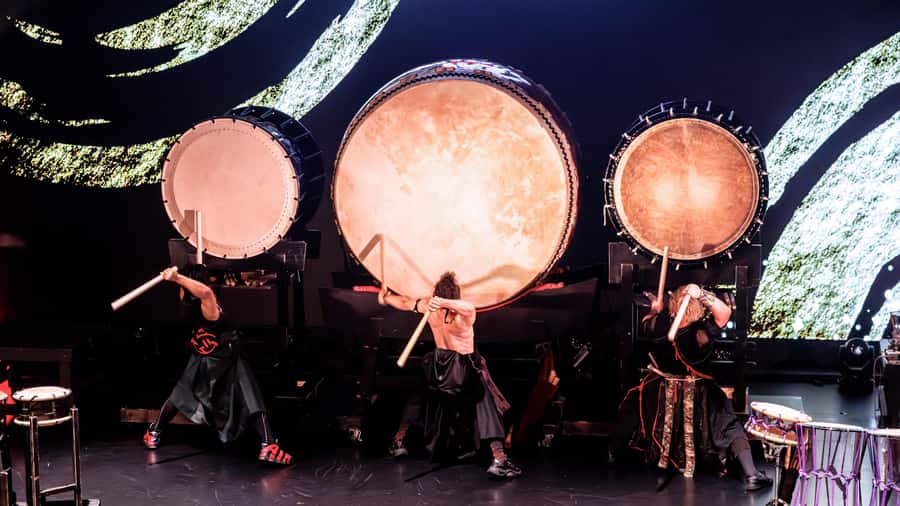
UTAGE puts real effort into making the audience active. You may be invited to the stage, asked to respond to the performers, or encouraged to join in for a song. The production also uses visual elements to keep attention moving beyond the sound itself.
That interaction is a major reason the show works well for families and mixed-age groups. Children may not sit patiently through a formal instrumental recital, but the chance to watch performers move, respond, and bring people forward can keep the room engaged. Adults get the music and skill, while younger audience members get a clear sense that they are part of the event.
You can also expect a relaxed atmosphere around photography. One detailed account says photos are welcome during the performance, and several parts of the experience include pictures with the performers afterward. Since stage policies can change, follow the staff’s directions on the day, but this is not presented as a strictly no-camera concert.
After the show, there may be a chance to meet and photograph with the musicians. The downstairs shop area also offers traditional props such as samurai swords and Japanese umbrellas for complimentary photos. This adds a light, playful finish, especially if you want a souvenir image rather than another purchased object.
How long the experience takes and how to plan it
The performance is described as a great hour of entertainment. That makes UTAGE easy to fit into an Osaka schedule. You can attend the show without sacrificing an entire day, then continue with dinner or another nearby activity.
The meeting point is Osaka Cultural Center, and the activity ends back at that same point. No transport is included because this is a theatre-based experience rather than a moving tour. Check your route carefully and allow enough time to reach the venue.
Arrive at least five minutes before the start. Once the production begins, late entry is not permitted for production reasons. This rule is worth taking seriously. A late arrival is not simply an inconvenience to you; opening the doors during a close-range performance can disrupt the show for everyone.
A practical plan is to arrive early, locate the theatre, and keep your schedule clear for the start time. Do not count on squeezing in a last-minute meal, shopping stop, or train connection immediately beforehand. The show itself is short enough to combine with other plans, but the start time needs respect.
The wider area can also help you build a day around the performance. One account points to an aquarium and a Ferris wheel nearby, so the show may work well as part of a larger outing. Those attractions are not included in the activity, and no transport or admission to them is provided, but they offer a useful way to fill the rest of your day.
Is $40 good value?

At $40 per person, UTAGE is not a bargain basement attraction, but the price is reasonable for a live performance with close seating, several traditional instruments, audience interaction, and a possible hands-on moment. You are paying for a stage production, not only for access to a single drum.
Value depends on what you want from Japanese culture. If you want a quiet temple visit, a formal theatre performance, or detailed instruction in traditional music, your money may be better spent elsewhere. If you want a lively evening that works without much Japanese language, the price compares well with other ticketed entertainment.
The limited audience size helps the value. A close-up seat can make a one-hour show feel more personal than a larger concert. You also get the possibility of photographs with the band and traditional props after the main performance, though the core value remains the live music.
The experience is also efficient. You do not lose half a day to transfers, and the activity returns you to its meeting point. For a short Osaka stay, that matters. You can add a concert-like cultural event without giving up a major sightseeing block.
Who will enjoy UTAGE most?
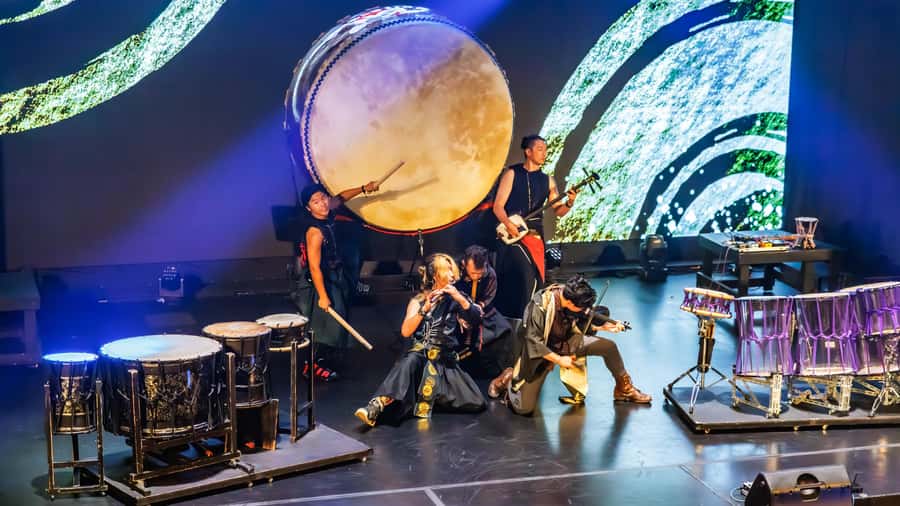
I would recommend UTAGE to anyone who wants a first taste of Japanese musical instruments in an easy, energetic format. You do not need to know the difference between a shamisen and a shinobue before arriving. The program gives you the basic experience through sound and sight.
It is a good match for:
- Families looking for an activity with movement and audience involvement.
- Couples wanting an evening event that feels different from a standard concert.
- Solo visitors who enjoy being close to performers and may want to join the action.
- Music fans interested in the meeting point between traditional instruments and electronic production.
- Visitors with limited time who want an approximately one-hour cultural activity.
Solo visitors should not worry about being left out. The audience interaction is part of the show, and one attendee described joining the dancing while visiting alone. You can participate if invited, but you can also remain in your seat and enjoy the musicians.
The show also suits people who want something less formal. The energy, humour, and direct contact make it feel social rather than ceremonial. That said, the same qualities may not suit someone seeking a solemn or strictly traditional presentation.
A few limitations to keep in mind
The program is in Japanese, and the available information does not promise translation or an English explanation. The music is accessible, but spoken introductions or announcements may not be fully clear to you.
Audience participation is promoted, but the wording indicates that the one-song performance is offered for a limited time. You should treat it as an opportunity, not a guaranteed personal lesson. The focus remains on watching the professional performers.
There is also no detailed schedule of individual numbers. You know the instrument lineup and the broad mix of traditional and modern music, but not the exact running order. If you need a predictable program, ask at the venue.
Finally, the close setting and powerful drums are part of the appeal, but they can be intense. This is a high-energy show, not background music for a quiet evening. Choose it because you want the room to come alive.
Booking details that matter
The provider is TryHard Japan, and the experience is listed at $40 per person. You can reserve now and pay later, which helps if you are still arranging your Osaka schedule.
Cancellation is allowed up to 24 hours before the activity for a full refund. Make sure your plans are settled before the deadline if you decide not to attend.
The most important practical rule is the arrival time. Be at Osaka Cultural Center at least five minutes before the show begins. Late entry is not allowed after the performance starts.
Should you book the UTAGE Japanese Taiko Live Show?
I would book UTAGE if you want a lively, easy-to-follow Japanese cultural experience with genuine stage energy. The 180 cm drum, close seating, unusual instrument mix, and chance to play along give it more personality than a standard concert.
I would skip it if your main goal is a quiet, academic introduction to Japanese music or a fully translated cultural lecture. But for most people looking for a memorable evening in Osaka, $40 buys a concentrated hour of sound, movement, humour, and participation. Arrive early, be ready for serious drum power, and keep an open mind about stepping onstage.
FAQ
Where does the UTAGE Japanese Taiko Live Show take place?
The show takes place at Osaka Cultural Center in Osaka, on Honshu, Japan.
How much does the experience cost?
The listed price is $40 per person.
What instruments are featured?
The performance includes Japanese drums, a large taiko drum, shamisen, shakuhachi, and shinobue. Computer music is also part of the production.
How large is the main drum?
The featured large drum has a diameter of 180 centimetres. It is introduced as one of the largest large drums in Kansai.
Can I play a Japanese instrument during the show?
You may be invited to participate as a performer for one song. This opportunity is available for a limited time and is not described as guaranteed for every attendee.
Is the show performed in English?
The listed language is Japanese. The musical and visual parts of the production do not require Japanese language ability to follow.
When should I arrive?
You should arrive at least five minutes before the show starts. Entry is not allowed once the performance has begun.
Where does the activity end?
The activity ends back at the meeting point, Osaka Cultural Center.
Can I reserve now and pay later?
Yes. The booking option allows you to reserve your place and pay nothing today. You can also cancel up to 24 hours in advance for a full refund.
Just added around Osaka
- Discover Real Osaka: A Cultural Walk with Food & Drink★ 5.0 · 13 reviews
- From Osaka/Kyoto: Kyoto & Nara Day Trip with Optional Lunch★ 4.5 · 79 reviews
- Osaka 6hr Private Walking Tour with Government Licensed Guide★ 5.0 · 174 reviews
- Private Airport transfer Kansai Intl. Airport(KIX) to OSAKA CITY★ 4.5 · 12 reviews
- Osaka: Namba Local Food Walking Tour (Taste 15 Dishes)★ 5.0 · 20 reviews
- Osaka Delights: Traditional Japanese Food Tour★ 4.5 · 33 reviews
- 1 Day Takoyaki Making and Osaka Castle Walking Tour★ 5.0 · 15 reviews
- Badminton in Osaka & Kyoto with Locals!★ 5.0 · 15 reviews
Osaka Tours, compared.


Shinsekai Food Tour with 13-15 Dishes at 5 Eateries
Read our review →
Osaka Food Tour: 13 Dishes at 5 Local Eateries
Read our review →
Hungry Osaka Street Food Tour:15 Tastings & 3 Drinks with a Local
Read our review →



Hotspots & Hidden Gems Walking Tour Private or Group
Read our review →Browse the lists this tour appears in