
Reviewed · OKINAWA TOURS
Tea ceremony experience with simple kimono in Okinawa
The most unusual part of this Onna experience comes before the tea: you enter a traditional tea room through its small doorway, then learn why the room, hanging scroll, flowers, and utensils deserve careful attention. Later, you move to a Ryurei-style setting with tables and chairs, so you can enjoy the ceremony without sitting on the floor.
I like the simple kimono and the hands-on finish, where you clean the tools, whisk your own matcha, and drink what you prepare. I also like the mix of Japanese and Okinawan sweets, which gives the hour a local touch. The main consideration is the small-group format and advance booking requirement, plus a published group-size discrepancy that you should confirm before paying.
Key points to know
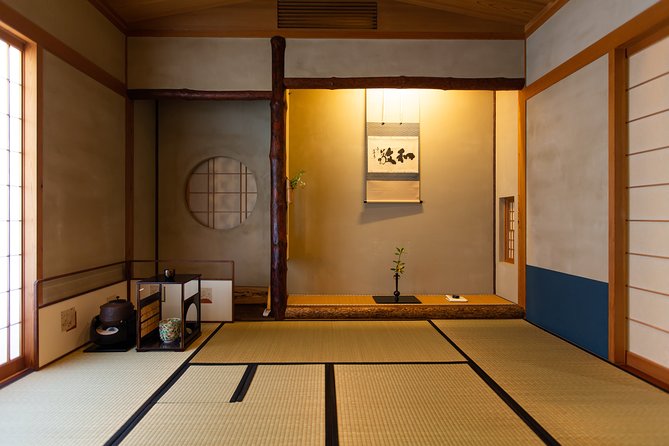
- Small-door tea-room entry: Learn the respectful way to enter and appreciate the room before the tea begins.
- Simple kimono included: Change into traditional clothing and take photos before changing back.
- Ryurei-style seating: Tables and chairs make the ceremony easier for anyone who cannot sit upright on the floor.
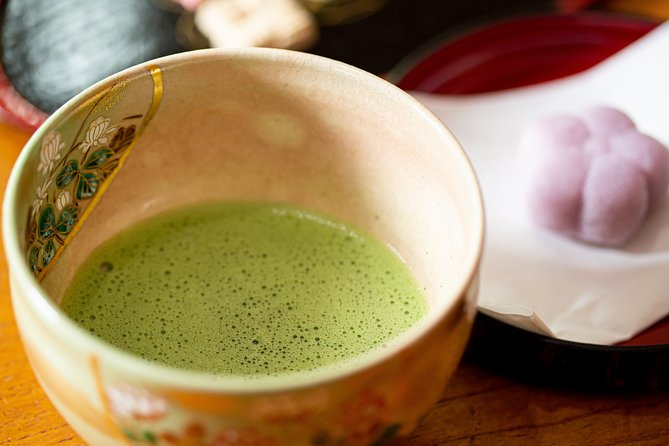
- Okinawan and Japanese sweets: Taste sweets before the bitter matcha, following the traditional order.
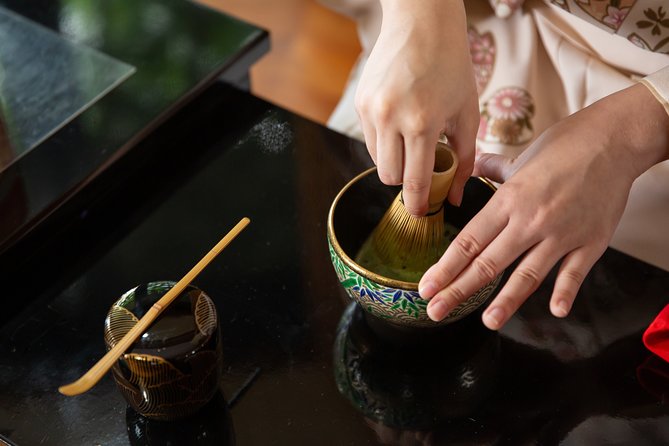
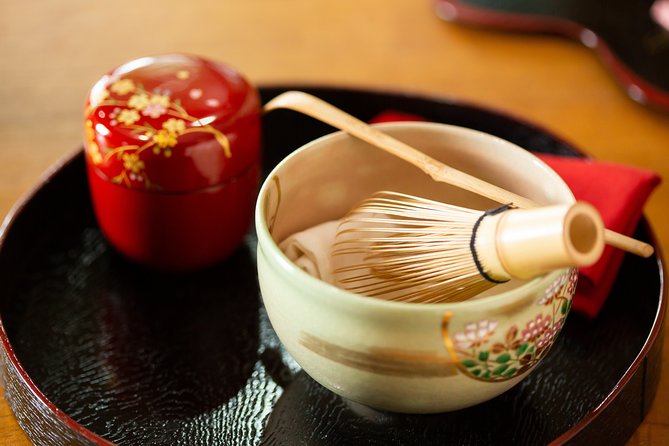
- Make your own tea: Handle the silk cloth, clean the utensils, add hot water, and prepare matcha yourself.
- Short, focused visit: The full experience lasts about 1 hour and 15 minutes at Sasagirian in Onna.
A real tea room in Okinawa
Okinawa is famous for beaches, island food, and the legacy of the Ryukyu Kingdom. This experience gives you a quieter way to connect with Japanese culture, in a traditional tea room that the activity describes as unusual to find elsewhere in Okinawa.
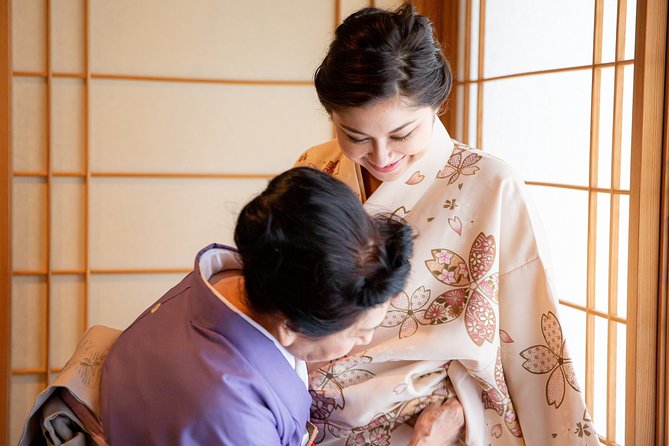
You begin by changing into a simple kimono. This is not a long costume session or a full day of formal dress. It is a practical introduction that sets the mood and gives you a memorable photo opportunity without taking over the visit.
The ceremony starts in the tea room itself. One of the first lessons is how to enter through the small entrance. In tea culture, this low doorway is not merely a design feature. It encourages everyone to bow and leave ordinary status at the threshold. You do not need prior knowledge of tea etiquette. The instructor explains what to do as you go.
The room also gives you a chance to notice details that are easy to miss in a quick cultural demonstration. You learn to appreciate the hanging scroll, flowers, and tea utensils. The experience treats these objects as part of the ceremony, not as decoration added for a photo.
More tea ceremonies in Okinawa:
- Kyoto: Tea Ceremony in a Traditional Tea House in Kiyomizu
★ 4.9 · 3,519 reviews - Kyoto: Tea Ceremony Ju-An at Jotokuji Temple
★ 4.9 · 3,207 reviews - Kyoto: 45-Minute Tea Ceremony Lesson Experience
★ 4.3 · 2,378 reviews
Why the Ryurei-style room matters
After the initial tea-room lesson, you move to a Ryurei-style setup. This means the tea ceremony is arranged around tables and chairs rather than requiring you to kneel or sit on the floor.
That change matters more than it may sound. Traditional Japanese tea ceremonies can be physically demanding if you have stiff knees, limited mobility, or simply are not used to sitting in a formal position. The activity specifically says you can participate even if you cannot sit up, making the chair-based portion an important practical feature.
The format also works well for families. Children over four can participate, and the experience has been enjoyed by groups spanning adults in their fifties and children as young as 11. Children under three are not permitted, so this is not a suitable activity for toddlers.
The total group is small. The supplied details give a maximum of six people in one place and eight in another, so I would ask Sasagirian to confirm the exact limit for your date. Either way, this is designed as a personal lesson rather than a large demonstration.
Sweets first, matcha second
The food part follows a clear rhythm. You first taste Japanese and Okinawan sweets, then drink the bitter green tea. That order is not just a pleasant snack break. The sweetness prepares your palate for matcha, whose grassy, bitter flavor can surprise first-time drinkers.
The Okinawan sweets are the detail that makes this more than a standard tea presentation. You get a small taste of local culture alongside the broader Japanese tradition. The supplied information does not identify the exact sweets, so do not book this expecting a full meal. Think of them as a carefully chosen accompaniment to the tea.
I like this sequence because it gives you something immediate to enjoy while the instructor explains the ceremony. If you are new to matcha, the sweets make the first sip easier. If you already drink matcha, you can focus more on the preparation and the meaning behind each movement.
Learning the tools, one movement at a time
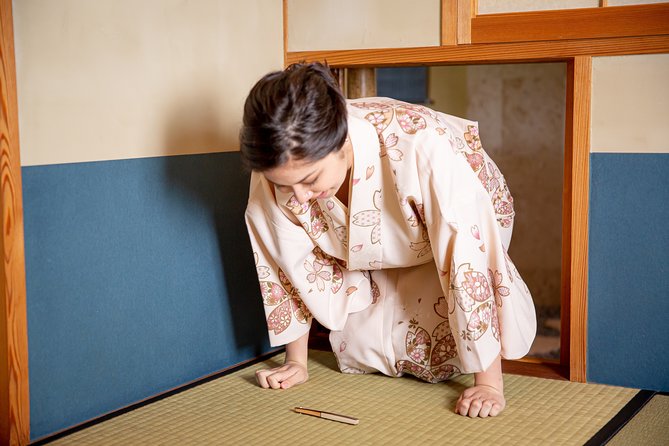
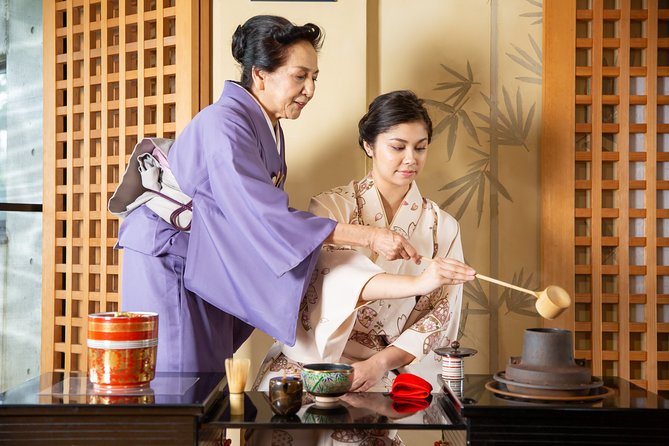
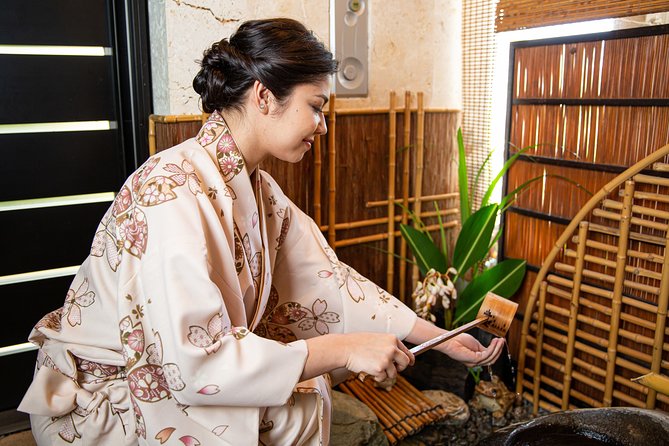
The practical lesson continues with the silk cloth and tea utensils. You learn how to handle the cloth and cleanse the tools. These gestures may look small, but they are central to the ceremony’s sense of care.
The instructor introduces each utensil and explains how it is treated. You are not expected to memorize a complicated set of rules. Instead, you get a guided look at the order and purpose of the movements. This is a good balance for a short activity: enough structure to feel authentic, without turning the visit into a lecture.
The tea master leads the ceremony, and a translator helps explain what you do not understand. That arrangement is useful because tea ceremony depends on quiet gestures and precise instructions. You will want to pay attention as the demonstration unfolds, then follow along when it is your turn.
The atmosphere is intended to be peaceful. The flowers, artwork, clothing, utensils, and attention to nature all contribute to that calm. If you prefer fast-paced sightseeing, the measured pace may feel slow. If you want an hour away from Okinawa’s busier resort activities, it is likely to suit you well.
More kimono rentals in Okinawa:
- Traditional Japanese Costumes “Kimono”, “Yukata”, “Ryuso”, “Photograph Course “Hair Set & Lipstick & Kimono & Photography”
★ 5.0 · 17 reviews - Walking around town in a kimono, you can choose your favorite kimono from the traditional Okinawan costumes “Ryuso”, “Kimono”, “Yukata” 《Hairset & Lipstick & Kimono & Rental Fee》All Comic Book
★ 4.5 · 14 reviews - Kimono Tea Ceremony at Kyoto Maikoya, NISHIKI
★ 5.0 · 911 reviews - Kyoto: Kimono Rental with Hairstyling and Accessories
★ 4.8 · 653 reviews
Preparing your own bowl of matcha
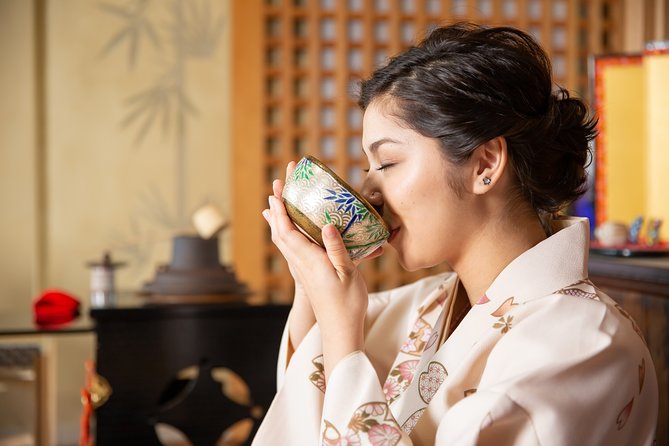
The most satisfying part comes near the end, when you make your own green tea. You add matcha powder and hot water to the tea bowl, then prepare the drink under instruction.
This hands-on step gives the experience a clear payoff. You are not only watching a tea master perform. You learn how the utensils work, repeat the process yourself, and then taste the tea you made.
Expect matcha to taste bitter and vegetal, especially if this is your first cup. The sweets come first for a reason. The drink is not prepared like a sugary café beverage, and the point is to appreciate its flavor and the method behind it.
The lesson is suitable for beginners because the instructor walks you through the process. Still, you should take care with the utensils and hot water, particularly when attending with children. The minimum age is four, but young children will need close adult attention during this portion.
The final photo and what the hour feels like
Before changing out of the kimono, you have time to take photos in front of a gold folding screen. This gives you a keepsake from the visit without making photography the main event.
The photo stop works best at the end because you have already learned the ceremony and can relax a little. You can take a family picture, a portrait in the kimono, or a simple record of the setting. The supplied details do not promise professional photography, so plan to use your own phone or camera.
After the photos, you change back into your regular clothes. The entire visit lasts about 75 minutes, including the kimono change, room introduction, sweets, tea lesson, matcha preparation, and final photos. That makes it easy to fit into a day based around Onna’s other sights.
Because the experience begins and ends at Sasagirian, you will not spend part of the booking moving between several stops. The meeting point is Japanese Cultural Experience Facility Sasagirian, at 1765-8 Nakama, Onna, Kunigami District, Okinawa 904-0401. It is described as near public transportation, and a mobile ticket is available.
The value of $85.39 per person
At $85.39 per person, this is not a cheap cup of tea. You are paying for a guided cultural lesson, use of a traditional setting, a simple kimono, sweets, instruction with the utensils, your own matcha preparation, and a small-group visit.
The value depends on what you want from Okinawa. If your priority is food quantity, scenic views, or a full-day activity, this will not be the best use of your money. The visit is short, and the sweets are part of the ceremony rather than a substantial refreshment.
I think the price is easier to justify for a first-time visitor who wants a structured cultural experience without committing half a day. The kimono, traditional room, translator, and hands-on tea preparation give you several distinct parts in one booking. A family or couple can also share the lesson, rather than simply watching a staged performance.
The small group adds value, since the instructor can guide each person through the tools and tea-making process. Confirm the exact maximum group size before booking, since the supplied information lists both six and eight. You should also reserve at least three days ahead. The experience is commonly booked about 22 days in advance, so last-minute plans may have fewer available times.
Who should book the Sasagirian ceremony
I would recommend this to you if you want a calm, indoor cultural activity with a clear beginning and end. It suits first-time visitors to Japan, families with children over four, couples, and anyone curious about matcha but unsure how a tea ceremony works.
It is also a good choice for people who cannot sit comfortably on the floor. The Ryurei-style tables and chairs remove one of the biggest physical hurdles found in traditional tea settings.
You should think twice if you dislike formal manners, quiet instruction, or bitter tea. The experience asks you to slow down and pay attention. It is not a loud entertainment show, and the tea is not sweetened to suit a Western café palate.
The translator is an important part of the visit for anyone who does not understand Japanese. You can follow the lesson more easily when the tea master’s movements are paired with explanations, though the exact translator’s name is not provided.
Booking details and weather concerns
Confirmation is provided when you book, and the mobile ticket makes arrival simple. The activity begins and ends at the same Onna meeting point, so check your route carefully before setting out.
You must reserve at least three days before the experience. The standard cancellation rule allows a full refund if you cancel at least 24 hours before the start time. Cancellations or changes made inside that window are not accepted for a refund.
The activity also requires good weather. If poor weather causes a cancellation, you will be offered another date or a full refund. That policy is worth noting even though much of the ceremony takes place indoors, because your transport to Sasagirian may still depend on road conditions.
Should you book it?
Book this experience if you want more than a quick photo in a kimono. You will learn how to enter the tea room, understand the meaning of its objects, taste local and Japanese sweets, handle the utensils, and make matcha yourself.
At 75 minutes, it is compact enough for a busy Okinawa schedule. The price is fair if you value personal instruction and a traditional setting, but less appealing if you want a large meal or a long activity.
For the best fit, reserve ahead, confirm the six-person or eight-person capacity, and allow time to reach Sasagirian in Onna. If those details work for your plans, this is a thoughtful way to add Japanese tea culture to an Okinawa trip.
FAQ
Where does the tea ceremony take place?
It takes place at Japanese Cultural Experience Facility Sasagirian, 1765-8 Nakama, Onna, Kunigami District, Okinawa 904-0401, Japan.
How long does the experience last?
The experience lasts approximately 1 hour and 15 minutes.
Do I wear a kimono during the activity?
Yes. You change into a simple kimono at the beginning, take photos in front of a gold folding screen near the end, and change back afterward.
Can I participate if I cannot sit up?
Yes. The activity states that you can participate even if you cannot sit up. Part of the ceremony uses a Ryurei-style arrangement with tables and chairs.
Are children allowed to participate?
Children over four can participate. Children under three are not permitted.
How far in advance must I reserve?
A reservation is required at least three days before the experience. The activity is booked, on average, 22 days in advance.
What happens if I need to cancel?
You can receive a full refund if you cancel at least 24 hours before the local start time. Cancellations or changes made less than 24 hours before the start are not accepted, and poor-weather cancellations offer a different date or a full refund.
Just added around Okinawa
- Blue Cave Private Snorkeling with Photoshoot★ 4.5 · 49 reviews
- Blue Cave Area Experience Diving!Free feeding & photo images Chinese guide available!1 group with a dedicated instructor★ 4.5 · 89 reviews
- [Okinawa Blue Cave] Snorkeling with Private Guide+ Free Photos★ 5.0 · 127 reviews
- Okinawa: Kayak Mangroves & Ocean Native-English Private Tour★ 5.0 · 66 reviews
- Blue Cave Introductory Dive–Private Guide, Boat Tour&Free Photos★ 5.0 · 34 reviews
- Okinawa Jungle Trails & Waterfalls – Private Yanbaru Tour★ 5.0 · 43 reviews
- Exclusive Private Full Day Okinawa Island Tour with a Local Guide★ 5.0 · 16 reviews
- Okinawa: Kayak & Snorkel, Private Tour in Yanbaru★ 5.0 · 18 reviews
Okinawa Tours, compared.


North Okinawa Sightseeing Tour & Churaumi Aquarium
Read our review →
From Naha: Kerama Islands 1-day snorkeling tour
Read our review →

Naha, Okinawa: Keramas Island Snorkeling Day Trip with Lunch
Read our review →![[Miyako Island/Half Day] Sea Turtle Snorkeling](https://media3.thejapanesetraveller.com/wp-content/uploads/miyako-island-half-day-sea-turtle-snorkeling-400x267.jpg)


Snorkeling in the Blue Cave area【Okinawa Prefecture: Free feeding & photo images!English and Chinese speaking guide available!
Read our review →Browse the lists this tour appears in