
Reviewed · TAKAYAMA TOURS
Takayama: Edo-Period Old Town Walking Tour
Takayama’s old town makes a strong first impression, but its dark wooden buildings and tidy lanes tell a better story once you know what to look for. This 45-minute walk explains how trade, craftsmanship, daily work, and town planning shaped an Edo-period merchant town without leaning on castle drama or samurai legends.
I like the clear historical frame and the way ordinary sights become useful clues. I also like the short format: you can fit it near the start of your day and use the rest of your time to explore on your own.
The main drawback is the price for such a brief outing. At $43 per person, you are paying for context rather than a long walk, and one published account describes a tour of only about 20 minutes with weak English. Guide quality and timing matter here.
Key points at a glance
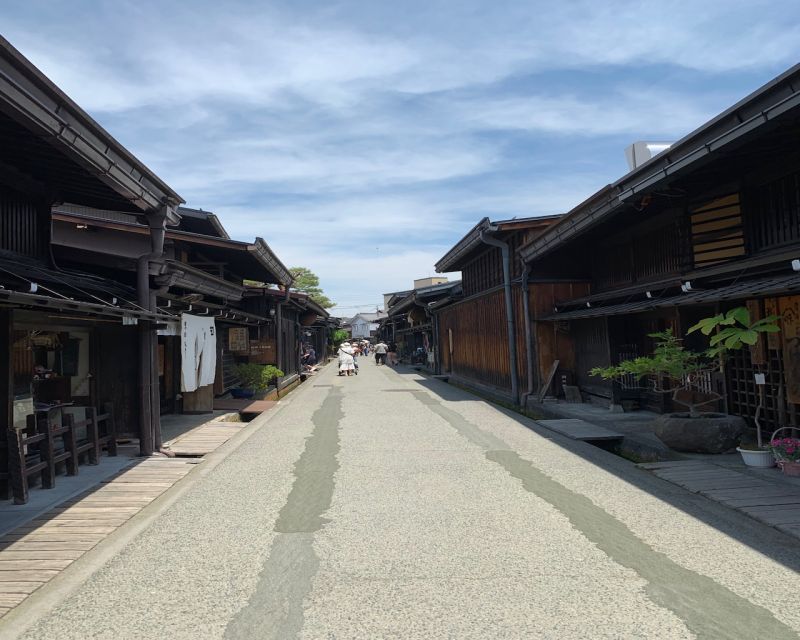
- Edo-period merchant town: Learn why Takayama grew through trade and craft rather than castle power.
- Everyday details explained: Town layouts, buildings, and local customs take on new meaning with a guide beside you.
- Short and easy to fit in: The listed walk lasts about 45 minutes and may run slightly longer for questions.
- English-led experience: Tours are usually conducted in English, with Yamma praised by name in one account.
- Rain-or-shine plan: You should be ready to walk in changing weather, since the tour runs in all conditions.
- Useful opening orientation: Take the walk early, then return to the streets and sights with a better sense of place.
Why Takayama makes a good history walk
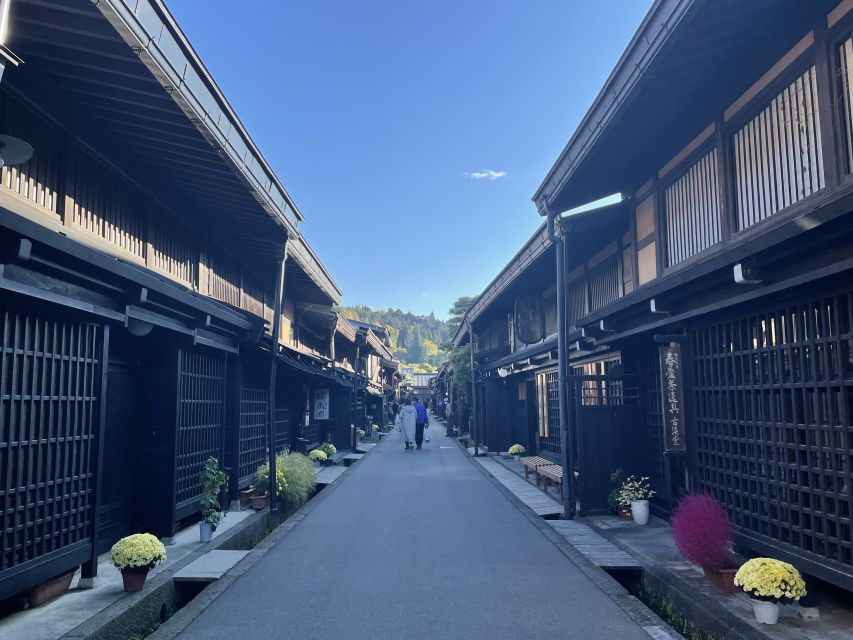
Takayama is a useful reminder that old Japan was not built only around castles, temples, and military families. Its character grew from work. Merchants traded, craftspeople made goods, and residents shaped a town around daily needs.
That gives this walk a practical focus. Instead of racing from one famous building to another, you learn how the town functioned. You hear why streets were arranged as they were, how commerce affected the buildings, and what local customs reveal about life in the Edo period.
I find this approach helpful because Takayama’s old town can otherwise feel almost too polished. The preserved streets are handsome, but a row of traditional buildings does not explain itself. A guide gives you the human layer behind the wood, lanes, shopfronts, and town plan.
The walk also reaches briefly before and after the Edo period. That wider frame matters. You get a basic sense of how Takayama developed, while the main attention stays on the period that shaped the old town you see today.
More walking tours in Takayama:
- Explore Kiso Valley : Magome – Tsumago Mountain Trail Walk
★ 5.0 · 33 reviews - Takayama: Takayama Jinya & Old Town Private Walking Tour
★ 4.5 · 32 reviews - Takayama: Private Walking Tour with a Local Guide
★ 4.6 · 29 reviews
Starting near the Tours & Activities sign
The meeting point is in front of the Tours & Activities sign board. To find it, search happyplus in Google Maps. This is worth doing before you leave your hotel, since a clear meeting point can save more time than you expect in a compact but unfamiliar town.
The supplied details do not give a full street-by-street route or a fixed list of buildings. That means you should think of this as a guided orientation through the old town, not a ticketed tour of several interiors. Your guide leads you through the streets and explains the setting as you go.
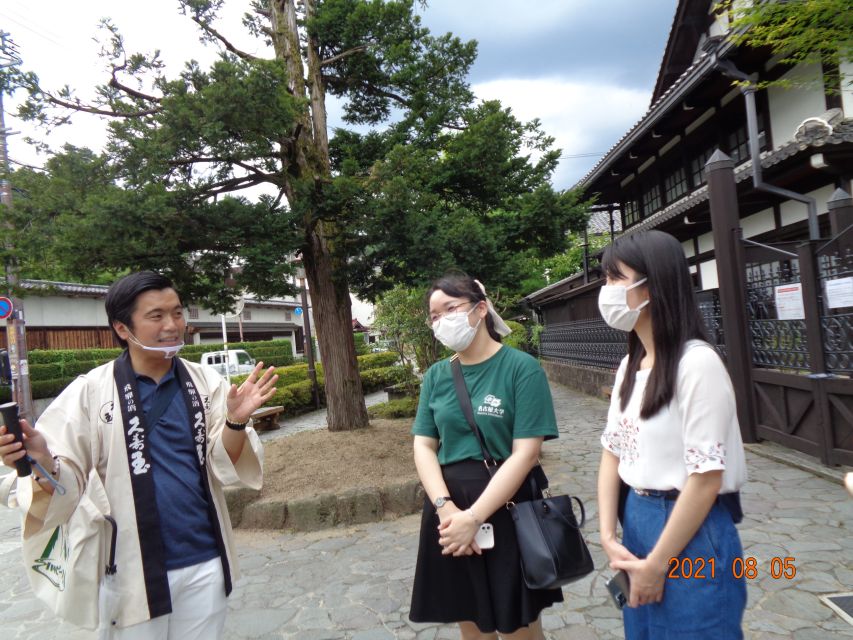
The tour is usually in English. A guide named Yamma received especially warm praise for being engaging and well informed, and another account describes a guide moving between Japanese and English while sharing plenty of information. Those comments suggest that the right guide can make the short format work very well.
At the same time, language ability is an important consideration. One unhappy account describes poor English and a walk lasting around 20 minutes. That is not the general picture suggested by the 4.5 rating from 22 ratings, but it is a fair warning: this experience depends heavily on the individual guide and the actual time spent walking.
Reading Takayama through its merchant streets
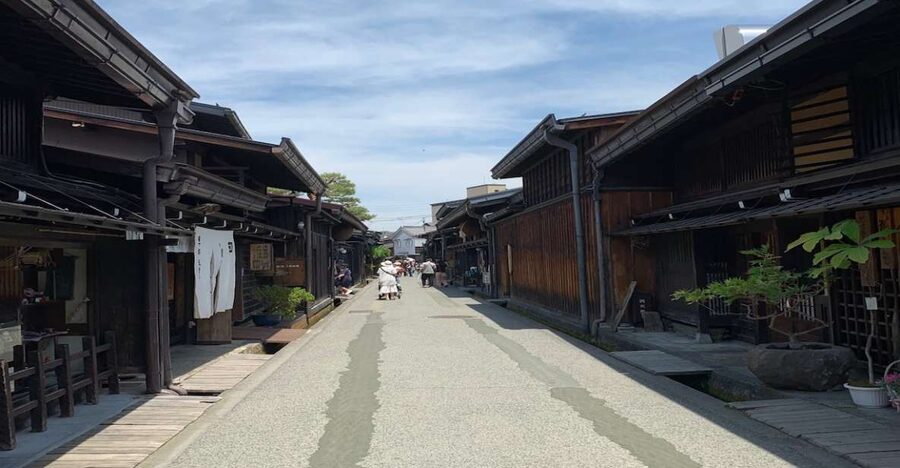
The first major idea is Takayama’s role as a merchant town during the Edo period. You learn that its growth came from trade, craftsmanship, and ordinary economic activity, not from being a grand seat of castle rule.
That distinction helps you compare Takayama with other Japanese historic towns. You are not being asked to search every view for a samurai connection. Instead, you look at how merchants and craftspeople shaped the place, and how the town’s buildings supported work and movement.
A good guide can turn a simple street view into a small lesson in town planning. The position of buildings, the way streets run, and the relationship between public space and private work all become part of the story. You may have walked past these details already without knowing what they mean.
The tour also addresses daily life. That broad phrase is useful here because it keeps the talk grounded. You learn about how people lived and worked, how trade affected the town, and how local customs fit into the setting. The goal is not to load you with dates. It is to help you remember a few ideas that stay useful after the tour ends.
What the old town reveals when you slow down
The best part of this experience is the change in your attention. Before the walk, you may see an attractive historic street. During the walk, you begin to ask why the street looks this way and what it once needed to do.
Your guide explains the meaning behind details that can look ordinary. That might include the layout of the town, the design and position of buildings, or customs connected with local life. The supplied description does not promise entry into specific homes, shops, or museums, so you should expect explanations from the street rather than a series of indoor visits.
This keeps the tour moving. You are not stopping for long lectures at every point. The stated pace is designed to be accessible, and the short duration should suit you if you prefer a clear introduction instead of a full morning of historical detail.
There is a tradeoff. Forty-five minutes is enough to give you a framework, but not enough to explore every corner of Takayama’s old town. If you already have a strong interest in architecture, social history, or local crafts, you may want more time than this tour provides.
Still, the format works well as a first look. I would rather spend 45 minutes learning how to read a place than spend the same time taking disconnected photographs and leaving without understanding what made the streets worth preserving.
A few more Takayama half-days to weigh up
- Kanazawa: World Heritage Shirakawa-go Morning Guided Tour
★ 4.9 · 988 reviews - Kanazawa: World Heritage Shirakawa-go & Two Local Experience
★ 4.9 · 274 reviews - Kanazawa/Takayama: Shirakawago & Takayama Private Day Tour
★ 4.8 · 172 reviews - Departing from Takayama [Regular sightseeing bus] World Heritage Sites Shirakawago and Gokayama Ainokura
★ 4.5 · 137 reviews
A 45-minute route with room for questions
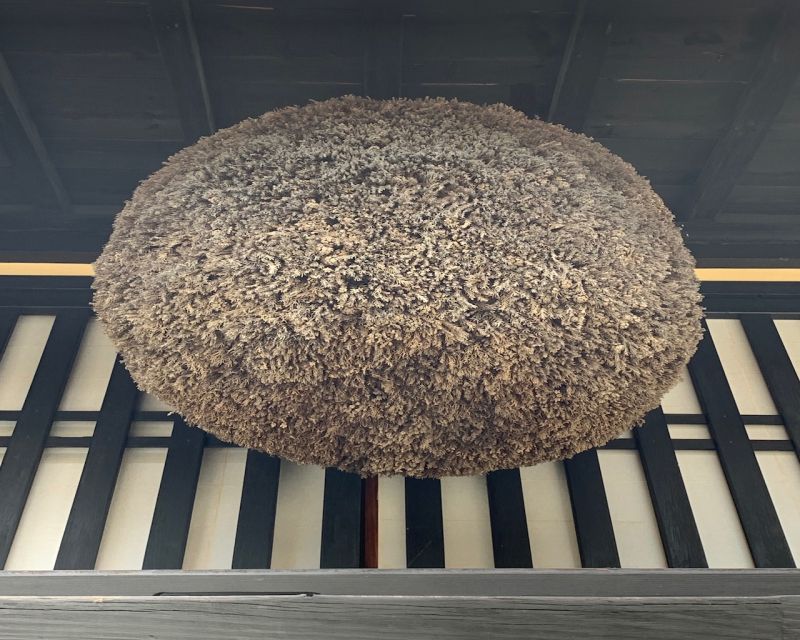
The published duration is approximately 45 minutes. It may run a little longer depending on the flow of the walk and the questions you ask. That small cushion is useful, but you should still avoid booking another activity immediately afterward.
The tour appears designed around a simple progression:
- You meet the local guide near the Tours & Activities sign board.
- You walk into Takayama’s Edo-period old town.
- You receive context on what came before and after the Edo period.
- You learn how trade, crafts, daily life, and planning shaped the streets.
- You examine everyday features that are easy to miss alone.
- You finish with a clearer idea of how to explore the town independently.
Because no fixed stop list is supplied, the precise route can depend on the guide and the pace of the group. That flexibility can be a benefit. A live guide can spend more time on a question or adjust the explanation to the people in front of them.
It also means the experience is less predictable than a tour built around named landmarks. If you need a tightly scripted route, several interior visits, or a guaranteed stop at a particular building, this is probably not the right choice.
Is $43 fair for less than an hour?
At $43 per person, this is not a cheap stroll. The ticket covers a local guide and the walking tour, but not food or drinks. There is no indication of entrance fees or tastings, so you are paying mainly for interpretation and orientation.
The value depends on how you use it. If you arrive in Takayama unsure how to make sense of the old town, the tour can save you from wandering without a plan. It gives you a working set of ideas that you can apply for the rest of your visit.
The value is weaker if you want a long route, many sights, or an extensive history lesson. One positive account called the 45-minute length too short for the price, which is a reasonable concern. You should book this because you want a focused explanation, not because you expect a packed sightseeing program.
I would get the most from it at the beginning of a Takayama stay. After the walk, you can revisit the old streets and notice the details your guide pointed out. That makes the short tour more than a one-time burst of information.
The 4.5 rating from 22 ratings suggests that the experience usually lands well, with several strong comments about organization, cultural insight, and guide quality. But the mixed timing and English feedback means I would keep expectations measured. The guide makes or breaks the value.
Who should book this walk?
This tour suits you if you:
- Are visiting Takayama for the first time
- Want historical context without a long lecture
- Prefer a short walking experience over a full-day program
- Like learning how ordinary buildings and streets work
- Want an English-speaking guide
- Plan to explore the old town independently afterward
- Need a wheelchair-accessible activity
- Have a tight schedule but still want a guided introduction
It is also a sensible choice if you are not usually a history buff. The tour focuses on understandable themes: work, trade, homes, movement, and customs. You do not need to remember a string of rulers or dates to gain something from it.
You may want to skip it if you already know Takayama well, need a longer experience for the price, or prefer food, shopping, or hands-on craft activities. This is a context walk, plain and simple.
Families and mixed-age groups may find the length manageable, although the supplied details do not specify a minimum age or child program. If someone in your group has limited mobility, the activity is listed as wheelchair accessible, but it is still sensible to confirm route details when booking.
Rain, timing, and practical planning
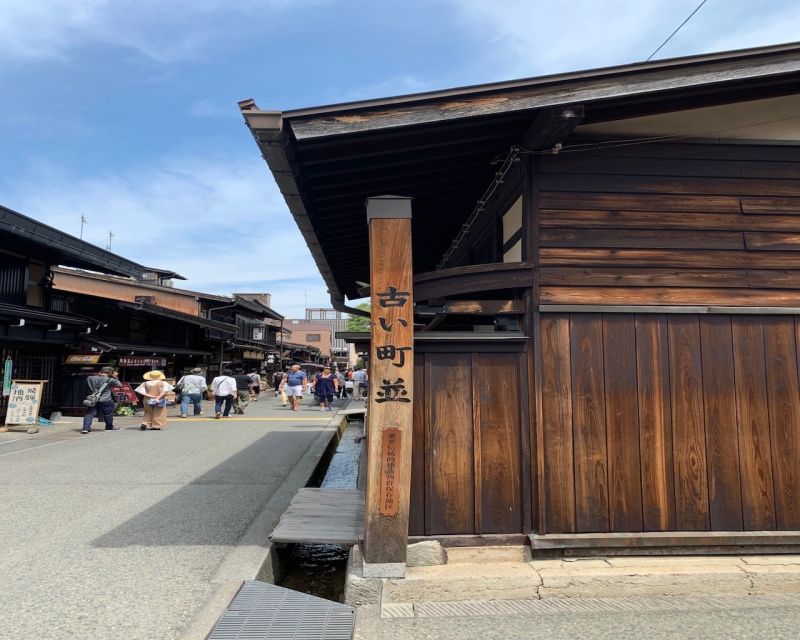
The tour runs rain or shine. Bring suitable clothing and footwear, and do not treat a poor forecast as an automatic cancellation. The old town is experienced on foot, so your comfort will affect how much attention you can give the guide.
Food and drinks are not included. Since the walk lasts about 45 minutes, this is easy to handle before or after the tour. You can keep the activity focused and choose your own meal rather than paying for a bundled stop you may not want.
You can cancel up to 24 hours in advance for a full refund. A reserve-now, pay-later option is also available, which helps if your route through Honshu is still changing.
The tour is listed as wheelchair accessible. That is a useful point for planning, though the exact street surface and route should be confirmed directly if you need detailed accessibility information.
How to make the short tour count
Arrive early enough to find the sign board without rushing. Search happyplus in Google Maps before you set out, and keep the confirmation details handy.
Use the first few minutes to tell the guide what interests you. If you care most about town planning, local customs, merchant life, or craftsmanship, a direct question can help shape the walk. The tour is designed to allow guest questions, and the duration may extend slightly for that reason.
Take mental notes rather than trying to photograph every building. The point is to learn a few patterns: how streets were organized, how work affected the buildings, and how local life shaped the old town. Once you have those patterns, your own exploring becomes more rewarding.
If your guide is Yamma, you may find the engaging style especially helpful, based on the positive account attached to that name. Still, go in ready for a brief orientation rather than a guaranteed long tour. The most practical plan is to schedule this early, leave free time afterward, and use the old town itself as the second half of the experience.
Should you book Takayama’s Edo-period walk?
Book it if you want a short, English-led introduction that explains why Takayama looks and feels different from other old Japanese towns. The strongest reasons are the clear focus on merchant life, the attention to everyday details, and the chance to get your bearings before exploring alone.
Think twice if $43 feels high for 45 minutes, or if you expect a detailed itinerary with many named stops and indoor visits. The mixed feedback about length and English is important, even alongside the strong overall rating.
My advice is to treat this as a useful orientation, not a complete Takayama sightseeing day. Take it early, ask questions, and then spend time walking the streets again on your own. For the right kind of visitor, that simple two-part plan gives the tour its value.
FAQ
Where does the tour meet?
Meet in front of the Tours & Activities sign board. Search happyplus in Google Maps to locate the meeting point.
How long does the walking tour last?
The listed duration is approximately 45 minutes. It may extend slightly depending on the pace of the walk and guest questions.
What language is the tour conducted in?
The tour is usually conducted in English and includes a live English-speaking guide. Other languages may be available upon request.
What does the tour focus on?
It focuses on Takayama’s development as an Edo-period merchant town, including trade, craftsmanship, daily life, town planning, buildings, and local customs.
Does the tour include food or drinks?
No. Food and drinks are not included.
Is the tour wheelchair accessible?
Yes, the activity is listed as wheelchair accessible.
Does the tour run in bad weather?
Yes. Tours take place rain or shine.
Can I cancel the booking?
You can cancel up to 24 hours in advance for a full refund. A reserve-now, pay-later option is also available.
Just added around Takayama
- Private Afternoon Cycling Tour in Hida-Furukawa★ 5.0 · 109 reviews
- Gifu Samurai Sword Town;Japanese Damascus Knife Making Experience★ 5.0 · 27 reviews
- Private-group Morning Cycling Tour in Hida-Furukawa★ 5.0 · 105 reviews
- Short Morning Cycling Tour in Hida★ 5.0 · 17 reviews
- Magome & Tsumago Nakasendo Full-Day Private Trip with Government-Licensed Guide★ 5.0 · 20 reviews
- Magome & Tsumago Nakasendo Trail Day Hike with Government-Licensed Guide★ 5.0 · 38 reviews
- Frozen fall trekking★ 5.0 · 21 reviews
- Explore Kiso Valley : Magome – Tsumago Mountain Trail Walk★ 5.0 · 33 reviews
Takayama Tours, compared.
World Heritage Shirakawa-go Morning Guided Tour
Read our review →
World Heritage Shirakawa-go & Two Local Experience
Read our review →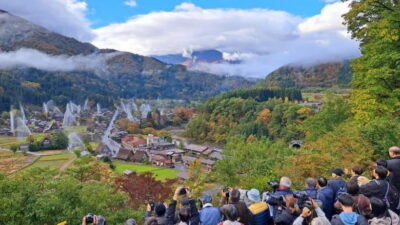
Kanazawa/Takayama: Shirakawago & Takayama Private Day Tour
Read our review →![Departing from Takayama [Regular sightseeing bus] World Heritage Sites Shirakawago and Gokayama Ainokura](https://media3.thejapanesetraveller.com/wp-content/uploads/departing-from-takayama-regular-sightseeing-bus-world-heritage-sites-shirakawago-and-gokayama-ainokura-400x267.jpg)
Departing from Takayama [Regular sightseeing bus] World Heritage Sites Shirakawago and Gokayama Ainokura
Read our review →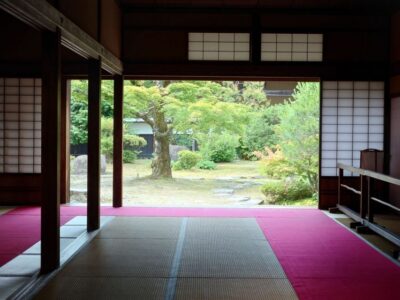
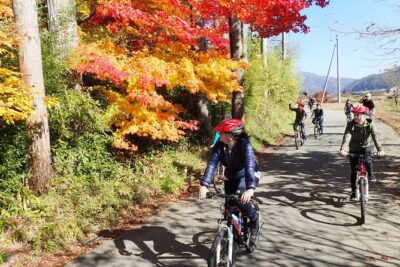
Private Afternoon Cycling Tour in Hida-Furukawa
Read our review →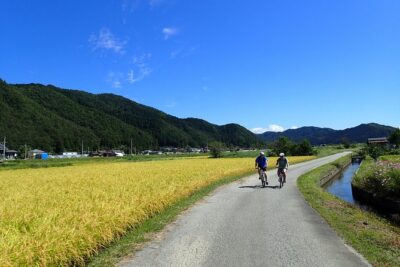
Private-group Morning Cycling Tour in Hida-Furukawa
Read our review →
Onigiri and miso soup making at a buddhist temple
Read our review →Browse the lists this tour appears in