
Reviewed · TAKAYAMA TOURS
Private Afternoon Cycling Tour in Hida-Furukawa
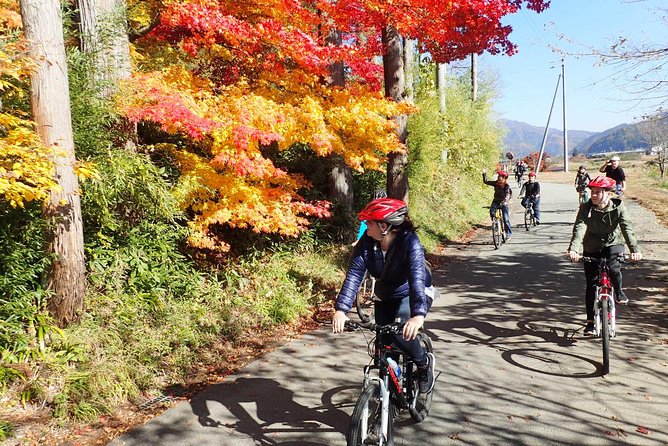
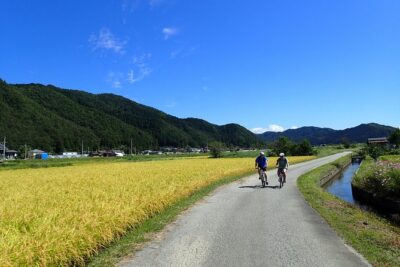
Hida-Furukawa’s best moments may come after you leave its handsome old streets behind. This 22-kilometer ride follows canals, farm roads, rice fields, shrines, and village lanes where daily life carries on at an easy rural pace.
I like the relaxed route and the chance to stop at a local vegetable market, and I like that guides such as Ayato, Hisa, Nanami, and Kazuki adjust the pace to the group. The main drawback is weather: rain has caused some tours to end early, so this is an outdoor experience with no promise of a full ride in poor conditions.
The tour costs $214.48 per person, which is not a bargain for a bicycle outing. Still, the guide, quality bike, helmet, insurance, snacks, and several hours of local interpretation make it a reasonable choice if you want access to countryside you would probably miss on your own.
Key points to know before you book
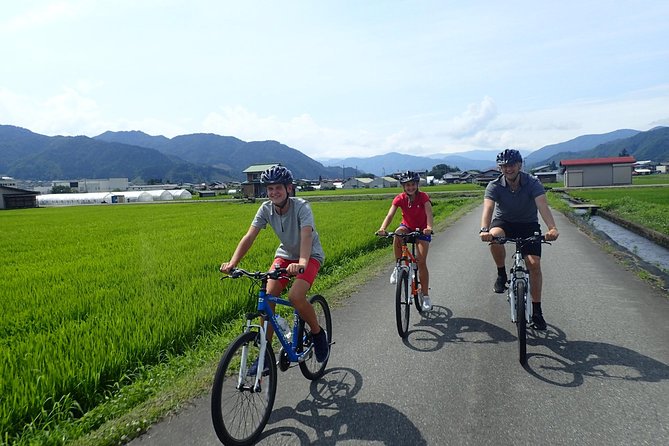
- A 22-kilometer route leaves Hida-Furukawa’s old town for rice fields and farming villages.
- The ride is designed for a relaxed pace, not athletic cycling or steep mountain riding.
- Groups are limited to eight people, and the activity is presented as private for your party.
- Guides tailor the pace to children and less-confident cyclists when possible.
- The local market, canals, folk houses, shrines, and Satoyama scenery give the ride a strong sense of place.
- You need to be at least 6 years old and 125 centimeters tall, about 4.1 feet.
Leaving the old town at 2 p.m.
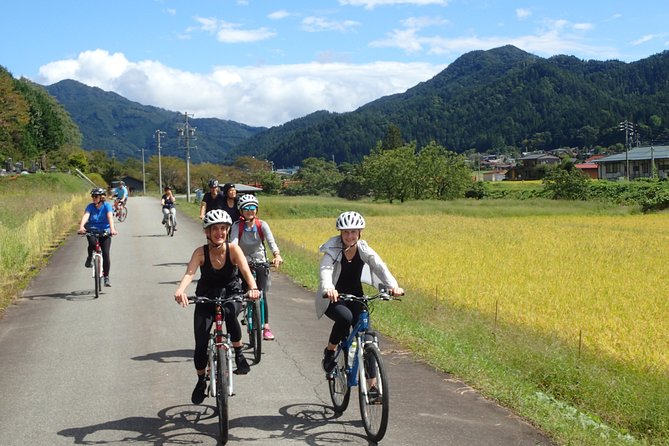
You meet at the local operator’s Furukawa office at 11-32 Furukawachō Ninomachi. The afternoon departure is scheduled for 2 p.m., and the tour returns to the same place after about three and a half hours.
That timing works well if you spend the morning in Takayama or Hida-Furukawa. You can have lunch first, then trade crowded sightseeing streets for a quieter ride through the surrounding countryside. The late start also gives you time to reach the meeting point by train or other public transport, since the office is near public transportation.
At the start, you meet your guide, receive a bicycle and helmet, and get ready for the route. Insurance and local taxes are included, as are snacks. A useful detail: the bikes do not have baskets, so keep your belongings light and secure.
The tour is capped at eight people. The booking information describes it as a private activity, meaning only your group participates. However, one past group described riding with six strangers, so I would confirm the exact arrangement with the operator if a fully exclusive outing matters to you.
More bike days around Takayama:
- Private-group Morning Cycling Tour in Hida-Furukawa
★ 5.0 · 105 reviews - Short Morning Cycling Tour in Hida
★ 5.0 · 17 reviews - Hidden Kyoto E-Biking tour
★ 5.0 · 1,843 reviews
Hida-Furukawa’s canals and old streets
The first section introduces you to Hida-Furukawa itself. The town is known for graceful old streets, traditional buildings, and narrow waterways. Rather than simply walking past these details, you get a guide who can explain how the town works and why familiar features matter.
One especially interesting local detail concerns the koi fish in the canals. A guide may explain why they are kept there, turning an ordinary town waterway into a small lesson in local customs and practical life.
This is one of the tour’s strongest features. You are not just pedaling past attractive buildings. You are given enough context to understand the relationship between the town, its water, its homes, and its farming culture.
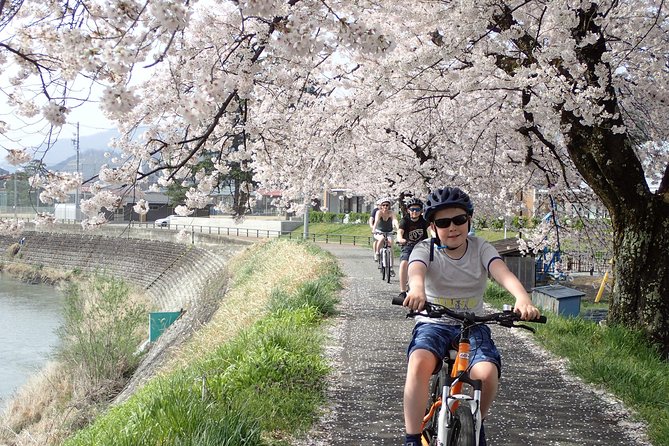
The pace is described as easy, and that matters here. You have time to look around, listen, and stop for photographs instead of treating the route like a timed cycling challenge. Guides have also adjusted the ride for families and for people returning to cycling after many years away.
Still, easy does not mean completely effortless. You cover about 22 kilometers, so you should be comfortable spending several hours on a bicycle. The supplied information says most people can participate, but the minimum age and height rules are important for children.
The market and the everyday side of Hida
A stop at a local farmer’s market adds a practical touch to the afternoon. You may see local vegetables arranged for sale, an ordinary scene that gives you a better sense of the area than another major attraction would.
The market also helps connect the countryside to the food on local tables. Your guide can explain what you are seeing and point out details that would be easy to miss if you were passing through alone.
This is the kind of stop I value on a rural tour. It is not built around a grand monument. It shows you how the place functions, what people grow, and how local produce enters daily life.
The market stop may also provide a natural break from cycling. The experience includes snacks, but food and drinks beyond that are not included. Plan accordingly, especially if you are traveling with children or tend to need regular refreshments.
Rice fields, farm roads, and Satoyama views
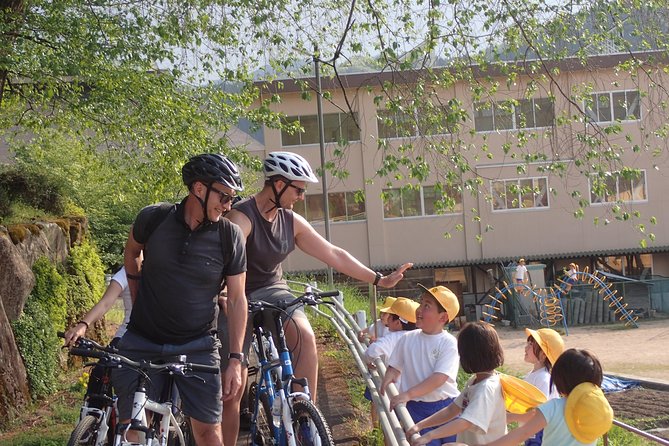
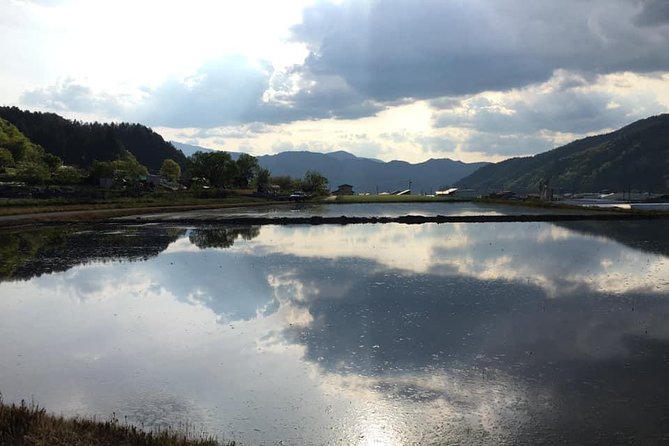
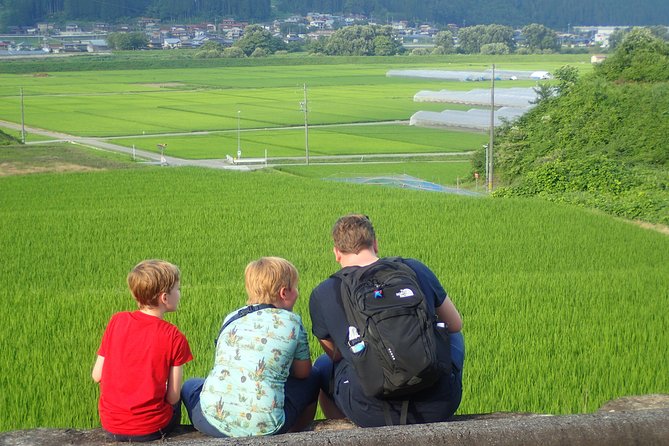
After the old town, the route opens into the Hida countryside. Rice fields spread across the valley, backed by mountains, while large old folk houses appear among the farms. This is the visual heart of the tour.
The Japanese idea of Satoyama describes a lived-in rural setting where woodland, fields, waterways, and villages meet. Here, it is not just a scenic label. You see working farmland, village homes, local roads, and the quiet pattern of life beyond the main sightseeing centers.
Spring, summer, and autumn will likely give the ride different moods, though the supplied details do not specify a best season. One past visitor suggested returning in another season for a different experience. That is a fair point: farmland changes through the year, so the same route may look quite different from one visit to the next.
The route is especially appealing if you have already seen Takayama’s central sights and want a slower look at the wider Hida region. You are not being rushed from one famous stop to another. The countryside itself is the main attraction.
Your guide adds the meaning. Guides have discussed local culture, nature, wildlife, customs, and the region’s history during the ride. You might learn about local animals, farming practices, or why particular buildings and waterways look the way they do.
A few more Takayama half-days to weigh up
- Kanazawa: World Heritage Shirakawa-go Morning Guided Tour
★ 4.9 · 988 reviews - Kanazawa: World Heritage Shirakawa-go & Two Local Experience
★ 4.9 · 274 reviews - Kanazawa/Takayama: Shirakawago & Takayama Private Day Tour
★ 4.8 · 172 reviews - Departing from Takayama [Regular sightseeing bus] World Heritage Sites Shirakawago and Gokayama Ainokura
★ 4.5 · 137 reviews
A guide makes the difference
The bicycles are only half the experience. The guide determines how comfortable, interesting, and flexible the afternoon feels.
Ayato has been praised for explaining Japanese culture and nature with enthusiasm. Hisa has adapted routes to the group’s cycling ability and children’s ages, while also helping families feel welcome. Kazuki has supported a cyclist who had not ridden in more than 20 years, helping that person regain confidence while keeping safety in view.
Nanami has led tours focused on local history, wildlife, traditions, shrines, and the farming area. Marino has guided rides around rice fields and surrounding villages. These names are useful because the company uses several guides, and your guide may not be the person you expect.
The consistent strength is local interpretation delivered during the ride. You get conversation rather than a long formal lecture, with opportunities to ask questions and pause for photos.
That personal approach is also why the eight-person limit matters. A large group would make it harder to hear explanations, cross village roads together, or adjust the pace. With a small group, the guide can respond to your comfort level and interests.
How difficult is the 22-kilometer ride?
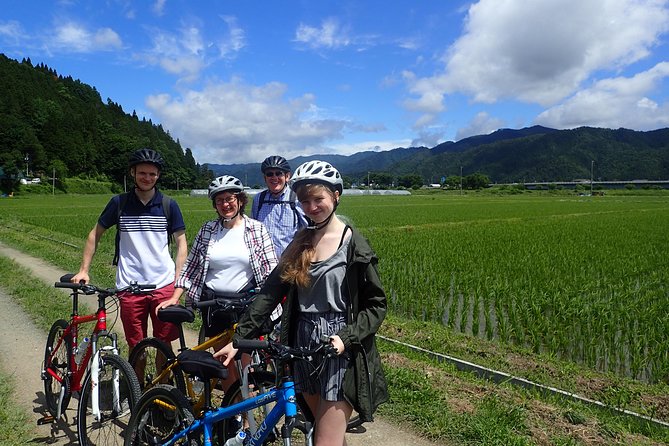
The tour is marketed as a relaxed balance of exercise and rest. Several accounts describe it as easy, and one family completed it with children ages 7 and 9. Another cyclist who had not ridden for two decades found the guide’s support helpful.
I would still take the distance seriously. Twenty-two kilometers is manageable for many people, but it is not a quick spin around town. You should be comfortable riding for a few hours, even at a gentle pace.
The information does not provide details about gears, hills, road surfaces, or electric bicycles. Do not book this expecting a technical description of the route or a mountain-bike adventure. The emphasis is on countryside access, scenery, and conversation.
Children must be at least 6 years old and 125 centimeters tall. Most people can participate, but the operator’s height rule suggests that a child’s ability to reach the pedals and handle the bicycle safely matters more than age alone.
If you are unsure about your fitness, contact the operator before booking. The guides have shown flexibility, but the published route remains about 22 kilometers.
What is included, and what should you bring?
The price covers:
- A local guide
- Bicycle use
- Helmet use
- Insurance
- Local taxes
- Snacks
You pay separately for food and drinks. Since there is no basket on the bicycle, carry only what you need in a small bag that stays secure while riding.
Wear clothing suitable for cycling and shoes you can pedal in comfortably. The supplied information does not give a clothing list, rental options, or a luggage-storage policy, so ask the operator if you have bulky bags or special equipment.
Rain is the main practical concern. One tour ended early because of wet weather, though the guide continued by showing the group the town and museums. That kind of backup may not be guaranteed, so check the forecast and bring suitable rain protection if conditions look uncertain.
The tour includes insurance, but that should not be treated as a substitute for sensible riding. Follow the guide’s instructions, especially around village roads and other riders.
Is $214.48 a fair price?
At $214.48 per person, this is a premium half-day activity. You can rent a bicycle more cheaply, and you can see parts of Hida-Furukawa without a guide.
The difference is access and interpretation. A rental gives you wheels. This tour gives you a planned 22-kilometer route, a bicycle and helmet, insurance, snacks, and a local person who can explain the canals, markets, folk houses, farming areas, wildlife, and customs.
The value is strongest for first-time visitors who do not know the rural roads. It is also strong for families who prefer a prepared route and for couples who want a social, active afternoon without organizing every turn themselves.
The price is harder to justify if you are an experienced cyclist who already knows the region, wants to ride independently, or has only a short time in Hida-Furukawa. You are paying for the guide’s local knowledge and the ease of having the afternoon arranged.
Group discounts are available, which may improve the cost for a larger party. Since availability is limited and the experience is often booked well ahead, planning matters. The average booking lead time is listed as 139 days, a sign that you should not wait until the last minute during a busy period.
Who will enjoy this afternoon most?
I would recommend this ride to:
- Families with children who meet the age and height requirements
- Couples wanting a quiet break from city sightseeing
- Visitors staying in Takayama or Hida-Furukawa
- People interested in ordinary rural life rather than only famous sights
- Casual cyclists who prefer a gentle pace
- Anyone who wants local stories while seeing the countryside
It is less suitable for someone seeking a hard workout, a fast road ride, or a detailed cycling specification before booking. It may also disappoint if rain is likely and your schedule cannot handle an early finish.
The tour’s appeal comes from its balance. You get enough cycling to reach farms and villages, but the guide’s stories and stops keep it from feeling like a fitness session.
Practical planning for the afternoon
Allow time to reach the office before 2 p.m. The meeting point is in Furukawachō Ninomachi, Hida, Gifu, and the activity ends back there.
Because the ride lasts about three and a half hours, avoid scheduling another fixed activity too soon afterward. The route includes stops and conversation, and the return time may vary with the group’s pace and weather.
The activity is offered with mobile ticketing, and confirmation is sent within 48 hours of booking, subject to availability. Free cancellation is available up to 24 hours before the start time. Cancellations or changes made less than 24 hours before departure are not accepted for a refund.
FAQ
Where does the cycling tour start?
The tour starts at 11-32 Furukawachō Ninomachi, Hida, Gifu 509-4235, Japan, at the Furukawa office of the local operator.
What time does the tour begin?
The scheduled afternoon departure time is 2 p.m.
How long does the tour last?
The tour lasts approximately three and a half hours.
How far do you cycle?
The route is approximately 22 kilometers long.
Where does the tour end?
The activity ends back at the meeting point.
What is the maximum group size?
The maximum is eight people per booking. The activity is described as private, with only your group participating.
What is the minimum age and height?
Children must be at least 6 years old and at least 125 centimeters tall, about 4.1 feet.
Is bicycle equipment included?
Yes. Bicycle use, helmet use, insurance, local taxes, and snacks are included. A basket is not attached to the bicycle, and food and drinks are not included.
Should you book the Hida-Furukawa cycling tour?
Book it if you want to see working countryside, rice fields, village homes, and local customs with a guide who can give the scenery meaning. The relaxed pace, small group, family-friendly approach, and strong guiding make it a good match for curious visitors who want more than a quick walk through the old town.
Think twice if the price feels high, you need a guaranteed full ride in any weather, or you want a demanding cycling challenge. For most people, this is best understood as a guided cultural outing on bicycles, not a sporting event. If that sounds like your kind of afternoon, it offers a pleasant and useful way to see the quieter side of Hida.
Just added around Takayama
- Gifu Samurai Sword Town;Japanese Damascus Knife Making Experience★ 5.0 · 27 reviews
- Private-group Morning Cycling Tour in Hida-Furukawa★ 5.0 · 105 reviews
- Short Morning Cycling Tour in Hida★ 5.0 · 17 reviews
- Magome & Tsumago Nakasendo Full-Day Private Trip with Government-Licensed Guide★ 5.0 · 20 reviews
- Magome & Tsumago Nakasendo Trail Day Hike with Government-Licensed Guide★ 5.0 · 38 reviews
- Frozen fall trekking★ 5.0 · 21 reviews
- Explore Kiso Valley : Magome – Tsumago Mountain Trail Walk★ 5.0 · 33 reviews
- Takayama: Takayama Jinya & Old Town Private Walking Tour★ 4.5 · 32 reviews
Takayama Tours, compared.
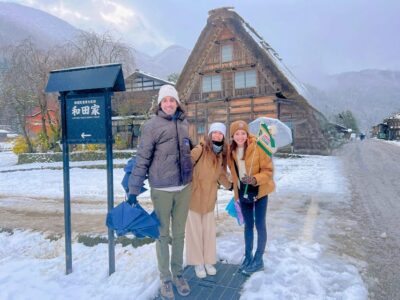
World Heritage Shirakawa-go Morning Guided Tour
Read our review →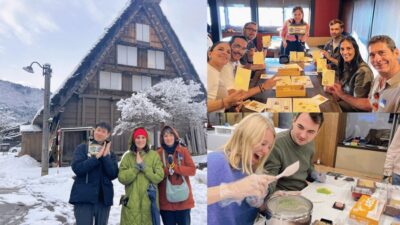
World Heritage Shirakawa-go & Two Local Experience
Read our review →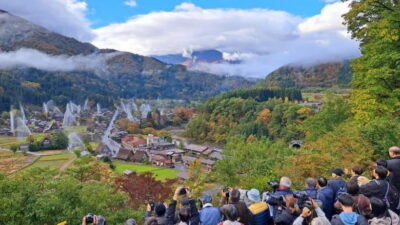
Kanazawa/Takayama: Shirakawago & Takayama Private Day Tour
Read our review →![Departing from Takayama [Regular sightseeing bus] World Heritage Sites Shirakawago and Gokayama Ainokura](https://media3.thejapanesetraveller.com/wp-content/uploads/departing-from-takayama-regular-sightseeing-bus-world-heritage-sites-shirakawago-and-gokayama-ainokura-400x267.jpg)
Departing from Takayama [Regular sightseeing bus] World Heritage Sites Shirakawago and Gokayama Ainokura
Read our review →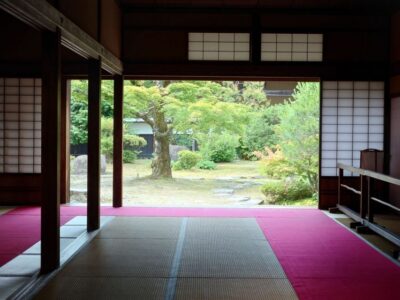
Private-group Morning Cycling Tour in Hida-Furukawa
Read our review →
Onigiri and miso soup making at a buddhist temple
Read our review →
Browse the lists this tour appears in