
Reviewed · TAKAYAMA TOURS
Takayama: Onigiri and miso soup making at a buddhist temple
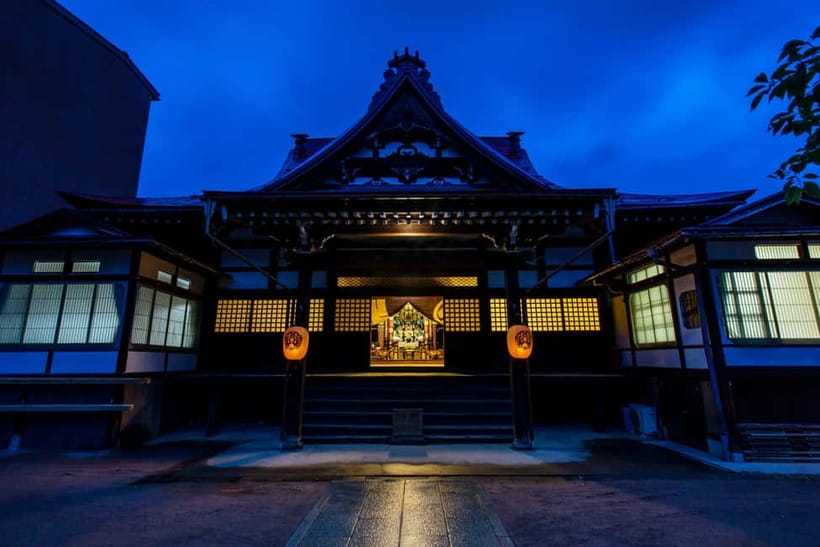
The best part of this Takayama experience is the setting: you make simple Japanese food inside a Buddhist temple kitchen, then eat it in the same calm surroundings. In one hour, you learn to shape onigiri, prepare miso soup, and understand why gratitude matters at the Japanese table.
I like the small-group feel and the clear, patient teaching from instructors including Kazuki and Tama. I also like that the class connects food with Buddhist practice, sometimes beginning with prayer or a moment of respect for the temple’s patron. The one drawback is the short schedule. If you want a long cooking course or a detailed study of Japanese cuisine, one hour may feel tight.
Key points
- Cook in the temple’s kuri: The class takes place in the kitchen space of a peaceful Japanese temple, not a busy commercial cooking studio.
- Make two Japanese staples: You prepare onigiri and miso soup, then eat the food as breakfast or lunch.
- English instruction: Temple staff explain the steps, ingredients, food customs, and Buddhist ideas in English.
- A calm cultural lesson: Prayer, gratitude, and respect for ingredients give the meal a meaning beyond the recipes.
- Good value at $25: The price includes instruction and the food you prepare, with vegetarian-friendly choices available.
- Plan ahead for access: You must arrange your own transport, arrive 10 minutes early, and use the gate nearest the traffic lights.
Cooking rice balls inside a Buddhist temple
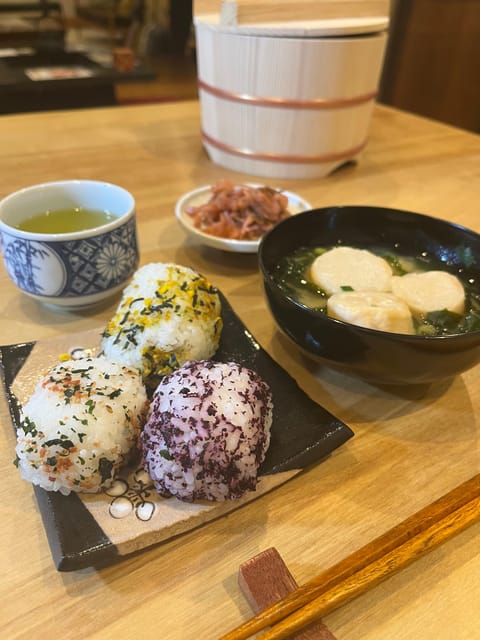
Onigiri looks humble. It is rice shaped by hand, often with a filling or seasoning, and it is one of Japan’s most familiar foods. Yet making it yourself changes how you see it. You notice the texture of the rice, the pressure needed to hold its shape, and the care required to make something simple taste good.
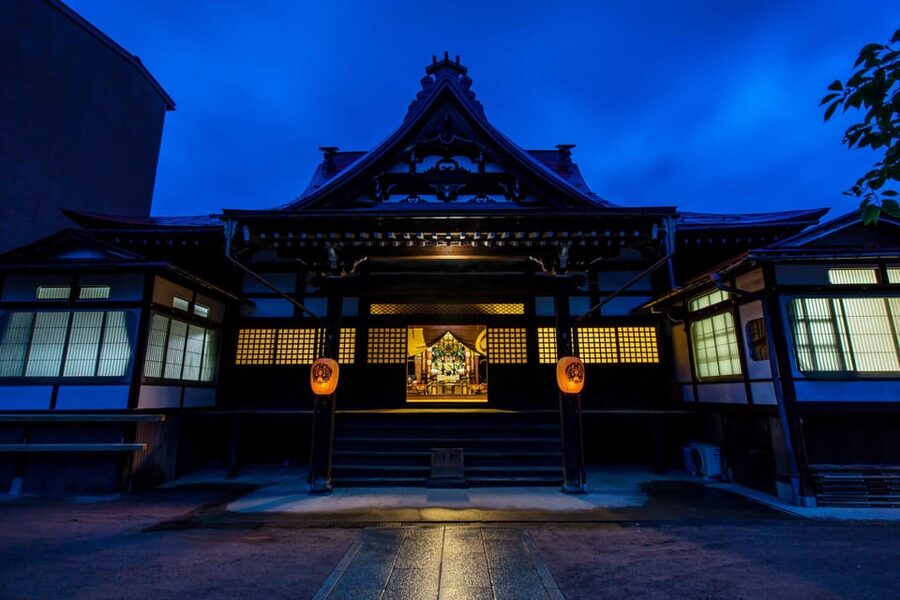
Here, the lesson takes place in the temple’s kuri, the kitchen area used for preparing food. That gives the class a different tone from a standard cooking workshop. You are not just learning a recipe. You are stepping into a place where food, daily routine, and religious practice meet.
The session is conducted in English, and the teaching is practical. Your instructor guides you through each stage rather than handing you a recipe and leaving you to struggle. Several instructors are named in the feedback, including Kazuki and Tama, and the strongest praise is directed at their warmth, clear explanations, and ability to answer questions about ingredients and customs.
You should arrive ready to participate. This is not a demonstration where you sit back and watch someone else cook. You shape the rice balls, help prepare the meal, and eat what you make. That hands-on format makes the hour pass quickly.
A few more Takayama half-days to weigh up
- Kanazawa: World Heritage Shirakawa-go Morning Guided Tour
★ 4.9 · 988 reviews - Kanazawa: World Heritage Shirakawa-go & Two Local Experience
★ 4.9 · 274 reviews - Kanazawa/Takayama: Shirakawago & Takayama Private Day Tour
★ 4.8 · 172 reviews
What happens during the one-hour class
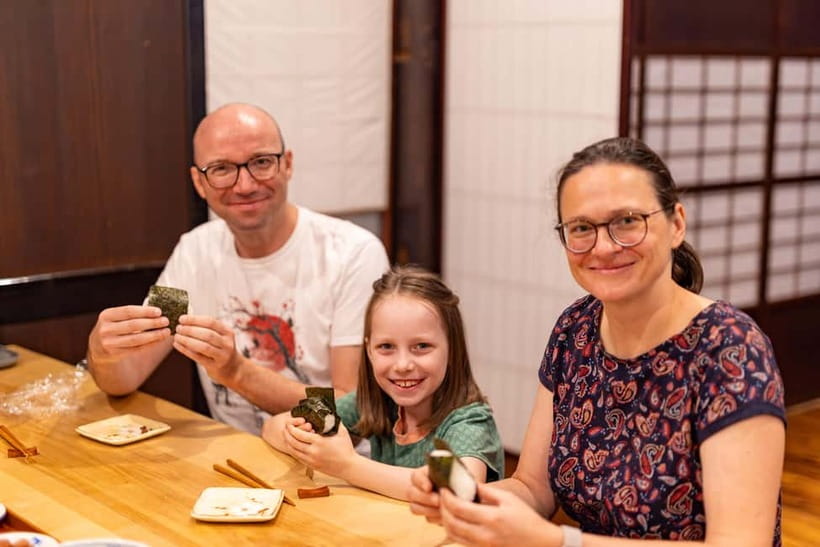
The exact order can vary, but the experience centers on two dishes: onigiri and miso soup. The class is designed to fit into one hour, so expect a focused introduction rather than a long tour of the temple or a full survey of Japanese cooking.
You first receive guidance on the ingredients and preparation. Seasonal ingredients are used, and the instructor explains how they fit into the meal. This is a useful detail for anyone who wants to repeat the dishes at home. You are not only copying hand movements. You are learning what goes into the food and how Japanese cooks think about balance and simplicity.
The onigiri portion is the most tactile. You work with cooked rice and form it by hand. The shape may look easy when an instructor does it, but your first attempt can be less tidy. That is part of the fun. The lesson gives you enough structure to succeed without removing the pleasure of figuring it out yourself.
Miso soup adds a second skill. You learn how the soup is prepared and how its ingredients come together. The dish is familiar to many people from Japanese restaurants, but making it in the temple kitchen gives it a more direct connection to everyday Japanese meals.
At the end, you eat the onigiri and miso soup as breakfast or lunch. Portions are described as plentiful, and vegetarian-friendly options are available. If you are comparing this with a sightseeing stop, remember that the meal is part of the experience, not an extra purchase afterward.
One participant also described receiving a recipe to take home. That is especially useful because onigiri is practical to make in an ordinary kitchen, and miso soup can become a regular part of your meals after Japan.
The temple setting adds meaning to a simple meal
The temple is not just a backdrop for photographs. It shapes the pace and purpose of the class. You enter through one of two gates, using the gate closer to the traffic lights, then walk straight to the entrance. From there, the activity moves into the temple’s kitchen space.
The atmosphere is quiet and respectful. Several sessions have included a prayer or a chance to pay respects to the temple’s patron. These moments are brief, but they help explain the Buddhist ideas linked to the meal. You are encouraged to think about the work behind the ingredients and to show gratitude before eating.
That cultural context is the reason I would choose this activity over a basic onigiri lesson in a city cooking school. Onigiri itself is not hard to find in Japan. You can buy it at convenience stores almost everywhere. The value here comes from learning how to make it in a religious setting while discussing respect for food and the people who prepare it.
The experience does not turn into a formal religious ceremony for the entire hour. It remains a cooking class first. Still, the temple setting gives the food a quiet dignity and encourages you to slow down. One participant was even invited to attend morning prayer on the following day. That invitation is not listed as part of the one-hour class, so you should not book expecting it, but it shows how the activity can open a door to a broader temple experience.
English teaching and the instructors
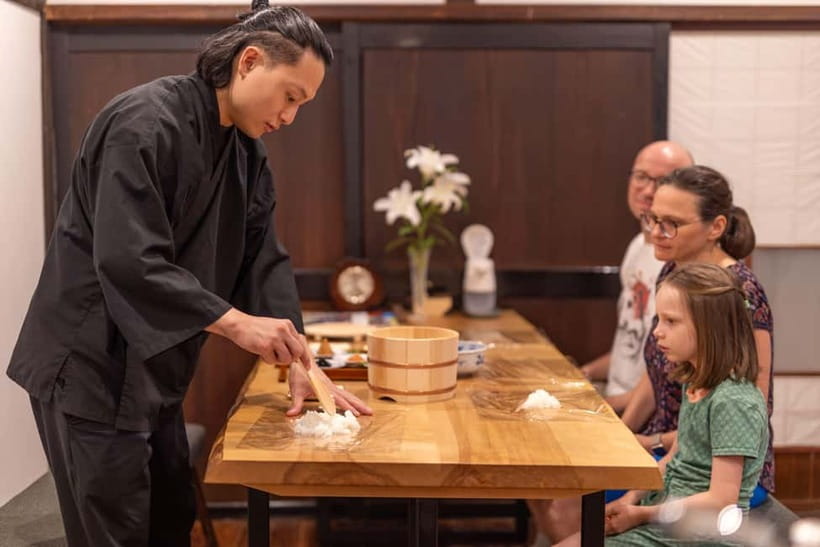
English is the teaching language, which makes a real difference in a short class. There is not much time to decode unclear instructions, especially when you are handling rice and preparing soup at the same time.
The instructors receive especially strong praise for being friendly, welcoming, and easy to understand. Kazuki is described as an excellent cook and host, while Tama is praised for her kindness and helpful manner. Other instruction is described as step by step, with clear explanations of both dishes.
The best teaching here goes beyond measurements. You can ask about ingredients, local food, Japanese customs, and the link between eating and Buddhist thought. One instructor also explained where to find some of the ingredients used in the class, which is handy if you want to continue cooking after leaving Takayama.
You should still keep your expectations realistic. This is not a professional chef course, and the one-hour format leaves limited time for long discussions. One participant would have preferred more background about food and its culture. I see that as the main tradeoff: the class gives you a pleasant introduction, but not an exhaustive lesson.
Same base, a completely different sort of day:
- Departing from Takayama [Regular sightseeing bus] World Heritage Sites Shirakawago and Gokayama Ainokura
★ 4.5 · 137 reviews - From Takayama: Guided Day Trip to Takayama and Shirakawa-go
★ 4.9 · 113 reviews - Private Afternoon Cycling Tour in Hida-Furukawa
★ 5.0 · 109 reviews - Private-group Morning Cycling Tour in Hida-Furukawa
★ 5.0 · 105 reviews
Why the $25 price makes sense
At $25 per person, this is a reasonably priced cultural activity in Takayama. The fee covers English instruction, the preparation of onigiri and miso soup, and the meal itself. You are paying for the setting and personal guidance as much as for the ingredients.
The value is strongest if you want three things in one stop: a meal, a cooking lesson, and a cultural encounter. A restaurant lunch might cost less, but it would not teach you how the food is made. A longer private cooking course could offer more detail, but it would likely cost more and take up a larger part of your day.
The small-group format is another plus. The available information does not promise a fixed maximum group size, but several accounts describe intimate sessions and personal attention. Some people have had the instructor to themselves, while others worked in a small group. That means the level of individual attention may depend on the date and attendance.
The class also works well as a morning or midday stop. You receive breakfast or lunch, so you do not need to fit a separate meal around it. For a visitor with limited time in Takayama, that makes the hour easy to use.
Practical arrival advice in Takayama
Transportation to the temple is not included, and personal expenses are extra. You need to make your own way to the meeting point and arrive 10 minutes before the start.
The directions are simple once you reach the area: look for the two gates in front of the temple, enter through the gate closer to the traffic lights, and walk straight to the entrance. I would allow extra time if you are unfamiliar with the streets or are carrying luggage.
Do not rely on parking without checking first. One person was told parking would be available but found there was none at the temple. If you are driving, confirm the arrangement directly before setting out. Walking or using another form of local transport may be the safer plan.
The activity lasts one hour, and starting times depend on availability. That short length is convenient, but punctuality matters. Arriving late could mean missing the introduction, the prayer, or the first preparation steps.
The activity is not suitable for children under 10, wheelchair users, or people with altitude sickness. The altitude restriction may seem unusual for a cooking class, but it is part of the stated conditions and should not be ignored when planning.
Food, dietary needs, and what you actually eat
The included meal consists of onigiri and miso soup, served as breakfast or lunch. Vegetarian-friendly options are available, making this a useful choice if you avoid meat or fish. You should still explain your dietary needs when booking or before the class if you need more specific guidance.
The ingredients are fresh and seasonal, and the lesson explains how they are used. That seasonal focus gives you a better sense of Japanese cooking than a fixed menu would. You learn how a few well-handled ingredients can form a satisfying meal.
The onigiri can be made in different variations, depending on the session. One class included three variations of mochi, but that detail does not appear to be guaranteed for every booking, so I would not choose this activity expecting mochi as a standard part of the menu.
The miso soup is often the dish that makes the strongest impression. Several participants described it as especially delicious, even the best miso soup they had tasted. That enthusiasm should not make you expect a particular recipe, but it does point to the care given to preparation and serving.
Most important, you eat the food you prepare. That creates a satisfying finish and lets you judge the results for yourself. Your onigiri may not look perfect, but it will taste better for having made it.
Who should book this temple cooking experience
I would recommend this class to food lovers who want more than a meal in Takayama. It is also a good fit if you enjoy cultural activities that are quiet, personal, and rooted in local practice rather than built around a major attraction.
It suits solo visitors, couples, and small groups. The English instruction makes it approachable, and the short schedule leaves room for other Takayama sights. Parents should note the minimum age of 10.
This is particularly worthwhile if you want a meaningful indoor activity on a free morning or around lunchtime. It can also balance a busy sightseeing schedule because you are learning, eating, and sitting in a calm place rather than rushing from one landmark to the next.
I would choose something else if you want an advanced cooking class, a long temple tour, or a broad study of Japanese cuisine. The class focuses on two dishes and a short cultural introduction. It gives you a taste, not a full course in Buddhist food traditions.
Booking, cancellation, and accessibility notes
You can cancel up to 24 hours before the activity for a full refund. The reserve-now, pay-later option also lets you keep your plans flexible, with no payment needed at the time of booking.
Check the available starting times before choosing your date. The activity is only one hour, but that does not mean you can arrive at any point during the morning or afternoon.
Because the temple is not wheelchair accessible for this activity, you should confirm that the physical arrangements suit you before booking. The experience is also not suitable for children under 10 or people with altitude sickness.
Should you book it?
Yes, if you want a short, affordable introduction to Japanese food with a real cultural setting. At $25, you receive hands-on instruction, a meal, English guidance, and time to consider the Buddhist ideas tied to preparing and eating food.
Book it for the temple kitchen, not just the onigiri. You can find rice balls across Japan, but making them in the kuri, listening to a patient instructor, and eating them in a quiet temple gives the dish a different weight.
Skip it if your main goal is a long, technical cooking workshop or a detailed temple visit. For everyone else, this is a thoughtful way to spend an hour in Takayama, especially if you value local contact, simple food, and a slower pace.
FAQ
How long does the onigiri and miso soup class last?
The activity lasts one hour.
How much does the experience cost?
The listed price is $25 per person.
Is the class conducted in English?
Yes. The instructor provides guidance in English.
What food is included?
You prepare and eat onigiri and miso soup. The meal is served as breakfast or lunch.
Are vegetarian options available?
Yes. Vegetarian-friendly options are available.
Where do I meet the instructor?
Look for the two gates in front of the temple. Enter through the gate closer to the traffic lights, walk straight to the entrance, and follow the directions there.
How early should I arrive?
You should arrive 10 minutes before the activity begins.
Just added around Takayama
- Private Afternoon Cycling Tour in Hida-Furukawa★ 5.0 · 109 reviews
- Private-group Morning Cycling Tour in Hida-Furukawa★ 5.0 · 105 reviews
- Short Morning Cycling Tour in Hida★ 5.0 · 17 reviews
- Gifu Samurai Sword Town;Japanese Damascus Knife Making Experience★ 5.0 · 27 reviews
- Magome & Tsumago Nakasendo Full-Day Private Trip with Government-Licensed Guide★ 5.0 · 20 reviews
- Magome & Tsumago Nakasendo Trail Day Hike with Government-Licensed Guide★ 5.0 · 38 reviews
- Frozen fall trekking★ 5.0 · 21 reviews
- Explore Kiso Valley : Magome – Tsumago Mountain Trail Walk★ 5.0 · 33 reviews
Takayama Tours, compared.
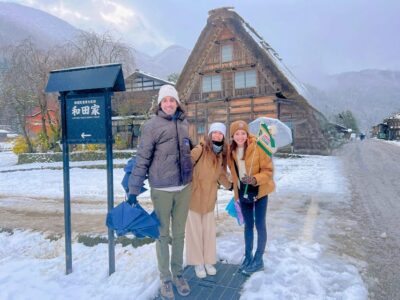
World Heritage Shirakawa-go Morning Guided Tour
Read our review →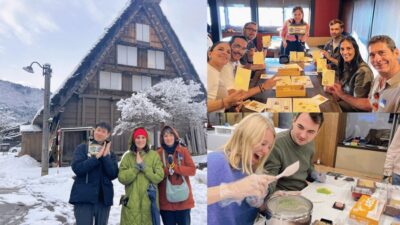
World Heritage Shirakawa-go & Two Local Experience
Read our review →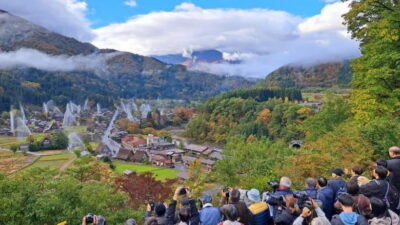
Kanazawa/Takayama: Shirakawago & Takayama Private Day Tour
Read our review →![Departing from Takayama [Regular sightseeing bus] World Heritage Sites Shirakawago and Gokayama Ainokura](https://media3.thejapanesetraveller.com/wp-content/uploads/departing-from-takayama-regular-sightseeing-bus-world-heritage-sites-shirakawago-and-gokayama-ainokura-400x267.jpg)
Departing from Takayama [Regular sightseeing bus] World Heritage Sites Shirakawago and Gokayama Ainokura
Read our review →
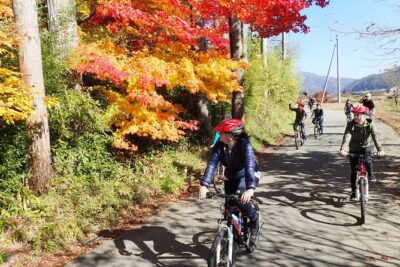
Private Afternoon Cycling Tour in Hida-Furukawa
Read our review →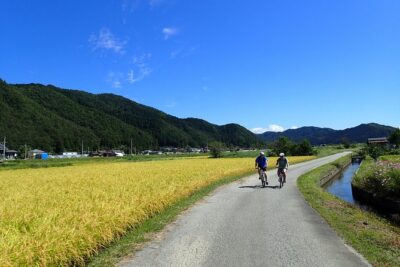
Private-group Morning Cycling Tour in Hida-Furukawa
Read our review →
Browse the lists this tour appears in