
Reviewed · TAKAYAMA TOURS
Explore Kiso Valley : Magome – Tsumago Mountain Trail Walk
The best part of this experience is that you walk a real section of Japan’s old Nakasendo highway, linking the preserved post towns of Magome and Tsumago through the Kiso Valley. The route gives you mountain views, cedar forest, waterfalls, and old wooden homes in one well-planned day.
I like the private format, since your guide can adjust the pace and answer your questions without a large group slowing things down. I also like that bus tickets and museum admissions are covered, so you can focus on the trail instead of sorting out every transfer.
The catch is simple: this is a serious walking day. You cover about 5.5 miles, or 9 kilometers, on a route with slopes and uneven ground. You need good physical fitness, and food and drinks are not included.
Key points to know before booking
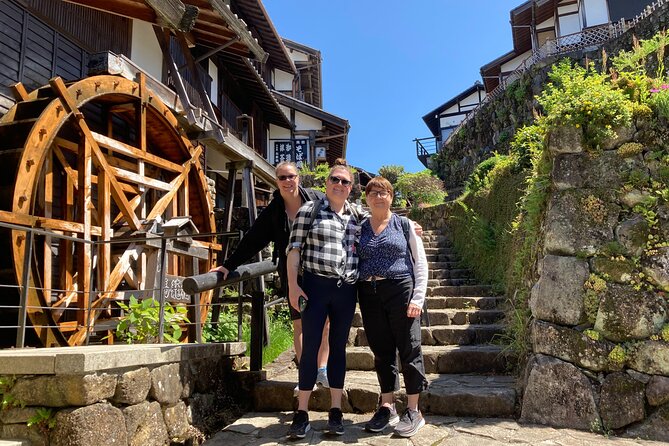
- Walk between two preserved post towns: Follow the historic route from Magome-juku to Tsumago-juku, rather than simply touring one town by bus.
- Private guiding makes the route easy: Your guide handles the trail direction, local buses, timing, and cultural explanation.
- Local guides add real context: Ryo grew up near the Nakasendo Trail, while Harumoto and Kazuo have also led highly praised walks here.
- The route includes more than scenery: You visit Odaki and Medaki Waterfalls, Otsumago, a museum, and the former Waki-honjin Okuya residence.
- Plan for nearly a full day: Meet at Nakatsugawa Station at 9:00 am and finish near Nagiso Station around 3:45 pm.
- The price covers useful basics: At $171.31 per person, bus transport and entry fees are included, but meals and private transportation are extra.
Why this stretch of the Nakasendo Trail matters
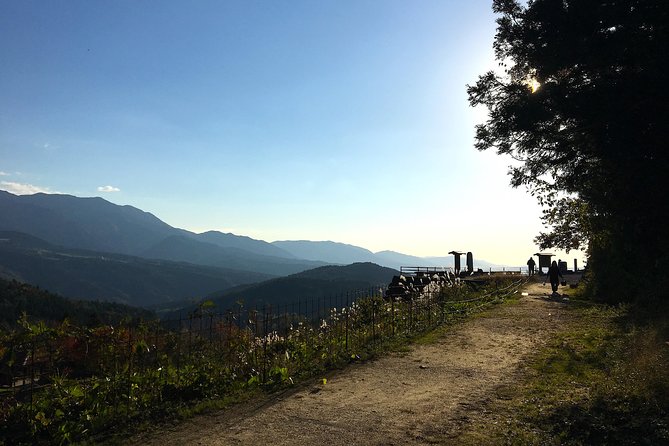
The Nakasendo was an inland highway linking Kyoto and Tokyo during Japan’s historic feudal period. Post towns along the route served officials, samurai, merchants, and ordinary people moving between the two major cities.
Magome and Tsumago are among the best-preserved sections. Their old inns and shops have been maintained with care, and the walk between them still feels tied to the route’s original purpose. You are not just visiting a museum display. You are moving from one post town to the next on foot, as people once did.
That distinction matters. A quick stop in Magome can be pleasant, but the trail explains why the towns exist where they do. The steep sections, forest paths, streams, and resting points show what travel here demanded before modern roads and railways.
I like this combination of culture and exercise. You get enough walking to feel that you have earned the destination, but the guide and included bus connection remove much of the worry that comes with planning an unfamiliar rural route.
More walking tours in Takayama:
- Takayama: Takayama Jinya & Old Town Private Walking Tour
★ 4.5 · 32 reviews - Takayama: Private Walking Tour with a Local Guide
★ 4.6 · 29 reviews - Takayama: Edo-Period Old Town Walking Tour
★ 4.5 · 22 reviews
Starting at Nakatsugawa and riding to Magome
You meet your guide at the ticket gate of Nakatsugawa Station at 9:00 am. This is a practical starting point because the station connects with the route to Magome, and your guide can help organize the bus transfer.
The ride to Magome-juku is part of the day’s convenience. The experience includes the bus ticket, so you do not need to work out the local fare yourself. Private transportation is not included, but that is not a major concern here because the planned route uses public transportation at the beginning.
Starting in Nakatsugawa also means you do not waste the walking portion on a long approach. You arrive at Magome ready to explore the post town and then begin the trail toward Tsumago.
The meeting time is fixed at 9:00 am, so allow enough time to reach Nakatsugawa Station. Your end point is Nagiso Station, not the station where you began. The guide will assist you with buying a train ticket back to your accommodation, but your return train fare is not listed as included.
Magome-juku: a strong opening to the walk
Magome-juku sits on a slope, with a main street lined by traditional buildings, small shops, and restored post-town architecture. It is an appealing place to begin because the historic setting appears almost immediately, before you have even started the longer trail walk.
The first stop allows about 40 minutes. That is enough time to get your bearings, look at the buildings, and hear how the post town functioned along the Nakasendo. The town once served people traveling between Kyoto and Tokyo, including samurai and other official parties.
Magome is also where you begin to understand the physical nature of the route. The town climbs uphill, and the old highway does not offer a flat stroll from start to finish. Wear shoes with a firm sole and expect to use your legs from the first stage.
This stop can feel busy compared with the quieter forest portions later in the day, especially because Magome is a well-known sightseeing point. The benefit of having a private guide is that you can ask questions and set a sensible pace instead of rushing through the town.
The Magome Observatory and the route’s highest point
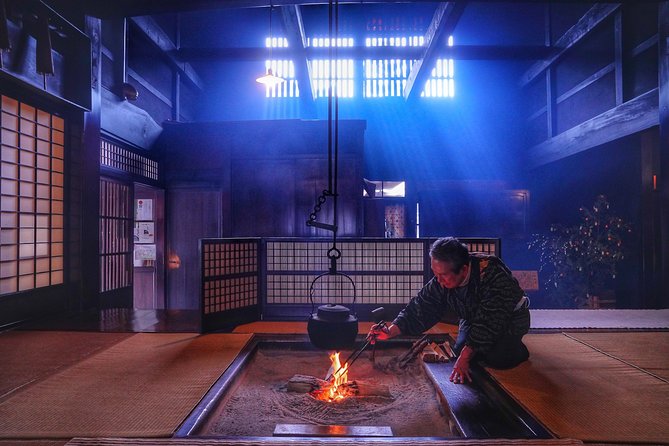
A short walk uphill brings you to the Magome Observatory, where you spend about 15 minutes. At an altitude of roughly 801 meters, it occupies the highest point of the Magome to Tsumago hiking course.
The view gives you a useful sense of the Kiso Valley’s scale. You can look across the surrounding mountains and see Magome below. After walking through the enclosed post town, this open viewpoint provides a welcome change.
Do not expect a long rest stop here. Fifteen minutes is enough for photographs and a pause, but not a leisurely picnic. Since food and drinks are not included, carry what you need for the walk.
The observatory is also a good reminder that this route is not simply a paved village path. You gain elevation, and the day requires steady effort. Your guide can help tailor the pace to your group, but the basic physical demands remain.
A few more Takayama half-days to weigh up
- Kanazawa: World Heritage Shirakawa-go Morning Guided Tour
★ 4.9 · 988 reviews - Kanazawa: World Heritage Shirakawa-go & Two Local Experience
★ 4.9 · 274 reviews - Kanazawa/Takayama: Shirakawago & Takayama Private Day Tour
★ 4.8 · 172 reviews - Departing from Takayama [Regular sightseeing bus] World Heritage Sites Shirakawago and Gokayama Ainokura
★ 4.5 · 137 reviews
Forest paths and the Odaki and Medaki Waterfalls
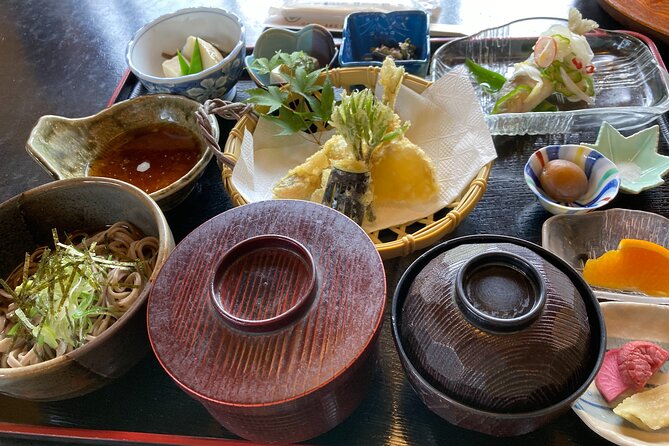
The trail continues through wooded sections of the Kiso Valley, where the old highway feels more rural and quiet. The forested route is one of the main reasons to choose this walk over a town-only visit.
After the viewpoint, you reach Odaki-Medaki Waterfalls for about 10 minutes. Odaki, meaning man waterfall, is on the left, while Medaki, meaning woman waterfall, is on the right. The pair has long served as a refreshing stop for people using the highway.
This is a brief visit, but it breaks up the walking nicely. The sound of water and the shade of the surrounding trees offer a natural pause before the trail continues. You might find the stop especially pleasant on a warm day, though the experience depends on the weather.
The route’s mix of forest and historic sites gives the day its balance. You are not spending seven hours looking at buildings, and you are not hiking without context. Your guide can explain how the highway shaped local life while you move through the same setting.
Otsumago and the quieter side of preservation
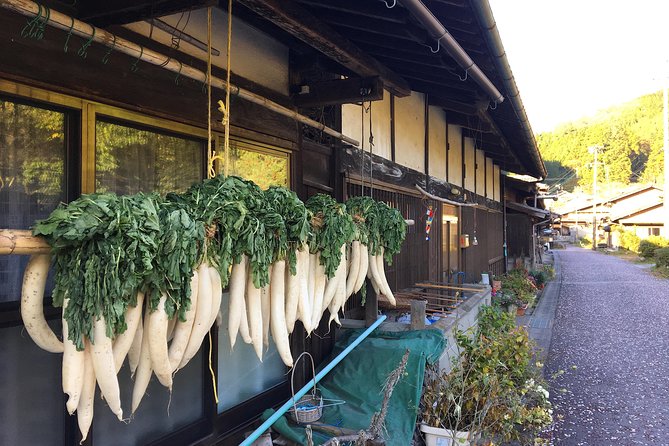
Otsumago is a district within the Tsumago-juku Preservation Area. The planned visit lasts about 20 minutes and focuses on traditional houses built in Hon-Udatsu and Dashibari Zukuri styles.
This section is useful because it broadens your view beyond the two famous post towns. Otsumago shows how traditional housing continued in the surrounding area, even as the region became more popular with sightseers.
You should not expect a large attraction with many formal exhibits. The value is in seeing the buildings in their setting and noticing how the old road passes through a living district. The area has become a sightseeing destination, but it retains a more residential feel than the busiest parts of the main post towns.
Your guide can point out construction details that are easy to miss on your own. That is one of the stronger reasons to pay for a private walk instead of downloading a map and following the path independently.
Arriving at Tsumago-juku after the long walk
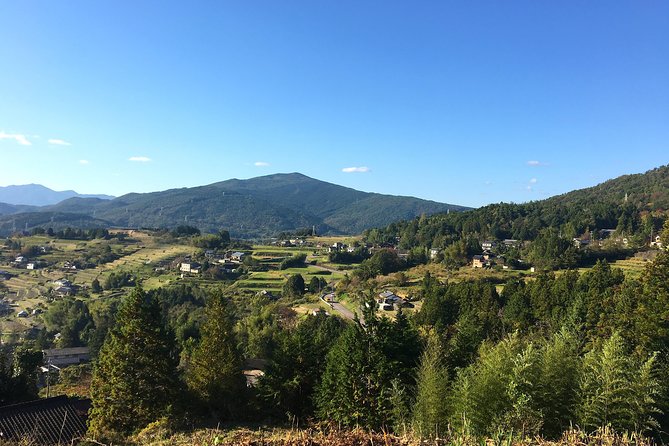
Tsumago-juku receives about 1 hour and 10 minutes, making it the longest town visit of the day. Historically, it had one Honjin inn, one Waki-Honjin inn, and 31 Hatago inns. The Honjin served higher-ranking officials, while Hatago inns accommodated ordinary people traveling along the highway.
After the forest walk, Tsumago feels like a proper destination rather than a quick photo stop. You have time to walk its old street, study the wooden facades, browse shops, and take photographs.
The order of the day works well. Magome introduces the route, the trail provides the physical experience, and Tsumago rewards you with a longer period to explore. You will likely appreciate its preserved buildings more after walking into town rather than arriving directly by bus.
Tsumago is still a historic sightseeing area, so some parts can feel polished for visitors. That is not a reason to skip it. The careful preservation is precisely what makes the town valuable, but you should come expecting a maintained cultural site, not an untouched village.
The Nagisomachi Museum and Waki-honjin Okuya
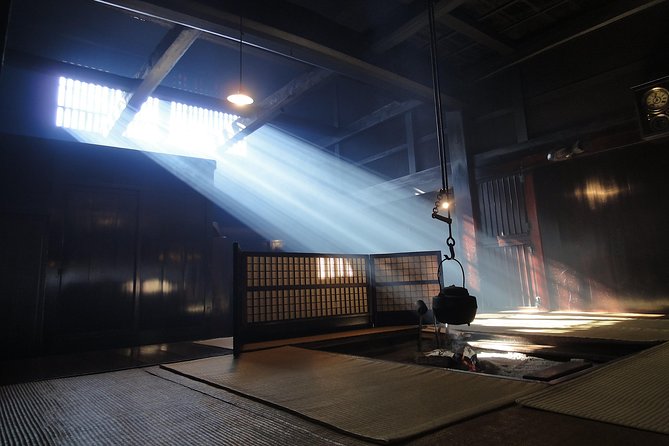
The final part of the day focuses on two connected cultural sites. You spend about 25 minutes at the Nagisomachi Museum, located inside the former Waki-honjin Okuya residence, also called the Hayashiya House.
The building is a designated Important Cultural Property. It has been restored using floor plans from the late Edo period, giving you a chance to see the structure as a working post-town residence rather than simply viewing objects in glass cases.
A Waki-honjin was an inn used by officials and important parties who could not stay at the main Honjin. The distinction helps explain the social order of the Nakasendo and why these inns mattered to the towns along the route.
You then spend another 25 minutes at Wakihonjin Okuya. The residence dates to 1877 and served as both a Waki-honjin and a provision store for generations. It was built from Japanese cypress, a fragrant and valued material that had only recently become legal for building use when construction took place.
These visits add depth to the walk. The trail scenery is memorable, but the buildings show how people actually lived, hosted officials, stored goods, and supported the highway economy. Admission to both sites is included, which improves the value of the tour.
What the private guide adds
The guide is the main reason this experience costs more than walking the route alone. You are not paying only for directions. You receive help with the bus, trail navigation, timing, historical explanation, and the transition from one station to another.
Ryo is described as having grown up in the area around the Nakasendo Trail. That kind of local connection can make a difference when you want more than dates and building names. He has also been praised for his friendly manner and enthusiasm, which matters during a long day outdoors.
Harumoto, also referred to as Moto in one account, has introduced regional culture, local food, and special treats along the route. If those introductions are available on your day, they can add a personal touch, but food is not part of the published inclusions, so budget separately.
Kazuo has been especially considerate about pace and questions. That is useful for families or groups with different walking speeds. The private setup means the guide is working with only your party, not a busload of strangers.
The guide cannot remove every hill or make the 9-kilometer route effortless. What the guide does is make the day clearer, more relaxed, and less vulnerable to missed turns or confusing bus connections.
Is $171.31 a fair price?
At $171.31 per person, this is not a budget hike. The price makes more sense when you count what is bundled: an English guide, the bus ticket to Magome, and entrance fees to the Nagisomachi Museum and Wakihonjin Okuya.
You are also buying a private experience. If you are a couple, family, or small group that values flexibility, the cost can be reasonable, especially if a group discount applies. A private guide is less compelling if you are comfortable navigating rural Japan alone and do not need historical explanation.
Meals and drinks are extra. Private taxi, car, or bus service is also not included, so the tour uses the scheduled public bus and ends with you arranging your own train fare from Nagiso.
I see the strongest value in the logistics and interpretation. The trail itself is available to independent walkers, but getting between the stations, finding the right bus, following the route, and understanding the old buildings takes extra planning. This option packages those tasks into one day.
The experience is often booked about 66 days in advance. That suggests you should reserve early if your Japan schedule is fixed, particularly if you want a private guide on a specific date.
Fitness, weather, and what to bring
Treat this as an active outing, not a gentle town tour. The distance is about 9 kilometers, and the route includes slopes, forest paths, and uneven surfaces. The booking information calls for strong physical fitness.
Wear sturdy walking shoes and clothing suited to changing mountain conditions. Bring water and snacks because food and drinks are not included. A small bag is easier to manage than heavy luggage during the trail section.
Weather matters enough that the experience requires good conditions. If poor weather forces cancellation, you are offered another date or a full refund. For your own planning, keep some flexibility around this day if possible.
The full experience lasts about seven hours. You meet at 9:00 am and finish around 3:45 pm at Nagiso Station. The listed stop times do not represent every minute of the day, since bus travel and walking connect them, so expect a full morning and afternoon commitment.
Who should book this walk?
I would choose this experience if you want one memorable day outside Japan’s largest cities and prefer local context to a self-guided route. It suits active couples, families with fit older children, and small groups who want a private pace.
It is especially good as an early Japan activity. The route introduces rural scenery, traditional architecture, transportation customs, and Japanese history without requiring you to plan several separate visits.
You should think twice if you dislike hills, need frequent long rests, or want a relaxed food-focused day. The walk is not built around extended shopping or dining, and the 9-kilometer distance is fixed even if the guide can adjust your pace.
Independent hikers may also decide to skip the tour. The Nakasendo route can be walked without a private guide, but you would take responsibility for buses, directions, admissions, and the historical side of the visit.
Should you book Explore Kiso Valley?
Book it if you want the Magome to Tsumago walk made simple, with an English-speaking guide, included bus fare, and access to important historic buildings. The private format and local guides such as Ryo, Harumoto, and Kazuo add real value for anyone who likes to ask questions and move at a comfortable pace.
Skip it if $171.31 feels high for a public trail you could walk independently, or if 9 kilometers sounds too demanding. For fit visitors who want scenery, preserved post towns, waterfalls, and a clear look at the old highway system in one day, this is a strong choice.
Free cancellation is available up to 24 hours before the start time. Changes or cancellations inside that window are not refunded, so confirm your weather and schedule before the cutoff.
FAQ
Where does the tour begin?
The tour begins at the ticket gate of Nakatsugawa Station in Gifu Prefecture at 9:00 am.
Where does the tour end?
The tour ends at Nagiso Station in Nagiso, Nagano Prefecture, at around 3:45 pm.
How far do I walk?
The walk covers about 5.5 miles, or 9 kilometers.
How long does the experience last?
The experience lasts approximately seven hours.
Is the tour private?
Yes. Only your group participates in the private activity.
Is an English guide included?
Yes. An English-speaking guide is included.
Are bus tickets included?
Yes. The bus ticket used during the planned route is included.
Are entrance fees included?
Yes. Entrance to the Nagisomachi Museum and Wakihonjin Okuya is included.
Is food included?
No. Food and drinks are not included in the tour price.
Can I cancel for a full refund?
Yes, if you cancel at least 24 hours before the experience start time. If poor weather causes the tour to be canceled, you are offered another date or a full refund.
Just added around Takayama
- Private Afternoon Cycling Tour in Hida-Furukawa★ 5.0 · 109 reviews
- Gifu Samurai Sword Town;Japanese Damascus Knife Making Experience★ 5.0 · 27 reviews
- Private-group Morning Cycling Tour in Hida-Furukawa★ 5.0 · 105 reviews
- Short Morning Cycling Tour in Hida★ 5.0 · 17 reviews
- Magome & Tsumago Nakasendo Full-Day Private Trip with Government-Licensed Guide★ 5.0 · 20 reviews
- Magome & Tsumago Nakasendo Trail Day Hike with Government-Licensed Guide★ 5.0 · 38 reviews
- Frozen fall trekking★ 5.0 · 21 reviews
- Takayama: Private Night Walking Tour with Dinner★ 4.5 · 13 reviews
Takayama Tours, compared.
World Heritage Shirakawa-go Morning Guided Tour
Read our review →
World Heritage Shirakawa-go & Two Local Experience
Read our review →
Kanazawa/Takayama: Shirakawago & Takayama Private Day Tour
Read our review →![Departing from Takayama [Regular sightseeing bus] World Heritage Sites Shirakawago and Gokayama Ainokura](https://media3.thejapanesetraveller.com/wp-content/uploads/departing-from-takayama-regular-sightseeing-bus-world-heritage-sites-shirakawago-and-gokayama-ainokura-400x267.jpg)
Departing from Takayama [Regular sightseeing bus] World Heritage Sites Shirakawago and Gokayama Ainokura
Read our review →
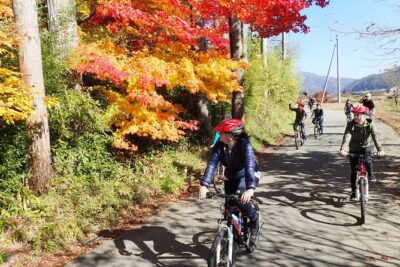
Private Afternoon Cycling Tour in Hida-Furukawa
Read our review →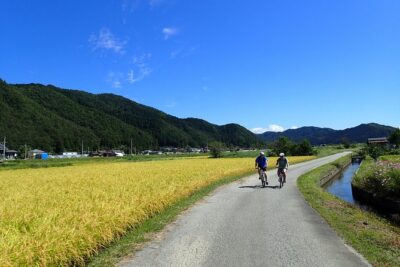
Private-group Morning Cycling Tour in Hida-Furukawa
Read our review →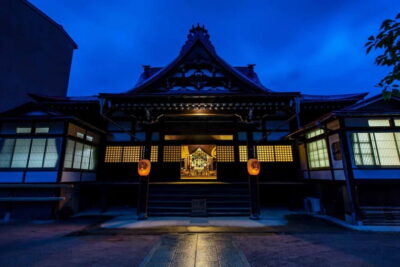
Onigiri and miso soup making at a buddhist temple
Read our review →Browse the lists this tour appears in