
Reviewed · NAGANO TOURS
Wasabi Farm Walking Tour & Lunch
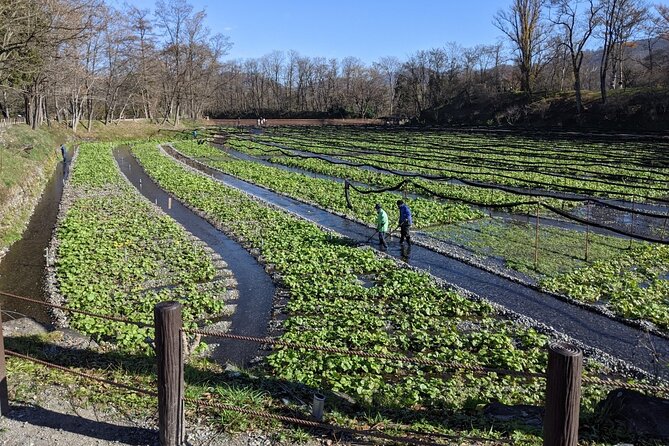
The surprising part of this Nagano outing is that wasabi is not simply a root pulled from ordinary soil. At Daio Wasabi Farm, clear water from the Japanese Alps helps create the conditions this fussy plant needs. A private guide explains the process as you walk among the fields, then you sit down to a local lunch built around fresh wasabi.
I like the small private-group format, which lets you ask questions instead of trailing behind a large crowd. I also like the lunch: Shinshu soba, miso, and other local foods give you a better sense of Nagano than a quick snack from the farm shop. The main consideration is timing. The farm is popular, restaurant waits can occur in peak season, and the wasabi ice cream appears to be an extra purchase despite being highlighted as part of the experience.
Key points to know before you go
- Daio Wasabi Farm is the main event: You spend about an hour walking through one of Japan’s largest wasabi farms.
- A private guide adds real value: Guides including Akiko, Naomi, Tom, Tim, and Carole have explained cultivation, local culture, and farm history in English or French.
- Lunch uses Shinshu flavors: Expect a Japanese set meal featuring local soba, miso, and wasabi.
- The farm entrance is free: Your fee mainly pays for the guide and arranged lunch, not admission to the grounds.
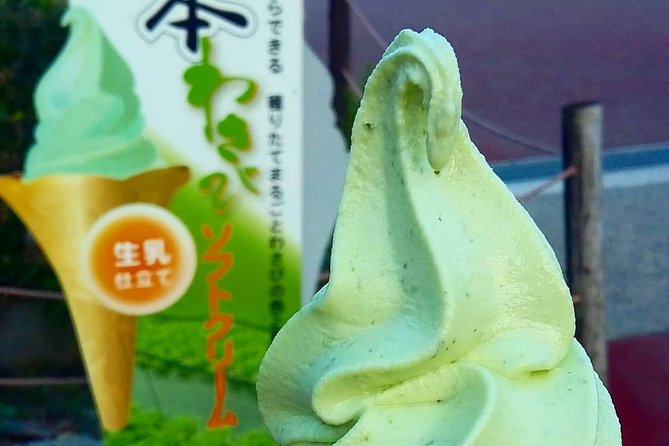
- Wasabi ice cream needs a budget check: It is featured in the tour description and praised in visitor feedback, but the inclusions also list it among items not covered.
- The tour runs at 10:30 a.m.: The experience lasts about two hours and begins and ends at Daio Wasabi Farm.
Why a wasabi farm is worth your morning
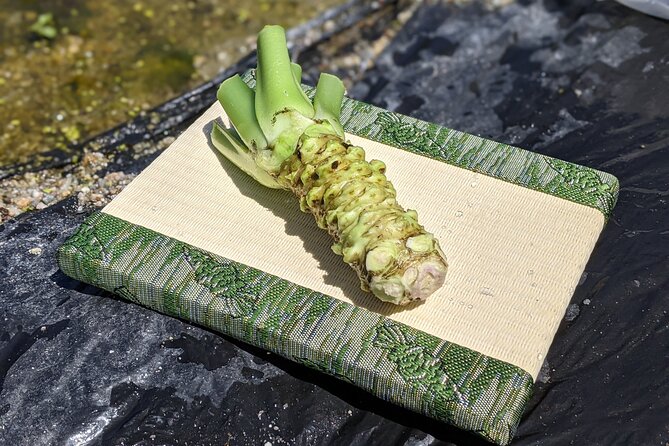
Wasabi is familiar to anyone who eats sushi, but most people only meet it as a small green mound beside fish. This visit gives you the missing part of the story: how the plant is grown, why water matters, and why genuine wasabi is treated differently from the common horseradish-based paste served in many restaurants.
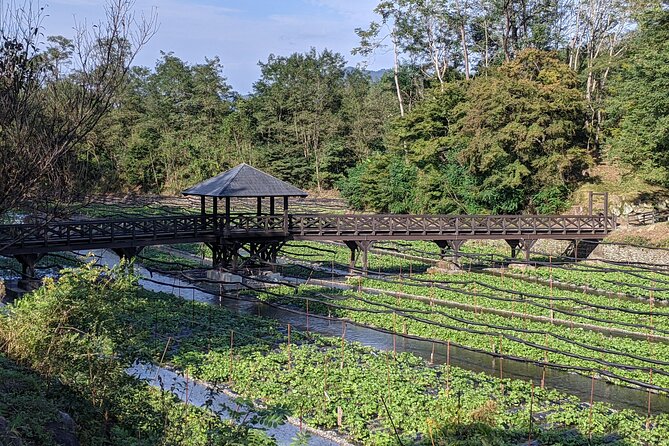
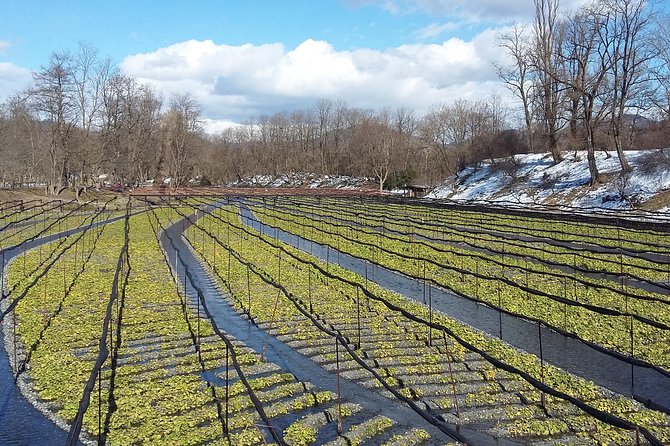
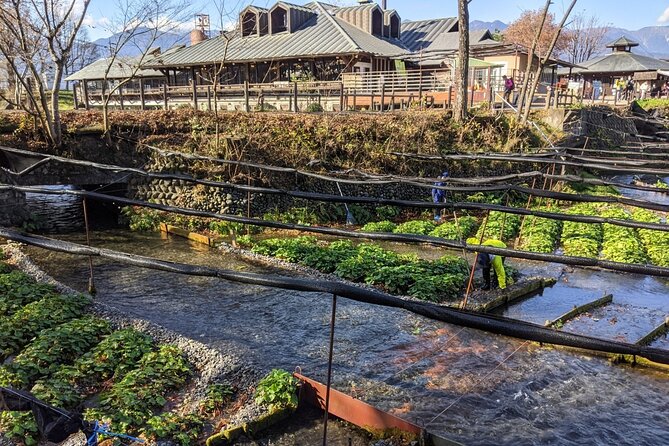
Daio Wasabi Farm was established in 1915 and covers a large area near Azumino. The farm is known for its fields, water channels, rural setting, and connection to the food culture of Nagano. You are not just looking at a crop. You are seeing how local geography and farming methods shape something that ends up on a Japanese dining table.
I think this works especially well for anyone who enjoys food, cooking, or the practical side of Japanese culture. You get an ingredient, a place, and a meal tied together in one short visit.
The setting also gives you a break from city sightseeing. The farm sits at the base of the Japanese Alps, among rice fields and rural roads. The tour does not promise a long mountain walk, but the grounds offer a quiet change of pace from stations, shopping streets, and crowded temples.
More lunch stops in Nagano:
- From Tokyo: Snow Monkey 1 Day Tour with Beef Sukiyaki Lunch
★ 4.6 · 295 reviews - Snow Monkey Park, Soba Lunch and Shibu Onsen Tour
★ 5.0 · 12 reviews - Bike Tour Exploring North Kyoto plus Lunch
★ 5.0 · 1,087 reviews
The 10:30 a.m. meeting at Daio Wasabi Farm
You meet your guide at Daio Wasabi Farm in Hotaka, Azumino, Nagano. The start time is 10:30 a.m., and you return to the same farm at the end of the roughly two-hour experience.
That simple arrangement matters. You do not need to find a second meeting point for lunch or work out a return transfer after the tour. One guide even helped explain how to reach the farm, which is useful because getting out to this rural area can take more planning than visiting a central Nagano attraction.
The farm is listed as being near public transportation, but the supplied information does not give a specific route, station, or transfer time. I would check your route carefully before the day of the tour, especially if you are not driving. Save the exact farm address, and allow enough time to arrive before 10:30 a.m.
The group can have a maximum of 12 people, though the private format means the booking is intended for your own group. That gives the visit a more personal feel than a standard large walking tour. You can ask about farming, food, or Japanese customs without waiting for a guide to finish addressing a crowd.
Walking through the wasabi fields
The first hour focuses on Daio Wasabi Farm itself. Your guide leads you around the grounds and explains how wasabi is cultivated, along with the farm’s background and role in the area.
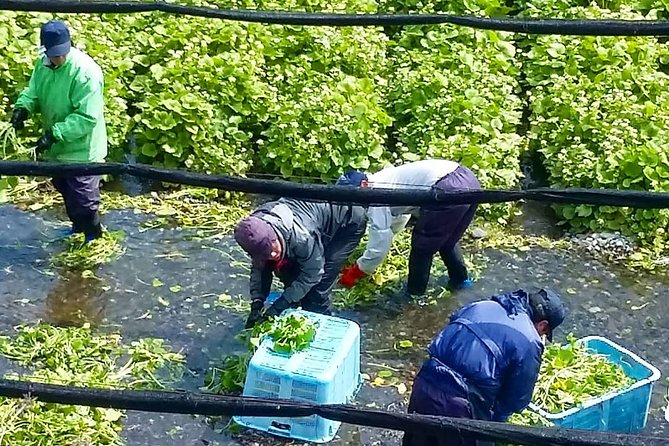
The most useful part is the explanation of what makes wasabi different from an ordinary garden plant. The farm’s mountain water and natural setting are central to the story. Seeing the fields while someone explains the growing process helps you understand why genuine wasabi is a specialty rather than a cheap condiment.
The farm is also highly photogenic. Water, green plants, rural paths, and the wider mountain setting give you plenty to look at as you walk. If you bring a camera, this is the sort of stop where the surroundings matter as much as the formal commentary.
A guide is particularly helpful here. Much of the farm museum information is in Japanese, and Tom has been able to translate key parts for English-speaking participants. Other guides, including Akiko and Naomi, have been praised for explaining both the farm and the wider region in clear English. Carole has also led the visit in French.
The guide’s role goes beyond naming plants. You can expect stories about the farm’s past, the place of wasabi in Japanese cooking, and related points about life in Japan. Tim, for example, has explained less familiar parts of the farm and answered questions about the specific way wasabi is grown in this area.
This is why I would not treat the walk as a simple self-guided visit. The farm itself is free to enter, so you can see the grounds without paying for a tour. But without a guide, you may miss the reasons the farm matters and the details that turn green fields into a lesson about Japanese food.
The walk is described as suitable for most people. Still, it is an outdoor activity, and the experience depends on the weather. One visit remained enjoyable in the rain, but wet conditions can make any farm walk less comfortable. Wear shoes suited to outdoor paths and check the forecast before you go.
Shinshu lunch with fresh wasabi
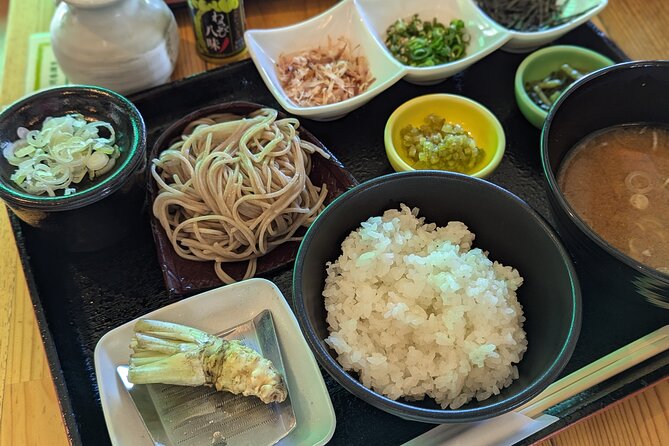
The second hour is set aside for a traditional Japanese lunch at the farm. The meal is designed to show how real wasabi works with other local foods, rather than treating it as a novelty on the side.
Shinshu is the old name for Nagano Prefecture, and the meal draws on the area’s familiar foods. You can expect Shinshu soba, Shinshu miso, and other local dishes, served as a Japanese set meal with wasabi.
Freshly grated wasabi with soba is the detail that makes this lunch more than a standard restaurant stop. The flavor is tied directly to what you have just learned about at the farm. I like that connection: you see the crop, hear how it is produced, and then taste it in a local meal.
The lunch is included in the listed price, and vegetarian and vegan meals can be arranged. Families with young children can also be accommodated. Tell the operator about your needs in advance so the meal can be prepared properly.
There is one practical warning. During peak periods, the farm restaurant may be too busy to accept a reservation at the planned time. You may have to wait before being seated. This does not change the food, but it can affect your schedule, especially if you have a train or another timed activity afterward.
I would leave some flexibility after the tour. The official duration is about two hours, but a restaurant queue could stretch the visit. The meeting time is fixed, while the lunch finish may be less predictable in the busiest season.
More farm visits around Nagano:
- Miyajima Guided Tour and Fresh Oyster Farm Tour
★ 5.0 · 20 reviews
The wasabi ice cream question
Wasabi ice cream is one of the experience’s most unusual selling points. It offers a playful way to try wasabi outside the usual sushi or soba setting, and it has been described as a memorable part of the visit.
However, the payment details are not perfectly consistent. The tour description presents a wasabi ice cream tasting as an added feature, while the list of excluded items specifically includes wasabi ice cream, along with drinks, beer, sausages, snacks, and souvenirs.
My advice is simple: ask the operator before the day of your visit whether the ice cream is included or purchased separately. Bring a little extra money if you want to try it. The same advice applies to drinks and other farm products. The lunch is included, but optional food and shopping are not.
This small uncertainty does not undermine the farm walk or lunch. It simply means you should not assume every food item mentioned in the description is covered by the $70.94 price.
Is $70.94 good value?
At $70.94 per person, this is not the cheapest way to enter Daio Wasabi Farm. The grounds themselves are free, so a self-guided visit costs less. The real question is what the guide and lunch are worth to you.
For me, the fee makes sense if you want context. A guide can explain the cultivation process, translate parts of the museum, point out less familiar areas, and connect the farm to Japanese food and local culture. That information is difficult to replace with a quick walk and a few photographs.
The included lunch also improves the value. You are not paying only for a talk about wasabi. You receive a proper Japanese meal featuring Shinshu foods and fresh wasabi, with vegetarian and vegan arrangements available.
The private setup is another reason the price may work for couples, families, or small groups. You get a chance to shape the conversation around your interests. If you are a food-focused visitor, the combination of farm, explanation, and tasting is more useful than a basic admission ticket.
The value is weaker if you only want to take pictures and leave. Since entry is free, independent visitors can see the grounds without booking this experience. You are paying for interpretation, a planned meal, and the convenience of having the visit organized around a guide.
Who will enjoy this experience most
I would recommend the tour to food lovers, home cooks, families, and anyone who wants a rural stop with a clear purpose. It is also a good choice if you have already seen the major city sights and want something tied to everyday Japanese food.
The private format suits people who like asking questions. The guides have discussed wasabi, Japanese culture, regional customs, and onward travel advice. That makes the tour useful beyond the farm itself.
It can also suit visitors who do not speak Japanese. English-speaking guides are available, and French-language guiding has been provided. Museum information is mostly in Japanese, so the guide can make a real difference.
You may want to skip it if your schedule is very tight or if you are not interested in food production. The farm visit is peaceful and informative, but it is not a high-speed attraction with constant action. Peak-season restaurant delays are another reason to avoid placing a strict appointment immediately afterward.
Most people can participate, and the maximum group size is 12. The tour requires good weather, so poor conditions may lead to a different date or a full refund.
Practical details that matter
The price is $70.94 per person, and the tour is booked with a mobile ticket. You receive confirmation at the time of booking.
The tour begins and ends at Daio Wasabi Farm, Hotaka, Azumino, Nagano 399-8303, Japan. Entry to the farm is free, while the guided experience and Japanese lunch are covered by the booking.
Food and shopping outside the lunch are not included. That includes drinks, beer, sausages, snacks, souvenirs, and, based on the stated exclusions, possibly the wasabi ice cream. Confirm this point before you go.
Free cancellation is available up to 24 hours before the local start time for a full refund. Changes or cancellations within 24 hours are not accepted for a refund. If bad weather forces the operator to cancel, you can choose another date or receive a full refund. Travel insurance and private insurance are not included.
Should you book the Wasabi Farm Walking Tour?
Book it if you want to understand what you are eating, not just take a picture beside a famous farm sign. The guide is the main reason to pay for the experience, and the lunch gives the visit a satisfying local finish.
I would especially choose it for a small group with an interest in Japanese food, farming, or regional culture. The $70.94 cost is reasonable when you use the guide, included lunch, and private attention. Just confirm the ice cream charge, plan for a possible restaurant wait, and leave extra time around the 10:30 a.m. start.
If you are already planning to visit Daio Wasabi Farm and prefer to explore at your own pace, the free grounds may be enough. But if you want the story behind the plant and a proper taste of Shinshu, this short tour adds the missing pieces.
FAQ
Where does the Wasabi Farm Walking Tour begin and end?
It begins at Daio Wasabi Farm in Hotaka, Azumino, Nagano, and ends at the same farm.
What time does the tour start?
The tour starts at 10:30 a.m.
How long does the experience last?
The experience lasts approximately two hours, with about one hour for the farm walk and one hour for lunch.
Is lunch included?
Yes. A Japanese lunch set featuring wasabi and local Shinshu foods is included.
Can vegetarian or vegan meals be arranged?
Yes. The operator can cater to vegetarian and vegan guests, as well as families with young children.
Is the wasabi ice cream included in the price?
The description presents a wasabi ice cream tasting, but the exclusions also list wasabi ice cream as an extra purchase. Confirm the current arrangement with the operator before booking or visiting.
What happens if bad weather cancels the tour?
If the operator cancels because of poor weather, you can choose a different date or receive a full refund. You can also cancel for a full refund up to 24 hours before the start time.
More Walking Tours in Nagano
- Food & Cultural Walking Tour around Zenkoji temple in Nagano
★ 5.0 · 58 reviews - Matsumoto Castle Town Walking Tour
★ 4.8 · 58 reviews - Matsumoto Discovery – Half Day Walking Tour
★ 5.0 · 43 reviews - 1-Day Tour from Matsumoto: Walk the Nakasendo Trail
★ 5.0 · 39 reviews
Just added around Nagano
- Snow Monkeys, Hokusai & Sake: A Perfect Day in Nagano★ 5.0 · 19 reviews
- 1-Day Tateyama-Kurobe Tour: Walking on the ‘Roof of Japan’★ 5.0 · 20 reviews
- Snow Monkey & Shibu Onsen Afternoon Tour (Depart: Iiyama & Nozwa)★ 5.0 · 54 reviews
- Snow Monkey Park, Soba Lunch and Shibu Onsen Tour★ 5.0 · 12 reviews
- Snow Monkey Park & Miso Production Day Tour from Nagano★ 5.0 · 18 reviews
- Ski or Snowboard Lesson in Shiga Kogen (4Hours)★ 5.0 · 34 reviews
- Nagano Spring: 1-Day Cherry Blossoms & Snow Monkeys Guided Tour★ 5.0 · 31 reviews
- Nagano Snowshoe Hiking Tour★ 5.0 · 14 reviews
Nagano Tours, compared.
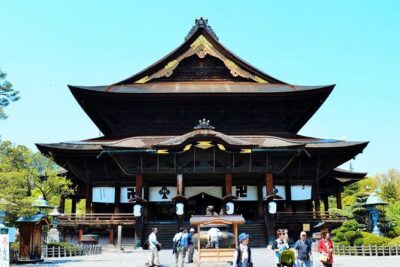
1-Day Snow Monkeys, Zenko-ji Temple & Sake in Nagano
Read our review →
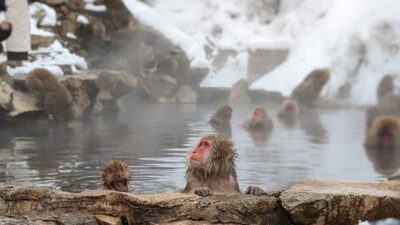
Snow Monkey 1 Day Tour with Beef Sukiyaki Lunch
Read our review →
1-Day Tour from Nagano and Matsumoto Kamikochi & Matsumoto Castle
Read our review →
1-Day Snow Monkeys & Snow Fun in Shiga Kogen Tour
Read our review →
Wild Japanese Flying Squirrel Watching Tour in Nagano
Read our review →Browse the lists this tour appears in