
Reviewed · TAKAYAMA TOURS
Hida Takayama, Shirakawa-go+Observatory|Day Trip from Nagoya
The real prize here is the Shirakawa-go Observatory, where the famous thatched roofs spread below you and Gifu’s mountains fill the distance. I like that the viewpoint is guaranteed, not left to chance, and that the day pairs it with Takayama’s old town, where canals, sake breweries, lattice-fronted homes, and noren curtains give the visit a strong sense of place.
I also like the simple Nagoya departure and the chance to cover two hard-to-reach Hida sights in one day. The catch is the schedule: five hours are spent on transfers, leaving 2.5 hours in Takayama and 1.5 hours in Shirakawa-go. This suits you if you value convenience and a broad first look, but not if you want slow village walks or long meals.
Key points to know before you book
- The observatory is guaranteed: You get the classic high view over Shirakawa-go, weather permitting for visibility.
- Takayama comes first: You have 2.5 hours for lunch, a guided walk, and free sightseeing in the old town.
- Shirakawa-go is a short visit: The village portion lasts about 1.5 hours, so plan your priorities before arrival.
- Most of the day is on the bus: Transfers take about 2.5 hours from Nagoya, 1 hour between stops, and another 2.5 hours back.
- Meeting instructions matter: The pre-tour email lists the guide’s name and bus number. Show that email to a yellow-flag staff member at the meeting point.
- The price is low for the route: At $50 per person, the bus and guided stops offer good value, but meals, tickets, and personal costs are extra.
Why this Nagoya day trip works
Takayama and Shirakawa-go sit far from Nagoya in the Hida region of central Honshu. Reaching both by public transport takes planning, transfers, and more time than many people have on a short Japan visit.
This tour solves that problem with one bus, one day, and a guide available in English, Japanese, Chinese, and Traditional Chinese. You leave Nagoya, see Takayama’s historic center, continue to Shirakawa-go, visit the high viewpoint, then return to the same Nagoya area.
That convenience is the main reason to book. You are not buying an unhurried regional stay. You are buying access to two major Hida sights without arranging the route yourself.
The day lasts 10 hours. That sounds long because it is long, but the distances explain it. The trip includes about six hours of road travel, split into a 2.5-hour ride out, a 1-hour transfer between destinations, and a 2.5-hour ride back.
I would treat the bus time as part of the tradeoff, not a surprise. Bring water, snacks, and something comfortable for the ride. The schedule gives you a useful introduction to the region, while a later overnight stay would be better for a slower visit.
A few more Takayama half-days to weigh up
- From Takayama: Guided Day Trip to Takayama and Shirakawa-go
★ 4.9 · 113 reviews - From Nagoya: Shirakawa-go & Hida-Takayama Full Day Trip
★ 4.3 · 24 reviews - Shirakawago&HidaTakayama&GujoHachiman 1 Day Tour from Nagoya
★ 4.5 · 14 reviews
Starting in Nagoya and finding the right bus
There are two possible starting options, and the meeting point depends on the option you book. The listed Nagoya meeting location is Ministop Meieki Tsubakicho, written in Japanese as ミニストップ 名駅椿町店.
Allow time to find the exact meeting place. A particularly useful instruction is to rely on the email sent the day before, not only the QR code. That email includes the guide’s name and bus number.
Several yellow flags may be visible at the departure area. If you are unsure, show the email to any yellow-flag staff member and ask to be connected with your guide. You can also check the parked buses for the matching vehicle number.
This is a small detail, but it can prevent a stressful start. Keep the email open on your phone, and do not assume the QR code alone is enough for check-in.
Guides may speak English, Japanese, Chinese, or Traditional Chinese. One guide identified as Tani received especially warm praise for careful driving and clear, polite explanations in Japanese. Guide assignments can vary, so I would not book on the assumption that Tani will lead your departure.
Takayama’s old town, 2.5 hours of canals and timber fronts
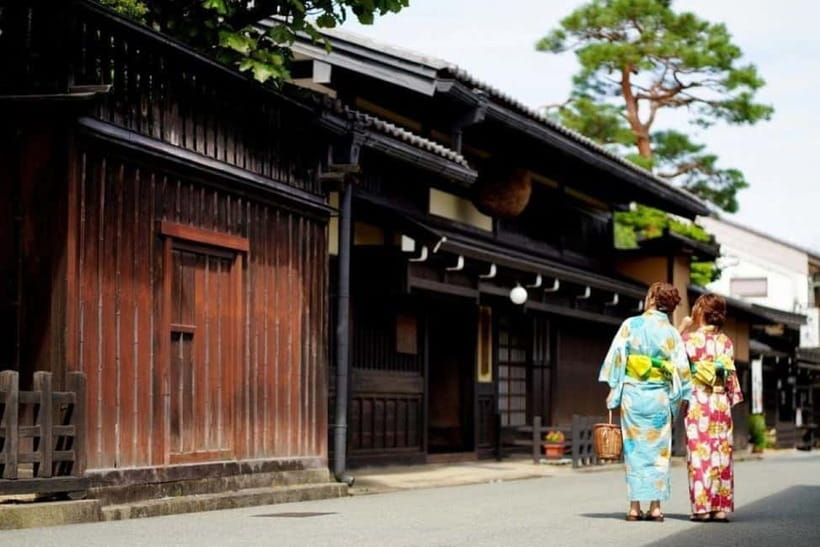
After about 2.5 hours on the road, you reach Hida Takayama. The old town is the most structured part of the visit, with time for a guided walk, lunch, and your own short exploration.
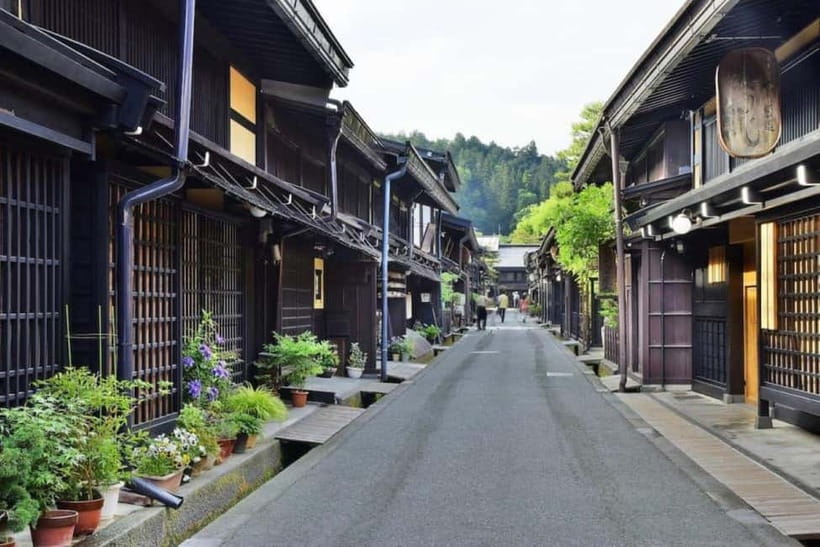
Takayama’s traditional streets are easy to read as you walk. Irrigation canals run beneath the eaves, and dark timber townhouses line the road. Latticework fronts, large wooden doors, and noren curtains give the streets a consistent old-town character without requiring a museum visit to understand what you are seeing.
Look for cedar-leaf balls called sakebayashi hanging outside sake breweries. They serve as signs for the breweries and change appearance as the season progresses. This is the sort of detail a guide can point out quickly, helping you notice things you might otherwise pass by.
The old town is also a working commercial area. Long-established shops, food sellers, and small stores sit inside the traditional buildings. That makes the stop more useful than a static historic display, though it also means the streets can feel crowded, especially during popular visiting periods.
You have 2.5 hours here, which is enough for a focused walk and lunch. It is not enough to inspect every shop, visit several indoor sights, and wander without a plan. I suggest deciding in advance what matters most: the guided street walk, lunch, shopping, or photographs.
The included food situation needs careful attention. The description mentions a buffet breakfast and dinner at Toyama Royal Tonami Hot Spring Resort, but the inclusion details say meals and beverages are not included. Since those statements conflict, confirm the exact meal arrangement before paying or budgeting around it. Do not assume breakfast or dinner is part of the $50 price.
Lunch is also listed as part of the Takayama stop, but meals are generally excluded from the included services. Plan to pay separately unless your booking confirmation clearly says otherwise.
The one-hour transfer to Shirakawa-go
The ride from Takayama to Shirakawa-go takes about one hour. This is a useful break after walking Takayama, though the bus remains the main way you move through the region.
The road leads into the Hida area, known for mountain scenery and traditional rural settlements. The supplied details do not promise a particular roadside stop, so I would think of this section as transport time rather than a sightseeing segment.
Keep your camera ready for the arrival at Shirakawa-go, but save your main photo plans for the observatory. The schedule is tight, and stopping for every possible view could leave you short of time in the village.
Same base, a completely different sort of day:
- Kanazawa: World Heritage Shirakawa-go Morning Guided Tour
★ 4.9 · 988 reviews - Kanazawa: World Heritage Shirakawa-go & Two Local Experience
★ 4.9 · 274 reviews - Kanazawa/Takayama: Shirakawago & Takayama Private Day Tour
★ 4.8 · 172 reviews - Departing from Takayama [Regular sightseeing bus] World Heritage Sites Shirakawago and Gokayama Ainokura
★ 4.5 · 137 reviews
Shirakawa-go’s thatched houses and living village
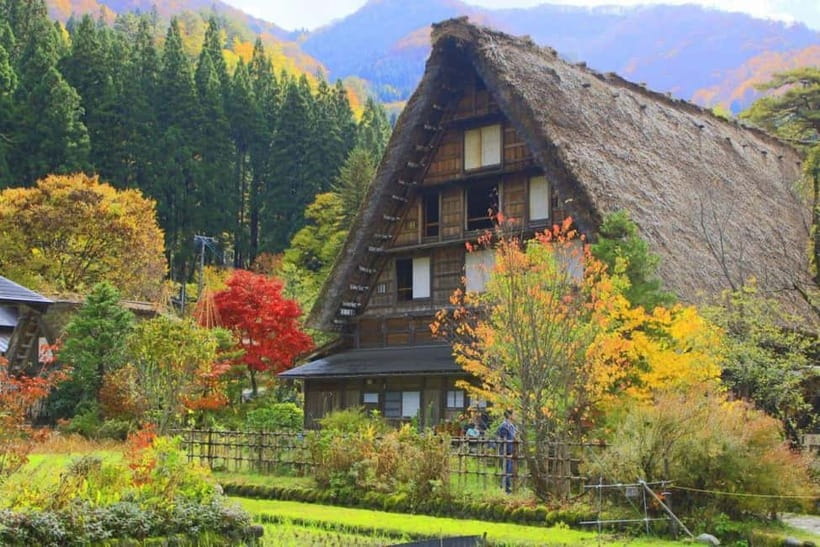
Shirakawa-go is famous for its Gassho-zukuri houses, large steep-roofed buildings designed to handle heavy winter snow. More than 100 of these structures remain in the village, and people still live there.
That last point matters. This is not simply an open-air display assembled for sightseeing. You are walking through a real community, so the rules are practical: do not touch plants, do not litter, and do not smoke. Flash photography is also prohibited.
You have about 1.5 hours in Shirakawa-go, including the guided visit and sightseeing walk. That is enough to see the village’s main character and reach the viewpoint, but you need to manage the clock.
I would put the observatory first if the view is your priority. Then use the remaining time for the houses, lanes, and photographs at ground level. If you spend the whole visit browsing, you may have to rush the viewpoint.
The traditional buildings show practical knowledge as much as visual charm. Their roof shape, timber construction, and continued use connect the village to local weather and daily life. The surrounding mountains also explain why the settlement feels distinct from a city neighborhood in Nagoya or a more polished historic district.
The area includes other sights connected with local customs, traditional techniques, and nature. Hirase Onsen is mentioned as one nearby point of interest, with a source at the foot of Mount Hakusan, but this tour does not promise a separate hot spring visit. Do not count on time for it during the 1.5-hour village stop.
The Shirakawa-go Observatory is the visual payoff
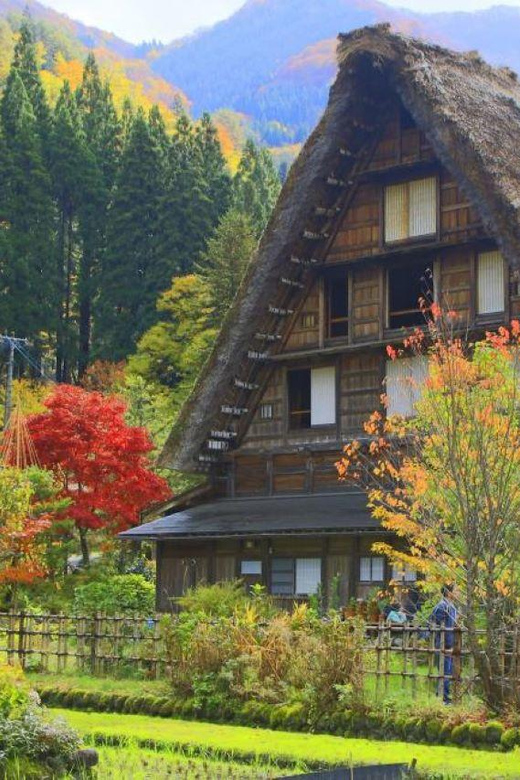
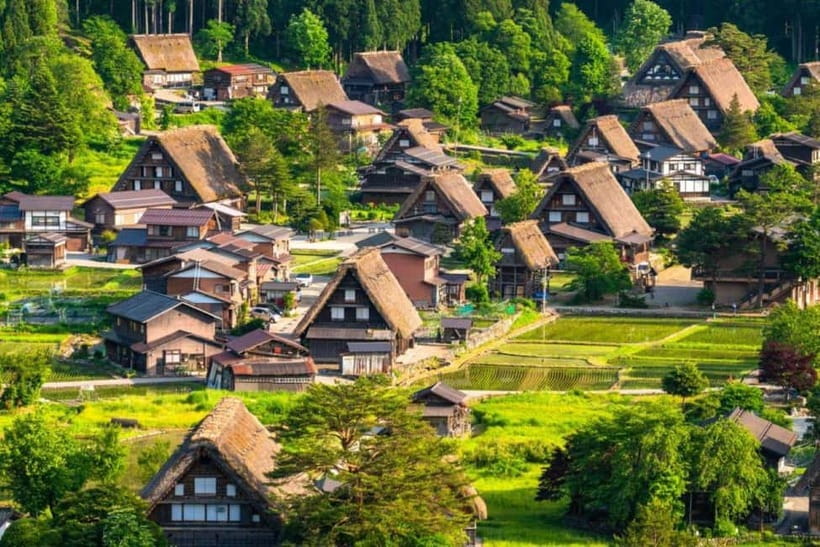
The observatory, also called the Ogimachi Castle Observation Deck, gives you the view most associated with Shirakawa-go. From above, you can see the thatched houses gathered below, with the mountains of Gifu behind them.
This is why the guaranteed stop matters. Ground-level streets show construction details and village life, but the high view explains the settlement’s full shape in one glance. You see how the houses sit together within the mountain setting rather than as isolated buildings.
Weather will affect the experience. The tour guarantees the visit to the observatory, not a clear sky. Check the forecast and dress for conditions. On a hazy or rainy day, the outline of the village may be softer, but the viewpoint remains an important part of the route.
Wear shoes with a firm sole. You will walk a lot between the bus, Takayama’s streets, Shirakawa-go, and the observation area. Comfortable walking shoes are specifically recommended, and I would take that advice seriously.
What the $50 price really includes
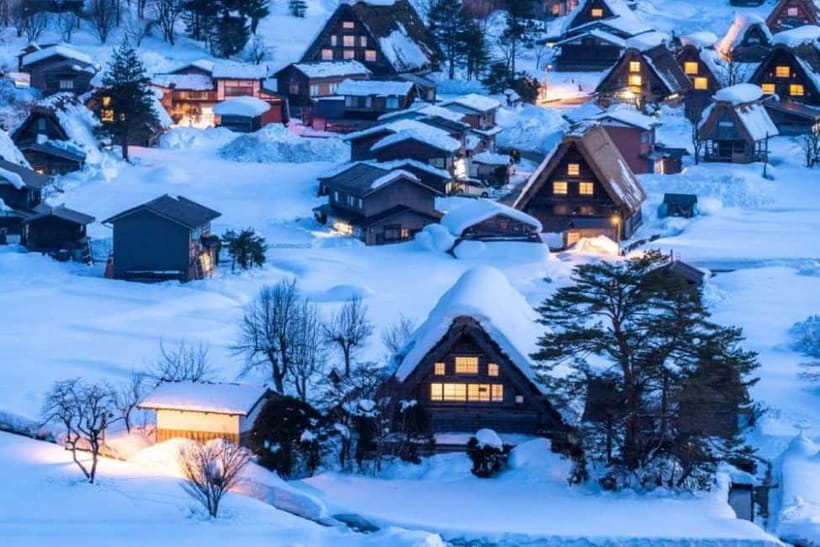
At $50 per person, this is an inexpensive way to connect Nagoya with two major Hida sights. The bus, driver, service charge, Takayama guided tour, and visit to the Gassho-zukuri village are included.
The value is strongest for people who would otherwise need to coordinate several transport legs. You also get a guide to frame the old town and village, which can make a short visit feel more purposeful.
The price does not cover transportation to the starting point, food and drinks, attraction tickets, personal purchases, or other expenses not listed. Set aside extra money for lunch and anything you buy in Takayama or Shirakawa-go.
The reference to buffet breakfast and dinner at Toyama Royal Tonami Hot Spring Resort deserves another warning. Because meals are described in one part of the information but excluded in another, ask the operator to clarify exactly what your selected option contains. This is particularly important if you are comparing the tour with a package that includes an overnight resort stay.
There is also no reason to pay for this tour solely for free cancellation or delayed payment, but those terms do add flexibility. You can cancel up to 24 hours in advance for a full refund, and the reserve-now, pay-later option lets you hold a place without paying immediately.
Who will enjoy this day, and who will not
I would recommend this trip to a first-time Japan visitor based in Nagoya who wants to see Takayama and Shirakawa-go without spending a night away. It also suits you if the observatory view is a top priority and you prefer a set route over independent transport planning.
It works well for photographers who want the broad Shirakawa-go view, culture-minded visitors interested in traditional homes, and anyone who likes having a guide explain small details such as sakebayashi and the old-town canals.
The tour is less suitable if you dislike long bus rides. Six hours of transfer time is a major part of the day, and the two sightseeing stops are carefully limited.
It is also not suitable for children under five, pregnant women, people with mobility impairments, wheelchair users, or people with heart problems. The walking and transfers can be demanding, and the service does not list wheelchair suitability.
Dress for the forecast and bring a water bottle and snacks. Follow the site rules, especially the bans on smoking, flash photography, littering, and touching plants.
My verdict: book it for access, not for a slow visit

I would book this tour if you have one free day from Nagoya and want the simplest way to see Takayama and Shirakawa-go together. The $50 price, multilingual guide options, and guaranteed observatory visit make a strong package for a long-distance day trip.
I would skip it if you already plan to stay in Hida, want extended time in the village, or dislike spending much of a holiday on a bus. Before booking, confirm your exact meeting point and clarify the conflicting meal information.
For the best day, save the pre-tour email, note the bus number and guide name, wear walking shoes, and make the observatory your first Shirakawa-go priority. If your guide is Tani, you may also benefit from the careful driving and clear explanations that have been specifically praised.
FAQ
How long is the Hida Takayama and Shirakawa-go day trip?
The activity lasts 10 hours. The schedule includes about 2.5 hours from Nagoya to Takayama, 2.5 hours in Takayama, 1 hour to Shirakawa-go, 1.5 hours in Shirakawa-go, and 2.5 hours back to Nagoya.
What is the price of the tour?
The listed price is $50 per person. Food, drinks, attraction tickets, transport to and from the meeting point, personal expenses, and other unlisted costs are not included.
Is the Shirakawa-go Observatory included?
Yes. The tour includes a visit to the Shirakawa-go Observation Deck, also called the Ogimachi Castle Observation Deck, with a panoramic view over the village and the Gifu mountains.
What languages are available?
Live guiding is available in English, Japanese, Chinese, and Traditional Chinese.
Where does the tour meet in Nagoya?
The meeting point may vary according to the option booked. One listed location is Ministop Meieki Tsubakicho, written as ミニストップ 名駅椿町店. Check your booking details for the exact point.
What should I bring?
Bring comfortable walking shoes. You should also check the weather, dress appropriately, and consider carrying water, snacks, and a camera.
Can I cancel the tour or pay later?
You can cancel up to 24 hours in advance for a full refund. The reserve-now, pay-later option allows you to book without paying immediately.
Just added around Takayama
- Private Afternoon Cycling Tour in Hida-Furukawa★ 5.0 · 109 reviews
- Gifu Samurai Sword Town;Japanese Damascus Knife Making Experience★ 5.0 · 27 reviews
- Private-group Morning Cycling Tour in Hida-Furukawa★ 5.0 · 105 reviews
- Short Morning Cycling Tour in Hida★ 5.0 · 17 reviews
- Magome & Tsumago Nakasendo Full-Day Private Trip with Government-Licensed Guide★ 5.0 · 20 reviews
- Magome & Tsumago Nakasendo Trail Day Hike with Government-Licensed Guide★ 5.0 · 38 reviews
- Frozen fall trekking★ 5.0 · 21 reviews
- Explore Kiso Valley : Magome – Tsumago Mountain Trail Walk★ 5.0 · 33 reviews
Takayama Tours, compared.
World Heritage Shirakawa-go Morning Guided Tour
Read our review →
World Heritage Shirakawa-go & Two Local Experience
Read our review →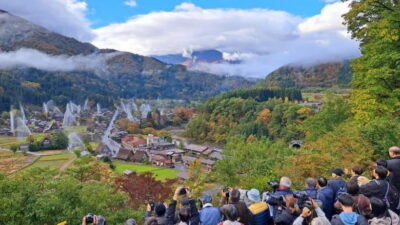
Kanazawa/Takayama: Shirakawago & Takayama Private Day Tour
Read our review →![Departing from Takayama [Regular sightseeing bus] World Heritage Sites Shirakawago and Gokayama Ainokura](https://media3.thejapanesetraveller.com/wp-content/uploads/departing-from-takayama-regular-sightseeing-bus-world-heritage-sites-shirakawago-and-gokayama-ainokura-400x267.jpg)
Departing from Takayama [Regular sightseeing bus] World Heritage Sites Shirakawago and Gokayama Ainokura
Read our review →
Private Afternoon Cycling Tour in Hida-Furukawa
Read our review →
Private-group Morning Cycling Tour in Hida-Furukawa
Read our review →
Onigiri and miso soup making at a buddhist temple
Read our review →Browse the lists this tour appears in