
Reviewed · TOKYO TOURS
From Tokyo 1-Day Kyoto English-guided Tour by Bullet Train
Kyoto is only about two hours from Tokyo by Shinkansen, but the distance between the cities can make a visit seem out of reach. This tour solves that problem in one long day, pairing the famous bullet train with three major Kyoto sights: Fushimi Inari Taisha, Sanjusangen-do Hall, and Kiyomizu-dera.
I like two things right away. First, station staff guide you from Tokyo City i to the correct train, then meet you again at Kyoto Station. Second, you get a useful introduction to Kyoto without having to plan buses, temple tickets, lunch, or return rail travel yourself. The catch is simple: Kyoto time is short, and crowds plus traffic can make the afternoon feel rushed.
Key points at a glance
- Mt Fuji from the train: On a clear morning, look west from the Shinkansen for a possible view of Japan’s famous peak.
- Three classic Kyoto sights: See the red torii gates at Fushimi Inari, 1,001 Kannon statues at Sanjusangen-do, and the hilltop platform at Kiyomizu-dera.
- Guided connections: Staff escort you to the Shinkansen in Tokyo and meet you on the Kyoto platform, a big help in busy stations.
- Hotel lunch included: The Miyako Hotel Kyoto Hachijo serves a Western-style lunch, with a 2025 semi-buffet and a vegetarian request option.
- Standard or first-class rail: You can choose an ordinary or first-class Shinkansen ticket, though the first-class upgrade costs more.
- A very full day: The tour starts at 9:20 a.m. and usually reaches Tokyo between 8:30 and 9:30 p.m.
The Shinkansen makes Kyoto possible in one day
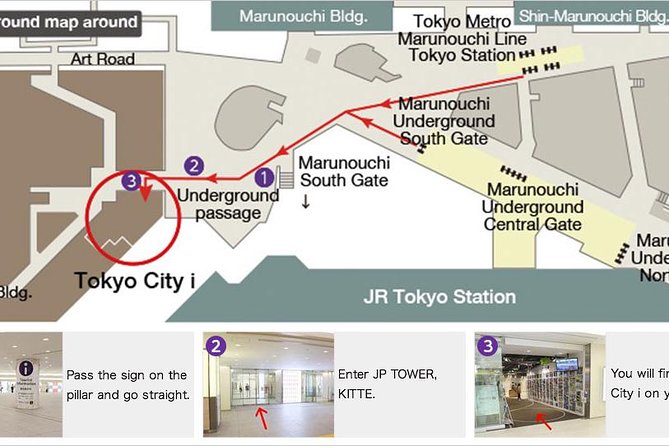
The experience begins at Tokyo City i in the KITTE building near Tokyo Station. Be there before the 9:20 a.m. start. An English-speaking tour conductor takes you to the Shinkansen platform, checks that you are on the right train, and remains with the group until departure.
That handoff matters. Tokyo Station is large, busy, and not always intuitive when you are carrying luggage or dealing with unfamiliar ticket gates. The staff do not ride with you, however. Once the train leaves, you are on your own until the Kyoto team meets you at the other end.
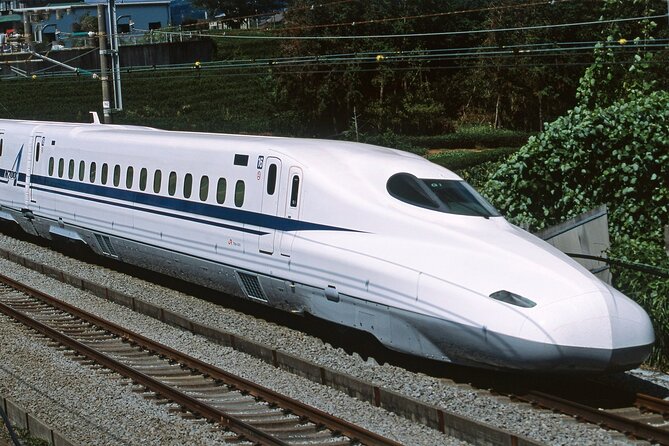
The ride takes about two hours and 20 minutes. It is one of the main pleasures of the day. The Shinkansen is quiet, quick, and comfortable, and a clear-weather seat can give you a fine view of Mt Fuji. Choose your seat carefully if the mountain view matters to you, since the tour notes that seats may not be designated.
You can book standard class or first class, called the Green Car in Japan. The upgrade can make sense for a ride of more than two hours each way, especially if you value extra comfort. Still, the tour is already priced at $452.45 per person, so standard class is the sensible choice for many people.
The return train is a Nozomi Shinkansen. Guides and station staff again help with the connection, but you should pay close attention to the meeting instructions. The day can end at Shin-Yokohama, Shinagawa, or Tokyo Station, with an approximate arrival window of 8:30 to 9:30 p.m.
More rail days around Tokyo:
- Mt Fuji and Hakone 1-Day Bus Tour Return by Bullet Train
★ 5.0 · 26,383 reviews - Mt Fuji & Hakone Cruise, Drum Show Bullet Train 1 Day from Tokyo
★ 4.0 · 7,413 reviews - Tokyo Mt Fuji 5th St & Hakone Cruise Bus Tour w/Bullet Train
★ 4.4 · 5,024 reviews
A smooth Kyoto arrival, followed by hotel lunch
When you step off the train in Kyoto, English-speaking staff wait on the platform. They escort you to the lunch venue, which is across from the station at the Miyako Hotel Kyoto Hachijo.
Lunch is Western-style rather than a traditional Kyoto meal. In 2025, it is served as a semi-buffet, and you can request a vegetarian main dish when booking. Same-day changes are not accepted. For 2026, the meal is listed as a vegetarian-friendly Western-style set menu.
The hotel setting is comfortable and practical after the train ride. Several people have especially enjoyed the food, including the buffet selection, seafood, pastries, and desserts. Still, if your dream is a small local restaurant serving seasonal Kyoto dishes, this lunch may feel generic. It is included, convenient, and well organized, but it is not the most local meal of the day.
After roughly 40 minutes, an English-speaking staff member walks you to the JTB Sunrise Tours Desk at Kyoto Avanti. This is where the Kyoto sightseeing group gathers. You may wait while people arriving on a related morning tour join the bus. That pause has been a weak spot for some departures, so do not expect every minute of the schedule to be filled with sightseeing.
Fushimi Inari and the first walk beneath the torii gates
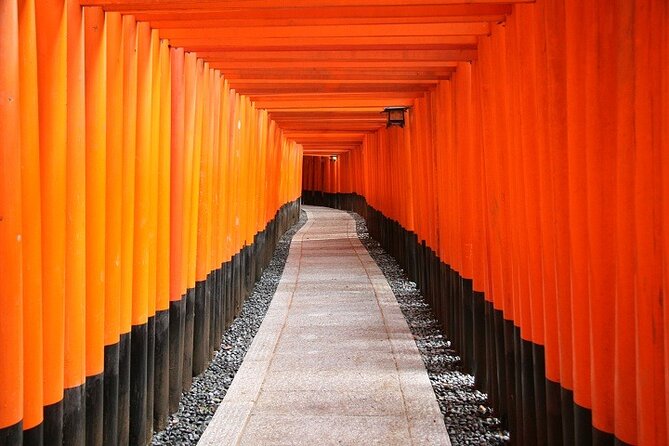
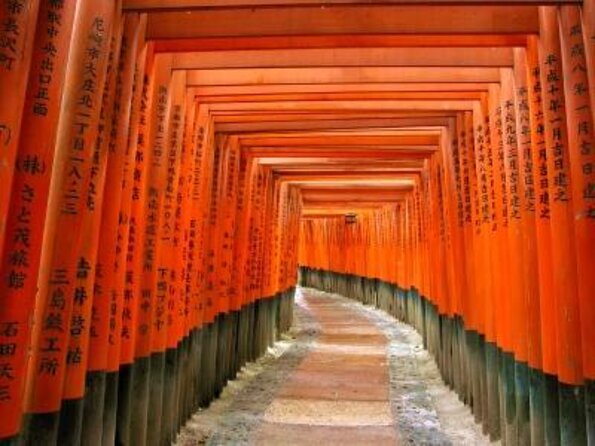
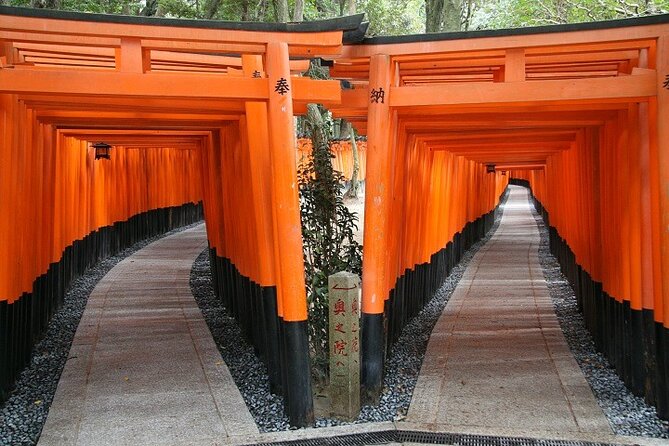
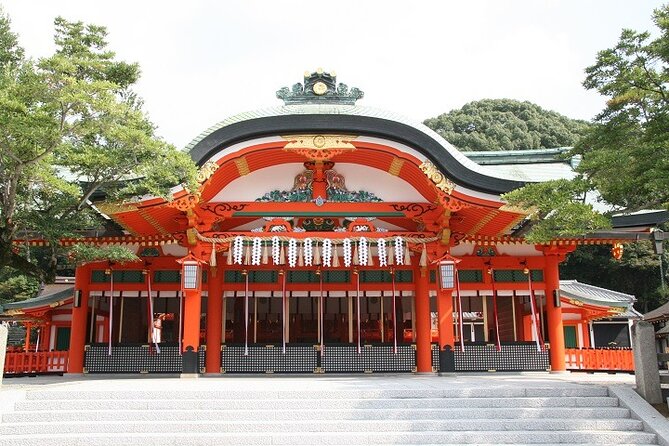
The first temple-area stop is Fushimi Inari Taisha, the head shrine for roughly 40,000 Inari shrines across Japan. Inari is associated with rice, business, and prosperity, and the shrine is famous for its long rows of bright red-orange torii gates.
The bus drops you near the shrine, but you still walk from the parking area. Your time here is about 30 minutes. That is enough to see the opening section of the Senbon Torii, take photographs, and hear an explanation of the shrine’s role. It is not enough to hike far up Mt Inari.
This distinction matters. The torii gates continue for a long distance up the mountain, and the famous photographs usually come from walking beyond the first crowded section. On this tour, you get the visual introduction rather than the full mountain visit. Some departures allow only a brief stretch at the first gates before the group returns to the bus.
Fushimi Inari is also one of Kyoto’s busiest sights. The narrow passage beneath the gates can become packed, especially at popular times of day. Keep your guide in sight, move promptly, and treat this as a short first taste rather than a quiet shrine visit.
Sanjusangen-do, where 1,001 statues fill a wooden hall
Sanjusangen-do offers a sharp contrast to the open-air torii gates. The temple’s name refers to the 33 bays of its main hall, and the building is described as the world’s longest wooden structure.
Inside, the main sight is the Thousand-Armed Kannon surrounded by 1,000 life-size statues of Buddhist deities. Together, the figures create a powerful, orderly scene. The statues date from the 13th century, and the hall also connects with Japanese archery traditions.
You have about 30 minutes here. That is enough for a guided explanation and a close look at the statues, but the visit is tightly timed. Photography is not allowed inside the hall, so this stop is about looking and listening rather than collecting pictures.
This may be the most rewarding stop for anyone interested in Buddhist art. It is also the least flexible. You follow the group through the hall, and there is no spare time to linger over individual figures. Pay attention to the guide’s explanation, since the visual impact is much greater when you understand what you are seeing.
A few more Tokyo half-days to weigh up
- 1-Day Tokyo Bus Tour
★ 5.0 · 14,250 reviews - Tokyo: DisneySea 1-Day Passport
★ 4.5 · 2,726 reviews - Tokyo Disneyland 1-Day Passport
★ 4.6 · 2,512 reviews - Tokyo Customized Private Tour (Must See Places in 1 Day)
★ 5.0 · 1,499 reviews
Kiyomizu-dera delivers the big Kyoto view
Kiyomizu-dera is the final and longest visit, with about one hour and 10 minutes scheduled. The temple sits on a hillside, and its wooden platform offers broad views over Kyoto. This is the stop most closely tied to the classic postcard image of the city.
The route includes the historic shopping lane leading uphill toward the temple. You can browse souvenirs, pick up snacks, and see the approach that has served temple visitors for generations. The shopping street adds welcome color to a schedule otherwise focused on monuments.
The problem is crowding. Kiyomizu-dera is extremely popular, and the approach can become so full that simply walking uphill takes time. If traffic has delayed the bus, your actual time at the temple can shrink. Some departures reach the final stop late in the afternoon, leaving less time for the view and shops.
You should not treat the 70-minute allowance as 70 quiet minutes at the temple. Some of it goes to walking, gathering, and returning to the bus. Stay close to the meeting point instructions. The return train will not wait for a missing participant, and the schedule has little slack.
Even with those limits, Kiyomizu-dera is a strong finish. The combination of temple architecture, hillside views, and the old shopping lane gives you the broadest sense of Kyoto’s appeal. I would save a few minutes for the view before spending too much time in the shops.
Guide quality and the tag-team format
The tour uses a National Government Licensed English Guide Interpreter, but the guide you receive depends on the departure. Guides named in the supplied information include Tammy, Yumi, KC, and Momo, along with other English-speaking staff handling the rail connections.
The staffing system is unusual but useful. One person helps you in Tokyo, another meets you in Kyoto, a local guide leads the sightseeing, and another staff member helps organize the return train. You may be passed from one person to another several times. That can feel impersonal, but it also reduces the risk of getting lost in the stations.
The strongest guide experiences combine clear English with lively explanations of Buddhism, shrine customs, and Kyoto’s history. Guides such as Tammy, Yumi, KC, and Momo have been singled out for being energetic, helpful, or well informed. English ability can vary by guide, so explanations may not always be equally easy to follow.
This is a group tour, with a maximum of 40 participants. A group that size is manageable with a strong guide, but it can slow down at temple entrances, bus loading points, and crowded sidewalks. You should expect set meeting points and little freedom to wander far from the group.
What the $452.45 price really covers
The price is high for an afternoon of sightseeing, but the rail travel changes the calculation. You are paying for round-trip Shinkansen transportation between Tokyo and Kyoto, a local bus tour, temple admissions, lunch, English guidance, and staff assistance at both stations.
The ticket alone is not the whole value. For a first visit to Japan, the escort to the correct train can remove a lot of stress. You also avoid working out Kyoto’s local transportation, buying several entrance tickets, and finding a restaurant that can feed a group on a strict schedule.
Still, the price is harder to justify if you already know Japan’s rail system and prefer to travel independently. You spend about four hours and 40 minutes on the Shinkansen, plus time on the bus and walking. Kyoto sightseeing is limited to three major sites, and the lunch is Western-style rather than a special local food experience.
The tour makes its best financial sense for someone based in Tokyo who cannot add a Kyoto hotel night. If you have two or more days available, staying in Kyoto will give you more time, less pressure, and better access to early morning or less crowded temple visits.
Practical details that can make or break the day
Large luggage requires planning. You cannot bring a bag onto the Shinkansen if its total height, width, and length exceeds 160 centimeters. Use a luggage delivery service on your own if your suitcase is larger. A small day bag is far easier for this schedule.
Children up to five years old may join free, but they do not receive a Shinkansen seat, bus seat, or lunch. If you need those items, book the child rate. Participants under 18 need written parental permission, and anyone under 15 or not yet in middle school must be accompanied by a parent or guardian.
The tour is intended for international visitors, and residents of Japan cannot book it. Most people can participate, and the meeting point is near public transportation. Train times may change, and traffic can alter the order of stops or the length of each visit.
Rain can affect the experience, especially at Fushimi Inari and Kiyomizu-dera. Sanjusangen-do provides useful shelter, but the outdoor walks and hillside approach are less pleasant in wet weather. Comfortable shoes are essential, since every stop includes walking from a parking area or station.
Vegetarian meals must be requested when you book. In 2025, only the main dish can be changed, while the 2026 meal is listed as vegetarian-friendly. Read the current meal description at booking so you know what you are choosing.
Free cancellation is available until 24 hours before the start time. Changes or cancellations inside that window are not refunded.
Who should book this Tokyo to Kyoto day trip?
I would choose this tour if you are staying in Tokyo, have limited time in Japan, and want a guided first look at Kyoto without handling the rail details yourself. It is especially useful for first-time visitors who want someone to walk them to the correct platform and meet them after the train arrives.
You will also appreciate it if the Shinkansen itself is part of the goal. The train ride is not just transportation here. It is one of the day’s headline experiences, with a possible Mt Fuji view on the outbound journey.
I would not choose it if your main goal is a quiet or deeply personal Kyoto experience. The schedule gives you only a short afternoon in the city, and the three stops can be crowded. You will see the highlights, but you will not have time for a long walk up Fushimi Inari, a slow temple visit, or much unscheduled exploration.
Final decision: a useful Kyoto sampler, not a complete Kyoto visit
Book this tour when a Kyoto overnight is impossible and you want the simplest way to see the city’s most famous sights from Tokyo. The station escorts, included lunch, admissions, and return Shinkansen make the day easy to manage, and the guides can add welcome context to places that might otherwise blur together.
Skip it when you can spare two days in Kyoto or when you prefer independent travel. The $452.45 cost is considerable, and much of the day is spent on trains and transfers. For the right schedule, though, this is a practical Kyoto sampler: long, crowded, and rushed, but still a real chance to see Fushimi Inari, Sanjusangen-do, and Kiyomizu-dera in one ambitious day.
FAQ
How long is the Tokyo to Kyoto tour?
The tour lasts approximately 12 hours. It starts at 9:20 a.m., and the approximate return time is between 8:30 and 9:30 p.m.
Where does the tour start?
The meeting point is Tokyo City i in the KITTE building, at 2-chome 7-2 Marunouchi, Chiyoda City, near Tokyo Station.
How long is the Shinkansen ride?
The train journey takes approximately two hours and 20 minutes each way.
Does the tour include lunch?
Yes. Lunch is served at the Miyako Hotel Kyoto Hachijo. The 2025 option is a Western-style semi-buffet, and a vegetarian main dish must be requested when booking.
Which Kyoto sights are included?
The tour visits Fushimi Inari Taisha, Sanjusangen-do Temple, and Kiyomizu-dera Temple.
Can I choose first-class train seating?
Yes. The tour offers a choice between standard and first-class bullet train tickets.
Can I bring large luggage?
Not if the total height, width, and length exceeds 160 centimeters. You must arrange a delivery service on your own for luggage larger than that limit.
What happens if I need to cancel?
You can receive a full refund if you cancel at least 24 hours before the experience starts. Cancellations or changes made less than 24 hours in advance are not refunded or accepted.
Just added around Tokyo
- Private Transfer from Narita Airport to Yokohama Port and City★ 4.5 · 17 reviews
- Private Arrival Transfer : Narita International Airport to Central Tokyo City★ 4.5 · 12 reviews
- Narita Airport(NRT): Private Transfer to Tokyo/Yokohama 1-9pax★ 5.0 · 47 reviews
- [Narita Airport Terminals 1, 2] 40-60km Sawara Itako Historic Bike Tour★ 5.0 · 13 reviews
- 3 Day Japan Highlights Tour: Tokyo, Mt.Fuji, Nara, Kyoto, Osaka★ 5.0 · 22 reviews
- Small Town in the Big City: Tasting Tokyo’s Kichijoji★ 5.0 · 195 reviews
- Small Town in the Big City: Tasting Tokyo’s Kichijoji★ 5.0 · 16 reviews
- The 10 Tastings of Tokyo With Locals: Private Street Food Tour★ 5.0 · 48 reviews
Tokyo Tours, compared.

Mt Fuji and Hakone 1-Day Bus Tour Return by Bullet Train
Read our review →
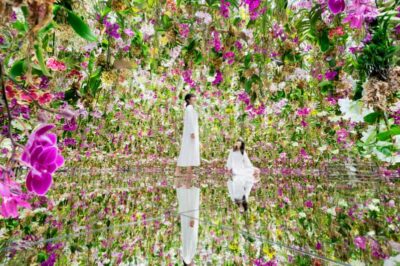
teamLab Planets TOKYO Digital Art Museum Entry Ticket
Read our review →
Mt Fuji & Hakone Cruise, Drum Show Bullet Train 1 Day from Tokyo
Read our review →
Sumo Show Experience with Chicken Hot Pot and a Photo
Read our review →
Shinjuku Food Tour (13 Dishes at 4 Local Eateries)
Read our review →
Tokyo Mt Fuji 5th St & Hakone Cruise Bus Tour w/Bullet Train
Read our review →
Flagship 2-Hours Official Street Go-Kart Tour – Tokyo Bay Shop
Read our review →Browse the lists this tour appears in