
Reviewed · SPA & HOT SPRINGS
Become a local! A Walking Tour of Arts, Crafts & Onsen Culture
Beppu’s best stories are found away from the famous Hells, in market lanes, working studios, old bathhouse streets, and ordinary buildings still used by local people. This small-group walk takes you through that quieter side of town, with stops at a bamboo factory founded in 1908 and a century-old Japanese house turned into an art and community space.
I like the close contact with local makers, and I like the small maximum of eight people, which gives the walk a personal feel. Guides such as Masahiro Ide, known as Masa, have been praised for clear English, humor, and strong knowledge of Beppu. The main consideration is simple: despite the title, you do not go inside an onsen, and the tour does not visit the Hells.
At a glance: what makes this Beppu walk different
- A working bamboo factory: See Oita bamboo shaped into useful and decorative products by hand.
- Downtown streets beyond the usual route: Explore alleys and cultural corners that are easy to miss on your own.
- Artist contact: Visit Kiyoshima Apartment and, when available, meet creators in their studios.
- A century-old Japanese house: Space Beppu combines a contemporary gallery, shop, community space, and photographs of old Beppu.
- A genuinely small group: The tour accepts no more than eight people, making conversation with the guide easier.
- Flexible workshop element: The one-hour arts stop is not always available because it depends on the instructor’s schedule.
Why Beppu’s ordinary streets are worth your time
Beppu is famous for hot springs, but the city is more than steam, red mud, and sightseeing buses. Its downtown streets hold a mix of working businesses, old homes, small creative projects, and places shaped by the daily lives of residents.
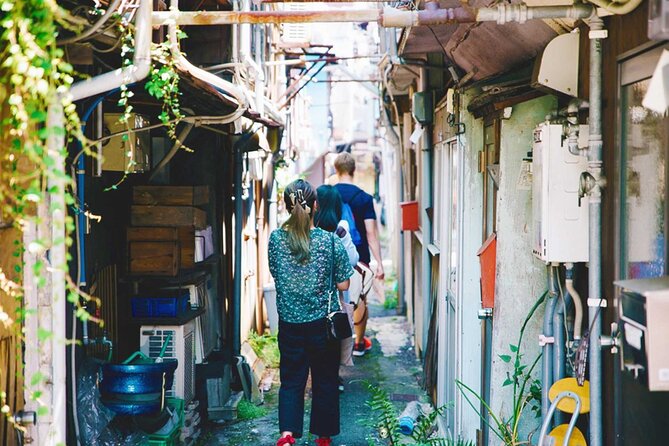
That is the focus here. You will not spend the morning ticking off major attractions. Instead, you will walk through places that explain how Beppu functions as a living city. You might see a local market, a modest workshop, an old building given a new purpose, or a studio where an artist actually works.
I see this as a useful first or final-day activity. Early in a stay, it helps you understand the city before visiting other areas. At the end, it gives you a more personal way to remember Beppu than another standard sightseeing stop.
The walk lasts about two to two and a half hours. That is long enough for several substantial stops without taking up an entire day. You should still be comfortable walking for that period, and sensible shoes are a good idea. The route runs through downtown Beppu, with the start at WANDER COMPASS BEPPU inside the Beppu station shopping area.
More walking tours in Japan:
- Kyoto Geisha Walking Tour: Gion District & Hidden Gems
★ 4.7 · 3,273 reviews - Tokyo Tsukiji Fish Market Food and Culture Walking Tour
★ 5.0 · 3,184 reviews - Kyoto: Gion Magical Night Walking Tour with Geisha Trivia
★ 4.9 · 2,393 reviews
Beppu Station Market: a quick look at local life
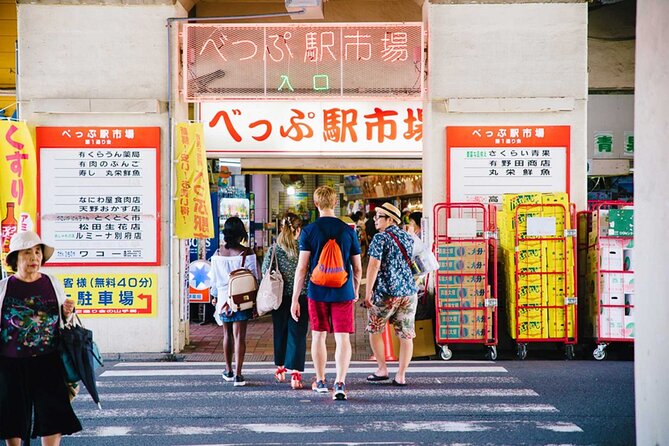
The first stop is Beppu Station Market, where you spend about ten minutes looking at fresh fish and vegetables. It is a short visit, but it sets the tone well.
A local market gives you a better sense of the city than a polished shop aimed at sightseers. You can see the kinds of food sold for everyday use and watch ordinary trade taking place close to the station. The guide can also help you understand what you are seeing and provide a bridge for simple interaction with local residents.
Do not expect a long food tour or tastings. Food and drinks are not included, and this stop is mainly about observation and conversation. If you want to buy something, bring your own spending money, though the tour does not promise time for a full meal.
The market is also a practical reminder that Beppu is not only a resort town. Its hot springs attract people from around Japan and beyond, but residents still shop, work, and eat here in the usual ways.
The 1908 bamboo workshop in Oita
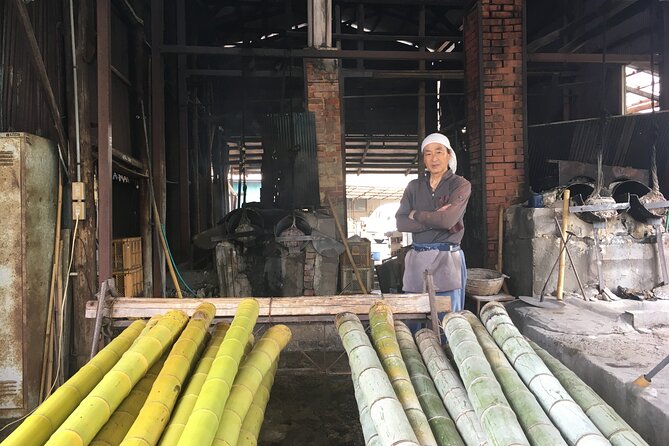
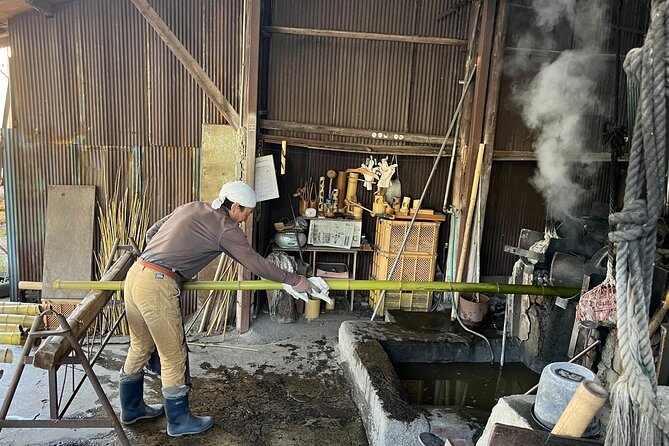
The strongest craft stop is the bamboo factory operated by 永井製竹, a business established in 1908. Here you can watch artisans work with bamboo from Oita Prefecture and see how local material becomes finished goods.
This is more valuable than a quick demonstration designed only for photographs. You are seeing a working craft business, with the focus on skilled hands and careful production. Bamboo can look simple when you see it growing, but shaping it into an even, attractive product requires patience and control.
The visit lasts about 30 minutes, and admission is included. That is enough time to watch the process and learn why bamboo matters in the area without turning the tour into a full technical class.
Pay attention to the difference between handmade work and factory-style production. The appeal is not just the finished object. It is the sense of time, precision, and local material behind it. If you like Japanese design, traditional crafts, or practical objects made well, this will probably be one of the most satisfying parts of the walk.
Some visitors have also bought bamboo products during or after the experience, including bamboo speakers. Souvenirs are not included in the tour price, so treat any purchase as an optional extra rather than part of the admission.
The one-hour workshop, only when the instructor is free
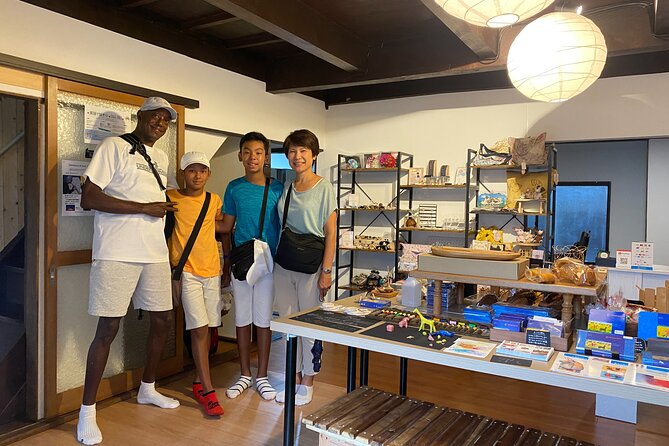
The third stop is listed as 別府風流人 and lasts about an hour. This is the least fixed part of the experience. It is an irregular workshop and can only take place when the instructor has availability.
That flexibility can work in your favor. If the workshop is running, you may have a more hands-on and personal encounter with Beppu’s creative community. The supplied tour details do not guarantee the exact activity, so you should book this walk for its overall arts and culture focus, not for one specific workshop result.
One past experience included time in a local home, tea, origami, and the chance to play a harp. That gives you a useful idea of the range of contact possible, but it should not be treated as a promise that every departure includes those same activities.
This stop also explains why the route can change. Local businesses and instructors may keep different opening hours, and the operator may adjust the places visited. I would see that as a normal feature of a small local tour, but anyone who prefers a rigid schedule should take note.
More spa and hot spring stops in Japan:
- From Osaka: Himeji Castle, Arima Onsen & Mt. Rokko Day Tour
★ 4.6 · 339 reviews - Osaka: Nara and Uji Day Trip with Deer Park and Hot Spring
★ 4.4 · 302 reviews - From Tokyo: Private Tour to Fuji/Hakone – Onsen, Art, Nature
★ 5.0 · 116 reviews - Tokyo: Mount Fuji 5th Station & Onsen Day Trip
★ 4.3 · 75 reviews
Space Beppu: art and old photographs in a century-old house
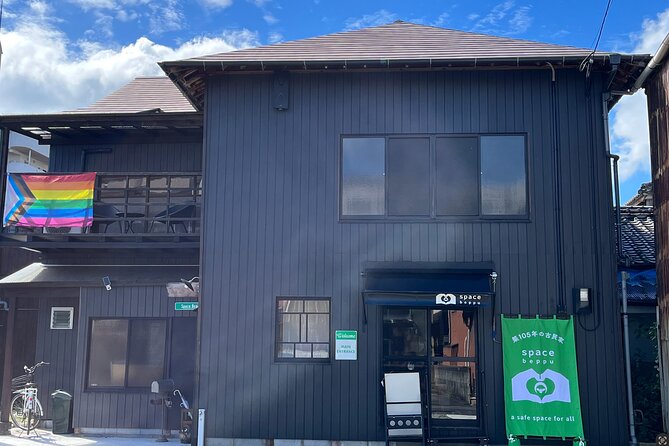
Space Beppu is one of the most distinctive stops. It occupies a renovated Japanese house about a century old and combines a contemporary art gallery, gift shop, community space, and history room.
The building itself is part of the experience. Rather than viewing an old house behind a barrier, you see one adapted for current use. That contrast between historic structure and modern art says a lot about how Beppu’s creative scene works: old spaces are not simply preserved, they can become places for new projects.
The history room contains old photographs of Beppu. These images help you picture how the city looked in earlier decades and put the present-day streets into context. You spend about 20 minutes here, which is enough for a focused visit but not enough for a long museum session.
The shop is another practical advantage. It gives you a chance to buy a small reminder of the area, though gifts are not part of the tour price. If you enjoy independent art and locally made objects, you may want to leave a little room in your budget.
The tour ends at Space Beppu, not back at the station. That is useful if you want to continue exploring central Beppu on foot. The operator provides directions back to the station or to your next destination, and the walk from Space Beppu to JR Beppu Station takes about 12 minutes.
Kiyoshima Apartment and Beppu’s working artists
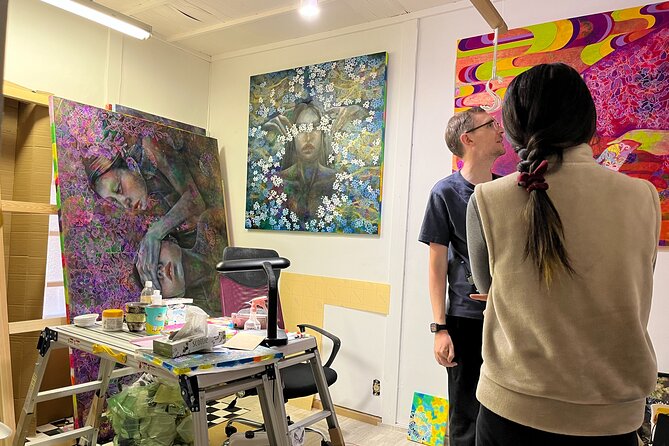
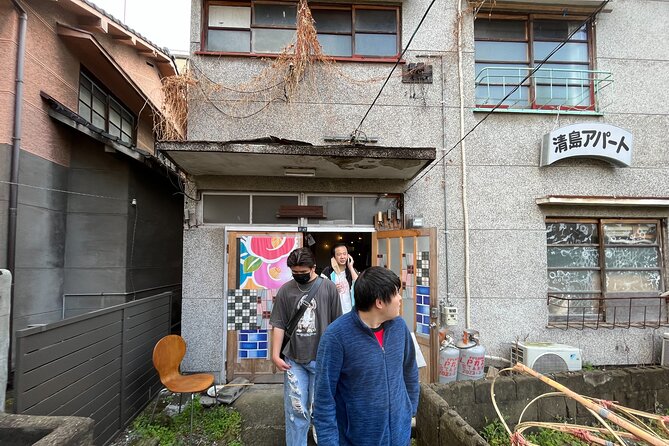
The final listed stop is Kiyoshima Apartment, a creator residence and studio space in downtown Beppu. This is not a formal museum. It is a place where artists live and work, which makes the visit more direct and less polished.
You may meet residents and see the spaces where they create. That contact is the main value. Instead of looking only at finished work in a gallery, you get a glimpse of the people and rooms behind it.
The stop lasts around 20 minutes. That is brief, so you should not expect a full studio tour or a long conversation with every artist. The exact experience can depend on who is present and how the route is operating that day.
Still, this is the kind of stop that can make the walk feel personal. Beppu’s art scene is not presented as a separate attraction removed from the city. It is connected to old buildings, local residents, and downtown life.
If you are interested in Japanese crafts, small galleries, artist residencies, or creative reuse of old buildings, this stop deserves particular attention. It is also a good reason to choose this tour instead of a standard hot-spring sightseeing circuit.
The onsen title needs a careful reading
The tour is about onsen culture, but it does not take you inside an onsen building. You may see bathhouse streets or hear about local bathing customs, and the guide can provide recommendations for where to bathe later, but an actual bath visit is not included.
One useful recommendation connected with the experience was Suginoi Hotel. That does not mean the hotel is part of this walking route or included in the price. It simply shows how the guide may help you plan the next part of your Beppu stay.
If entering an onsen is your main goal, book a separate bathing experience. If you want to understand the city around its hot springs, including its streets, buildings, crafts, and people, this walk makes more sense.
Remember the Japanese bathing rules before visiting an onsen on your own. The tour itself does not provide bottled water, food, or drinks, so carry water if you need it.
Guides, group size, and the feel of the walk
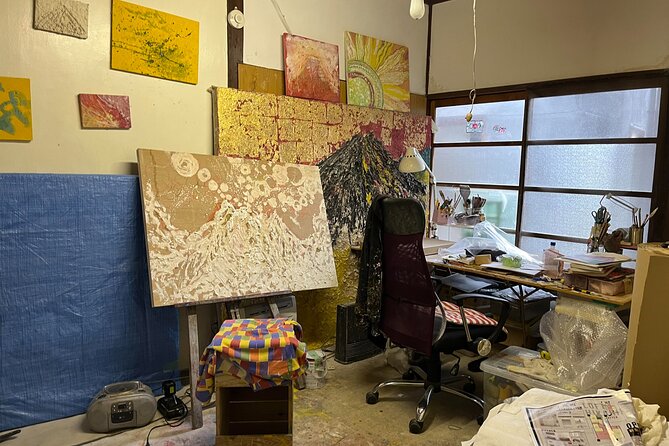
The maximum group size is eight. That matters on a walking tour built around small workshops and conversations. A large group could make a market interaction awkward or crowd a working studio. With eight or fewer people, you have a better chance to hear the guide and ask questions.
Masahiro Ide, usually called Masa, has received especially strong praise for his English, warmth, humor, and ability to explain Beppu. Lou, also named in the tour feedback, has been praised for guiding visitors through back streets and the bamboo factory.
Guide quality matters here more than on a simple point-to-point walk. Much of the value comes from explanation: why a building matters, how the craft fits Beppu, what the old photographs show, and how to behave in a working studio or local market.
The tour has also worked well in rain. A wet walk can make old streets feel atmospheric, but weather will affect comfort. Bring suitable clothing and footwear rather than assuming the whole route takes place indoors.
The required fitness level is moderate. No strenuous hike is described, but you will be on your feet and walking through downtown streets for two to two and a half hours. The tour allows service animals and runs near public transportation.
Price and what you receive for $59.30
At $59.30 per person, this is not the cheapest way to occupy two hours in Beppu. It is also not priced like a major attraction with extensive transportation or a full meal. The value depends on how much you want personal access and context.
Admission fees for each facility are included. That covers the bamboo workshop, Space Beppu, and the other included stops, while food, drinks, bottled water, and souvenirs are extra.
I think the price is reasonable for three reasons. First, the group is capped at eight. Second, you are visiting working craft and artist spaces that would be difficult to connect with on your own. Third, a local guide ties the separate stops together into a picture of Beppu as a creative city, not just a place to soak.
The value is weaker if you want famous sights, a food-focused walk, or a guaranteed hands-on workshop. It is also less suitable if you measure value only by the number of attractions entered. This experience sells access, explanation, and local scale rather than a long list of headline sights.
The tour is often booked well ahead, with an average booking time of about 51 days. If your dates are fixed, reserving early is sensible, especially because the group is small.
Who should book this experience
I would recommend this walk to you if you want to see how Beppu works beyond its main attractions. It suits people interested in bamboo, contemporary art, traditional homes, local markets, and small creative communities.
It is especially useful for:
- First-time visitors who want orientation in central Beppu
- Art and craft enthusiasts
- People who prefer small groups over bus tours
- Visitors who enjoy meeting local makers
- Couples or families comfortable with a moderate amount of walking
- Anyone with a spare morning or afternoon before a train
You may want to skip it if the Hells are your top priority, if you want a full onsen visit, or if you need a fixed route with no possible changes. The one-hour workshop is not guaranteed, and business hours can alter the stops.
Free cancellation is available when you cancel at least 24 hours before the start time. Changes or cancellations inside that window are not accepted for a refund, and cut-off times follow local Beppu time.
Final verdict: a strong choice for local Beppu
Book this tour if you want the city behind the postcard. The bamboo workshop, Kiyoshima Apartment, and Space Beppu give you three different ways to see Beppu: through traditional skill, current artistic work, and old buildings adapted for new use.
I would not choose it as a replacement for an onsen visit or the Hells. I would choose it as the cultural counterpoint to those attractions. The small group, named local guides such as Masa, and access to working creative spaces make the $59.30 fee worthwhile for the right kind of visitor.
If you value conversation, craft, and streets you might otherwise pass without noticing, this is one of Beppu’s better short tours.
FAQ
How long does the walking tour last?
The tour takes approximately two to two and a half hours.
Where does the tour start?
It starts at WANDER COMPASS BEPPU inside えきマチ1丁目別府BIS South Building near JR Beppu Station.
Where does the tour finish?
It finishes at Space Beppu in Chiyomachi. Space Beppu is about a 12-minute walk from JR Beppu Station, and directions are provided for returning to the station or continuing elsewhere.
Does the tour visit the Beppu Hells?
No. The tour focuses on lesser-known cultural streets and alleys in downtown Beppu rather than the popular Hells.
Does the tour include entering an onsen?
No. You will not be shown inside an onsen building. The tour may discuss onsen culture and local bathing customs, but an onsen visit is not included.
Is the workshop at 別府風流人 guaranteed?
No. This workshop is irregular and depends on the instructor’s availability. The route and places visited may also change because local businesses can have different opening times.
What is included in the price?
Admission fees for each facility are included. Food, drinks, bottled water, and souvenir purchases are not included.
Just added around Japan
- Private Arrival Transfer : Narita International Airport to Central Tokyo City★ 4.5 · 12 reviews
- Narita Airport(NRT): Private Transfer to Tokyo/Yokohama 1-9pax★ 5.0 · 47 reviews
- Private Transfer from Narita Airport to Yokohama Port and City★ 4.5 · 17 reviews
- [Narita Airport Terminals 1, 2] 40-60km Sawara Itako Historic Bike Tour★ 5.0 · 13 reviews
- 3 Day Japan Highlights Tour: Tokyo, Mt.Fuji, Nara, Kyoto, Osaka★ 5.0 · 22 reviews
- Private Nara Tour and Sake Tasting (Departing from Kyoto/Nara)★ 5.0 · 40 reviews
- Hammer a Pattern on Your Ring Workshop★ 5.0 · 57 reviews
- All must-sees in 3 hours – Nara Park Classic Tour! From JR Nara!★ 5.0 · 108 reviews
Spa & Hot Springs, compared.
Himeji Castle, Arima Onsen & Mt. Rokko Day Tour
Read our review →
Nara and Uji Day Trip with Deer Park and Hot Spring
Read our review →
Private Tour to Fuji/Hakone – Onsen, Art, Nature
Read our review →
Private Nagano 1-Day Tour:Snow Monkeys,Zenko-ji,Obuse,Sake,Onsen
Read our review →
Mt Takao Tour with Ramen and Tattoo-Okay Hot Spring
Read our review →
Snow Monkey & Shibu Onsen Afternoon Tour (Depart: Iiyama & Nozwa)
Read our review →Browse the lists this tour appears in