
Reviewed · OSAKA TOURS
Deep Backstreet Osaka Tours (Option to add Dinner)
Osaka’s famous food streets and neon districts are only part of the story. This three-hour evening walk takes you through old alleys, abandoned houses, a former ghetto, and a historic red light district, with a guide explaining the social forces behind what you see.
I like the way the tour pairs difficult subjects with ordinary local life, including family-run food stalls, small religious sites, and Osaka’s retro shopping streets. I also like the small-group format, capped at 15 people, since guides such as Mari, Knox, Josh, Mark, and Rudy can answer questions instead of giving a speech to a crowd.
The main consideration is tone. This is not a cheerful stroll through picture-perfect Osaka. You will hear about poverty, homelessness, sex work, organized crime, discrimination, mental health, and social taboos. The walking is easy but lasts a little over three hours, and one stop may involve standing outdoors near mosquitoes.
Key Points at a Glance
- The former ghetto and red light district: Learn about Osaka’s difficult social history in places most visitors never see.
- Two local food stops: Try Osakan street food at family-run stalls during the walk.
- Optional izakaya dinner: Add tonpeiyaki, karaage, nikudofu, yakitori, and dessert after the sightseeing portion.
- Guides with different personalities: Mari, Knox, Josh, Mark, Rudy, Alex, Bennett, and others are praised for humor, patience, and clear explanations.
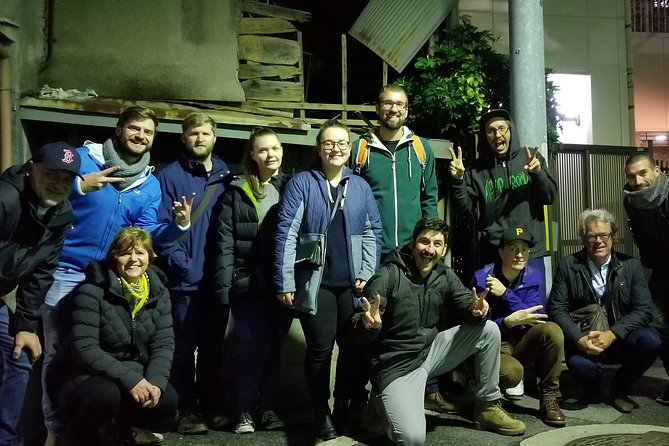
- Small-group walking tour: The maximum group size is 15, a useful limit for narrow lanes and personal questions.
- A safe but serious experience: The subject matter can be dark, but the tour is designed to show these areas respectfully and safely.
Why This Osaka Walk Goes Beyond the Neon
The tour begins at the FamilyMart beside Daikokucho Station at 5:30 pm. From there, you set off into parts of southern Osaka that are easy to pass by without noticing.
This is not a standard route linking Osaka Castle, Dotonbori, and Shinsekai. Instead, the guide uses streets, buildings, temples, shops, and districts as clues to explain how Osaka developed. You may see an abandoned house and hear why family names, social status, and long-held prejudice can affect what happens to a property after its residents are gone.
That kind of explanation is the point. On your own, an empty building is simply an empty building. With a guide, it becomes part of a wider discussion about class, family identity, housing, and the parts of Japanese society that are rarely discussed in basic sightseeing tours.
I would choose this experience after seeing Osaka’s major sights, not instead of them. It gives you a second look at the city and adds context to the polished shopping streets and famous entertainment districts.
More dinners out in Osaka:
- Osaka: Deep Backstreets Walking Tour with Dinner Option
★ 4.9 · 902 reviews - Osaka Umeda: PICCADILLY DINNER SHOW & NIGHTCLUB with Tasting
★ 4.8 · 49 reviews - Eat Our Favorites! Osaka’s Backstreet Dining
★ 4.9 · 19 reviews
Old Alleys and Osaka’s Retro Side
The walk moves through a network of narrow, twisting lanes. These passages are not grand attractions, but that is exactly why they work. You get a sense of the city at ground level, where small businesses, modest homes, old walls, and odd little shops sit close together.
The retro zone brings a lighter change of pace. The guide points out unusual shops and outlandish sights that are easy to miss if you stick to the main roads. Osaka has long had a reputation for being direct, funny, and food-obsessed, and these older commercial areas help explain that character.
The lanes may be cramped, so stay close to the group and wear shoes that are comfortable for several hours. The route includes breaks, but you should still expect to walk and stand for much of the evening.
A guide’s style matters here. Mark is praised for making complex subjects fun without losing their meaning. Knox is described as funny and direct, while Mari is noted for patience and careful answers. The exact guide depends on the date, but the experience appears to rely heavily on personality and storytelling.
Food Stalls Bring the City Down to Earth
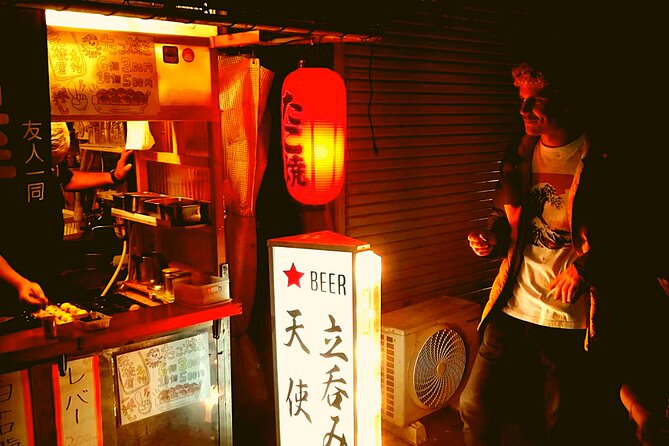
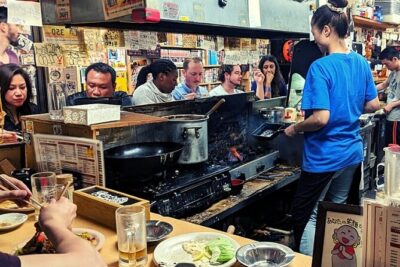
During the walking portion, you stop at two family-run street food stalls. The included tasting gives you a chance to sample local food without committing to a full meal at every stop.
This is one of the tour’s best choices. Food keeps the evening from becoming a lecture about difficult subjects, and it gives you a direct connection to Osaka’s everyday culture. The stalls are described as local and family-run rather than as polished restaurants designed for sightseeing groups.
The exact dishes served at the stalls are not specified, so do not book this expecting a fixed tasting menu. Think of it as a chance to try traditional Osakan food along the way, with the guide explaining what you are eating and where it fits into local life.
If you have dietary concerns, the dinner option is specifically described as vegetarian-friendly. The food-stall tastings are not detailed in the same way, so ask the operator in advance if you need firm information about ingredients.
The Place of Worship Most Visitors Miss
One stop takes you to an important but little-known place of worship in Osaka. The guide explains what the site represents and how religion connects with present-day community life.
This part adds needed balance. The tour is sometimes described as a look at Osaka’s darker side, but it is not limited to crime, poverty, or taboo subjects. Religion, tradition, construction, community funding, and ordinary belief all appear in the broader picture.
The stop also gives the group a quieter pause during a route that can cover emotionally heavy ground. You are not simply looking at an old structure. You are being encouraged to think about how a place continues to matter even when it is absent from the usual sightseeing map.
More places to eat in Osaka:
- Tokyo Bar Hopping Tour in Shinjuku (All-You-Can-Drink + Dinner)
★ 5.0 · 3,587 reviews - Tokyo: Sumo Show and Dining Experience
★ 4.8 · 2,742 reviews - Tokyo: Samurai Restaurant Show Ticket with 2 Drinks
★ 4.5 · 1,307 reviews - Sumida River: Japanese Traditional Yakatabune Dinner Cruise
★ 4.6 · 779 reviews
Abandoned Houses and the Cost of Social Stigma
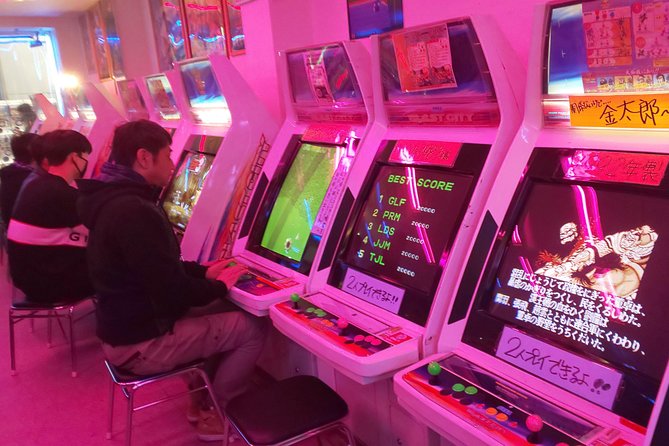
The abandoned houses area is among the most revealing parts of the walk. Osaka has many older properties, and the guide uses these buildings to discuss why some homes are left empty rather than passed on or sold easily.
The explanation includes the influence of family name and social standing. A house can carry a past that affects its future, and long-standing stigma can shape where people live, work, or feel welcome. This is a difficult topic, but it helps explain why some urban problems are not solved simply by renovating a building.
You may find this section sad rather than entertaining. That is appropriate. The tour does not treat poverty or empty homes as photo props. The value lies in hearing the background and considering how social structures affect real neighborhoods.
The route also touches on homelessness and mental health. One especially useful point is that homelessness in Japan cannot always be reduced to a simple story about personal failure. The guide offers a more careful view of the reasons people may become unhoused and how society responds.
The Red Light District and Yakuza Connections
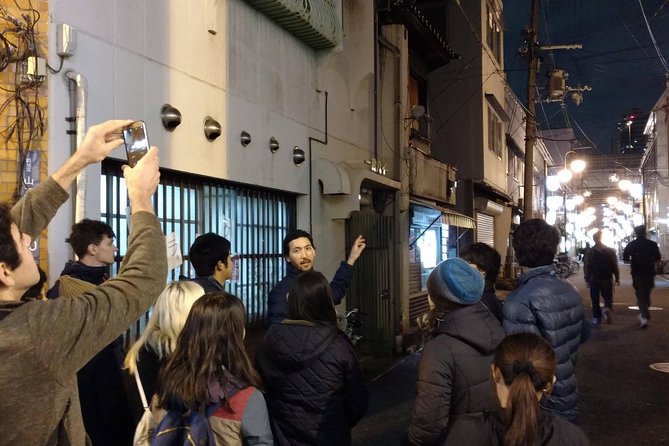
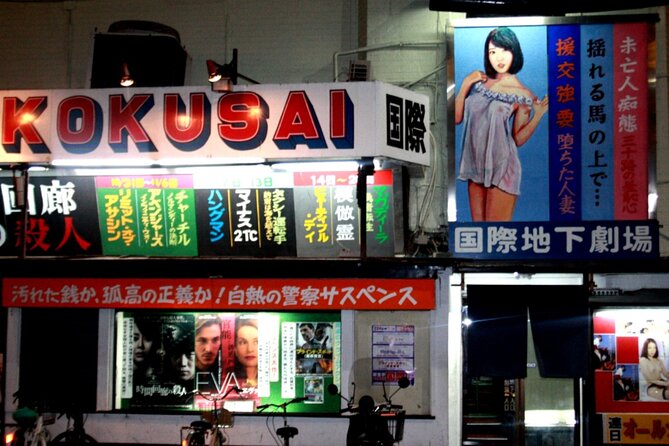
The historical red light district is another major stop. You learn about sex work, the district’s past, and its connections with organized crime, including the yakuza.
This can be uncomfortable, and the subject matter is not suitable for every child or every visitor. Still, it is handled as social history rather than cheap entertainment. The guide explains how the district developed and why it remains part of Osaka’s story.
The area is presented as safe for the tour group, but you should remain respectful. Do not photograph people without permission, stare into businesses, or treat working areas as a theme park. The best approach is to listen, ask thoughtful questions, and remember that these are real neighborhoods.
Some guides bring a lively sense of humor to the subject. Others take a more measured approach. The strongest moments come when humor opens the door to a serious point rather than making light of people’s hardship.
The Former Ghetto and Osaka’s Unspoken Past
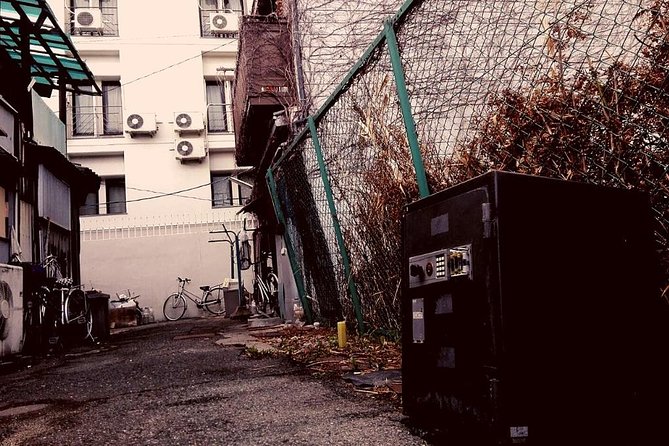
The former ghetto section looks at discrimination and social exclusion. This is where the tour most clearly asks you to reconsider the image of Japan as a completely uniform and harmonious society.
You hear about a controversial past and the ways class, work, family background, and neighborhood identity can shape opportunity. The discussion also connects to abandoned homes, homelessness, sex work, and the unequal treatment of different groups.
I find this useful because it supplies context that guidebooks often skip. Japan’s clean streets and efficient trains are real, but they do not tell the whole story. A thoughtful visit should leave room for both admiration and questions.
The guide’s role is crucial here. Several guides are praised for being open, patient, and willing to answer direct questions. Marie is described as engaging and patient, while Thomi is noted for discussing religion, mental health, sex work, and gangs in a careful way. You are likely to get the most from this section if you arrive ready to listen rather than expecting simple answers.
Adding the Izakaya Dinner
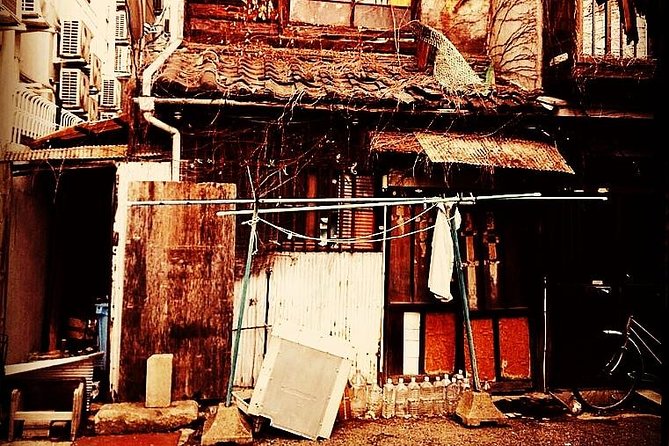
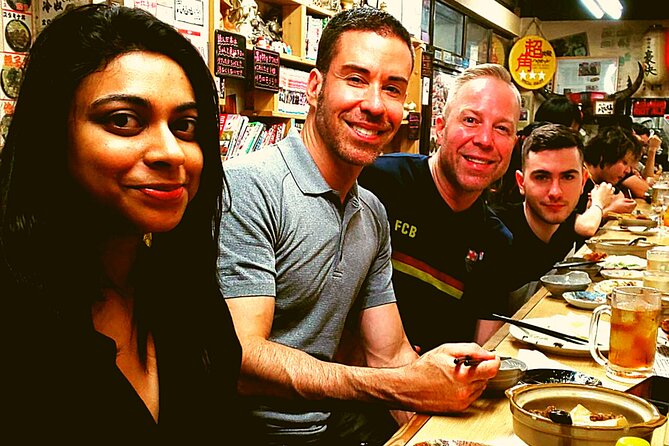
You can book the walking tour with or without dinner. The optional meal takes place at an izakaya and is designed around Osaka soul food that is difficult to find through a standard sightseeing package.
The listed dishes include:
- Tonpeiyaki
- Karaage
- Nikudofu
- Yakitori
- Dessert
The dinner is described as vegetarian-friendly, which makes the upgrade useful for mixed groups. Alcohol is not included, though drinks are said to be available at reasonable prices.
The meal adds real value if you want an easy end to the evening. After several hours of walking, sitting down for local food with the guide and group gives the experience a social finish. It can also help solo visitors meet people, since the walking route naturally creates conversation.
I would not treat dinner as a luxury restaurant experience. The appeal is the local setting and the food, not formal service or a carefully designed tasting menu. One account specifically praises motsunabe and yakitori, although the listed dinner dishes may vary. Ask about the menu if a particular dish matters to you.
The dinner option also changes the total time and budget, though the supplied price of $53.06 per person refers to the tour information provided and may not include every optional cost. Alcohol is definitely extra.
Is $53.06 Good Value?
At $53.06 per person, the price is fair for a three-hour small-group walk that includes food tastings and a local guide. You are paying less for major sights and more for access, interpretation, and a route you would be unlikely to create on your own.
The maximum of 15 people is important. Narrow lanes and sensitive discussions work better with a group that can hear the guide and move together. A private tour would offer more flexibility, but this format keeps the cost lower while still allowing questions.
The optional dinner improves the value for anyone who wants food as a central part of the evening. If you already have a restaurant booked or prefer choosing your own meal, the walking-only version should be enough.
The tour has a 4.9 rating from 1,290 reviews and a 97 percent recommendation figure. Those numbers point to strong consistency, but they should not distract from the clear nature of the experience: serious topics, plenty of walking, and a less polished view of Osaka.
Practical Advice for the 5:30 pm Start
The meeting point is the FamilyMart at 2-chome-5-16 Shikitsuhigashi, near Daikokucho Station. Use the exact address when planning your route, and allow enough time to find the correct station exit and convenience store.
The tour ends back at the meeting point. That makes it easier to continue into another Osaka neighborhood afterward, and after-tour assistance is offered if you want help finding a bar, shopping area, or entertainment district.
Bring comfortable walking shoes. The route is described as easy, but it lasts about three hours and includes narrow streets, pauses, and time spent standing. In warm weather, carry water and insect repellent, since at least one outdoor stop may have mosquitoes.
The experience requires good weather. If rain or other poor conditions lead to cancellation, you can receive a different date or a full refund. You can also cancel for a full refund up to 24 hours before the start time. Most people can participate, and the tour is near public transportation.
Who Should Book This Experience?
I would recommend this tour to you if you have already seen Osaka’s headline attractions and want social context. It suits curious adults, solo visitors, repeat visitors to Japan, and anyone interested in the parts of urban life that do not fit neatly into a sightseeing brochure.
It is especially useful if you want to understand how religion, class, housing, organized crime, sex work, and local food overlap in one city. The guides appear to be strongest when answering questions and making difficult subjects understandable without excessive academic language.
You may want to skip it if you are looking for bright signs, famous landmarks, or a relaxed food crawl. The red light district and former ghetto sections can be emotionally demanding, and the tour does not hide the harder parts of Osaka.
Families should also consider the age and maturity of children before booking. The subject matter includes sex work, gangs, homelessness, discrimination, and mental health. The group is described as safe, but safe does not mean lighthearted.
Should You Book the Deep Backstreet Osaka Tour?
Book it if you want to see how Osaka works behind its famous streets, not just photograph its best-known sights. The combination of local food, narrow lanes, religious sites, abandoned houses, and serious social history gives the evening a purpose beyond sightseeing.
Choose the dinner upgrade if you want local food and company after the walk. Choose the walking-only option if you prefer control over your evening meal.
This is one of the better choices in Osaka for a second layer of understanding. Go with comfortable shoes, an open mind, and respect for the people who live and work in the neighborhoods you visit.
FAQ
Where does the Deep Backstreet Osaka Tour start?
The tour starts at the FamilyMart MYS Daikokucho Station, located at 2-chome-5-16 Shikitsuhigashi, Naniwa Ward, Osaka. It begins at 5:30 pm.
How long does the tour last?
The walking tour lasts approximately three hours. The route includes walking breaks, food tastings, and several stops for explanations.
What areas does the tour visit?
The tour visits local backstreets, Osaka’s retro zone, old narrow alleys, an abandoned houses area, an important place of worship, a historical red light district, and a former ghetto area.
Is dinner included?
Dinner is optional. You can upgrade to include an izakaya meal with dishes such as tonpeiyaki, karaage, nikudofu, yakitori, and dessert.
Are drinks included with dinner?
Alcoholic beverages are not included. Drinks are available at the restaurant for additional cost.
Can I cancel for a refund?
You can cancel at least 24 hours before the experience start time for a full refund. Cancellations or changes made less than 24 hours before the start time are not refundable. If poor weather cancels the tour, you will be offered another date or a full refund.
Just added around Osaka
- Discover Real Osaka: A Cultural Walk with Food & Drink★ 5.0 · 13 reviews
- From Osaka/Kyoto: Kyoto & Nara Day Trip with Optional Lunch★ 4.5 · 79 reviews
- Osaka 6hr Private Walking Tour with Government Licensed Guide★ 5.0 · 174 reviews
- Private Airport transfer Kansai Intl. Airport(KIX) to OSAKA CITY★ 4.5 · 12 reviews
- Osaka: Namba Local Food Walking Tour (Taste 15 Dishes)★ 5.0 · 20 reviews
- Osaka Delights: Traditional Japanese Food Tour★ 4.5 · 33 reviews
- From Osaka or Kyoto: Kyoto and Nara 1-Day Bus Tour★ 3.5 · 141 reviews
- 1 Day Takoyaki Making and Osaka Castle Walking Tour★ 5.0 · 15 reviews
Osaka Tours, compared.
Shinsekai Food Tour with 13-15 Dishes at 5 Eateries
Read our review →
Osaka Food Tour: 13 Dishes at 5 Local Eateries
Read our review →
Hungry Osaka Street Food Tour:15 Tastings & 3 Drinks with a Local
Read our review →
Hotspots & Hidden Gems Walking Tour Private or Group
Read our review →Browse the lists this tour appears in