
Reviewed · TOKYO TOURS
Tokyo: Samurai Restaurant Show Ticket with 2 Drinks
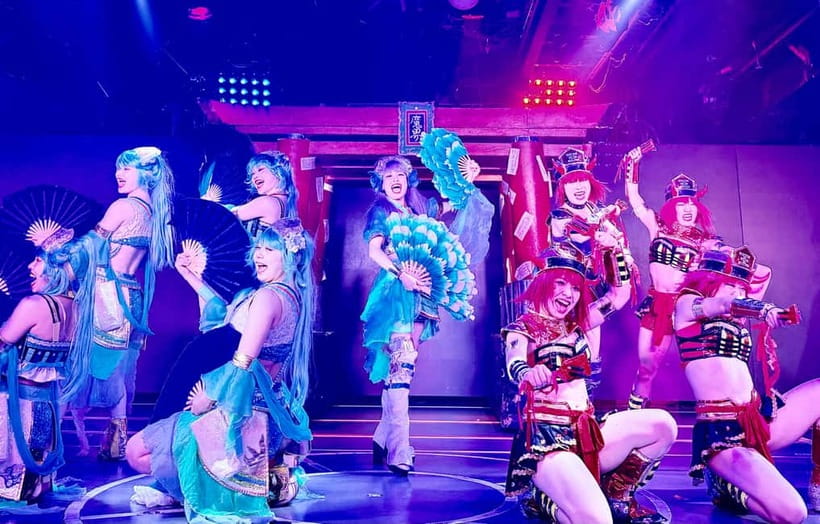
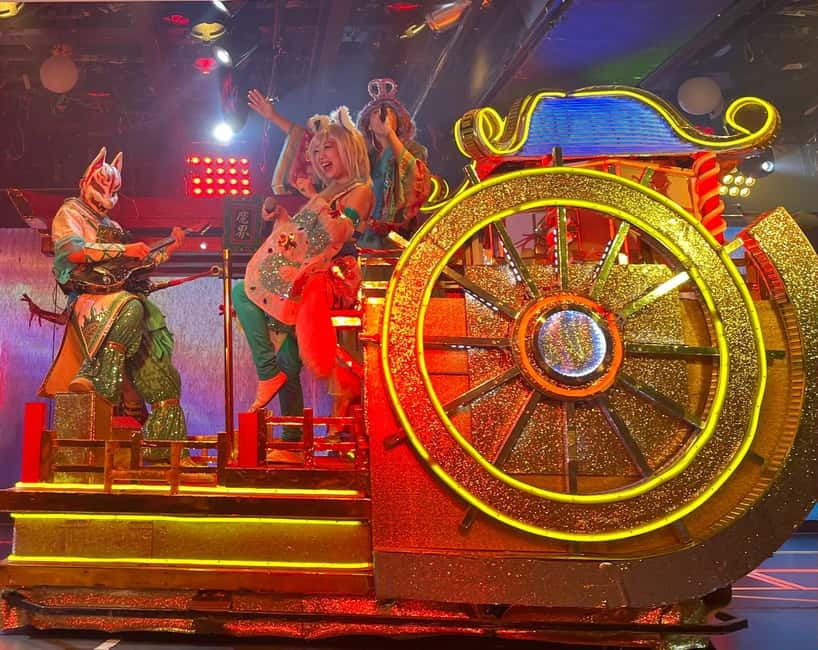
Tokyo’s Samurai Restaurant Show is a neon-powered blast of samurai, ninjas, dancers, music, costumes, and stage effects. The show takes place in Kabukicho, Shinjuku, so you get a dose of Tokyo’s famous nightlife district along with the performance. I like the huge visual scale and the friendly English-speaking staff. I also like that two drinks are included, which helps the $55 price feel fair.
The main drawback is the noise. The stage sits close to the audience, and the music can be extremely loud. The story may also be hard to follow, with short pauses between scenes and frequent changes on the compact stage. This is a high-energy spectacle, not a quiet lesson in samurai history.
Key points to know before you go
- Two drinks are included: Choose alcoholic or non-alcoholic drinks, then buy extra snacks and drinks if you wish.
- Expect sensory overload: Neon lights, loud music, quick costume changes, dancers, samurai, and ninjas all compete for your attention.
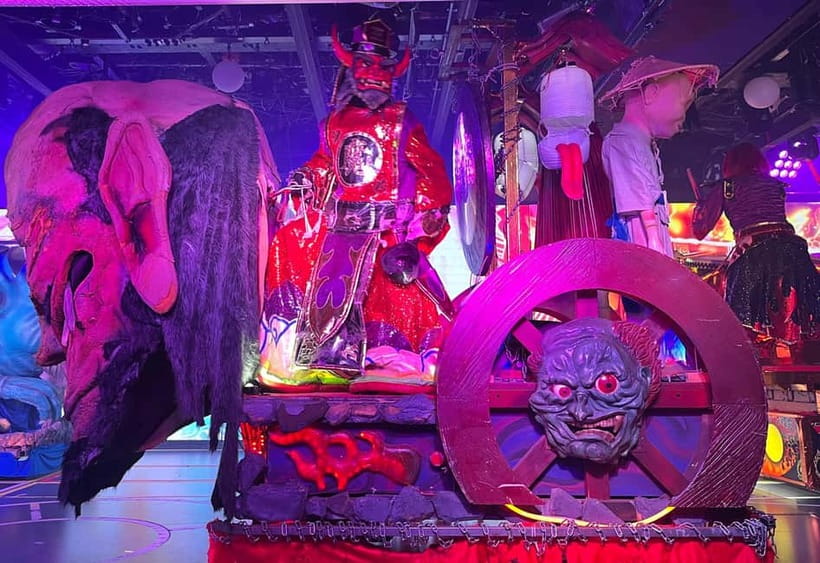
- The venue is a show in itself: The elaborate Samurai Restaurant interior reportedly cost more than 10 billion yen to create.
- Plan for roughly 90 minutes: The activity information gives a 90-minute duration, while the ticket description also refers to a two-hour show ticket.
- Late arrival means waiting: If you miss your show time, you may have to wait until intermission before taking your seat.
- It is adults-only: Nobody under 18 may enter, and intoxicated customers, costumes, professional cameras, sunglasses, and outside food or drinks are not allowed.
What the Samurai Restaurant Show really is
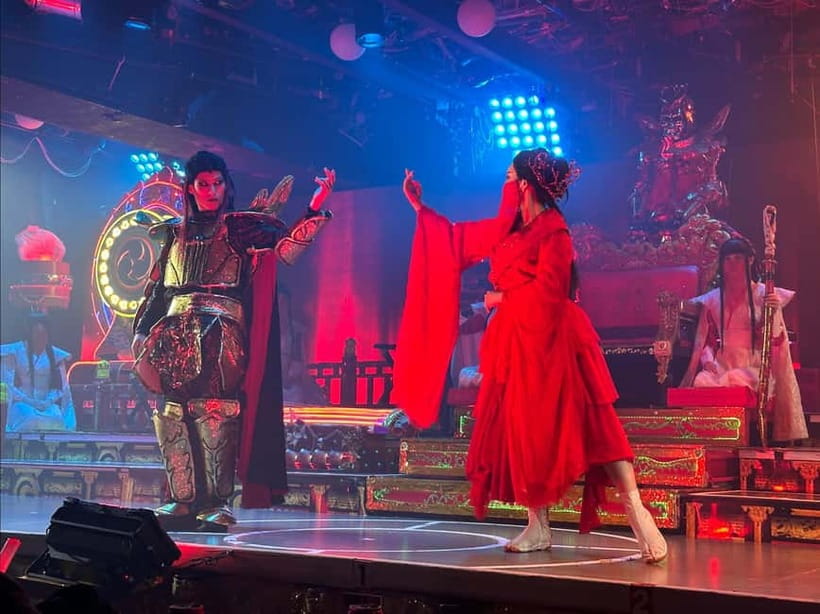
I would describe this as a Japanese stage spectacle with samurai themes, not a traditional cultural performance. It borrows familiar images of warriors and ninjas, then mixes them with modern dance, amplified music, neon light, theatrical costumes, and a nightclub-like mood.
That mix is exactly why the show works for many people. You are not asked to sit quietly and study a careful historical plot. Instead, the production aims to keep your eyes and ears busy. One moment may feature swordplay or samurai characters, and the next may bring dancers, unusual choreography, or a change in the stage setting.
The show’s appeal is easy to understand: it gives you a concentrated hit of the loud, colorful Tokyo that many first-time visitors hope to find. It is playful and a little strange. If you want a precise account of medieval Japan, choose a museum, castle, or traditional theater instead. If you want a memorable night out in Shinjuku, this is a stronger match.
More Samurai and Ninja Experiences in Tokyo
- Tokyo: Samurai Ninja Museum Guided tour and Experience
★ 4.6 · 1,010 reviews - Tokyo: Samurai Sword & Archery Class from Samurai Descendant
★ 5.0 · 603 reviews - Best Samurai Experience in Tokyo
★ 5.0 · 458 reviews
Entering the Kabukicho venue
The Samurai Restaurant is in Kabukicho, in the heart of Shinjuku. This is Tokyo’s entertainment district, with plenty of neon and late-night activity. The immediate setting can feel more adult and hectic than the usual sightseeing areas, so I would allow yourself a little time to find the entrance without rushing.
Your meeting point is the reception inside the entrance of the Samurai Restaurant. An English-speaking host or greeter is available, which is useful when you are dealing with a busy venue and a fixed performance time.
Take a few minutes to look around before the show begins. The interior is one of the main attractions. It is elaborate, theatrical, and designed to make the room feel like part of the performance rather than a plain auditorium. The reported construction cost of more than 10 billion yen helps explain why the setting feels so extravagant.
You need to bring a passport or identity card. A copy is accepted. This rule is easy to overlook, but it matters because you cannot simply assume that your booking confirmation will be enough.
The opening acts: samurai, ninjas, and dancers
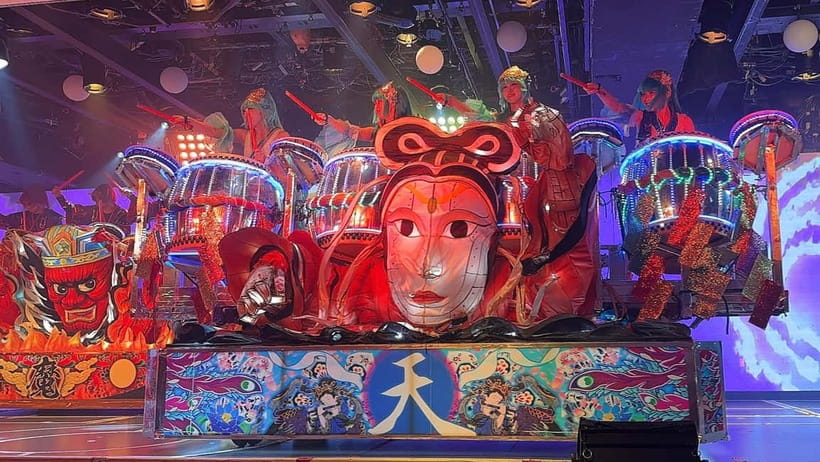
Once the performance starts, expect a rapid sequence of visual set pieces. Samurai and ninjas appear alongside dancers, with music, neon lighting, and sound effects pushing the action forward.
The stage is relatively close to the audience. That gives you a good view of the performers, costumes, and movement, but it also makes the sound feel stronger. If you are sensitive to loud music, bring earplugs or ask whether they are available at the venue. One practical warning from the experience is worth taking seriously: the show can be very loud.
The performers work with obvious energy. The strongest part of the production is not a complex plot. It is the commitment of the cast, the colorful costumes, and the constant change in mood. You may not always know what each scene means, but you are unlikely to mistake the show for a dull one.
The production also uses frequent short pauses. These allow the team to change decor and reset the compact stage. If you expect a single uninterrupted dance number, the stops may interrupt your momentum. I see them as part of the mechanics of the show, though they can feel longer when you are waiting for the next act.
What happens during the intermissions
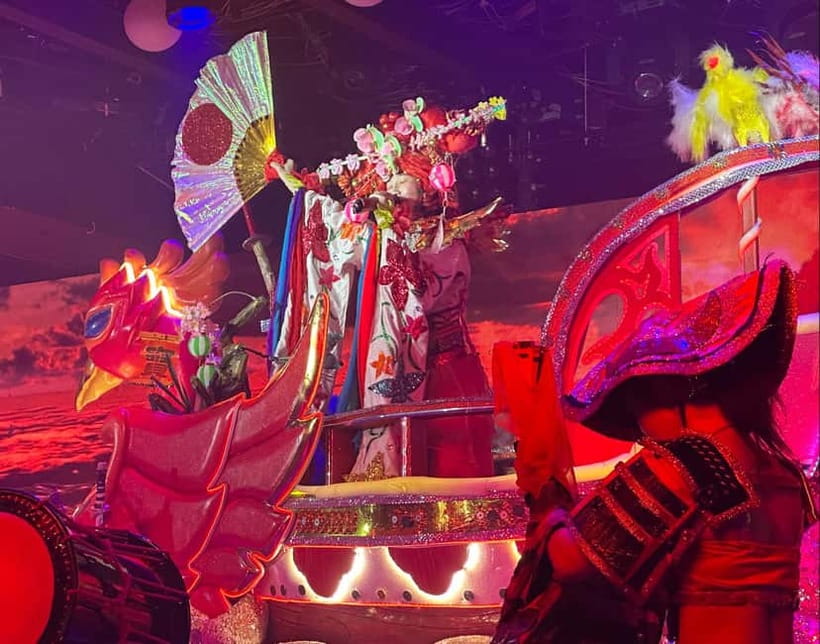
The pauses give you time to settle in, use your drinks, and look around. Your ticket includes two drinks of your choice, alcoholic or non-alcoholic. That is a useful inclusion at a $55 price point, especially in central Shinjuku.
Do not expect the included drinks to turn this into a full dinner experience. Food is not included, and the available choices are described as snack-style items such as popcorn and similar light food. Some people have enjoyed the snacks, but I would plan to eat before or after the performance if you need a proper meal.
The intermission also gives the staff a chance to keep the room engaged. A staff member identified as Kushiro was praised for speaking excellent English and helping maintain the crowd’s energy between acts. Staff friendliness is a repeated strength of the experience, and that matters in a show built around audience mood.
You may also encounter small surprises during the breaks or later in the performance. One account described sake shots, strawberry cake, and green tea, but I would not treat those items as guaranteed inclusions. The dependable food and drink details are the two included drinks, with extra purchases charged separately.
More samurai and ninja sessions in Tokyo:
- Ninja Experience (Family Friendly) at Samurai Ninja Museum TOKYO
★ 5.0 · 441 reviews - Tokyo: Samurai Entertainment Night Show in Kanda Shrine
★ 4.6 · 417 reviews - Tokyo Sword Experience – includes Museum Ticket/Ninja Experience
★ 5.0 · 314 reviews - Samurai Ninja Museum Asakusa: Samurai Sword Lesson & Tour
★ 4.8 · 306 reviews
The final acts and the Kabuki-style finish
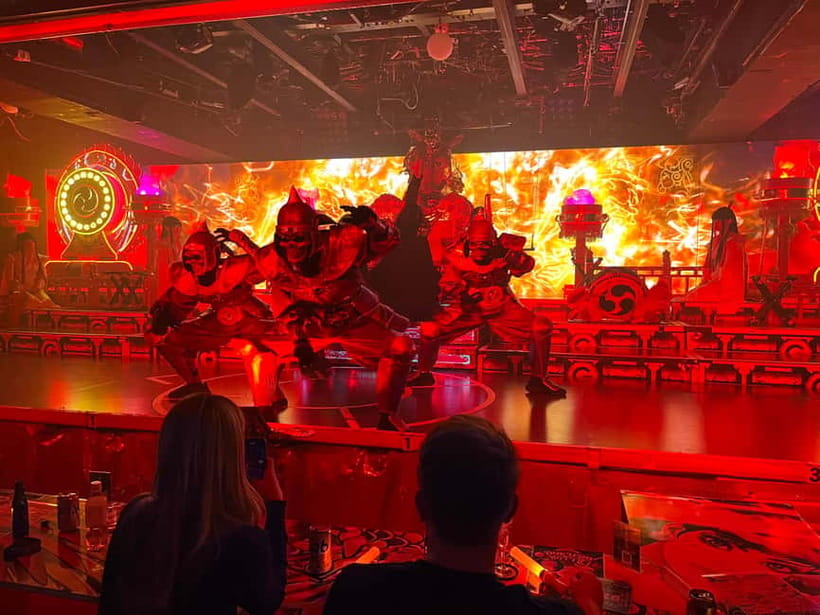
The latter part of the show continues the same blend of music, costume, choreography, and stage effects. A Kabuki performance near the end has received particular praise, especially from people who felt the earlier scenes were more random or difficult to follow.
That final section may give the show a clearer connection to Japanese theater traditions, although the whole production remains a modern entertainment piece. The appeal is in the contrast: historic-looking characters and theatrical forms meet loud contemporary staging.
I would avoid trying to decode every moment. The show is better treated like a concert or visual stage event. Watch the performers, enjoy the lighting, and let the production move at its own odd pace. If you need a clear beginning, middle, and end, you may leave puzzled. If you enjoy shows that are intentionally excessive, the lack of a simple storyline becomes part of the fun.
Is $55 a good value?
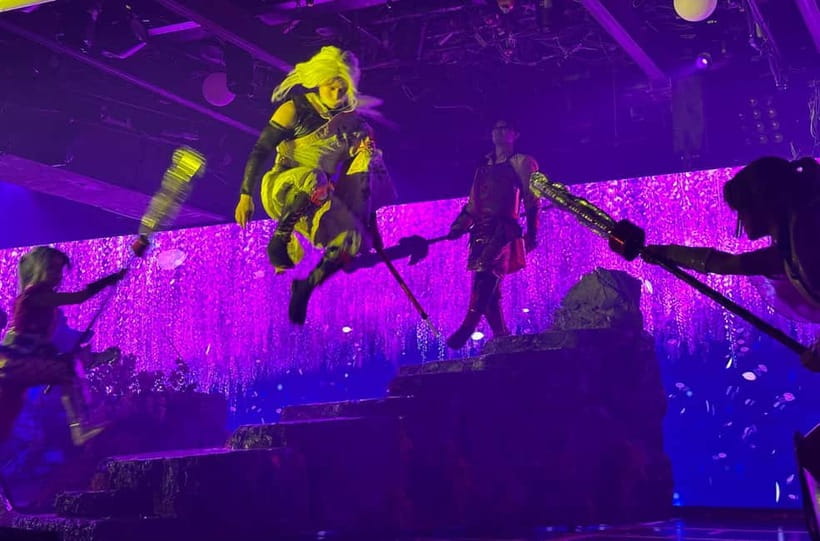
At $55 per person, this is not a cheap casual activity. Tokyo offers plenty of low-cost evening entertainment, and you can find excellent food or a smaller cultural performance for less.
Still, the price becomes easier to justify when you count what is included: admission to the Samurai Restaurant, the elaborate room, a large-scale staged performance, and two drinks. You are paying for the production rather than just a seat. The set, lighting, costumes, performers, and sound system create an event that would be difficult to reproduce by simply visiting a bar or watching a street performance.
The value depends on your taste. I think it works best as a special evening activity, especially if you want something unlike a temple visit, food tour, or museum. It is also convenient in one important way: the experience lasts only about 90 minutes according to the activity details, so it can fit between dinner and other plans.
There is a small timing inconsistency in the information provided. The activity duration is listed as 90 minutes, while the included ticket is described as a two-hour samurai show ticket. Check the available start time and expected duration when booking, then avoid arranging another fixed activity immediately afterward.
Who will enjoy it most
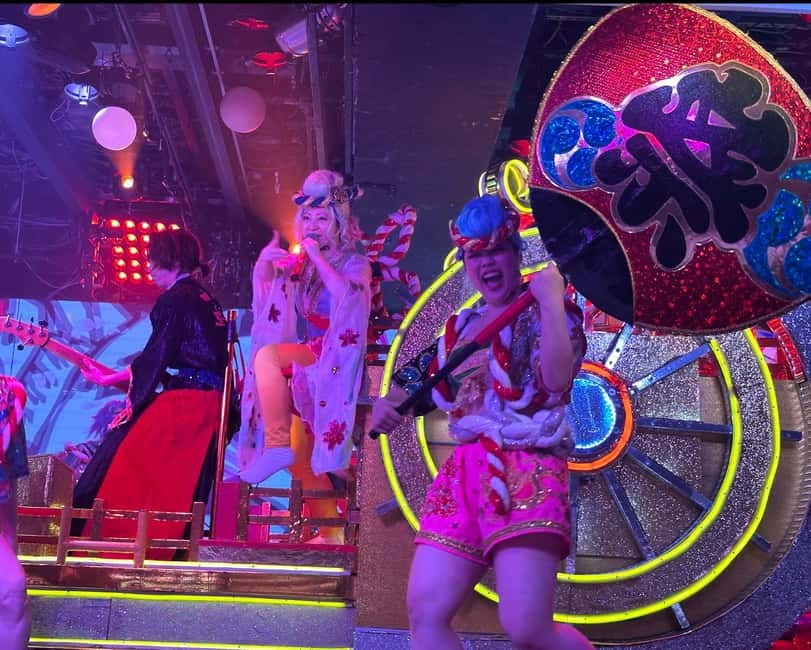
I would recommend this show to adults who enjoy theatrical spectacle, unusual choreography, loud music, and bold visual design. It suits couples, groups of friends, and first-time visitors who want one evening that feels distinctly different from ordinary sightseeing.
It is also a good choice if you are already spending time in Shinjuku. The show lets you combine a fixed performance with an evening walk through Kabukicho, though you should be comfortable in an entertainment district that can feel more adult than family-oriented.
You may enjoy it less if you prefer subtle performances, quiet venues, or historically accurate presentations. The show is deliberately exaggerated. The costumes and lighting are a major part of the attraction, while the plot can be secondary.
The age rule is firm: children under 18 cannot enter. The venue also does not allow intoxicated customers, people wearing cosplay or bizarre costumes, professional cameras, sunglasses, outside food, or outside drinks. These rules are worth noting before you make plans around the performance.
Practical advice for a smoother visit
Arrive with enough time to find the entrance and complete reception. This is especially important in Kabukicho, where a few wrong turns can cost you valuable minutes. If you arrive late, you may have to wait until intermission before being seated.
Bring your passport or identity card, or a copy of it. Keep the document easy to reach, since the venue specifically requires identification.
Wear ordinary clothing rather than a costume. Do not bring professional camera equipment, and leave outside food and drinks behind. Sunglasses are also not permitted.
If loud sound bothers you, pack earplugs. The close stage and powerful music create a strong effect, but they can be uncomfortable for sensitive ears. Anyone concerned about intense flashing or rapid visual effects should think carefully before booking, since the show uses heavy neon lighting and fast changes.
Use the two included drinks as part of the experience, but do not arrive expecting dinner. A meal before or after the show will make your evening more comfortable. Snack purchases may be available inside, but additional food and drinks are not part of the ticket.
The cancellation policy is fairly flexible: you can cancel up to 24 hours in advance for a full refund. You can also reserve and pay later, which helps if your Tokyo schedule is still shifting.
How this compares with traditional Japanese theater
The Samurai Restaurant Show uses Japanese cultural images, but I would not book it as a substitute for Kabuki, Noh, or a serious samurai museum. Those experiences ask you to slow down and pay attention to form, history, and tradition.
This show takes a different route. It places samurai and ninja imagery inside a modern, highly decorated entertainment package. The result is less restrained and more playful. You get a quick, accessible introduction to theatrical Japanese motifs, but not much historical explanation.
That distinction helps set the right expectations. If you want an educational performance with translation and context, this may not satisfy you. If you want to see how Tokyo can turn historical symbols into a wild modern stage event, it makes more sense.
Should you book the Samurai Restaurant Show?
I would book it if you want a loud, colorful, unusual night in Tokyo and you are comfortable with a show that values energy over plot. The two drinks, English-speaking staff, central Shinjuku location, and elaborate venue make the package reasonably strong for $55.
I would skip it if you dislike loud music, intense lighting, short pauses between acts, or tourist-focused entertainment. You should also skip it if you are under 18, traveling with children, or looking for a traditional account of samurai culture.
For the right audience, this is one of those Tokyo activities that is hard to explain neatly because its charm comes from the sheer mix of ingredients. Go in expecting neon, costumes, dancing, noise, and a few moments that make little sense. That is the point.
FAQ
Where is the Samurai Restaurant Show located?
It is located in Kabukicho, Shinjuku, in the heart of Tokyo on Honshu.
How long does the experience last?
The activity duration is listed as 90 minutes. The ticket information also refers to a two-hour samurai show ticket, so check the confirmed timing when booking.
What does the ticket include?
The ticket includes admission to the samurai show and two alcoholic or non-alcoholic drinks of your choice.
Is food included?
No. Food is not included, and additional food and drinks cost extra. Snack-style items such as popcorn may be available for purchase.
Is the show suitable for children?
No. Children under 18 cannot enter.
Do I need identification?
Yes. Bring a passport or identity card. A copy is accepted.
What happens if I arrive late?
If you arrive after the scheduled show time, you may need to wait until the intermission before being seated.
Is the show in English?
The host or greeter speaks English, and English is listed as the available language. The supplied information does not state that the full performance is conducted in English.
What items are not allowed?
Sunglasses, outside food and drinks, professional cameras, costumes, and intoxication are not allowed. Cosplay or bizarre costumes are also prohibited.
Can I cancel the booking?
Yes. You can cancel up to 24 hours in advance for a full refund. The experience also offers a reserve-now-and-pay-later option.
More Shows in Tokyo
- Mt Fuji & Hakone Cruise, Drum Show Bullet Train 1 Day from Tokyo
★ 4.0 · 7,413 reviews - Tokyo: Sumo Show Experience with Chicken Hot Pot and a Photo
★ 4.8 · 6,678 reviews - the SUMO show
★ 5.0 · 1,960 reviews - Tokyo Shinjuku Sumo Show & Experience with Photo
★ 5.0 · 1,750 reviews
More Places to Eat in Tokyo
- Tokyo Bar Hopping Tour in Shinjuku (All-You-Can-Drink + Dinner)
★ 5.0 · 3,587 reviews - Tokyo: Sumo Show and Dining Experience
★ 4.8 · 2,742 reviews - Sumida River: Japanese Traditional Yakatabune Dinner Cruise
★ 4.6 · 779 reviews - Tokyo Bay Yakatabune Dinner/Day Cruise with Japan Show and Drinks
★ 4.5 · 473 reviews
Just added around Tokyo
- Private Arrival Transfer : Narita International Airport to Central Tokyo City★ 4.5 · 12 reviews
- Narita Airport(NRT): Private Transfer to Tokyo/Yokohama 1-9pax★ 5.0 · 47 reviews
- Private Transfer from Narita Airport to Yokohama Port and City★ 4.5 · 17 reviews
- [Narita Airport Terminals 1, 2] 40-60km Sawara Itako Historic Bike Tour★ 5.0 · 13 reviews
- 3 Day Japan Highlights Tour: Tokyo, Mt.Fuji, Nara, Kyoto, Osaka★ 5.0 · 22 reviews
- The 10 Tastings of Tokyo With Locals: Private Street Food Tour★ 5.0 · 48 reviews
- Small Town in the Big City: Tasting Tokyo’s Kichijoji★ 5.0 · 195 reviews
- Small Town in the Big City: Tasting Tokyo’s Kichijoji★ 5.0 · 16 reviews
Tokyo Tours, compared.

Mt Fuji and Hakone 1-Day Bus Tour Return by Bullet Train
Read our review →
teamLab Planets TOKYO Digital Art Museum Entry Ticket
Read our review →
Mt Fuji & Hakone Cruise, Drum Show Bullet Train 1 Day from Tokyo
Read our review →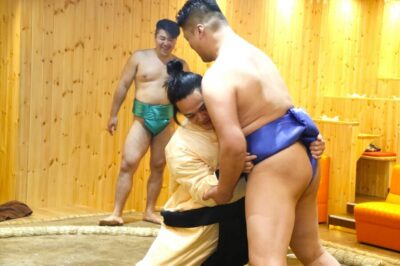
Sumo Show Experience with Chicken Hot Pot and a Photo
Read our review →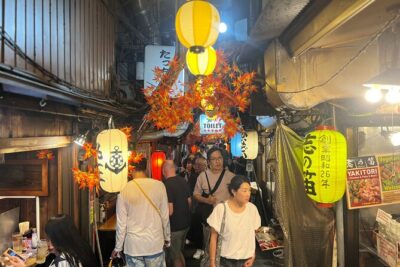
Shinjuku Food Tour (13 Dishes at 4 Local Eateries)
Read our review →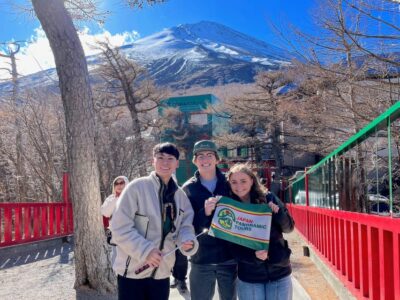
Tokyo Mt Fuji 5th St & Hakone Cruise Bus Tour w/Bullet Train
Read our review →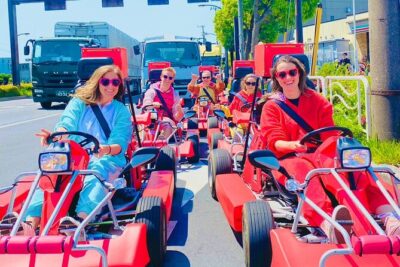
Flagship 2-Hours Official Street Go-Kart Tour – Tokyo Bay Shop
Read our review →Browse the lists this tour appears in