
Reviewed · TOKYO TOURS
Tokyo: Samurai Entertainment Night Show in Kanda Shrine
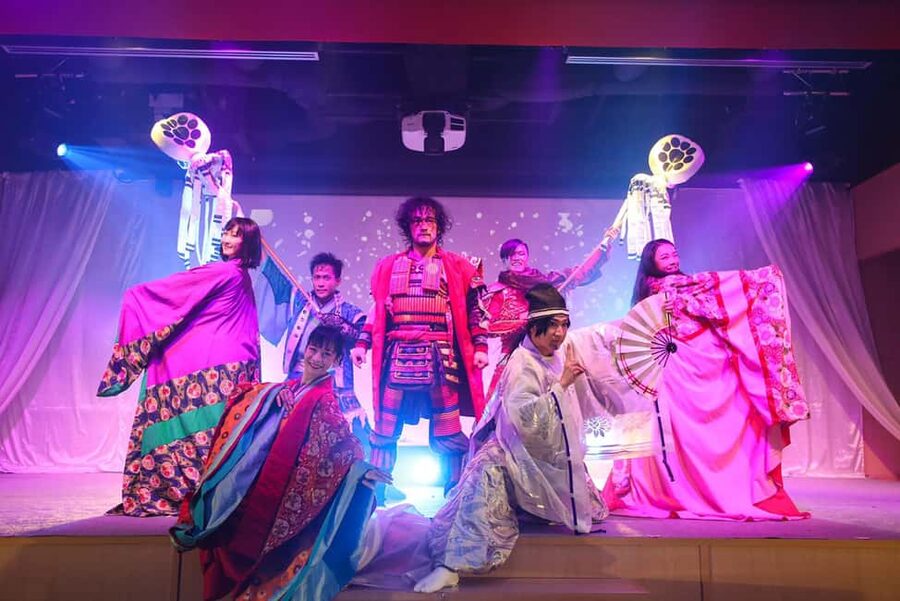
Tokyo’s Kanda Myojin Shrine provides a striking setting for a theatrical retelling of Taira no Masakado, a legendary rebel later honored as a spirit. Inside the shrine complex, you’ll watch swordplay, dance, music, costumes, and modern lighting turn Japanese folklore into a lively stage show.
I like the small venue, which keeps the performers close and makes the final photo session feel personal. I also like the flexible food and drink setup: you can choose a simple show-and-drink ticket or add dinner and unlimited drinks. The main drawback is that the story can be hard to follow if you expect a conventional spoken play, and cameras are forbidden during most of the performance.
Key points to know before booking
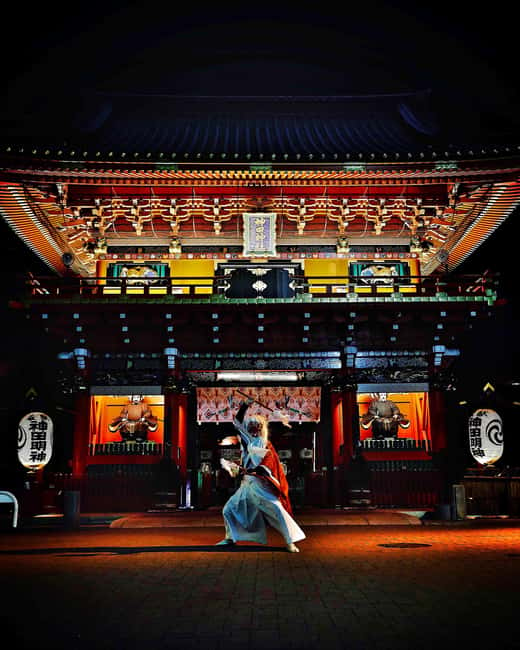
- The setting: Kanda Myojin Shrine is beautifully lit at night, with city views along the approach.
- The performance: Expect about an hour of fast-moving theatrical dance, swordplay, music, costumes, and Japanese legends.
- The schedule: Doors open at 7 PM, food and drinks run until showtime, and the performance runs from 8:15 to 9:15 PM.
- The food: Dinner is optional. The chicken hot pot gives you an individual pot with vegetables and broth, with chicken added at your table.
- The cast meeting: From 9:15 to 10 PM, you can take photos with the performers and speak with them.
- The rules: No photography, video, or audio recording during the main show. Seat selection is not available.
Kanda Myojin after dark
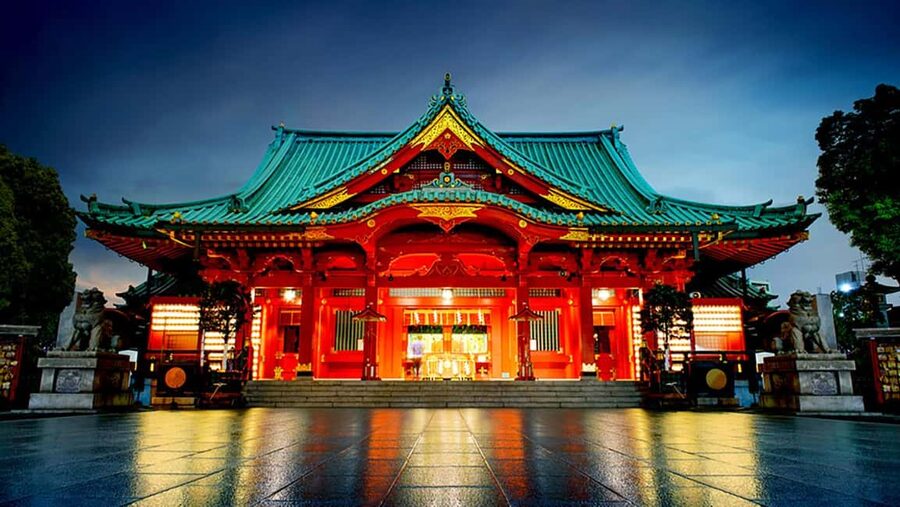
Kanda Myojin, also called Kanda Shrine, is more than a convenient theater location. It is one of Tokyo’s important shrines, associated with prosperity in business and good fortune in love. Its traditional buildings and elevated position give the evening a memorable start, especially when the grounds are lit after sunset.
You enter through the shrine grounds and head to The Show restaurant in the basement of Kanda-Myojin Bunka-Koryu-kan. Allow extra time to find the exact entrance. One person specifically found the location difficult to identify, and arriving early is sensible if you are unfamiliar with the complex.
The atmosphere changes as you walk in. Tokyo’s city scenery gives way to shrine buildings, lantern light, and a quieter, more ceremonial setting. I like this contrast because it gives the night a sense of place before the performance begins. You are not simply walking into a standard dinner theater.
The show restaurant itself is intimate rather than grand. That is good news if you want to see facial expressions and costume details without sitting in a huge auditorium. It also means seats are relatively close together, and you cannot request a particular position. The restaurant assigns seats, with the front section covering rows one through four.
More Samurai and Ninja Experiences in Tokyo
- Tokyo: Samurai Restaurant Show Ticket with 2 Drinks
★ 4.5 · 1,307 reviews - Tokyo: Samurai Ninja Museum Guided tour and Experience
★ 4.6 · 1,010 reviews - Tokyo: Samurai Sword & Archery Class from Samurai Descendant
★ 5.0 · 603 reviews
The 7 PM arrival and dinner hour
Doors open at 7 PM, giving you roughly an hour and fifteen minutes before the show. This is your time to order food, arrange drinks, read the story guide, and settle into your seat.
The base experience includes the samurai show and either one drink or unlimited drinks, depending on the ticket option you choose. Food is not automatically included unless you select a dinner package. An a la carte menu is available, so check the exact option before booking.
The meal is part of the entertainment, not merely something to eat before the curtain. The chicken hot pot comes in an individual pot with seasonal vegetables and broth. You add the chicken yourself, wait until it changes color, then dip it into sauce. Udon can be added toward the end, allowing the noodles to cook in the remaining broth without turning soft too early.
This format gives you a small hands-on taste of Japanese hot pot dining. It also helps explain why dinner must be ordered before the performance starts. Once the show begins, you’ll want your attention on the stage, and food and drink service may stop.
Other menu items reported during the evening have included fried chicken, French fries, gyoza, soup, ice cream, fruit, and a fried churro-style dessert. The food has generally been described as simple, filling, and reasonably priced, though it is not the main reason to book this event. One person found the menu less appealing personally but still enjoyed the fries and dessert.
If you choose unlimited drinks, arrive close to opening time. Drinks and other a la carte orders need to be placed before the show. Do not assume that you can order during the performance or save a drink for later. A few people have ordered something just before the curtain and then found there was no practical chance to enjoy it once the action started.
The pre-show hour can also help you understand the story. A short printed guide explains what happens in each section. Read it while eating or drinking, especially if English is your main language. The performance relies heavily on movement, music, and visual storytelling, so this advance preparation makes the scenes easier to follow.
Taira no Masakado on stage
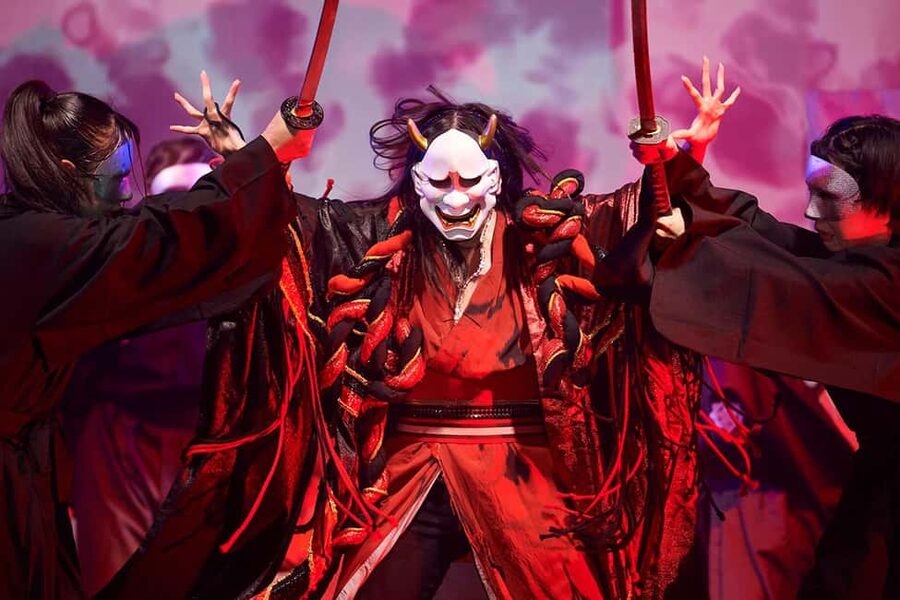
The central figure is Taira no Masakado, a powerful and rebellious figure from Japanese legend. The show presents his story through a mixture of historical ideas, mythology, fantasy, and theatrical invention.
You should not expect a museum-style history lecture or a strictly realistic account of samurai life. The production treats Masakado as a legendary character and uses his story as a doorway into Japanese folklore. One scene may feel rooted in history, while another leans toward spirits, creatures, or fantasy figures.
That blend is one of the show’s strongest features. The performance uses modern sound, lighting, choreography, and visual effects alongside traditional costumes and themes. The result can feel like a live-action anime, with quick changes in mood and a strong visual focus.
The story is not always easy to track. There is limited spoken dialogue, and the action can move quickly between characters and legends. If you need every plot point explained, you may find it confusing. If you are willing to follow the images, music, expressions, and movement, the show works well as theatrical storytelling.
The guide sheet matters here. Read it before the performance rather than trying to study it in the dark. You might also treat the story as a series of dramatic episodes instead of expecting a single clear narrative from beginning to end.
The 8:15 PM performance
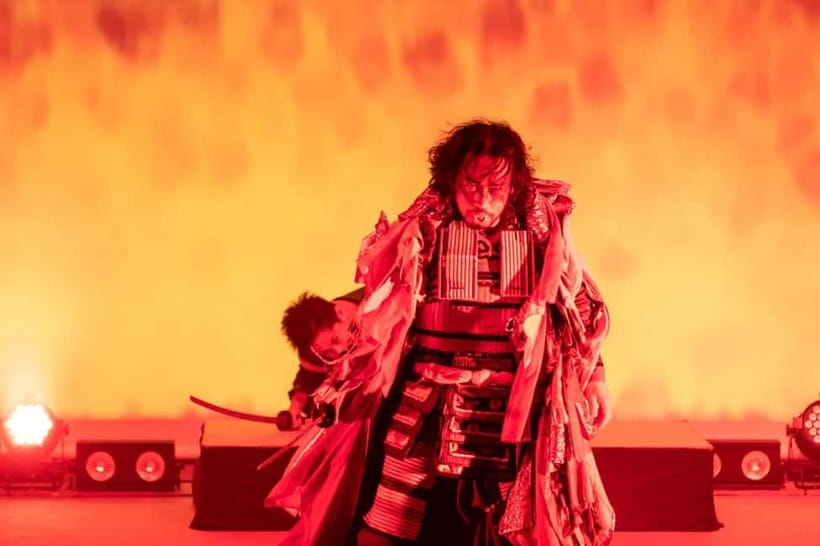
The main show runs from 8:15 to 9:15 PM. The published schedule also asks you to arrive by 8 PM, with no entry after 8:15. Take that seriously. You do not want to arrive just as the doors close and miss the opening.
The production’s most praised features are the performers’ energy, precise movement, costumes, music, and sound effects. Swordplay is part of the show, but this is not a long, realistic fencing demonstration. It is closer to visual theater, with choreographed combat used alongside dance and dramatic gestures.
The actors work with their full bodies. Facial expressions, sudden changes in posture, group movement, and carefully timed entrances carry much of the meaning. You may notice that each performer receives a clear role and moment rather than blending into a faceless group.
The small room helps the action feel close. Performers may use parts of the space beyond the central stage, so keep your attention moving. One practical consequence is that ordering one final drink before the curtain is usually a poor plan. The performance demands your eyes and ears.
The lighting and sound effects give the legends a modern pulse. This is where the show separates itself from a static cultural demonstration. You are not simply watching costumes and traditional gestures. You are watching a produced stage work that uses contemporary theater techniques to make old stories accessible.
Still, keep your expectations in check. The show is not presented as a full English-language drama. It is not designed around long explanations of samurai weapons or detailed historical interpretation. The emotional force comes from rhythm, movement, music, and spectacle.
More samurai and ninja sessions in Tokyo:
- Best Samurai Experience in Tokyo
★ 5.0 · 458 reviews - Ninja Experience (Family Friendly) at Samurai Ninja Museum TOKYO
★ 5.0 · 441 reviews - Tokyo Sword Experience – includes Museum Ticket/Ninja Experience
★ 5.0 · 314 reviews - Samurai Ninja Museum Asakusa: Samurai Sword Lesson & Tour
★ 4.8 · 306 reviews
Photos and conversation from 9:15 to 10 PM
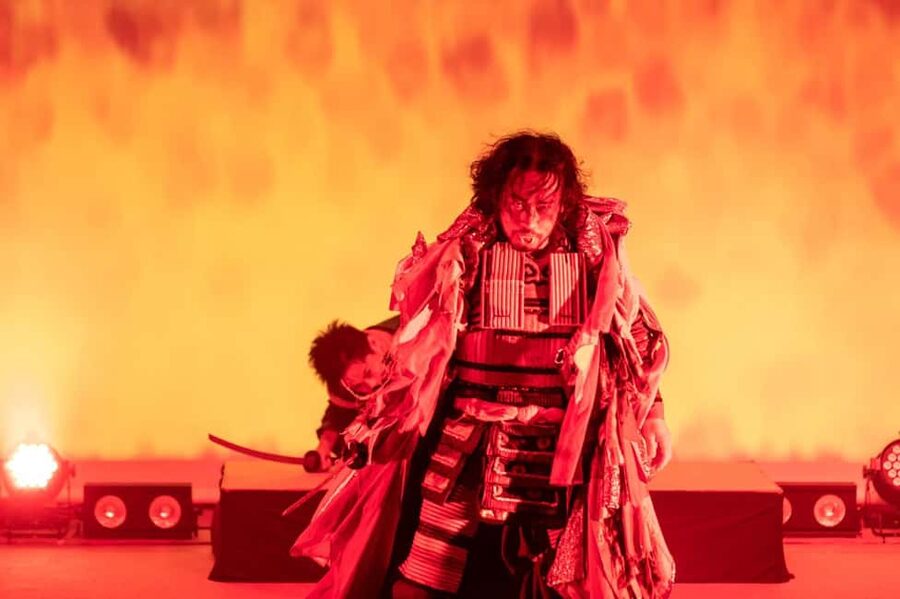
The final hour changes the mood completely. From 9:15 to 10 PM, the actors come out to meet the audience, chat, and pose for pictures.
This is a valuable part of the evening because it lets you see the people behind the costumes. The cast is known for being welcoming, and English conversation is possible. If you are shy about approaching performers, the staff and actors help make the process comfortable.
Photography is allowed during this period, including pictures with the performers. You can also take photos during the permitted closing portion of the event, but follow staff instructions carefully. Cameras, video, and audio recording are not allowed during the main performance.
Do not bring out your phone during the show, even for a quick snapshot. This rule is clearly important, both for the performers and for the people seated around you. Several comments about the event specifically praised the show while criticizing people who recorded through the performance.
Tipping may arise during the cast interaction. Tipping is not a standard Japanese custom, so you are not required to treat it like a restaurant gratuity. However, some people choose to offer a tip to individual performers as a personal thank-you. If you want to do this, carry a small amount of cash and be ready because the photo line can move quickly.
The photo session is not just a rushed souvenir stop. It gives you time to thank the cast and ask simple questions. For many people, this friendly contact becomes one of the most memorable parts of the night.
What the $41 price really covers
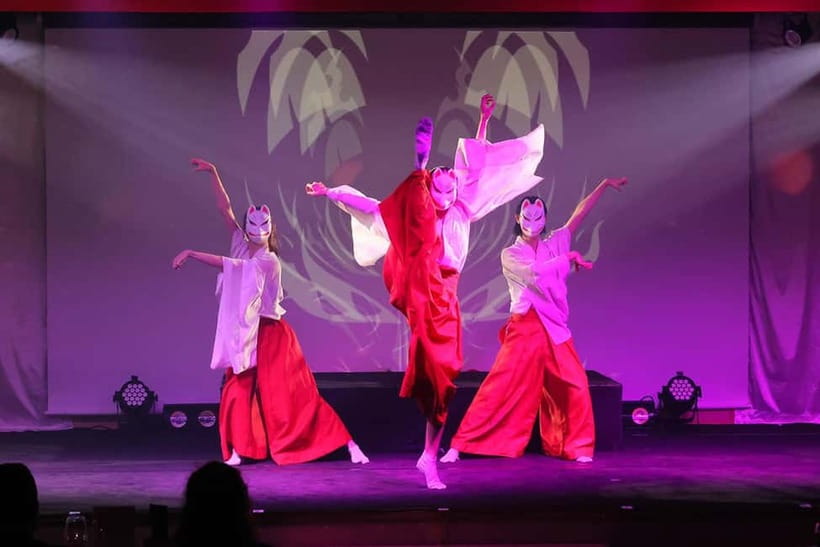
At about $41 per person, this is reasonably priced for a two to three-hour evening that combines a live performance, shrine setting, and a drink. The value is strongest if you want a cultural night out rather than a formal history lesson.
The standard price does not automatically mean dinner is included. Food is available separately, while certain options add a meal and unlimited drinks. Compare the ticket choices carefully. If you only want the show, one drink may be enough. If you plan to arrive early and make the dinner hour part of the evening, the meal package may offer better value.
The show lasts about an hour, but the full schedule gives you time to eat, drink, and meet the cast. That makes the price easier to justify than a short stage performance with no contact afterward.
I would not book this solely for the food. The meal is convenient and can be enjoyable, especially the individual hot pot, but opinions about the menu vary. Book it for the production, then choose the food option that suits your appetite and budget.
Who will enjoy this night most
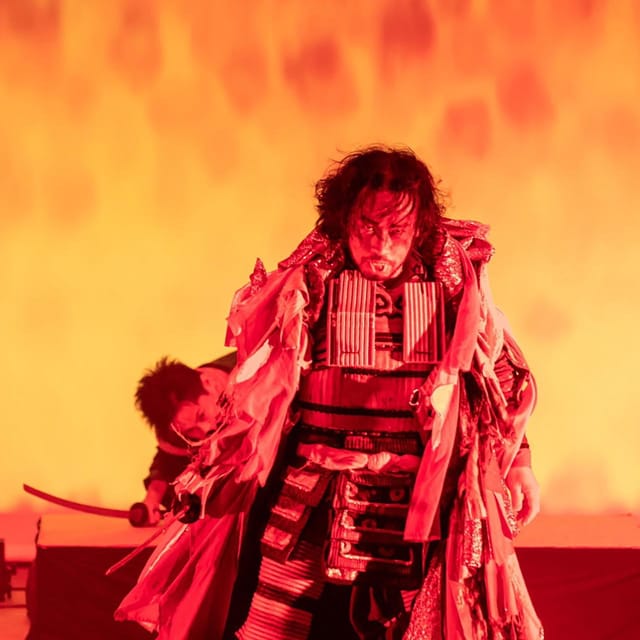
I would recommend the experience to you if you like live theater, Japanese folklore, visual performance, or unusual evening activities. You do not need to be a serious samurai enthusiast. The mix of music, costumes, action, and fantasy gives the show broad appeal.
Families with older children can also consider it. Children around 10 and 12 have enjoyed the performance, though parents should remember that the story may be more visual than verbal. Younger children who need a simple, clearly explained plot may lose interest.
It is also a good choice for solo visitors. The small setting, shared tables, staff attention, and post-show cast interaction make it easier to feel involved without traveling with a group.
You might skip it if you want a quiet shrine visit, a formal historical presentation, or a performance with full translation and detailed dialogue. You should also think twice if you strongly prefer to choose your own seat or take photographs throughout a show.
The event is wheelchair accessible, and one account describes staff helping with the challenge of returning to a hotel after the show. Still, it is wise to contact the provider in advance about your exact seating and access needs, since seat assignments cannot be requested.
Timing, arrival, and practical advice

Plan to arrive at Kanda Myojin before 7:45 PM if possible. This gives you time to find The Show restaurant, check in, read the story guide, and order dinner or drinks without rushing.
The essential timetable is:
- 7 PM: Doors open
- 7 PM to 8:15 PM: Food and drinks
- 8:15 PM to 9:15 PM: Samurai performance
- 9:15 PM to 10 PM: Photos and conversation with the cast
- 10 PM: Closing time
The meeting point is The Show restaurant in the basement of Kanda-Myojin Bunka-Koryu-kan. Staff will welcome you there, but the shrine complex can be confusing if you arrive late or rely only on a map pin.
Wear something comfortable for sitting through the performance and the meal. Keep your phone put away during the show, and finish ordering before 8:15 PM. If you want a cast photo, have your camera ready only once the photo period begins.
Should you book the Kanda Myojin Samurai Show?
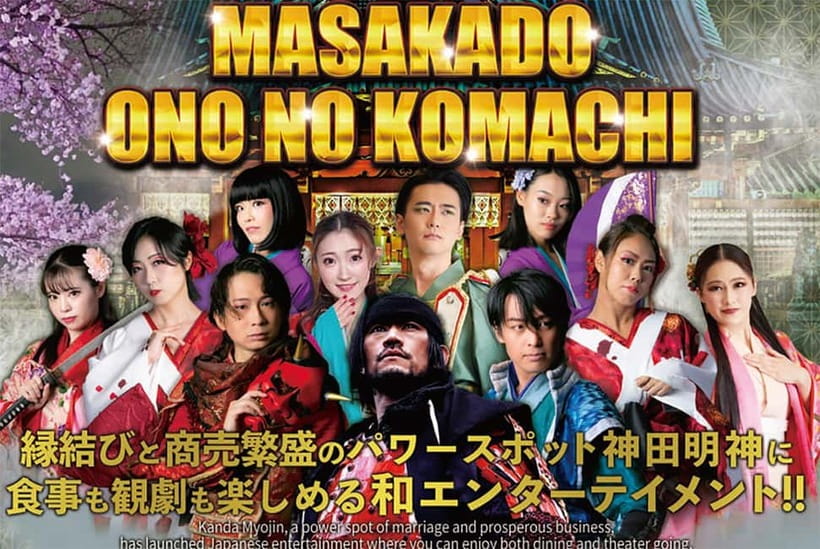
Book it if you want a lively, intimate evening that combines a Tokyo shrine, Japanese legends, theatrical swordplay, music, dance, optional dinner, and a genuine chance to meet the performers.
The strongest reasons to go are the committed cast, polished choreography, modern lighting and sound, and the unusual shrine setting. The main cautions are the limited dialogue, occasionally confusing storyline, assigned seating, and strict no-recording rule.
For the best value, arrive at 7 PM, read the story guide, choose dinner only if the menu appeals to you, and save time after the show for photos. At $41, it is a sensible pick for an evening of Japanese-themed entertainment, especially if you want something more personal than a large stage production.
FAQ
Where does the samurai show take place?
It takes place at The Show restaurant, located in the basement of Kanda-Myojin Bunka-Koryu-kan at Kanda Myojin Shrine.
What time should I arrive?
Doors open at 7 PM. You should arrive at the restaurant by 8 PM, since entry is not possible after 8:15 PM.
When does the performance begin?
The performance runs from 8:15 PM to 9:15 PM.
How long does the full activity last?
The complete evening lasts about two to three hours, including food and drinks before the show and photos afterward.
Is dinner included?
Food is not included in every option. An a la carte menu is available, and some options include dinner. Check the option you select when booking.
What food is available?
The dinner course features an individual chicken hot pot with seasonal vegetables and broth. You add the chicken yourself and can enjoy it with sauce. Other a la carte items are available.
Are drinks included?
The activity includes either one drink or unlimited drinks, depending on the option chosen. Drinks and other orders must be placed before the show begins.
Can I take photos during the performance?
No. Cameras, video recording, and audio recording are not allowed during the main show. You can take photos with the performers from 9:15 PM to 10 PM.
Can I choose my seat?
No. Seat assignments are decided by the restaurant. The front section consists of rows one through four.
Is the activity wheelchair accessible?
Yes, the activity is listed as wheelchair accessible. Seat assignments cannot be requested, so contact the provider in advance if you have specific access needs.
More Evenings Out in Tokyo
- Tokyo Night Foodie Tour in Shinjuku – Seasonal Sushi, Wagyu Beef
★ 5.0 · 1,161 reviews - Tokyo: Daikoku JDM Car Meet & Night Car Culture Tour
★ 4.8 · 626 reviews - Tokyo After 5: Authentic Japanese Food & Drink Night Tour
★ 4.5 · 560 reviews - The Dark Side of Tokyo – Night Walking Tour Shinjuku Kabukicho
★ 4.5 · 297 reviews
More Shows in Tokyo
- Mt Fuji & Hakone Cruise, Drum Show Bullet Train 1 Day from Tokyo
★ 4.0 · 7,413 reviews - Tokyo: Sumo Show Experience with Chicken Hot Pot and a Photo
★ 4.8 · 6,678 reviews - Tokyo: Sumo Show and Dining Experience
★ 4.8 · 2,742 reviews - the SUMO show
★ 5.0 · 1,960 reviews
Just added around Tokyo
- Private Arrival Transfer : Narita International Airport to Central Tokyo City★ 4.5 · 12 reviews
- Narita Airport(NRT): Private Transfer to Tokyo/Yokohama 1-9pax★ 5.0 · 47 reviews
- Private Transfer from Narita Airport to Yokohama Port and City★ 4.5 · 17 reviews
- [Narita Airport Terminals 1, 2] 40-60km Sawara Itako Historic Bike Tour★ 5.0 · 13 reviews
- 3 Day Japan Highlights Tour: Tokyo, Mt.Fuji, Nara, Kyoto, Osaka★ 5.0 · 22 reviews
- Small Town in the Big City: Tasting Tokyo’s Kichijoji★ 5.0 · 195 reviews
- Small Town in the Big City: Tasting Tokyo’s Kichijoji★ 5.0 · 16 reviews
- The 10 Tastings of Tokyo With Locals: Private Street Food Tour★ 5.0 · 48 reviews
Tokyo Tours, compared.

Mt Fuji and Hakone 1-Day Bus Tour Return by Bullet Train
Read our review →
teamLab Planets TOKYO Digital Art Museum Entry Ticket
Read our review →
Mt Fuji & Hakone Cruise, Drum Show Bullet Train 1 Day from Tokyo
Read our review →
Sumo Show Experience with Chicken Hot Pot and a Photo
Read our review →
Shinjuku Food Tour (13 Dishes at 4 Local Eateries)
Read our review →
Tokyo Mt Fuji 5th St & Hakone Cruise Bus Tour w/Bullet Train
Read our review →
Flagship 2-Hours Official Street Go-Kart Tour – Tokyo Bay Shop
Read our review →Browse the lists this tour appears in