
Reviewed · TOKYO TOURS
Best Samurai Experience in Tokyo
The best part of this Tokyo activity is that you do not just pose in samurai clothing. You learn a short set of sword movements, practice them with an instructor, and use them in a staged battle set to music. The Edo-period-style dojo, with armor, swords, and spears on display, gives the hour a proper sense of place.
I like two things right away: you choose your own kimono and hakama, and you may take photos and videos during the session. The instructors are friendly, patient, and used to making the lesson work for children, adults, and solo participants. The one drawback is the short format. At about an hour, this is a lively introduction to samurai performance, not a full martial arts course or a detailed study of Japanese history.
Key points before you book
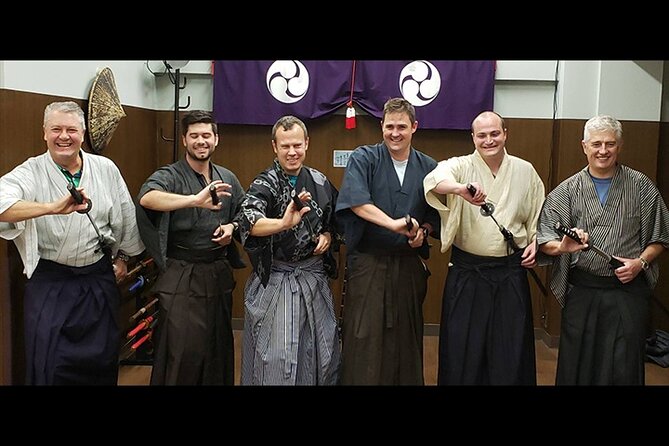
- Choose your own samurai outfit: You change into a kimono and hakama before the sword lesson begins.
- Learn five basic sword movements: Practice drawing, holding, swinging, and returning a Japanese sword.
- Perform a choreographed battle: The final sequence lets you put the movements together in a movie-style fight.
- Film and photograph the action: You can use your smartphone and have staff take pictures and videos for you.
- Small group setting: The maximum group size is 10 people, which helps the instructors give clear guidance.
- Works for families and solo visitors: Children, teenagers, adults, and people arriving alone can all take part.
Entering the Edo-style dojo in Shinjuku
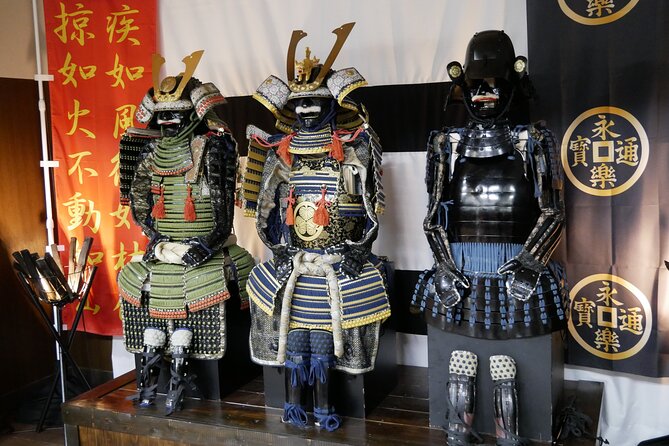
Samurai Theater Tokyo is at 40 Yokoteramachi in Shinjuku City. The activity begins and ends at this same meeting point, and the venue is near public transportation. The setting is designed to resemble a dojo from roughly 400 years ago, so the room is made to feel separate from modern Tokyo.
That contrast is part of the fun. You may arrive through ordinary city streets, then find yourself in a room lined with armor and traditional weapons. Swords and spears are displayed around the space, giving you something to look at before the lesson starts and helping the place feel like more than a costume studio.
The venue can take a little attention to find. It is up side roads, and the flag leading toward the entrance is useful. Give yourself enough time to locate the meeting point rather than assuming the address will be obvious from a main street.
The group size is capped at 10 people. That is large enough for a lively group performance but small enough for instructors to see what you are doing. If you are visiting alone, you do not need to form your own party. Solo participants can join, and the staff can help with photos and video.
More Samurai and Ninja Experiences in Tokyo
- Tokyo: Samurai Restaurant Show Ticket with 2 Drinks
★ 4.5 · 1,307 reviews - Tokyo: Samurai Ninja Museum Guided tour and Experience
★ 4.6 · 1,010 reviews - Tokyo: Samurai Sword & Archery Class from Samurai Descendant
★ 5.0 · 603 reviews
Picking a kimono and hakama
The first hands-on step is choosing your clothing. You put on a kimono and hakama, the traditional trousers often associated with formal Japanese dress and martial arts. The clothing is not just decoration. It changes the way you stand and move, and it helps turn the lesson into a role-playing experience.
You should expect the staff to help you get dressed and prepare for the activity. Many people find the formal wear more comfortable than expected once it is on. It also photographs well, especially against the darker, old-style dojo setting.
For families, this change of clothing is a major part of the appeal. Children can see themselves transformed before they ever pick up a sword. Adults get a chance to take the activity seriously without needing to arrive with any knowledge of Japanese martial arts.
The clothing also creates one small practical consideration: allow a little time for changing. The experience lasts about one hour, so the costume portion is part of the scheduled activity rather than an extra session before it.
Learning to handle the Japanese sword
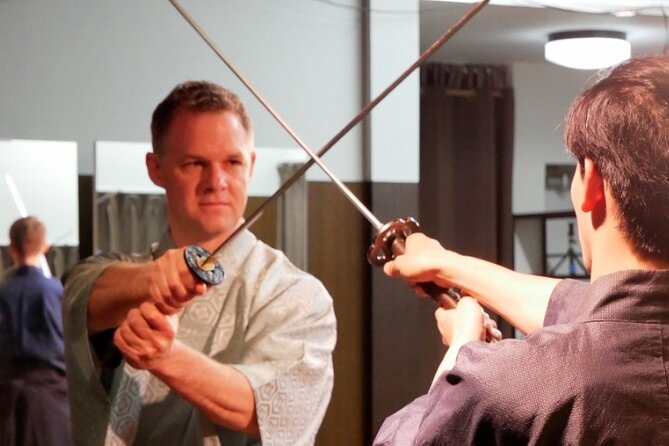
Once dressed, you receive instruction in basic sword use. The lesson covers how to draw a sword, hold it, swing it, and return it. The teaching is presented for beginners, with the instructors explaining each movement at a manageable pace.
The point is not to turn you into a swordsman in 60 minutes. Instead, you learn a short sequence that can be performed safely and clearly. The instructors demonstrate the movements, then guide you as you repeat them.
This is where the experience gains value beyond a costume photo. You are learning a small amount of choreography, paying attention to hand position and timing, and remembering a series of actions in the correct order. Several people describe it as a fun mental exercise as well as a physical one.
The teachers are presented as authentic instructors who have appeared in major Japanese dramas and movies. That background matters most during the demonstrations and final performance, when the movements need to look clean and theatrical. You get guidance from people who understand how samurai action is presented on screen.
The lesson includes an explanation of sword safety. That is especially important for families and anyone who feels unsure about handling a sword. The instructors are described as patient and accommodating, and the activity is designed so beginners can participate.
From practice to a choreographed chambara fight
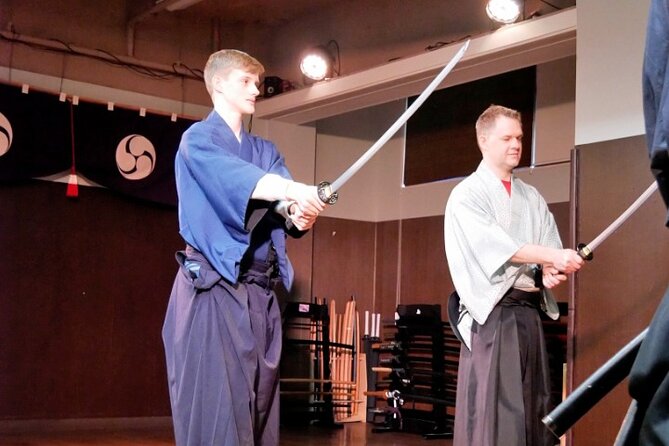
After the basic movements, you practice a simple chambara sequence. Chambara is Japanese sword-fighting entertainment, the kind of stylized action associated with samurai films and stage performances.
This is not presented as uncontrolled combat. You learn a planned routine, then perform it with the other participants. The structure makes the activity suitable for people with different levels of confidence. You do not need to invent movements or rely on quick reflexes.
The final battle is set to music, with a playful good-versus-bad-guys theme. You use the skills from the lesson to stage an attack sequence and help defeat the villains. It is theatrical rather than dangerous, and the sound effects and music help the scene feel like a small film set.
I like this progression because it gives the hour a clear payoff. You start by changing clothes, learn individual actions, rehearse them, and then use them in a complete performance. That is more satisfying than simply holding a prop sword for a photograph.
The final routine is also the most entertaining part for families. Children can take on the drama of the scene, while adults get enough instruction to feel involved rather than merely watching. The activity is playful, but the staff still guide the movements and keep the pace organized.
More samurai and ninja sessions in Tokyo:
- Ninja Experience (Family Friendly) at Samurai Ninja Museum TOKYO
★ 5.0 · 441 reviews - Tokyo: Samurai Entertainment Night Show in Kanda Shrine
★ 4.6 · 417 reviews - Tokyo Sword Experience – includes Museum Ticket/Ninja Experience
★ 5.0 · 314 reviews - Samurai Ninja Museum Asakusa: Samurai Sword Lesson & Tour
★ 4.8 · 306 reviews
Photos and videos that are part of the fun
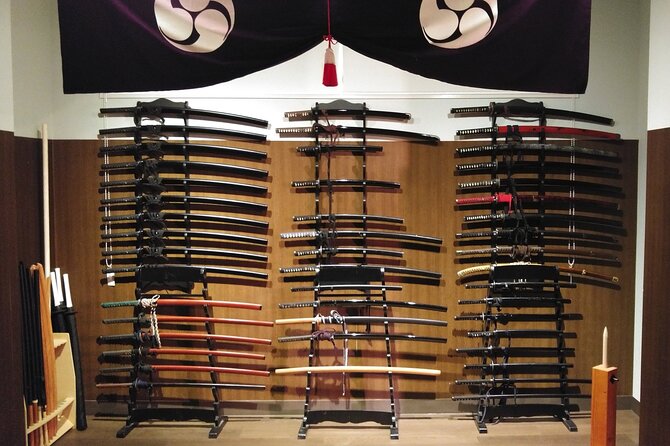
Photography and video recording are allowed inside the museum-like venue. You may use your smartphone, and staff can take pictures and videos for you during the session.
That is a real advantage for solo participants. You do not need to ask another member of the group to record every important moment. The staff can capture you in costume, during the sword practice, and in the final performance.
Families should find this especially useful. It is difficult for parents to supervise children and record a staged sword fight at the same time. Having staff help with pictures means you can take part rather than stand at the edge of the room with a phone in your hand.
The photos also serve a practical purpose. Since the experience is short, the images help preserve the details that pass quickly: the clothing, the dojo decorations, the sword poses, and the group battle. You leave with something more lasting than the memory of a quick costume change.
Bring a charged smartphone and enough storage for videos. The activity specifically allows phone recording, so it makes sense to prepare for that before you arrive.
Why the one-hour length can be good value
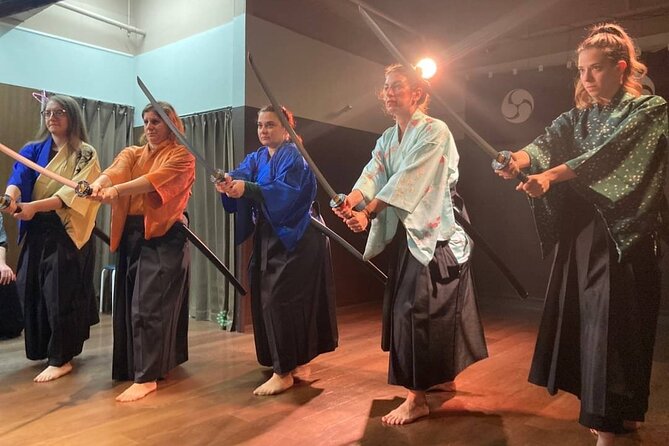
The price is $65 per person. That includes all fees and taxes, a professional guide or instructor, and the samurai costumes. Transportation to the venue is not included.
At first glance, $65 for about an hour may seem high compared with a museum visit. The value comes from the number of elements packed into the session: changing clothes, instruction, sword practice, a choreographed performance, access to the decorated venue, and help with photos and videos.
You are paying for an organized activity, not just admission. The instructors provide the demonstrations, manage the group, explain the movements, and shape the final performance. That makes the price easier to justify if you want a planned cultural activity rather than a self-guided stop.
Still, I would not book this expecting a long lecture or a serious sword-fighting class. The experience is best judged as a compact cultural performance and photo activity with a hands-on lesson. If you want historical detail, you may need to pair it with a separate museum or history site.
The format can also be efficient during a busy Tokyo trip. One hour leaves room for lunch, shopping, or another Shinjuku activity. Same-day reservations may be possible, though availability is never something to count on during a popular travel period.
Best fit for children, adults, and solo participants
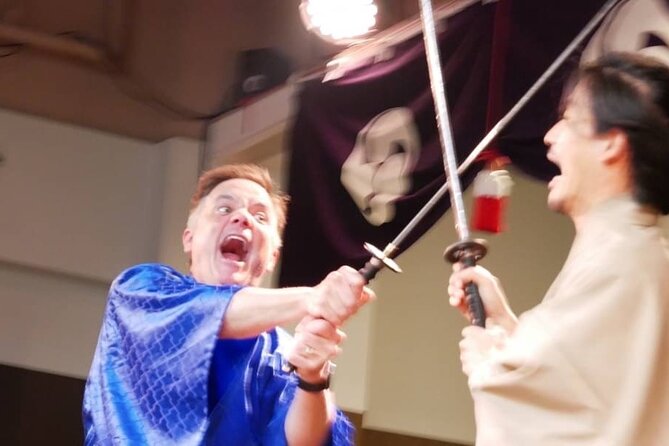
This is a strong choice for families. The costumes give children an immediate role, the movements are taught step by step, and the final battle provides a clear goal. Staff are described as especially patient with children, and a small gift may be given to children at the end.
The age range that has worked well is broad. Young children have taken part, including a six-year-old, while family groups with teenagers and young adults have also enjoyed the session. The activity is not limited to children, though adults should be ready to play along with the theatrical tone.
You will probably enjoy it most if you like active sightseeing. You are not sitting through a long presentation. You are standing, moving, posing, listening, and repeating a short routine.
Solo visitors are also welcome. The staff can photograph and film you, which removes one of the main problems with booking a performance activity alone. You may even get more direct attention during the session, though the exact group mix can vary.
This is less suitable if you dislike dressing up, staged fights, or being part of a group performance. The sword work is choreographed, and the mood is lively and playful. It is not a quiet meditation on samurai culture.
Practical details that affect your visit
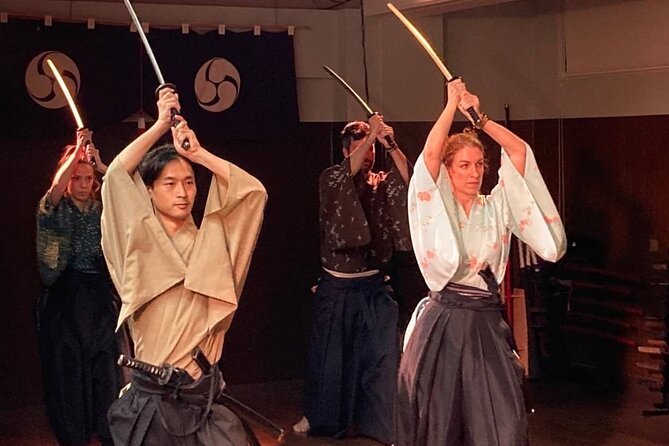
Your reservation confirmation is received at booking, and the activity uses a mobile ticket. Keep the ticket easy to access on your phone when you arrive.
The meeting point is Samurai Theater Tokyo, 40 Yokoteramachi, Shinjuku City, Tokyo 162-0831, Japan. The activity ends back at that location, so you do not need to arrange a separate return transfer.
Private transportation is not included. Since the venue is near public transportation, you will need to make your own way there and back. Check your route before leaving, and allow extra time to follow the side roads and locate the flag near the venue.
Most people can participate, according to the activity information. Even so, remember that the session involves changing clothes, standing, and performing sword movements. If you have a concern about taking part physically, ask the provider before booking.
The maximum group size is 10. That limit helps keep the demonstrations visible and the final performance manageable. It also means you should book ahead if your schedule is fixed, even though one-person and same-day reservations may be accepted.
Free cancellation is available if you cancel at least 24 hours before the start time. Cancellations made less than 24 hours in advance are not refunded, and late changes are not accepted. The cut-off follows Tokyo local time.
How this compares with a standard museum visit
A museum can give you more objects, more labels, and more historical context. This activity gives you a physical connection to the subject. You put on the clothing, handle a sword under instruction, learn a few movements, and perform them.
That difference should guide your decision. If you want to understand armor styles or the political role of the samurai in Japanese history, this one-hour session will not cover enough. The displayed weapons and armor add atmosphere, but the central focus is participation.
If you want a memorable break from temples, shopping streets, and train stations, the format works well. Tokyo sightseeing can involve plenty of walking and looking. Here, you become part of the scene for a while.
The experience also gives you a better sense of the performance side of samurai culture. The music, sound effects, poses, and controlled movements show how sword fighting becomes stage entertainment. That is different from a historical lecture, but it is a legitimate and enjoyable way to connect with the image of the samurai in popular Japanese culture.
Should you book the Samurai Experience in Tokyo?
Book it if you want a short, active, family-friendly Tokyo activity with costumes, sword instruction, and strong photo opportunities. It is particularly useful for a first visit when you want one easy cultural experience that children and adults can share.
I would also recommend it for solo visitors because the staff can help record the session. The instructors’ film and drama experience, along with their friendly teaching style, adds polish to the final performance.
Skip it if you are looking for a detailed history seminar, an authentic combat lesson, or a long visit. At $65 for about an hour, the value depends on your interest in dressing up, performing, and taking home photos.
For the right audience, this is a well-organized hour of Japanese-themed fun. You learn just enough technique to make the staged battle feel earned, then leave with a story, a few new movements, and evidence that you once fought your way through an Edo-style dojo.
FAQ
How long does the samurai experience last?
The activity lasts approximately one hour.
Where does the activity take place?
It starts and ends at Samurai Theater Tokyo, 40 Yokoteramachi, Shinjuku City, Tokyo 162-0831, Japan.
What is included in the price?
The price includes all fees and taxes, a professional guide or instructor, and samurai costumes.
Is transportation included?
No. Private transportation is not included. The venue is near public transportation, so you arrange your own journey to and from the meeting point.
Can I choose my own samurai clothing?
Yes. You choose a kimono and hakama before changing into the samurai costume.
What sword skills will I learn?
You learn how to draw a sword, hold it, swing it, and return it. The session also includes basic sword movements and a simple choreographed fight.
Can I take photos and videos?
Yes. Photography and video recording are allowed inside the venue. You can use your smartphone, and staff can help take photos and videos.
Can someone who is traveling alone participate?
Yes. One person can join the activity, and staff can help solo participants take photos and record video.
What is the cancellation policy?
You can cancel for a full refund if you do so at least 24 hours before the experience starts. Cancellations or changes made less than 24 hours before the start time are not accepted for a refund.
Just added around Tokyo
- Private Transfer from Narita Airport to Yokohama Port and City★ 4.5 · 17 reviews
- Private Arrival Transfer : Narita International Airport to Central Tokyo City★ 4.5 · 12 reviews
- Narita Airport(NRT): Private Transfer to Tokyo/Yokohama 1-9pax★ 5.0 · 47 reviews
- [Narita Airport Terminals 1, 2] 40-60km Sawara Itako Historic Bike Tour★ 5.0 · 13 reviews
- 3 Day Japan Highlights Tour: Tokyo, Mt.Fuji, Nara, Kyoto, Osaka★ 5.0 · 22 reviews
- Small Town in the Big City: Tasting Tokyo’s Kichijoji★ 5.0 · 195 reviews
- Small Town in the Big City: Tasting Tokyo’s Kichijoji★ 5.0 · 16 reviews
- The 10 Tastings of Tokyo With Locals: Private Street Food Tour★ 5.0 · 48 reviews
Tokyo Tours, compared.

Mt Fuji and Hakone 1-Day Bus Tour Return by Bullet Train
Read our review →
teamLab Planets TOKYO Digital Art Museum Entry Ticket
Read our review →
Mt Fuji & Hakone Cruise, Drum Show Bullet Train 1 Day from Tokyo
Read our review →
Sumo Show Experience with Chicken Hot Pot and a Photo
Read our review →
Shinjuku Food Tour (13 Dishes at 4 Local Eateries)
Read our review →
Tokyo Mt Fuji 5th St & Hakone Cruise Bus Tour w/Bullet Train
Read our review →
Flagship 2-Hours Official Street Go-Kart Tour – Tokyo Bay Shop
Read our review →Browse the lists this tour appears in