
Reviewed · TOKYO TOURS
Tokyo: Samurai Sword & Archery Class from Samurai Descendant
The unusual part of this three-hour class is that you do not simply watch a staged samurai show. At Toyama-Ryu BIZENKAI, samurai descendant Yoshioki Sumida teaches sword forms, sparring, target cutting, and Japanese archery in a real dojo. I like the hands-on training and the way the class corrects your form instead of handing you a souvenir sword and sending you home. I also like the mix of sword and bow, since it gives you a fuller picture of how samurai warfare changed over time.
The main drawback is the price, $193 per person, and the trip to Machida can take about 90 minutes from the Shimbashi area. This is also a physical class, not a gentle photo stop. You will swing a sword, work on footwork, and draw a strong Japanese bow, so it is a poor fit for anyone with major mobility, heart, back, or vision concerns.
Key points to know before booking
- You train instead of only watching: The class includes kata, sword handling, sparring, target cutting, and archery.
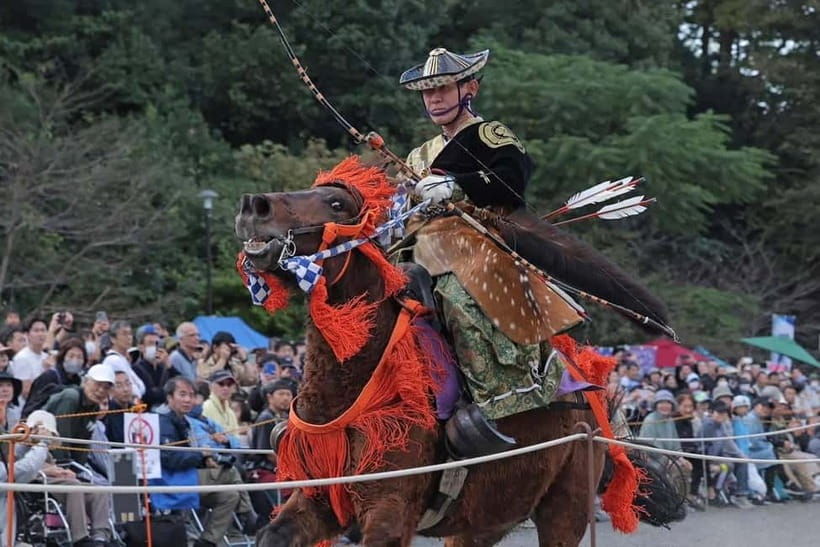
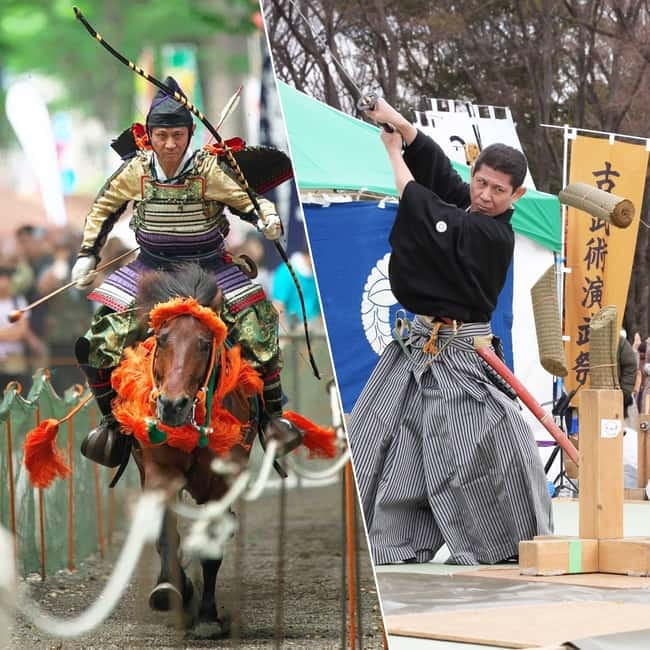
- Yoshioki Sumida teaches both disciplines: Your instructor practices Toyama-ryu swordsmanship and traditional Japanese horseback archery.
- The dojo is near JR Machida Station: Allow about 10 minutes on foot from the station, plus extra time if coming from central Tokyo.
- The class can be a real workout: Expect repeated sword swings, concentration, balance work, and bow practice.
- Training clothes and a practice sword are supplied: Send the height and weight of every participant after booking.
- The group limit is 15 people: It is a shared class, though a small booking may bring more personal attention.
Why this feels like a class, not a samurai photo show
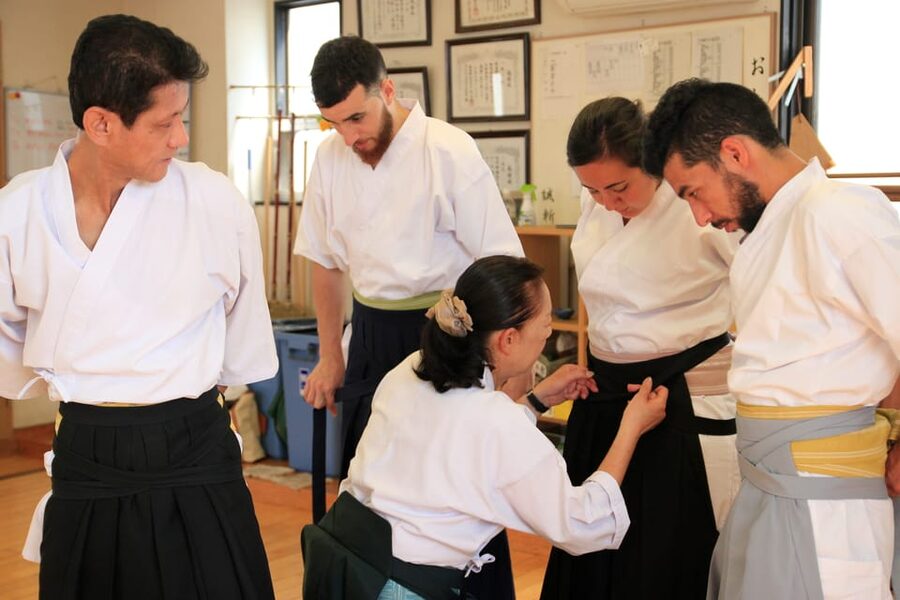
Many cultural activities give you a costume, a quick demonstration, and a few minutes to copy the guide. This one takes a different route. You change into training clothes, learn basic handling and etiquette, and then spend most of the session doing the work yourself.
That difference matters. A sword looks simple in a display case, but correct use involves grip, stance, balance, timing, and the path of the blade. You learn that the hard way, through repeated practice and direct correction. The instructor may stop you, show what went wrong, and have you repeat the movement until it becomes clearer.
Sumida-sensei is the central figure, with assistants helping during the practical sections. The teaching is available in Japanese and English. English ability may be basic in parts, but the class uses demonstrations and repetition well, and the instructor makes a point of checking that you understand the movement.
I especially like the serious tone. The class is designed as training, not as entertainment made only for foreign visitors. That does not mean it is grim. The teaching has humor and warmth, but the techniques are treated with care. You are expected to listen, follow instructions, and respect the dojo.
More Samurai and Ninja Experiences in Tokyo
- Tokyo: Samurai Restaurant Show Ticket with 2 Drinks
★ 4.5 · 1,307 reviews - Tokyo: Samurai Ninja Museum Guided tour and Experience
★ 4.6 · 1,010 reviews - Best Samurai Experience in Tokyo
★ 5.0 · 458 reviews
From bow to sword: a short lesson in samurai weapons
The opening lecture places the practical work in a useful timeline. About 1,000 years ago, the bow was the main samurai weapon. About 450 years ago, the matchlock gun changed the balance of power. After civil war ended around 400 years ago, the sword became the main weapon associated with samurai life.
This short explanation helps correct the movie version of samurai history. The katana was important, but it was not always the first weapon used in battle. You also get to hold an antique matchlock gun, which adds a physical link to the period of military change.
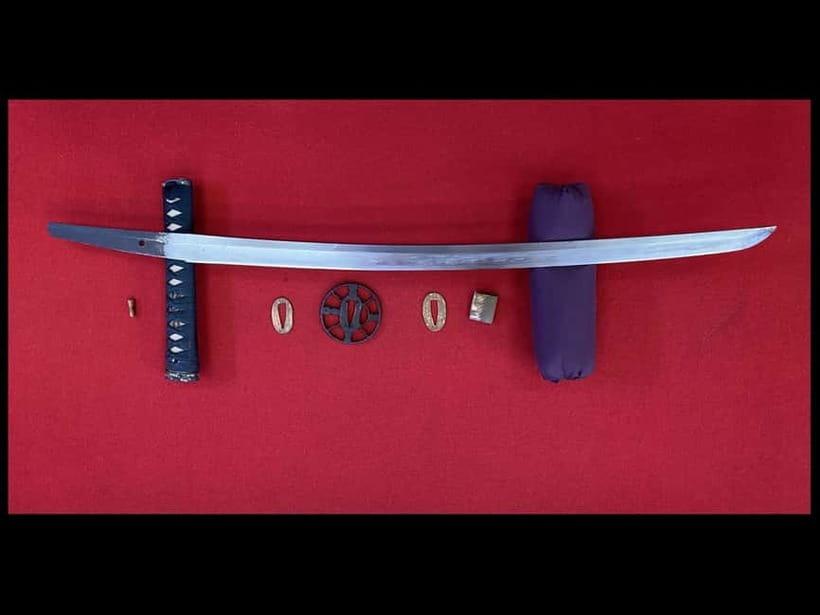
There is also a lecture about Japanese swords and how the blade is made. Do not expect a museum-level sword-forging seminar in three hours. Instead, use this part to understand why the sword is handled with such care and why blade alignment matters once you start practicing.
The instructor’s personal connection to the tradition is part of the appeal. Sumida presents himself as a descendant of a samurai family, and his pride in the arts is clear. The value here is not just the family story. You see how much discipline is required to teach these movements accurately.
Iai practice: learning to control a practice sword

The iai section introduces the basic action of drawing, positioning, and swinging a sword. You use a practice sword, not a live blade, while learning the forms known as kata.
Kata are set movements. They may look smooth when performed by an expert, but the beginner version is demanding. Your hands must work together, your feet must move in the right order, and the sword has to travel along a controlled line. Speed is not the goal at first. Control is.
One useful exercise checks your blade line. This is where you begin to see why a correct-looking swing can still be wrong. A blade that tilts or travels off line will not cut cleanly, and an awkward grip can make the movement unsafe.
Pay attention to the instructor’s corrections. Several parts of the class depend on small details, such as where your hands sit, how you turn your body, and where you finish the swing. If you rush because you want a dramatic photograph, you will miss the point.
The practice clothes help here. You are not trying to manage ordinary street clothes while moving, and the uniform gives the session a proper training feel. You need to provide your height and weight in advance so the dojo can prepare the right clothing.
Gekken sparring: timing replaces movie-style swordplay
The gekken section adds controlled sparring with practice swords. You learn when to attack, when to defend, and how to respond to another person’s movement.
This is friendly practice, but it still requires focus. You need to watch your partner, follow the instructor’s directions, and avoid treating the sword like a toy. The sparring offers a useful contrast to kata. Kata teaches a set pattern, while sparring asks you to react.
Beginners often enjoy this section most because it feels active and immediate. It also reveals how difficult sword fighting would be in real life. A large swing may look powerful, but it can leave you slow or off balance. Timing and footwork matter more than theatrical movement.
The instructors are careful about safety and form. Still, you should arrive ready to concentrate. The class is not suitable for people who cannot safely swing a sword, and the physical effort may leave you sore the next day.
More samurai and ninja sessions in Tokyo:
- Ninja Experience (Family Friendly) at Samurai Ninja Museum TOKYO
★ 5.0 · 441 reviews - Tokyo: Samurai Entertainment Night Show in Kanda Shrine
★ 4.6 · 417 reviews - Tokyo Sword Experience – includes Museum Ticket/Ninja Experience
★ 5.0 · 314 reviews - Samurai Ninja Museum Asakusa: Samurai Sword Lesson & Tour
★ 4.8 · 306 reviews
Target cutting is the class highlight, and it is harder than it looks
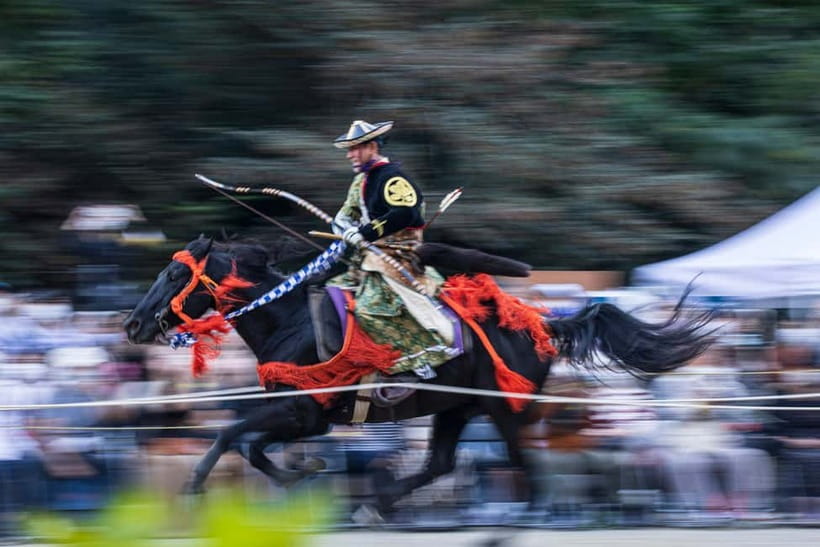
The most memorable part for many people is cutting targets while moving. This is much more difficult than standing still and making a single swing.
You must combine footwork, timing, posture, grip, and blade angle. The target does not forgive a sloppy motion. A cut can look forceful but fail if the blade line is wrong. That makes this section valuable, since it turns an abstract lesson into a clear result.
The descriptions of the activity refer to a mock sword during some practice, while the cutting portion is described as hands-on katana work. Follow the instructor’s directions closely about which sword is used at each stage. The important point is that you are not casually waving a sharp blade. You first learn the basics, then attempt the cutting under supervision.
Bring a camera if you want photographs or video, but do not let filming distract you. One useful tip from the class is to give yourself enough room in your frame during the bow section, since the long Japanese bow needs a wider view. Ask before recording, and keep your phone safely out of the way during practice.
Japanese archery with a long horseback bow
The archery lesson connects directly to the opening history talk. You use a Japanese-style bow associated with traditional horseback archery, a discipline that requires patience and body control.
This is not a modern target-range session with a short compound bow. The bow is long and can feel unfamiliar, particularly when you are trying to hold posture while drawing. The lesson focuses on basic use and safe handling rather than promising that you will become an archer in one afternoon.
The change from sword to bow is worthwhile. Sword work feels compact and close to the body. Archery asks you to extend your posture, control your breathing, and keep your attention on alignment. It gives you another view of samurai training and explains why the bow held such an important place in earlier periods.
Left-handed participants should take note. One participant found that the activity was taught right-handed, which had a greater effect during archery than during sword work. If you are left-handed, ask the provider about the current setup before booking. You may still take part, but the standard instruction may not mirror your natural side.
The instructor also demonstrates traditional techniques, including a Toyama-ryu performance described as a live demonstration by a seventh-grade practitioner. These techniques can be difficult to follow, and that is part of the point. You get to see the difference between beginner practice and trained performance.
A real dojo near Machida, not central Tokyo
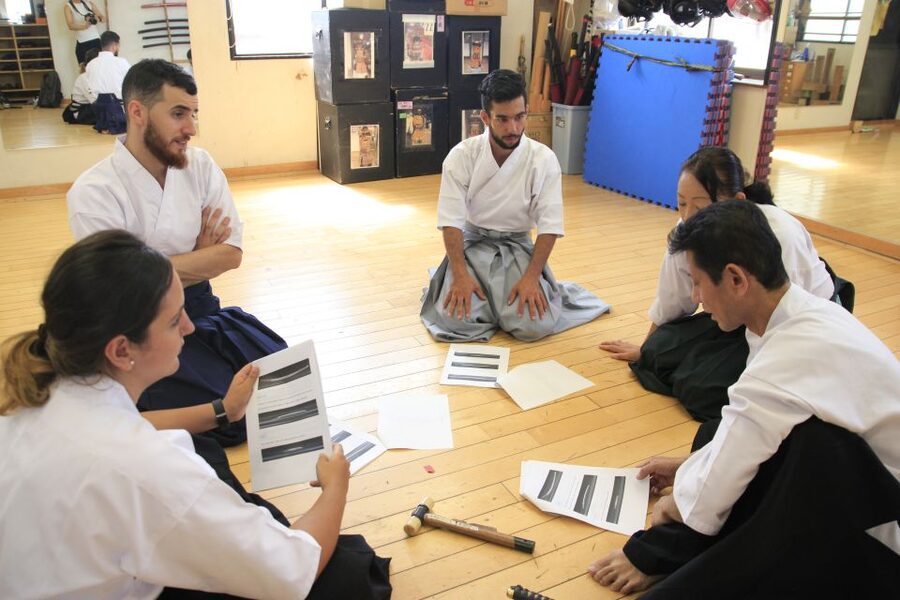
The meeting point is Toyama-Ryu Bizen-kai, written 戸山流備前会 BIZENKAI. The dojo is on the third floor, about a 10-minute walk from JR Machida Station.
Finding it requires attention. On the first floor, look for the stairs at the back, between the sword shop and the vending machines. Take those stairs to the third floor. This is not the kind of place where a large street sign necessarily does all the work, so arrive early and keep the meeting instructions available.
Machida is outside the most familiar sightseeing core of Tokyo. From Shimbashi, one class participant estimated the journey at about 90 minutes, so do not schedule this immediately before a major reservation in central Tokyo. The longer ride is the trade-off for training in a working dojo rather than a tourist attraction in the heart of the city.
Arriving 30 minutes early is a smart idea. You may have time to speak with the instructor and watch practice or a demonstration before your scheduled session. Punctuality matters, and the dojo expects you to arrive ready to begin.
The group maximum is 15, and the class is shared. A smaller booking may feel close to a private lesson, but you should not assume private treatment when reserving. The amount of individual correction can depend on the number of people present.
What the $193 price really buys you
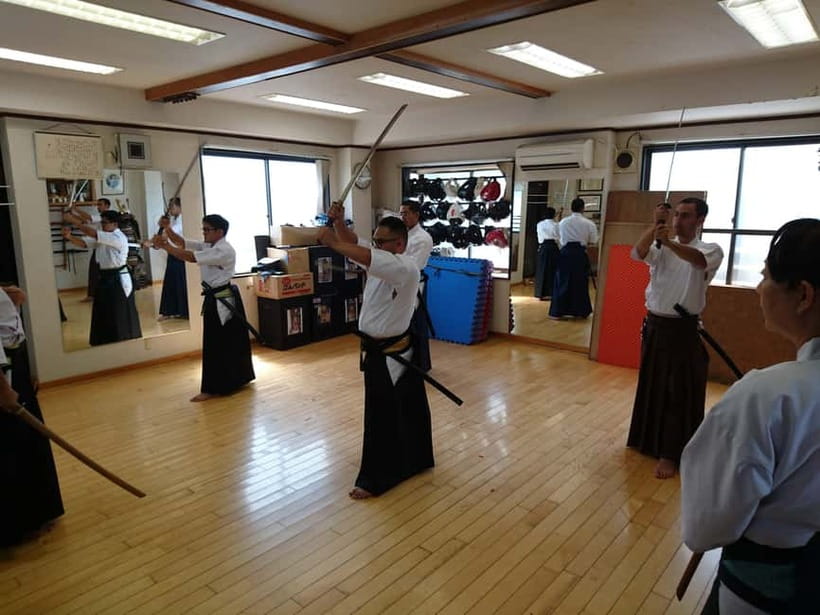
At $193, this is one of the more expensive cultural activities you can add to a Tokyo trip. You are paying for a three-hour lesson with an instructor, training wear, a practice sword, guided sword work, sparring, target cutting, archery, and cultural explanation.
That is better value for someone who wants actual instruction than for someone who only wants a quick samurai-themed memory. You receive repeated practice, personal correction, and access to equipment you would not normally handle on your own. The class also combines two traditional disciplines, which makes it broader than a basic sword lesson.
The price is harder to justify if you are mainly looking for photographs or a theatrical show. The class moves at a training pace, and some techniques may look difficult rather than instantly fun. You also pay in time, with the journey to Machida taking a meaningful part of your day.
I would book it for martial arts fans, people with a strong interest in Japanese culture, and anyone who values instruction over spectacle. Couples and small groups can enjoy it together, but everyone needs to be willing to listen and work. Several participants described the session as physically demanding, so plan a quieter evening afterward if you are not used to this kind of exercise.
Clothing, safety, and physical demands
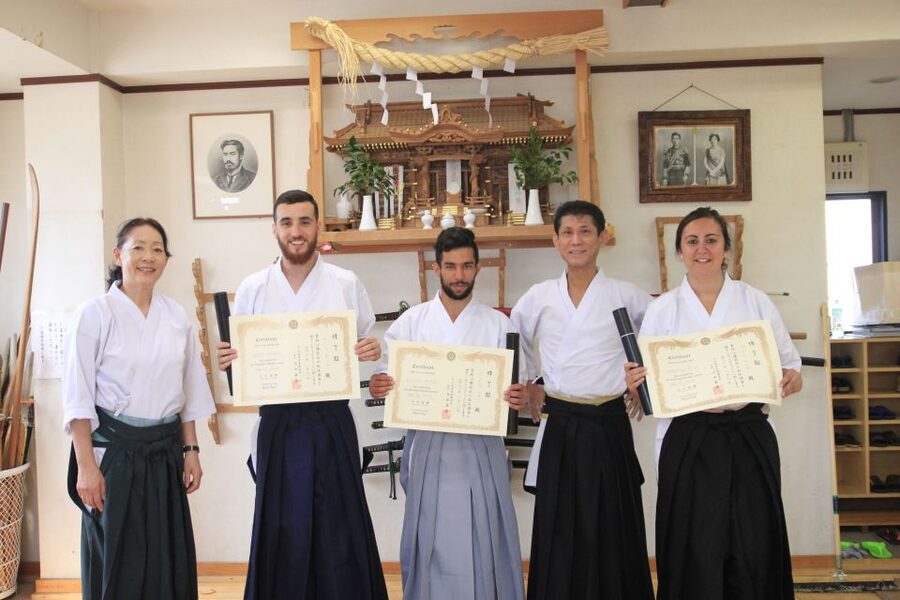
Training uniforms are provided, which simplifies packing. Send the height and weight of all participants after the reservation is confirmed so the dojo can prepare clothing.
Bring water or another drink and a camera if you want to document the day. Alcohol and drugs are not allowed. You should also wear or bring something suitable for changing into and out of training clothes, though the supplied information does not specify the changing-room setup.
The activity is not suitable for pregnant women, wheelchair users, people with mobility, back, heart, or vision problems, or people with epilepsy. The provider also lists children under 18 as unsuitable, while noting that someone under 18 may participate with parental permission and supervision if they have the strength to swing the sword. Because those instructions conflict slightly, confirm the current age rule before booking a minor.
This is not a passive cultural talk. You will stand, swing, move, draw a bow, and repeat techniques. Good instruction reduces risk, but it does not remove the need for physical ability and attention.
Cancellation and language details
The class lasts three hours, with starting times based on availability. Instruction is offered in Japanese and English.
You can cancel up to 24 hours in advance for a full refund, and the reserve-now, pay-later option can help if your Tokyo schedule is still shifting. After booking, check your email carefully because the organizer sends follow-up information, including the request for participant height and weight.
Should you book this samurai class?
Book it if you want to practice rather than pose. The combination of kata, sparring, target cutting, and traditional archery gives you a serious introduction to samurai arts, while Sumida-sensei’s personal connection and clear corrections make the session feel grounded.
Skip it if you want a central Tokyo activity, a short performance, or a low-effort photo opportunity. The price is high, the dojo is in Machida, and the class can leave you sore.
For the right person, this is a memorable use of half a day. Arrive early, allow plenty of travel time, listen closely, and treat the dojo as a place of training. If that sounds better than a staged samurai show, the $193 fee is easier to defend.
FAQ
Where is the samurai sword and archery class held?
It is held at Toyama-Ryu Bizen-kai, written 戸山流備前会 BIZENKAI, near JR Machida Station in Japan.
How far is the dojo from JR Machida Station?
The dojo is about a 10-minute walk from JR Machida Station.
How do I find the dojo?
The dojo is on the third floor. Use the stairs at the back on the first floor, between the sword shop and the vending machines.
How long does the class last?
The experience lasts three hours.
What activities are included?
You learn about Japanese swords, practice iai kata, study attack and defense timing, spar with a practice sword, practice target cutting, and try a Japanese-style bow used in traditional horseback archery.
Is the class taught in English?
Yes. The listed languages are Japanese and English.
Are training clothes provided?
Yes. Practice uniforms are provided. You must send the height and weight of every participant after booking.
How many people can join?
A maximum of 15 people can participate, and the class is shared.
Can children take part?
The activity is listed as unsuitable for children under 18. The additional instructions state that someone under 18 may participate with parental permission and supervision if they have enough strength to swing the sword, so confirm the rule with the organizer before booking.
What should I bring?
Bring a camera and drinks. Alcohol and drugs are not allowed.
Who should avoid this activity?
It is not suitable for pregnant women, people with back, heart, mobility, or vision problems, wheelchair users, people with epilepsy, or anyone unable to safely swing a sword.
More Workshops in Tokyo
- Sushi Making Tokyo Roll and Authentic Japanese Sushi Class
★ 5.0 · 3,971 reviews - Tokyo: Roll and Authentic Sushi Making Class in Asakusa
★ 4.9 · 1,957 reviews - Tokyo Shinjuku Chopsticks Making Class
★ 5.0 · 1,763 reviews - Tokyo: Sushi Making Class in a Happi Coat near a Famous Spot
★ 4.9 · 1,377 reviews
Just added around Tokyo
- Private Arrival Transfer : Narita International Airport to Central Tokyo City★ 4.5 · 12 reviews
- Narita Airport(NRT): Private Transfer to Tokyo/Yokohama 1-9pax★ 5.0 · 47 reviews
- Private Transfer from Narita Airport to Yokohama Port and City★ 4.5 · 17 reviews
- [Narita Airport Terminals 1, 2] 40-60km Sawara Itako Historic Bike Tour★ 5.0 · 13 reviews
- 3 Day Japan Highlights Tour: Tokyo, Mt.Fuji, Nara, Kyoto, Osaka★ 5.0 · 22 reviews
- Small Town in the Big City: Tasting Tokyo’s Kichijoji★ 5.0 · 195 reviews
- Small Town in the Big City: Tasting Tokyo’s Kichijoji★ 5.0 · 16 reviews
- The 10 Tastings of Tokyo With Locals: Private Street Food Tour★ 5.0 · 48 reviews
Tokyo Tours, compared.

Mt Fuji and Hakone 1-Day Bus Tour Return by Bullet Train
Read our review →

teamLab Planets TOKYO Digital Art Museum Entry Ticket
Read our review →
Mt Fuji & Hakone Cruise, Drum Show Bullet Train 1 Day from Tokyo
Read our review →
Sumo Show Experience with Chicken Hot Pot and a Photo
Read our review →
Shinjuku Food Tour (13 Dishes at 4 Local Eateries)
Read our review →
Tokyo Mt Fuji 5th St & Hakone Cruise Bus Tour w/Bullet Train
Read our review →
Flagship 2-Hours Official Street Go-Kart Tour – Tokyo Bay Shop
Read our review →Browse the lists this tour appears in