
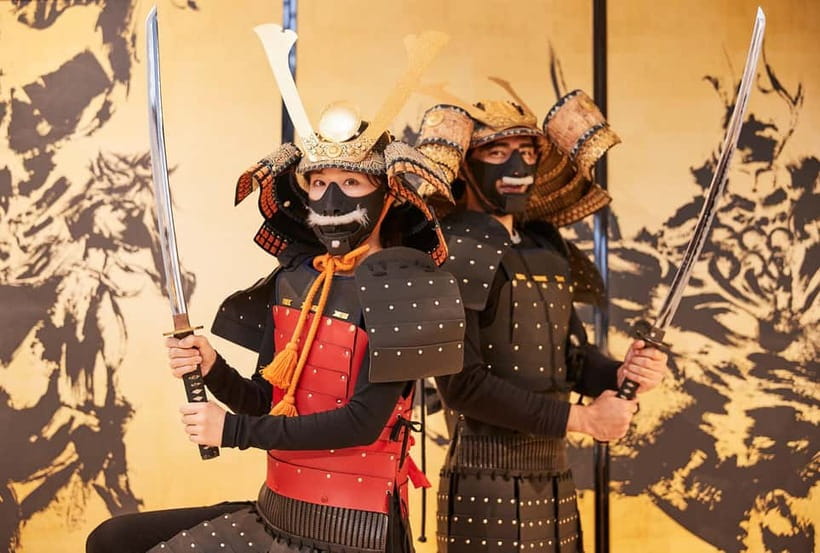
Reviewed · TOKYO TOURS
Samurai Ninja Museum Asakusa: Samurai Sword Lesson & Tour
The best part of this Asakusa experience is that you do more than look at samurai displays. You put on a hakama, helmet, and armor, then learn a short katana routine with an instructor such as Sensei Ryo or Koki. I like the mix of hands-on practice and history, and I especially like that children and adults can take part together. The main thing to keep in mind is that two hours moves quickly, so the sword practice can feel brief if you want serious training.
I also like the supervised, family-friendly sword play and the chance to throw ninja stars. The guides add humor and keep the pace lively, with instructors such as Ryo, Kai, Nao, Momo, Ren, and Leon appearing in recent sessions. The museum itself is compact, and some groups may find the history portion rushed or the practice area crowded, particularly when young children are in the room.
Key points at a glance
- Learn a short katana routine: You practice basic sword handling and choreographed movements, rather than simply posing with a prop.
- Dress the part: Hakama, samurai armor, and a helmet are provided for the lesson and photographs.
- Add ninja activities: The experience includes a ninja weapons trial, with shuriken throwing noted as a popular activity.
- Hear the story of Japan’s warriors: The museum tour covers samurai and ninja history from their origins through the end of the samurai era.
- Good for families: Children from age 6 can participate, and the activities are designed for adults, teens, and children.
- Small-group format: The maximum group size is 16, with private and small-group options available.
Putting on the armor in Asakusa
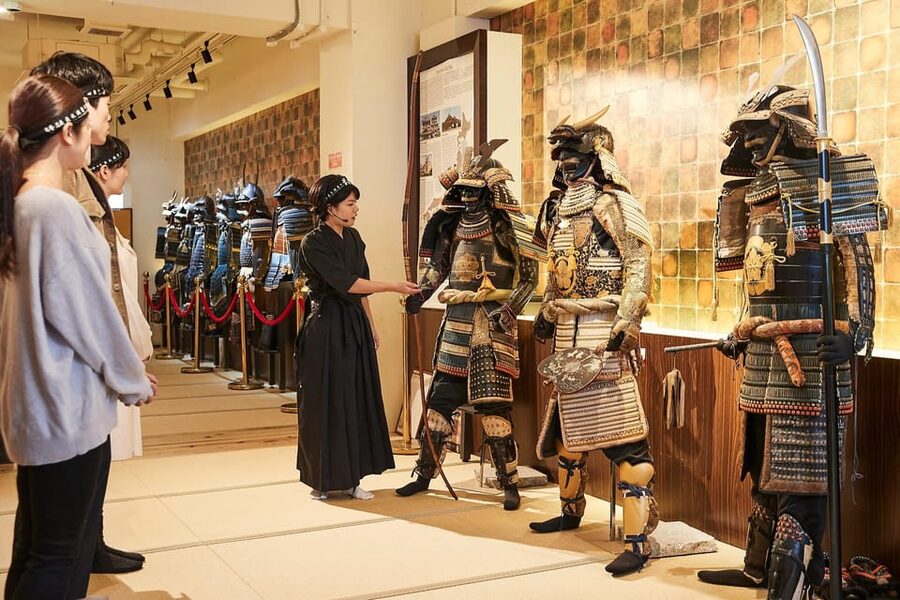
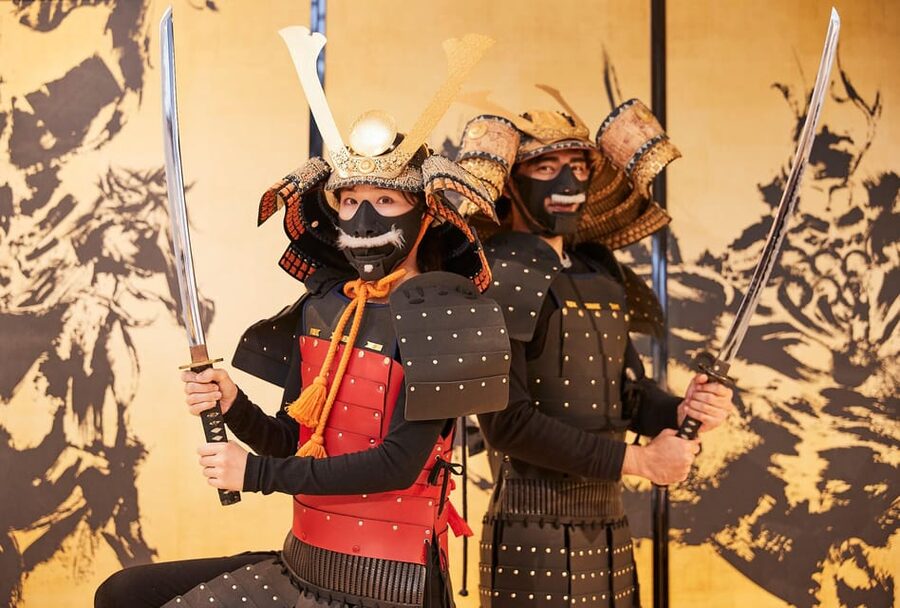
The session begins by moving you into the visual world of the samurai. You use a hakama and can wear samurai armor and a helmet, which immediately makes the activity feel more personal than a standard museum visit.
This dressing-up portion is not just for children. Adults get into it quickly, especially once the cameras come out. The venue provides several samurai-themed backgrounds for photos, giving you a record of the experience beyond a quick snapshot beside a display case.
The space is not large. That helps keep the session focused, but it also means the room can feel tight when a full group is changing, posing, and preparing for the lesson. If you are hoping for a grand castle setting or a large museum complex, adjust your expectations. This is a compact, interactive venue built around participation.
The staff help you get into the equipment and explain how to handle it. That matters if you have never held a sword before. You do not need martial arts experience or special coordination, and the instructors are used to teaching complete beginners.
More Samurai and Ninja Experiences in Tokyo
- Tokyo: Samurai Restaurant Show Ticket with 2 Drinks
★ 4.5 · 1,307 reviews - Tokyo: Samurai Ninja Museum Guided tour and Experience
★ 4.6 · 1,010 reviews - Tokyo: Samurai Sword & Archery Class from Samurai Descendant
★ 5.0 · 603 reviews
The katana lesson with Sensei Ryo
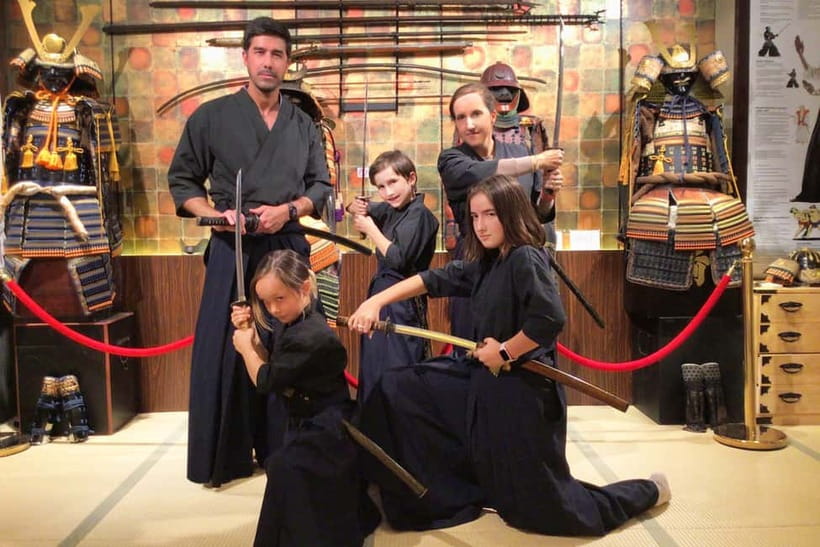
The sword lesson is the heart of the experience. Instructors including Ryo and Koki teach the basics of holding and moving a katana, then build those movements into a short routine. You practice footwork, positioning, and choreographed cuts under direction rather than swinging at random.
Ryo receives especially strong praise for his patient and polite teaching style. He also uses humor to loosen up the room, which helps when everyone is trying to remember several movements at once. Other instructors, including Kenny, have been noted for clear English and an entertaining approach.
The lesson can feel surprisingly satisfying. After a few attempts, you may be able to perform a short sequence that looked complicated at the start. It is not a full martial arts course, but you get a taste of the focus and formal movement associated with a sword routine.
A useful distinction: the lesson involves katana handling, while the partner combat portion uses foam or rubber swords in a supervised, family-friendly format. You may practice a choreographed fight or take part in a light tournament-style activity, depending on the session. This is playful rather than dangerous, but it still gives the class a physical finish.
The practice area and group size affect how much individual instruction you receive. The maximum is 16 people, and private or small-group options are available. A full group can be fun and energetic, but you may spend more time watching the instructor and less time repeating each movement. One recent assessment found the museum portion rushed, while another felt the lesson was too short. If practice time is your top priority, ask carefully which option you are booking.
What the museum tour adds
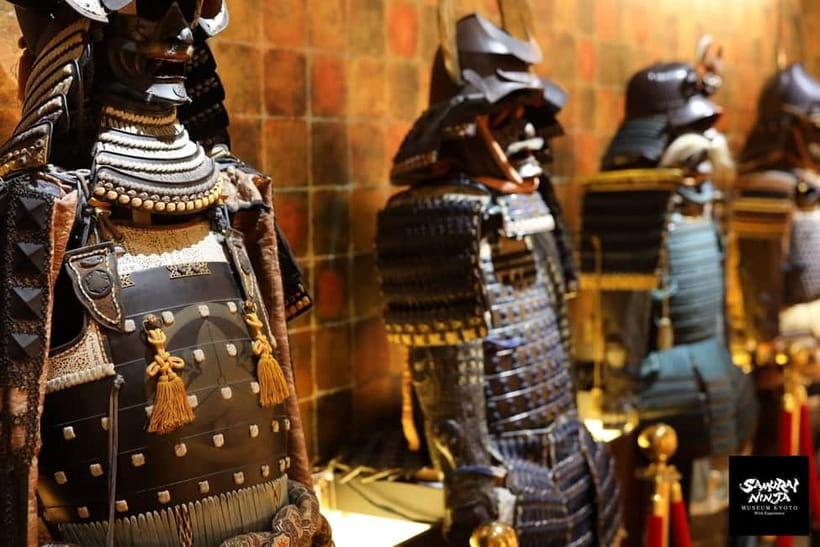
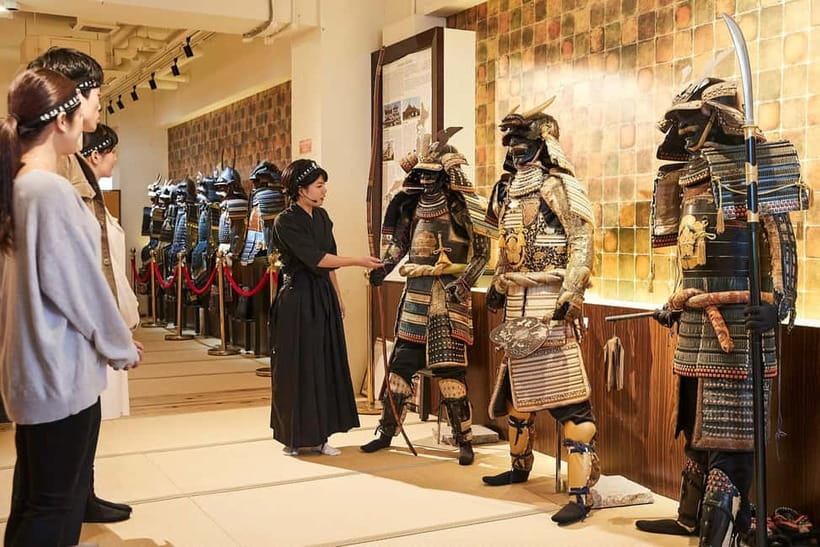
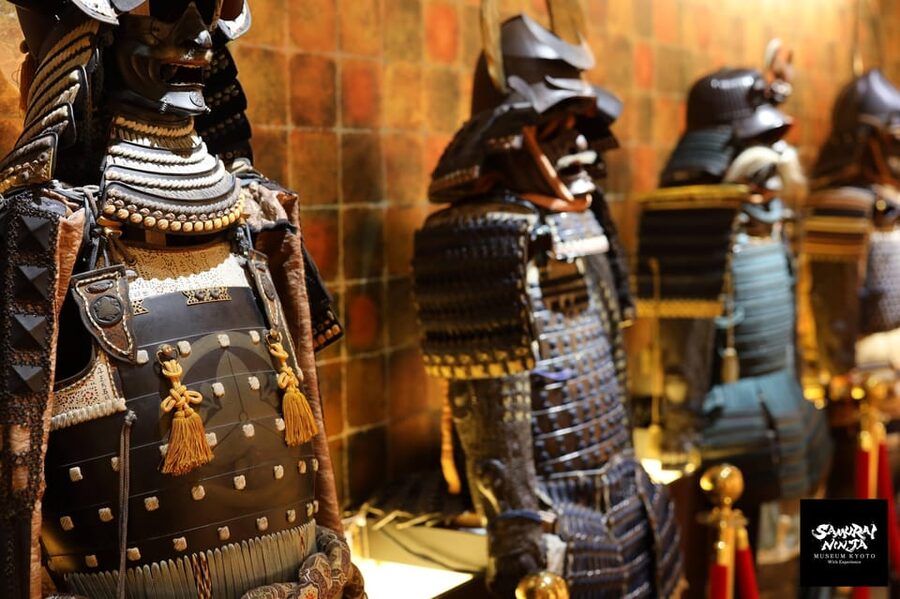
The museum section gives context to the costume and sword work. You learn about samurai and ninja culture, the origins of the warrior class, the development of samurai society, and the end of the samurai era. The displays include samurai antiques and ninja-related items.
I like this pairing because the historical information gives meaning to the activities. Without it, the sword routine could feel like a costume photo session. With the tour, you get a basic framework for understanding why samurai became such a powerful part of Japanese history and how the popular image of the ninja fits into that story.
The guides keep the presentation active rather than treating it like a silent gallery walk. Ren and Momo are among the guides praised for lively explanations, and the English-language format makes the material accessible to international visitors. Families have found that the presentation holds children’s attention better than a conventional historical talk.
Still, this is a small museum, not a full-scale national collection. The displays are limited in size, and the two-hour schedule has to cover dressing, photos, sword work, ninja activities, and history. You will gain a useful introduction, but you should not book this expecting an hour-by-hour academic lecture or an extensive collection of artifacts.
Ninja stars and the playful finish
The ninja weapons trial changes the pace after the historical explanation. Shuriken throwing is one of the most memorable parts for many families, teens, and adults who enjoy a little friendly competition.
You get the chance to aim at a target and see how difficult it is to land a ninja star accurately. The activity gives younger children something active to do, while adults can join in without feeling that it is only a kids’ attraction. Some sessions also include a small game or competition.
This part is short, but it works well because it breaks up the sitting and listening. If your children have a lot of energy, the combination of dressing up, sword movements, and target throwing should help keep them engaged. The experience is structured, so you are not left to handle weapons on your own.
The exact order can vary by option or session. You may take photos before or after the sword lesson, and the museum tour may come at the end. Follow the staff’s instructions rather than expecting every group to move through the same sequence.
More samurai and ninja sessions in Tokyo:
- Best Samurai Experience in Tokyo
★ 5.0 · 458 reviews - Ninja Experience (Family Friendly) at Samurai Ninja Museum TOKYO
★ 5.0 · 441 reviews - Tokyo: Samurai Entertainment Night Show in Kanda Shrine
★ 4.6 · 417 reviews - Tokyo Sword Experience – includes Museum Ticket/Ninja Experience
★ 5.0 · 314 reviews
How much value do you get for $63?
At $63 per person, this is not the cheapest way to spend two hours in Tokyo. You are paying for an English-speaking guide, a costume experience, a sword lesson, museum admission, photos, and the ninja weapons trial. For a family, the price adds up quickly, so it deserves a clear look.
I think the cost makes the most sense when you want an organized cultural activity rather than a museum visit alone. The lesson gives you something to do, the tour gives you historical context, and the photos provide a lasting souvenir without requiring you to buy a separate experience.
The value is also better if several people in your group participate. Parents and children can share the same activity, and adults do not need to sit on the sidelines. Families have described it as one of the more memorable parts of a Tokyo visit because everyone gets involved.
For a solo visitor mainly interested in serious swordsmanship, the price may feel high for the amount of practice. The class teaches fundamentals and a short routine, but it does not replace instruction at a traditional dojo. Likewise, a visitor who only wants museum objects may prefer a larger historical museum.
The flexible booking terms help reduce the risk. You can cancel up to 24 hours in advance for a full refund, and reserve now while paying later. Starting times depend on availability, so check the schedule before building this into a tightly timed day.
Who will enjoy this most?
I would put this high on the list for families with children aged 6 and older, especially kids who are drawn to samurai, ninjas, anime, or hands-on activities. Children under 6 cannot enter the samurai venue, so this is not a good choice for a family with a younger child who would need to come along.
It also suits couples, groups of friends, and adults who want a lighthearted cultural activity. You do not need to be athletic, coordinated, or experienced with weapons. The instructors break down the movements and keep the tone approachable.
Teens may particularly enjoy the balance of history and action. The sword routine feels more substantial than a simple dress-up session, while the foam-sword practice and shuriken throwing add the fun factor.
I would be more cautious if you dislike group activities, photography, or playful role-play. You will be asked to dress up, pose, practice movements with others, and possibly take part in a mock fight. A private or small-group option could make the experience more comfortable if you prefer more space and attention.
The activity is wheelchair accessible, according to the provided information. Since the meeting point can vary by booking option, check your confirmation carefully before heading to Asakusa.
English instruction and group atmosphere
The activity is conducted in English, and the instructors have experience teaching people with no previous sword training. Ryo, Kenny, Kai, Nao, Momo, Ren, and Leon are among the staff members associated with sessions described by name. Their roles vary, so you should not assume that a particular instructor will lead your booking unless the option confirms it.
The teaching style is one of the experience’s strongest features. Instructors explain the movements, demonstrate the routine, and use jokes or encouragement to keep beginners from feeling awkward. That is important because a sword lesson can become stiff or intimidating if the teacher treats every mistake too seriously.
The group limit of 16 keeps the activity from becoming a huge crowd, but 16 is still enough to affect the lesson. Young children may have trouble completing every movement in a tight space, and adults may need to wait their turn during some exercises. Families should see this as a shared activity, not a private lesson.
If you want the most practice possible, choose a small-group or private option when available. If you enjoy meeting other people and watching a range of ages attempt the routine, the regular group can be lively and amusing.
Practical tips before you book
Wear clothing that lets you move comfortably under the provided hakama and armor. The costume is part of the fun, but layers can become warm once you are practicing sword movements.
Allow the full two hours. The session includes several parts, and rushing off early would mean missing the museum explanation, photos, or ninja activity. I would avoid scheduling another attraction immediately afterward if you want to enjoy the lesson without watching the clock.
Keep your expectations realistic about the museum. It offers a compact collection and a guided introduction to samurai and ninja history. The real strength is the combination of objects, storytelling, costume, and practice.
If you are booking for children, remember the age rule: children under 6 cannot enter. Children aged 7 and 9 have enjoyed the ninja lesson in family sessions, and older children and teens have also taken part successfully.
Finally, check the meeting point tied to your selected option. The meeting location may vary, and the experience is not described as having one fixed meeting point for every booking.
Is the Samurai Ninja Museum experience worth booking?
I would book it if you want a lively, accessible introduction to samurai culture with something active at its center. The strongest reasons are the well-structured katana routine, the chance to wear real costume pieces, the friendly English instruction, and the way the museum tour turns a playful activity into a history lesson.
I would skip it if you are seeking in-depth martial arts instruction, a large museum collection, or a quiet gallery experience. The lesson is short, the space can feel crowded, and the history tour may move quickly.
For most families, first-time visitors to Japan, and anyone who wants a memorable two hours in Asakusa, $63 is a fair price for the complete package. Choose a smaller group if you want more practice, arrive ready to participate, and treat the sword fighting as supervised theater rather than combat training.
FAQ
How long does the Samurai Ninja Museum sword lesson and tour last?
The experience lasts two hours. That time includes the samurai sword lesson, costume use, museum tour, themed photos, and ninja weapons trial.
What is included in the price?
The experience includes a samurai sword lesson, use of a hakama, samurai helmet and armor, themed photo opportunities, and a ninja weapons trial.
Can children take part?
Children can take part from age 6. Children under 6 cannot enter the samurai venue.
Is the experience available in English?
Yes. The live tour guide and activity are conducted in English.
How many people can join the group?
The maximum group size is 16 people. Private and small-group options are also available.
Can I cancel the booking?
You can cancel up to 24 hours in advance for a full refund. The reserve-now, pay-later option is also available, depending on the booking terms.
More Museums in Tokyo
- Tokyo: teamLab Planets TOKYO Digital Art Museum Entry Ticket
★ 4.6 · 9,779 reviews - Tokyo Studio Ghibli Museum and Ghibli Film Appreciation Tour
★ 4.5 · 421 reviews - Tokyo: Art Aquarium Museum GINZA Entry Ticket
★ 4.5 · 278 reviews - Samurai Ninja Museum Asakusa: Kid-Friendly Ninja Training
★ 4.7 · 67 reviews
More Workshops in Tokyo
- Sushi Making Tokyo Roll and Authentic Japanese Sushi Class
★ 5.0 · 3,971 reviews - Tokyo: Roll and Authentic Sushi Making Class in Asakusa
★ 4.9 · 1,957 reviews - Tokyo Shinjuku Chopsticks Making Class
★ 5.0 · 1,763 reviews - Tokyo: Sushi Making Class in a Happi Coat near a Famous Spot
★ 4.9 · 1,377 reviews
Just added around Tokyo
- Private Arrival Transfer : Narita International Airport to Central Tokyo City★ 4.5 · 12 reviews
- Narita Airport(NRT): Private Transfer to Tokyo/Yokohama 1-9pax★ 5.0 · 47 reviews
- Private Transfer from Narita Airport to Yokohama Port and City★ 4.5 · 17 reviews
- [Narita Airport Terminals 1, 2] 40-60km Sawara Itako Historic Bike Tour★ 5.0 · 13 reviews
- 3 Day Japan Highlights Tour: Tokyo, Mt.Fuji, Nara, Kyoto, Osaka★ 5.0 · 22 reviews
- Small Town in the Big City: Tasting Tokyo’s Kichijoji★ 5.0 · 195 reviews
- Small Town in the Big City: Tasting Tokyo’s Kichijoji★ 5.0 · 16 reviews
- The 10 Tastings of Tokyo With Locals: Private Street Food Tour★ 5.0 · 48 reviews
Tokyo Tours, compared.

Mt Fuji and Hakone 1-Day Bus Tour Return by Bullet Train
Read our review →

teamLab Planets TOKYO Digital Art Museum Entry Ticket
Read our review →
Mt Fuji & Hakone Cruise, Drum Show Bullet Train 1 Day from Tokyo
Read our review →
Sumo Show Experience with Chicken Hot Pot and a Photo
Read our review →
Shinjuku Food Tour (13 Dishes at 4 Local Eateries)
Read our review →
Tokyo Mt Fuji 5th St & Hakone Cruise Bus Tour w/Bullet Train
Read our review →
Flagship 2-Hours Official Street Go-Kart Tour – Tokyo Bay Shop
Read our review →Browse the lists this tour appears in