
Reviewed · TOKYO TOURS
Ninja Experience (Family Friendly) at Samurai Ninja Museum TOKYO
The best part of this Tokyo activity is that it gets you doing things quickly. You do not only look at weapons and armor behind glass. You put on a ninja outfit, practice with ninja tools, take photos, and join a treasure hunt. For children who already love ninjas, this is the sort of hour that turns a museum visit into a story they can act out.
I like two things right away. The costume rental is included, so the advertised price does not hide a second charge for the outfit. I also like the mix of history and play: you learn about ninja methods and equipment, then use some of that knowledge in a supervised activity. The main consideration is group dynamics. A larger family group can make the hands-on parts feel crowded, especially if some children take over the activity.
Key points before you book
- Included ninja costume: Staff help you dress in traditional-style ninja clothing before the photo session and training.
- Hands-on weapon practice: You use a ninja star and other training weapons, with reviews also noting a blow pipe and dart-style games.
- Treasure hunt included: The hunt gives children a simple goal beyond listening to a museum talk.
- Short, family-friendly timing: The experience lasts about 1 hour 15 minutes, a useful fit between other Tokyo plans.
- Asakusa location: You meet at Samurai Ninja Museum Asakusa Tokyo, near public transportation.
- Age and group limits matter: Children under 3 may enter the venue but cannot join the ninja experience, and children must be with an adult.
What happens at Samurai Ninja Museum TOKYO
You begin at Samurai Ninja Museum Asakusa Tokyo, at 1-chōme-8-13 Nishiasakusa, Taito City, Tokyo 111-0035. The activity ends back at the meeting point, so you do not need to arrange a separate pickup or work out a second destination at the end.
The session combines museum interpretation with staged ninja training. You learn about the place of ninjas in Japanese history, along with the weapons and tools linked to covert missions. The presentation also touches on the legends surrounding ninjas, including stories of invisibility, walking on water, and flight. That contrast is useful for children: it shows how folklore grew around real skills such as deception, martial arts, climbing, and knowledge of the natural world.
I would treat this as a lively introduction rather than a full history course. In 75 minutes, the guide must keep the pace moving, and the activity is designed to hold a child’s attention. You will get a clear sense of the ninja image in Japanese culture, but not a long academic account of every period or school of ninjutsu.
The museum setting adds value because the activity is not only dress-up. You see authentic weapons and armor as part of the visit, then move into practical games. That connection makes the equipment easier to remember. A child may not recall a long explanation of a weapon, but they are more likely to remember it after trying a safe training version.
More Samurai and Ninja Experiences in Tokyo
- Tokyo: Samurai Restaurant Show Ticket with 2 Drinks
★ 4.5 · 1,307 reviews - Tokyo: Samurai Ninja Museum Guided tour and Experience
★ 4.6 · 1,010 reviews - Tokyo: Samurai Sword & Archery Class from Samurai Descendant
★ 5.0 · 603 reviews
Dressing as a ninja and taking the photo
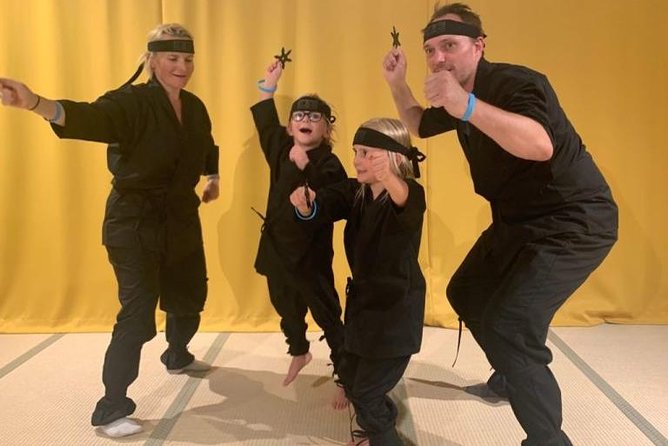
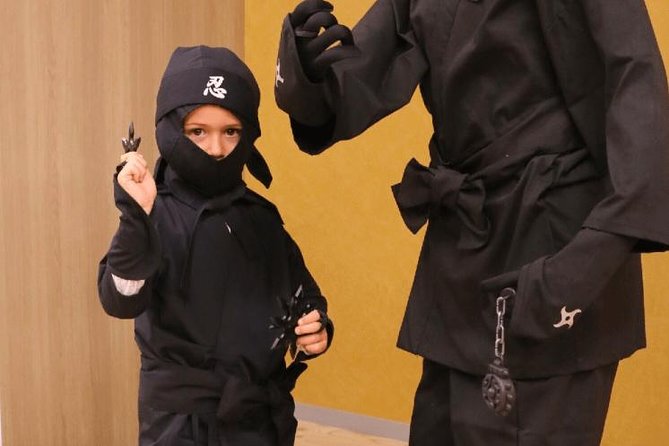
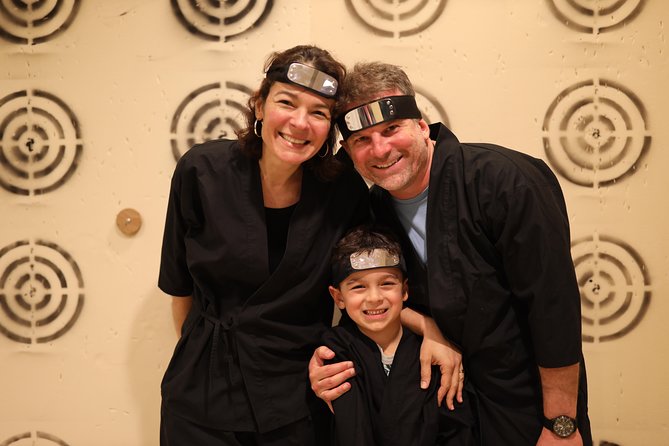
Your transformation starts with the outfit. Staff help you choose and put on ninja attire, then arrange a photo session with a background suited to the theme. The costume is part of the admission price, which is important at $47.92 per person. You are not paying the tour price and then discovering a separate rental fee at the door.
The photo session works well for families who want a shared souvenir. It also gives children a clear change of pace between the museum explanation and the weapon practice. You can expect the photographs to be posed rather than a full professional shoot, but the traditional backdrop helps the pictures feel more special than a quick snapshot in ordinary clothes.
This part can be especially useful if you have children who are shy about joining a group activity. Getting dressed gives them a role before the more active exercises begin. On the other hand, if your family dislikes costumes or staged photos, this is a meaningful part of the paid experience, so you may not get the full value from it.
Ninja stars, darts, and supervised training
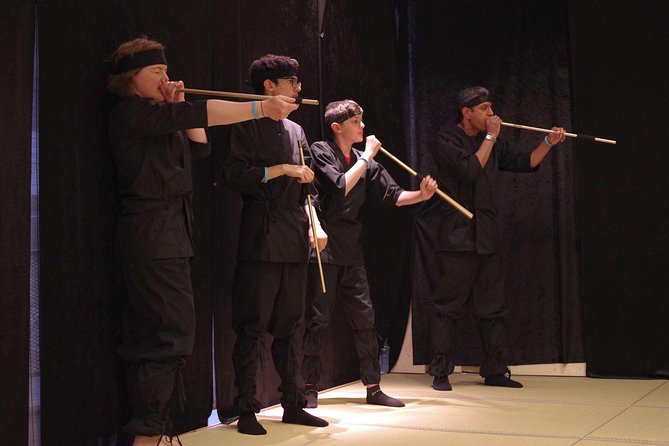
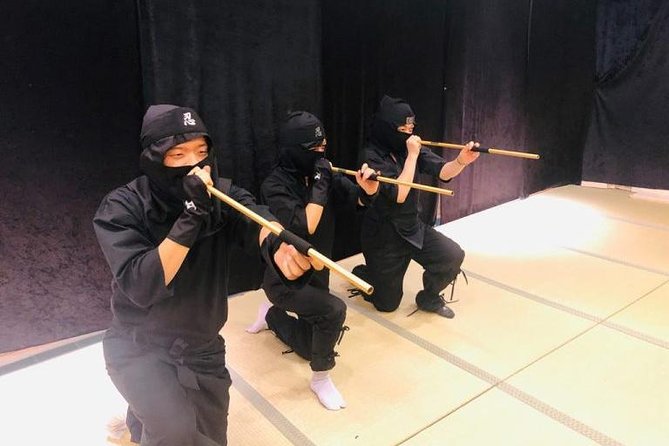
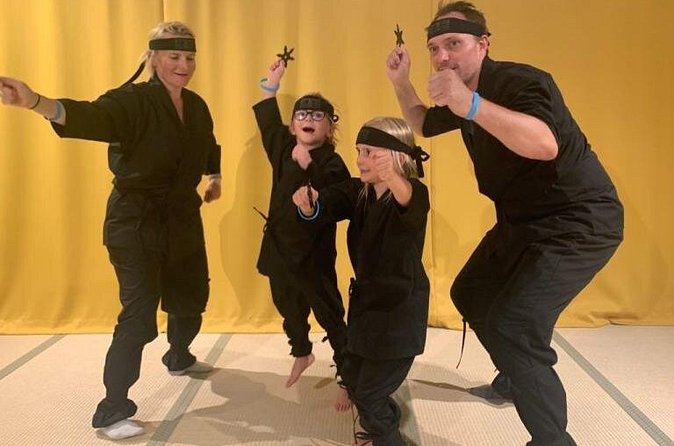
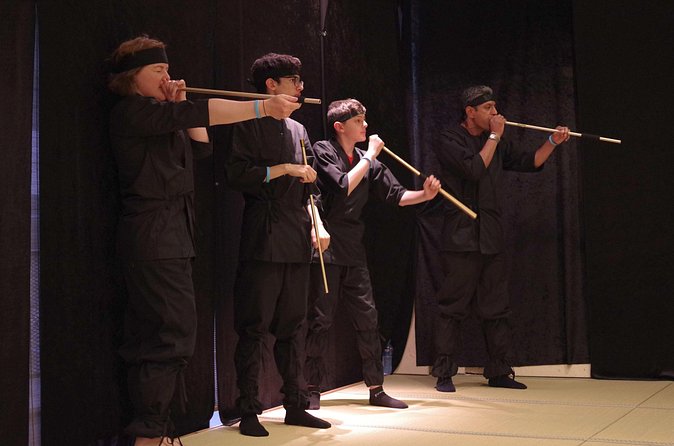
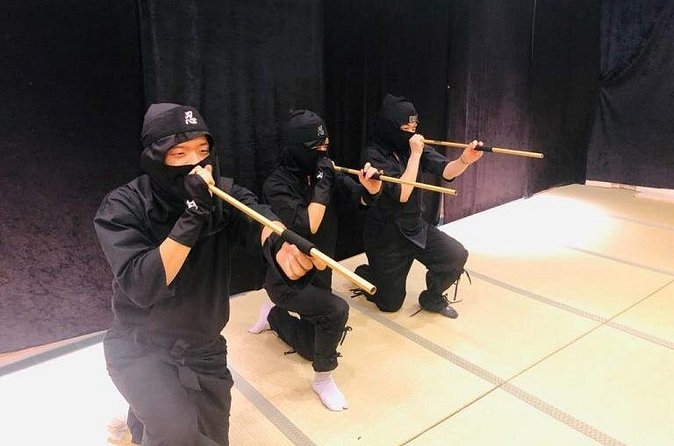
The training is the main reason to choose this activity over a standard museum visit. You practice with a ninja star and other weapons used for training. Specific activities reported from the session include a blow pipe, darts, and star throwing. These are simple, playful exercises rather than advanced martial arts instruction.
You should expect guidance from the staff as you try each activity. The strongest part of the format is the direct participation. Children get to focus on aim, movement, and following instructions, while adults can join instead of standing at the side. Several families found the activity entertaining for both age groups, which is not always the case with a children’s attraction.
The physical demands appear moderate, but the booking information still recommends a moderate fitness level. You may need to stand, move around, and take part in the training rather than sit through the whole session. Wear something that lets you move comfortably under or around the costume.
A practical point: group size can affect the quality of this section. The information gives two different maximum figures, 20 travelers in one place and 4 in another. That may reflect different booking arrangements, so check the conditions attached to your date. A smaller group should make it easier to hear instructions and get a turn. In a larger session, you may need to be patient while other children practice.
One family found that another group’s children became heavily involved even though the adults had not paid for the same experience. That is a useful warning, not a reason to reject the tour. If your child is easily crowded out, ask the staff how the session is organized when you arrive and stay close during the hands-on rounds.
The treasure hunt gives children a reason to keep watching
The treasure hunt is a smart addition. It gives young children something to solve while they learn about ninja culture and equipment. Instead of treating the museum explanation as a separate lesson, the hunt turns attention into a game.
The available information does not give the exact clues, route, or prize, so you should not book this expecting a large-scale scavenger hunt. Think of it as a short interactive element within the visit. For a seven or nine-year-old with a strong interest in ninjas, that can be enough to keep the hour lively.
I like this feature because it helps balance the activity. The costume and photos appeal to children who enjoy make-believe. The weapons appeal to children who want action. The treasure hunt adds a problem-solving piece, so the experience is not built around only one type of child.
Adults should still listen to the historical explanation. The hunt may keep children occupied, but the museum portion is where you get the cultural context. The guides explain samurai and ninja history, weapons, and armor in English, according to the supplied experience details and family accounts. That makes this a practical choice for international visitors who want more than a visual costume stop.
More samurai and ninja sessions in Tokyo:
- Best Samurai Experience in Tokyo
★ 5.0 · 458 reviews - Tokyo: Samurai Entertainment Night Show in Kanda Shrine
★ 4.6 · 417 reviews - Tokyo Sword Experience – includes Museum Ticket/Ninja Experience
★ 5.0 · 314 reviews - Samurai Ninja Museum Asakusa: Samurai Sword Lesson & Tour
★ 4.8 · 306 reviews
Why the samurai material adds useful context
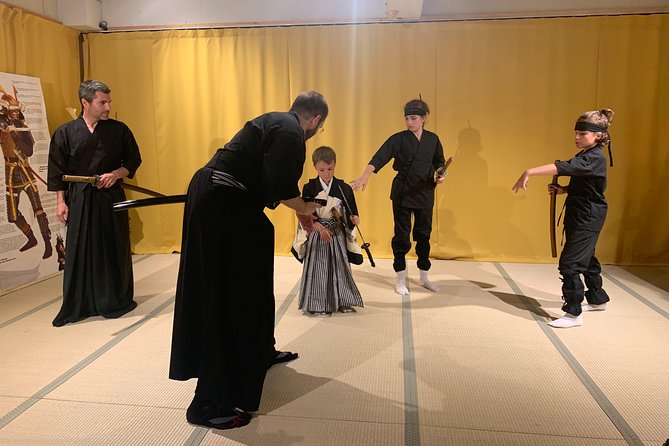
Although the booking title focuses on ninjas, the museum experience also covers samurai. You can expect to learn about samurai culture and history and see weapons and armor connected with Japan’s warrior past. This broader subject matter is helpful because popular culture often blends samurai and ninja imagery together.
The activity lets you compare the public warrior image of the samurai with the secretive, deceptive role associated with ninjas. The historical explanation covers skills linked to ninja training, including martial arts, climbing, and techniques for entering castles. It also explains how folklore added supernatural powers to the ninja story.
That context makes the costume and games less shallow. You are not simply putting on black clothing and throwing a star. You are learning why ninjas became such powerful figures in Japanese stories, then taking part in a carefully controlled version of the skills connected with them.
Still, keep your expectations in proportion. This is a family activity, not a specialist museum tour. If you want a detailed study of weapons, military history, or historical evidence, you will need more time elsewhere. If you want an accessible introduction that children can understand, the balance is much better.
Is $47.92 per person good value?
At $47.92 per person, this is not a bargain-priced filler activity. The value depends on how much of the package your group will use. The price includes the ninja outfit, museum content, training with ninja weapons, the treasure hunt, and the photo session. Transportation to and from the venue is not included.
For a family, the cost is easier to justify when both children and adults take part. The activity is not only a child drop-off program. Parents can dress up, listen to the explanation, throw the training weapons, and appear in the photographs. If only one child participates while adults wait, the price feels less attractive.
The 1 hour 15 minute duration is another factor. You are buying a compact activity rather than a half-day tour. That makes it easier to fit around Asakusa sightseeing, meals, or another museum. It also limits the amount of history and practice you can receive, so the price is paying for a focused experience, not a long guided visit.
The high overall score of 4.9 from 441 ratings and a 99 percent recommendation rate point to a consistently popular family format. I would not use those figures as a promise that every session will be perfect. The group-size concern is real, and the experience will work best when everyone gets a fair turn. But the repeated praise for friendly staff, clear English explanations, and fun hands-on activities supports the idea that the package delivers what it advertises.
Location, timing, and practical planning
The meeting point is in Nishiasakusa, in Tokyo’s Taito City, and the venue is near public transportation. Transportation is not part of the booking, so plan your route to the museum before your start time. A mobile ticket is provided, which keeps the entry process simple if your booking is stored on your phone.
The activity lasts approximately 75 minutes. Allow extra time before the start for finding the address and getting organized, especially if you are visiting with small children. Since the activity returns to the meeting point, you can plan your next stop from the same central area.
Children under 3 cannot join the ninja experience, though they can enter the venue. Children who do participate must be accompanied by an adult. The stated fitness requirement is moderate, and the activity involves physical participation, so it is worth considering how comfortably your family can stand, move, and follow instructions for the session.
The cancellation terms are reasonable for a Tokyo itinerary. You can receive a full refund if you cancel at least 24 hours before the local start time. Cancellations or changes made less than 24 hours ahead are not accepted for a refund, so leave some flexibility around the booking if your plans are uncertain.
There is one detail I would confirm before booking: the supplied information lists both a maximum of 20 people and a maximum of 4 people. Those figures may relate to different booking setups, but they are not the same. If a small, private-feeling session matters to you, check the group limit shown for your selected date.
Who will enjoy this most?
I would recommend this for families with school-age children who already like ninjas, samurai stories, costumes, or active games. A seven-year-old can understand the basic historical explanation and enjoy the equipment practice, while a nine-year-old who is already ninja-obsessed is likely to get a lot from the session.
It also suits adults who want to participate rather than watch. The costumes, photo shoot, and weapon games are not limited to children, and the strongest family memories often come when parents join the activity. It is also a sensible rainy-day choice because the main program takes place indoors.
This is less suited to anyone seeking a quiet, serious museum visit. The session is interactive, and children may be excited and noisy. It is also not the right fit for children under 3 if your main goal is for the youngest child to take part, since they may enter but cannot join the experience.
I would be cautious if your child is uncomfortable in groups or becomes upset when another child gets more attention. The staff are described as friendly and interactive, but the exact group arrangement matters. A smaller group should help, and a larger group may require more parental involvement.
Should you book the Tokyo ninja experience?
Book it if you want a short, active family stop that combines Japanese history with dressing up and simple weapon practice. The included costume, English explanation, treasure hunt, and photo shoot give the $47.92 price more substance than a basic museum ticket.
I would especially choose it for a rainy day, a child with a strong ninja interest, or a family that wants an activity everyone can join. Before paying, check the group size for your time slot and remember that transportation is separate. If your child is under 3, plan on visiting the venue without counting on participation.
For most families, this is a good use of 75 minutes in Tokyo. It will not replace a full museum study of samurai and ninja history, but it gives you a lively introduction, a few new skills to demonstrate at home, and photos that capture the fun.
FAQ
Where does the Ninja Experience take place?
You meet at Samurai Ninja Museum Asakusa Tokyo, located at 1-chōme-8-13 Nishiasakusa, Taito City, Tokyo 111-0035, Japan.
How long does the experience last?
The activity lasts approximately 1 hour and 15 minutes.
What is included in the price?
The experience includes wearing a ninja outfit, ninja training with a ninja star and other weapons, a photo shoot, and a ninja treasure hunt.
Is transportation included?
No. Transportation to and from the attraction is not included. The activity ends back at the meeting point.
Can children under 3 join?
Children under 3 cannot join the ninja experience, although they can enter the venue.
Must children be accompanied by an adult?
Yes. Children must be accompanied by an adult.
How many people can join the activity?
The supplied booking information gives both a maximum of 20 people and a maximum of 4 people. Check the group limit shown for your selected booking because the applicable number is not clear.
Is the activity physically demanding?
A moderate level of physical fitness is recommended. The experience includes active training with ninja weapons and other interactive activities.
Can I cancel for a full refund?
Yes, if you cancel at least 24 hours before the experience start time. Cancellations or changes made less than 24 hours before the local start time are not accepted for a refund.
More Museums in Tokyo
- Tokyo: teamLab Planets TOKYO Digital Art Museum Entry Ticket
★ 4.6 · 9,779 reviews - Tokyo Studio Ghibli Museum and Ghibli Film Appreciation Tour
★ 4.5 · 421 reviews - Tokyo: Art Aquarium Museum GINZA Entry Ticket
★ 4.5 · 278 reviews - Samurai Ninja Museum Asakusa: Kid-Friendly Ninja Training
★ 4.7 · 67 reviews
Just added around Tokyo
- Private Arrival Transfer : Narita International Airport to Central Tokyo City★ 4.5 · 12 reviews
- Narita Airport(NRT): Private Transfer to Tokyo/Yokohama 1-9pax★ 5.0 · 47 reviews
- Private Transfer from Narita Airport to Yokohama Port and City★ 4.5 · 17 reviews
- [Narita Airport Terminals 1, 2] 40-60km Sawara Itako Historic Bike Tour★ 5.0 · 13 reviews
- 3 Day Japan Highlights Tour: Tokyo, Mt.Fuji, Nara, Kyoto, Osaka★ 5.0 · 22 reviews
- Small Town in the Big City: Tasting Tokyo’s Kichijoji★ 5.0 · 195 reviews
- Small Town in the Big City: Tasting Tokyo’s Kichijoji★ 5.0 · 16 reviews
- The 10 Tastings of Tokyo With Locals: Private Street Food Tour★ 5.0 · 48 reviews
Tokyo Tours, compared.

Mt Fuji and Hakone 1-Day Bus Tour Return by Bullet Train
Read our review →

teamLab Planets TOKYO Digital Art Museum Entry Ticket
Read our review →
Mt Fuji & Hakone Cruise, Drum Show Bullet Train 1 Day from Tokyo
Read our review →
Sumo Show Experience with Chicken Hot Pot and a Photo
Read our review →
Shinjuku Food Tour (13 Dishes at 4 Local Eateries)
Read our review →
Tokyo Mt Fuji 5th St & Hakone Cruise Bus Tour w/Bullet Train
Read our review →
Flagship 2-Hours Official Street Go-Kart Tour – Tokyo Bay Shop
Read our review →Browse the lists this tour appears in