
Reviewed · TOKYO TOURS
Tokyo Night Foodie Tour in Shinjuku – Seasonal Sushi, Wagyu Beef
The best part of this Shinjuku evening is the pairing of two special Japanese meals: seasonal omakase sushi followed by Wagyu beef grilled at your table. Between them, your guide leads you through Omoide Yokocho, Kabukicho, Godzilla Road, and the neon center of Tokyo nightlife.
I like the small maximum of seven people, which gives guides such as Molly, Yuma, Mimi, Aoi, and Yosh room to answer questions and help with menus. I also like the pace: enough walking to understand Shinjuku, but not so much that dinner becomes an endurance test.
One thing to know before booking: although Omoide Yokocho appears in the route, you may not eat in its tiny lanes. The group may walk about 15 minutes to the sushi restaurant, then another 15 minutes to the Wagyu restaurant. The food is the main event, while the sightseeing fills the spaces between courses.
Key points at a glance
- Two headline tastings: Expect omakase sushi and several cuts of Japanese Wagyu, with some departures offering A5 beef.
- Small evening group: The tour accepts no more than seven people, a useful size for menu help and conversation.
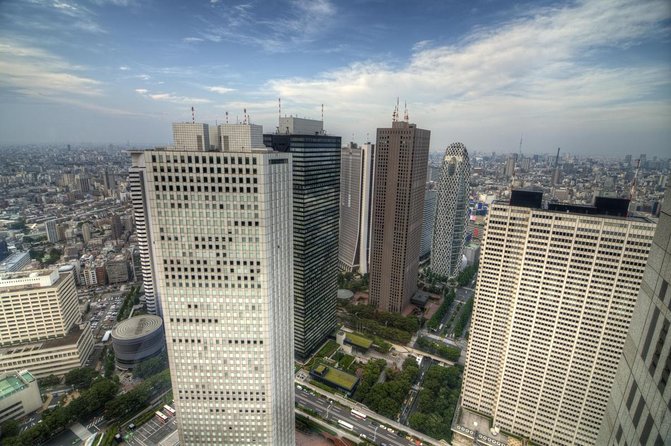
- Shinjuku after dark: The route includes Omoide Yokocho, Kabukicho, Godzilla Road, and the Godzilla Head.
- A relaxed walking pace: The tour suits you if you want food and nightlife without a long, strenuous march.
- Dessert or a drink at the finish: The final stop in Nishishinjuku adds a sweet course or a refreshment.
- Plan for food restrictions: Vegetarian arrangements must be requested by the day before, and allergy-free meals cannot be guaranteed.
Why the sushi and Wagyu pairing works
Many Tokyo food walks scatter small bites across several casual stops. This one takes a more focused approach. You get two substantial food experiences, each tied to an important part of Japanese dining culture, then a final choice of dessert or a drink.
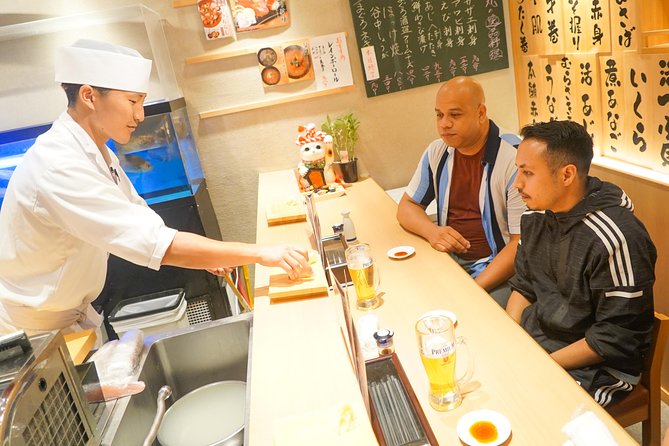
The sushi portion uses an omakase format in which the chef chooses the selection. That can be a pleasant break from trying to decode a long menu, especially on your first night in Japan. Some descriptions of the meal include eight pieces of omakase sushi, though the exact serving may vary.
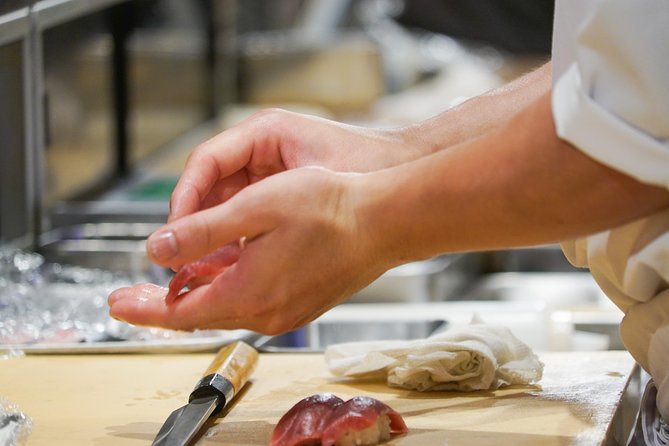
You may watch the chef prepare the sushi, which adds useful context to the meal. The point is not simply to eat fish in a stylish room. You get a look at how the chef handles the ingredients and presents each piece. If you are unsure how to approach omakase, your guide can explain what is being served and help with questions.
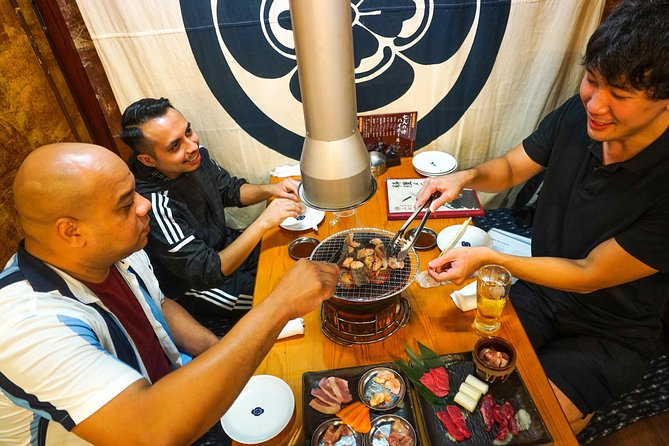
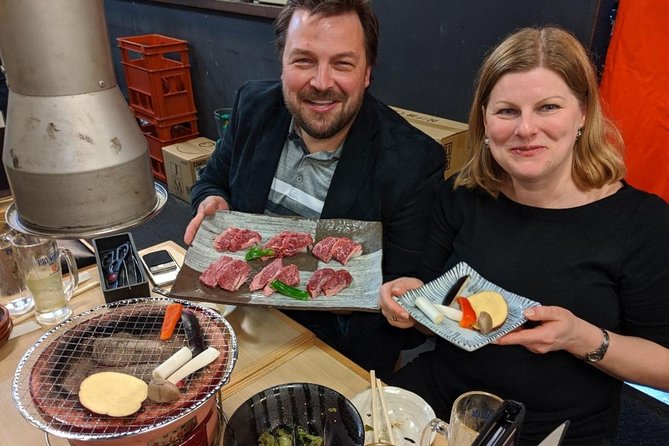
The Wagyu stop changes the mood. The beef is cooked over a traditional shichirin stove, often at the table, and some versions of the meal include five cuts of A5 Wagyu. This is a rich meal, so the portions work well as a tasting rather than a giant steak dinner. Several people found the food more than filling by the end.
I see real value in this combination. A sushi meal alone could be enough for a good evening, but adding Wagyu gives you a second view of Japanese dining. You compare the clean, delicate style of sushi with the smoky, luxurious character of grilled beef.
More Food Tours in Tokyo
- Tokyo: Shinjuku Food Tour (13 Dishes at 4 Local Eateries)
★ 5.0 · 6,603 reviews - Tokyo: Shinjuku Food Tour (15 Dishes and 4 Eateries)
★ 4.9 · 2,033 reviews - Best of Shinjuku: Izakaya Food Tour (4 Stops, 14+ Tastings)
★ 5.0 · 1,863 reviews
Starting in Nishishinjuku and finding your guide
The meeting point is 1-chōme-2-8 Nishishinjuku, Shinjuku City, Tokyo 160-0023. The activity lasts about three hours and ends back at the meeting point, so you do not need to arrange a complicated ride across Tokyo after dinner.
This is a useful first or early-trip activity. One person specifically recommended doing it near the start of a Japan visit because the guide can answer questions about food, customs, and places to eat later. That advice makes sense. A local guide can point out restaurants and districts you might otherwise pass without understanding.
The guides vary by departure. Yuki has helped with menu choices for an older family member. Molly has been praised for answering basic questions about food, people, and daily life in Japan. Yuma has explained the cultural meaning of places along the route, while Mimi has been especially helpful with families and food explanations.
You should not book this expecting one fixed guide or one identical personality every evening. The quality depends partly on who leads your group, but the supplied guide names include Yuki, Molly, Aoi, Mimi, Yuma, Yosh, Mayu, Hiro, Lisa, Karen, and Megumi. The common thread is a friendly local host who helps you move through restaurants that may feel unfamiliar.
Omoide Yokocho, more atmosphere than meal stop
Omoide Yokocho is one of Shinjuku’s best-known old-style restaurant lanes. Its narrow passageways, compact eateries, and close-set tables provide a sharp contrast to the wide streets and tall buildings nearby.
Here, your guide helps place Shinjuku’s food culture in context. You walk through the area and get a sense of the small-scale dining scene, but you should be clear about what is included. The group may not actually dine in the lanes. Instead, you may walk roughly 15 minutes to the sushi restaurant.
That is not a flaw, but it is an important distinction. If your main goal is to sit in one of Omoide Yokocho’s tiny restaurants, this tour may not deliver that exact experience. If you want a guided look at the area combined with a more comfortable sushi meal, the arrangement works better.
The walking portion also gives you time to talk with your group. With no more than seven people, the evening can feel social without becoming a large procession. Solo participants and couples may find it easy to meet other people, while families can ask for help without having to compete with a crowd.
Omakase sushi and the value of chef’s choice
The sushi stop is the first major food event. Omakase means you trust the chef to choose the meal, often based on the season and available ingredients. That makes this a good introduction if you want more than standard menu sushi but do not know what to order.
The exact seafood selection is not fixed in the tour details, and that is part of the format. You should expect several sushi creations rather than a guaranteed list of named fish. Some meals include eight pieces, giving you a substantial taste without turning the entire evening into one long sushi sitting.
A guide can be useful here in small but practical ways. You may want help understanding a menu, deciding how to eat a particular piece, or asking about an ingredient. Yuki has assisted with selections for an elderly participant, and other guides have been praised for explaining the food clearly.
One fair criticism is that the amount of explanation may depend on the guide. Some people wanted more detail about the dishes and their cultural background. If you are a serious food student looking for a long technical talk about fish, rice, and knife work, you may need to ask direct questions.
For most people, the balance is better. You receive enough explanation to enjoy the meal, while the evening remains relaxed and social.
Same base, a completely different sort of day:
- Mt Fuji and Hakone 1-Day Bus Tour Return by Bullet Train
★ 5.0 · 26,383 reviews - 1-Day Tokyo Bus Tour
★ 5.0 · 14,250 reviews - Tokyo: TOKYO SKYTREE® Admission ticket
★ 4.5 · 11,192 reviews - Tokyo: teamLab Planets TOKYO Digital Art Museum Entry Ticket
★ 4.6 · 9,779 reviews
Walking into Kabukicho after dark
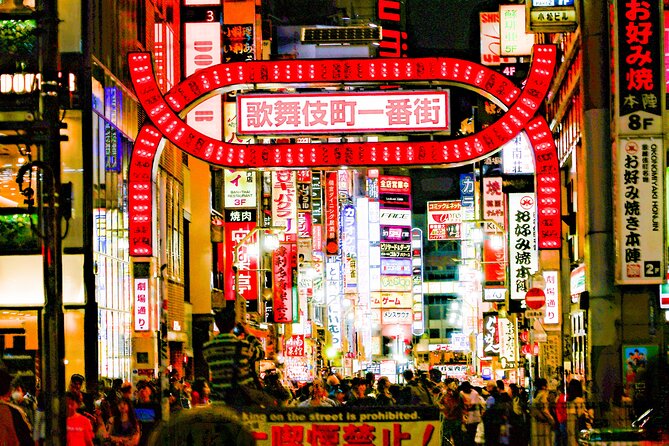
After sushi, the route moves toward Kabukicho, Shinjuku’s famous entertainment district. This is where the tour becomes more than dinner. The signs, restaurants, theaters, and nightlife create a busy urban scene that can feel confusing when you first arrive in Tokyo.
Your guide provides the setting rather than treating the neighborhood as a list of photo stops. You walk through the streets, learn how the district fits into Shinjuku, and get a chance to ask about what you are seeing. The walk lasts about 40 minutes, long enough to get a proper look without taking over the evening.
Kabukicho is also an area where you may feel more comfortable with a local at your side. The tour does not promise a full lesson in every aspect of Tokyo nightlife, but the guide can help you understand the public face of the district and point out places you might revisit.
The pace is intentionally manageable. One three-star assessment described it as a slower-paced Shinjuku walking tour, which is useful information if you have just landed from a long flight or have spent the day sightseeing. You should still wear comfortable shoes, but this is not a forced march through every corner of the district.
Godzilla Road and the five-minute photo stop
The Godzilla Head is a quick stop, listed at about five minutes. It is not a major attraction visit with a long interior tour. Instead, it is a recognizable landmark and a fun pause along the route.
Godzilla fans will enjoy the theatrical scale of the head above the street. Even if you are not a devoted fan, the stop captures something about Shinjuku: old movie culture, bright signs, entertainment, and modern commercial energy all stacked together.
Keep your expectations in proportion. The stop is short, so it works as a photo opportunity and a bit of local color. It does not add much value if you are expecting a detailed museum-style presentation about the character.
Wagyu on a shichirin stove
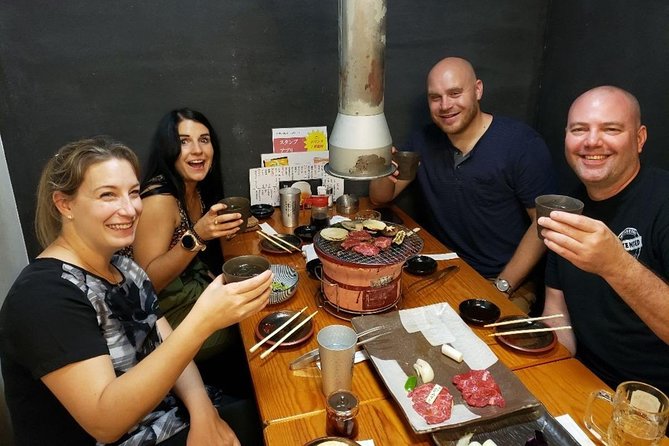
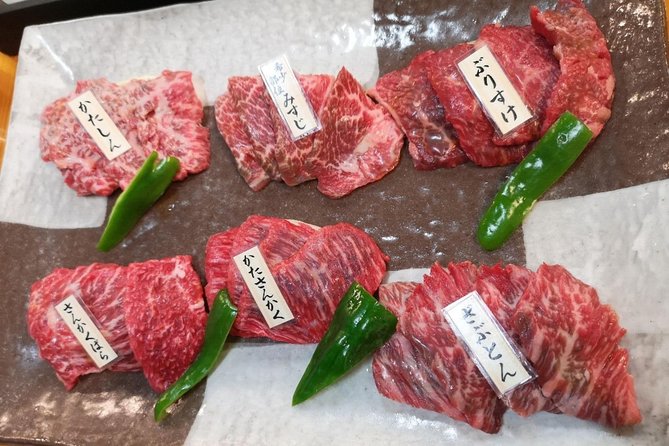
The second main meal is the Wagyu tasting. You may receive several cuts of beef, with some tour meals featuring five cuts of A5 Wagyu. The meat is grilled over a traditional shichirin stove, and the cooking method gives you a more active meal than the sushi course.
This is where the tour feels especially generous for its price. High-grade beef can be costly in Tokyo, and tasting multiple cuts lets you compare texture and richness without ordering a full expensive meal on your own. The guide can also help you understand the cooking process and make sure the group handles the meal comfortably.
The beef is rich, so pacing matters. Do not assume you need to eat a large meal before the tour. Several accounts describe finishing very full, while another found the amount just right after arriving directly from a flight. Your appetite will depend on the day, but you should arrive ready for a substantial evening.
There is also a practical benefit to eating Wagyu with a guide. Restaurant customs, ordering, and cooking instructions can be less stressful when someone explains what is happening. You can focus on the flavor instead of wondering if you are using the grill correctly.
Dessert or a drink in Nishishinjuku
The final stop returns to Nishishinjuku for a Japanese dessert or a drink. The group may have a choice, and at least one group selected dessert after the sushi and beef courses.
This finish gives the evening a softer landing. After the smoky richness of grilled beef, a sweet course can reset your palate. A drink may suit you better if you are already full and want to sit, talk, and compare notes with the group.
The final stop lasts about 30 minutes. That extra time matters. The tour is not simply a series of hurried restaurant visits. You have room to ask your guide about other places to eat, nightlife, transportation, or plans for the rest of your Japan trip.
Guides such as Mayu, Hiro, Lisa, Karen, and Megumi have been praised for making people feel welcome and offering useful suggestions beyond the tour. I would use this final stop to ask for specific advice, such as where to eat near your hotel or which Tokyo neighborhood fits your interests.
What the $111.62 price includes in practical terms
At $111.62 per person, the price is not cheap for a three-hour evening. But the value depends on how you use the guide and how much food is served. You are paying for two substantial restaurant experiences, a dessert or drink, a small group, and local help in a part of Tokyo that can be hard to read at first.
If you booked the sushi and Wagyu meals independently, you would still need to find the restaurants, understand the menus, manage the walking route, and arrange the evening yourself. The tour removes that work. It also gives you a social setting, which can be valuable if you are traveling alone or want to meet other people.
I would call it good value for a first visit, especially if you want both sushi and Wagyu in one night. It is less attractive if you already know Shinjuku well, speak Japanese comfortably, and prefer choosing your own restaurants.
Group discounts are available, and the activity uses a mobile ticket. Confirmation arrives when you book. Free cancellation is available up to 24 hours before the start time, but changes or cancellations inside that window are not refunded.
Food restrictions, weather, and comfort
The operator cannot guarantee allergy-free meals because the food is prepared in kitchens it does not control. Substitutions may not be possible at every stop, though alternative arrangements may be made at other stops when possible.
Vegetarian food can be arranged if you request it by the day before. Do not wait until the evening of the tour. A vegetarian request made on the day cannot be guaranteed.
Smoking is another consideration. The route may include places where smoking is not prohibited, and the venues may not be changed for that reason. If smoke is a serious concern, ask before booking.
Tokyo weather can be severe. Summer temperatures may reach 40°C, while winter temperatures can fall to -5°C. You will be outdoors during the walking sections, so dress for the forecast, carry rain protection when needed, and wear shoes suited to city pavement.
Most people can participate, and the group maximum is seven. The route is near public transportation, though the activity ends where it starts rather than at a different station or hotel.
Who should book this Shinjuku evening
I would choose this tour for a first or second night in Tokyo, when you want a friendly introduction to Shinjuku and need help making sense of local food. It also suits couples, adult families, solo visitors, and anyone who wants to eat well without planning every restaurant in advance.
It is a good match if you like:
- A small group instead of a large bus tour
- A relaxed amount of walking
- Guided help with unfamiliar food
- Sushi and beef in the same evening
- Night views and entertainment districts
- Time to ask a local guide for Tokyo advice
I would think twice if you want a very traditional Omoide Yokocho meal, a long technical lecture about Japanese cuisine, or complete control over every dish. The exact restaurant sequence and food details can vary, and the tour is designed as a social introduction rather than a specialist food seminar.
Should you book the Tokyo Night Foodie Tour?
Book it if you want two excellent Japanese food formats plus a guided look at Shinjuku after dark. The omakase sushi and table-grilled Wagyu give the evening a clear purpose, while Kabukicho and the Godzilla Head keep it from feeling like a string of restaurant reservations.
The strongest reason to choose it is the guide. A good host can turn an unfamiliar menu into an easy meal, explain the neighborhood, and give you advice for the rest of your trip. The small group makes that personal help more likely.
Skip it if dietary restrictions are difficult to accommodate, smoking venues would be a problem, or you already have your Shinjuku dining plans set. For most first-time visitors who want a satisfying, social, and well-paced introduction to Tokyo nightlife, the $111.62 cost is reasonable for what is served and arranged.
FAQ
How long does the Tokyo Night Foodie Tour last?
The experience lasts approximately three hours.
Where does the tour begin?
You meet at 1-chōme-2-8 Nishishinjuku, Shinjuku City, Tokyo 160-0023, Japan.
Where does the tour end?
The activity ends back at the meeting point.
What food is included?
The tour includes sushi, including an omakase-style option, Japanese Wagyu beef grilled on a shichirin stove, and a final dessert or drink.
Does the tour visit Omoide Yokocho?
Yes, Omoide Yokocho is part of the route. However, the meal may take place at a sushi restaurant reached after walking from the area rather than inside the small lanes.
How large is the group?
The maximum group size is seven people.
Can vegetarians join the tour?
A vegetarian course may be available if requested by the day before the tour. A same-day request cannot be accommodated.
What is the cancellation policy?
You can cancel for a full refund up to 24 hours before the experience begins. Cancellations or changes made less than 24 hours before the start time are not refunded or accepted.
More Evenings Out in Tokyo
- Tokyo: Daikoku JDM Car Meet & Night Car Culture Tour
★ 4.8 · 626 reviews - Tokyo After 5: Authentic Japanese Food & Drink Night Tour
★ 4.5 · 560 reviews - Tokyo: Samurai Entertainment Night Show in Kanda Shrine
★ 4.6 · 417 reviews - The Dark Side of Tokyo – Night Walking Tour Shinjuku Kabukicho
★ 4.5 · 297 reviews
Just added around Tokyo
- Private Arrival Transfer : Narita International Airport to Central Tokyo City★ 4.5 · 12 reviews
- Narita Airport(NRT): Private Transfer to Tokyo/Yokohama 1-9pax★ 5.0 · 47 reviews
- Private Transfer from Narita Airport to Yokohama Port and City★ 4.5 · 17 reviews
- [Narita Airport Terminals 1, 2] 40-60km Sawara Itako Historic Bike Tour★ 5.0 · 13 reviews
- 3 Day Japan Highlights Tour: Tokyo, Mt.Fuji, Nara, Kyoto, Osaka★ 5.0 · 22 reviews
- Small Town in the Big City: Tasting Tokyo’s Kichijoji★ 5.0 · 195 reviews
- Small Town in the Big City: Tasting Tokyo’s Kichijoji★ 5.0 · 16 reviews
- The 10 Tastings of Tokyo With Locals: Private Street Food Tour★ 5.0 · 48 reviews
Tokyo Tours, compared.

Mt Fuji and Hakone 1-Day Bus Tour Return by Bullet Train
Read our review →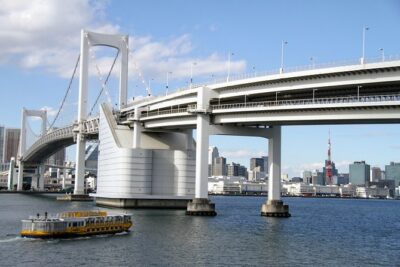
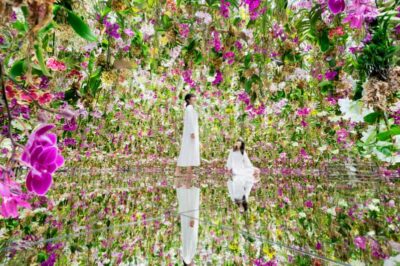
teamLab Planets TOKYO Digital Art Museum Entry Ticket
Read our review →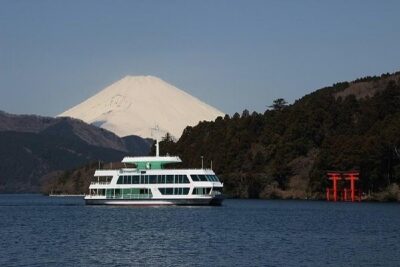
Mt Fuji & Hakone Cruise, Drum Show Bullet Train 1 Day from Tokyo
Read our review →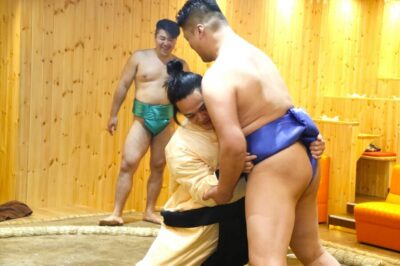
Sumo Show Experience with Chicken Hot Pot and a Photo
Read our review →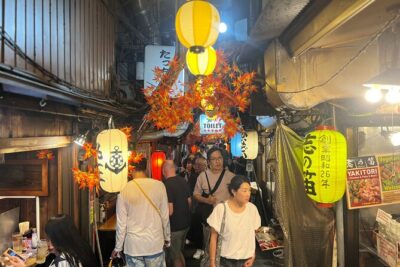
Shinjuku Food Tour (13 Dishes at 4 Local Eateries)
Read our review →
Tokyo Mt Fuji 5th St & Hakone Cruise Bus Tour w/Bullet Train
Read our review →
Flagship 2-Hours Official Street Go-Kart Tour – Tokyo Bay Shop
Read our review →Browse the lists this tour appears in