
Reviewed · NAGOYA TOURS
Experience Japanese calligraphy & tea ceremony at a traditional house in Nagoya
Nagoya’s best cultural moments may happen behind an ordinary door. At this traditional kominka house, you sit on tatami, learn why Nagoya mattered during the Sengoku period, grind your own ink, and practice brushwork before a tea ceremony in the same old home. I like the personal setting and the small maximum of six people. I also like that your calligraphy is framed, giving you a useful keepsake rather than a quick photograph.
The main drawback is the price: $179.63 per person for about two and a half hours is a serious spend. You are paying for a private-feeling cultural lesson in a real home, not for a long sightseeing route. The non-refundable policy also means you should book only when your Nagoya plans are firm.
Key points at a glance
- A lived-in Nagoya farmhouse: Experience tatami, shoji paper walls, and a traditional garden in a home where people actually lived.
- A short Sengoku history lesson: Begin with about 15 minutes of easy-to-follow commentary and slides about Nagoya and the Owari district.
- Hands-on calligraphy: Grind an ink-stick, learn brush control, choose meaningful symbols, and have your finished work framed.
- Tea ceremony with participation: First drink matcha served by the host, then try preparing tea yourself.
- A very small group: The experience accepts no more than six people, which suits a quiet, personal lesson.
- Warm hosting: Yuzo Mori and his wife lead the activity, adding a direct human connection to the house and its customs.
Entering a real kominka house in Nagoya
The experience begins at 4-chōme-32 Yamawakichō in Showa Ward, Nagoya. It ends at the same meeting point, and the location is near public transportation. You receive a mobile ticket, so keep it ready when you arrive.
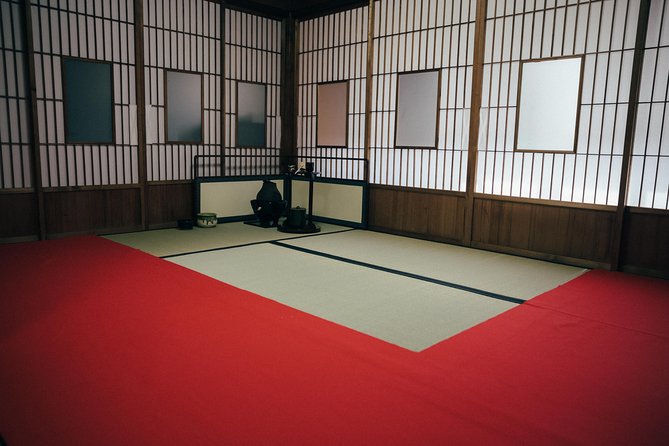
The setting is the heart of the activity. This is described as a kominka, or old Japanese farmhouse, rather than a purpose-built cultural attraction. That difference matters. You are not simply looking at tatami and shoji as museum pieces. You are entering a domestic space designed for daily life, hospitality, and quiet attention.
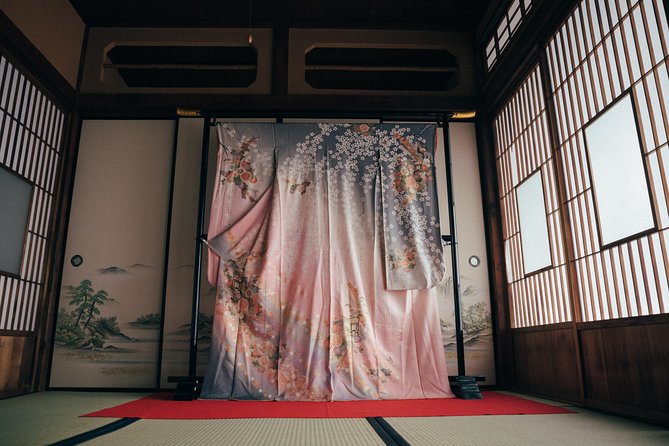
You might notice the change in mood as soon as you step indoors. Tatami mats soften the room. Shoji filter the light. A traditional garden gives the house an outdoor view without turning the visit into a garden tour. The setting is modest and calm, which makes it well suited to activities where your hands and mind need to slow down.
Yuzo Mori and his wife host the experience. His wife’s first name is not provided, but the warm welcome from both hosts is an important part of the visit. Their role is not just to demonstrate tools. They help you understand how the objects, rooms, and customs fit together.
Because the group is limited to six, you should have more room for questions than you would in a large workshop. That small size also protects the quiet mood. Calligraphy and tea ceremony can feel awkward if you are squeezed into a crowded classroom. Here, the house itself gives the lesson breathing room.
More tea ceremonies in Nagoya:
- Nagoya: Japanese Traditional Sweets making and Tea Ceremony
★ 4.9 · 76 reviews - Kimono Rental and Tea Ceremony Experience in Inuyama
★ 5.0 · 15 reviews - Kyoto: Tea Ceremony in a Traditional Tea House in Kiyomizu
★ 4.9 · 3,519 reviews
Fifteen minutes with Nagoya’s Sengoku past
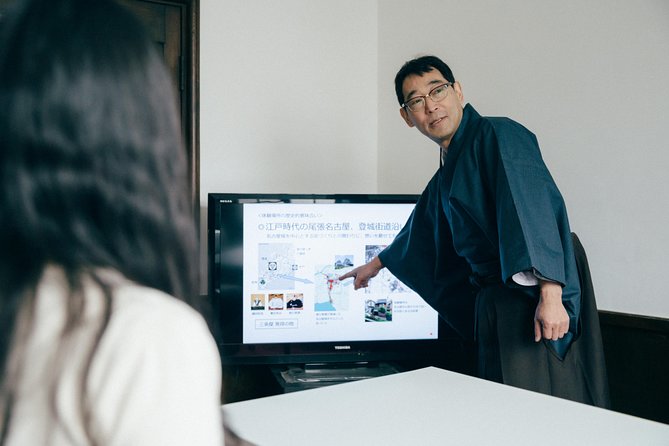
Before picking up a brush, you receive about 15 minutes of historical commentary with an easy-to-understand slide show. The topic is the Sengoku period, the era of competing military lords in the 16th century.
The focus is Nagoya and the wider Owari district. This area was connected with major figures such as Oda Nobunaga, Toyotomi Hideyoshi, and Tokugawa Ieyasu. You do not need a strong background in Japanese history to follow the introduction. The purpose is to give you a basic frame for the cultural experience that follows.
I like this opening because it keeps the history tied to place. You are not hearing a general lecture about Japan and then moving to an unrelated craft. The introduction explains why Nagoya is presented as a city linked with samurai culture, then places the house and the activity within that larger story.
At only 15 minutes, this is an introduction rather than a full history class. If you already know the Sengoku period, you may find it brief. If you are starting from scratch, it gives you enough context to recognize the names and understand why the Owari region matters.
The slides also provide a useful pause before the hands-on work. You can settle into the house, listen to the hosts, and learn the basic idea behind the visit before dealing with ink, paper, and tea utensils.
Grinding ink before you write
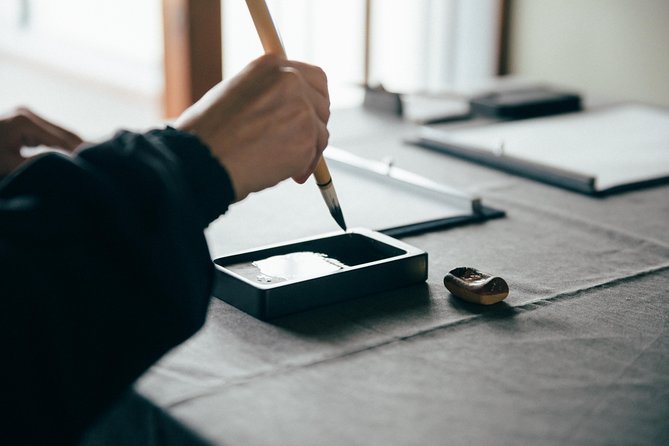
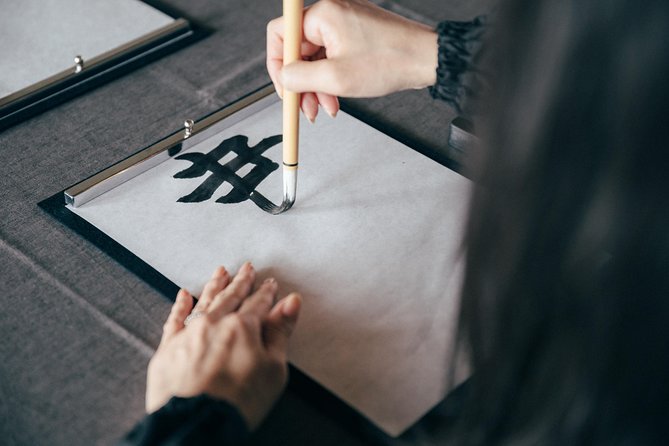
The calligraphy session begins with preparation, not instant brushwork. You place water on an inkstone and rub an ink-stick slowly across its surface. This takes time, and that is part of the point.
The process has a distinct smell and a quiet rhythm. Instead of squeezing ready-made ink from a bottle, you make the ink yourself. The task asks you to pay attention to pressure and movement before you write a single character. It is a simple way to leave the speed of ordinary sightseeing behind.
You then learn basic brush technique, including how to hold and move the brush. That instruction is important for beginners. Japanese calligraphy is not simply drawing symbols with a soft brush. The pressure, direction, and order of each stroke affect the result.
Next, you choose symbols from a selection of samples. The choice is personal, since the symbols have different meanings and designs. You should take a moment to consider what you want your finished piece to express. The information provided does not specify the full range of available characters, so your options will depend on the samples presented during your session.
This part suits people who like making something with their hands. It also works for first-time visitors who worry that they have no artistic skill. The goal is not to produce professional calligraphy. You are learning a few fundamentals, concentrating on the action, and creating a piece that records your time in Japan.
After you write on the clean copy, your work is framed as a souvenir. That is a strong practical touch. A loose sheet of paper can be difficult to protect in luggage, while a framed piece gives the activity a clear ending and a lasting object.
The included items cover all Japanese calligraphy tools. Souvenirs are otherwise listed as not included, so do not assume that additional gifts or purchases are part of the price. Your framed calligraphy is the specific keepsake described for the session.
A tea ceremony with a chance to serve matcha
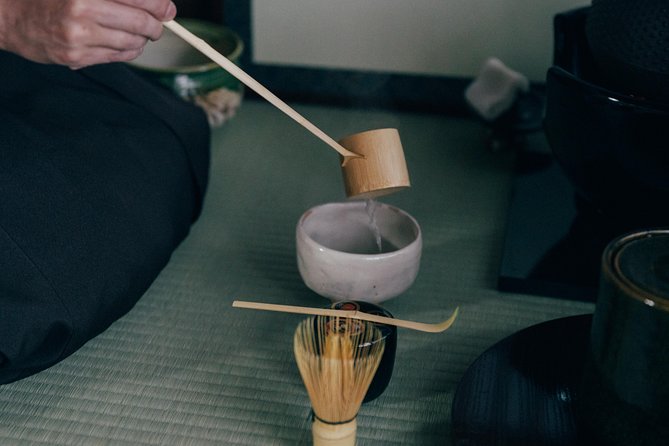
After calligraphy, you move to the tea room. The hosts explain the room’s arrangement and the utensils before tea is served. This introduction helps you notice that the ceremony is not only about drinking matcha. The room, tools, gestures, and sequence all have a role.
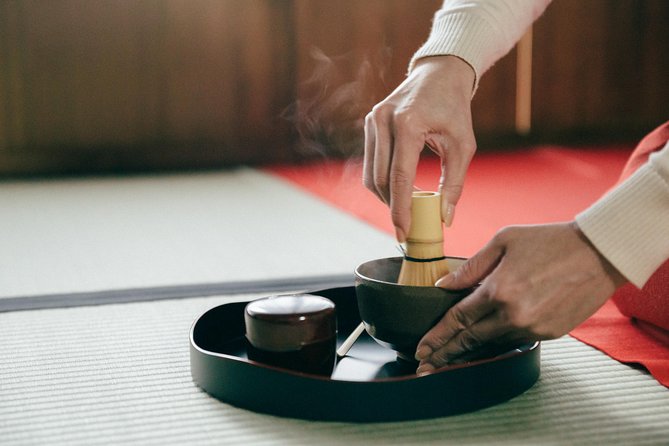
First, you take the position of guest. The host serves you a bowl of matcha with Japanese sweets. This gives you a chance to watch the pace and understand the etiquette without having to perform it immediately.
Then you try serving tea yourself. The activity describes this as an opportunity to calm your mind and feel the spirit of tea ceremony. In practical terms, you are moving from observation to participation. You see what the host does, then repeat the process with guidance.
This two-part structure is helpful. Some cultural demonstrations leave you sitting silently while someone else performs every step. Here, you get to experience both sides of the exchange: receiving tea and preparing it.
Matcha has a distinctive flavor that can surprise people who expect ordinary green tea. Japanese sweets are served with it, and the combination is part of the experience. If you have food allergies, tell the host in advance, since sweets are provided.
The tea portion may be the most atmospheric part of the visit. The tatami room, the quiet house, and the deliberate movements all reward patience. It is not designed for rushing through a checklist. If you want dramatic entertainment or a large historical display, this may feel too gentle. If you want to understand a Japanese custom through direct participation, it has much more value.
A few more Nagoya half-days to weigh up
- From Nagoya: Gujo, Hida Takayama, and Shirakawa-go Day Tour
★ 4.4 · 398 reviews - Ghibli Park 1-Day Bus Tour from Nagoya
★ 4.5 · 277 reviews - From Nagoya: Hida Takayama & Shirakawa-go Tour w/Opt. Lunch
★ 4.5 · 256 reviews - Hiking the Historic Nakasendo Trail [1 Day Tour from Nagoya]
★ 5.0 · 104 reviews
What the two-and-a-half-hour schedule means
The full experience lasts approximately two hours and 30 minutes. That is long enough to give both calligraphy and tea ceremony proper attention, but short enough to fit into a day of sightseeing in Nagoya.
The time is divided among three main elements: the Sengoku introduction, calligraphy, and tea ceremony. The exact minutes for each part are not specified, apart from the roughly 15-minute history talk. Do not plan another appointment immediately afterward, since hands-on activities can run at a relaxed pace.
The same starting and ending point makes the visit simple to place in your schedule. You do not need to arrange separate transportation between a museum, a workshop, and a tea room. The meeting point is near public transportation, but the supplied information does not give a train station, walking time, or detailed route. Check the map carefully before setting out.
A mobile ticket is convenient for most people. Still, I would save the meeting address offline and allow time to find the house. The location is described as reasonably easy to find, but a residential neighborhood is not the same as a major attraction with a large entrance sign.
Is $179.63 a fair price?
At $179.63 per person, this is not a budget activity. The cost is easier to understand when you look at what you are buying: a two-and-a-half-hour session, English-language instruction, calligraphy supplies, matcha, Japanese sweets, a framed calligraphy piece, and access to a traditional home with a maximum of six participants.
It is also a combined experience. You do not have to pay separately for a short calligraphy lesson and a tea ceremony. The history introduction adds context, and the small group keeps the format personal.
Still, the price will not suit everyone. If you mainly want to taste matcha or write one character, you can likely find less expensive cultural activities elsewhere. This experience makes more sense for you if the house, the hosts, and the chance to participate in both customs are central to your Nagoya plans.
The framed work improves the value, especially if you want a souvenir with a story. It is not a generic item bought from a shop. You select the symbols, write them yourself, and take home the result. The price is harder to justify if you do not care about calligraphy or prefer a fast demonstration.
This activity is likely to appeal most to couples, solo visitors, families with older children, and small groups who appreciate quiet instruction. The information says most people can participate, but it does not provide specific details about wheelchair access, seating alternatives, or accommodations for mobility needs. If those details affect your booking, ask the provider before paying.
Who should book this Nagoya experience?
I would choose this for someone who wants contact with everyday Japanese traditions rather than another large attraction. The fact that the activity takes place in a home where people actually lived gives the visit a more personal scale.
It is also a good pick if you enjoy learning through your hands. Grinding ink, controlling a brush, handling tea utensils, and serving matcha all ask you to take part. You are not simply collecting photos.
History fans may appreciate the Sengoku introduction, especially if Nagoya is part of a wider trip focused on samurai-era Japan. The talk is short, so you should not book this expecting a detailed military or political lecture.
I would be more cautious if you have a tight schedule, dislike sitting on tatami, or want a large, highly scripted show. The experience depends on quiet concentration. Its strength is also its limit: the house and group size create intimacy, but they do not offer the scale or variety of a major museum.
The activity is recommended for most people, and the group cap is six. That makes it a sensible choice for people who prefer questions and direct guidance instead of a crowded class. The warm hosting by Yuzo Mori and his wife adds a human touch that helps the customs feel approachable.
Booking details worth knowing
The activity is held in Nagoya at 4-chōme-32 Yamawakichō, Showa Ward, Aichi 466-0063, Japan. It returns to the meeting point when finished.
Confirmation is normally received at booking. If you book within seven days of travel, confirmation may arrive within 48 hours and depends on availability. Since the experience is non-refundable and cannot be changed for any reason, check your date, meeting point, and schedule carefully before booking.
The activity accepts a maximum of six people. Coffee or tea is included in the form of a bowl of matcha and Japanese sweets, and all calligraphy tools are supplied. Tell the provider about allergies in advance.
The experience is supplied by 蝶ノ屋. Its high rating is based on 16 reviews, with 100 percent recommending it. That is a small sample, so I would treat it as encouraging rather than a guarantee, but the repeated strengths are clear: the history briefing, the writing session, the tea flavor, the warm hosts, and a location that is reasonably easy to find.
Should you book it?
Book this if you want a quiet, personal introduction to Japanese culture in a real Nagoya home, and if you value leaving with calligraphy you helped create. The combination of Sengoku context, ink preparation, framed writing, matcha, and hands-on tea service gives the two-and-a-half hours a clear purpose.
Skip it if $179.63 feels too high for a short cultural lesson, or if you want a broad city tour with several sights. This is a focused experience, not a general Nagoya excursion.
For the right person, the appeal is simple: you slow down, learn a little history, make something by hand, and share tea in a traditional setting. Just confirm your plans first, since the booking cannot be refunded or changed.
FAQ
Where does the experience take place?
It takes place at 4-chōme-32 Yamawakichō, Showa Ward, Nagoya, Aichi 466-0063, Japan.
Where does the activity end?
The activity ends back at the meeting point.
How long does the experience last?
It lasts approximately two hours and 30 minutes.
How many people can join?
The maximum group size is six people.
Is the activity near public transportation?
Yes. The meeting point is described as being near public transportation.
Who hosts the experience?
Yuzo Mori and his wife host the activity.
Is tea included?
Yes. You receive a bowl of matcha tea and Japanese sweets.
Are calligraphy supplies provided?
Yes. All Japanese calligraphy tools are included.
Do I get to prepare tea myself?
Yes. You first receive matcha as a guest, then have the opportunity to serve tea yourself.
What happens to my calligraphy work?
Your work is framed as a souvenir after you write it on the clean copy. Additional souvenirs are not included.
Can I tell the host about food allergies?
Yes. Japanese sweets are provided, so tell the host about any allergies in advance.
Can I cancel for a refund?
No. The experience is non-refundable and cannot be changed for any reason.
Just added around Nagoya
- Walking Small-Group Nagoya City Tour★ 5.0 · 13 reviews
- Nagoya Endoji Food and Cultural Tour★ 5.0 · 12 reviews
- Pub Crawl in Nagoya★ 5.0 · 15 reviews
- Sumo Tournament Experience in Nagoya★ 5.0 · 12 reviews
- Nagoya Street Food Walking Tour of Osu★ 5.0 · 28 reviews
- Nagoya: 2026 Hida Takayama Shirakawa-go Light-up Winter Tour★ 3.5 · 16 reviews
- Private Full-day Nagoya City Tour★ 5.0 · 22 reviews
- Specialties of Nagoya Food Tour★ 5.0 · 12 reviews
Nagoya Tours, compared.

![Hiking the Historic Nakasendo Trail [1 Day Tour from Nagoya]](https://media3.thejapanesetraveller.com/wp-content/uploads/hiking-the-historic-nakasendo-trail-1-day-tour-from-nagoya-400x267.jpg)
Hiking the Historic Nakasendo Trail [1 Day Tour from Nagoya]
Read our review →
Nagoya Highlight Tour guided by a friendly local
Read our review →
Japanese Traditional Sweets making and Tea Ceremony
Read our review →
Magome-juku, Tsumago-juku & Ena-kyo 1d Bus Tour from Nagoya
Read our review →
Nagoya Full-day Private Custom Tour with National Licensed Guide
Read our review →Browse the lists this tour appears in