
Reviewed · MT FUJI TOURS
Explore Mt. Fuji Ice Cave in Aokigahara Forest
Mt. Fuji’s ice cave is the star here: a cold, dark chamber formed when lava from a major eruption hardened into tubes about 1,200 years ago. Meltwater from the mountain later froze inside, creating the natural ice formations you see today. You enter by headlamp, wearing a helmet, gloves, coveralls, and a look of pleasant disbelief.
I like two things right away. The special entry permit gives you access to a secluded cave that independent visitors generally cannot enter, and the tour includes transportation from Kawaguchiko Station or nearby Lake Kawaguchiko hotels. I also like the guide-led walk through Aokigahara, where the forest, plants, geology, and local history receive as much attention as the cave.
The catch is physical. You walk for about 40 minutes through the forest, spend roughly an hour in the cave, then walk another 40 minutes back. The cave requires maneuvering around rocks, so good grip, warm layers, and reasonable fitness matter. One booking issue also deserves attention: the advertised start time may not match the actual meeting time, so confirm the precise pickup details before setting out.
Key points to know before booking
- Enter a restricted lava cave: The special permit is included, which is the main reason to book with a guide rather than attempt this independently.
- Expect a real forest walk: The route includes about 80 minutes of walking in Aokigahara, not just a quick stop beside a cave entrance.
- Prepare for near-freezing conditions: The cave sits at about 0°C, even when the weather around Lake Kawaguchiko feels mild.
- Guides make the experience: Tada, Toshi, Takasi, and Tadasuke are praised for clear English, humor, and strong knowledge of the forest and volcanic area.
- Small groups keep it personal: The normal maximum is 12 people, and some departures become private when others cancel.
- Good value at $53.06: Equipment, permits, guiding, private vehicle transport, and pickup or drop-off are included, but food is not.
Why this Mt. Fuji cave trip feels different
Around Mt. Fuji, you can fill a day with familiar sights: a ropeway, a boat ride, a lakeside view, and a photo stop. This experience takes another path. You trade a polished sightseeing circuit for wet forest soil, rough lava rock, a headlamp beam, and ice formed naturally underground.
That change of pace is the appeal. The cave is not presented as a built attraction with bright lighting and paved paths. You enter a volcanic space that has remained largely undisturbed, and the equipment is practical rather than decorative. A helmet protects your head, gloves help with the cold, and the headlamp becomes your main source of light.
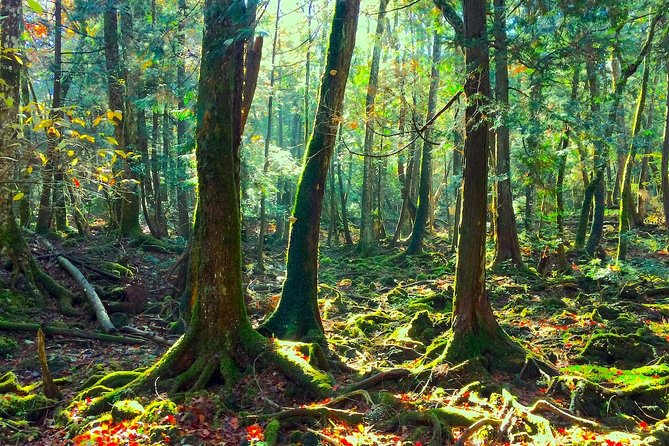
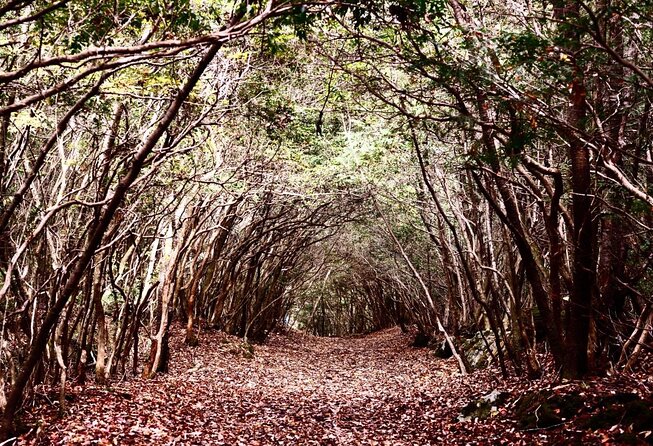
The forest adds an important second half. Aokigahara, also called the Sea of Trees, is often reduced to a dark reputation. A good guide gives you a fuller picture, explaining its volcanic ground, plants, wildlife, and connection to Mt. Fuji. The result is less sensational than the nickname and more useful: you see a quiet forest shaped by old lava flows and time.
More Mt Fuji days out:
- Mt Fuji Area Private Guided Tours in English-Nature up close, quiet, personal
★ 5.0 · 288 reviews - Private guided hidden gems tour by local English speaking driver
★ 5.0 · 142 reviews - Ramen Cooking Class at Ramen Factory in Mt.Fuji
★ 5.0 · 101 reviews
The pickup around Lake Kawaguchiko
The experience lasts about three hours and includes pickup and drop-off at Kawaguchiko Station and hotels around Lake Kawaguchiko. That matters because the cave area is not a simple walk from the station. Having a guide drive you to the departure point removes a layer of planning and helps keep the short outing on schedule.
The vehicle is air-conditioned, and private transportation is included. The route may also offer a view of Mt. Fuji, with a scenic photo stop possible at the beginning. Do not treat that as the main event, since mountain weather can change the view, but it is a pleasant bonus when Fuji is visible.
You need to arrive on time. There has been at least one serious complaint about a scheduled 9 a.m. start appearing alongside an earlier actual meeting window of 8:20 to 8:30. That is an avoidable problem. Check the confirmation message, contact the provider if anything is unclear, and use the actual appointed meeting time rather than relying only on the headline start time.
Getting ready for a 0°C cave
Before entering the forest, you receive a short preparation period. The operator supplies a helmet, headlight, overall, and gloves. You also have access to a place to change clothes and a toilet before the walk begins.
Bring clothing suited to outdoor activity. Long sleeves, long pants, and a winter jacket are specifically advised. Wear comfortable clothes under the coveralls, and choose hiking shoes with firm grip. One of the most useful practical tips from the experience is simple: do not wear smooth-soled shoes. The cave involves rocks and some scrambling, and slippery footwear can turn a fun challenge into a tense one.
The cave is cold enough to surprise you. Even if your day starts in warm weather, the underground air is close to freezing. The supplied gloves and coveralls help, but your base layers still matter. Light clothing beneath the outer gear works well if you have warm layers available for the cave and do not want to overheat on the forest walk.
You should also follow the guide’s directions closely. The operator may stop the tour if someone ignores safety instructions or disrupts the group. Pregnant people and anyone who has been drinking may not be safe on this activity, and children must be accompanied by an adult.
Aokigahara Forest, the first real walk
The route includes around 40 minutes of walking through Aokigahara before the cave. This is not filler. The forest helps you understand the ground beneath your feet and the volcanic forces that created the caves.
The soil and rock come from Mt. Fuji’s past eruptions. The forest grew over those lava flows, producing a dense setting with dark volcanic ground, moss, trees, and damp air. Depending on weather and season, you might find the forest peaceful, misty, or mysterious. A guide can point out local plants and wildlife, explain how the terrain formed, and place the cave in its natural setting.
This is also where the guide’s personality matters most. Tada is praised for combining humor with clear explanations in both Japanese and English. Toshi is known for an unusually close familiarity with the forest and cave, while Takasi is praised for patience, especially with children. Tadasuke has also been singled out for giving information in both languages and explaining the area’s geology and past uses.
Aokigahara’s difficult reputation is part of the setting, but it should not define the whole visit. The guide handles the subject with care and puts attention on the forest’s geology, nature, and cultural context. You get a more grounded understanding of the place instead of a spooky story built for effect.
Same base, a completely different sort of day:
- Early Morning Kayaking With Views of Mt Fuji at Lake Kawaguchiko
★ 5.0 · 69 reviews - Johnny’s Exclusive: Mt. Fuji Adventure from Kawaguchiko
★ 5.0 · 62 reviews - Mt. Fuji Five Lakes Area Private Tour with Licensed Guide(Kawaguchiko area Dep)
★ 5.0 · 55 reviews - Cute & Fun E-Car tour following guide around Lake Kawaguchiko
★ 5.0 · 54 reviews
Entering the lava-formed ice cave
After the forest walk, you reach the cave and switch into adventure mode. Your helmet goes on, the headlamp becomes essential, and the temperature drops toward 0°C. The space is formed from solidified lava, with ice created by water from Mt. Fuji’s melted snow entering the underground chambers.
The ice is the visual prize, but the way you reach it is just as memorable. The cave is dark and rough, and you use your hands, feet, and balance to move carefully around the rock. Some people may find the entrance or uneven sections daunting. The cave is described as spacious once inside, so claustrophobia may be less of a concern than footing and cold.
You spend about 60 minutes exploring the cave. The guide leads the route, explains the volcanic formation, and points out the ice art. The artificial light is limited to your headlamp, which changes the mood completely. You see only what the beam reveals, then notice new shapes as you move.
Photos can record the colors and shapes, but they cannot fully capture the cold, darkness, and sound of moving through a natural lava tube. This is an experience for your senses, not just your camera. If you want a quick photo stop, the cave may feel like too much work. If you enjoy unusual natural sites and hands-on exploration, the roughness is part of the value.
The walk back and the guide’s role
After the cave, you return through the forest for another 40 minutes before riding back to the meeting point. By this stage, you have had time to compare the forest above with the ice chamber below. The contrast is the clever structure of the tour: green and damp outside, black rock and freezing air underneath.
The guide continues to explain the area during the return walk and drive. Some outings finish early, and the guide may use the extra time for a scenic drive back. That depends on the pace of the group and the tour’s progress, so it should be treated as a possibility, not a promise.
This is a small-group experience, normally capped at 12 people. That is small enough for the guide to manage safety and answer questions without turning every explanation into a public speech. If others cancel, the outing may become private, which has happened for some bookings. You do not pay extra for that possibility, but you should not book expecting a private tour.
What the $53.06 price really covers
At $53.06 per person, the tour is priced well for a three-hour guided outing in the Fuji area. The value comes from several pieces working together: a professional English-speaking guide, the special cave entry permit, a private vehicle, pickup and drop-off in the Kawaguchiko area, and all the basic exploration equipment.
If you tried to arrange the same elements separately, the permit and access would be the hard part. The cave is not simply a public attraction where you buy a ticket at the entrance. You are paying for access, transport, safety equipment, and a guide who knows how to move through the site.
Food and drinks are not included, and accommodation or transportation to the Fuji area is also your responsibility. If you are coming from Tokyo, plan that connection carefully. An early express bus from Shibuya has been used successfully, but you need to arrive in time for the actual meeting window, not just the advertised tour hour.
The tour is especially good value if you already plan to stay near Lake Kawaguchiko. It is less convenient as a rushed day trip from Tokyo because the meeting time, bus schedule, weather, and return journey all need to line up.
Who will enjoy it, and who should think twice
I would choose this for someone who has already seen the standard Fuji viewpoints and wants a more unusual half-day. Nature lovers, amateur geology fans, families with an adventurous child, and people who enjoy guided walks should find plenty to like.
The activity can suit mixed ages. A guide has handled a group ranging from age 6 to 65, and Takasi was praised for being patient with a young child. Still, family-friendly does not mean effortless. Children need to stay close to an adult, listen to instructions, and manage uneven ground.
You should think twice if you have limited mobility, dislike cold conditions, or are uncomfortable climbing and scrambling over rocks. The forest walk is moderate rather than extreme, but the cave is not a flat, polished tunnel. Pregnancy and alcohol use are specifically noted as safety concerns.
Weather also matters. The operator requires good weather and may cancel in poor conditions, offering another date or a full refund. Rain does not necessarily ruin the day, and one outing continued during heavy rain, but wet conditions can make forest paths and cave rocks more demanding.
Booking details that can save you trouble
Confirmation is provided when you book, and free cancellation is available up to 24 hours before the start time for a full refund. Changes or cancellations inside that 24-hour period are not accepted for a refund.
Read all pickup messages carefully. The conflicting start-time experience is the one practical warning I would take seriously. If you are staying at a hotel, make sure it is within the Lake Kawaguchiko pickup area and confirm where the vehicle will meet you.
Bring suitable clothing, sturdy shoes, and enough time for the full three hours. Food is not included, so plan anything you need before or after the outing rather than expecting a meal during the forest and cave portion.
Should you book the Mt. Fuji ice cave tour?
Book it if you want a genuine change from Fuji’s usual viewing platforms and do not mind cold, dark, uneven conditions. The permit, equipment, vehicle, and guide make the price reasonable, while the forest walk gives the cave more meaning than a stand-alone underground visit.
Skip it if you need an easy, paved attraction or have very limited time around the lake. For everyone else, this is one of the area’s more distinctive choices. Confirm the meeting time, wear shoes with grip, dress warmly, and let the guide handle the cave route. That preparation turns a potentially awkward outing into a memorable look at the volcanic world beneath Mt. Fuji.
FAQ
How long does the Mt. Fuji ice cave tour last?
The tour lasts about three hours, although the timing can change depending on the group and conditions.
Where does pickup take place?
Pickup and drop-off are offered at Kawaguchiko Station and hotels around Lake Kawaguchiko.
Is the tour conducted in English?
Yes. An English-speaking local guide leads the experience.
What equipment is included?
The tour includes a helmet, headlight, overall, and gloves. A vehicle and all taxes, fees, and handling charges are also included.
How cold is the ice cave?
The cave has a natural temperature of about 0°C.
How much walking is involved?
The planned route includes about 40 minutes of walking through Aokigahara Forest, around 60 minutes exploring the cave, and another 40 minutes walking back.
Is the tour suitable for children?
Children may join but must be accompanied by an adult. The activity still requires moderate physical fitness and careful movement around rocks.
Can I cancel for a full refund?
You can cancel at least 24 hours before the experience start time for a full refund. If poor weather causes the operator to cancel, you will be offered another date or a full refund.
Just added around Fujikawaguchiko machi
- Ramen Cooking Class at Lake Kawaguchiko (Short Course)★ 5.0 · 42 reviews
- Cute & Fun E-Car tour following guide around Lake Kawaguchiko★ 5.0 · 54 reviews
- Private Local Hiking to enjoy the nature and culture of Mt.Fuji★ 5.0 · 22 reviews
- Fujisan Sushi Making Lesson★ 5.0 · 16 reviews
- Early Morning Kayaking With Views of Mt Fuji at Lake Kawaguchiko★ 5.0 · 69 reviews
- Sushi Cooking Class at Sushi Factory -KIWAMI- Mt.Fuji★ 5.0 · 23 reviews
- Hidden Fuji drive tour with a Local English speaking guide★ 5.0 · 43 reviews
- Ramen Cooking Class at Ramen Factory in Mt.Fuji★ 5.0 · 101 reviews
Mt Fuji Tours, compared.
Mt Fuji and Hakone 1-Day Bus Tour Return by Bullet Train
Read our review →
Mt Fuji & Hakone Cruise, Drum Show Bullet Train 1 Day from Tokyo
Read our review →
Tokyo Mt Fuji 5th St & Hakone Cruise Bus Tour w/Bullet Train
Read our review →
Mt. Fuji Tour, Hakone Ropeway, Owakudani, Lake Ashi
Read our review →
Mt.Fuji,Kawaguchiko Oishi Park,Arakurayama Sengen Park
Read our review →
Mt. Fuji 5th Station & Hakone Cruise 1-Day Bus Tour
Read our review →
Mt Fuji Top 5 Spots Day Tour: Arakurayama Park,Oshino Hakkai
Read our review →Browse the lists this tour appears in