
Reviewed · MT FUJI TOURS
Mt. Fuji Five Lakes Area Private Tour with Licensed Guide(Kawaguchiko area Dep)
Mt. Fuji’s Five Lakes area rewards a little planning, and this six-hour private tour gives you a local guide without the cost of a private vehicle. You choose two or three sights, then travel between them by public bus and train connections from Kawaguchiko.
I like the personal feel, especially with guides such as Chinami, also called Cindy, who knows the area well and keeps an eye on bus times. I also like the choice of stops, from a famous pagoda and mountain shrine to an ice cave and Fuji’s 5th Station. The main catch is simple: public transportation takes time, so trying to squeeze in three far-flung sights can leave you with more bus rides and less sightseeing.
Key points to know before booking
- Choose only 2 to 3 sights: The long stop list is a menu, not a promise that you will visit every location.
- Public buses shape the day: Transportation is not included, and bus schedules limit how much ground you can cover.
- The guide is the main value: Chinami, Yoshi, Moto, and other licensed multilingual guides can explain local customs, history, and practical details.
- Kawaguchiko is the base: You meet on foot near Kawaguchiko Station, with a possible drop-off around Lake Kawaguchiko at the end.
- Mt. Fuji views depend on weather: Clear skies can produce superb photographs, but clouds may hide the mountain.
- Admission fees are extra: Ropeway, cave, 5th Station, and other entrance costs are paid separately.
Why this private tour makes sense around Mt. Fuji
The Five Lakes region is easy to reach from Tokyo in broad terms, but once you arrive, the sights are spread across Fujikawaguchiko, Fujiyoshida, Oshino, and the roads leading toward Mt. Fuji. A guide helps turn a scattered day into a workable plan.
That matters most if you want more than one postcard view. You can pair a shrine with a lake, add the famous Chureito Pagoda, or choose a nature-focused route through Aokigahara Forest and Narusawa Ice Cave. You are not locked into a large group’s schedule, and only your own party takes part.
The price is listed at about $155.22 per person. That is not a cheap sightseeing ticket, since transportation, food, and admission fees are extra. Still, it can be fair value for a private guide who helps you use a complicated bus network, adjusts the route to your interests, and explains what you are seeing.
The value drops if you expect a driver or a packed sightseeing circuit. This is not a chauffeured tour. It is a walking and public-transit experience with a guide.
More licensed-guide days in Fujikawaguchiko machi:
- Tokyo 6hr Private Tour with Government-Licensed Guide
★ 5.0 · 3,902 reviews - Tokyo 4hr Private Tour with Government-Licensed Guide
★ 5.0 · 1,394 reviews - Kyoto 6hr Private Tour with Government-Licensed Guide
★ 5.0 · 1,369 reviews
Start at Kawaguchiko Station and set the day’s priorities
The meeting point is Kawaguchiko Station. Your guide meets you on foot within the designated Kawaguchiko area, and the stated end point is also Kawaguchiko Station, although drop-off around Lake Kawaguchiko may be arranged.
Before setting out, make your priorities clear. The available choices cover viewpoints, cultural sites, water, forest, and volcanic geology. You will get a better day by choosing two or three places that fit together than by chasing every famous name.
The guide’s local judgment can be useful here. Chinami, known as Cindy, has helped visitors stay on schedule and make their bus connections. One especially practical detail from her guiding style is that she watches the timetable closely, which matters when a missed bus can alter the whole afternoon.
The tour is advertised as about six hours. That includes transit, walking, stops, and time for explanations. A stop listed as five minutes should be understood as a brief photo or orientation stop, not a long visit.
Mt. Kachi Kachi Ropeway for the classic lake view
The Mt. Fuji Panoramic Ropeway, often called the Kachi Kachi Ropeway, rises from the Lake Kawaguchiko area to the top of Mt. Tenjo. From above, you can look over the lake, Mt. Fuji, and the surrounding area.
This is a strong choice if your first goal is a broad view. It gives you a sense of how the Five Lakes sit around the foot of the mountain, rather than offering only a close-up photograph from ground level.
The ride and admission are not included, so you will pay separately. Weather is the key factor. If Mt. Fuji is hidden by cloud, the lake and nearby hills still provide a view, but the headline photograph may not appear.
With only six hours, the ropeway can also compete with more time-consuming stops. Ask your guide how it fits with bus departures before choosing it alongside distant locations.
Chureito Pagoda, the most sought-after photograph
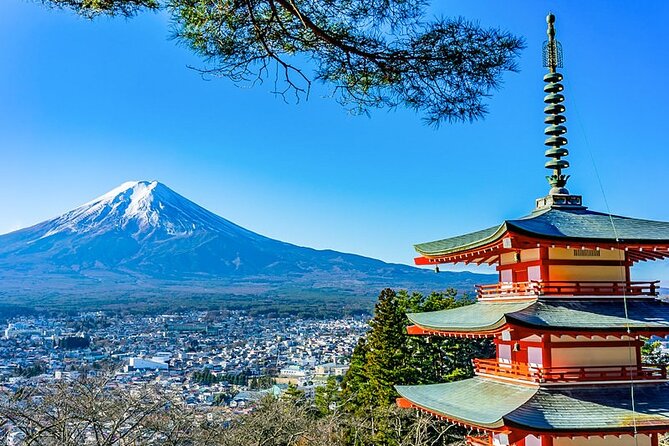
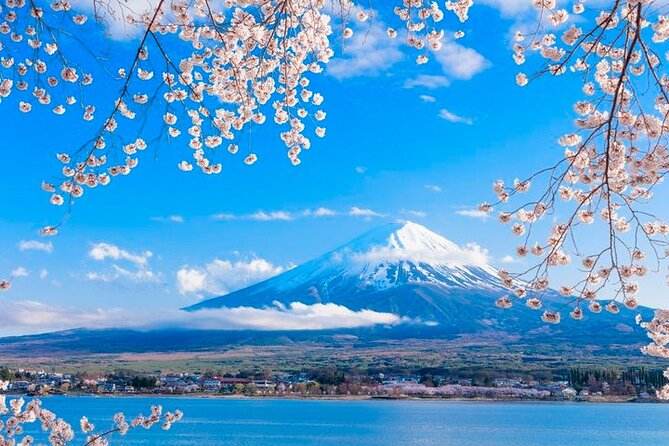
Chureito Pagoda is part of Arakurayama Sengen Shrine in Fujiyoshida. The red five-story pagoda, Mt. Fuji, and seasonal cherry blossoms create one of the region’s best-known views.
The image is famous for good reason, but fame brings a practical problem: the photo area can be crowded, especially during cherry blossom season. If your main purpose is to take the classic shot, allow enough time for the climb and for waiting near the viewpoint.
The pagoda is not simply a roadside photo stop. It is connected to a shrine setting, and the approach gives the visit a more meaningful cultural frame. Still, a short six-hour tour may force you to choose between spending time here and seeing another site.
Your guide can help judge the timing. One guide, Chinami, has advised visitors to return in another season when crowds or weather made photography difficult. That is sensible advice. Mt. Fuji photography is never guaranteed, and the pagoda is best treated as one part of the day, not the entire reason to book.
More Mt Fuji days out:
- Mt Fuji Area Private Guided Tours in English-Nature up close, quiet, personal
★ 5.0 · 288 reviews - Explore Mt. Fuji Ice Cave in Aokigahara Forest
★ 5.0 · 243 reviews - Private guided hidden gems tour by local English speaking driver
★ 5.0 · 142 reviews - Ramen Cooking Class at Ramen Factory in Mt.Fuji
★ 5.0 · 101 reviews
Kitaguchi Hongu Fuji Sengen Shrine and Kawaguchi Asama Shrine
The Five Lakes area has strong ties to worship of Mt. Fuji. Kitaguchi Hongu Fuji Sengen Shrine sits on the north side of the mountain between Lake Kawaguchi and Lake Yamanaka. It offers a more solemn, wooded setting than the region’s busy viewpoints.
Kawaguchi Asama Shrine, also called Sengen Shrine, was built in connection with the eruption of Mt. Fuji in 864. It is registered as a World Cultural Heritage site and is known for its seven sacred cedar trees, called Shichi-hon Sugi.
These shrines are good choices if you want context, not just scenery. A licensed guide can explain why Mt. Fuji has been treated as a sacred presence and how shrines fit into local life.
The difference between the two is useful when planning. Kitaguchi Hongu is associated with the northern approach to Mt. Fuji, while Kawaguchi Asama provides a cultural stop near Lake Kawaguchi. Visiting both may be worthwhile for a shrine-focused day, but it leaves less time for the lake, cave, or pagoda.
Oshino Hakkai and its clear mountain springs
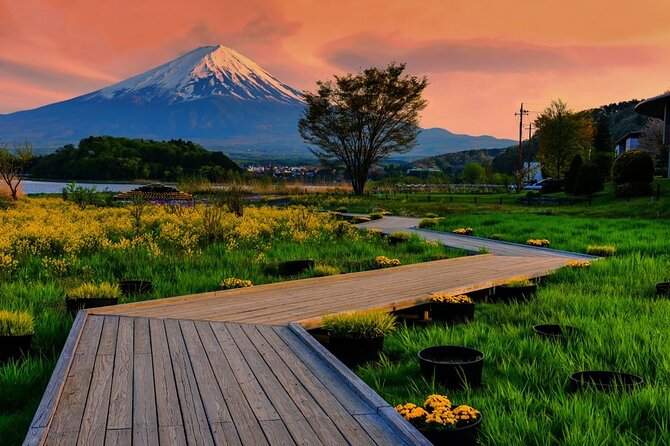
Oshino Hakkai is a traditional village made up of eight ponds fed by snowmelt from Mt. Fuji. The spring water gives the ponds their appeal, and the village setting adds a calmer, more traditional stop to the day.
This is a good choice for visitors who want water, rural scenery, and a taste of old-style village Japan. It also pairs well with Chureito Pagoda, as one guide successfully combined those two places during a half-day outing.
Do not expect a long rural walk if you are also visiting distant sites. The tour’s time limit means your guide may keep the visit focused. Admission is listed separately where applicable, and personal spending is not included.
Oshino Hakkai can be especially useful on a day when Fuji itself is cloudy. The ponds and village remain worthwhile even when the mountain refuses to appear.
Narusawa Ice Cave and the Aokigahara Forest
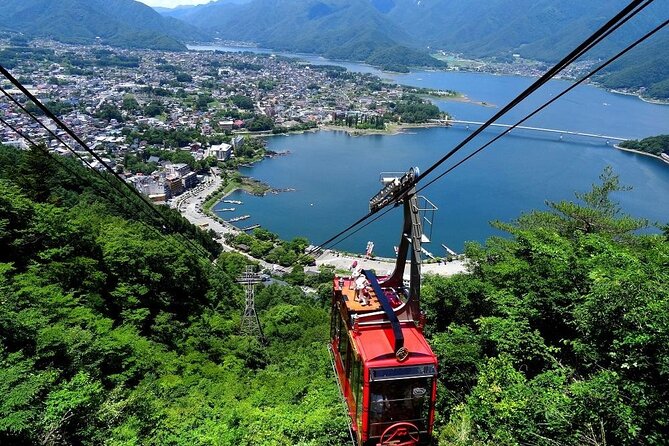
Narusawa Ice Cave is a 153-meter lava cave in the Aokigahara Forest. Ice pillars and ice walls can be seen throughout the year, making this one of the most unusual options on the list.
The cave provides a change of pace from shrines and viewpoints. You move through a natural volcanic formation rather than simply looking at Mt. Fuji from a distance. A visit is listed at about 30 minutes, though entrance fees are extra.
You should choose this stop because you are interested in geology and forest scenery, not only because the word ice sounds appealing. The cave is one of the more time-specific choices, and combining it with faraway sites can make the day transit-heavy.
A guide named Moto has led an outing that included the Aokigahara Forest and ice caves. His enthusiasm for the area’s natural features is the kind of local interpretation that can make a short cave visit more than a quick photo stop.
Subaru Line 5th Station, halfway up Mt. Fuji
The Fuji Subaru Line 5th Station sits at roughly the halfway point of the Yoshida Trail. It is also called Yoshidaguchi 5th Station or Kawaguchiko 5th Station.
At about one hour, this is one of the longest planned stops. It gives you a closer view of Mt. Fuji and a sense of the mountain’s climbing routes without requiring a full hike.
The tradeoff is transit. Reaching the 5th Station and returning takes time, and weather at the mountain can be different from conditions around the lake. If the summit is covered, the stop may not deliver the view you hoped for, though the elevation and trail setting still give it a distinct feel.
Choose the 5th Station when Mt. Fuji itself is your priority. If you care more about culture or village life, the same hour may be better spent at Oshino Hakkai or one of the shrines.
Lake Kawaguchiko and Lake Yamanaka
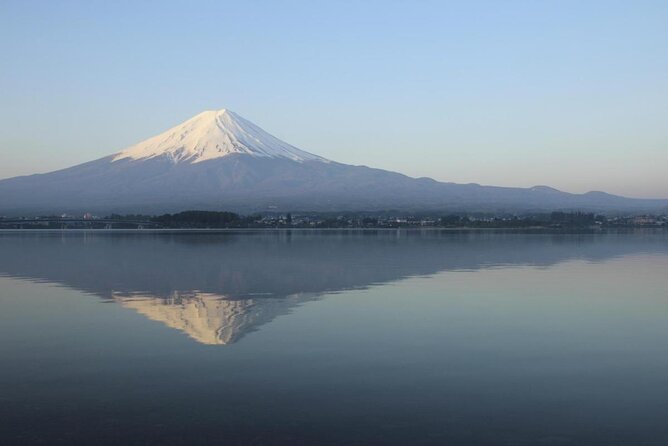
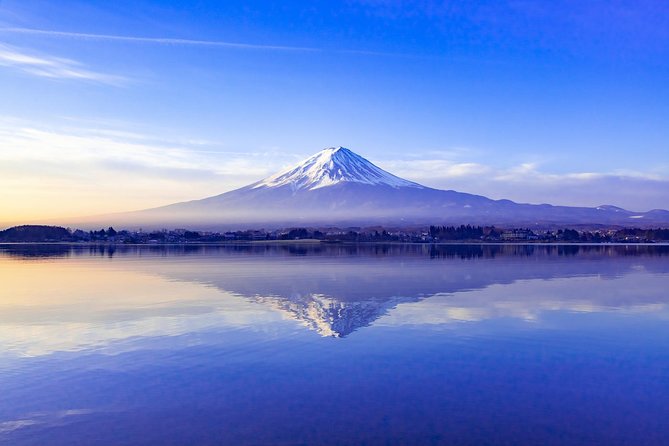
Lake Kawaguchiko is the most convenient base for this experience and one of the easiest places to frame Mt. Fuji across open water. It also gives you access to the ropeway and several nearby shrines.
A short lake stop can work well for photographs or orientation, but five minutes is not enough for a full lakeside experience. If you want a slower visit, say so when choosing your sites, though the six-hour limit still applies.
Lake Yamanaka is the largest of the Fuji Five Lakes and is listed with about one hour of touring time. It offers a different setting from Kawaguchiko, but reaching it can add substantial travel time. Pair it with nearby attractions rather than treating it as an easy add-on to every other stop.
The Five Lakes are not one compact park. They are separate resort and natural areas around Mt. Fuji. That is why a guide and a sensible route matter, and also why the tour cannot promise a full circuit in six hours.
The guide can make or break the experience
The strongest part of this tour is the person leading it. The guide is a government-licensed local professional, and English-speaking multilingual support is provided.
Chinami, or Cindy, receives repeated praise for warmth, local knowledge, clear English, and careful timing. She has helped visitors keep to bus schedules, adjusted to their walking pace, and suggested returning for better seasonal photographs. Yoshi is described as friendly and active, while Moto brings strong enthusiasm for the forest and caves.
Those details matter more than a long list of stops. A good guide can explain why a shrine was built, point out the right view, and tell you when a bus connection makes one choice unrealistic. The experience works best when you treat the guide as a route planner and local interpreter, not simply someone who walks beside you.
There is one serious caution. A past booking ended with no guide available after a late change, and a refund was processed. That appears to be an exception, but it shows why you should read confirmation messages carefully, especially during busy periods.
Public transportation is both the strength and the weakness
The tour uses public transportation, and the cost of those fares is not included. You also pay separately for entrance tickets, lunch, and personal expenses.
Public transit keeps the price below a private-car tour and gives you a more ordinary view of how the region works. It can also be less comfortable than having a driver waiting at every stop. Buses take time, schedules can dictate the route, and a missed connection can reduce sightseeing time.
One disappointing outing included only two locations because much of the six-hour period went to buses. That is the clearest warning attached to this experience. Choose nearby sites, start on time, and avoid building a plan around three locations scattered across the Five Lakes.
Pickup is on foot, not by private vehicle. Most people can take part, and service animals are allowed, but you should be comfortable with walking, station transfers, and public transportation.
Who should book this Mt. Fuji day tour?
I would choose this tour if you want a private guide, have a short stay in the area, and prefer to select your own focus. It suits couples, families, and small groups who want help with shrines, photography, nature, or mountain views.
It is also a good fit if you are staying near Kawaguchiko and do not want to work out every bus route yourself. The private format means your party can discuss pace and interests without joining a large group.
I would hesitate if you want a relaxed day with long stops, a private car, or a guaranteed view of Mt. Fuji. I would also be cautious about selecting three distant sites. Two well-chosen locations, plus time for transit and lunch, may produce a far better day than an ambitious checklist.
Free cancellation is available up to 24 hours before the start time. Changes or cancellations inside that window are not refunded, so make your plans before the cutoff.
Should you book it?
Book this experience if you want local guidance and flexible choices more than a fixed sightseeing bus. The best pairings are likely to be Chureito Pagoda with Oshino Hakkai, a shrine with Lake Kawaguchiko, or Narusawa Ice Cave with another nearby nature stop.
Before paying, decide what matters most: the classic Fuji photograph, sacred sites, a cave, a lake, or the 5th Station. Then ask the guide to build the day around that priority. If you accept the limits of public transit and choose only two or three sensible stops, this can be a practical and personal way to see the Five Lakes.
FAQ
Where does the tour begin?
The tour begins at Kawaguchiko Station in Fujikawaguchiko. You meet your guide on foot within the designated Kawaguchiko area.
Where does the tour end?
The stated end point is Kawaguchiko Station. The guide may also drop you at your hotel or another location around Lake Kawaguchiko.
How long does the experience last?
The tour lasts approximately six hours.
How many sights can I choose?
You can customize the experience by selecting two or three sites from the available choices.
Are transportation and entrance fees included?
No. Transportation fares, entrance fees, lunch, and personal expenses are not included. A private vehicle is also not provided.
Can I cancel for a full refund?
Yes. You can cancel at least 24 hours before the local start time for a full refund. Cancellations or changes made less than 24 hours before the start time are not refunded.
Just added around Fujikawaguchiko machi
- Ramen Cooking Class at Lake Kawaguchiko (Short Course)★ 5.0 · 42 reviews
- Fujisan Sushi Making Lesson★ 5.0 · 16 reviews
- Cute & Fun E-Car tour following guide around Lake Kawaguchiko★ 5.0 · 54 reviews
- Private Local Hiking to enjoy the nature and culture of Mt.Fuji★ 5.0 · 22 reviews
- Early Morning Kayaking With Views of Mt Fuji at Lake Kawaguchiko★ 5.0 · 69 reviews
- Sushi Cooking Class at Sushi Factory -KIWAMI- Mt.Fuji★ 5.0 · 23 reviews
- Hidden Fuji drive tour with a Local English speaking guide★ 5.0 · 43 reviews
- Ramen Cooking Class at Ramen Factory in Mt.Fuji★ 5.0 · 101 reviews
Mt Fuji Tours, compared.

Mt Fuji and Hakone 1-Day Bus Tour Return by Bullet Train
Read our review →
Mt Fuji & Hakone Cruise, Drum Show Bullet Train 1 Day from Tokyo
Read our review →
Tokyo Mt Fuji 5th St & Hakone Cruise Bus Tour w/Bullet Train
Read our review →
Mt. Fuji Tour, Hakone Ropeway, Owakudani, Lake Ashi
Read our review →
Mt.Fuji,Kawaguchiko Oishi Park,Arakurayama Sengen Park
Read our review →
Mt. Fuji 5th Station & Hakone Cruise 1-Day Bus Tour
Read our review →
Mt Fuji Top 5 Spots Day Tour: Arakurayama Park,Oshino Hakkai
Read our review →Browse the lists this tour appears in