
Reviewed · OSAKA TOURS
Osaka: Castle History Walking Tour / Castle Tower Admission
Osaka Castle is more than a photogenic tower. Its moats, gates, angled walls, and trap-like entrances form a military puzzle built to slow an enemy at every step. This 90-minute walking tour explains that design before taking you up the tower for wide city views.
I like the separate entrance, which can save time at a busy attraction, and I like the focus on details you could easily miss alone, from hidden marks left by stoneworkers to the castle’s largest stone. Guides such as Mao, Saya, Spike, Yuta, and Kaz have also been praised for clear English, warmth, and an ability to adjust the pace.
The main consideration is that the castle museum floors are not guided. You get the historical explanation outside and admission to the tower, then explore the interior on your own. The route also includes substantial walking, so comfortable shoes matter.
Key points to know before you book
- The defenses are the real lesson: Triple moats, layered gates, zigzag paths, and masugata entrances show how attackers were delayed and divided.
- You enter through a separate route: Skip-the-line access can be especially useful when the castle is busy.
- The biggest stone gets a starring role: You learn how builders moved enormous blocks in the 16th century.
- Hokoku Shrine adds a different angle: The stop connects the castle grounds with Toyotomi Hideyoshi’s legacy.
- The top-floor view is your reward: The tour ends with Osaka spread below you, followed by independent time in the tower.
- Guides make this personal: Mao, Saya, Spike, Yuta, Kaz, Ken, Yu, and others have been singled out for friendly, flexible explanations.
Why Osaka Castle makes more sense as a fortress

At first glance, Osaka Castle looks like a grand tower surrounded by green parkland. The tour asks you to look lower and wider. The tower is only the final piece of a defensive system designed to make an attacking army lose time, direction, and confidence.
You begin near the Lawson S Otemae Rest House Store. This meeting point matters because there are several Lawson stores nearby. Check the supplied Google Maps location before setting out and look for the Local Guide Stars sign. A few minutes spent finding the correct store is better than a hurried start.
From there, your guide leads you through the castle grounds and explains the outer moats. The triple-moat arrangement created several barriers between an approaching force and the central stronghold. Water was only part of the problem. Every crossing exposed attackers to another layer of walls, gates, and controlled approaches.
I find this approach much more useful than simply hearing dates inside a museum. Once you understand the plan, the castle grounds become readable. A broad path is no longer just a path. A gate is no longer just an entrance. Each turn begins to look like part of a system meant to break up an organized attack.
More history-led days in Osaka:
- Osaka: Osaka Castle & Historical Museum Guided Tour
★ 4.8 · 28 reviews - (Ticket Included) Explore Osaka Castle & Museum of History
★ 4.8 · 21 reviews - Osaka: Kyoto & Nara & Uji Historical and Scenic One-Day Tour
★ 4.7 · 21 reviews
The zigzag route and masugata entrances
The most interesting architectural lesson is the masugata entrance. These enclosed, angled gate areas forced attackers into a confined space before they could continue. The shape helped defenders control movement and made it difficult for a large group to push straight through.
The tour also points out zigzagging routes. An army approaching along a straight road could move quickly and keep its formation. A route that turns repeatedly slows the advance and makes each section easier to defend. Your guide explains how attackers could be delayed, divided, and exposed to fire from different positions.
This is where the castle’s military design becomes easy to picture. You are not just looking at old masonry. You are following the route an enemy might have taken, then considering why the builders refused to give that enemy a simple line forward.
The route is suitable for people interested in military strategy, architecture, and Japanese history. It should also work for families if children can manage the walking. One guide kept a 3-year-old engaged for the full experience, while another adjusted the pace for an older family member with mobility concerns. Those examples suggest a considerate guiding style, but the tour is still a walking activity rather than a seated visit.
Reading the stone walls, angles, and hidden marks
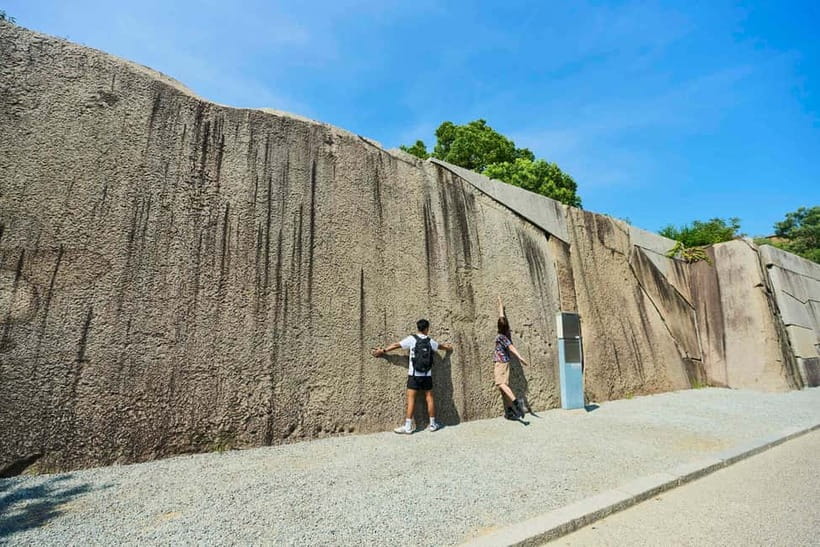
Osaka Castle’s stonework gets more attention here than it usually does on a quick independent visit. Your guide explains how the walls were angled to make them difficult to climb. The surfaces are not simply tall piles of stone. Their shape, slope, and careful construction all served a defensive purpose.
You also look for marks associated with the master craftsmen who worked on the walls. These details are easy to miss because they are not the main attraction. A guide who knows where to point can turn an ordinary-looking section of wall into evidence of the construction process and the teams behind it.
The largest stone is another strong stop. You learn how builders in the 16th century transported massive blocks into position. The value is not just the size of the stone. It gives you a practical sense of the labor, planning, and organization needed to build a fortress before modern lifting equipment.
I especially like this part for visitors who enjoy seeing how things were made. The tower is the glamorous photo subject, but the walls reveal more about the daily work and engineering that made the stronghold possible.
Hokoku Shrine and the Toyotomi connection
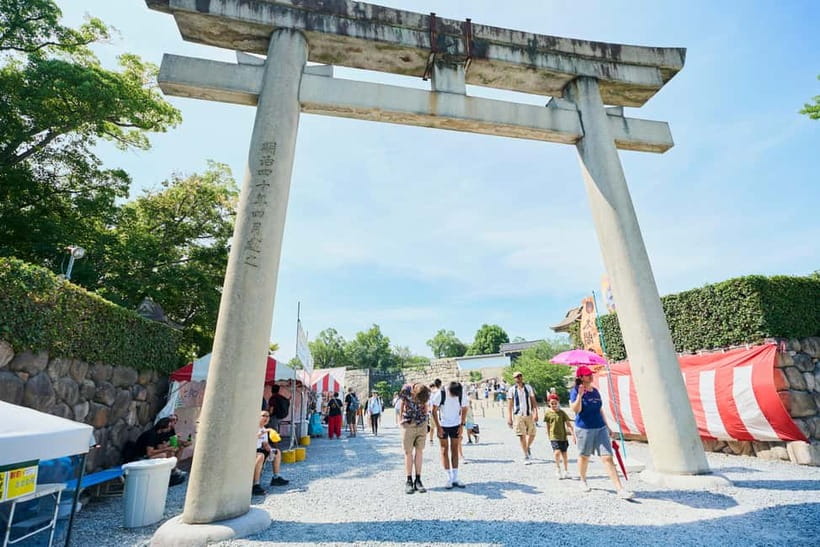
The itinerary includes about 20 minutes at Hokoku Shrine. The shrine helps connect the physical castle grounds with Toyotomi Hideyoshi, whose legacy is central to Osaka Castle’s story.
The tour frames the later conflict as a rivalry between the memory and political importance of Hideyoshi’s house and the ambition of Tokugawa Ieyasu. That rivalry gives the castle more than a simple builder-and-battle story. The site became tied to competing claims over power and legitimacy.
A visit to Hokoku Shrine can also provide a change of pace from walls and gates. It gives your guide room to explain cultural and historical context, including aspects of Japanese culture that several guides have worked into their explanations. You might also encounter a ceremony during your visit. A traditional Japanese wedding was taking place at the shrine during one afternoon tour, though that is clearly an occasional bonus rather than a promised part of the activity.
The shrine stop is relatively short. If your main goal is the castle tower and its views, you will appreciate that it does not take over the tour. If you want a long, quiet shrine visit, this experience is not designed for that.
More walking tours in Osaka:
- Osaka: Hotspots & Hidden Gems Walking Tour Private or Group
★ 4.9 · 1,300 reviews - Osaka Local Foodie Walking Tour in Dotonbori and Shinsekai
★ 5.0 · 985 reviews - Osaka Bar Hopping Night Walking Tour in Namba (3 bars, 6 tastes)
★ 5.0 · 958 reviews - Osaka: Deep Backstreets Walking Tour with Dinner Option
★ 4.9 · 902 reviews
Inside the tower: command post, museum, and city view
After the grounds, you enter Osaka Castle Tower with admission included. The tower is presented as a command post and final defensive position, not merely as a decorative landmark.
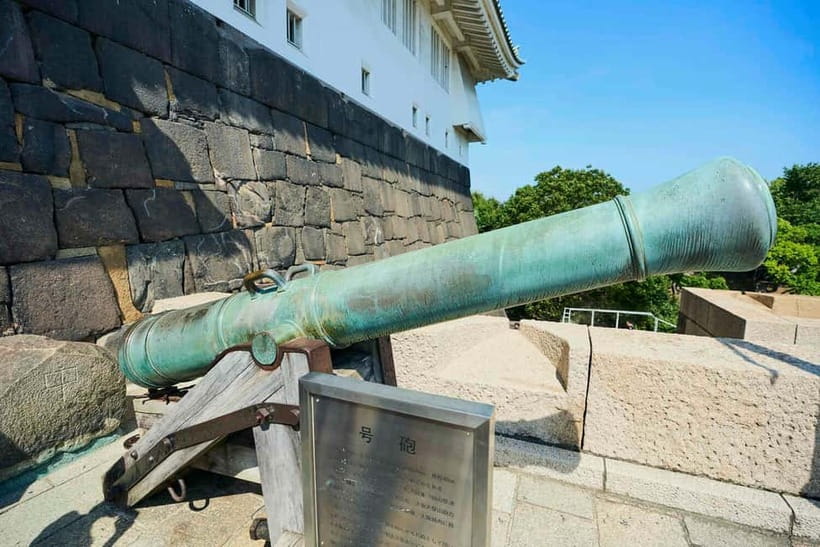
Your guide points out arrow slits and gun ports, details that show how the structure could support defense. Gold decoration also enters the story. Its use was not only about beauty or wealth. It could work as psychological warfare, projecting power to allies, enemies, and anyone approaching the castle.
The separate entrance is one of the tour’s clearest practical benefits. Osaka Castle can develop long lines, and some visitors specifically appreciated avoiding the main ticket queue and reaching the elevator more quickly. Starting earlier can help too. A 9 a.m. group noted that by around 11 a.m. the line had become much longer, so an early time is worth considering if you have a choice.
Once at the top, you get city views from the castle. The view is a welcome payoff after the historical groundwork, since you can see how the castle occupies a central position within modern Osaka. Bring a camera, but do not expect the view alone to justify the price. The main value is the explanation you receive before reaching it.
The castle museum floors are self-guided. Your guide does not walk you through each floor, and the included admission does not mean a private museum tour. The tour typically brings you to the tower, explains the major ideas, and leaves you time to explore the interior at your own pace. That arrangement suits people who prefer a clear introduction followed by independent browsing.
How Osaka Castle fell in 1614 and 1615
The tour ends its historical arc with the castle’s fall during the conflicts of 1614 and 1615. This is an important part of the visit because it challenges the idea of an invincible fortress.
A strong wall system can delay an enemy, control movement, and create a powerful impression. It cannot settle a political struggle by itself. The castle’s defenses mattered, but the Toyotomi and Tokugawa conflict involved leadership, ambition, and the changing balance of power.
Your guide uses the fortress to explain that difference. The castle was designed to resist attack, yet it eventually fell. That contrast makes the earlier stops more meaningful. The moats and gates were not pointless, but no military design can guarantee permanent control.
Several guides have been praised for putting the castle into the wider story of Osaka and Japan. Ken, for instance, has handled broader questions about the city and newer discoveries, while Spike has been noted for explaining the Tokugawa era and the symbolism of the castle. The exact style depends on your assigned guide, but the experience clearly favors story, context, and questions over a memorized list of dates.
The guides and the feel of the walk
This is a guide-led experience, and the guide can shape the day. Mao has been praised for being welcoming, passionate, and good at pointing out things you would otherwise walk past. Saya has been described as friendly, funny, and careful to make the history understandable. Yuta, Spike, Kaz, Ken, Yu, Kat, Ami, and others have also been noted for clear explanations and a relaxed manner.
Some departures may be small. A few people ended up with what felt like a private tour because no one else joined their scheduled group. You should not book on the assumption that you will receive a private guide, but a small group can allow more questions and a flexible pace.
The guides have also shown practical awareness. One waited for a family delayed by transport. Others adjusted around an injured family member or made time for photos without abandoning the historical explanation. That flexibility matters at a site where the walking, stairs, crowds, and photo stops can affect your pace.
English is the tour language. The activity is best for you if you want history explained in plain terms and enjoy asking questions. It is less suitable if you prefer complete solitude or want to spend the whole visit reading every museum display at your own speed.
Is $33 a fair price?
At $33 per person, this is not the cheapest way to enter Osaka Castle. The basic admission alone is less than that, so you are paying for the guide, route planning, historical interpretation, and separate entrance access.
I think the price is reasonable if Osaka Castle is an important stop on your Osaka schedule. The guide helps you understand the grounds before you enter the tower, and that context can prevent the visit from becoming a quick photo stop followed by a crowded museum walk. The potential time savings are also useful on a short trip.
The value is weaker if you already know the castle’s history, dislike group tours, or want a long self-guided museum visit. Since each floor is not guided, you may still want extra time after the 90-minute activity to read displays and take photos.
The tour’s free cancellation up to 24 hours ahead and reserve-now, pay-later option make it easier to fit into a changing itinerary. Those policies are practical, but the real question is how much help you want interpreting the site.
Practical details for a smoother visit
Wear comfortable shoes. You will walk through historical grounds, across routes designed around moats and gates, and into a large castle complex. Weather-appropriate clothing is also important because much of the experience takes place outdoors.
Allow a little extra time to reach the meeting point. The tour begins in front of Lawson S Otemae Rest House Store, not at any Lawson in the wider area. Use Google Maps to confirm the correct store and find the Local Guide Stars sign.
The advertised duration is 90 minutes. The route includes the castle grounds, Hokoku Shrine, the tower, photo stops, and some independent time. The pace can vary depending on crowd levels, questions, and how quickly the group moves through the entrance.
If you want a quieter start, consider an early departure. The 9 a.m. timing has been especially practical for avoiding the heaviest entry queues before late morning. You may also find fewer distractions while your guide explains the walls and gates.
Bring questions. The strongest part of this experience is not the number of facts delivered. It is the chance to ask why a wall slopes, how a gate controlled movement, or why gold appeared on a military building.
Who should book the Osaka Castle history walk?
I would book this tour if you are visiting Osaka Castle for the first time and want to understand what you are seeing. It is particularly good for people who enjoy architecture, military planning, Japanese political history, or carefully chosen photo stops.
Families can benefit from the storytelling and short changes of focus, though young children still need to handle the walking. The tour also suits solo visitors and small groups who want conversation without arranging a private guide.
I would skip it if your priority is an unhurried museum visit with no fixed route. You will not receive a guided explanation on every castle floor, and the 90-minute structure leaves only limited time for wandering during the organized portion.
For most first-time visitors, though, the combination of defensive design, Toyotomi and Tokugawa history, skip-the-line entry, and top-floor views makes $33 a sensible spend. Go early if possible, wear good shoes, and treat the tower as the final chapter rather than the whole story.
FAQ
Where does the Osaka Castle tour meet?
Meet in front of Lawson S Otemae Rest House Store. Several Lawson stores are nearby, so confirm the exact location on Google Maps and look for the Local Guide Stars sign.
How long does the activity last?
The advertised duration is 90 minutes. It includes guided walking around Osaka Castle, a stop at Hokoku Shrine, castle admission, photo stops, and some self-guided time.
Is Osaka Castle admission included?
Yes. An Osaka Castle Tower admission ticket is included in the price.
Is the castle museum guided floor by floor?
No. The guide explains the castle and its history during the walking portion, but guided tours of each museum floor are not included. You can explore the tower interior independently.
Is the tour in English?
Yes. The activity has a live English-speaking guide.
Does the tour skip the main line?
The experience includes access through a separate entrance. This can help you avoid the regular ticket line, especially during busy periods.
What should I wear?
Wear comfortable shoes and clothing suited to the weather. The activity includes walking through outdoor historical sites.
Can I cancel the booking?
You can cancel up to 24 hours in advance for a full refund. The reserve-now, pay-later option lets you book without paying immediately.
Just added around Osaka
- Discover Real Osaka: A Cultural Walk with Food & Drink★ 5.0 · 13 reviews
- From Osaka/Kyoto: Kyoto & Nara Day Trip with Optional Lunch★ 4.5 · 79 reviews
- Osaka 6hr Private Walking Tour with Government Licensed Guide★ 5.0 · 174 reviews
- Private Airport transfer Kansai Intl. Airport(KIX) to OSAKA CITY★ 4.5 · 12 reviews
- Osaka: Namba Local Food Walking Tour (Taste 15 Dishes)★ 5.0 · 20 reviews
- Osaka Delights: Traditional Japanese Food Tour★ 4.5 · 33 reviews
- Badminton in Osaka & Kyoto with Locals!★ 5.0 · 15 reviews
- From Osaka or Kyoto: Kyoto and Nara 1-Day Bus Tour★ 3.5 · 141 reviews
Osaka Tours, compared.
Shinsekai Food Tour with 13-15 Dishes at 5 Eateries
Read our review →
Osaka Food Tour: 13 Dishes at 5 Local Eateries
Read our review →
Hungry Osaka Street Food Tour:15 Tastings & 3 Drinks with a Local
Read our review →


Hotspots & Hidden Gems Walking Tour Private or Group
Read our review →Browse the lists this tour appears in