
Reviewed · OSAKA TOURS
Osaka Local Foodie Walking Tour in Dotonbori and Shinsekai
Osaka’s famous food districts make the perfect stage for a short introduction to local eating. This three-hour walk links old-fashioned Shinsekai with neon-lit Dotonbori, serving kushikatsu, takoyaki, and okonomiyaki along the way. You get food, neighborhood context, and a guide to help you make sense of Osaka’s casual dining culture.
I like two things here: the small maximum group of seven, which gives you a fair chance to ask questions, and the route itself, which joins several major Osaka sights in one evening. Guides such as Aika, Yuma, Michiko, and Justin have been praised for friendly explanations, food tips, and help with subway navigation.
The main caution is value. At $111.42 per person, this is not a cheap snack crawl. Some visitors find the food portions and number of stops too modest for the price, while others feel the guide and cultural explanation make up the difference.
Key points to know before booking
- Six kushikatsu skewers are included, along with one serving of okonomiyaki, one box of takoyaki, and three drinks.
- The route connects Shinsekai and Dotonbori, two of Osaka’s best-known food and nightlife areas.
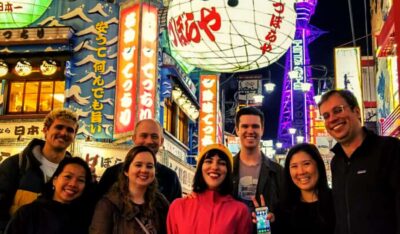
- Groups are limited to seven people, and a family of six may effectively receive a private experience if no one else books.
- Guides can shape the experience, with strong examples including Aika, Yuma, Emi, Michiko, and Justin.
- Vegetarian requests must be made by the day before, and gluten-free and vegan meals cannot be accommodated.
- A fast walking pace is possible, so wear comfortable shoes and arrive early at the meeting point.
Why Shinsekai is the right place to begin
The tour starts at a FamilyMart near Shin-Imamiya, in Osaka’s Nishinari Ward. This meeting point is practical for the general area but not especially memorable or easy for everyone to find, so I would allow extra time and check the map before setting out.
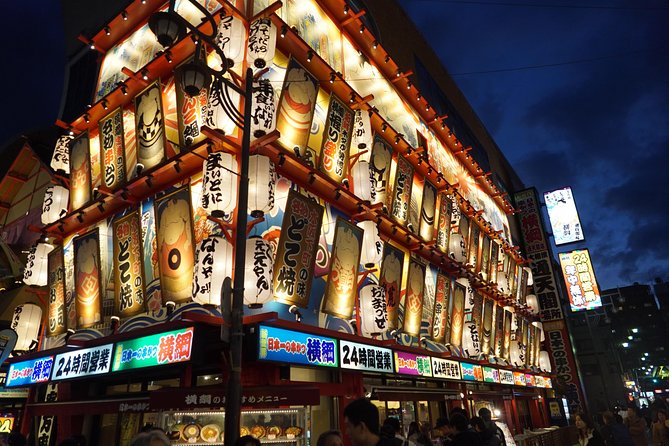
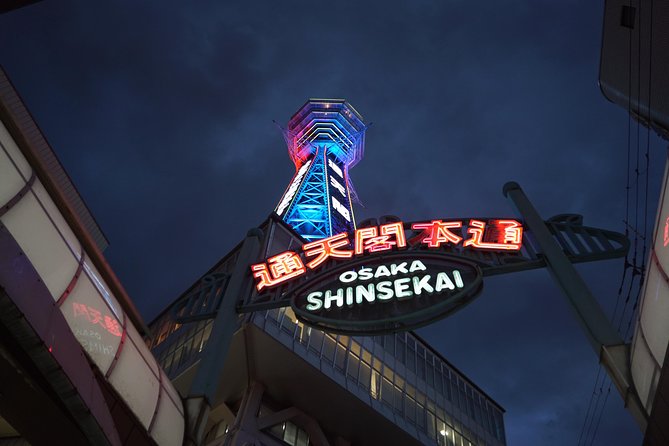
From there, you walk toward Tsutenkaku Tower, the familiar steel landmark above Shinsekai. The district has an older, slightly scruffy character that feels different from central Osaka’s shopping streets. The route includes Jan-Jan Yokocho, a narrow alley lined with small restaurants and local businesses.
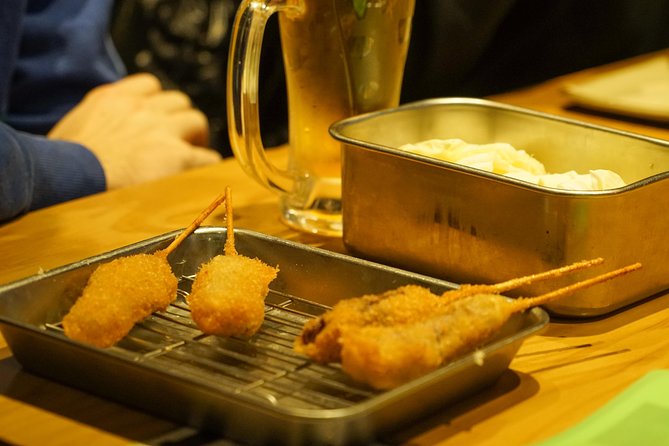
This is where the first major tasting takes place: six pieces of kushikatsu. These are meat and vegetables coated, skewered, and deep-fried. Osaka is closely linked with this food, and Shinsekai is one of the best places to connect the dish with its neighborhood setting.
You also receive drinks here, with alcohol and nonalcoholic options available. That matters because the tour includes three drinks in total, which helps explain part of the price for people who plan to drink. If you do not drink alcohol, the nonalcoholic choice keeps the stop useful, though some people may not want three drinks during a three-hour walk.
Tsutenkaku gives the area its visual anchor, but the point is not simply to take a tower photograph. Your guide may explain the Billiken statue and the local traditions tied to Shinsekai. The best guides, including Aika and Yuma, have been praised for connecting food with daily life rather than treating each stop as a quick photo opportunity.
More food tours in Osaka:
- Osaka: Shinsekai Food Tour with 13-15 Dishes at 5 Eateries
★ 4.8 · 2,204 reviews - Osaka Food Tour: 13 Dishes at 5 Local Eateries
★ 5.0 · 2,149 reviews - Hungry Osaka Street Food Tour:15 Tastings & 3 Drinks with a Local
★ 5.0 · 1,727 reviews
Jan-Jan Yokocho and the old Osaka atmosphere
One short section of the route is described as a museum-like alley, offering a look at how Osaka’s center appeared more than 80 years ago. That is a useful contrast with the modern signs and bright shopfronts around Dotonbori.
You should think of this part as a neighborhood walk with food, not a formal museum visit. The appeal comes from seeing the narrow lanes, older storefronts, and small details that are easy to miss when you move straight between major attractions.
The stop is listed at about 20 minutes, and there is no admission charge. Because the tour covers several districts in only three hours, the guide may keep you moving. One person specifically found the pace too fast, while another found the walk too slow. That split tells you something important: the experience depends partly on the guide and the group’s speed.
If you want long pauses for photographs, shopping, or detailed explanations at every corner, this may feel compressed. If you want a useful first look at Osaka’s popular south-side districts, the timing works better.
Crossing into Dotonbori and Doguyasuji
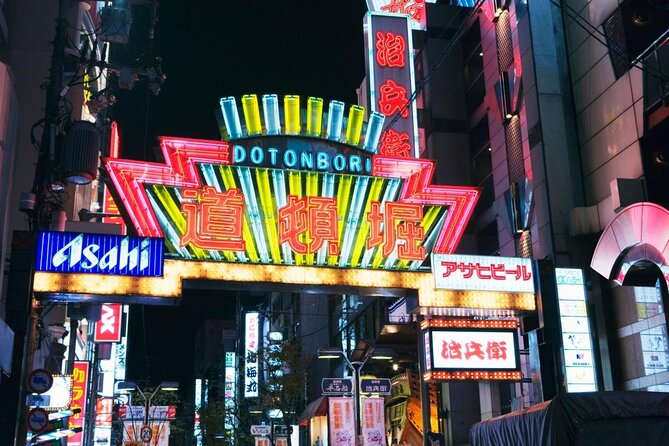
The route then shifts toward Dotonbori, Osaka’s best-known entertainment and food zone. Depending on the time of day, the plan includes souvenir shopping on Dōgu-ya-suji, including the Hōchō-ya knife shop, or an explanation of the area near Namba Grand Kagetsu followed by shopping nearby.
Doguyasuji is a sensible stop for anyone interested in Japanese kitchens. The street is known for cooking tools, restaurant supplies, knives, plastic food displays, and souvenirs. It gives the food theme more depth because you are not only eating Osaka dishes, you are also seeing the equipment and objects connected with them.
Do not count on a long shopping session. The itinerary allows limited time, and the group must continue toward the next food stop. Still, this is a useful place to note purchases for later. If you are considering a kitchen knife, remember that the tour is not designed as a dedicated knife-shopping visit, so you may need to return on your own.
The route ends at the Glico sign in Dotonbori, but the famous sign appears before the final stop as well. Your guide can help with photographs, and several guides have been praised for taking pictures during the walk. That small service is especially helpful when you are traveling as a couple or group and want everyone in the frame.
Hozen-ji Temple and Ukiyo-koji
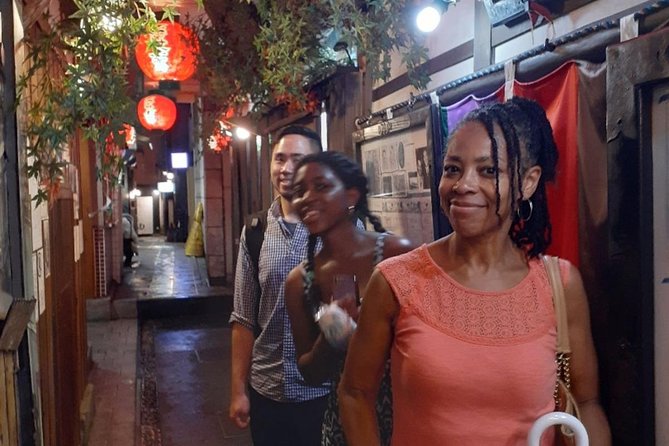
Hozen-ji Temple offers a quiet pause inside the crowded Dotonbori area. The route continues through Ukiyo-koji, a narrow lane with an older atmosphere, before more food is served.
This part helps prevent the tour from becoming only a march between restaurants. You get a shrine or temple setting, a small alley, and a chance to hear about local customs. The quality of the explanation depends on your guide. Emi, Michiko, Aika, and Yuma have been praised for tying temples, food, and everyday Osaka culture together.
Timing matters here. A temple visit after dark may feel atmospheric, but it can also make details harder to see. One person found the temple stop disappointing because it was dark. I would treat it as a brief cultural pause rather than a major sightseeing visit.
The itinerary also mentions additional snacks such as takoyaki and sweets, with an approximate extra cost of ¥500 in that section, while the included-food list specifies one box of takoyaki. Since the exact serving arrangement can vary, ask your guide early about what is included at each stop and which items may cost extra.
More walking tours in Osaka:
- Osaka: Hotspots & Hidden Gems Walking Tour Private or Group
★ 4.9 · 1,300 reviews - Osaka Bar Hopping Night Walking Tour in Namba (3 bars, 6 tastes)
★ 5.0 · 958 reviews - Osaka: Deep Backstreets Walking Tour with Dinner Option
★ 4.9 · 902 reviews - Ultimate Osaka Walking Tour: Castle, Dotonbori & Hidden Gems
★ 5.0 · 862 reviews
What you actually eat: three Osaka classics
The food is the heart of the experience, but the menu is fairly focused. You receive:
- Six kushikatsu skewers
- One piece or serving of okonomiyaki
- One box of takoyaki
- Three drinks
- Possible extra snacks such as sweets, depending on the route
Kushikatsu is the most strongly tied to Shinsekai. Expect fried skewers rather than a refined tasting menu. The appeal is the crisp coating, simple sauces, and wide mix of meat and vegetables. If you avoid pork, ask about the ingredients before ordering.
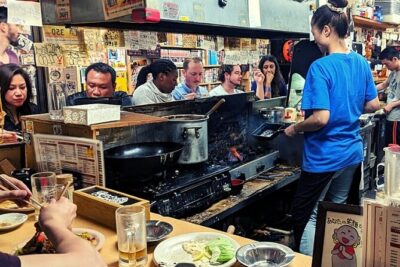
Okonomiyaki is Osaka’s savory pancake, built around the idea of as you like it. The dish may include batter, cabbage, toppings, and sauce, and one highly praised part of the experience was getting to grill the okonomiyaki personally. That hands-on element can make this stop more memorable than simply receiving a finished plate.
Takoyaki consists of round batter-based pieces with tender octopus and other ingredients inside. It is hot, soft, and easy to underestimate. Give it time to cool before eating. Some people love the dish immediately, while others find the octopus or texture less appealing.
The menu leans heavily toward fried and griddled food. That is authentic to the casual Osaka street-food theme, but it is not a broad survey of Japanese cuisine. If you expect sushi, sashimi, noodles, delicate sweets, or many small tastings from separate stalls, you may find the selection narrow.
This is also where the price question becomes important. Some people consider the included food plentiful, especially with three drinks. Others feel that two main food venues and several set dishes do not justify $111.42. I would book it for the guide and route first, and for the food quantity second.
The guide can make or break the walk
MagicalTrip assigns different local guides, so you cannot assume the same style on every date. Aika has been praised for lively conversation, food suggestions, photographs, and practical advice on snacks to take home. Yuma has been praised for clear English, warmth, and explanations of how dishes are made.
Michiko, often called Mich, has been described as strong on local history and food choices. Emi has received especially warm praise for linking restaurants and common eating habits to ordinary life in Osaka. Justin has helped people navigate the subway after the tour, a welcome touch if this is your first evening in the city.
The less successful experiences point to a real limitation. One guide offered information mainly when asked, with little narration during walks. Another was friendly but still gaining experience. If you want a tightly scripted food lecture with expert-level detail at every stop, results may vary.
You can improve your experience by asking direct questions. Ask why a dish matters in Osaka, how locals eat it, what sauce or topping is being used, and where the guide would eat on another night. The small group makes that conversation possible.
How much walking and waiting should you expect?
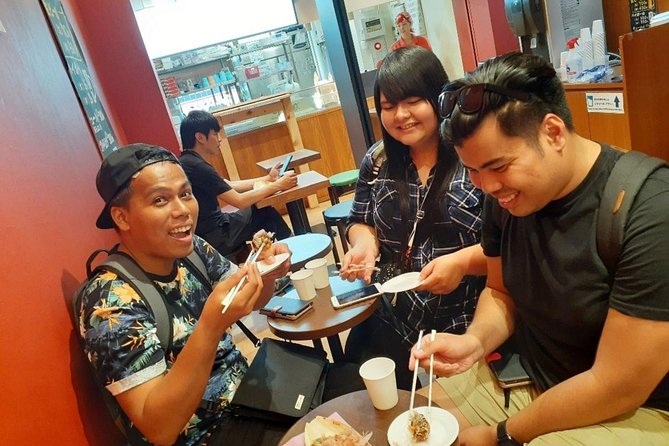
The official duration is about three hours. The route includes Shinsekai, Tsutenkaku, Dotonbori, Hozen-ji Temple, Ukiyo-koji, Doguyasuji, and the Glico sign. That is enough ground to cover, even though the listed walking segments are short.
The tour is not a strenuous hike, but you will spend much of the time on your feet in crowded streets and narrow alleys. Wear shoes that handle pavement well. Summer temperatures in Osaka can reach 40°C, while winter lows can fall to -5°C, so your clothing choice matters more than the short duration suggests.
Arrive early. The group leaves on time, and late arrivals may not be able to join, reschedule, or receive a refund. The meeting point has been described as less accessible than expected, so do not leave navigation until the last few minutes.
The tour includes a transportation fee of 190 yen as a separate cost. That is small compared with the booking price, but you should still carry some yen or be prepared for the transport arrangement.
Dietary limits deserve careful attention
Gluten-free and vegan diets cannot be accommodated. Vegetarian meals are possible only if you select the vegetarian option when booking or request it no later than the day before.
There is an important catch: the kushikatsu restaurant still uses pork broth in its dashi, including for vegetarian kushikatsu. If you cannot consume dashi, notify the operator in advance so another vegetarian dish can be prepared.
Allergies must also be reported at least one day before the tour. The operator cannot guarantee an allergy-free meal or substitutions because the food is prepared in kitchens it does not control. This is not the right booking for anyone who needs strict separation from allergens.
Smoking may be allowed at some venues, and the route may not be changed to avoid those places. Keep that in mind if smoke bothers you.
Who gets the most from this Osaka food walk?
I would recommend it to first-time visitors who want an easy introduction to Osaka’s southern districts. It combines food, photos, local streets, a temple, shopping, and basic cultural context without asking you to plan several reservations yourself.
It also suits repeat visitors who have seen the major sights but want a guide through Shinsekai and Dotonbori. The route can help you get your bearings, and guides often add suggestions for later meals and snacks.
Families can do well here, especially if the group is small. A family of six could end up with a private-feeling outing if no other bookings join. All ages are welcome, though parents should note that the food is hot, fried, and served in busy public areas.
I would hesitate if your main goal is serious food research. The menu is limited, several dishes are fried or griddled, and the experience may use popular venues rather than obscure local counters. You may prefer an alternative that offers smaller portions at more restaurants.
Should you book the Dotonbori and Shinsekai tour?
Book it if you value a friendly local guide, want to sample Osaka’s three signature foods, and prefer a ready-made route through two busy districts. The strongest version of this tour includes a guide who explains local habits, helps with photographs, answers questions, and adds useful advice for the rest of your stay.
Skip it if $111.42 feels high for kushikatsu, okonomiyaki, takoyaki, and drinks, or if you want a wider menu and more food stops. You can explore Dotonbori and Shinsekai independently, especially if you are comfortable choosing restaurants and reading menus.
My practical call: this is best treated as a guided neighborhood orientation with substantial tastings, not an intensive food crawl. Book early in your Osaka visit, arrive hungry but not starved, wear good shoes, and send all dietary requests before the day of the tour.
FAQ
How long does the Osaka Local Foodie Walking Tour last?
The tour lasts approximately three hours.
What foods are included?
The included menu has six kushikatsu skewers, one piece or serving of okonomiyaki, one box of takoyaki, and three drinks.
Are alcoholic drinks included?
Yes. The three included drinks can be alcoholic or nonalcoholic.
How many people can join the tour?
The maximum group size is seven travelers.
Where does the tour start?
It starts at FamilyMart Japan, 1-chōme 17-6 Sannō, Nishinari Ward, Osaka, 557-0001.
Where does the tour end?
The tour ends at the Glico Sign in Dotonbori, at 1-chōme-10-3 Dōtonbori, Chuo Ward, Osaka, 542-0071.
Can vegetarians join?
Yes, but you must choose the vegetarian option when booking or request it by the day before. Pork broth is still used in the vegetarian kushikatsu unless another dish is arranged in advance.
Can the tour accommodate vegan or gluten-free diets?
No. Gluten-free and vegan diets cannot be accommodated.
What happens if I arrive late?
The tour starts on time. If you arrive late and miss the group, you cannot join the tour, reschedule, or receive a refund.
Just added around Osaka
- Discover Real Osaka: A Cultural Walk with Food & Drink★ 5.0 · 13 reviews
- From Osaka/Kyoto: Kyoto & Nara Day Trip with Optional Lunch★ 4.5 · 79 reviews
- Osaka 6hr Private Walking Tour with Government Licensed Guide★ 5.0 · 174 reviews
- Private Airport transfer Kansai Intl. Airport(KIX) to OSAKA CITY★ 4.5 · 12 reviews
- Osaka: Namba Local Food Walking Tour (Taste 15 Dishes)★ 5.0 · 20 reviews
- Osaka Delights: Traditional Japanese Food Tour★ 4.5 · 33 reviews
- 1 Day Takoyaki Making and Osaka Castle Walking Tour★ 5.0 · 15 reviews
- Badminton in Osaka & Kyoto with Locals!★ 5.0 · 15 reviews
Osaka Tours, compared.
Shinsekai Food Tour with 13-15 Dishes at 5 Eateries
Read our review →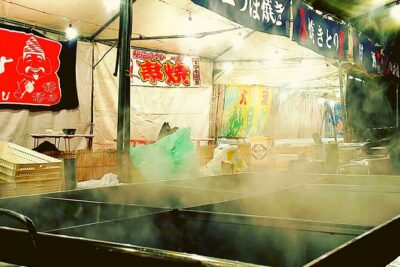
Osaka Food Tour: 13 Dishes at 5 Local Eateries
Read our review →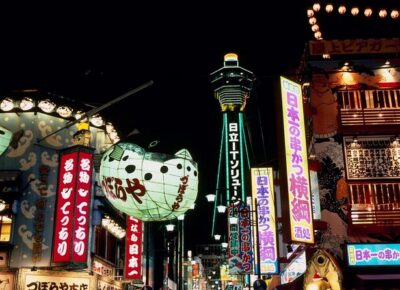
Hungry Osaka Street Food Tour:15 Tastings & 3 Drinks with a Local
Read our review →
Hotspots & Hidden Gems Walking Tour Private or Group
Read our review →Browse the lists this tour appears in