
Reviewed · OSAKA TOURS
Osaka: Dark Side of Osaka Night Walking Tour
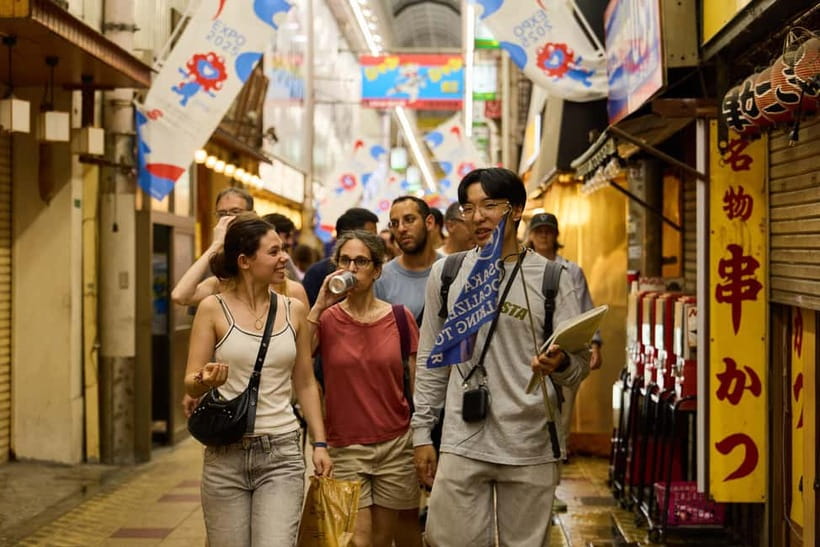
Osaka’s shadowed neighborhoods tell a story that bright signs and famous food streets cannot. This two-hour evening walk takes you through Shinsekai, Nishinari, and Tobita Shinchi, explaining poverty, day labor, sex work, changing city life, and the customs that shape these districts.
I like the way the tour connects Tsutenkaku Tower and Jyanjyan Yokocho with modern Osaka’s harder edges. I also like the small details, such as the meaning of a painted torii on a wall, which can signal that people should not urinate there. The main consideration is the subject matter: parts of the walk can be confronting, and this is not a family outing.
Key points at a glance
- Shinsekai after dark: See Osaka’s retro entertainment quarter, created in 1912 with design ideas inspired by Paris and Coney Island.
- A candid social-history walk: Learn about Nishinari, day labor, poverty, urban change, and other subjects often left out of standard sightseeing tours.
- Tobita Shinchi: Pass through Osaka’s largest and most famous red-light district, where discretion and strict local customs matter.
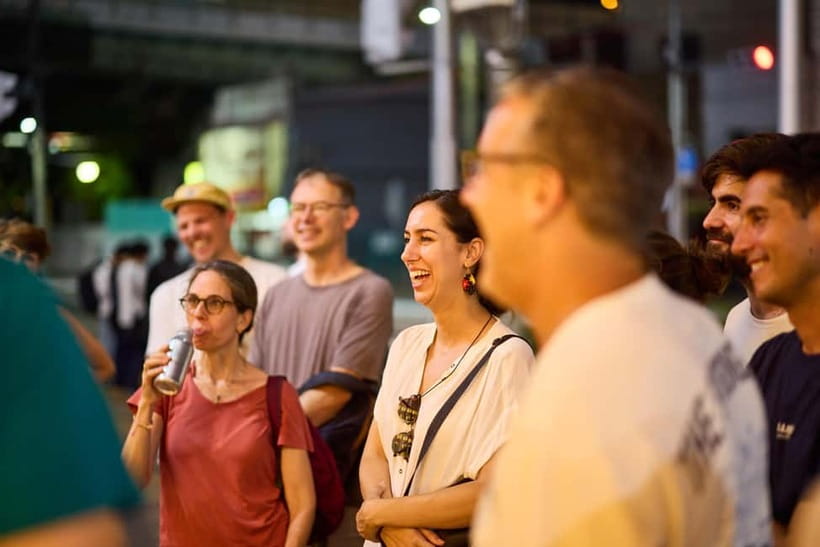
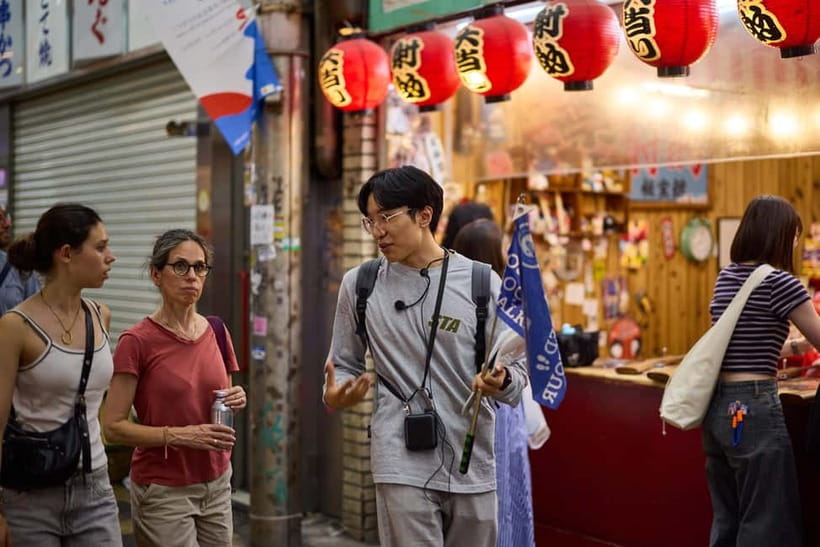
- Strong English-speaking guides: Jay, Rico, and Matt have led especially engaging walks, with explanations shaped by history, observation, and personal experience.
- Small details and local advice: The tour can include unusual signs, street customs, restaurant tips, and practical suggestions for the rest of your Osaka stay.
- Good value at $25: Two hours with a live guide costs little compared with a private tour, though you pay for conversation and context rather than attractions you enter.
Why this Osaka walk is different
Many Osaka tours stay on the easy path: neon streets, market food, temples, and shopping arcades. This one looks at the city from ground level, in districts shaped by working-class life and forms of entertainment that Japan usually keeps discreet.
That does not mean the walk is designed to shock you. The best version of this tour is a social-history lesson delivered while you are actually standing in the streets being discussed. You see the setting, notice how the area is used, and then hear how its past connects with present-day Osaka.
The English-speaking guides are central to the experience. Jay is described as warm, friendly, and attentive to questions. Rico has been praised for clear explanations, different points of view, and useful restaurant suggestions. Matt brings particular interest in Osaka’s modern history and handles sensitive subjects with care. Guide assignments can change, so you should not book expecting one specific person.
The tone also depends on your group. This is a walking conversation, not a scripted show. You will get the most from it if you ask questions and are willing to listen to subjects that may feel uncomfortable.
More walking tours in Osaka:
- Osaka: Hotspots & Hidden Gems Walking Tour Private or Group
★ 4.9 · 1,300 reviews - Osaka Local Foodie Walking Tour in Dotonbori and Shinsekai
★ 5.0 · 985 reviews - Osaka Bar Hopping Night Walking Tour in Namba (3 bars, 6 tastes)
★ 5.0 · 958 reviews
Starting under the Giant Penguin
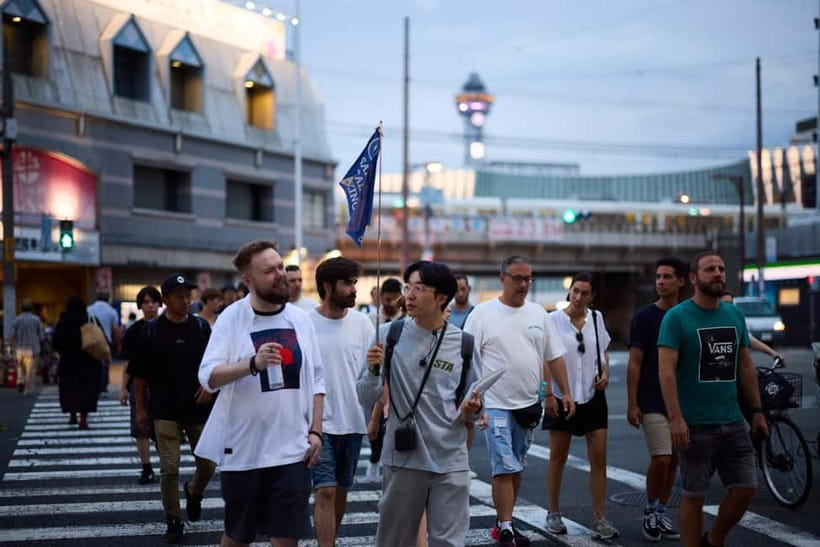
The meeting point is easy to identify: under the Giant Penguin at MEGA Don Quijote Shinsekai. Look for a guide holding a GetYourGuide sign. The walk begins here and finishes at Tsūtenkaku, so you are not returned to the starting point.
That arrangement works well for an evening in the area. You can begin near one of Shinsekai’s most recognizable shopping landmarks and end beside the tower, with the option of finding food nearby afterward. The walk itself does not include food or drinks, so plan to eat before or after rather than expecting tastings along the way.
Allow the full two hours. The route includes several stops of varying length, with time for explanation and questions. Comfortable walking shoes matter, and you should be ready for rain, heat, or cooler evening conditions. The tour is not suitable for wheelchair users because of the walking route and surroundings.
Shinsekai, Osaka’s planned New World
Shinsekai means New World, and its original idea was every bit as ambitious as the name suggests. Created in 1912, the district was designed as a modern entertainment area influenced by Europe and the United States. Its southern section drew inspiration from Paris, while the northern part looked toward New York’s Coney Island.
The grand plan has faded, but Shinsekai still feels unlike polished commercial districts such as Umeda. Its appeal comes from retro signs, old eateries, narrow lanes, and a slightly rough-around-the-edges atmosphere. Tsutenkaku Tower provides the visual anchor, rising above the neighborhood like a local mascot.
Your guide can help you read this setting in two ways. First, there is the entertaining side: Osaka’s love of food, amusement, humor, and inexpensive nightlife. Second, there is the harder story of how districts built for leisure can age, lose investment, and become associated with low incomes and informal work.
I like this opening because it gives you a frame for the rest of the walk. You are not simply being shown an unusual neighborhood. You are seeing how urban dreams change over time.
Nishinari and the working-class story

The route continues into Nishinari, a southern Osaka district long associated with day laborers and working-class residents. Its reputation can be rough, but the area is not a single simple story. It has faced hardship, while also changing as budget visitors and people interested in less polished parts of cities began to arrive.
This is where a good guide makes a major difference. A quick walk through the streets can encourage lazy assumptions. An informed explanation can show how employment, housing, age, poverty, and public perception affect a neighborhood.
You may hear about the district’s past and its changing present, with time to ask how the area fits into wider Japanese society. The tour description promises a look at the less visible side of Japan, so expect the conversation to move beyond architecture and sightseeing.
Some subjects may be confronting. That is not a flaw, but it is a reason to choose this walk carefully. If you want a cheerful evening focused on food and photographs, pick another Osaka tour. If you want to understand how people live outside the postcard version of Japan, Nishinari is the reason to come.
More evenings out in Osaka:
- Osaka After Dark: Small-Group Night Food Tour (Max 6)
★ 4.5 · 245 reviews - OSAKA NIGHT FUSION Japanese Taiko Kabuki Samurai Dance Show
★ 4.8 · 155 reviews - Osaka: Bar-Hopping Night Tour in Namba
★ 4.7 · 117 reviews - 3.5h Osaka Night guided Local Bar Hopping, Sake & Karaoke
★ 5.0 · 27 reviews
Jyanjyan Yokocho and the old Osaka mood
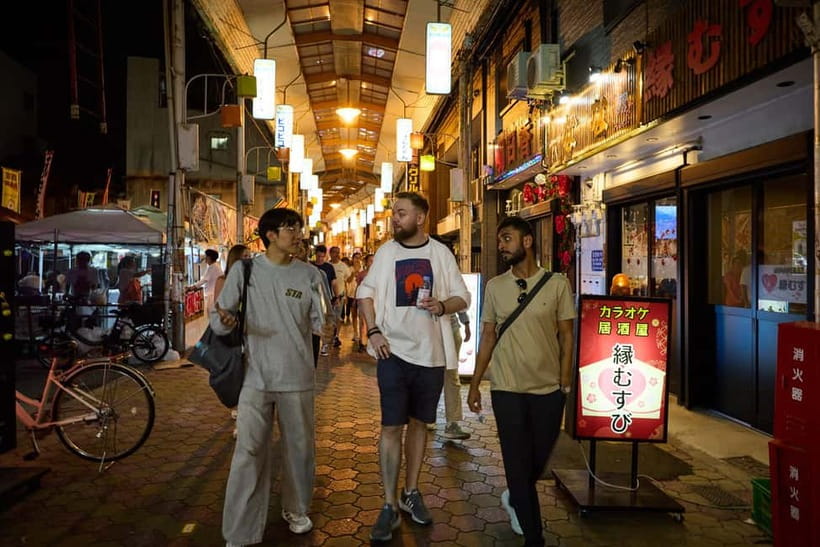
Jyanjyan Yokocho is a narrow shopping and dining street close to Tsutenkaku. Its old-style eateries, bars, and shops create a strong sense of mid-20th-century Osaka, when neighborhood dining streets were built around familiar food, regular customers, and compact storefronts.
This stop adds texture to the social history. The tour is not only about difficult subjects and red-light districts. It also shows the everyday pleasures that keep Shinsekai appealing: casual meals, local drinking spots, old signs, and a street scale that feels more personal than a large shopping center.
Your guide may point out places to eat after the walk. One useful tip from the tour experience is to treat the ending as a chance to sample Shinsekai food independently. Since meals are not included, you remain free to choose what suits your budget and appetite.
Do not expect a food tour, though. You are looking at the street and hearing its story, not stopping for a full meal at every corner. The advantage is a better sense of place. The drawback is that food-focused visitors may want to budget extra time afterward.
Tobita Shinchi and Osaka’s discreet nightlife
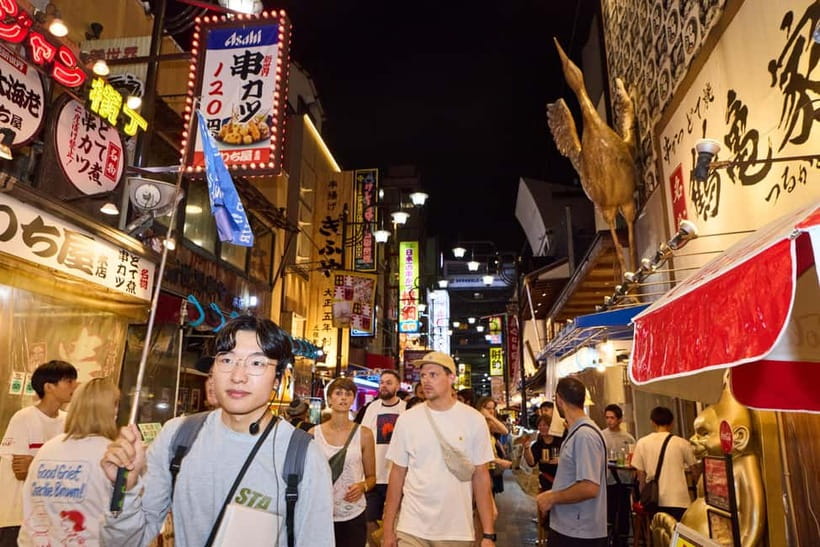
Tobita Shinchi is the most sensitive part of the route. It is Osaka’s largest and best-known red-light district, with more than a century of history. Its buildings, storefronts, and working customs reflect an area governed by tradition and discretion.
You should follow your guide’s instructions closely here. Be respectful, keep your voice down, and do not treat the neighborhood as a theme park. The people who live and work there are not scenery, and photography can be inappropriate even when no explicit rule is posted.
The value of visiting with a guide is context. Without explanation, you may notice unusual façades or carefully arranged entrances without understanding their purpose. With a careful guide, you can learn how the district operates as part of Osaka’s urban culture, and why public discussion around it tends to be indirect.
This stop may not suit everyone. The tour is restricted to people aged 18 and over, and that limit is sensible. Adults who are curious about social customs and city history should still arrive with tact. Anyone hoping for sensational stories or voyeuristic entertainment should skip it.
What the two-hour pace feels like
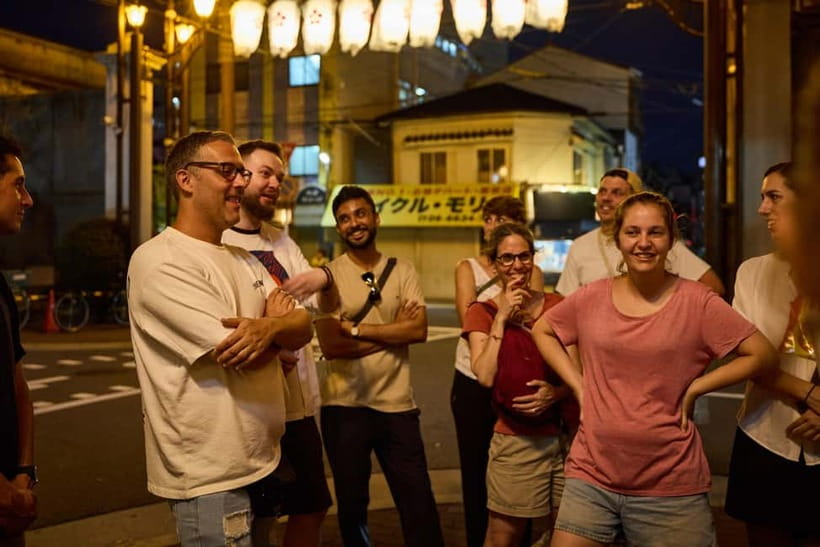
The route is divided into several guided sections, including longer half-hour visits and shorter ten or twenty-minute stops. That pacing gives the guide room to explain the main districts without turning the evening into a long march.
You will be on your feet for most of the experience. Comfortable shoes are a simple but important choice, especially if the weather is wet. Osaka evenings can change quickly, so carry suitable rain protection and dress for the season.
A small group can make the walk much better. One reported group had six people, which allowed plenty of questions without slowing the route. The exact group size is not specified, so do not assume every departure will be that intimate.
English ability also matters. Matt has been described as speaking quickly, which was fine for some English speakers but could be harder if English is not your strongest language. If you need time to process complex historical or social explanations, ask your guide to repeat or rephrase a point.
The value of $25
At $25 per person, this is inexpensive for a two-hour guided experience in Osaka. You are not paying for entry tickets, transport, or included food. You are paying for access to a route that can be difficult to interpret on your own and for a guide who can explain sensitive local subjects in English.
I think the price works best for three kinds of visitors. First, it suits a first-time Osaka visitor who wants something beyond Dotonbori and the castle. Second, it works for repeat visitors who have already seen the major sights. Third, it is useful for anyone interested in modern history, poverty, urban change, or the social rules around nightlife.
The value is less clear if you dislike walking or do not enjoy guided discussion. There is no formal attraction admission included, and the tour cannot make the subject matter comfortable for everyone. You should see it as a low-cost interpretive walk, not a collection of ticketed sights.
The flexible booking terms add practical value. You can cancel up to 24 hours before the start for a full refund, and reserve now while paying later. Starting times vary, so check availability for your date.
Respect, safety, and good manners
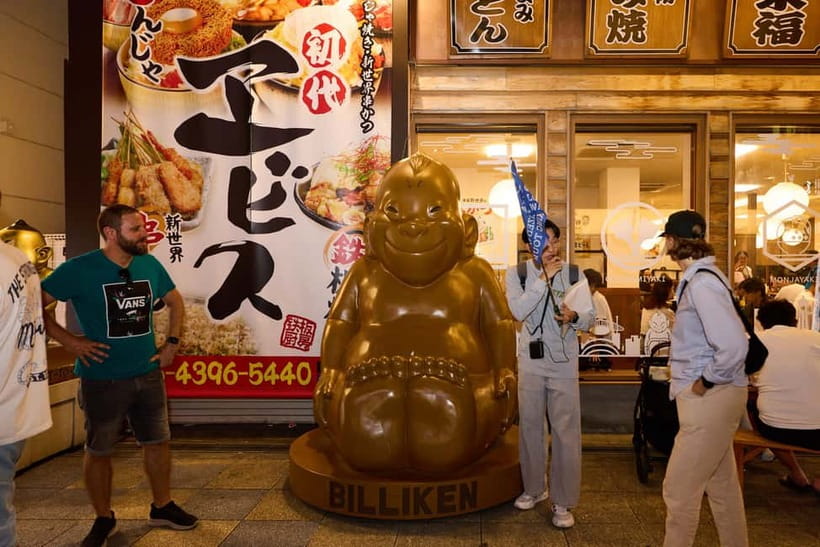
This is a public neighborhood, not an actors’ set. The most important rule is simple: observe without intruding. Avoid photographing people, shopfront activity, or private spaces unless your guide clearly says it is acceptable.
Respect local customs and regulations throughout the walk. Smoking is not allowed, and alcoholic drinks are not allowed in the vehicle, although the experience itself is a walking tour. The supplied information does not promise a restroom stop, food break, or shelter from bad weather, so prepare before meeting the guide.
The phrase historic getto area appears in the tour description, but you should understand that this language can be loaded and may not neatly describe the people who live in these districts today. Listen for the guide’s explanation rather than reducing Nishinari or Tobita Shinchi to a label.
That approach is part of the lesson. Osaka’s less polished neighborhoods deserve more care, not less, because hardship and nightlife can attract careless curiosity.
Who should book this walk
I would recommend it to adults who want social context, unusual neighborhoods, and a candid look at Osaka beyond the usual sightseeing circuit. It is especially useful if you enjoy asking questions and prefer local streets to formal museums.
It is a good match for:
- First-time visitors who want a different introduction to southern Osaka
- Repeat visitors seeking a new side of the city
- People interested in modern Japanese history and urban change
- Adults comfortable discussing poverty, day labor, and sex work
- Visitors who value a guide’s interpretation more than included attractions
I would not choose it for children, wheelchair users, or anyone looking for a relaxed food walk. It may also disappoint visitors who want lots of time inside restaurants or shops. The route is about streets, stories, and observation.
Should you book the Dark Side of Osaka walk?
Book it if you want Osaka explained honestly, with its old entertainment quarters and working-class districts treated as part of the city rather than brushed aside. The $25 price is fair, the two-hour length is manageable, and guides such as Jay, Rico, and Matt bring the warmth and detail needed for difficult material.
Skip it if you want a polished highlight tour or feel uneasy about visiting a red-light district. The strongest reason to go is not shock value. It is the chance to understand how history, poverty, nightlife, and ordinary neighborhood life sit side by side in Osaka.
FAQ
Where does the tour meet?
Meet under the Giant Penguin at MEGA Don Quijote Shinsekai. Your English-speaking guide will be holding a GetYourGuide sign.
Where does the tour finish?
The walk finishes at Tsūtenkaku.
How long does the tour last?
The tour lasts two hours.
How much does the experience cost?
The listed price is $25 per person.
Is the tour conducted in English?
Yes. The tour includes a live English-speaking guide.
What areas does the tour visit?
The route covers Shinsekai, Nishinari, Jyanjyan Yokocho, Tobita Shinchi, and other nearby points of interest.
Is food included?
No. Food and drinks are not included.
Is hotel pickup available?
No. Hotel pickup and drop-off are not included.
Can children join the tour?
No. The experience is not suitable for children under 18.
Is the tour suitable for wheelchair users?
No. The tour is not suitable for wheelchair users.
What should I wear?
Wear comfortable walking shoes and prepare for changing weather conditions.
Can I cancel my booking?
Yes. You can cancel up to 24 hours in advance for a full refund. You can also reserve now and pay later.
Just added around Osaka
- Discover Real Osaka: A Cultural Walk with Food & Drink★ 5.0 · 13 reviews
- From Osaka/Kyoto: Kyoto & Nara Day Trip with Optional Lunch★ 4.5 · 79 reviews
- Osaka 6hr Private Walking Tour with Government Licensed Guide★ 5.0 · 174 reviews
- Private Airport transfer Kansai Intl. Airport(KIX) to OSAKA CITY★ 4.5 · 12 reviews
- Osaka: Namba Local Food Walking Tour (Taste 15 Dishes)★ 5.0 · 20 reviews
- Osaka Delights: Traditional Japanese Food Tour★ 4.5 · 33 reviews
- 1 Day Takoyaki Making and Osaka Castle Walking Tour★ 5.0 · 15 reviews
- Badminton in Osaka & Kyoto with Locals!★ 5.0 · 15 reviews
Osaka Tours, compared.


Shinsekai Food Tour with 13-15 Dishes at 5 Eateries
Read our review →
Osaka Food Tour: 13 Dishes at 5 Local Eateries
Read our review →
Hungry Osaka Street Food Tour:15 Tastings & 3 Drinks with a Local
Read our review →



Hotspots & Hidden Gems Walking Tour Private or Group
Read our review →Browse the lists this tour appears in