
Reviewed · OSAKA TOURS
Osaka: Walking Tour and Top Highlights
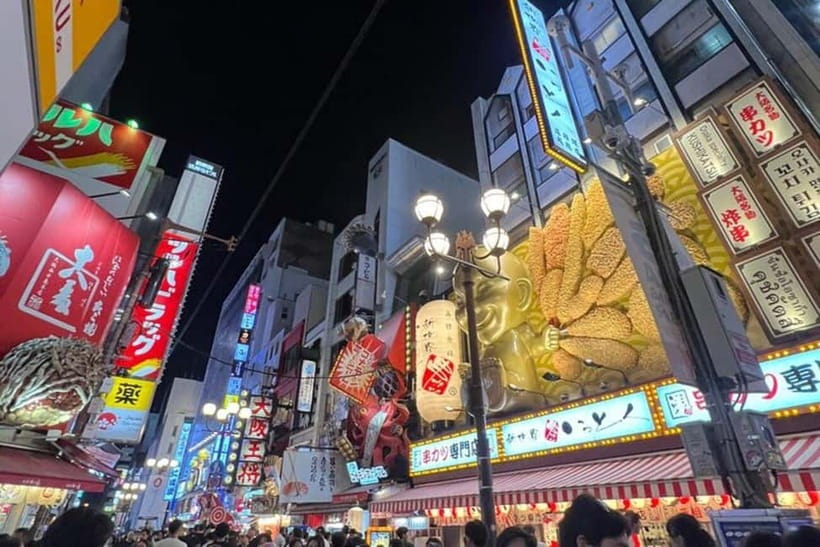
Osaka’s best feature is its variety, and this four-hour tour packs a lot of it into one route. You move from the grand stone walls of Osaka Castle to the retro streets of Shinsekai, then on to ancient Shitennoji, Kuromon Market, and the neon signs of Dotonbori.
I like the way the tour uses the subway to connect far-flung sights, and I like the practical help from guides such as Minori, Kenji, Nagi, Buchi, and Haru. They take photos, explain local customs, answer questions, and point out places to eat after the tour. The drawback is pace: with five subway rides and several short stops, you see a lot but do not linger long.
Key points
- Six major Osaka sights in four hours: The route covers Osaka Castle, Hokoku Shrine, Shinsekai, Shitennoji, Kuromon Market, and Dotonbori.
- A useful first-day orientation: You learn how Osaka’s subway works while getting a quick sense of its historic districts, food quarters, and shopping areas.
- Food is part of the route: Kuromon Market offers fresh seafood, street food, snacks, and local treats, though food costs extra.
- Guides help with more than history: Expect restaurant suggestions, shopping tips, photo help, and explanations of everyday life in Osaka.
- The tour costs $64: Add about 800 yen for subway fares, 1,200 yen if you enter Osaka Castle, and extra money for food and drinks.
- Plan for steady walking: Comfortable shoes, cash, and rain protection matter. The tour is not suited to people with mobility impairments, recent surgery, or those over 75.
A fast route through Osaka’s many personalities
This is not a slow museum tour. It is a city sampler, designed to show you how Osaka changes from district to district.
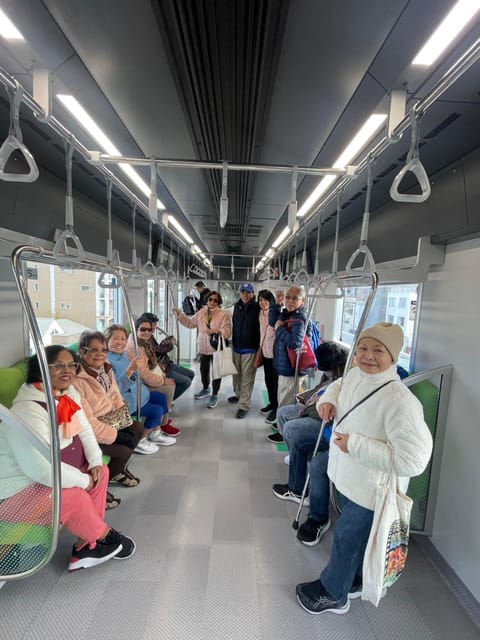
You begin near Namba Walk, an underground shopping area close to the city’s main restaurant and shopping zones. From there, the guide leads you onto the subway and starts the route toward Osaka Castle. The whole tour includes roughly 55 minutes on the subway, about 10 minutes of walking between some stops, and a series of visits that range from 10 to 50 minutes.
That structure works well if you have only a short stay in Osaka. You can see major sights without spending time working out train connections or guessing which station exit to use. The trade-off is clear: each stop gives you an introduction rather than a full visit.
The tour has earned a 4.8 rating from 104 reviews, and the strongest pattern is the guides’ personal care. Minori has been praised for keeping groups together on the subway and allowing free time for photos and shopping. Kenji has been singled out for clear explanations and restaurant suggestions. Buchi, Nagi, Haru, and others are also noted for friendly service, patience, and flexibility.
More walking tours in Osaka:
- Osaka: Hotspots & Hidden Gems Walking Tour Private or Group
★ 4.9 · 1,300 reviews - Osaka Local Foodie Walking Tour in Dotonbori and Shinsekai
★ 5.0 · 985 reviews - Osaka Bar Hopping Night Walking Tour in Namba (3 bars, 6 tastes)
★ 5.0 · 958 reviews
Osaka Castle: broad views and a short historical stop
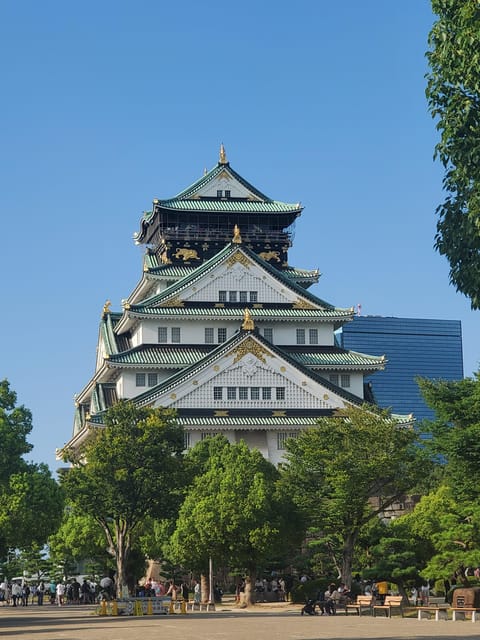
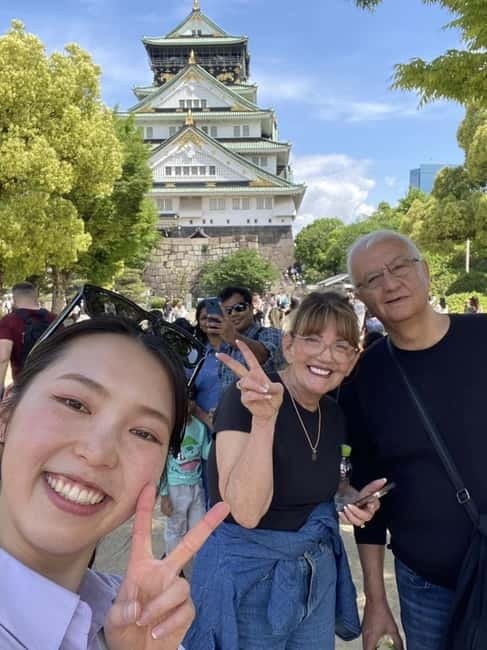
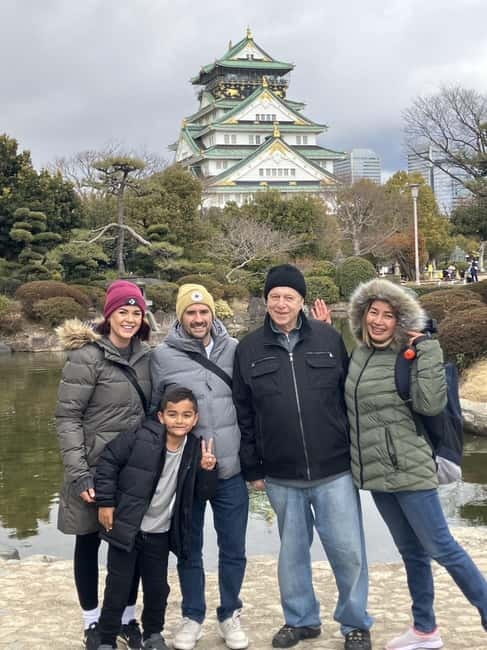
Osaka Castle is the longest stop, at about 50 minutes. You have time for photos, the castle grounds, and the surrounding park. The setting gives you a useful introduction to Osaka’s past, with broad views and formal gardens around one of Japan’s best-known landmarks.
The tour includes the grounds and a photo stop. Entry to the castle itself costs an additional 1,200 yen, so check the option and your priorities before you go. If you want to spend serious time inside, viewing displays and moving through the building at leisure, this schedule may feel tight.
I would treat the castle stop as a strong outdoor introduction. The guide can explain the importance of the site, point out good photo angles, and keep the visit moving. If the weather is clear, the views are especially worthwhile. If you have already visited Osaka Castle on a previous trip, you may prefer to use this time for the park and exterior rather than paying the entrance fee.
Hokoku Shrine adds a quieter pause
A 15-minute guided visit to Hokoku Shrine follows the castle. This is a small but useful change of mood after the open grounds and city views.
The shrine gives the guide a chance to explain another part of Osaka’s religious and political story without asking you to spend another long block of time at a major attraction. It is mainly a photo and information stop, so do not expect a long ritual visit or extended garden time.
This brief stop also shows why a guide helps on a packed route. Without context, a short shrine visit can feel like just another building. With an explanation, it becomes part of the larger picture of Osaka.
Shinsekai and Tsutenkaku: Osaka’s old-school side
After another subway ride, the tour reaches Shinsekai, Osaka’s New World district. You get about 20 minutes for photos, free time, shopping, and a walk through the area.
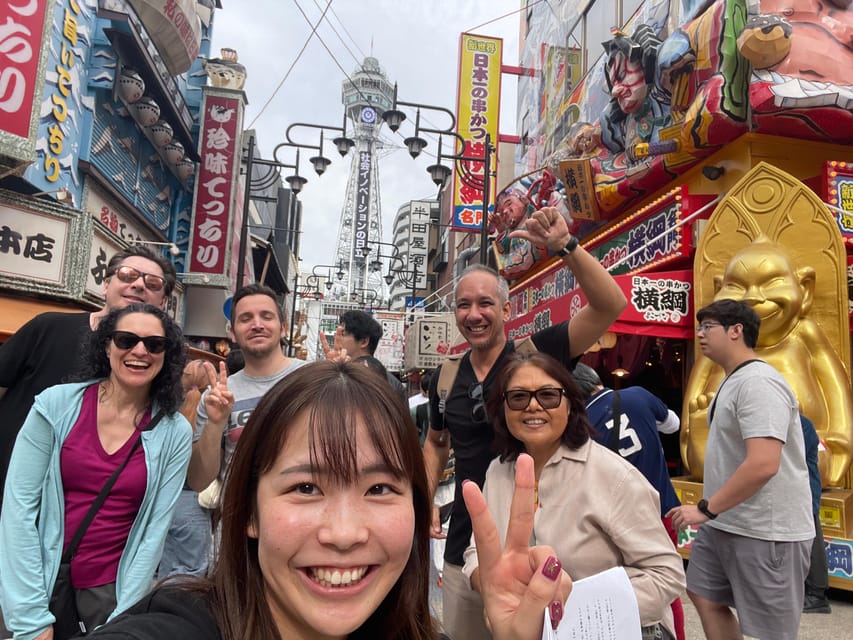
Shinsekai has a retro feel that contrasts sharply with the polished commercial streets around Namba and Dotonbori. Tsutenkaku Tower is the district’s familiar landmark, and the tour includes a separate 10-minute stop for photos and sightseeing.
The timing is enough to look around and take in the atmosphere, but not enough for a long meal or a detailed neighborhood walk. That is important if Shinsekai is high on your personal list. You will get an introduction and local pointers, then you can return later on your own.
The route also includes about 15 minutes at Shinsekai Market, with tea and a tea ceremony listed in the schedule. A matcha tea experience is included only if you select the appropriate option, so check your booking details. This is one of the more distinctive parts of the tour because it adds a small cultural activity to the sightseeing.
A few more Osaka half-days to weigh up
- Osaka Go Karting Tour with Funny Costume
★ 5.0 · 2,658 reviews - Osaka Castle: Museum and Tower Entry Ticket
★ 4.5 · 2,380 reviews - Osaka: Shinsekai Food Tour with 13-15 Dishes at 5 Eateries
★ 4.8 · 2,204 reviews - Osaka Food Tour: 13 Dishes at 5 Local Eateries
★ 5.0 · 2,149 reviews
Shitennoji Temple brings Osaka’s oldest religious story into view
The next major stop is Shitennoji, described as one of Japan’s oldest Buddhist temples. You have about 30 minutes for photos and sightseeing.
Compared with the quick Tsutenkaku stop, this gives you more time to notice the temple’s architecture and grounds. The guide can explain the place in relation to Japanese Buddhism and Osaka’s long religious history, while you take photos and look around at your own pace.
Still, half an hour is not a full temple visit. If you want to study every building, spend quiet time in the gardens, or enter all available areas, plan a separate return visit. For a first look, the stop is well placed. It gives the day a calmer, more reflective center before the food markets and neon streets later on.
Kuromon Ichiba Market is the eating highlight
Kuromon Ichiba Market, often called Osaka’s kitchen, is where the tour shifts from sights to tastes. You have around 20 minutes for a market visit, street food, food sampling, shopping, and a break.
Food and drinks are not included, so bring cash and choose what appeals to you. You might find fresh seafood, prepared snacks, and local treats, but the tour does not promise a particular dish or tasting menu. The short visit is best used as an introduction to the market rather than a full lunch.
I like this stop because it connects Osaka’s food reputation with everyday shopping. Your guide can help explain what you are seeing and suggest options that suit your appetite. Several guides have also offered restaurant advice for later, including sushi recommendations and ideas for the following day.
Do not arrive at Kuromon expecting an unhurried meal. Twenty minutes can disappear quickly if you are comparing stalls, waiting for food, or taking photos. If you want to eat properly, return after the tour with more time and a bigger budget.
Dotonbori finishes with Osaka’s loudest postcard
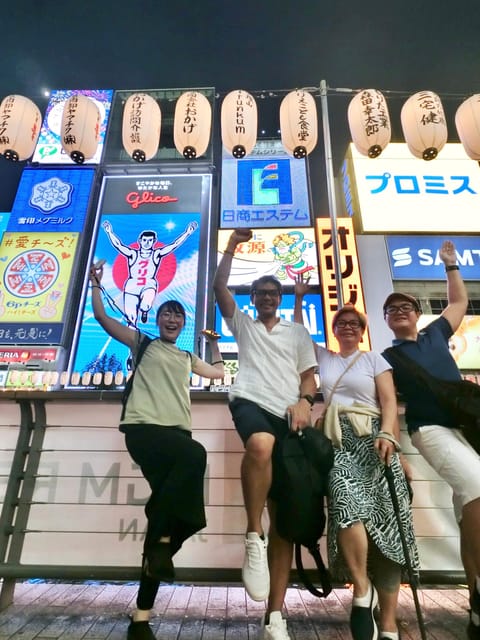
The final stop is Dotonbori, reached on foot from Kuromon Market in about 10 minutes. The scheduled visit lasts around 15 minutes and ends in Dotonbori, which is convenient if you want to continue exploring, shop, or eat dinner there.
This is Osaka at its most theatrical, with neon signs, shopping, restaurants, and the canal-side atmosphere that makes the district so recognizable. The tour is well designed to finish here because you can stay after the guide leaves instead of being taken back to the starting point.
The short guided portion focuses on seeing the area and taking photos. You will not have time for a full restaurant crawl, and food is not part of the tour price. Use the guide’s recommendations, then choose your own place after the official route ends.
The subway makes the route possible
Calling this a walking tour is only partly accurate. You walk through the districts, but the subway does much of the connecting work.
The itinerary includes subway segments of about 15 minutes between several major stops, followed by a shorter ride later in the day. Subway fares cost around 800 yen and are not included. A Suica card can make this simpler, and one past participant found that using a Suica card avoided the need to buy an all-day train ticket.
The guide’s value is not only historical. You also learn how to move around Osaka. Haru, for example, has helped visitors understand the subway well enough to save money on taxis during the rest of their stay.
The starting point can be confusing because Namba Walk has two walkways. The tour base is between exits B21 and B23, between the DOCOMO and MIZUNO shops. If you do not see it, check the opposite walkway before assuming you are lost.
How much value do you get for $64?
At $64 per person, the tour offers solid value if you want structure and local help during your first Osaka visit. You are paying for four hours with an English-speaking guide, photo assistance, transport guidance, and access to a route that would take planning to arrange alone.
The basic price does not cover everything. Budget for approximately:
- 800 yen for subway fares
- 1,200 yen for Osaka Castle entry, if you choose to go inside
- Food and drinks at Kuromon Market or Dotonbori
- Cash payment for the guide, as requested in the tour information
The value is strongest for solo visitors, couples, families, and small groups who want to ask questions. Several people had private or nearly private experiences when few others booked, allowing the guide to adjust the route or answer more questions.
A large group may feel different, especially on crowded subway platforms and busy streets. The guides work to keep people together, but you should expect a city tour rather than a quiet private stroll.
Pace, weather, and physical demands
You need comfortable shoes. The tour includes city walking, subway stairs or station movement, standing, and repeated transitions between outdoor areas and public transport.
The schedule includes brief pauses, but it is still a full four hours. One guide made sure to ask about water breaks on a hot day, and another completed the route during constant rain. That tells you what the practical standard is: the tour proceeds in poor weather, and the guide helps, but you must bring an umbrella or raincoat.
This is not a suitable choice for people with mobility impairments, recent surgeries, or those over 75. The tour information also warns that it is not designed for travelers who need a slower, low-effort route.
Families may enjoy the variety, especially because the day includes a castle, shrine, temple, market, tower, and bright downtown district. Keep in mind that children may tire during the subway transfers and long city route.
The guides are a major part of the experience
The guide can shape this tour more than any single attraction. Names that appear often in the feedback include Minori, Kenji, Nagi, Buchi, Haru, Lily, Kito, Kota, Risa, and Halu.
The most useful guide traits are clear English, patience, photo help, and flexibility. Minori has helped groups navigate trains and allowed free time at stops. Kenji has adjusted tours for smaller parties and shared restaurant ideas. Nagi has been praised for covering both historical and modern topics, while Buchi has been appreciated for answering questions and creating a relaxed group mood.
You should also use the guide as a local sounding board. Ask where to eat after Dotonbori, how to use the subway, or which nearby area deserves your next free afternoon. That practical advice may be worth as much as the formal sightseeing.
Who should book this Osaka tour?
I would recommend it most strongly if you are visiting Osaka for the first time, have only a day or two, or feel uncertain about using the city’s trains. It is also useful if you want a broad introduction before exploring selected districts more slowly.
The tour suits you if you like a full schedule, photo stops, cultural background, and food suggestions. It is less suitable if you want long museum visits, extended temple time, a relaxed food tour, or a slow neighborhood walk.
Cruise passengers can request pickup near the cruise terminal for an additional 5,000 yen, including tax. You must message at least one day before the tour. Hotel pickup may also be available with a selected option, with the guide meeting you in the lobby about 10 minutes before the start and possibly holding an Osaka JOINER sign.
Free cancellation is available up to 24 hours before the tour, and you can reserve now and pay later. Those terms help if your Osaka schedule is still shifting.
Should you book it?
Book this tour if you want to see Osaka Castle, Shitennoji, Shinsekai, Kuromon Market, and Dotonbori in one organized morning or afternoon. At $64, plus transport, entry, and food, it is a fair buy for the time saved and the help of an English-speaking local.
Do not book it expecting deep time at each attraction. The route is quick, and the city is busy. Think of it as a well-guided first look, then use the final stop in Dotonbori and the guide’s food advice to plan your own evening.
FAQ
How long does the Osaka walking tour last?
The tour lasts four hours. It includes sightseeing, walking, subway rides, photo stops, and short breaks.
What attractions are included?
The route includes Osaka Castle, Hokoku Shrine, Shinsekai, Shinsekai Market, Tsutenkaku, Shitennoji Temple, Kuromon Ichiba Market, and Dotonbori.
Is the tour conducted in English?
Yes. The tour includes a live English-speaking guide.
How much do subway fares cost?
Subway fares are not included. They cost around 800 yen for the tour.
Is Osaka Castle entry included?
No. Castle entry costs an additional 1,200 yen.
Are food and drinks included?
No. Food and drinks at Kuromon Market or elsewhere are extra.
Is the matcha tea experience included?
Matcha tea is included only if you select the option that includes the experience.
Where is the meeting point?
The meeting point is at the tour base in Namba Walk, between exits B21 and B23, between the DOCOMO and MIZUNO shops. Namba Walk has two walkways, so check the opposite side if you cannot find the store.
Is hotel or cruise-terminal pickup available?
Hotel pickup is available with selected options. Cruise passengers can request pickup near the cruise terminal for an additional 5,000 yen, including tax, by messaging at least one day before the tour.
Just added around Osaka
- Discover Real Osaka: A Cultural Walk with Food & Drink★ 5.0 · 13 reviews
- Private Airport transfer Kansai Intl. Airport(KIX) to OSAKA CITY★ 4.5 · 12 reviews
- From Osaka/Kyoto: Kyoto & Nara Day Trip with Optional Lunch★ 4.5 · 79 reviews
- Osaka 6hr Private Walking Tour with Government Licensed Guide★ 5.0 · 174 reviews
- Osaka: Namba Local Food Walking Tour (Taste 15 Dishes)★ 5.0 · 20 reviews
- Osaka Delights: Traditional Japanese Food Tour★ 4.5 · 33 reviews
- Badminton in Osaka & Kyoto with Locals!★ 5.0 · 15 reviews
- From Osaka or Kyoto: Kyoto and Nara 1-Day Bus Tour★ 3.5 · 141 reviews
Osaka Tours, compared.


Shinsekai Food Tour with 13-15 Dishes at 5 Eateries
Read our review →
Osaka Food Tour: 13 Dishes at 5 Local Eateries
Read our review →
Hungry Osaka Street Food Tour:15 Tastings & 3 Drinks with a Local
Read our review →



Hotspots & Hidden Gems Walking Tour Private or Group
Read our review →Browse the lists this tour appears in