
Reviewed · OSAKA TOURS
Osaka: Walking Tour to Local Gems, Food & Culture
Osaka’s appeal comes into focus when you walk from polished Shinsaibashi into the neon lanes of Dotonbori, the quiet corner of Hōzenji Temple, and the food stalls of Kuromon Ichiba Market. This 150-minute route links several famous sights without asking you to plan the connections yourself.
I like the efficient path and the chance to ask an English-speaking guide about Japanese customs along the way. I also like that the walk includes both big-name sights and smaller cultural stops, with guides such as Rico and J. bringing different personal knowledge to the experience. The main drawback is that food is not included, and the tour is not suitable for wheelchair users.
Key points to know before you book
- Start in Shinsaibashi: Meet your guide in front of the Apple store, where the guide will hold a sign.
- Dotonbori gets 20 minutes: You’ll have time for photos, orientation, and stories in Osaka’s best-known entertainment district.
- Hōzenji offers a calmer pause: The 10-minute temple visit changes the pace after the busy streets.
- Kuromon Ichiba Market gets 20 minutes: This is the best stop for seeing Osaka’s food culture, though any food purchase is extra.
- Denden Town adds a different side of Namba: Expect a short visit and photo stop in the area associated with electronics and pop culture.
- Finish near Namba Grand Kagetsu: The endpoint puts you in a useful part of central Osaka for continuing your evening.
Why this Osaka walking route works
This tour is built for people who want a quick first look at Osaka without spending half a day on transport. In two and a half hours, you move through Shinsaibashi, Dotonbori, Hōzenji, Kuromon Ichiba, Denden Town, and Namba.
That route matters because these places feel different from one another. Shinsaibashi gives you a central starting point. Dotonbori delivers the famous Osaka scene. Hōzenji gives you a brief temple visit. Kuromon brings food into the picture, and Denden Town adds a modern, playful note before you finish near Namba.
I see this as an orientation walk rather than a full food tour or a deep historical visit. The guide supplies the context, points out important details, and helps you understand how the districts fit together. You then have a better sense of where to return on your own.
The experience costs $25 per person, with the guide and all fees and taxes included. That is a fair price if you value local explanation and a planned route. It is less attractive if you mainly want to take photos, since all of these areas can be visited independently.
More food tours in Osaka:
- Osaka: Shinsekai Food Tour with 13-15 Dishes at 5 Eateries
★ 4.8 · 2,204 reviews - Osaka Food Tour: 13 Dishes at 5 Local Eateries
★ 5.0 · 2,149 reviews - Hungry Osaka Street Food Tour:15 Tastings & 3 Drinks with a Local
★ 5.0 · 1,727 reviews
Meeting at Apple Shinsaibashi
Your meeting point is in front of the Apple store in Shinsaibashi. The guide will hold a sign, which should make the group easier to find in a busy shopping district.
This is a practical place to begin. Shinsaibashi is central, well known, and easy to use as a reference point. Still, give yourself enough time to locate the exact meeting spot. The instructions identify the Apple store rather than a more specific entrance or street corner.
The tour is conducted in English. The guide leads the walk and explains the cultural meaning behind the places you see, rather than simply naming them. You may also find the pace useful if you are arriving in Osaka with little sense of how Shinsaibashi, Dotonbori, and Namba connect.
Shinsaibashi and the opening walk
The first part includes a 15-minute guided section, followed by two 10-minute visits. The exact names of those first stops are not specified, so you should think of this opening as a gradual introduction to the area rather than a promised list of extra landmarks.
That lack of detail is worth noting. If you are booking mainly to see one particular building, confirm the current route before you go. If you want a general introduction, the opening allows the guide to set the scene before the tour reaches Dotonbori.
The guide’s role is especially useful here. Osaka’s neighborhoods can appear to be one long stretch of shops and signs when you first arrive. A good explanation helps you notice the difference between a shopping street, an entertainment district, a temple quarter, and a market area.
Dotonbori in a focused 20 minutes
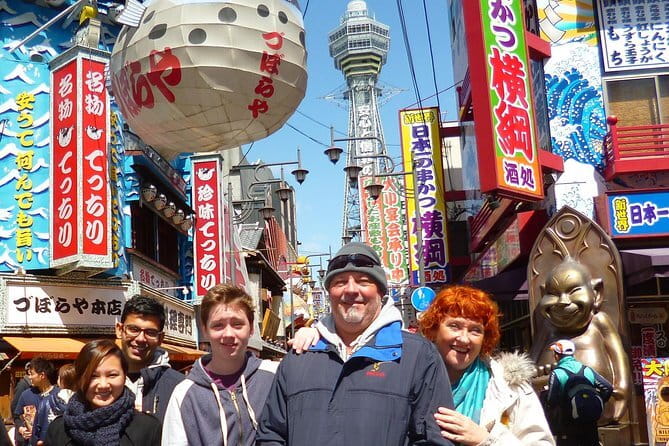
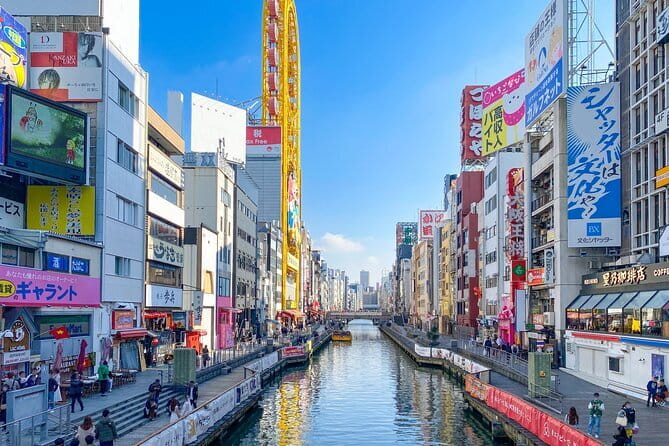
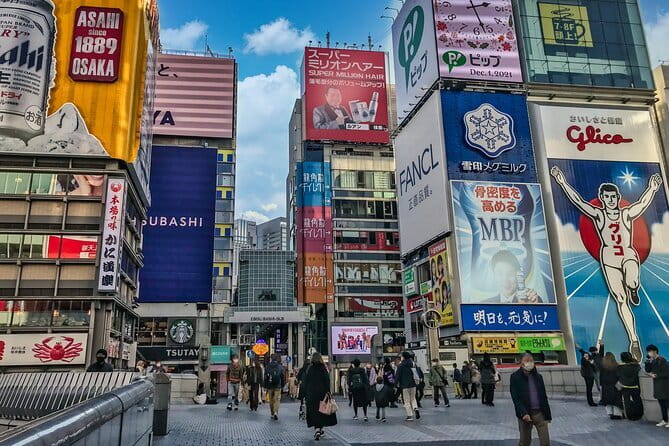
Dotonbori is the tour’s most recognizable stop. You get a photo stop, a visit, and a 20-minute guided explanation.
This is the place for Osaka’s famous visual energy: bright signs, canal-side views, restaurants, and crowds. Twenty minutes is enough for an introduction and photos, but it is not enough for a slow meal or a full exploration of every side street. I would treat this stop as a preview, then return later if you want to eat or photograph the area at your own pace.
The guide adds value by explaining more than what appears in front of you. The tour description promises stories about Osaka’s past and cultural meaning, and the guide can connect the district’s appearance with the city’s food-centered identity and local character.
Keep your expectations practical. This is a group walking tour, not a private photography session. You will likely need to keep moving, especially in crowded areas. If you want a particular photo, take it quickly and follow the guide’s instructions.
Same base, a completely different sort of day:
- Osaka Go Karting Tour with Funny Costume
★ 5.0 · 2,658 reviews - Osaka Castle: Museum and Tower Entry Ticket
★ 4.5 · 2,380 reviews - Osaka: teamLab Botanical Garden Entry Ticket
★ 4.5 · 1,710 reviews - Osaka: Tea Ceremony Experience
★ 4.9 · 1,426 reviews
Hōzenji Temple, a quiet 10-minute change of pace
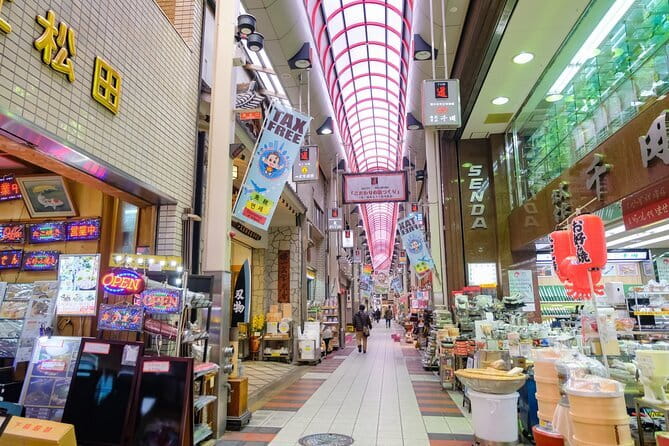
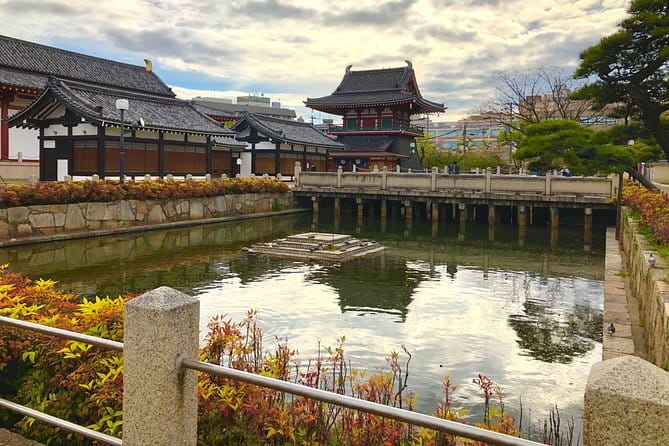
After Dotonbori, the route visits Hōzenji Temple for 10 minutes. This is a smart contrast. You move from one of Osaka’s loudest and most photographed areas to a smaller religious site where the mood is more restrained.
Ten minutes is brief, but it gives you time to look, listen, and ask a question. The value here is not in a long temple lecture. It is in seeing how a compact temple can sit within the same central district as restaurants, signs, and entertainment venues.
The guide’s cultural explanation is important at this stop. Without context, a short temple visit can feel like a quick photo break. With context, you have a better chance of understanding why the site matters and how older traditions remain part of present-day Osaka.
This is also a good point to slow your pace. The route is active, and Hōzenji supplies a welcome pause before the market.
Kuromon Ichiba Market and the cost of eating

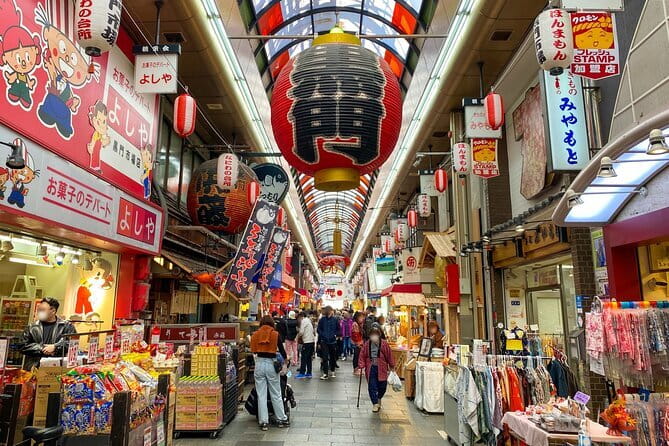
Kuromon Ichiba Market receives 20 minutes, including a visit and guided tour. This is the route’s clearest food stop, but food is not included in the $25 price.
That arrangement can work well for you because you choose whether to buy anything. You can simply walk through the market and listen, or spend extra on a snack if something catches your eye. The tradeoff is that the tour’s fixed timing limits how much you can browse and eat.
I would not arrive expecting a full market lunch. Twenty minutes is better suited to a quick look at the stalls and a short explanation of Osaka’s food culture. If you see something you want, ask about the timing before making a purchase. Eating while walking with a group may not be practical.
The market also helps explain why food plays such a large part in Osaka’s identity. The guide can point out what you are seeing and answer questions that signs alone cannot. One of the strongest features of this experience is that the food district is treated as part of local culture, not just as a place to collect photos.
Denden Town and the modern side of Namba
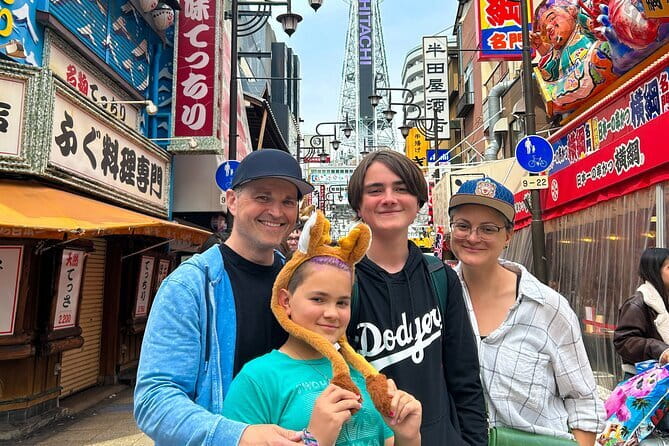
The route continues to Nipponbashi Denden Town for a 10-minute photo stop and guided visit. This gives the tour a different flavor from the temple and market.
Denden Town is associated with electronics and pop culture, and the short stop lets you see another part of Namba’s personality. You should expect a quick introduction rather than a detailed shopping session. Ten minutes is enough to take photos and get your bearings, but not enough to compare shops or search for a particular item.
For me, this stop makes the route feel more complete. Osaka is not only old temples and famous food streets. It also has districts shaped by modern interests and specialist shopping. The guide can help you understand that contrast without requiring you to plan a separate visit.
The itinerary includes one more 10-minute visit after Denden Town, but its name is not specified. That means the exact final portion may vary or may depend on the guide’s route. If a particular stop matters to you, ask about it when booking.
Finishing at Namba Grand Kagetsu
The tour ends at Namba Grand Kagetsu. This is a useful finish because you remain in central Osaka, close to many places for food, shopping, and evening plans.
The endpoint also makes sense after Denden Town and Kuromon. You are not dropped at an isolated transport stop. Instead, you finish in the Namba area with a better idea of the districts you may want to revisit.
Use the end of the walk to ask the guide any last questions about Osaka. The strongest guide experience here seems to come from conversation as much as from the planned route. One guest specifically appreciated that J. answered questions about Japanese culture and topics beyond the immediate walk. That suggests you should bring questions of your own.
The guide can shape the experience
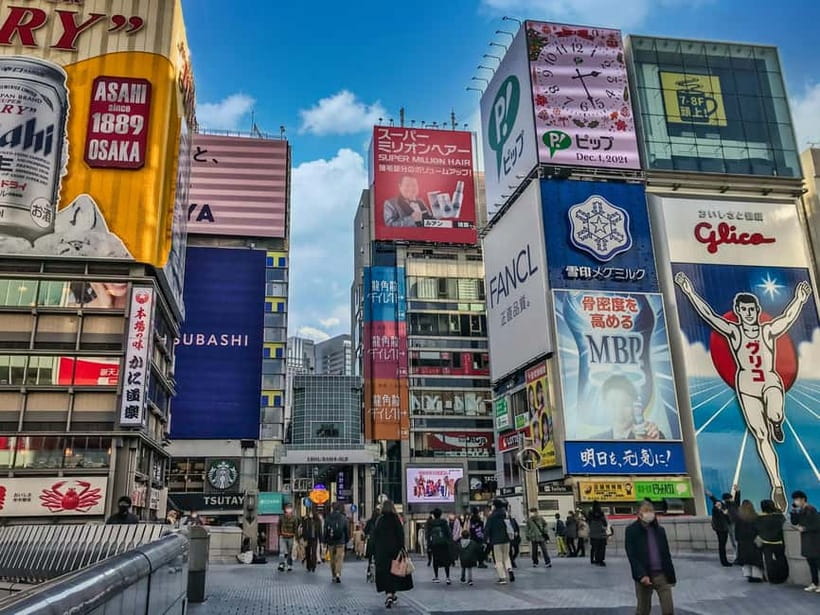
The tour is led in English by a licensed guide. Names can vary, but Rico and J. are two guides associated with especially positive experiences on this route.
You should expect differences in style. One guide may give more historical detail, while another may focus more on daily customs, food, or questions from the group. J. was described as taking time to explain small historical details and answer broader questions about Japan. Rico was praised for sharing many interesting points during the walk.
The information provided does not state the group size, so I would not assume a private or small-group setting. Your experience may depend partly on how easily you can hear the guide and how much time there is for questions. Stay near the guide, especially around Dotonbori and the market.
The strongest feedback points to three things: clear English, useful information, and an entertaining tone. That combination matters on a walking tour. Facts are helpful, but stories and room for questions make the route easier to remember.
Timing, walking, and practical limits
The advertised duration is 150 minutes. The listed guided segments total less than that, which leaves time for walking between stops, gathering the group, photos, and transitions. Do not read the individual stop times as the entire tour length.
You will be on foot for the whole experience. Wear comfortable shoes and keep your belongings secure in crowded streets and market areas. The tour is not suitable for wheelchair users, so anyone with mobility concerns should consider that limitation before booking.
Alcohol and drugs are not allowed. Food purchases are also separate from the tour price. These are simple points, but they matter because Kuromon Ichiba may tempt you to stop and eat, while the group schedule keeps moving.
Cancellation is flexible: you can cancel up to 24 hours in advance for a full refund. You can also reserve now and pay later, which helps if your Osaka plans are still changing.
Who will get the most from this walk
I would recommend this tour to a first-time Osaka visitor who wants a clear introduction in a short time. It suits you if you like walking, want cultural explanations, and prefer a guide to connect the major areas.
It is also useful early in your stay. After the walk, you can decide where to return for a longer meal, another round of photos, or more shopping. The route gives you a practical map of central Osaka without requiring a full day.
The tour is less suitable if you want a long food tasting session. You pay for the guide and route, but not for food, and the 20-minute market stop is too short for a relaxed meal. It is also not a good choice if you need wheelchair access.
Independent visitors may reasonably skip it. Shinsaibashi, Dotonbori, Hōzenji, Kuromon Ichiba, and Denden Town can be explored without a guide. The $25 is buying interpretation, structure, and conversation rather than entry to a paid attraction.
Should you book the Osaka walking tour?
Book it if you want a fast, well-planned introduction to central Osaka with an English-speaking licensed guide. The route covers major names, adds a temple and market, and gives you useful cultural context in 150 minutes.
Skip it if you prefer to set your own pace, spend a long time eating, or focus on one district in detail. For most first visits, though, $25 is a sensible price for getting oriented and learning what deserves a second look. Meet at Apple Shinsaibashi, stay ready to walk, and bring questions for the guide.
FAQ
How long does the Osaka walking tour last?
The tour lasts 150 minutes, or two and a half hours.
How much does the tour cost?
The price is $25 per person.
Where does the tour begin?
The meeting point is in front of the Apple store in Shinsaibashi.
How will I find the guide?
The guide will be holding a sign in front of the Apple store Shinsaibashi.
Where does the tour finish?
The tour finishes at Namba Grand Kagetsu.
Which language is the tour offered in?
The live tour guide speaks English.
Is food included in the tour price?
No. Food is not included, so you pay separately for anything you choose to buy at Kuromon Ichiba Market or elsewhere.
Is the tour suitable for wheelchair users?
No. The experience is not suitable for wheelchair users.
Can I cancel for a full refund?
Yes. You can cancel up to 24 hours in advance for a full refund.
More Walking Tours in Osaka
- Osaka: Hotspots & Hidden Gems Walking Tour Private or Group
★ 4.9 · 1,300 reviews - Osaka Local Foodie Walking Tour in Dotonbori and Shinsekai
★ 5.0 · 985 reviews - Osaka Bar Hopping Night Walking Tour in Namba (3 bars, 6 tastes)
★ 5.0 · 958 reviews - Osaka: Deep Backstreets Walking Tour with Dinner Option
★ 4.9 · 902 reviews
Just added around Osaka
- Discover Real Osaka: A Cultural Walk with Food & Drink★ 5.0 · 13 reviews
- From Osaka/Kyoto: Kyoto & Nara Day Trip with Optional Lunch★ 4.5 · 79 reviews
- Osaka 6hr Private Walking Tour with Government Licensed Guide★ 5.0 · 174 reviews
- Private Airport transfer Kansai Intl. Airport(KIX) to OSAKA CITY★ 4.5 · 12 reviews
- Osaka: Namba Local Food Walking Tour (Taste 15 Dishes)★ 5.0 · 20 reviews
- Osaka Delights: Traditional Japanese Food Tour★ 4.5 · 33 reviews
- Badminton in Osaka & Kyoto with Locals!★ 5.0 · 15 reviews
- From Osaka or Kyoto: Kyoto and Nara 1-Day Bus Tour★ 3.5 · 141 reviews
Osaka Tours, compared.


Shinsekai Food Tour with 13-15 Dishes at 5 Eateries
Read our review →
Osaka Food Tour: 13 Dishes at 5 Local Eateries
Read our review →
Hungry Osaka Street Food Tour:15 Tastings & 3 Drinks with a Local
Read our review →



Hotspots & Hidden Gems Walking Tour Private or Group
Read our review →Browse the lists this tour appears in