
Reviewed · OSAKA TOURS
Osaka Walking Tour
Osaka reveals itself through food and neighborhoods rather than grand monuments, and this three-hour walk gives you a useful first look. You move from the polished maze of Osaka Station to old-school Shinsekai, then end beneath the neon signs of Dotonbori at Ebisu Bridge.
I like the small groups of up to 10 and the chance to ride the subway with a local guide instead of simply following a sightseeing bus. I also like the Kushikatsu tasting, a modest but welcome way to sample Osaka’s famous deep-fried snack while learning how the city eats.
The main catch is simple: this is an orientation walk, not a full tour of Osaka’s major sights. You pay an additional 430 yen for the subway as an adult or youth, and anyone expecting castles, museums, or long visits inside temples may find the route too light for the price.
Key points at a glance
- Three sides of Osaka in three hours: See the modern Osaka Station area, the old restaurant district of Shinsekai, and the neon streets around Dotonbori.
- A local guide shapes the experience: Guides including Hide, Harry, Keiko, Minako, Rika, Kaori, and Ichiro have been praised for clear English, city knowledge, and practical advice.
- Kushikatsu is included: You receive a food tasting and one non-alcoholic drink at a stop in Shinsekai.
- The subway ride is part of the lesson: The 430-yen fare is extra, but riding the train helps you understand how Osaka is connected.
- The finish is convenient: The tour ends at Ebisu Bridge, placing you in the heart of Dotonbori with food, shops, theaters, and easy onward options.
- Expect real walking: Comfortable shoes matter, and the tour runs in rain or shine unless poor weather forces a cancellation.
Osaka Station is the tour’s modern opening
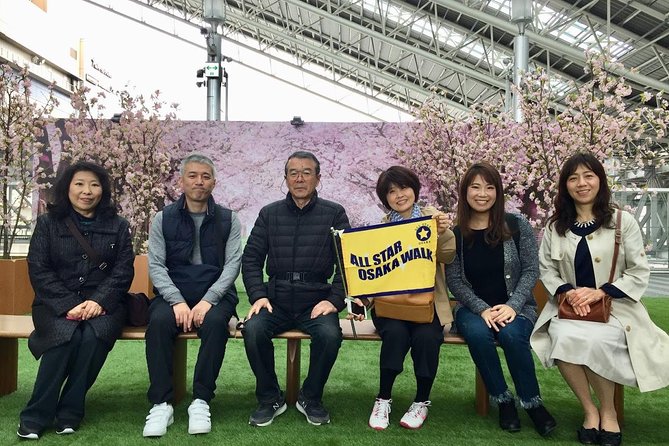
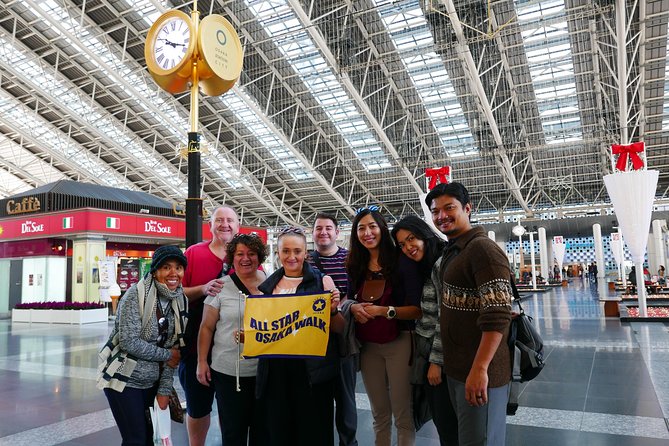
Meet at the Osaka Tourist Information Center on the ground level, in front of the central gate of JR Osaka Station. The guide will carry an All Star Osaka yellow flag. Arrive by 9:50 a.m. for a prompt 10 a.m. start.
This meeting point is practical but not especially forgiving. Osaka Station is large, crowded, and full of signs for different railway companies, shopping areas, and exits. Give yourself extra time. The meeting instructions specify the central gate, which is important because simply arriving at Osaka Station does not put you near the guide.
The first part of the walk spends about 45 minutes around Osaka Station City. This is the city’s modern face: department stores, rail connections, office buildings, and a large shopping complex built around the station. It may not sound like a classic sightseeing stop, but it gives you useful context.
Osaka is a working city as much as a tourist destination. Starting here shows how people move through the center, how the railway system shapes daily life, and why the station area feels so different from Shinsekai or Dotonbori. Guides also use this early section to explain the city’s development and offer practical advice for the rest of your stay.
That context is one reason I would take this tour early in an Osaka visit. You are not only looking at buildings. You are learning how the city is arranged before you try to navigate it alone.
Still, the station portion may disappoint you if you want monuments from the first minute. One lower-rated opinion found too much time spent around the train station. That criticism is fair, especially if you already understand Osaka’s rail network or have only one short morning available.
More walking tours in Osaka:
- Osaka: Hotspots & Hidden Gems Walking Tour Private or Group
★ 4.9 · 1,300 reviews - Osaka Local Foodie Walking Tour in Dotonbori and Shinsekai
★ 5.0 · 985 reviews - Osaka Bar Hopping Night Walking Tour in Namba (3 bars, 6 tastes)
★ 5.0 · 958 reviews
Shinsekai brings the food and local character
The tour then uses Osaka’s subway, with the adult and youth fare of 430 yen paid separately. Children pay 220 yen. The train ride is brief in the overall schedule, but it is useful because the subway is central to exploring Osaka’s separate districts.
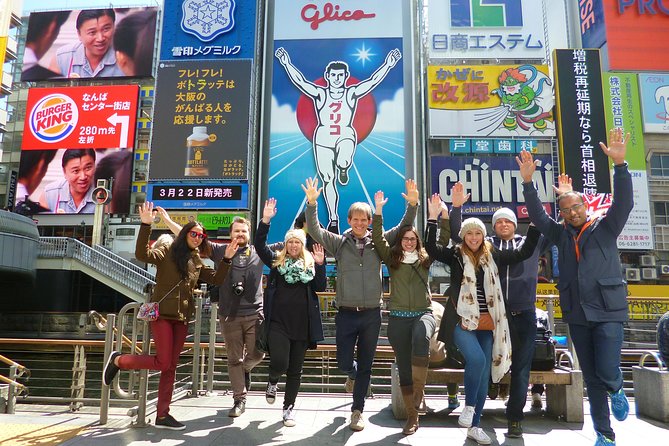
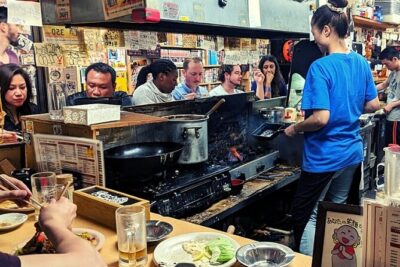
The next major stop is Shinsekai, one of the city’s most distinctive downtown areas. The streets here are lined with restaurants and signs connected with Osaka’s soul food. This is where the tour’s food tasting takes place.
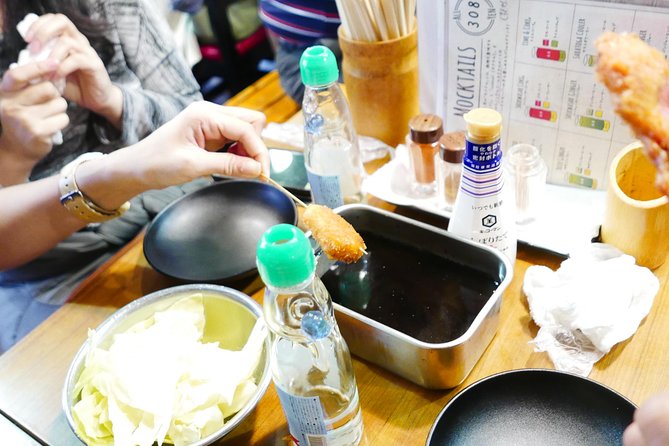
Kushikatsu consists of skewered food coated and deep-fried. The exact selection can vary, but the tasting is presented as a local specialty rather than a full meal. One non-alcoholic drink is included, while extra food and drinks are not.
Keep your expectations in the right place. This is not a dedicated food tour with a long list of tastings. It is one snack stop folded into a city walk. The portion gives you a first taste and a chance to ask questions, but you may want to eat again later.
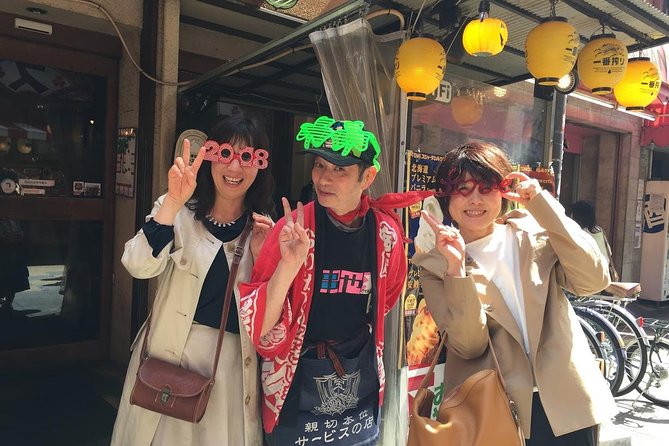
One especially unusual detail from the tour is the possibility of eating inside an old Volkswagen van at the restaurant. That is not the sort of polished dining room experience you would get on a formal culinary tour, but it fits the playful, slightly offbeat character of this part of Osaka.
The Shinsekai stop lasts about 50 minutes, including time at the restaurant. It gives you a pause from walking and a chance to talk with the guide. For many people, this is where the tour feels most connected to everyday Osaka, since food, small restaurants, and informal street life take center stage.
The district is also a good place to ask direct questions. Guides such as Hide, Harry, Minako, Keiko, and Kaori have been praised for explaining local customs, Osaka’s past, and the practical details that help you function in Japan. The strongest guides do more than recite dates. They connect the neighborhood to the city you are seeing around you.
Alleys, Hozenji, and Dotonbori show another Osaka
After Shinsekai, the route continues through smaller restaurant-lined lanes and busy commercial streets. The exact balance can vary by guide and group, but the purpose is clear: you see Osaka through places built for eating, shopping, entertainment, and local foot traffic.
The tour also includes Hozenji, a small temple in the Dotonbori area. It offers a sharp change of pace from the flashy signs and packed restaurant streets nearby. The contrast is part of the appeal. Osaka can move from quiet religious space to loud commercial energy within a few steps.
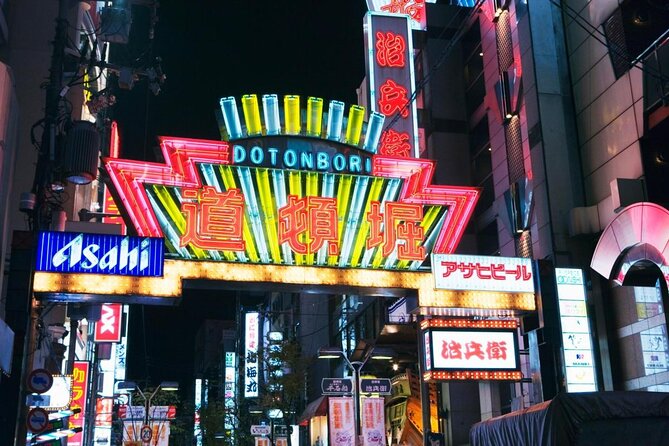
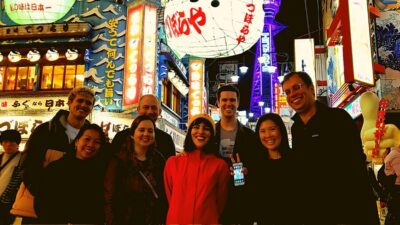
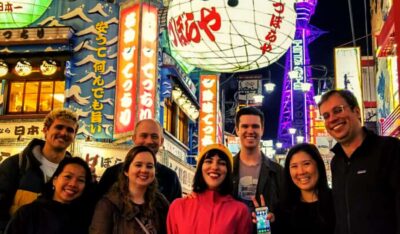
Dotonbori is the tour’s most instantly recognizable setting. Giant signs, restaurants, shops, theaters, and crowds make this the city’s famous entertainment district. You pass through rather than spend a long block of time at each attraction, so the experience is more about orientation than detailed sightseeing.
That distinction matters. You will not get an extended visit to every temple, shopping street, or landmark. Instead, you get a guided path through several areas that feel different from one another. The value is in seeing the links between them and learning which districts you may want to revisit.
The tour ends at Ebisu Bridge, near 1 Chome-6 Dotonbori. This is a convenient finish if you want to continue eating, shopping, or exploring Namba. It is not a hotel drop-off, and you are responsible for finding your own way afterward.
A guide may help with onward directions. One guide even went out of the way to assist with a return journey to a cruise ship. That sort of help can be valuable, but you should not treat it as a guaranteed transfer service. The official end point is the bridge.
The guide makes or breaks the morning
The most praised part of this experience is the human side. Guides named Hide, also called Harry in some comments, Keiko, Kaori, Minako, Rika, Ichi, Ichiro, and Yahiro have all been singled out for friendly service, good English, and clear explanations.
You can expect the guide to discuss Osaka’s development, local food, Japanese culture, the city’s different districts, and practical travel questions. Several guide accounts describe an easy walking pace and a willingness to answer questions rather than rush from stop to stop.
That personal approach is especially helpful on a first visit. Japan can be wonderfully orderly but confusing at first, and a local guide can explain small customs or signs that you might otherwise miss. One guide even checked an answer when the information was not immediately available, which is exactly the kind of honest response I prefer.
The tour’s rating is 4.8 from 271 ratings, with 96 percent recommending it. Those numbers suggest a reliable experience, but they do not erase the occasional mismatch between expectations and reality. A guide can be excellent while the route still feels too ordinary for someone expecting a grand survey of Osaka.
There was also a complaint about repeated requests to pose for photographs for the tour company’s social media. This was not the general theme, but it is worth knowing. If you prefer to keep your walk private, you can politely decline.
Group size has a real effect here. With a maximum of 10 people, the guide can hear questions and adjust the pace more easily than on a large coach excursion. Some departures may be much smaller, even close to a private walk. That can make the station navigation and neighborhood explanations feel more personal.
A few more Osaka half-days to weigh up
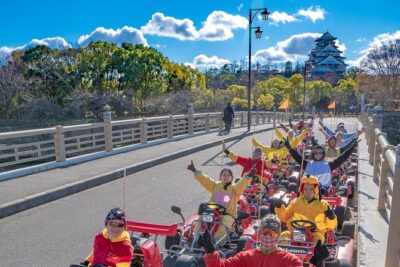
- Osaka Go Karting Tour with Funny Costume
★ 5.0 · 2,658 reviews - Osaka Castle: Museum and Tower Entry Ticket
★ 4.5 · 2,380 reviews - Osaka: Shinsekai Food Tour with 13-15 Dishes at 5 Eateries
★ 4.8 · 2,204 reviews - Osaka Food Tour: 13 Dishes at 5 Local Eateries
★ 5.0 · 2,149 reviews
What the $53.06 price includes
At $53.06 per person, the tour is priced as a guided introduction rather than a cheap snack-and-stroll outing. The price includes the local guide, the Kushikatsu tasting, and one non-alcoholic drink.
The subway fare is extra. For an adult or youth, budget another 430 yen. You also pay for any additional food or drinks, and there is no hotel pickup, hotel drop-off, or insurance.
I think the value depends on how you use the tour. If you are new to Osaka and want someone to explain the city while taking you between three very different districts, the price is reasonable. You are paying for translation, local context, navigation, and a structured first morning.
If you already know Osaka well, or if you are mainly looking for major sights, the value is weaker. The route does not include a lengthy castle visit or an admission-based attraction. Much of the experience takes place on public streets and around a station, so the guide’s explanations are the main product.
You should also remember that a three-hour walk cannot cover a city this large in depth. Think of it as a first chapter. The tour can show you where to return for food or evening activity, but it cannot replace a full day devoted to Osaka Castle, museums, markets, or other specific interests.
Walking, weather, and practical comfort
The tour begins at 9:50 a.m. and starts at exactly 10 a.m. It lasts about three hours and finishes at Ebisu Bridge. You will walk through stations, commercial streets, restaurant lanes, and entertainment districts, with escalators and some steps along the way.
Wear comfortable walking shoes. Osaka’s flat streets can still feel tiring when you combine a morning of walking with station corridors, stairs, heat, or humidity. The walking pace is generally described as relaxed, but the tour is not suitable for someone who cannot manage a moderate amount of walking.
The activity runs in rain or shine. The provider notes that a stroller may be difficult because of escalators and steps, and children must be accompanied by an adult. Most people can participate, but you should consider your own comfort with walking and public transport.
Bad weather has one important exception. If the provider cancels because conditions are poor, you are offered another date or a full refund. Otherwise, cancellation is free up to 24 hours before the start time. Less than 24 hours before the tour, you receive no refund, and changes are not accepted.
Bring water, especially in warm months. The included drink is one non-alcoholic beverage at the food stop, not a full supply for the morning.
Who gets the most from this Osaka walk
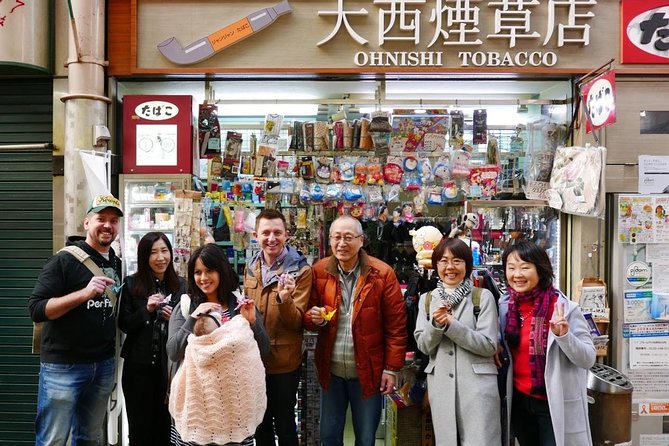
I would recommend this tour most strongly for first-time visitors, people with only one day in Osaka, and anyone who wants help making sense of the city before exploring alone. It also suits solo visitors who like a small social setting without committing to a full-day group excursion.
It works well as a first-day activity because it introduces several districts and ends in Dotonbori. Afterward, you already know where the restaurant signs are concentrated, how the subway fits into your day, and which area deserves more of your time.
Families can join, provided children are accompanied by an adult and everyone can manage the walking and station steps. Hot-weather visitors may appreciate the easy pace and indoor breaks, though no walking tour in Osaka will feel entirely cool or effortless in humid conditions.
I would be more cautious about booking if food is your main reason for going. The Kushikatsu stop is appealing, but it is only one tasting. Likewise, if you want deep historical detail or entry into major attractions, choose a more specialized tour.
Should you book the Osaka Walking Tour?
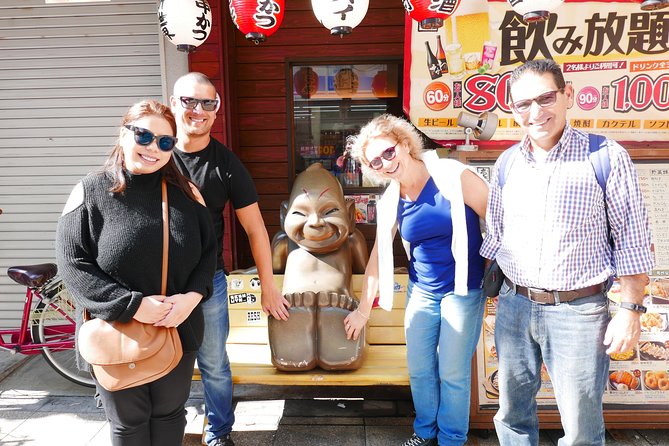
Book it if you want a friendly, compact introduction to Osaka with a real local guide, one food tasting, and a look at districts you might not connect on your own. Guides such as Hide, Keiko, Minako, Kaori, and Ichiro have earned strong praise for their English, patience, and personal advice.
Skip it if $53.06 feels high for a street-based orientation, or if you want a packed list of famous sights. The tour’s strength is its local framing, not the number of admission tickets.
For most first-time visitors, I would schedule it near the start of an Osaka stay. Arrive early at Osaka Station, wear good shoes, bring a little extra money for the subway and food, and treat the walk as a practical introduction rather than the final word on the city.
FAQ
How long does the Osaka Walking Tour last?
The tour lasts approximately three hours.
Where does the tour start?
It starts at the Osaka Tourist Information Center on the ground level in front of the central gate of JR Osaka Station. Meet at 9:50 a.m. for a 10 a.m. start.
Where does the tour end?
The tour ends at Ebisu Bridge in Dotonbori, near 1 Chome-6 Dotonbori, Chuo Ward, Osaka.
Is the subway fare included?
No. The adult and youth fare is 430 yen, while the child fare is 220 yen.
Is food included?
Yes. A Kushikatsu tasting and one non-alcoholic drink are included. Other food and drinks are not included.
How many people can join the tour?
The maximum group size is 10 people.
Can I cancel for a full refund?
Yes, if you cancel at least 24 hours before the start time. Cancellations within 24 hours are not refunded. If poor weather causes the provider to cancel, you are offered another date or a full refund.
Just added around Osaka
- Discover Real Osaka: A Cultural Walk with Food & Drink★ 5.0 · 13 reviews
- From Osaka/Kyoto: Kyoto & Nara Day Trip with Optional Lunch★ 4.5 · 79 reviews
- Osaka 6hr Private Walking Tour with Government Licensed Guide★ 5.0 · 174 reviews
- Private Airport transfer Kansai Intl. Airport(KIX) to OSAKA CITY★ 4.5 · 12 reviews
- Osaka Delights: Traditional Japanese Food Tour★ 4.5 · 33 reviews
- Osaka: Namba Local Food Walking Tour (Taste 15 Dishes)★ 5.0 · 20 reviews
- Badminton in Osaka & Kyoto with Locals!★ 5.0 · 15 reviews
- From Osaka or Kyoto: Kyoto and Nara 1-Day Bus Tour★ 3.5 · 141 reviews
Osaka Tours, compared.
Shinsekai Food Tour with 13-15 Dishes at 5 Eateries
Read our review →
Osaka Food Tour: 13 Dishes at 5 Local Eateries
Read our review →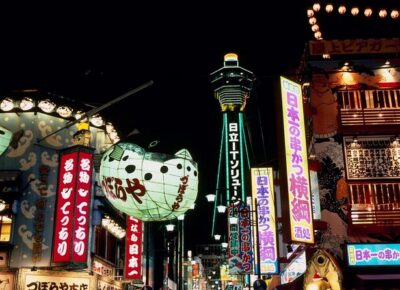
Hungry Osaka Street Food Tour:15 Tastings & 3 Drinks with a Local
Read our review →
Hotspots & Hidden Gems Walking Tour Private or Group
Read our review →Browse the lists this tour appears in