
Reviewed · OSAKA TOURS
Samurai Training Experience KENDO in Osaka
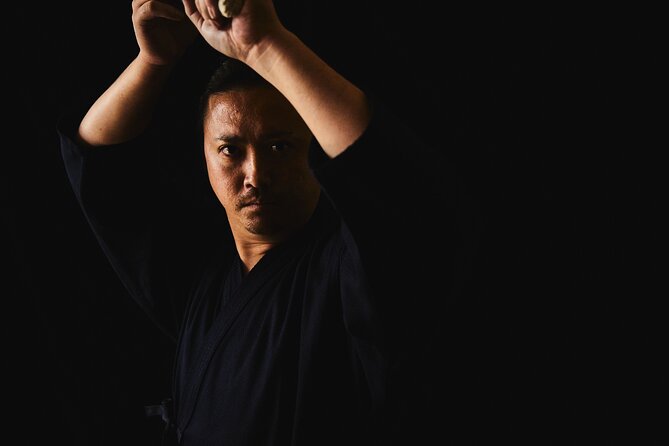
The best part of this Osaka experience is that you do not simply pose in samurai clothing. You learn basic kendo technique, put on protective armor, and take part in a supervised match with a bamboo sword. Toshi leads the instruction, while Kumiko helps with explanations and keeps the session friendly and clear.
I like two things right away: the small class size, capped at 12, and the fact that your photos and videos are included. You get real instruction, not just a costume portrait, and solo participants may receive especially close attention if the group is small.
The main consideration is physical effort. Two hours of footwork, strikes, armor, and sparring can feel like a workout, especially in protective gear. The pace can be adjusted, but this is still active rather than a purely historical talk.
Key details before you book
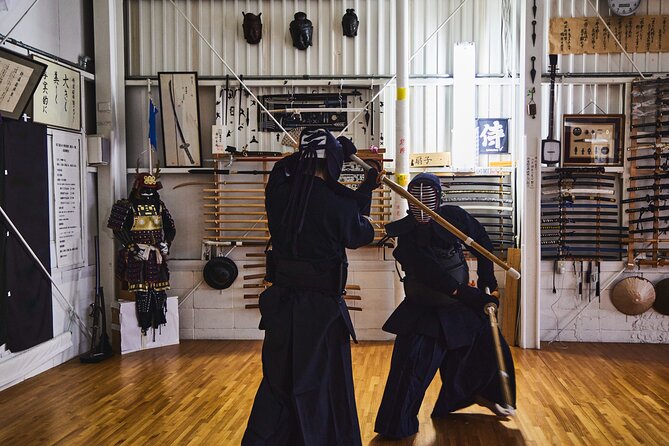
- Train inside a real dojo: The clean, well-kept facility also displays samurai artifacts and memorabilia.
- Learn before you fight: The lesson covers posture, footwork, basic strikes, combinations, and match manners before sparring begins.
- Toshi and Kumiko teach together: Toshi handles the kendo instruction, while Kumiko assists with English explanations and the cultural background.
- Photos and videos are included: Your session is recorded and sent digitally, with some visitors receiving them within 24 hours.
- Suitable for beginners and families: No previous martial arts experience is required, and children aged 3 to 5 focus on wearing the uniform and armor safely.
- Central Osaka location: The meeting point is at 1-chōme-18-2 Honjōhigashi in Kita Ward, near public transportation.
Entering the Osaka dojo
You meet at 1-chōme-18-2 Honjōhigashi, in Osaka’s Kita Ward. The activity returns to this same location, so you do not need to arrange a second pickup point or find your way to a distant training hall afterward.
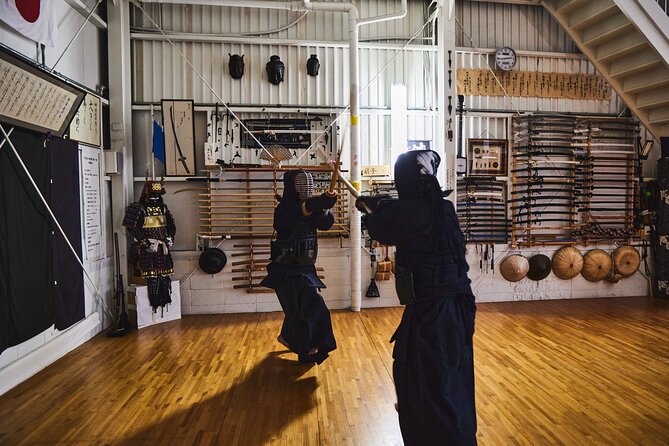
The dojo is more than a bare practice room. It includes samurai artifacts and memorabilia, giving the opening talk a useful visual setting. You can look at the objects while learning how kendo connects with older samurai fighting traditions and the principles of Bushidō.
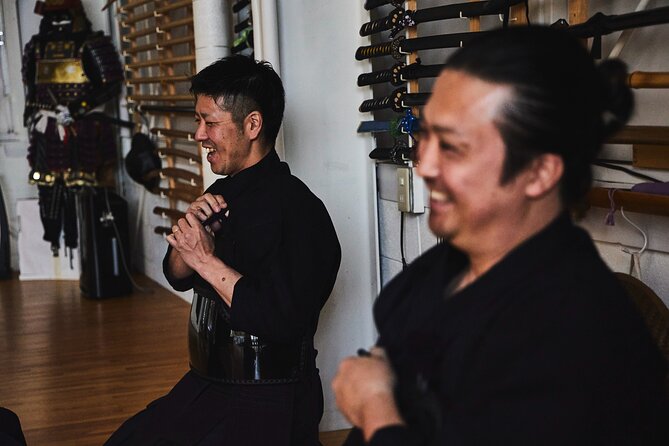
The presentation is conducted in English. Toshi teaches the physical side of kendo, and Kumiko helps make the explanations easy to follow. Several people who came with little or no martial arts background found the instruction patient and approachable, which matters when you are trying to remember Japanese terms, body position, and etiquette all at once.
The setting is comfortable by active-tour standards. There is air conditioning, heating, a changing room, and showers. That makes the experience easier to fit into a day of sightseeing, since you do not necessarily have to spend the rest of the afternoon in damp clothes.
More Samurai and Ninja Experiences in Osaka
- OSAKA NIGHT FUSION Japanese Taiko Kabuki Samurai Dance Show
★ 4.8 · 155 reviews - Osaka: Samurai Training Experience KENDO in Osaka
★ 5.0 · 111 reviews - Osaka: A Modern Samurai, Kabuki, Taiko, & Dance Show
★ 4.5 · 66 reviews
Learning samurai culture before the lesson
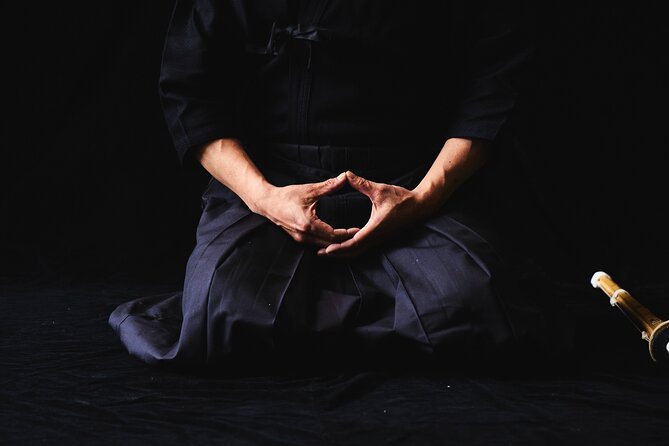
The cultural introduction comes first, and it gives the activity some needed context. You hear about samurai traditions, kendo, and the ideas connected with Bushidō before picking up the shinai, the bamboo sword used in practice.
That order is important. Without it, the activity could feel like a quick hit-and-block game in costume. Here, the history and customs help explain why posture, focus, respect, and controlled movement matter.
Do not expect a university lecture or a long museum visit. The session lasts about two hours, so the background section is brief enough to leave plenty of time for practice. I think that is the right balance for a holiday activity. You get the essential story, then learn through your own body rather than sitting still.
The dojo’s displays also make this part more memorable. You are not hearing about samurai culture in a generic meeting room. You are surrounded by objects connected with the theme, then asked to take part in a modern martial art that grew from those older methods.
Changing into kendo uniform and armor
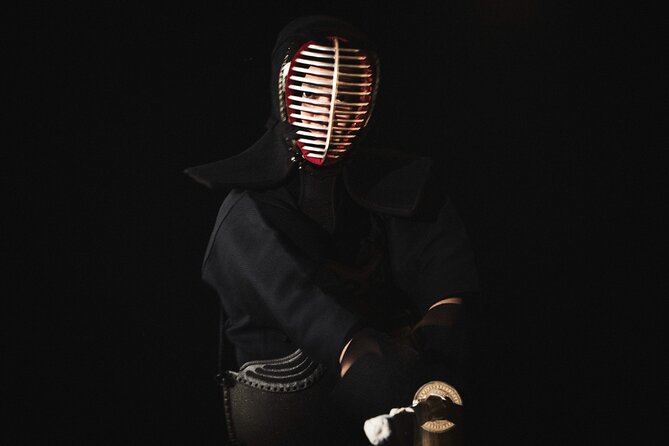
After the introduction, you change into an authentic kendo uniform. You then learn how to wear the protective equipment used for practice, including armor suitable for a controlled training match.
This is one of the moments when the activity becomes more than a photo opportunity. The clothing and armor change how you move. Your stance feels more deliberate, your steps become more careful, and even a basic strike takes concentration.
The outfit also makes the included photos worthwhile. You can take pictures in full gear inside the dojo, with the artifacts and training space providing a more convincing setting than a rented studio backdrop.
Allow yourself time to get comfortable. Armor is not light, and first-time participants may need help with straps and positioning. The instructors guide you through it, but you should expect the session to feel unfamiliar at first. Wear practical clothes underneath and arrive ready to change.
For children aged 3 to 5, the focus is different. They can wear the uniform and armor and take part in safe photos, but the activity is not presented as a full combat lesson for that age group. Older children can learn techniques and take part in a supervised match, depending on their ability and comfort.
Building skill with the shinai
The practical lesson starts with the basics. You work on stance, body position, footwork, and the correct way to hold and use the shinai. Toshi then introduces fundamental strikes, combinations, and counters as the group becomes more comfortable.
The session is designed for beginners, so you do not need experience in kendo, fencing, karate, or any other martial art. You will not be expected to arrive knowing how to bow, stand, step, or strike.
That said, the lesson is not weightless entertainment. One person described the progression as a good workout, with strikes and combinations joined to the footwork. You may feel your legs and shoulders working well before the final match.
The instructors adjust the pace. You can keep things relaxed, or work harder if you want a more physical session. This flexibility makes the activity suitable for mixed groups, such as a family with energetic teenagers and adults who would rather focus on culture and technique.
Pay attention to form instead of trying to swing hard. Kendo depends on timing, distance, posture, and control. A first-time participant who concentrates on the sequence will get more from the lesson than someone who treats the shinai like a movie prop.
The class size helps here. With a maximum of 12 people, Toshi and Kumiko can correct your movements and answer questions. If you are the only participant at your time, you may receive one-on-one instruction. That is a particularly good arrangement for anyone nervous about trying a martial art in front of strangers.
More samurai and ninja sessions in Osaka:
- Osaka: Private Samurai Experience – Train with Sword Master
★ 5.0 · 36 reviews - Experience Samurai and traditional Culture to the fullest
★ 5.0 · 26 reviews - Osaka: Ninja Experience Cafe in Dotonbori
★ 4.9 · 16 reviews - Samurai Armor & Sword experience with phot near Osaka Castle
★ 4.6 · 16 reviews
The match and supervised sparring
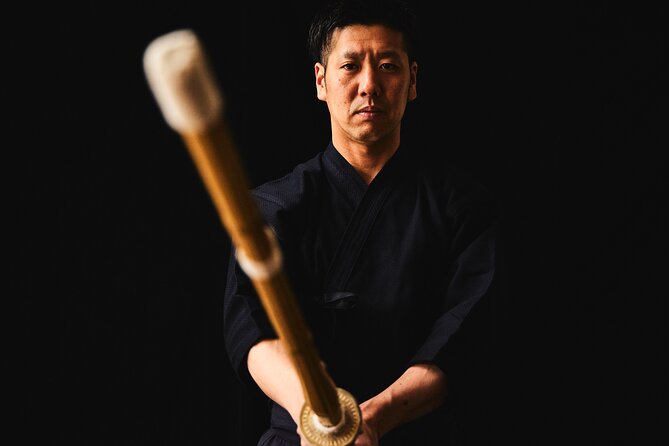
Once you have practiced the basic movements, the class moves into a match-style session. You learn how to duel properly, then face another participant under close supervision.
This is the payoff, but it is not a free-for-all. The techniques, manners, and safety rules come first. The instructors guide the action and adjust the level, so the match can be playful and relaxed or more demanding for people who want a stronger challenge.
Families often find this part especially fun. Parents and children can face each other after learning the proper movements, giving everyone a clear goal during the earlier practice. Friends and couples can also train together and then test what they have learned.
Some participants also challenge Toshi. That can be a memorable way to understand the speed and skill of a trained instructor, but you should follow his direction and choose a pace that feels comfortable. You do not need to compete seriously to enjoy the match.
The armor provides an important sense of safety, but you should still treat the activity with care. Listen closely, keep your strikes controlled, and tell the instructors if you need a pause. The experience is beginner-friendly, not risk-free simply because it is supervised.
Photos, videos, snacks, and facilities
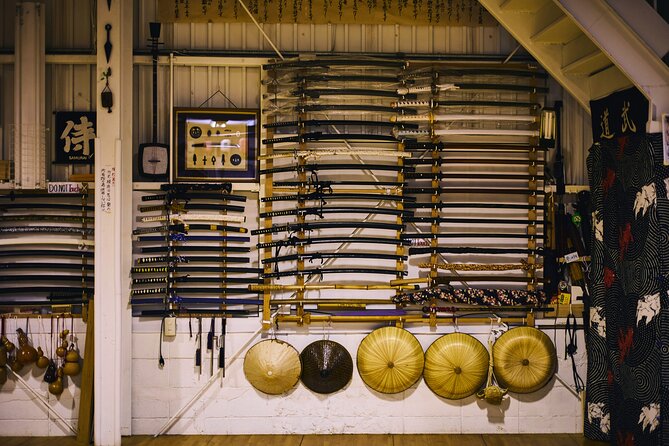
Photos and videos are part of the package rather than an extra purchase. The instructors capture the training and sparring, then send the digital files afterward. Some participants received their pictures and videos within 24 hours, though the supplied information does not promise a fixed delivery time.
This is good value for a hands-on activity. You can concentrate on learning instead of asking a companion to stand outside the action with a phone. You also receive a record of the full-armored portion, which is difficult to capture by yourself.
There is time for a photo session in the dojo, too. You can pose in the uniform and armor and take pictures with the training space and samurai displays around you. The images should feel like a record of something you did, not the entire purpose of the visit.
Water is available during the activity, and the hosts have also offered drinks and Japanese snacks afterward. These small touches help you recover after the physical part and create a relaxed ending to the lesson.
The changing rooms, showers, heating, and air conditioning are practical advantages. They matter more after you have spent an hour or more moving in armor than they would on a normal museum visit.
What the $131.32 price buys you
At $131.32 per person, this is not the cheapest cultural activity in Osaka. The price makes more sense if you want instruction, equipment, staff attention, and keepsake media in one package.
You are paying for roughly two hours at a real dojo, an English-language introduction to samurai culture and kendo, use of the uniform and armor, guided practice, supervised sparring, and digital photos and videos. The small-group format adds value because beginners need correction. A large class would make it harder to learn footwork and stance properly.
The price also compares favorably with a simple costume experience if your goal is participation. A photo-only session may take less time and require less effort, but it will not teach you how to use a shinai or let you test the basic movements in a match.
I would consider it especially worthwhile for families, martial arts fans, history enthusiasts, and anyone who wants one memorable activity away from Osaka’s usual food and sightseeing circuit. It is less compelling if you want a quiet cultural visit, dislike changing clothes, or have no interest in physical practice.
With more than 20 bookings in the previous month and a listed 100 percent recommendation rate from 515 ratings, availability can matter. The maximum group size is 12, so booking ahead is sensible if you need a particular time.
Who will enjoy this most
This activity works well for first-time visitors because no prior experience is needed. The instructors explain the movements step by step, and the English support helps you understand both the physical rules and the cultural meaning behind them.
Families are a strong match. Children can take part at an age-appropriate level, and older children often enjoy the final match with parents or siblings. A birthday activity can work particularly well for a child interested in samurai, provided the child is comfortable with changing and wearing protective gear.
It also suits solo visitors. If the session has only one participant, you may receive personal instruction rather than being lost in a group. You still get the photos and videos, which is useful when you are exploring Japan alone.
Couples and friends can make the session more social by practicing together and sparring at the end. Martial arts fans will appreciate the chance to ask questions and test basic technique with a trained instructor.
You should think twice if you have an injury or strongly prefer passive sightseeing. The information says most people can participate, but it does not provide detailed medical guidance. Contact the provider before booking if you have a specific physical concern.
Practical planning for your Osaka day
The activity lasts about two hours, but allow extra time around it for transportation, changing, and cooling down. Since the experience begins and ends at the dojo, it is easy to pair with other plans in Kita Ward or nearby central Osaka, provided you do not schedule something immediately afterward.
The location is near public transportation, but the supplied details do not identify a particular station or travel time. Check the route from your hotel on the day before you go, and use the exact street address rather than relying only on the tour name.
A mobile ticket is provided, and confirmation arrives at booking. Keep your phone charged so you can show the ticket and later receive the digital media.
The cancellation terms are straightforward: cancel at least 24 hours before the local start time for a full refund. Cancellations or changes made less than 24 hours before the start are not refunded or accepted.
Service animals are allowed, and most people can participate. The activity is limited to 12 participants, which supports the personal teaching that makes this experience work.
Should you book the kendo experience?
I would book this if you want to do something with Japanese culture rather than only look at it. The strongest reasons are the real dojo setting, patient instruction from Toshi and Kumiko, full protective gear, supervised sparring, and photos and videos included in the price.
The biggest caution is that the experience asks for energy and attention. It is not just dressing up, and the armor and footwork may leave you warm and tired. That is exactly why I think it offers better value than a short photo session for the right person.
Book it for a family, a martial arts enthusiast, a curious solo visitor, or friends who want a shared story from Osaka. Skip it only if you are seeking a quiet museum-style activity or want to avoid any physical exertion.
FAQ
How long does the kendo experience last?
The experience lasts approximately two hours and ends back at the meeting point.
Where does the activity take place?
It begins and ends at 1-chōme-18-2 Honjōhigashi, Kita Ward, Osaka, 531-0074, Japan. The dojo is near public transportation.
Do I need previous kendo or martial arts experience?
No. The activity is beginner-friendly, and no prior experience is required.
Is the experience conducted in English?
Yes. The session is conducted in English, with Toshi teaching kendo and Kumiko assisting with explanations and cultural background.
Are children allowed to participate?
Yes. Children aged 3 to 5 focus on wearing the uniform and armor and taking safe photos. The experience also suits older children and families.
Are photos and videos included?
Yes. Digital photos and videos of the experience are provided as a souvenir. Some participants received their files within 24 hours, but no fixed delivery time is stated.
Just added around Osaka
- Discover Real Osaka: A Cultural Walk with Food & Drink★ 5.0 · 13 reviews
- From Osaka/Kyoto: Kyoto & Nara Day Trip with Optional Lunch★ 4.5 · 79 reviews
- Osaka 6hr Private Walking Tour with Government Licensed Guide★ 5.0 · 174 reviews
- Private Airport transfer Kansai Intl. Airport(KIX) to OSAKA CITY★ 4.5 · 12 reviews
- Osaka: Namba Local Food Walking Tour (Taste 15 Dishes)★ 5.0 · 20 reviews
- Osaka Delights: Traditional Japanese Food Tour★ 4.5 · 33 reviews
- 1 Day Takoyaki Making and Osaka Castle Walking Tour★ 5.0 · 15 reviews
- Badminton in Osaka & Kyoto with Locals!★ 5.0 · 15 reviews
Osaka Tours, compared.
Shinsekai Food Tour with 13-15 Dishes at 5 Eateries
Read our review →
Osaka Food Tour: 13 Dishes at 5 Local Eateries
Read our review →
Hungry Osaka Street Food Tour:15 Tastings & 3 Drinks with a Local
Read our review →
Hotspots & Hidden Gems Walking Tour Private or Group
Read our review →Browse the lists this tour appears in