
Reviewed · OSAKA TOURS
Tea Ceremony Experience in Osaka Doutonbori
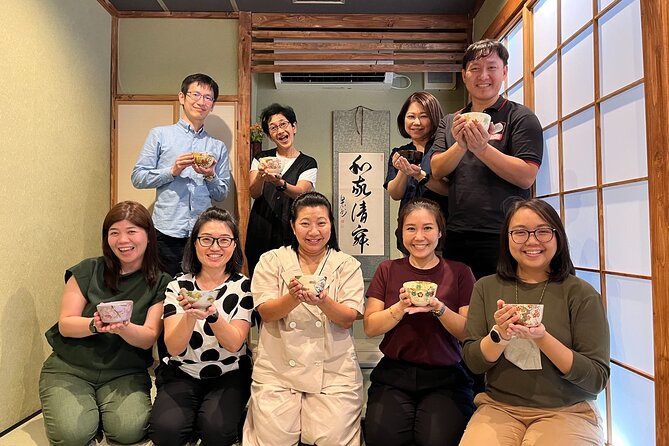
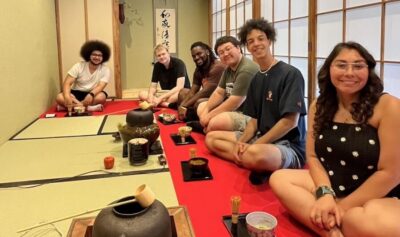
Osaka’s Dotonbori is all neon signs, restaurant crowds, and noise. Upstairs, this small-group tea ceremony offers a striking change of pace. You learn why the ceremony matters, watch the host prepare matcha, then make and drink your own bowl with a traditional sweet.
I like the hands-on format and the clear teaching. You do not just sit quietly and watch. You learn how to use the tools, serve the tea, and drink it with proper etiquette. I also like the family-friendly option of caffeine-free matcha milk for children.
The main consideration is the location. The address can confuse map apps, and children under five may not be accepted. The session is short, around 45 minutes, so this is an introduction rather than a full formal tea-school lesson.
Key points at a glance
- A calm room above Dotonbori: Step away from Osaka’s busy entertainment district without leaving central Osaka.
- Watch, then make your own matcha: The teacher demonstrates the process before giving you a turn with the whisk.
- Guides with strong teaching skills: Hosts including Kazu, Mai, and Soda are praised for warmth, clear English, and cultural explanations.
- Traditional sweets are part of the lesson: A Japanese sweet accompanies the tea and helps explain the ceremony’s customs.
- Good for families: Children can have caffeine-free matcha milk, but under-fives need advance contact and may not be admitted.
- Easy to budget: At $20.69 per person, the experience includes instruction, tea, and sweets in a compact central-Osaka visit.
A quiet room in the middle of Dotonbori
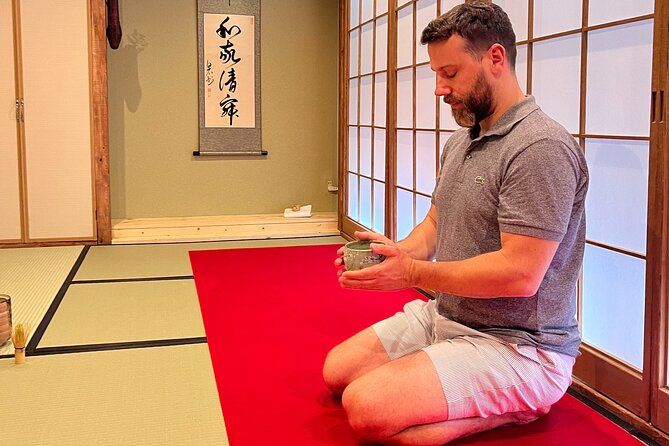
The appeal begins with contrast. Dotonbori is one of Osaka’s busiest areas, yet the tea class takes place at Tea Ceremony Osaka The Osaka, on the second floor of a building at 1-chome Higashi-5-26 in Chuo Ward.
That change of mood is part of the experience. You are not traveling to a remote garden or a countryside tea house. You are learning about one of Japan’s most refined traditions a short distance from Osaka’s famous food and entertainment streets.
The setting is practical rather than grand. This is an urban class in a central location, not a lavish historic residence. That matters when you choose it. You get a direct cultural lesson without giving up a large part of your sightseeing day.
The teacher begins with the background of the Japanese tea ceremony and explains its place in Japanese culture. The tradition developed as an art form in the 16th century, and the instruction also covers the meaning behind the movements, tools, manners, and quiet attention expected during tea.
More Tea Ceremonies in Osaka
- Osaka: Tea Ceremony Experience
★ 4.9 · 1,426 reviews - Osaka: Japanese Traditional Sweets Making and Tea Ceremony
★ 4.7 · 118 reviews - Osaka Temple Cool Foot Bath & Matcha Experience〈45min〉
★ 4.9 · 82 reviews
What happens during the 45-minute class
The experience follows a sensible teaching pattern. First, the host explains the ceremony and its customs. Then you watch a traditional preparation before trying the process yourself.
You can expect the teacher to explain how matcha is made, how it is presented, and how it should be received and drunk. The details matter because the ceremony is not simply a lesson in powdered green tea. The movements show care, respect, and attention between the person preparing the tea and the person receiving it.
Several hosts are named in the feedback connected with this experience. Kazu is described as warm, relaxed, and funny, while Mai is praised for her history lessons and calm instruction. Soda is also singled out for creating a peaceful session. Your teacher may be different, but the format is designed around a personal class rather than a large lecture.
The group size can reach 15 people, though some sessions are much smaller. A class of six, or even two couples, gives you more room to ask questions and practice. At the full stated limit, the lesson may feel less private, so keep the maximum group size in mind if personal attention is your top concern.
The listed duration is approximately 45 minutes. One account describes a session lasting about an hour, so I would avoid booking it tightly between two fixed appointments. The class is short enough to fit into a morning or afternoon in Dotonbori, but give yourself extra time to find the room.
Watching the tea master work
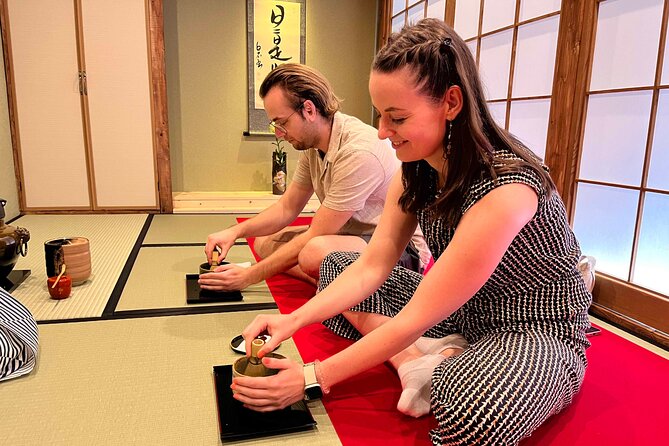
The demonstration is the heart of the class. You see the teacher handle the tea tools and prepare matcha in the proper manner before you attempt it yourself.
That order is useful. Matcha looks simple until you try to create the right texture with a bamboo whisk. Watching first lets you notice the pace, the hand movements, and the way each item is treated. The ceremony can feel formal, but the instructors keep it approachable and explain what you are seeing.
The ceremony also gives you a chance to pause. Several descriptions of the class focus on its peaceful mood, and that is easy to understand. You sit quietly, listen to the teacher, and pay attention to a small set of deliberate actions. It is a welcome counterpoint to the bright signs and constant movement outside.
Do not expect a silent, highly strict ritual from start to finish. The format is educational and interactive. The hosts explain the customs, answer questions, and use humor when appropriate. One account mentions playful sound effects and the traditional foot-shuffling movement, which suggests the lesson does not take itself so seriously that beginners feel nervous.
Making your own bowl of matcha
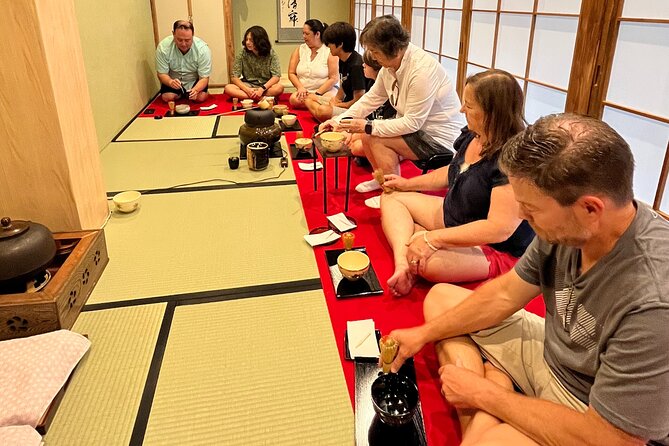
After watching the demonstration, you get to prepare your own tea. This is the part that makes the class better value than a simple performance.
You handle the tools and whisk the matcha yourself. The teacher guides you through the process, so you are not expected to know the correct movements before arriving. You then drink the tea you have made and practice the proper way to receive and enjoy it.
The hands-on section also gives you a better feel for the care involved in the ceremony. A bowl of matcha is not just a quick drink. The preparation, presentation, and drinking all follow a pattern, and the class shows how those steps fit together.
The flavor may be an adjustment if you are used to sweetened tea. Matcha has a strong, grassy taste, and the traditional preparation does not turn it into a dessert drink. The included Japanese sweet helps balance the tea and is part of the custom, not just an extra snack.
If you already drink matcha, you may value the etiquette and cultural background more than the basic whisking lesson. If this is your first introduction, the chance to make your own bowl keeps the session active and memorable.
Same base, a completely different sort of day:
- Osaka Go Karting Tour with Funny Costume
★ 5.0 · 2,658 reviews - Osaka Castle: Museum and Tower Entry Ticket
★ 4.5 · 2,380 reviews - Osaka: Shinsekai Food Tour with 13-15 Dishes at 5 Eateries
★ 4.8 · 2,204 reviews - Osaka Food Tour: 13 Dishes at 5 Local Eateries
★ 5.0 · 2,149 reviews
The sweet, the tools, and the etiquette
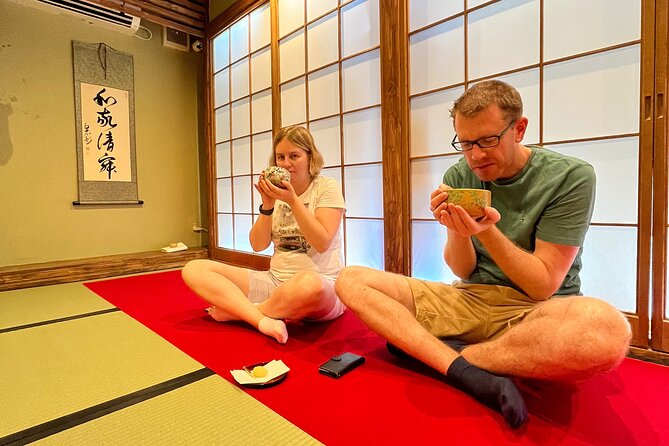
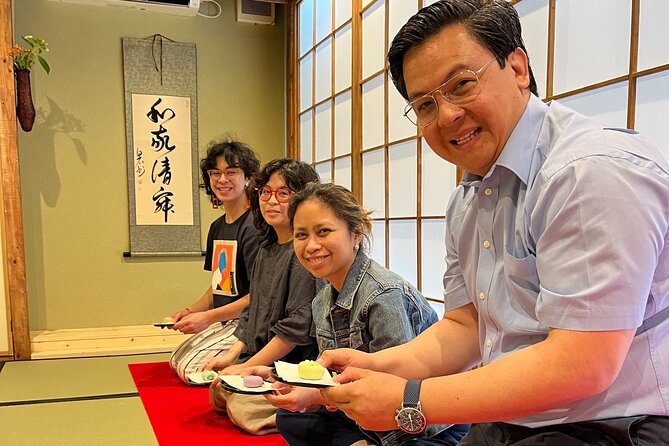
Traditional sweets accompany the tea. The exact item can vary, since the teaching refers to sweets connected with the seasons, but you should expect a small Japanese treat rather than a full snack or meal.
The sweet serves a purpose. You eat it before drinking the matcha, which prepares your palate for the tea’s bitterness. It also shows how Japanese tea gatherings bring together taste, appearance, season, and manners.
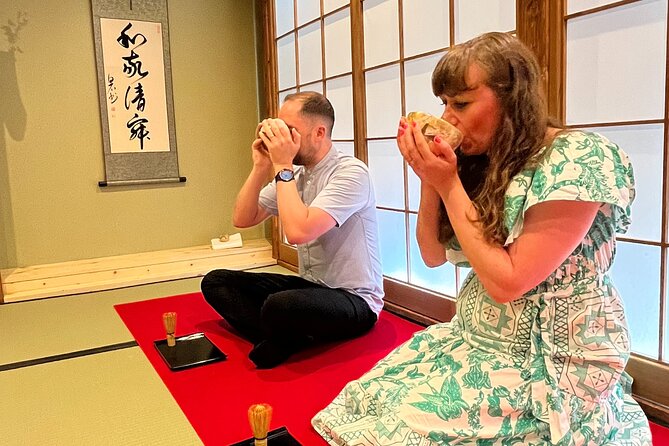
The teacher explains how to serve and drink the tea correctly. That can include how to handle the bowl and how to show respect during the exchange. You do not need to worry about making a serious mistake. The point is to understand the gestures and try them with guidance.
I find this useful for visitors who want more than a photo opportunity. You leave with a simple skill you can repeat at home, plus a better sense of why Japanese tea culture places such value on care and courtesy.
Why the history adds value
The background lesson gives the ceremony some context. Tea gatherings have long been linked with social status, hospitality, and serious conversation. One particularly interesting point from the teaching is the connection between tea gatherings and the samurai class, including their use as settings for political and strategic discussion.
The class also explains the idea that people entering the tea room should meet as equals. That principle helps explain why the ceremony focuses so closely on mutual respect, even when the host and guest have different roles.
You do not need a specialist interest in Japanese history to enjoy this part. The information is presented as a guide to what you are about to see, not as a long academic lecture. The best sessions balance explanation with action, which is why the watch-then-practice structure works well.
English ability is another practical strength. The guides named in the experience are praised for clear English, friendly instruction, and the ability to explain both the procedure and the culture. That makes a difference when etiquette is involved. A demonstration without explanation could leave you copying movements without understanding them.
Family appeal and limits
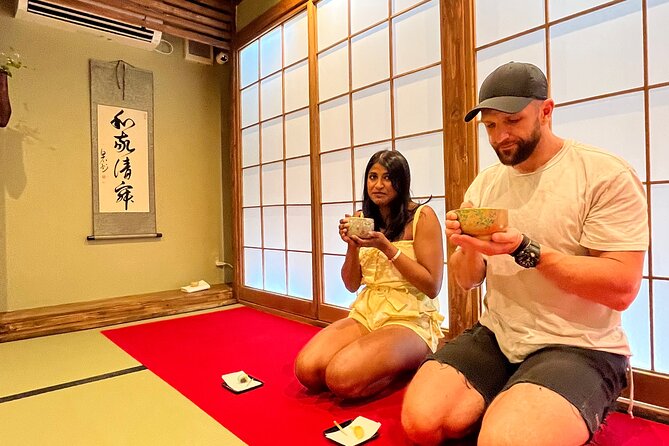
Families can join the regular experience, and children have a caffeine-free matcha milk option. That lets younger participants take part in the ceremony without drinking standard matcha.
The activity still has limits for very young children. If you are bringing someone under five, contact the provider before booking. Children under five may not be admitted even if an adult has purchased a ticket, so do not assume a paid adult place guarantees entry for a toddler.
Older children are likely to get the most from the class if they can sit, listen, and follow simple instructions. The practical whisking section gives them something to do, while the caffeine-free drink keeps the experience suitable for the family.
The class is also a good choice for couples, solo visitors, and friends who want a cultural activity that does not take half a day. It is less suitable if you want to wear a kimono, visit a historic temple setting, or attend a long, formal ceremony conducted entirely in silence. Those features are not part of this experience.
Price, group size, and overall value
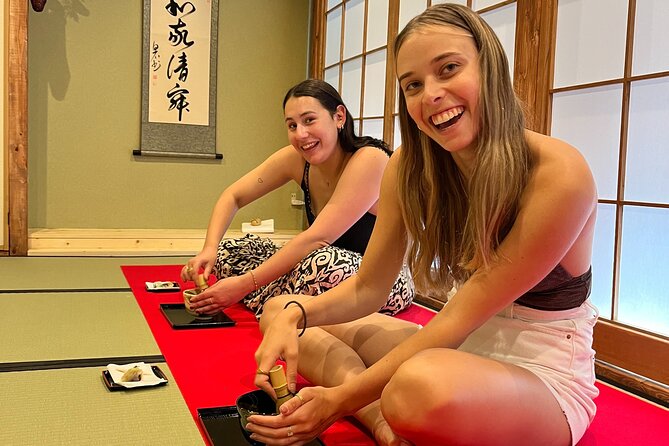
At $20.69 per person, this is a modestly priced cultural activity in one of Osaka’s most central districts. The fee covers the instruction, the tea ceremony demonstration, your own matcha preparation, the drink, and a traditional sweet.
The value comes from the personal teaching. You are not paying only to watch someone whisk tea. You receive an explanation of the ceremony, learn how to behave as a guest, and get practical time with the tools.
The maximum group size is 15 people. That is still small compared with a major attraction, but the actual class may be smaller. If you prefer close guidance, book with the understanding that group size can vary from intimate to moderately sized.
The experience also saves transport time. Since it takes place near Dotonbori and ends back at the meeting point, you can combine it with food, shopping, or evening sightseeing nearby. The trade-off is that the class lacks the atmosphere of a rural tea house or a temple garden.
A mobile ticket keeps entry simple. Confirmation is provided when you book, and free cancellation is available if you cancel at least 24 hours before the start time. Changes or cancellations inside that window are not refunded, so check your Osaka schedule before committing.
Finding the correct meeting point
Pay close attention to the address. The meeting point is Tea Ceremony Osaka The Osaka, at Tea Ceremony Experience The Osaka, 2F, Dotonbori Building, 1-chome Higashi-5-26, Osaka 542-0077.
The provider warns that map links can send you to the wrong place. Use the Google Maps app and search for tea ceremony osaka the osaka. The word Higashi, meaning east, is important. The common mistake is entering 1-5-26 instead of 1-chome Higashi-5-26.
This is the sort of small detail that can spoil a short appointment, so arrive with enough time to check the building and find the second-floor room. The location is near public transportation, but the exact walk can be harder to follow amid Dotonbori’s signs and crowds.
Who should book this Osaka tea experience
I would choose this class if you want a compact introduction to Japanese culture with a real activity at its center. It suits first-time visitors, families with older children, couples, and anyone who wants a quiet break from Osaka’s food streets.
It is especially useful near the end of a Japan trip. You can reflect on the country’s customs, learn a practice you may remember after returning home, and spend less than an hour doing something slower and more focused.
You may want another option if your main goal is a highly formal ceremony, traditional clothing, an old tea house, or a long period of meditation. This is an informal teaching experience in a city location. Its strength is access and participation, not elaborate surroundings.
Should you book it?
Yes, if you want to understand matcha rather than simply drink it. The price is fair, the class is short, and the teacher lets you watch the traditional method before making your own tea.
Book it with three points in mind: verify the Higashi address, allow more than 45 minutes in your schedule, and contact the provider before bringing a child under five. For a first look at tea etiquette and Japanese hospitality in central Osaka, this is a useful and enjoyable choice.
FAQ
Where does the tea ceremony take place?
It takes place at Tea Ceremony Osaka The Osaka, on the second floor of Dotonbori Building at 1-chome Higashi-5-26, Chuo Ward, Osaka 542-0077.
How long does the experience last?
The listed duration is approximately 45 minutes. Some sessions may take closer to an hour, so allow extra time if you have another booking afterward.
What happens during the class?
The teacher explains Japanese tea culture, traditions, history, and etiquette. You watch a tea ceremony, enjoy matcha and a Japanese sweet, then prepare and drink your own matcha.
Is the activity suitable for children?
Yes, the class is family-friendly. Children can receive caffeine-free matcha milk instead of regular matcha.
Can children under five join?
Contact the provider in advance if you are bringing a child under five. Children in that age group may not be admitted, even when accompanied by an adult with a ticket.
What is the maximum group size?
The maximum is 15 participants. The experience is described as a small-group activity, but the number of people can vary by session.
How do I find the correct location?
Search Google Maps for tea ceremony osaka the osaka. Use the address with Higashi, written as 1-chome Higashi-5-26. The provider warns that some map links show a different location.
Can I cancel for a refund?
You can cancel at least 24 hours before the start time for a full refund. Cancellations or changes made less than 24 hours before the experience are not accepted for a refund.
Just added around Osaka
- Discover Real Osaka: A Cultural Walk with Food & Drink★ 5.0 · 13 reviews
- From Osaka/Kyoto: Kyoto & Nara Day Trip with Optional Lunch★ 4.5 · 79 reviews
- Osaka 6hr Private Walking Tour with Government Licensed Guide★ 5.0 · 174 reviews
- Private Airport transfer Kansai Intl. Airport(KIX) to OSAKA CITY★ 4.5 · 12 reviews
- Osaka: Namba Local Food Walking Tour (Taste 15 Dishes)★ 5.0 · 20 reviews
- Osaka Delights: Traditional Japanese Food Tour★ 4.5 · 33 reviews
- Badminton in Osaka & Kyoto with Locals!★ 5.0 · 15 reviews
- From Osaka or Kyoto: Kyoto and Nara 1-Day Bus Tour★ 3.5 · 141 reviews
Osaka Tours, compared.
Shinsekai Food Tour with 13-15 Dishes at 5 Eateries
Read our review →
Osaka Food Tour: 13 Dishes at 5 Local Eateries
Read our review →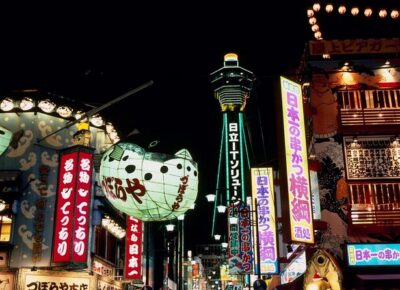
Hungry Osaka Street Food Tour:15 Tastings & 3 Drinks with a Local
Read our review →
Hotspots & Hidden Gems Walking Tour Private or Group
Read our review →Browse the lists this tour appears in