
Reviewed · OSAKA TOURS
Osaka: Japanese Traditional Sweets Making and Tea Ceremony
The best part of this Osaka experience is that you do not simply watch a tea ceremony. You color and shape two seasonal nerikiri sweets, then prepare matcha to drink with them. The sweets are made from white and red bean paste supplied by long-established Kyoto shops, so this is both a craft lesson and a tasty introduction to wagashi.
I like the low $18 price and the easy central location, just one minute from Higobashi Station. I also like the calm, creative pace: you can ask questions, see matcha ground into powder, and learn why the sweets take flower and fruit shapes. The main consideration is communication. The instructor teaches in Japanese, though English explanations can be added if you contact the provider in advance.
Key Points at a Glance
- Two seasonal sweets: Make a flower-shaped nerikiri and a second kinton nerikiri.
- Kyoto-made ingredients: Work with white and red bean paste produced by long-established Kyoto shops.
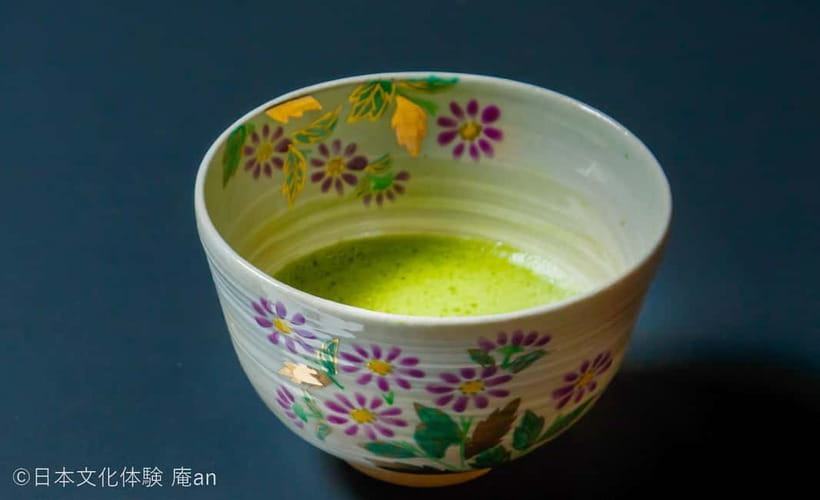
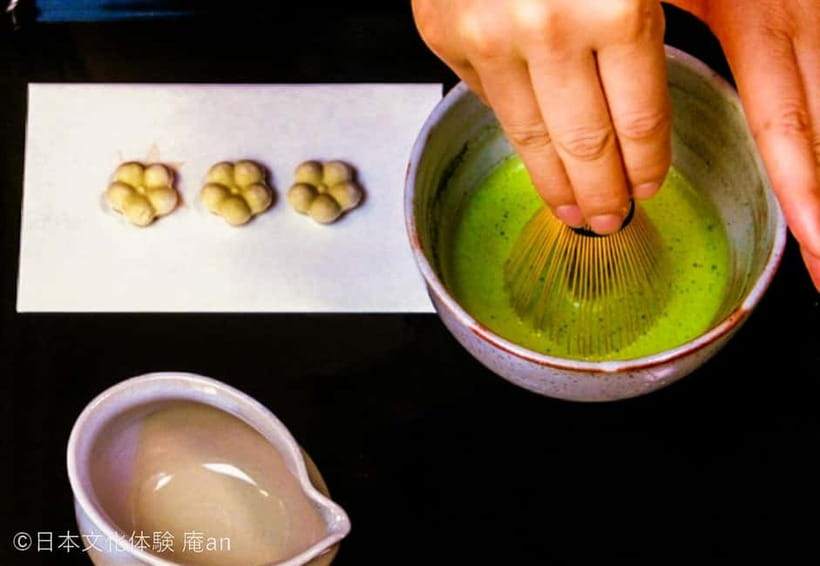
- Uji matcha preparation: See matcha ground into powder, then make your own tea.
- Central Osaka location: The venue is one minute from Exit 10 at Higobashi Station.
- Friendly instruction: Instructors including Maiko, Jun, and Mihiko have been praised for patience, humor, and clear English support.
- A strong budget pick: At $18 for 95 minutes, this is an easy cultural activity to fit between sightseeing stops.
Making Wagashi Instead of Just Photographing It
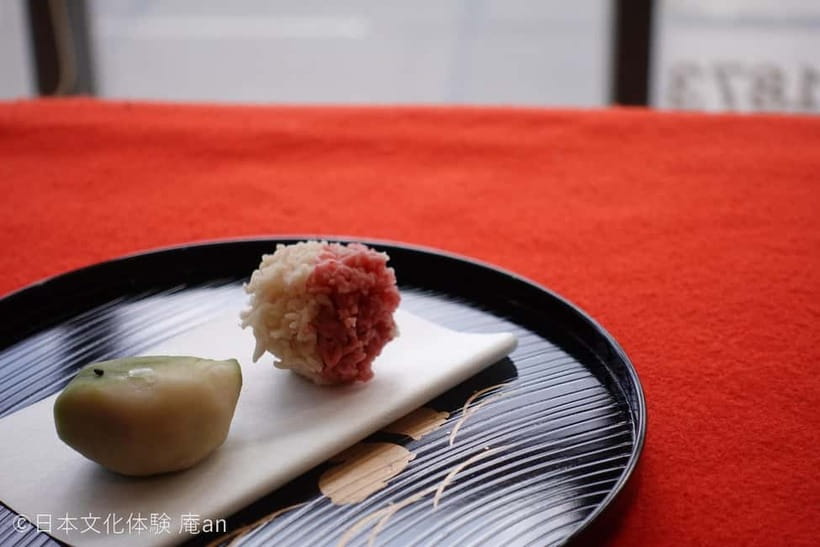
Japanese sweets can look almost too perfect to eat. Nerikiri, a refined type of wagashi, is often shaped like flowers, leaves, fruit, or other seasonal objects. Here, you get to handle the paste yourself and see how a plain mound becomes a small edible design.
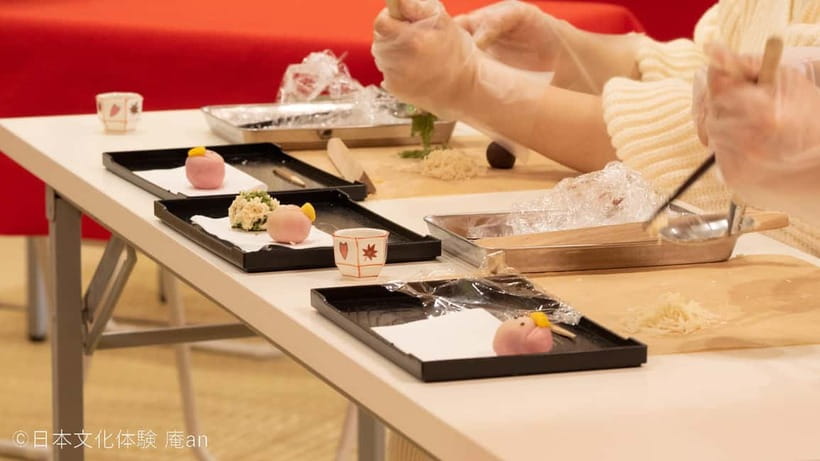
The class begins with an explanation of traditional Japanese sweets. You then start with the coloring process, working with white bean paste before shaping it. This first stage matters because the color and form are not random decorations. They connect the sweet to the season and to the natural shapes that inspire Japanese confectionery.
You make two different sweets. The first is a flower-shaped nerikiri. The second is a kinton nerikiri, another delicate style that gives you a different shaping task. The exact seasonal designs can change, which keeps the activity connected to the time of year rather than locking it into one repeated souvenir.
I like this part because it gives you something to do with your hands. You are not expected to be a trained pastry chef, and the teacher talks you through the procedure. Still, nerikiri rewards patience. Small differences in pressure, color, and shaping affect the final result, so this is better suited to people who enjoy careful work than to anyone hoping for a rushed, slapdash cooking class.
The bean paste is sweet, smooth, and central to the experience. It does not taste like a Western cake or cookie. Its sweetness is meant to balance the slight bitterness of matcha, which you drink later. That pairing helps explain why Japanese tea sweets are often small and beautifully formed rather than large and heavily frosted.
More Tea Ceremonies in Osaka
- Osaka: Tea Ceremony Experience
★ 4.9 · 1,426 reviews - Tea Ceremony Experience in Osaka Doutonbori
★ 5.0 · 754 reviews - Osaka Temple Cool Foot Bath & Matcha Experience〈45min〉
★ 4.9 · 82 reviews
The 55-Minute Craft Session
The sweets-making portion takes up the first 55 minutes. The venue prepares the required tools, so you do not need to bring specialist equipment. The instructor first explains the ingredients and the general idea behind nerikiri, then demonstrates the steps before you begin.
The order is useful. You learn about the paste before coloring it, and you see the finished style before trying to form your own. If you have children with you, the hands-on format gives them a clear task, and children aged 10 and 12 have enjoyed the activity according to the supplied experience notes.
Expect a little trial and error. Your flower may not look exactly like the instructor’s, and that is part of the point. The class is about learning the method and understanding the care behind the sweet, not producing a display-case-perfect piece on your first attempt.
Several instructors have been singled out for their teaching style. Maiko has been described as cheerful and enthusiastic, while Jun has been praised for patient explanations. Mihiko has also taught in both Japanese and English despite being relatively new to the role. The instructor may vary, so you should not book solely on the promise of one particular person, but the teaching approach appears to be warm and inclusive.
At about the 55-minute mark, there is a break. Use it to look over your sweets, take pictures, and reset before the tea portion begins. The schedule allows the two activities to feel distinct rather than cramming everything into one long demonstration.
From Matcha Powder to Tea Bowl
The tea section begins with an explanation of tea and the ceremony. You also see a demonstration of matcha being ground into powder, an especially useful detail for anyone who has only encountered matcha as a bright green drink in a café.
The class uses single-origin Uji matcha. Uji, near Kyoto, is one of Japan’s best-known tea-growing areas, and using a specified origin gives the tasting more focus than a generic powdered tea. You are not simply told that matcha is important. You see part of its preparation and then make your own.
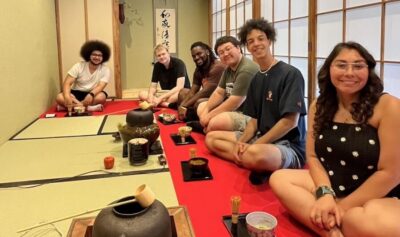
The instructor explains how to prepare the matcha and how to drink it properly. You learn about the gestures and expressions of appreciation connected with Japanese tea culture. This is presented as a fairly relaxed tea experience rather than a strict, formal ceremony lasting several hours.
That relaxed tone is a strength for most first-time participants. One class was described as a casual tea ceremony, which suited people who wanted cultural context without feeling nervous about getting every movement exactly right. At the same time, one participant noted that the teacher explained the ceremony but did not require everyone to practice each formal action. If you want an exact traditional tea-school lesson, this may feel light. If you want an approachable introduction, it should fit well.
The balance with the sweets is the payoff. The high-quality bean paste provides sweetness, while matcha supplies a grassy, mildly bitter counterpoint. You eat and drink what you prepared, which gives the whole class a satisfying finish instead of leaving you with a craft but no chance to enjoy it.
A 95-Minute Schedule That Stays Manageable
The published timing is clear:
- 00 minutes: introduction to traditional Japanese sweets
- 00 to 55 minutes: flower-shaped nerikiri and kinton nerikiri making
- 55 minutes: break
- 65 minutes: explanation of tea
- After 65 minutes: matcha grinding demonstration and tea ceremony
- 85 minutes: picture time
- 85 to 95 minutes: eating and drinking
- 95 minutes: departure from the room
I like this structure because it fits neatly into an Osaka sightseeing day. Ninety-five minutes is long enough to learn and make two sweets, but short enough to combine with other plans in Nakanoshima, Umeda, or the Kitashinchi area.
The picture time comes before the final eating and drinking period. That is useful because your sweets are at their best for photographs before you consume them. If you want to take some home, a take-out box costs 100 yen. The box is not included, so decide before leaving if you want a small edible souvenir.
The completion certificate is also optional, at 300 yen. I would treat it as a keepsake rather than part of the value calculation. The main experience, tools, sweets, and tea activity are covered by the $18 price.
Same base, a completely different sort of day:
- Osaka Go Karting Tour with Funny Costume
★ 5.0 · 2,658 reviews - Osaka Castle: Museum and Tower Entry Ticket
★ 4.5 · 2,380 reviews - Osaka: Shinsekai Food Tour with 13-15 Dishes at 5 Eateries
★ 4.8 · 2,204 reviews - Osaka Food Tour: 13 Dishes at 5 Local Eateries
★ 5.0 · 2,149 reviews
Why the $18 Price Works
At $18 per person, this is one of the easier cultural activities to justify in Osaka. You receive an instructor-led lesson, use of the required tools, two sweets to make, a matcha demonstration, and your own tea. The short duration also means you are not paying for a full-day commitment.
The price is especially good if you want more than a quick tasting. A café can give you matcha and a sweet, but it will not usually show you how the sweet is colored and shaped or explain the customs around preparing tea. Here, the creative work is part of the cost.
There are a few extra charges to remember. A take-out box costs 100 yen, and a completion certificate costs 300 yen. Neither is essential, so the advertised price remains a fair guide to what you need to spend for the core activity.
I would not choose this experience for a grand, formal tea-room setting. The emphasis is on participation, instruction, and a friendly class. That makes it better value for families, first-time visitors, and anyone who wants a practical cultural activity without paying for an elaborate ceremony.
Finding the Venue Near Higobashi
The easiest route is Osaka Metro’s Yotsubashi Line to Higobashi Station. The venue is one minute from Exit 10, which is the most convenient arrival point.
You can also walk from Watanabebashi Station on the Keihan Nakanoshima Line in about five minutes. Yodoyabashi Station is about seven minutes away, Kitashinchi Station is about 10 minutes away, and Osaka Station is about 15 minutes from the meeting point.
The exact address matters here because one participant had trouble finding the building and described it as a gray building that Google Maps missed. I would arrive early, keep the map link handy, and allow extra time to identify the entrance rather than relying on a last-second search.
If you drive, use nearby coin parking. Parking is not included, and the practical choice is public transport.
There is no elevator in the building. You need to use stairs to reach each venue, so the experience is not suitable for anyone who cannot manage stairs. This is worth checking before booking, especially if you are carrying a stroller, luggage, or mobility equipment.
Language, Group Feel, and Punctuality
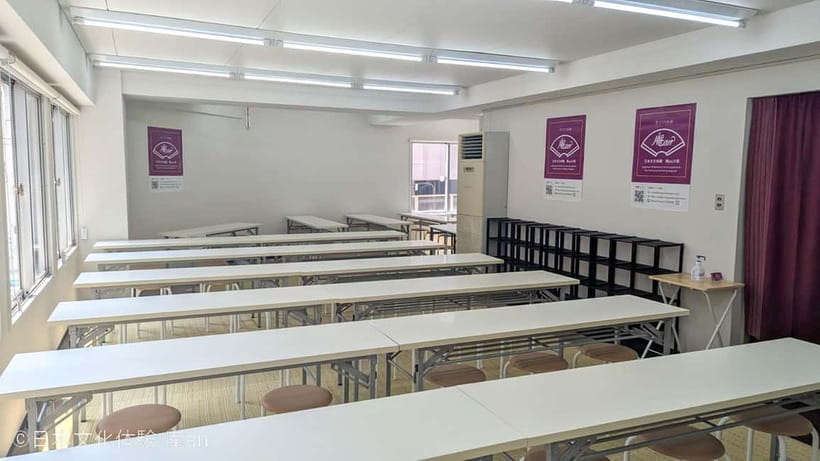
The operating language is Japanese. English translation is provided as much as possible, and you should contact the provider if you want English support added to your booking. Do not assume that a last-minute reservation will automatically include a full English lesson.
In practice, the instructors have often handled mixed-language groups well. English ability has ranged from very strong to more limited, but the teaching has included gestures, demonstrations, and patient repetition. Questions in English and Japanese have been answered, and instructors such as Maiko have been praised for giving clear explanations in both languages.
The experience can work well as a private or very small class when bookings are light. One couple had a class just for two people and found the instructor welcoming and energetic. A small group can be a real advantage if you want to ask about tea customs or take your time with the shaping process.
Do arrive on time. The event will not be held for late arrivals, and cancelled participation does not include compensation for your transport costs. I would aim to reach Higobashi before the scheduled start, especially if you are walking from Osaka Station or locating the gray building for the first time.
Who Will Enjoy This Osaka Culture Class
I would recommend this to you if you want a hands-on introduction to wagashi and matcha. It works particularly well for:
- First-time visitors who want a cultural activity beyond temples and shopping
- Couples looking for a relaxed shared activity
- Families with children who enjoy shaping and coloring food
- Food lovers curious about bean paste and Japanese sweets
- Budget-conscious visitors who want a guided experience under two hours
- People staying near Umeda, Nakanoshima, Yodoyabashi, or Kitashinchi
The class also suits a rainy day. Much of the value comes from the indoor instruction and the chance to slow down in the middle of a city itinerary.
I would be more cautious if you need a fully English-led class and have not contacted the provider. You may receive helpful English explanations, but the official language is Japanese. I would also look elsewhere if your priority is a highly formal tea ceremony with extended ritual practice.
Children under two who sit on a parent’s lap are free. Other participants need to be included in the booking, and people who do not participate are not allowed to enter the experience.
My Practical Verdict
I like this experience because it gives you three things in one compact visit: a lesson in Japanese confectionery, a look at matcha preparation, and a chance to take part in tea customs. The Kyoto bean paste and Uji matcha add genuine substance, while the instructors’ patient style keeps the class accessible.
The drawbacks are modest but real. English support needs advance attention, the venue requires stairs, and late arrivals cannot be accommodated. The tea ceremony is also casual and introductory, not a full formal training session.
For $18, I think this is a smart choice for a relaxed morning or afternoon in central Osaka. Book it if you want to make something with your hands, taste the result, and leave with a better sense of how sweets and tea fit together in Japanese culture. Skip it only if you want a strictly formal ceremony, a guaranteed English-only guide, or a class with no stairs.
FAQ
How long does the Japanese sweets and tea experience last?
The experience lasts 95 minutes, including sweets making, the break, tea instruction, matcha preparation, picture time, and eating and drinking.
What sweets will I make?
You will make two seasonal Japanese sweets: a flower-shaped nerikiri and a kinton nerikiri. The designs match the season and use colored white bean paste.
What kind of matcha is used?
The experience uses single-origin Uji matcha. You will also see a demonstration of matcha being ground into powder before preparing your own tea.
Is English available during the class?
The operating language is Japanese. English translation is provided as much as possible, and you should contact the provider if you would like English support added.
Can I take my sweets home?
A sweets take-out box is available for 100 JPY. It is not included in the experience price.
Is the venue accessible by elevator?
No. There is no elevator in the building, and you need to take stairs to reach each venue.
More Dessert Tours in Osaka
- Matcha Making Class in Osaka with Authentic Japanese Sweets Set
★ 5.0 · 509 reviews - Osaka: Matcha Making Experience with Japanese Sweets
★ 5.0 · 146 reviews - Matcha Making Class in Tokyo with Authentic Japanese Sweets Set
★ 5.0 · 744 reviews - Tokyo: Matcha Making Experience with Mochi Sweets in Asakusa
★ 4.9 · 388 reviews
Just added around Osaka
- Discover Real Osaka: A Cultural Walk with Food & Drink★ 5.0 · 13 reviews
- Private Airport transfer Kansai Intl. Airport(KIX) to OSAKA CITY★ 4.5 · 12 reviews
- From Osaka/Kyoto: Kyoto & Nara Day Trip with Optional Lunch★ 4.5 · 79 reviews
- Osaka 6hr Private Walking Tour with Government Licensed Guide★ 5.0 · 174 reviews
- Osaka: Namba Local Food Walking Tour (Taste 15 Dishes)★ 5.0 · 20 reviews
- Osaka Delights: Traditional Japanese Food Tour★ 4.5 · 33 reviews
- Badminton in Osaka & Kyoto with Locals!★ 5.0 · 15 reviews
- From Osaka or Kyoto: Kyoto and Nara 1-Day Bus Tour★ 3.5 · 141 reviews
Osaka Tours, compared.

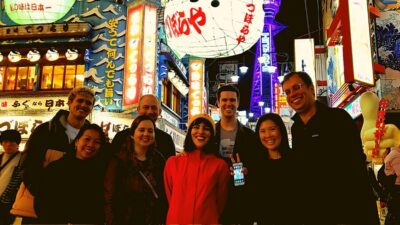
Shinsekai Food Tour with 13-15 Dishes at 5 Eateries
Read our review →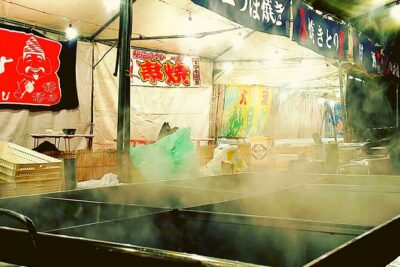
Osaka Food Tour: 13 Dishes at 5 Local Eateries
Read our review →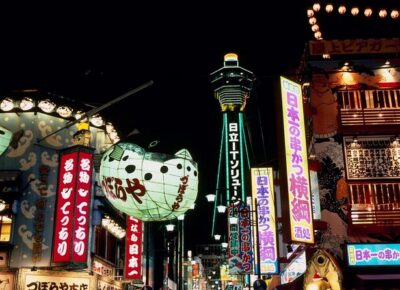
Hungry Osaka Street Food Tour:15 Tastings & 3 Drinks with a Local
Read our review →
Hotspots & Hidden Gems Walking Tour Private or Group
Read our review →Browse the lists this tour appears in