
Reviewed · OSAKA TOURS
Matcha Making Class in Osaka with Authentic Japanese Sweets Set
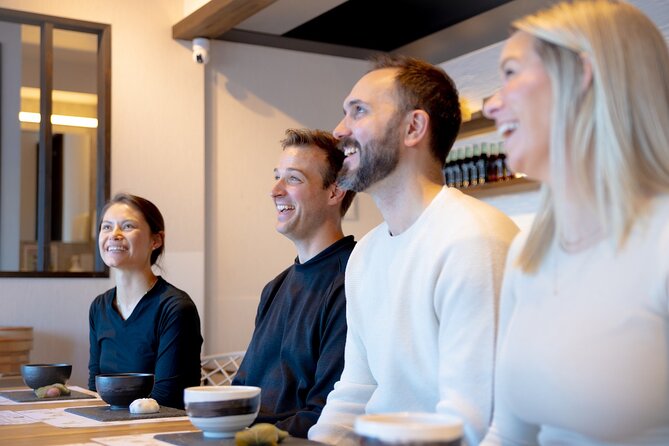
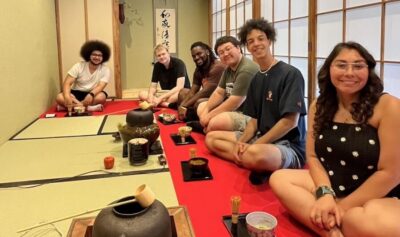
The best part of this Osaka class is that you do not just watch someone prepare matcha. You make it yourself, with an instructor correcting your technique as you go, then drink the tea with Japanese sweets. The lesson also covers where matcha comes from and why its preparation matters, so the bowl in front of you has some context.
I like the maximum group size of six, which keeps the lesson personal. I also like the practical focus: you get hands-on guidance and tips you can use at home, rather than a polished demonstration that ends when the host lifts the whisk.
The main drawback is finding the meeting point. The address is in Higashishinsaibashi, but the building entrance may not be obvious, so give yourself extra time and check the location video before setting out. The class lasts about an hour, making it easy to fit into a busy Osaka day, but it is a short introduction rather than a full tea-school course.
Key points at a glance
- Small class of up to six: You get room to ask questions and receive help with your whisking.
- Hosts teach in English: Momo, Fuko, Matty, and Yui are among the instructors praised for clear, friendly teaching.
- Matcha comes with Japanese sweets: The sweets balance the tea’s strong, grassy flavor and make the lesson feel like a proper tea break.
- History and technique are combined: Visuals and short quizzes help explain matcha production, origins, and tea customs.
- Morning and afternoon times: You can place the class around sightseeing, lunch, or an evening in Osaka.
- Good value at $21.89: For a one-hour cultural activity with tea, sweets, instruction, and equipment supplied, the cost is modest.
What happens during the one-hour Osaka matcha class
This is a compact cultural lesson held at Matcha Making Osaka, at 1-chōme-16-20 Higashishinsaibashi in Osaka’s Chuo Ward. You meet at the class location and return there when the session ends. There is no hotel pickup or drop-off, so you handle your own way to the venue.
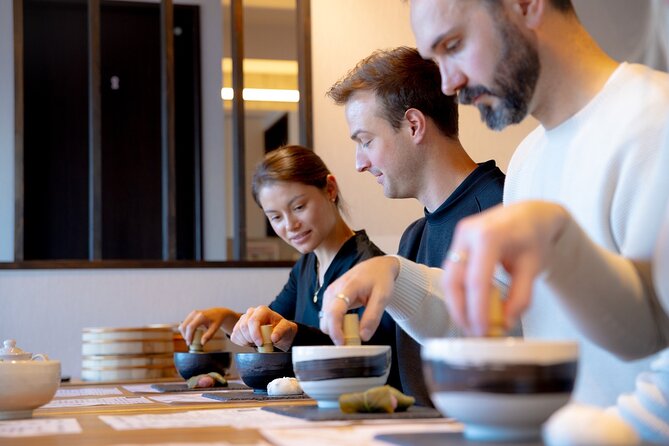
The format is designed for beginners. You do not need to know the difference between matcha grades, own a bamboo whisk, or understand Japanese tea etiquette before arriving. The tools and ingredients are prepared for you, and the English-speaking instructor takes you through the process one step at a time.
The class usually begins with background information. You learn about matcha’s origins, how it is produced, and its place in Japanese tea culture. The teaching style is not meant to feel stiff or overly formal. Visual aids and little quizzes help keep the opening talk active, which is useful if you prefer learning through examples rather than a long lecture.
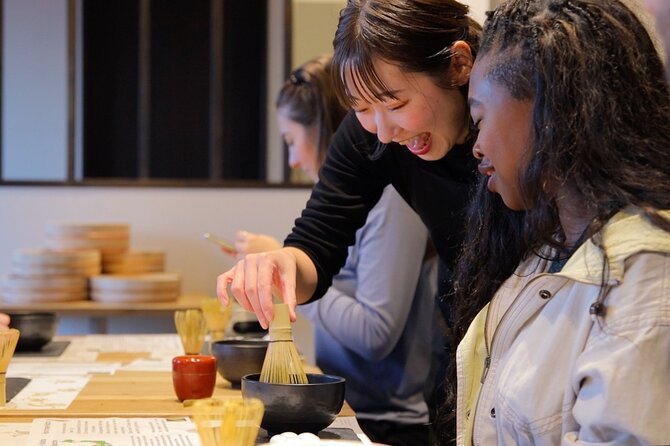
Then the practical work begins. Your host shows you how to prepare the tea and gives you the chance to repeat the process yourself. This is where the small group matters. If your whisking is too slow or your method needs a correction, the teacher can spot it and offer direct help.
The exact host may vary. Yui is praised for being easy to understand, while Momo is described as warm and lovely. Fuko uses a quiz to make the information easier to remember, and Matty brings an energetic, interactive style to the lesson. These details suggest that the class has a friendly teaching approach even when the instructor changes.
A few more Osaka half-days to weigh up
- Osaka: Matcha Making Experience with Japanese Sweets
★ 5.0 · 146 reviews - Osaka: Japanese Traditional Sweets Making and Tea Ceremony
★ 4.7 · 118 reviews - Matcha Making Class in Tokyo with Authentic Japanese Sweets Set
★ 5.0 · 744 reviews
Why making your own matcha is worth an hour
Matcha is easy to recognize but less easy to prepare well. Powdered green tea can taste bitter, flat, or overly strong when the proportions and whisking are off. A guided class gives you a chance to see the process clearly and correct mistakes before you try it alone at home.
I like this kind of practical cultural activity because it gives you something to remember beyond a photograph. You learn a small skill, taste the result, and gain a better sense of why the preparation is treated with care in Japan.
The class also shows that matcha is not simply a fashionable green drink. The lesson connects the powder in your bowl to Japanese tea customs and the steps used to turn tea leaves into fine powder. You will not become a tea master in sixty minutes, but you should leave with a better understanding of what you are drinking.
The instruction is casual rather than ceremonial in the strictest sense. Some descriptions of the session refer to tea ceremony elements, but this is best understood as an accessible introduction. If you want a silent, highly formal ceremony led according to every traditional rule, this may feel too relaxed. If you want to participate and ask questions, the informal style is a strength.
The Japanese sweets are part of the lesson
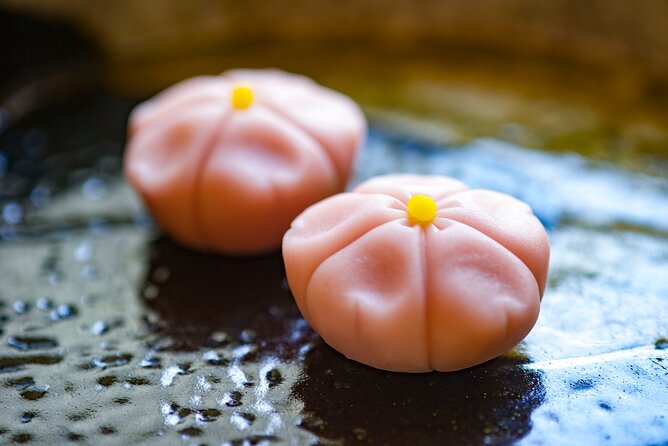
The tea is served with Japanese sweets, and that pairing is more important than it may first appear. Matcha has a pronounced, earthy flavor. A sweet accompaniment softens the bitterness and lets you notice more of the tea’s character.
The treats are included in the price, so you are not paying extra for a small snack at the end. They also make the session feel more complete. You prepare the drink, sit down to enjoy it, and take photographs of the finished tea and sweets.
Do not expect this to be a full meal. The information only promises matcha with Japanese sweets, not a broad food spread. That is perfectly suitable for a one-hour class, but you should plan lunch or dinner separately.
This pairing can also help people who are unsure about matcha. You may not love the tea on its own, especially if you are used to sweetened matcha drinks. The sweets offer a gentler first taste. Even people who do not usually choose matcha may find the class enjoyable because the focus is as much on making and learning as it is on drinking.
A relaxed class with real individual attention
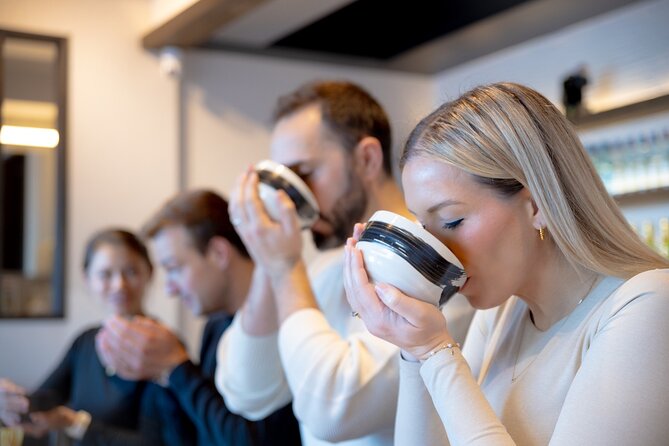
The group limit is six people. That is a useful middle ground. You get the energy of a shared activity, but the room should not feel like a large demonstration where you are left copying from the back.
For solo visitors, this setup is especially appealing. You can join without needing to organize a private group, and the hands-on format gives you an easy way to interact with other people. Couples and small families can also take part together without the class becoming too crowded.
The teaching is interactive. Short quizzes, visuals, questions, and direct correction make the class more than a simple talk. I would choose this over a much larger session if learning the method matters to you.
There is one limit to keep in mind: the class is only about an hour. The instructor needs to cover the background, demonstrate the technique, supervise your preparation, and allow time for tea and sweets. You will get the main ideas and basic method, but not an extended discussion of regional tea styles, advanced equipment, or the full history of Japanese tea practice.
More hands-on workshops in Osaka:
- Sushi Making Osaka Roll and Authentic Japanese Sushi Class
★ 5.0 · 1,220 reviews - Osaka: Ramen and Gyoza Cooking Class in Dotonbori
★ 5.0 · 378 reviews - Osaka Sushi Making Class – Hands-On Nigiri & Rolls (Same-Day OK)
★ 5.0 · 352 reviews - Osaka Cooking Class: Okonomiyaki &Japanese cuisines experience
★ 5.0 · 261 reviews
Choosing a morning or afternoon time
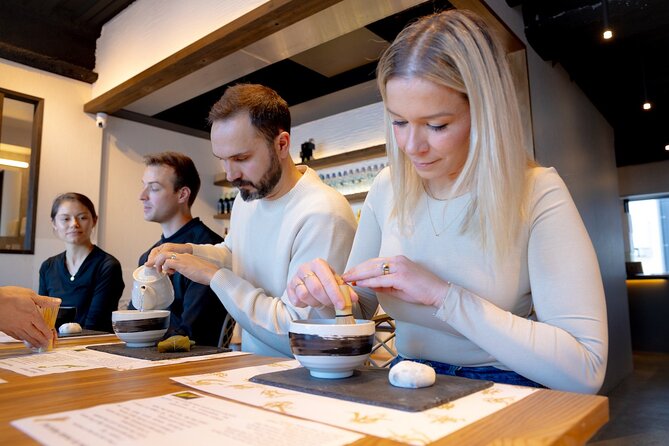
Morning and afternoon sessions are offered, giving you some useful control over your Osaka schedule. A morning class can work well before a day of sightseeing, especially if you want a quiet start before the city gets busier. An afternoon session can provide a calm break after shopping or exploring.
Because the class ends back at the same meeting point, it is easy to continue into the surrounding Chuo Ward area. You will need to arrange your own transport, but the venue is near public transportation.
I would avoid placing the class too close to another timed booking. The session itself is one hour, yet you still need time to locate the building, enter, and settle in. One visitor found the location harder to identify than expected, and another suggested watching the YouTube short used to explain the entrance. Treat that as practical advice, not an optional extra.
The address is:
Matcha Making Osaka
1-chōme-16-20 Higashishinsaibashi
Chuo Ward, Osaka 542-0083, Japan
A mobile ticket makes the booking simple, but it does not solve the navigation issue. Save the confirmation and location details before leaving your hotel, and arrive with enough time to look for the correct entrance.
What makes the teaching work
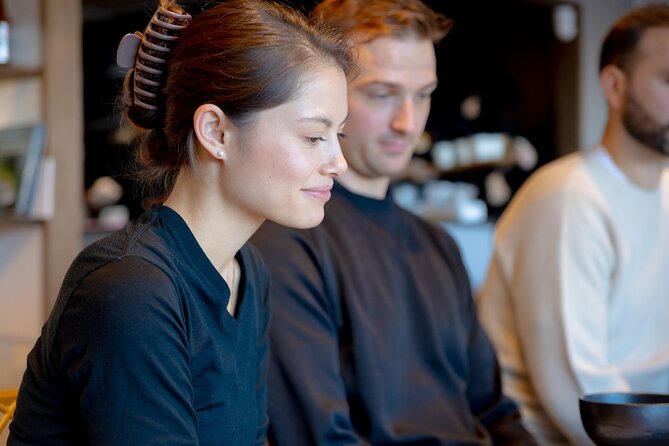
The strongest feature here is the way the class combines clear instruction with a light tone. Fuko’s use of a quiz, for example, gives you a way to remember the information instead of hearing a string of facts and forgetting them by dinner.
Momo, Matty, and Yui are also praised for making the activity comfortable and easy to follow. That matters because preparing matcha can feel awkward the first time. You may not know how firmly to hold the whisk, how quickly to move it, or what the finished tea should look like. A patient host keeps those small uncertainties from becoming a problem.
The class appears to welcome questions. That is valuable if you are curious about making matcha at home, buying powder in Japan, or understanding the difference between a café-style drink and a more traditional preparation. The stated focus on tips and tricks for home preparation makes the lesson useful after your holiday, not just during it.
At the same time, you should keep your expectations realistic. This is a beginner class, not professional training. It gives you a solid starting point, but the quality of your homemade matcha will still depend on the powder, water, tools, and practice you have later.
Is $21.89 good value?
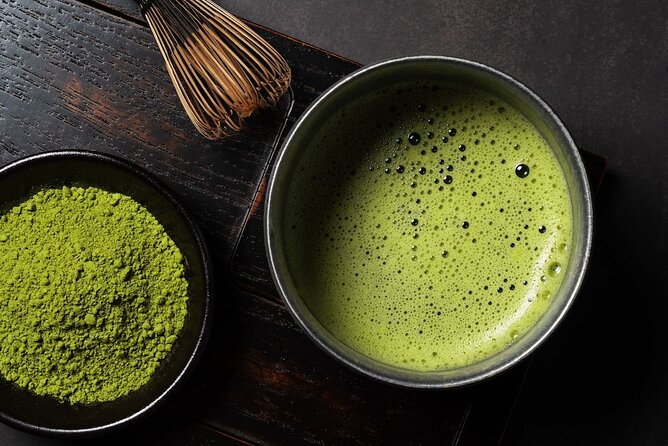
At $21.89 per person, the class is priced below many longer food and culture activities in Osaka. You receive an English-speaking instructor, matcha, Japanese sweets, the use of prepared tools and ingredients, and roughly an hour of guided participation.
The value is strongest if you want an activity with a clear cultural focus. You are not only consuming a drink. You are learning how it is made, hearing about its background, and practicing the method yourself.
It is also a sensible choice for a short gap in your schedule. A longer cooking class may offer more food, but it also takes more of your day and usually costs more. Here, you get a focused experience without committing an entire morning or afternoon.
The value is weaker if you are looking for a full meal, a long formal ceremony, or a private lesson. The group can include up to six people, and the session is deliberately brief. Those limits are clear, so the price feels fair when you buy it for what it is: a small, hands-on introduction to matcha.
The activity has a five-out-of-five rating from 509 reviews, with 100 percent recommending it. That record supports the idea that the class delivers a consistently pleasant experience, though your enjoyment will still depend on your interest in tea and your comfort with a short group lesson.
Who should book this matcha experience?
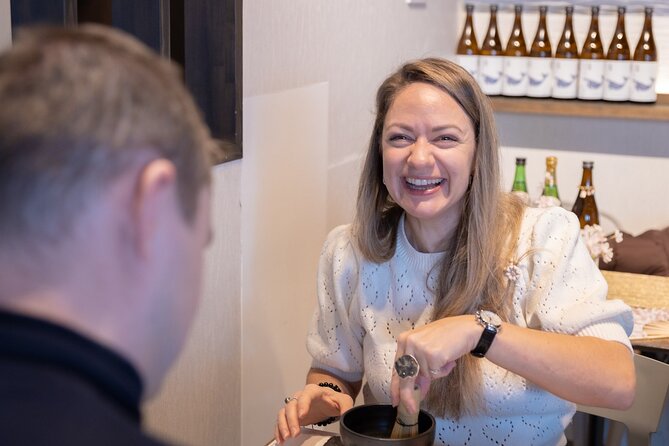
I would recommend it to first-time matcha drinkers, people who already enjoy matcha but have never prepared it properly, and anyone looking for a quiet break from Osaka’s busy shopping and food districts.
It also suits solo visitors. You do not need to bring a group, and the small class gives you a natural setting for conversation. Couples and families with older children may enjoy the hands-on format as well, provided everyone is interested in taking part rather than simply watching.
The class is a good fit for visitors who want authentic Japanese sweets and tea culture without committing to a formal, highly structured ceremony. It is also useful if you have bought matcha in Kyoto or Osaka and want to understand how to use it once you return home.
I would look elsewhere if you want a detailed study of tea history, a long ceremony, a large meal, or a private session. The lesson covers the essentials and keeps the mood friendly. That is its appeal, but it also defines its limits.
Service animals are allowed, and the location is near public transportation. The available information does not provide detailed access notes for the room itself, so contact the provider if you need specific mobility information.
Booking and cancellation details to know
You receive confirmation at the time of booking, and the ticket is mobile. The class begins and ends at the meeting point, with no hotel transfer included.
Free cancellation is available if you cancel at least 24 hours before the local start time. Cancellations made less than 24 hours in advance are not refunded, and changes inside that period are not accepted.
The provider is identified as Sushi Making Tokyo Cooking Class in Japan, while the Osaka venue and activity are presented as Matcha Making Osaka. For a smooth arrival, rely on the exact address and meeting instructions in your confirmation.
FAQ
How long does the matcha-making class last?
The class lasts approximately one hour.
Where does the class meet?
It meets at Matcha Making Osaka, 1-chōme-16-20 Higashishinsaibashi, Chuo Ward, Osaka 542-0083, Japan.
Is hotel pickup included?
No. Hotel pickup and drop-off are not included. The activity begins and ends at the meeting point.
How many people can join the class?
The class has a maximum of six participants.
Is the class suitable for beginners?
Yes. No prior experience is required, and the English-speaking instructor guides you through each step.
What is included in the booking?
The booking includes an English-speaking instructor, matcha, and Japanese sweets. Tools and ingredients are prepared for the class, and the ticket is available on your mobile device.
Should you book it?
Book this class if you want to do something with matcha rather than simply order another matcha drink. The combination of clear English instruction, a six-person limit, Japanese sweets, and practical home-preparation advice gives the hour real purpose.
I especially like it for a first visit to Osaka, a rainy afternoon, or a day when you want a slower cultural activity between major sights. Just allow extra time to find the Higashishinsaibashi meeting point, and do not expect a full tea ceremony or meal.
At $21.89, it is an affordable way to learn a small Japanese tradition, make your own tea, and enjoy a sweet break in the city. If that sounds like the kind of souvenir you can carry home in your habits, this is an easy booking to justify.
Just added around Osaka
- Discover Real Osaka: A Cultural Walk with Food & Drink★ 5.0 · 13 reviews
- From Osaka/Kyoto: Kyoto & Nara Day Trip with Optional Lunch★ 4.5 · 79 reviews
- Osaka 6hr Private Walking Tour with Government Licensed Guide★ 5.0 · 174 reviews
- Private Airport transfer Kansai Intl. Airport(KIX) to OSAKA CITY★ 4.5 · 12 reviews
- Osaka: Namba Local Food Walking Tour (Taste 15 Dishes)★ 5.0 · 20 reviews
- Osaka Delights: Traditional Japanese Food Tour★ 4.5 · 33 reviews
- From Osaka or Kyoto: Kyoto and Nara 1-Day Bus Tour★ 3.5 · 141 reviews
- 1 Day Takoyaki Making and Osaka Castle Walking Tour★ 5.0 · 15 reviews
Osaka Tours, compared.

Shinsekai Food Tour with 13-15 Dishes at 5 Eateries
Read our review →
Osaka Food Tour: 13 Dishes at 5 Local Eateries
Read our review →
Hungry Osaka Street Food Tour:15 Tastings & 3 Drinks with a Local
Read our review →
Hotspots & Hidden Gems Walking Tour Private or Group
Read our review →Browse the lists this tour appears in