
Reviewed · OSAKA TOURS
Osaka Cooking Class: Okonomiyaki &Japanese cuisines experience
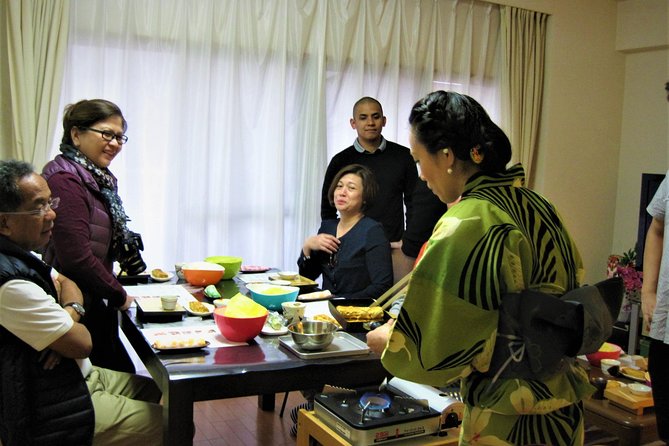
Osaka’s food culture becomes much easier to understand when you are standing over a hot plate, turning takoyaki with a pick, and learning why a small change in technique can alter a dish. In Yayo’s home, you make okonomiyaki, takoyaki, miso soup, and more, then sit down to eat what you prepared.
I especially like the small maximum of eight people, which allows plenty of hands-on help, and the warm home setting, where the class feels more personal than a standard cooking studio. The amount of food is generous, too, so arrive hungry.
The main consideration is the setting: this takes place in a small private home, not a large professional kitchen. You must also arrive on time, since participation is not guaranteed after 10 minutes and late cancellations are not refunded.
Key points to know before booking
- Cook several Osaka favorites: Prepare okonomiyaki, takoyaki, miso soup, and other dishes, then eat your finished meal.
- Meet Yayo near Noda Station: The class begins outside Noda Station in Fukushima Ward and ends back at the same meeting point.
- Expect a personal class: The group limit is eight, and some sessions may feel almost private if attendance is light.
- Learn food traditions as well as recipes: Yayo explains ingredients, techniques, and the background of each dish.
- Add drinks if you wish: A sake and beer pairing is available as an optional extra.
- Plan for a very filling meal: Several cooking sessions include enough food for leftovers, so do not schedule this right after a large lunch.
Cooking Osaka food in Yayo’s home
The appeal of this Osaka cooking class is simple: you do not just watch someone make Japanese food. You take part in the preparation, learn the basic methods, and eat the results at the end.
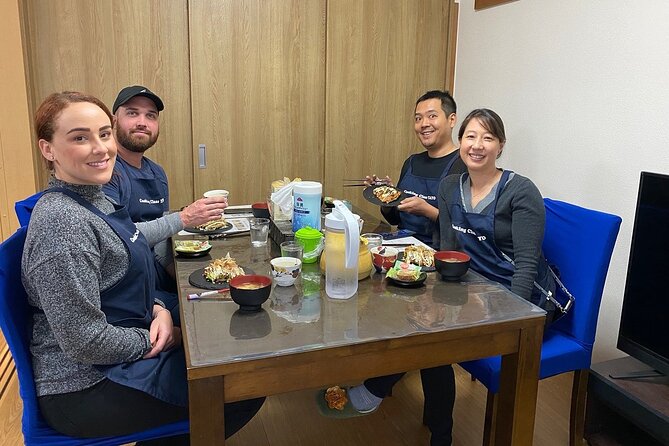
The class is led by Yayo, an English-speaking host who welcomes you into her own apartment. That detail matters. A home kitchen gives the experience a local feel, but it also means the space is small and informal. This is not a polished restaurant kitchen with rows of workstations. It is closer to being invited over for a guided meal with practical cooking lessons built in.
The group limit is eight people. That keeps the class manageable and gives Yayo time to help with tasks such as mixing batter, handling the cooking tools, and shaping takoyaki. If attendance is light, you may receive an especially personal lesson. Solo visitors and couples have sometimes had sessions with only one or two participants.
You meet outside Noda Station in Osaka’s Fukushima Ward. The exact meeting point is listed as 1 Chome-1 Ohiraki, Fukushima Ward, Osaka, 553-0007, and the activity returns there at the end. The location is near public transportation, but you should still allow extra time to find the station exit and meeting place. Arriving more than 10 minutes late can mean losing your place without a refund.
More cooking classes in Osaka:
- Osaka: Ramen and Gyoza Cooking Class in Dotonbori
★ 5.0 · 378 reviews - Osaka Sake Tasting with Takoyaki Cooking
★ 5.0 · 156 reviews - Osaka: Cooking Class Ramen & Gyoza Course in Nanba
★ 4.9 · 86 reviews
Miso soup, where small details matter
The cooking begins with miso soup. This may sound like the simplest dish on the menu, but it gives Yayo a useful way to explain Japanese cooking.
You learn that subtle choices affect the final taste. The broth, the miso, and the timing all matter. The class also introduces dashi, a basic Japanese stock that can seem mysterious before you learn how straightforward it is to prepare.
This part of the lesson is valuable because it gives you a foundation rather than just a recipe. Once you understand the role of dashi and miso, you can adjust the soup at home instead of treating it as a fixed formula.
Yayo also explains the cultural background of the food and how ingredients or methods can vary in different parts of Japan. That context makes the dish more than a quick starter before the main course. It helps you see why Japanese home cooking often depends on balance, timing, and careful handling rather than a long list of ingredients.
The pace is intended for participation, but much of the preparation is arranged for efficiency. You will have enough to do to feel involved without being left to manage every step alone.
Turning takoyaki without losing your patience
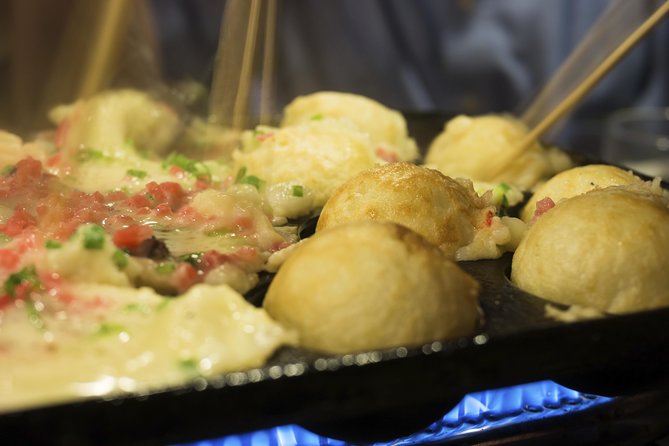
Takoyaki is one of Osaka’s signature foods, and making it yourself is a good lesson in coordination. These small fried balls are made from wheat flour batter and filled with octopus. The outside cooks while the inside remains soft, so shaping them takes practice.
You get to work with the batter and learn how to turn the pieces as they cook. This is the kind of task that looks easy when an experienced cook does it. In reality, the timing and movement take a little attention.
That makes takoyaki one of the most enjoyable parts of the class. You are not simply assembling a dish. You are learning a technique that connects directly with Osaka’s everyday food culture.
If your first pieces are not perfectly round, that is part of the fun. The format gives Yayo room to demonstrate and correct your technique, while the relaxed atmosphere keeps the task from feeling like a test.
The portion sizes are generous across the class, so the takoyaki is not your only food. Keep that in mind when planning the rest of your day.
Making okonomiyaki, Osaka’s flexible savory pancake
Okonomiyaki is the main event for many people. The dish combines egg, flour, cabbage, pork, and dried bonito flakes into a hearty savory pancake. Its name is often associated with the idea of cooking according to your preference, and the dish is flexible enough to make sense as a home meal.
The lesson shows you how the ingredients work together and how to cook the pancake properly. Cabbage gives it bulk, while the egg and flour help bind everything. Pork adds richness, and bonito flakes provide a distinctive finishing touch.
I like this dish as a take-home lesson because it is realistic for home cooking. You do not need a restaurant kitchen or a long list of rare ingredients to make something satisfying. After the class, you can use the method as a base and adapt it to the ingredients available where you live.
Yayo explains the role of each ingredient and offers practical advice on getting Japanese dishes right at home. That is more useful than simply copying a recipe card, since you learn what to watch for during preparation.
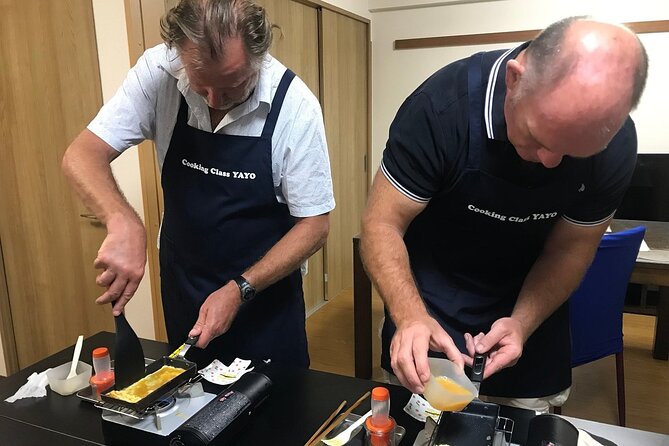
The class may also include dashimaki tamago, a Japanese rolled omelet. This appears in several accounts of the cooking menu, along with other small additions and treats. The precise selection can vary, so book with the core dishes in mind while allowing room for a few extras.
More hands-on workshops in Osaka:
- Sushi Making Osaka Roll and Authentic Japanese Sushi Class
★ 5.0 · 1,220 reviews - Matcha Making Class in Osaka with Authentic Japanese Sweets Set
★ 5.0 · 509 reviews - Osaka Sushi Making Class – Hands-On Nigiri & Rolls (Same-Day OK)
★ 5.0 · 352 reviews - Osaka: Roll and Authentic Sushi Making Class in Dotonbori
★ 4.9 · 239 reviews
A full meal, not a quick tasting
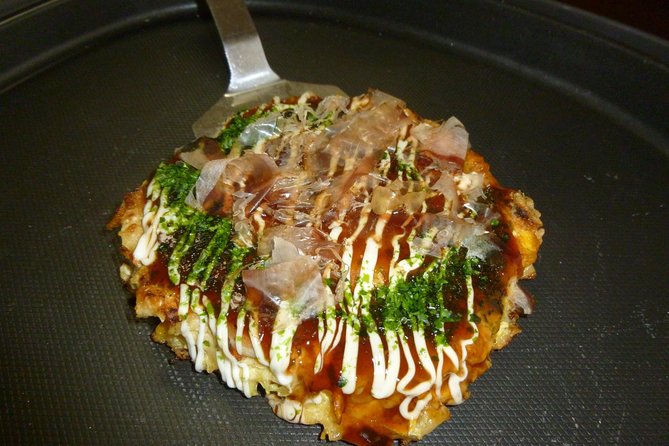
Once the cooking is finished, you sit down and eat the food you made. The included lunch or dinner is a real meal, not a series of tiny samples.
The menu can include miso soup, takoyaki, okonomiyaki, dashimaki tamago, taiyaki, matcha, and other small refreshments. Not every detail is presented as a separate formal course, but you should expect several dishes and a generous amount of food.
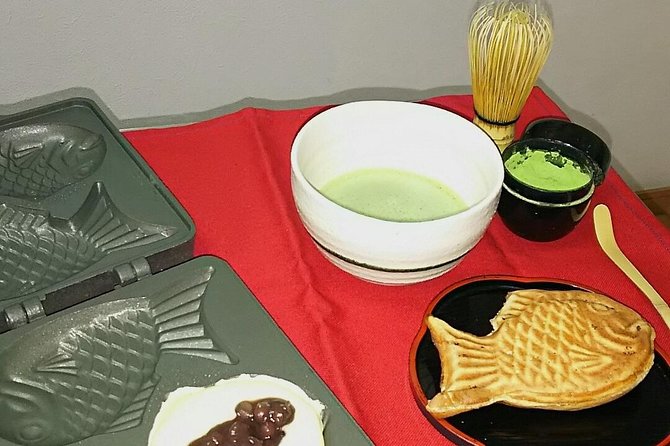
Taiyaki comes near the end. This fish-shaped cake is a familiar Japanese sweet, and it gives the class a pleasant finish. Matcha tea accompanies the final part of the experience.
Some people may find the meal too large to finish. If you are visiting Osaka during a food-heavy day, schedule this class as one of your main meals rather than something squeezed between lunch and dinner. You might have leftovers to take away, depending on the amount prepared and what you can eat.
You can also choose an optional sake and beer pairing. This adds a drink element to the meal, but extra food and drinks are not included unless specifically selected or provided as part of the class. If you do not want alcohol, you can simply enjoy the meal and tea.
What makes the home setting worthwhile
A private home changes the tone of the activity. The experience feels more like a meeting with a local cook than a commercial demonstration.
Yayo’s hospitality is a major part of the class. She is described as warm, patient, funny, and fluent enough in English to explain the dishes and answer questions. She also shares stories about Japanese life and family cooking, including ingredients connected with her mother.
Small personal touches may appear during the session. These have included printed instructions in different languages, homemade treats, chopsticks, paper cranes made from national flags, and other small gifts. They are not the reason to book, and you should not treat every extra as guaranteed, but they help explain why the class feels personal.
The home setting also has limits. The kitchen is small, and only people with confirmed bookings may attend. You should not expect to bring along an unbooked friend or family member to watch.
This style suits people who enjoy conversation and a slower, more social activity. If you prefer a large cooking school with plenty of personal space and a highly structured professional setup, the apartment setting may feel close. For most people seeking local contact, that informality is the point.
Price and what you receive for $104.13
At $104.13 per person, this is not the cheapest meal in Osaka. You can eat excellent okonomiyaki and takoyaki around the city for much less.
The price makes more sense when you separate the meal from the lesson. You are paying for about two and a half hours of instruction, ingredients, utensils, an English-speaking host, a meal, and access to a small-group setting. You also leave with methods you can repeat at home, rather than only a memory of what someone else cooked.
The value is strongest if you enjoy food education and personal contact. It is also a good choice for a first night in Japan, when a relaxed meal can help you get comfortable with local ingredients and flavors.
For a solo visitor, the price may feel high compared with simply eating at a restaurant. For a couple, family, or small group, the social experience and shared meal make the cost easier to justify. Group discounts may be available, so check the booking details if several people are attending.
The optional sake and beer pairing changes the total cost. Decide in advance if that part matters to you. The class remains complete without it.
Who should book this Osaka cooking class
I would recommend this experience to:
- First-time visitors who want an introduction to Japanese home cooking
- Solo visitors looking for a social activity with a small group
- Couples seeking a hands-on food experience
- Families with older children who enjoy cooking and eating together
- People who want recipes they can recreate after returning home
- Food lovers who prefer a local home to a formal cooking school
The class is especially useful if you want to understand Osaka food beyond restaurant menus. Okonomiyaki and takoyaki are easy to recognize after eating them around the city, but preparing them gives you a better feel for the ingredients and technique.
It is less suitable if you have a very tight schedule, dislike group activities, or need a large, fully accessible kitchen environment. The class also requires punctuality, and the compact apartment setting may not suit everyone.
Vegetarian and pescatarian options are available if requested at booking. Make that request in advance rather than assuming it can be arranged on the day.
Practical advice for a smooth visit
Book only for the people who will attend. The studio is small, and people without confirmed reservations cannot join.
Arrive early enough to meet Yayo outside Noda Station without rushing. The meeting point is in Fukushima Ward, and an extra few minutes can make the difference between a calm start and a missed class.
Wear something comfortable for a hands-on meal. Specific clothing requirements are not provided, but you will be working with food and cooking utensils, so practical clothing is sensible.
Tell the host about dietary needs when you book. Vegetarian and pescatarian versions are available upon request, but the standard dishes include ingredients such as pork and octopus.
Do not plan a large meal immediately before the class. The combination of savory pancakes, takoyaki, soup, omelet, sweets, and drinks can be substantial.
Free cancellation is available up to 24 hours before the start time for a full refund. Cancellations or changes made less than 24 hours ahead are not accepted, and late arrival can also mean losing the payment.
Should you book it?
Book this class if you want to cook, eat, and talk with a local host in a personal setting. Yayo’s home, the eight-person limit, the generous meal, and the practical recipes give it more character than a standard food demonstration.
At $104.13, it is best treated as a cooking lesson and cultural meal rather than a cheap lunch. If you are willing to pay for instruction and a memorable local encounter, it is a strong choice, especially for solo visitors, couples, and small groups.
Skip it if you want a quick tasting, a large professional kitchen, or a strict restaurant-style menu. Otherwise, arrive hungry, arrive on time, and leave room for taiyaki and matcha.
FAQ
Where does the Osaka cooking class begin?
The class begins outside Noda Station in Osaka, at 1 Chome-1 Ohiraki, Fukushima Ward, Osaka, 553-0007, Japan.
Where does the activity end?
The activity ends back at the meeting point near Noda Station.
How long does the cooking class last?
The experience lasts approximately 2 hours and 30 minutes.
What dishes will I prepare?
The class includes okonomiyaki, takoyaki, and miso soup. It may also include dishes such as dashimaki tamago, plus taiyaki and matcha near the end.
Is the class taught in English?
Yes. The class includes an English-speaking instructor, Yayo.
How many people can join the class?
The maximum group size is eight people.
Are vegetarian or pescatarian options available?
Yes. Vegetarian and pescatarian options are available when requested at the time of booking.
Is sake included?
A local sake tasting and beer pairing are optional additions. They are not included unless selected.
What happens if I arrive late or need to cancel?
Participation is not guaranteed if you arrive more than 10 minutes late, and no refund is provided for that missed participation. You can cancel up to 24 hours before the start time for a full refund. Changes or cancellations made less than 24 hours before the experience are not accepted.
Just added around Osaka
- Discover Real Osaka: A Cultural Walk with Food & Drink★ 5.0 · 13 reviews
- From Osaka/Kyoto: Kyoto & Nara Day Trip with Optional Lunch★ 4.5 · 79 reviews
- Osaka 6hr Private Walking Tour with Government Licensed Guide★ 5.0 · 174 reviews
- Private Airport transfer Kansai Intl. Airport(KIX) to OSAKA CITY★ 4.5 · 12 reviews
- Osaka: Namba Local Food Walking Tour (Taste 15 Dishes)★ 5.0 · 20 reviews
- Osaka Delights: Traditional Japanese Food Tour★ 4.5 · 33 reviews
- Badminton in Osaka & Kyoto with Locals!★ 5.0 · 15 reviews
- From Osaka or Kyoto: Kyoto and Nara 1-Day Bus Tour★ 3.5 · 141 reviews
Osaka Tours, compared.


Shinsekai Food Tour with 13-15 Dishes at 5 Eateries
Read our review →
Osaka Food Tour: 13 Dishes at 5 Local Eateries
Read our review →
Hungry Osaka Street Food Tour:15 Tastings & 3 Drinks with a Local
Read our review →
Hotspots & Hidden Gems Walking Tour Private or Group
Read our review →Browse the lists this tour appears in