
Reviewed · OSAKA TOURS
Osaka: Cooking Class Ramen & Gyoza Course in Nanba
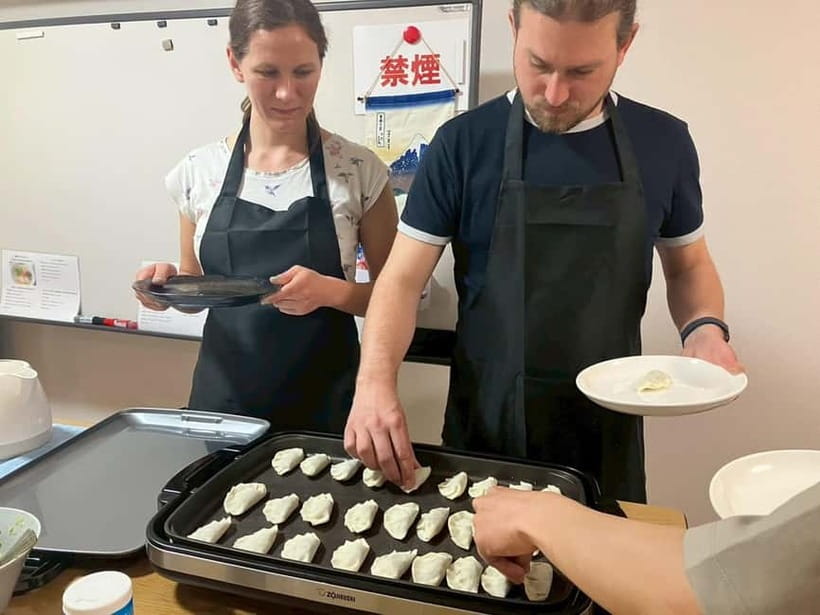
Making ramen noodles from flour and learning the fine art of folding gyoza gives this Osaka class more substance than a standard restaurant meal. You do not just eat Japanese comfort food here, you take part in preparing it from the first chop to the final bowl.
I like the small group of up to eight, which gives you room to ask questions and get help with tricky folds. I also like the relaxed tasting session, where your freshly made food comes with sake, beer, or soft drinks. The main thing to check is the timing: the activity is described as two hours, but its listed parts add up to three hours.
Key points at a glance
- Make ramen noodles from scratch, rather than only assembling a prepared bowl.
- Practice gyoza folding by hand, with patient help from English-speaking instructors.
- Cook in a group of no more than eight, a useful size for individual guidance.
- Eat what you prepare, with sake, beer, and soft drinks included during the tasting.
- Take home the recipes, so the class can continue in your own kitchen.
- Meet at Dear Court Semba 303, an apartment-style building in Osaka’s Chuo Ward.
What you actually cook in Osaka
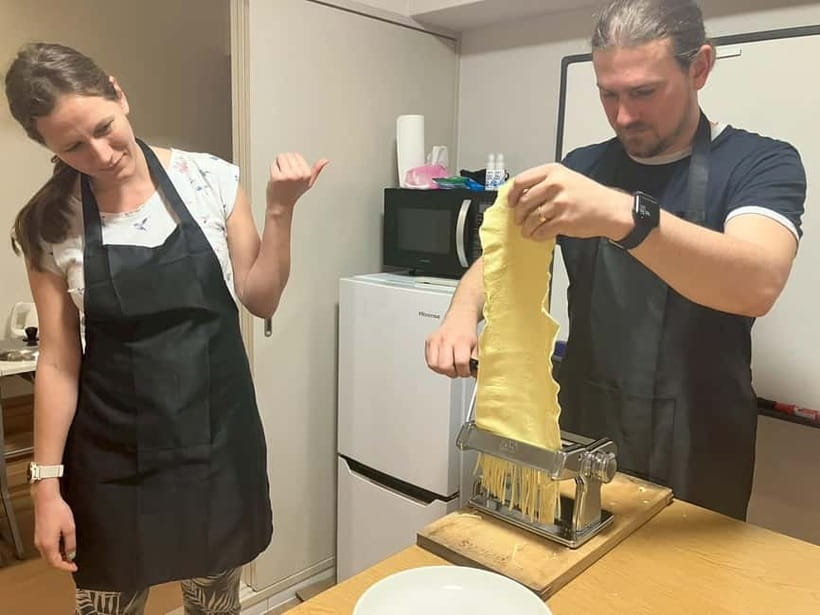
The focus is a classic pairing: ramen and gyoza. Ramen gives you the main cooking project, while gyoza adds a hands-on shaping task that is simple to begin and surprisingly hard to perfect.
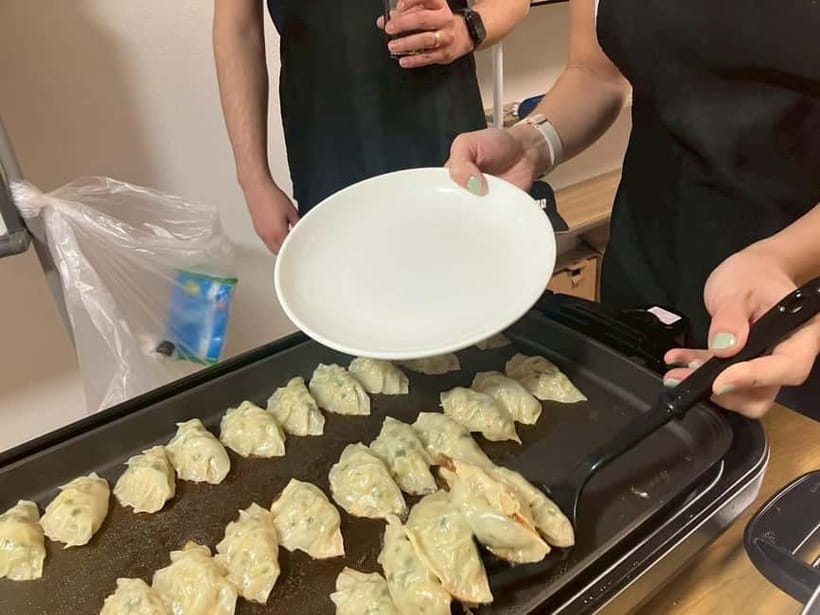
The gyoza filling combines vegetables and pork. You learn how to prepare the ingredients, fill the wrappers, and fold them into the familiar pleated shape. This is one of the most useful parts of the class because the technique is easy to practice again at home, even if your first few dumplings look a little uneven.
The ramen portion includes making the noodles from flour. That detail matters. Many food classes let you stir a broth or add toppings, but making the noodles yourself gives you a clearer sense of how the dish comes together. You can expect guidance through the process rather than being left to guess at texture or technique.
The class is designed for beginners and food enthusiasts. You do not need prior cooking experience, special equipment, or Japanese language skills. The instructors teach in English and Japanese, and the repeated praise for clear, patient instruction suggests that the class is built to keep first-timers involved.
More cooking classes in Osaka:
- Osaka: Ramen and Gyoza Cooking Class in Dotonbori
★ 5.0 · 378 reviews - Osaka Cooking Class: Okonomiyaki &Japanese cuisines experience
★ 5.0 · 261 reviews - Osaka Sake Tasting with Takoyaki Cooking
★ 5.0 · 156 reviews
The 30-minute arrival and preparation period
The first listed stage is a 30-minute orientation and preparation session. This is the settling-in period, when you get familiar with the cooking space, the ingredients, and the steps ahead.
All ingredients and cooking tools are supplied. That makes packing easy: you are told to bring yourself, not a kit of utensils or specialty products. The instructors are seasoned Washoku professionals, so you can expect explanations of the basic method and the reasons behind certain steps.
The setting is not a grand cooking school or a restaurant dining room. The meeting point is Room 303 at Dear Court Semba, in an apartment building at 4-chōme-3-1 Bakurōmachi, Chuo Ward. That gives the experience a small, informal feel, but it also means you need to pay attention when arriving.
At the entrance, use the doorbell panel and press 303, followed by the Call button marked 呼. Once the door opens, take the stairs or elevator to the third floor. The building can be easy to miss. A useful landmark from the directions is the Ferrari dealership nearby, with the entrance tucked about a block behind it, past a large stairway leading to a gym and an outdoor lounge area with couches.
Allow a few extra minutes to find the entrance, especially if you are unfamiliar with Japanese apartment buildings. If you have trouble, the host can be called or messaged.
Ninety minutes of hands-on cooking
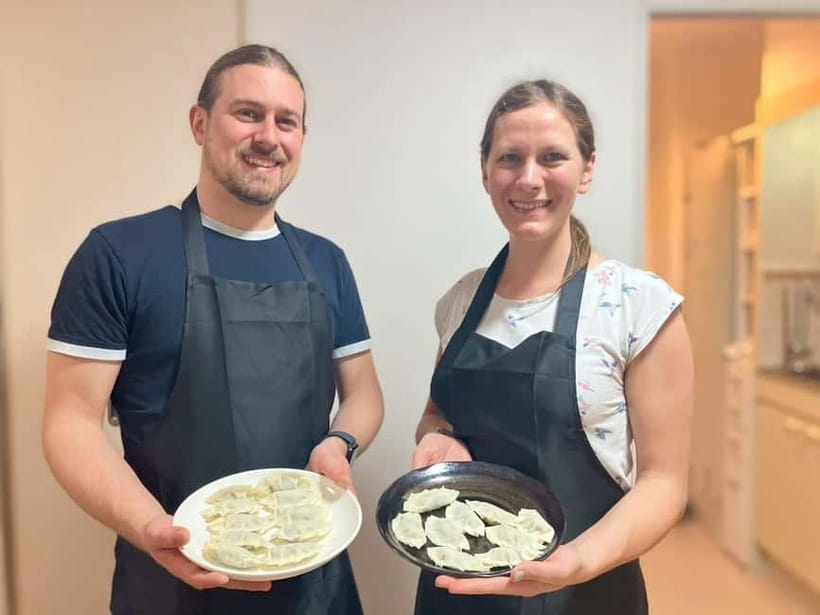
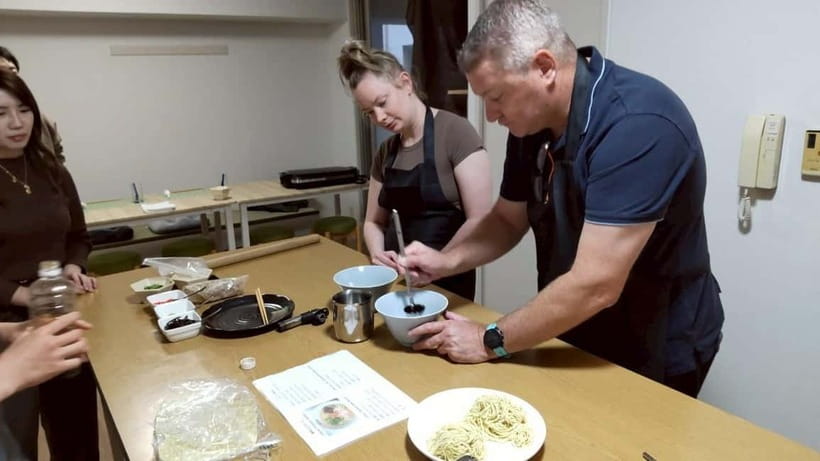
The main cooking period is listed as 1.5 hours. This is where the class earns its price. You chop vegetables, work with the ramen dough, and shape the gyoza instead of watching a chef do everything for you.
The instructors keep the class moving while helping people at different skill levels. That is especially helpful during gyoza folding. The basic concept is clear, but getting neat, even pleats takes practice. A small class helps here because the chef can look at your technique and correct it before you fold a whole plate of dumplings the wrong way.
You also get a chance to ask why a step matters. The teaching is not limited to a recipe readout. The class explains the process and techniques, which can make it easier to repeat the dishes later.
The friendly style is a major part of the experience. The class is group-based, so you cook beside other participants rather than working through a private lesson. That can be a plus if you like meeting people during a trip. It can be less appealing if you want a quiet, highly personalized session.
Several instructor names appear in the class team, including Ryota, Mimi, Keiichi, Yuma, Saya, Nana, Yuriko, Kiho, Kyota, and Keichi. The exact staff lineup may vary by date, but the repeated mention of named hosts points to a personal teaching style rather than a distant demonstration from behind a counter.
Ramen from flour, gyoza with careful folds
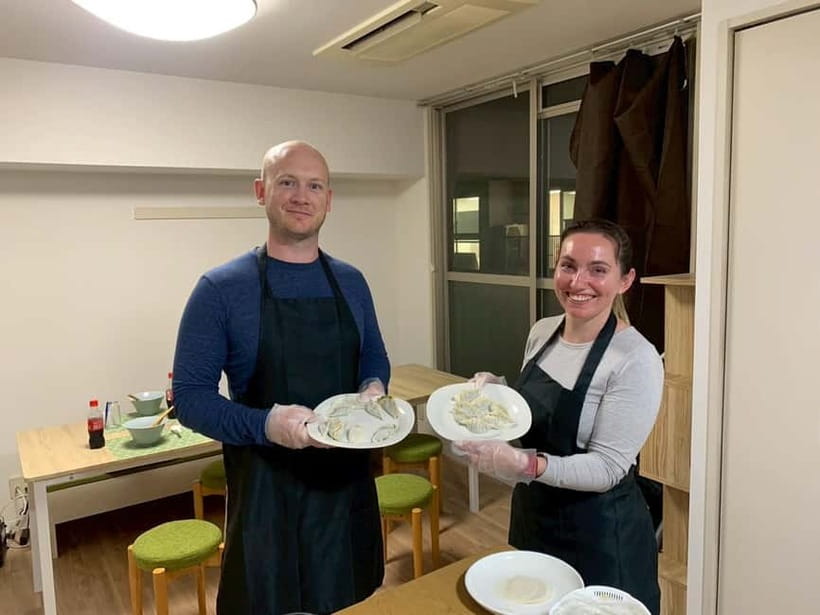
The strongest feature is the amount of work you do yourself. Making noodles from scratch requires more attention than opening a packet, and it gives you a better understanding of the texture you are trying to produce.
Gyoza is the more social task. You prepare the filling, place it in the wrapper, and learn the folding pattern. This tends to create a light, playful part of the class, since everyone is practicing the same small movement and comparing early attempts.
The recipes are provided to take home. That turns the activity into something more useful than a meal that ends when you leave. You may need to search for some ingredients in your home country, and one participant noted that certain products used in the class can be hard to find outside Japan. Still, the recipe cards give you a clear starting point and enough confidence to try.
Vegetarian and vegan needs have been accommodated in the past. If this matters to you, state it when booking rather than waiting until you arrive. The supplied information confirms that these adjustments can be made, but it does not spell out every substitution or guarantee that every dietary request can be handled.
More hands-on workshops in Osaka:
- Sushi Making Osaka Roll and Authentic Japanese Sushi Class
★ 5.0 · 1,220 reviews - Matcha Making Class in Osaka with Authentic Japanese Sweets Set
★ 5.0 · 509 reviews - Osaka Sushi Making Class – Hands-On Nigiri & Rolls (Same-Day OK)
★ 5.0 · 352 reviews - Osaka: Roll and Authentic Sushi Making Class in Dotonbori
★ 4.9 · 239 reviews
Sitting down to eat what you made
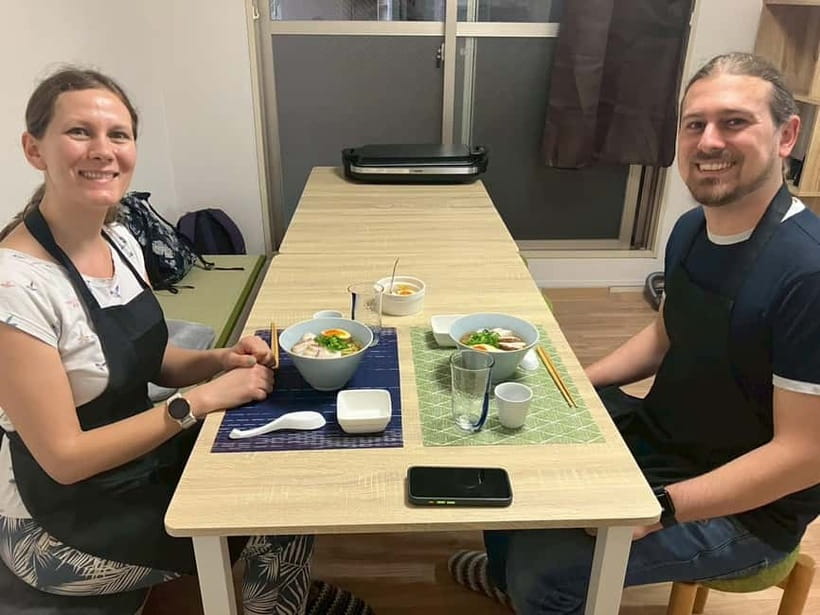
After the cooking, you sit down for a tasting session with the ramen and gyoza you prepared. The supplied schedule describes this as one hour, though the overall activity length is also shown as two hours.
That conflict is important. The detailed schedule adds up to 30 minutes of orientation, 90 minutes of cooking, and 60 minutes of tasting, for a total of three hours. Before booking a restaurant, transfer, show, or evening train around the class, confirm the actual start and finish times.
The meal is the payoff, but it is also part of the teaching. You can taste the noodles and dumplings while the cooking steps are still fresh in your mind. The food is served with sake, beer, and soft drinks included in the tasting session. Extra food and drinks beyond what is provided cost more and are not included.
The social setup adds to the meal. You eat with the other people in the class, which can make this a good evening activity for solo visitors, couples, families, or friends. One small point to note: the listed experience does not promise that the instructors will sit and eat with you. If sharing the meal with the chefs is important to you, ask in advance.
Is $70 a fair price?
At $70 per person, this is not the cheapest way to eat ramen in Osaka. A bowl from a casual noodle shop costs far less, and gyoza is widely available. The value comes from the work, instruction, small group size, drinks, and take-home recipes.
You receive all ingredients and tools, about 1.5 hours of active cooking, an orientation, and a prepared meal. The cooking also covers two dishes rather than one. For someone who wants a practical food memory and a skill to repeat at home, the price is reasonable.
The value is strongest if you enjoy participating. If you only want to eat excellent ramen, spend the $70 on several meals around Osaka instead. This class is for the person who wants to know how the noodles and dumplings are made, and who enjoys a shared table with people from different countries.
The drinks help round out the price, though the included selection is limited to the tasting session. You should not treat the booking as an all-you-can-eat or open bar arrangement.
Who will enjoy this class most
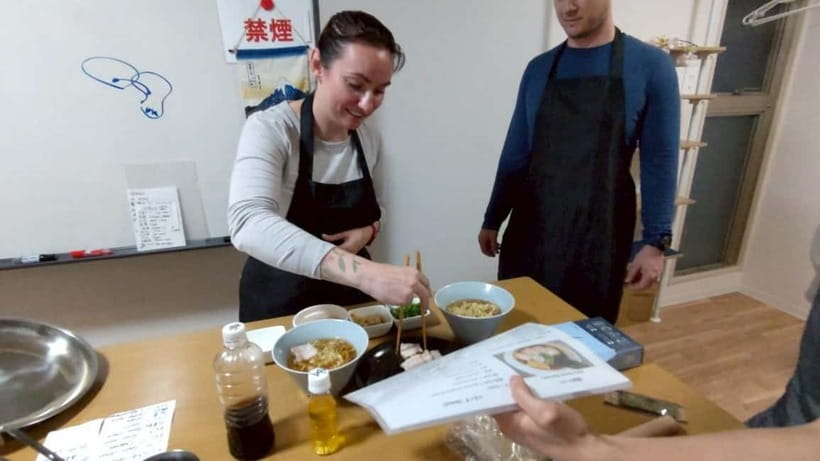
I would recommend it to first-time cooks, families with older children, couples, and solo visitors who like a social activity. The family groups described include teenagers, and the instructors are used to helping people with different levels of confidence.
It also suits anyone who has eaten plenty of ramen and gyoza in Japan and wants to understand the techniques behind them. You get more from the class if you ask questions, watch the folding method closely, and take notes about ingredients that may be difficult to source at home.
It may not suit you if you dislike group cooking, have limited time, or want a polished restaurant meal without any preparation. The class involves chopping, mixing, shaping, and following instructions. That is the point, but it is still work.
The wheelchair-accessible status is a useful detail for planning. The building has stairs and an elevator, but the supplied information does not describe the exact layout of the entrance or kitchen. If you use a wheelchair, contact the provider before booking to confirm the practical arrangements.
Location and arrival advice in Bakurōmachi
The address is in Bakurōmachi, in Osaka’s Chuo Ward, at Dear Court Semba 303. The activity is marketed as an Osaka and Nanba experience, but the specific meeting point is the Bakurōmachi apartment building, so use the full address rather than relying only on the broad area name.
This is a hosted apartment-style cooking space, not a prominent storefront with a large sign. Press 303 on the entrance panel, then press Call 呼. Go to the third floor after the door opens.
The nearby landmarks can help, but they are not a substitute for the street address. Look for the area behind the Ferrari dealership, then the large stairs near a gym and outdoor seating. If your map pin leaves you uncertain, call or message the host rather than wandering around the block.
Booking at least one day ahead is required. The activity is not designed for casual same-day drop-ins. You can reserve now and pay later, which is useful when your Osaka schedule is still shifting. Free cancellation is available up to 24 hours before the activity for a full refund.
What to bring and what to plan around it
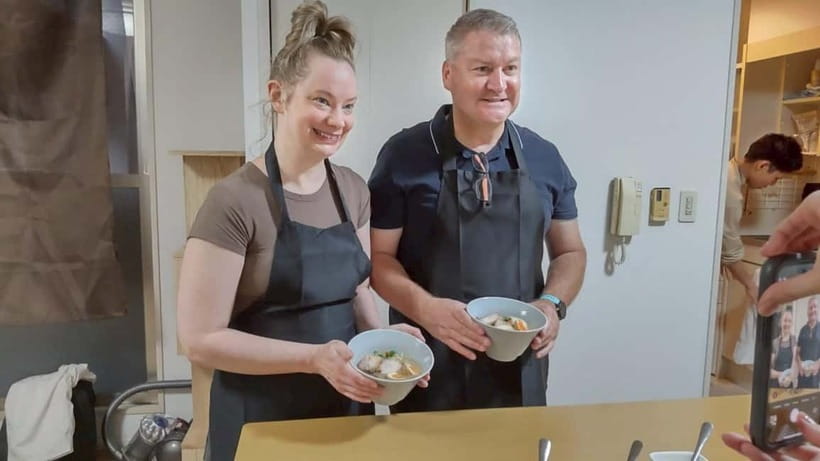
You do not need to bring cooking tools or ingredients. The class supplies both. Wear something comfortable for active food preparation, though no special clothing requirement is given.
Plan your day around the class rather than squeezing it between two fixed appointments. The advertised duration is two hours, but the listed sections total three, so this is one detail I would clarify before committing to a tight schedule.
The tasting includes sake, beer, and soft drinks. If you want anything beyond those provisions, bring that extra cost into your budget. Hotel pickup and drop-off are not included, so you must make your own way to Bakurōmachi and leave independently afterward.
What makes the teaching work
The class gets its strongest marks for patient, clear help. The instructors are fluent in English and Japanese, and the teaching style is friendly rather than formal. That matters when a recipe includes unfamiliar ingredients or a technique such as gyoza pleating.
The small group limit of eight is another practical strength. With a larger class, you might spend much of the session watching from the back. Here, the format is better suited to chopping, shaping, and asking questions directly.
The instruction also appears to be warm without losing focus. Hosts such as Ryota, Mimi, Keiichi, Nana, and Yuriko have been singled out for making the class easy to follow and fun. Staff names can change, but you can expect an English-speaking team rather than a self-guided workstation.
Final call: should you book it?
Book this class if you want more than a bowl of noodles. You will make ramen noodles from flour, prepare pork-and-vegetable gyoza, eat the results, share drinks, and leave with recipes. The small group and patient English instruction make it a strong choice for beginners and families.
Skip it if your Osaka schedule is tight, you dislike group activities, or you are mainly chasing the lowest-cost meal. Most important, confirm the real duration before booking because the two-hour headline does not match the three-hour breakdown.
For a hands-on food evening at a fair activity price, I would book it at least a day ahead and tell the host about any vegetarian or vegan needs. Bring an appetite, allow time to find Room 303, and expect to do the cooking rather than simply watch it.
FAQ
How long does the ramen and gyoza class last?
The activity is listed as two hours, but the detailed schedule describes 30 minutes of orientation, 1.5 hours of cooking, and one hour of tasting. Those sections total three hours, so confirm the exact timing before booking.
Where is the meeting point?
The class meets at Dear Court Semba 303, 4-chōme-3-1 Bakurōmachi, Chuo Ward, Osaka 541-0059, Japan.
How do I enter the building?
At the entrance, press 303 on the doorbell panel, then press the Call button marked 呼. After the door opens, take the stairs or elevator to Room 303 on the third floor.
What dishes will I make?
You will make ramen, including noodles from scratch, and gyoza filled with vegetables and pork.
Are drinks included?
Sake, beer, and soft drinks are included during the tasting session. Additional food and drinks beyond what is provided are not included.
Are ingredients and cooking tools provided?
Yes. All ingredients and tools needed for the cooking class are supplied.
Is the class suitable for beginners?
Yes. The class is described as suitable for beginners and food enthusiasts, with guidance from professional Washoku instructors.
Is the class taught in English?
Yes. Instruction is available in English and Japanese.
Can vegetarian or vegan participants join?
Vegetarian and vegan adjustments have been accommodated. Tell the provider about your dietary needs when booking so the appropriate arrangements can be confirmed.
Just added around Osaka
- Discover Real Osaka: A Cultural Walk with Food & Drink★ 5.0 · 13 reviews
- Private Airport transfer Kansai Intl. Airport(KIX) to OSAKA CITY★ 4.5 · 12 reviews
- From Osaka/Kyoto: Kyoto & Nara Day Trip with Optional Lunch★ 4.5 · 79 reviews
- Osaka 6hr Private Walking Tour with Government Licensed Guide★ 5.0 · 174 reviews
- Osaka: Namba Local Food Walking Tour (Taste 15 Dishes)★ 5.0 · 20 reviews
- Osaka Delights: Traditional Japanese Food Tour★ 4.5 · 33 reviews
- Badminton in Osaka & Kyoto with Locals!★ 5.0 · 15 reviews
- From Osaka or Kyoto: Kyoto and Nara 1-Day Bus Tour★ 3.5 · 141 reviews
Osaka Tours, compared.


Shinsekai Food Tour with 13-15 Dishes at 5 Eateries
Read our review →
Osaka Food Tour: 13 Dishes at 5 Local Eateries
Read our review →
Hungry Osaka Street Food Tour:15 Tastings & 3 Drinks with a Local
Read our review →



Hotspots & Hidden Gems Walking Tour Private or Group
Read our review →Browse the lists this tour appears in