
Reviewed · OSAKA TOURS
Sushi Making Osaka Roll and Authentic Japanese Sushi Class
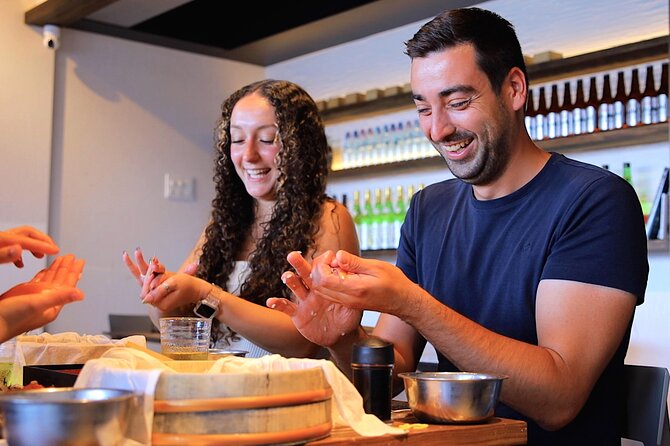
Osaka is a fine place to learn sushi, especially when the lesson takes place a block from Dotonbori and includes both maki rolls and nigiri. You prepare the food yourself, then sit down to eat it, so this is part cooking lesson and part lunch or dinner.
I like two things right away: the instructors keep the class friendly and easy for beginners, and the food is already prepped so you can spend your time learning technique rather than chopping vegetables. The main consideration is timing. The advertised length is about 1 hour 40 minutes, but a few people found the hands-on session rushed when they wanted more time to eat, take photos, or practice.
Key points to know before booking
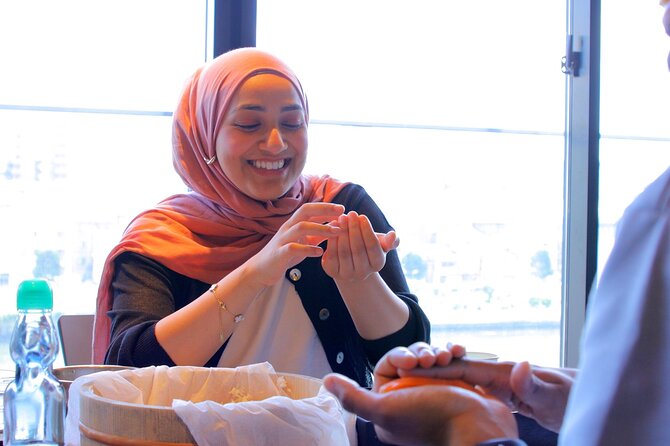
- Make both rolled and hand-formed sushi: You learn maki rolls and authentic nigiri, not just one simple dish.
- Beginner-friendly English instruction: Instructors including Reika, Fuko, Aina, Yui, Matty, and Arisa have led lively, patient classes.
- A useful central location: The class is near Dotonbori and Shinsaibashi, making it easy to fit into an evening or sightseeing day.
- A proper meal is included: You eat the sushi you make, with portions described as plentiful, including one maki roll and roughly four to eight pieces of nigiri.
- Small enough to receive help: The maximum group size is 20 people, and instructors circulate to correct hand positions and answer questions.
- Plan dietary needs early: Vegetarian and fish options are available, but special requests such as avoiding shrimp should be entered when booking.
Making sushi near Dotonbori
The class begins at Sushi Making Osaka, at 1-chōme-16-20 Higashishinsaibashi in Chuo Ward. That puts you in central Osaka, close to the Dotonbori shopping and dining area and within reach of Shinsaibashi. You do not spend time on a long ride out to a cooking studio, which matters when your Osaka schedule is already packed.
The exact room can be a little tricky to find. One useful detail is that the class is in a small room on the third floor, about one block from Dotonbori. I would leave extra time to locate the entrance rather than arrive at the last minute with raw fish and rice waiting upstairs.
There is no hotel pickup or drop-off. You make your own way to the meeting point, and the activity finishes there. The location is near public transportation, so it works well before a night around the canal or after shopping along Shinsaibashi.
The room is described as clean and modern, though lighting may not be ideal for photographs. If you want pictures of your finished sushi, take them promptly and do not expect a long photography session at the table.
More Sushi Making Classes in Osaka
- Osaka Sushi Making Experience
★ 5.0 · 400 reviews - Osaka Sushi Making Class – Hands-On Nigiri & Rolls (Same-Day OK)
★ 5.0 · 352 reviews - Osaka: Roll and Authentic Sushi Making Class in Dotonbori
★ 4.9 · 239 reviews
What happens during the 1-hour-40-minute class
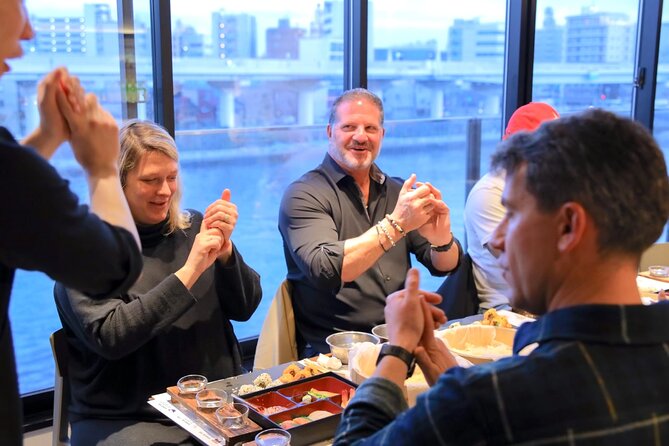
The ingredients are prepared before you arrive. That is a small but important advantage. You can focus on shaping, rolling, and handling the sushi instead of spending the short class washing rice, slicing fish, or setting up ingredients.
The session opens with instruction and some cultural background. You learn where sushi came from and how it developed in Japan, then move into the practical work. Instructors explain the process in English and answer questions about sushi, ingredients, and technique.
The balance of history and cooking will suit most people, though it may not suit everyone. One person wanted less background and more time making and eating. If your main goal is to produce as much sushi as possible, you may wish the introduction were shorter.
The class then moves into maki, or rolled sushi. You work with the prepared ingredients and learn how to arrange and roll them. Making a neat roll looks simple when a professional does it, but keeping the filling centered and the roll firm takes some care. The instructor guidance helps turn a messy first attempt into something you can actually slice and serve.
Next comes nigiri, the hand-formed style with a small mound of rice and a topping. This gives you a different skill from rolling. You practice the pressure needed to shape rice without crushing it, then place the topping correctly.
The lesson is practical rather than advanced. You will not leave as a sushi chef, but you should understand the basic movements well enough to try them again at home. The class also shows why professional sushi can look so effortless while requiring precise hands.
How much sushi do you actually eat?
The amount is one of the strongest reasons to consider the class. A typical portion described for the session is one maki roll and about four to eight pieces of nigiri, depending on your pace. Other accounts describe the food as generous enough to serve as lunch or dinner, and you eat everything you make.
That makes the $31.01 price easier to assess. You are not paying only for a demonstration. The fee includes the English-speaking instructor, cooking-class ingredients, and the meal. Compared with paying for a central Osaka sushi meal, the class gives you food plus an activity and basic instruction.
The value is best for someone who wants a shared activity, not simply the cheapest sushi in town. If you only want to eat excellent sushi, a restaurant may be more efficient. If you want to make your own meal, ask questions, and leave with a story to tell, the price is sensible.
Portions may depend on how quickly your group works. A fast participant could make closer to eight nigiri, while a slower beginner may produce fewer. Either way, the class appears designed to give you enough food to feel that you have had a meal, not just a sample.
The instructors make the difference
The teaching staff receives the most consistent praise. Reika is described as friendly and good at explaining the background of sushi. Fuko is noted for patience, humor, and keeping the room engaged, including during a first cooking class taken by a parent and child.
Aina is praised for being personable and informative, while Matty and Yui are described as entertaining and well informed. Other sessions have been led by Arisa, Ina, and Fujiko. The names vary by time and date, so you should not book expecting one particular instructor unless the operator confirms it.
The teaching style is energetic and interactive. Instructors demonstrate the steps, then help around the table. That personal help matters more than a polished speech because rice can stick, rolls can loosen, and nigiri can end up too large or too soft.
English is used throughout, making the session approachable for international visitors. A note from one person says an instructor had a strong accent, so you may need to listen carefully at times. Still, the repeated impression is that staff are patient and willing to show the movements again.
The group can include as many as 20 people. That is not a private lesson, but it is small enough for instructors to move around and offer assistance. Your level of individual attention may depend on how full the session is and how quickly each table progresses.
More sushi classes in Osaka:
- Osaka: Sushi Class in Dotonbori
★ 4.9 · 160 reviews - Osaka Dotonbori: Sushi Making Experience
★ 4.9 · 122 reviews - Osaka: Sushi Making in Spacious Studio (SAME-DAY OK!)
★ 5.0 · 75 reviews - Sushi Making Tokyo Roll and Authentic Japanese Sushi Class
★ 5.0 · 3,971 reviews
A good choice for families and first-time cooks
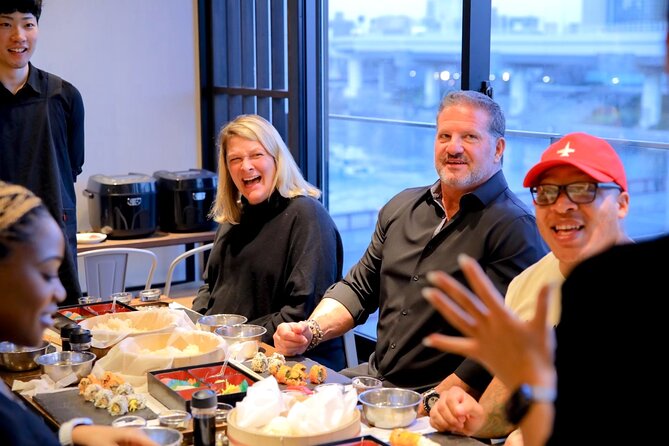
You need no cooking experience. That makes this an easy activity for families, couples, friends, and anyone who enjoys Japanese food but has never handled sushi rice.
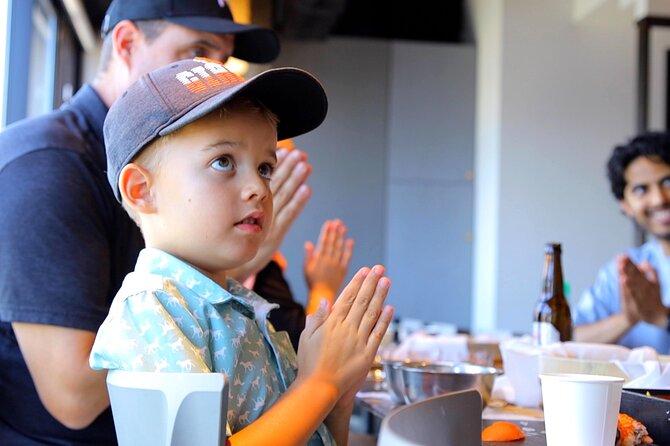
Children can take part, though they may need extra help with rolling and shaping. The teaching team has been described as patient with children, and the hands-on format gives younger participants something concrete to do. Teens also have a reason to stay involved, since the class ends with food they prepared themselves.
It is also a useful choice when your group has different interests. One person can enjoy the cultural explanation, another can focus on technique, and everyone gets a meal at the end. You do not need to be a serious cook to find value in it.
Vegetarian and fish options have both been available. Still, do not assume every ingredient can be switched on the day. A participant who did not eat shrimp was told the request should have been included in the reservation, so enter dietary preferences when booking. The supplied information does not promise that every allergy or substitution can be handled.
Service animals are allowed, and the class is near public transportation. No other accessibility details are provided, so if you need specific assistance, contact the operator before paying.
The pace can feel tight
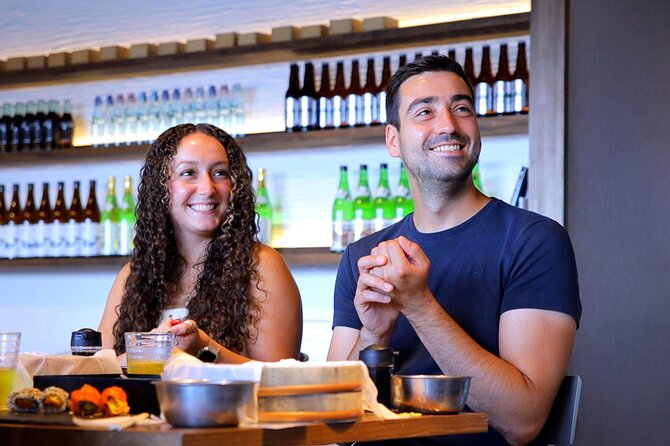
The advertised duration is approximately 1 hour 40 minutes. That includes the welcome, sushi background, instruction, preparation, eating, and cleanup. For many people, this is a useful length: long enough to learn the basics, short enough to fit between Osaka plans.
The tradeoff is that the activity has a fixed schedule. One person felt rushed while still eating as the team cleaned and prepared for the next group. Another found the class length just right. Your impression will depend partly on how quickly your group makes the sushi and how much time you want for photos.
I would treat this as a compact workshop rather than a leisurely cooking party. Arrive ready to follow directions, and avoid booking it immediately before a train or another timed appointment. Morning, afternoon, and evening sessions give you flexibility, but you still need to allow time to find the room.
There is no mention of sake or beer being included. If you are picturing a long social meal with drinks, adjust your expectations. The food and instruction are the focus.
Food handling and presentation details
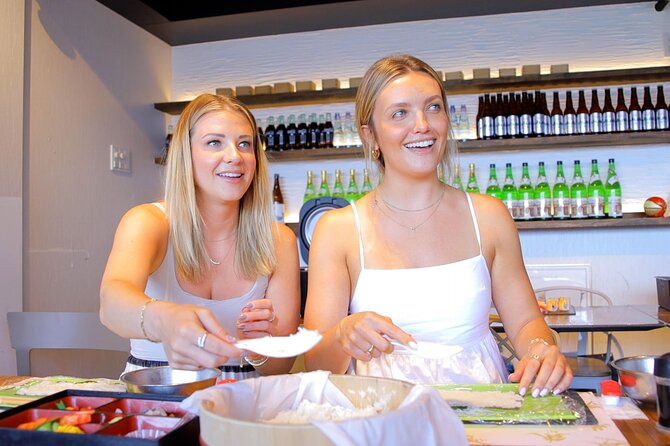
The ingredients are ready at the start, which keeps the class moving. One observation raised concern about fish sitting at room temperature during the session rather than on ice. This is a fair point to keep in mind, particularly if food handling is important to you.
The class receives praise for clean facilities and good-quality ingredients. The finished sushi is described as tasty and plentiful, but this is still a group lesson, not an omakase counter. You are making food at beginner speed, and the result depends on your own technique.
Photography is possible, but the room lighting may produce dark shadows. Since the class moves toward cleanup soon after eating, take a few pictures during the process rather than waiting until the very end.
Who should book this Osaka activity?
I would recommend it to:
- First-time sushi makers who want clear instruction
- Families looking for an activity that works for children and teens
- Couples and friends who want to do something together rather than sit quietly at a restaurant
- People staying near Dotonbori or Shinsaibashi
- Visitors who want a filling meal with a hands-on cultural activity
- Anyone curious about the difference between maki and nigiri
I would be more cautious if you want a private lesson, a long relaxed meal, extensive photography time, or a deep technical course in sushi preparation. The maximum group size is 20, the session is tightly timed, and the lesson covers basic methods rather than professional-level skills.
The class has received a 5 out of 5 rating from 1,224 reviews and is recommended by 100 percent of the rating base provided here. It has also received the TripAdvisor Best of the Best award twice. Those figures suggest a very dependable crowd-pleaser, but the lower ratings are useful: the experience is not perfect for people who dislike a brisk schedule, want drinks, or expect complete freedom over ingredients.
Booking, cancellation, and practical planning
The price is $31.01 per person, and the mobile ticket makes arrival simple once you have found the building. Confirmation is provided at booking.
You can cancel for a full refund up to 24 hours before the local start time. Cancellations or changes made less than 24 hours before the activity are not refunded or accepted, so check your Osaka schedule before reserving.
Because the activity starts and ends at the same address, you can plan a nearby meal, shopping stop, or walk through Dotonbori afterward. I would not place it at the far end of a busy sightseeing day unless you allow extra time for public transportation and finding the third-floor room.
Should you book the sushi class?
Book it if you want to make and eat your own sushi in a central Osaka location without committing half a day. The combination of friendly English instruction, ready-to-use ingredients, maki and nigiri practice, and a generous meal offers good value at $31.01.
Skip it if your priority is a slow food experience, a private setting, alcohol with dinner, or detailed accommodation of last-minute dietary changes. For most first-timers, families, and food-loving couples, this is a practical and cheerful addition to an Osaka itinerary. Just arrive early, note every dietary need in advance, and save your photo-taking for the pauses between steps.
FAQ
Where does the sushi-making class take place?
It starts and ends at Sushi Making Osaka, 1-chōme-16-20 Higashishinsaibashi, Chuo Ward, Osaka, 542-0083, Japan. The class is near Dotonbori and Shinsaibashi, in a small room on the third floor.
How long does the activity last?
The stated duration is approximately 1 hour 40 minutes. The class includes instruction, sushi making, eating, and cleanup.
What types of sushi will I learn to make?
You will learn to make maki rolls and authentic nigiri sushi.
Is the class taught in English?
Yes. An English-speaking instructor is included, and you can ask sushi-related questions during the lesson.
Is food included in the price?
Yes. The ingredients for the cooking class and the sushi meal you make are included. Hotel pickup and drop-off are not included.
How many people can join the class?
The activity has a maximum of 20 participants.
Can I cancel for a full refund?
Yes. You can cancel at least 24 hours before the local start time for a full refund. Cancellations or changes made less than 24 hours before the start time are not accepted for a refund.
More Workshops in Osaka
- Matcha Making Class in Osaka with Authentic Japanese Sweets Set
★ 5.0 · 509 reviews - Osaka: Ramen and Gyoza Cooking Class in Dotonbori
★ 5.0 · 378 reviews - Osaka Cooking Class: Okonomiyaki &Japanese cuisines experience
★ 5.0 · 261 reviews - Osaka: Cooking Class Ramen & Gyoza Course in Nanba
★ 4.9 · 86 reviews
Just added around Osaka
- Discover Real Osaka: A Cultural Walk with Food & Drink★ 5.0 · 13 reviews
- From Osaka/Kyoto: Kyoto & Nara Day Trip with Optional Lunch★ 4.5 · 79 reviews
- Osaka 6hr Private Walking Tour with Government Licensed Guide★ 5.0 · 174 reviews
- Private Airport transfer Kansai Intl. Airport(KIX) to OSAKA CITY★ 4.5 · 12 reviews
- Osaka: Namba Local Food Walking Tour (Taste 15 Dishes)★ 5.0 · 20 reviews
- Osaka Delights: Traditional Japanese Food Tour★ 4.5 · 33 reviews
- Badminton in Osaka & Kyoto with Locals!★ 5.0 · 15 reviews
- From Osaka or Kyoto: Kyoto and Nara 1-Day Bus Tour★ 3.5 · 141 reviews
Osaka Tours, compared.

Shinsekai Food Tour with 13-15 Dishes at 5 Eateries
Read our review →
Osaka Food Tour: 13 Dishes at 5 Local Eateries
Read our review →
Hungry Osaka Street Food Tour:15 Tastings & 3 Drinks with a Local
Read our review →
Hotspots & Hidden Gems Walking Tour Private or Group
Read our review →Browse the lists this tour appears in