
Reviewed · OSAKA TOURS
Osaka: Sushi Class in Dotonbori
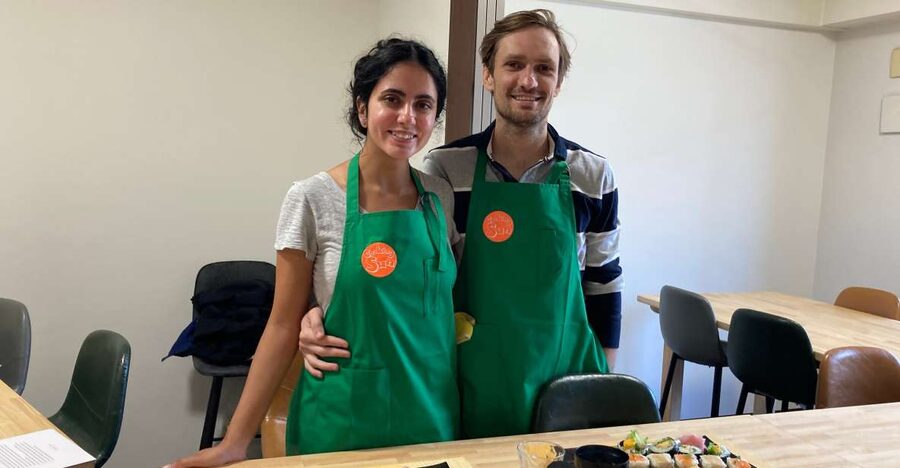
The best part of this Osaka sushi class is that you do not simply watch a chef work. You make three different styles yourself, including oshizushi, the square pressed sushi closely tied to Osaka and the Kansai region. By the end, you have handled vinegared rice, nori, fillings, toppings, and a wooden sushi press, then sit down to eat what you prepared.
I like the small groups of up to eight and the clear English instruction. I also like the amount of food: this is not a token tasting, and several participants found the finished meal large enough to satisfy a serious appetite. The main consideration is the meeting point. Cooking Sun Osaka is in room 202, and the entrance can be easy to miss, especially if you arrive by taxi.
Key points before you book
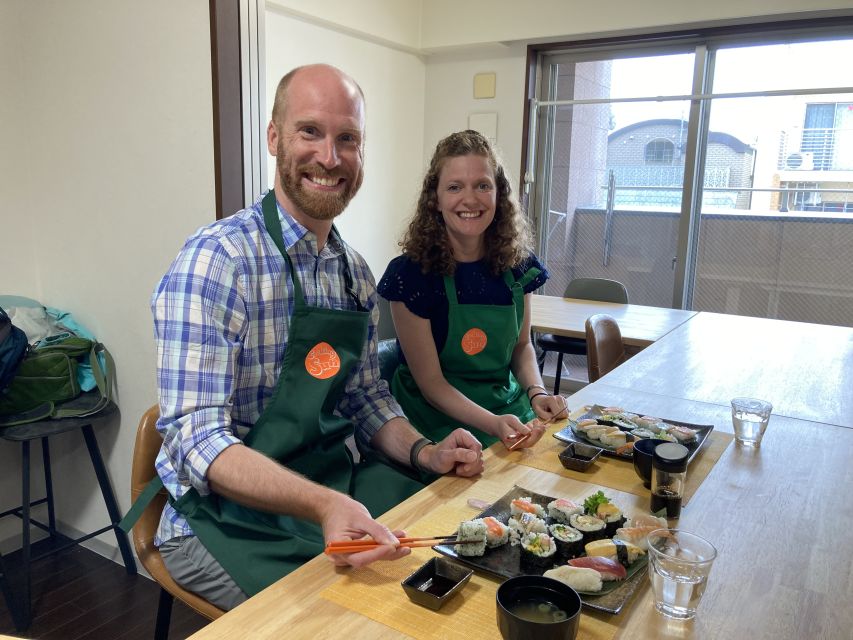
- Three sushi styles in one class: Make a salad roll, hand-shaped nigiri, and Osaka-style pressed sushi.
- A real taste of Osaka: Oshizushi, also called box sushi, is a traditional Kansai specialty.
- English-speaking instruction: Instructors such as Yoshi, Yoko, Ami, Eriko, Naomi, and Amy have led sessions.
- A generous three-hour activity: You prepare the food, learn about Japanese cooking, and eat the finished sushi.
- Small and accessible: The class is limited to eight people and is wheelchair accessible.
- Good flexibility: You can cancel up to 24 hours before the activity for a full refund, and reserve now while paying later.
What happens inside Cooking Sun Osaka
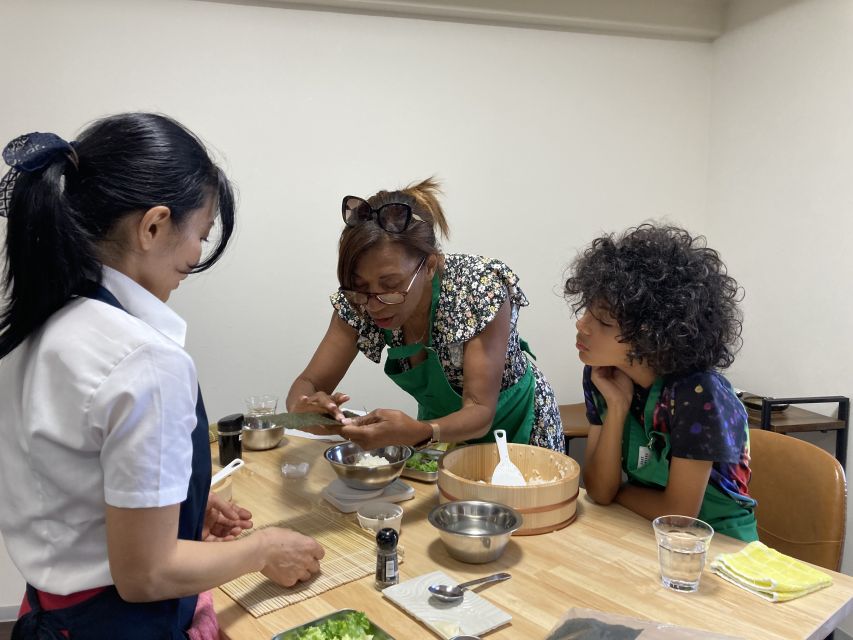
The class takes place at Cooking Sun Osaka in Dotonbori, one of Osaka’s best-known food districts. Your meeting point is room 202. At the entrance, press 202 and then the button marked 呼出, which means call.
Allow extra time to locate the building. One participant reported that even a taxi driver had trouble finding it, and the tree outside became the useful landmark once the location was clear. I would save the meeting details on your phone and arrive early rather than try to find room 202 at the last minute.
Once you are inside, expect a clean, modern cooking space with the equipment needed for the lesson. The group can be as small as four people and never exceeds eight, according to the activity details. That matters. You are not trying to copy hand movements from the far side of a crowded demonstration kitchen.
The three-hour schedule gives the instructors time to explain, demonstrate, and correct your technique. You also have room to ask questions about Japanese ingredients, food customs, preservation, pickling, and ways to make the dishes at home. The emphasis is practical, but the class also gives you a window into the food culture behind the meal.
More Sushi Making Classes in Osaka
- Sushi Making Osaka Roll and Authentic Japanese Sushi Class
★ 5.0 · 1,220 reviews - Osaka Sushi Making Experience
★ 5.0 · 400 reviews - Osaka Sushi Making Class – Hands-On Nigiri & Rolls (Same-Day OK)
★ 5.0 · 352 reviews
First technique: making the salad roll
The salad roll is the most approachable of the three preparations. You work with nori seaweed, sushi rice, lettuce, cucumber, crab-flavored kamaboko, tuna mixed with mayonnaise, and a core of tamagoyaki, or Japanese rolled omelet.
This is a useful place to begin because it teaches the basic structure of a roll without making the first task too demanding. You learn how to arrange several fillings, keep the ingredients together, and roll the nori around the rice. The combination is familiar enough for cautious eaters, yet the kamaboko, tamagoyaki, and nori give it a distinctly Japanese character.
The salad roll also shows why sushi is about balance rather than simply putting ingredients inside rice. Cucumber brings crunch, lettuce adds freshness, the tuna mayonnaise provides richness, and the egg gives the roll a soft center. You will likely find that the challenge is not the ingredients but controlling the pressure as you roll.
Do not expect a chef to do this part for you. The point is to make the roll yourself, with the instructor showing the process and helping you adjust. If your first roll looks a little uneven, that is part of the fun. It will still be lunch.
Second technique: shaping nigiri by hand
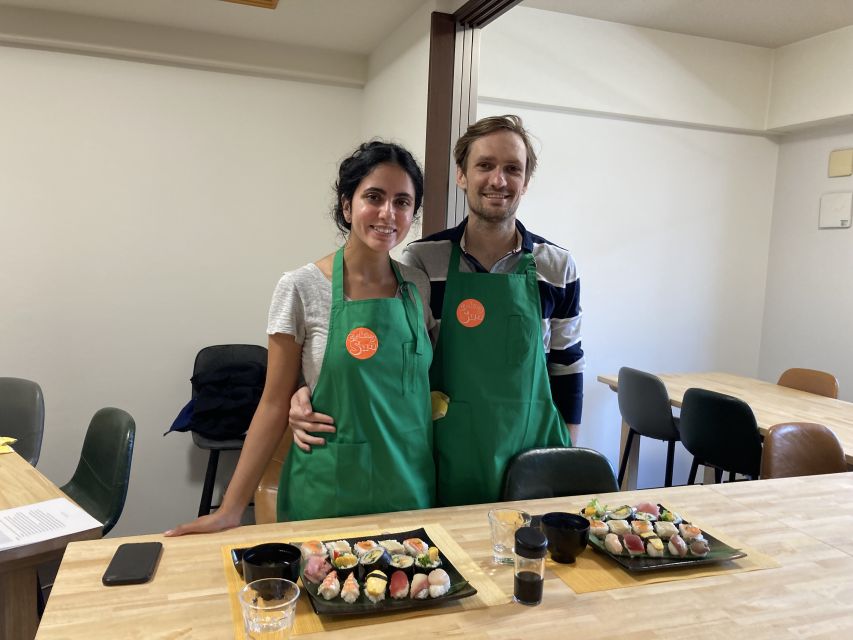
Nigiri is the sushi style most people picture first: a small piece of vinegared rice with fish, shellfish, or omelet placed on top. In this class, you learn how to form the rice into a compact, bite-sized shape and position the topping neatly.
Nigiri looks simple because the finished piece is small. It is not quite as easy as it looks. Too much pressure produces a dense lump of rice, while too little leaves the piece fragile. The instructor’s step-by-step demonstration helps you understand the light touch required.
The course description explains the traditional form rather than promising a fish-cutting lesson. If slicing fish is important to you, set your expectations accordingly. One participant specifically wished there had been a chance to cut the fish, after taking other classes in Japan that included that task. This class focuses more on assembling and shaping the sushi than on knife work.
That focus makes the lesson suitable for beginners. You do not need prior cooking experience, and the English-speaking instructors explain the movements carefully. Yoshi, Yoko, and other instructors have been praised for patient demonstrations, friendly interaction, and detailed explanations. Names and staff can vary by session, but the teaching style is designed for international participants.
Third technique: Osaka’s pressed oshizushi
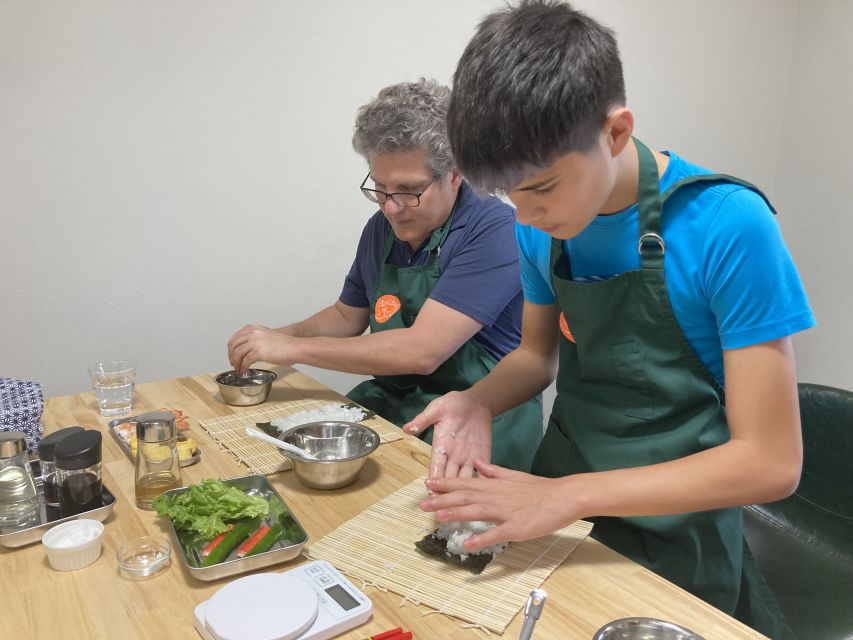
The most distinctive part of the class is oshizushi, or pressed sushi. This is a traditional Kansai preparation, and Osaka is especially associated with it. You fill a square wooden mold with sushi rice and toppings, then press the mixture so the rice holds together.
Unlike nigiri, which you shape by hand, oshizushi gets its form from the box. The finished sushi is square and is cut into pieces shortly before eating. In Osaka, it is also known as box sushi, and it remains a popular local style.
This is the preparation that gives the class a strong sense of place. Nigiri is famous around the world, but pressed sushi tells you something specific about Osaka and the Kansai region. The technique is neat, compact, and practical, and the square shape makes a clear contrast with the hand-formed nigiri and rolled salad sushi.
You will need to press firmly enough for the rice and toppings to hold together, but not so hard that the texture becomes heavy. The instructor guides the process, and you cut the finished block into portions before eating. That final step is satisfying because you see a plain wooden frame turn into a tidy plate of sushi.
More sushi classes in Osaka:
- Osaka: Roll and Authentic Sushi Making Class in Dotonbori
★ 4.9 · 239 reviews - Osaka Dotonbori: Sushi Making Experience
★ 4.9 · 122 reviews - Osaka: Sushi Making in Spacious Studio (SAME-DAY OK!)
★ 5.0 · 75 reviews - Sushi Making Tokyo Roll and Authentic Japanese Sushi Class
★ 5.0 · 3,971 reviews
More than sushi: rice, dashi, and Japanese food culture
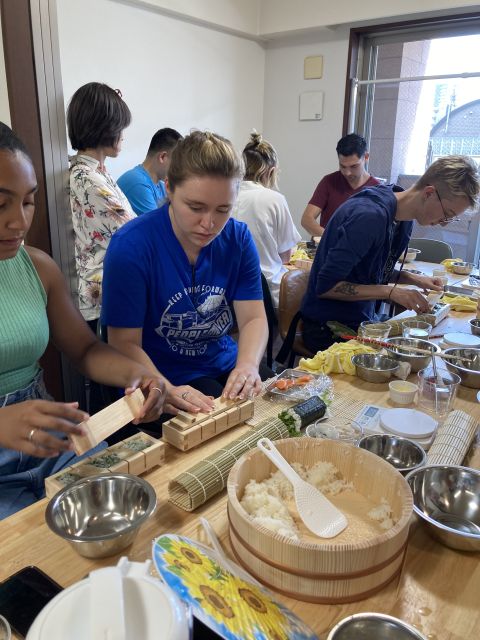
The main focus is the three sushi styles, but the three-hour format can include additional preparation. A previous class session included dashi, sushi rolls, nigiri, pressed sushi, and miso soup, along with the main sushi work. The exact menu may vary, so do not book expecting a fixed list beyond the three advertised sushi types.
Dashi is a particularly useful addition because it forms the base of many Japanese dishes. Learning about it helps place sushi in a wider kitchen tradition rather than treating the class as a one-off craft activity.
The instructors also explain Japanese cooking methods, food preservation, pickling, and the cultural meaning behind parts of the meal. You can ask about buying ingredients locally and recreating the food at home. That practical information gives the class value after you leave Osaka.
I would ask questions as you go. The teaching style is interactive, and the instructors have been described as happy to talk about local food and help with ideas for the rest of your trip. Yoshi, in particular, has offered suggestions about places to go and foods to try during Osaka visits.
Eating the sushi you made
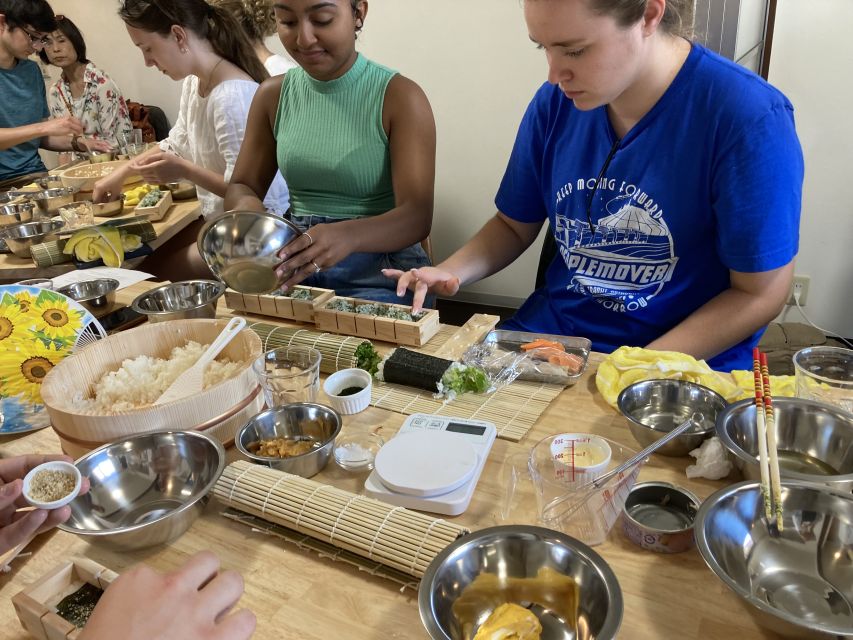
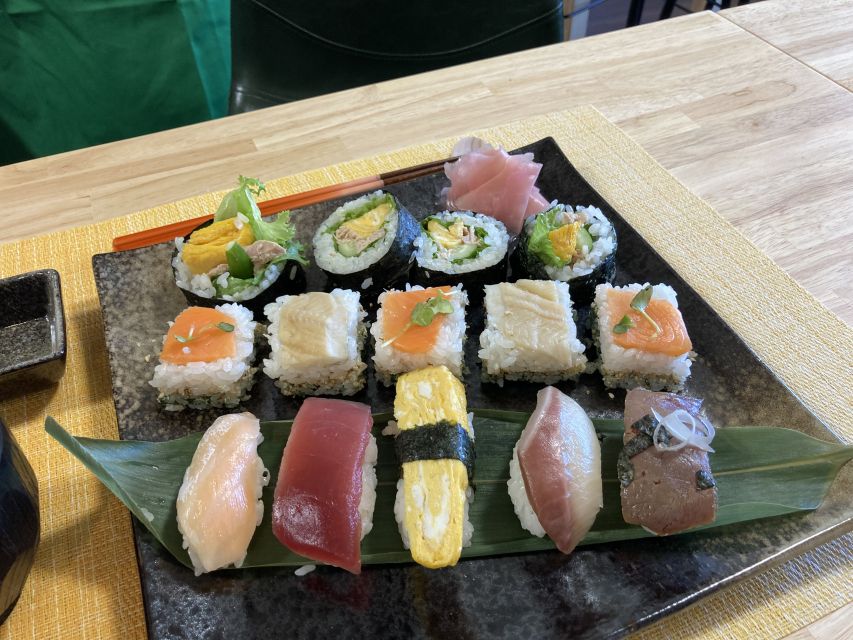
The final meal is one of the strongest reasons to choose this activity. You do not make a few pieces for a photograph and then leave hungry. The class includes all the ingredients, and the portions are described as generous.
Fresh ingredients matter here, especially because sushi depends on texture and balance. You will taste the difference between a roll, a hand-shaped piece of nigiri, and a pressed square of oshizushi. The meal also gives you a chance to see how your technique affected the result.
Some of your pieces may look more polished than others. That is normal for a first attempt, and the instructor’s help keeps the process enjoyable rather than stressful. The food is the reward, but it also gives you a direct way to judge what you learned.
If you have a large appetite, this class is a safer choice than a short tasting activity. Several participants found there was plenty to eat, and one described the quantity as enough for two people with sizable appetites. Exact portions can vary, but the format is clearly built around eating a full meal from your own work.
Why the small group matters
The limit of eight people is a practical advantage, not just a marketing detail. Sushi requires close attention to rice shape, rolling pressure, and ingredient placement. With fewer people at the counter, the instructor can see what you are doing and step in before a roll becomes difficult to repair.
Small classes also make it easier to ask about allergies, food customs, or local ingredients. The class has accommodated food allergies, but you should still provide the details when booking. Vegetarian and gluten-free options are available by request, and you should leave a note in advance.
The English instruction is another major strength for international visitors. The instructors explain each technique in English, and the class includes cultural information without requiring Japanese-language skills. Yoshi, Yoko, Ami, Eriko, Naomi, and Amy are among the instructors associated with sessions, though the person teaching you depends on the date.
The atmosphere is friendly and conversational. That can be a plus if you want advice about Osaka, but if you prefer a silent, highly formal cooking lesson, this may feel more social than expected.
Price, time, and overall value
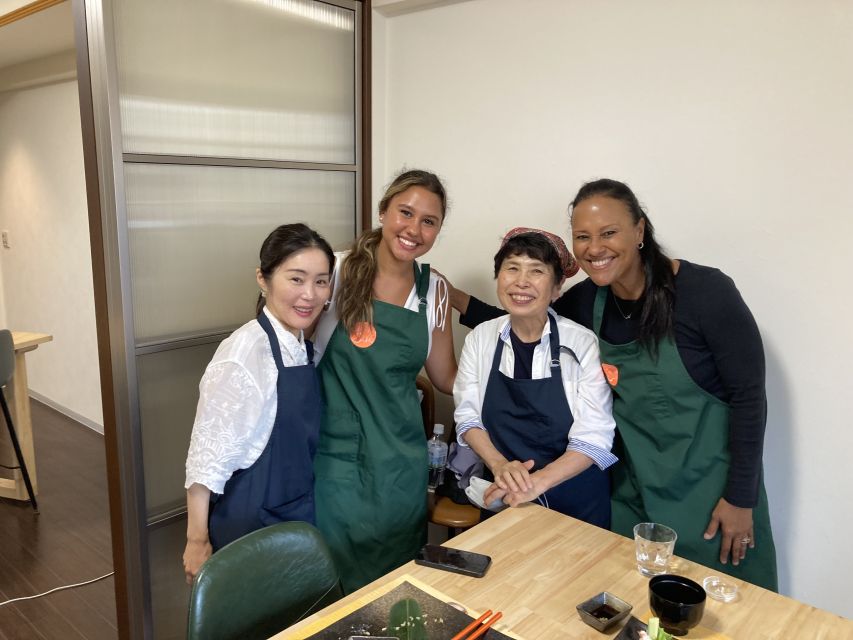
At $67 per person, the class is not the cheapest way to eat sushi in Osaka. You can find a quick meal for less. That comparison misses the point, though, because this price covers three hours of instruction, all the ingredients, a substantial meal, and a small-group cultural activity.
I see the value in the combination. You learn techniques that are easy to remember, eat what you make, and gain enough context to recognize oshizushi as an Osaka specialty rather than just another sushi shape. The class also fills a useful part of the day without taking over your entire sightseeing schedule.
Three hours is long enough to avoid a rushed demonstration. It also means you should not plan a tightly timed attraction immediately afterward. The starting time varies, so check availability and build in time for finding the room.
The activity is wheelchair accessible. Still, I would confirm any individual mobility needs when booking, since the supplied details do not describe the exact seating arrangement or route through the building.
The reserve-now-and-pay-later option is useful if your Osaka plans are still changing. Free cancellation is available up to 24 hours before the activity for a full refund. Those terms reduce the risk of booking early, but you should still check the current conditions when reserving.
Who will enjoy this class most
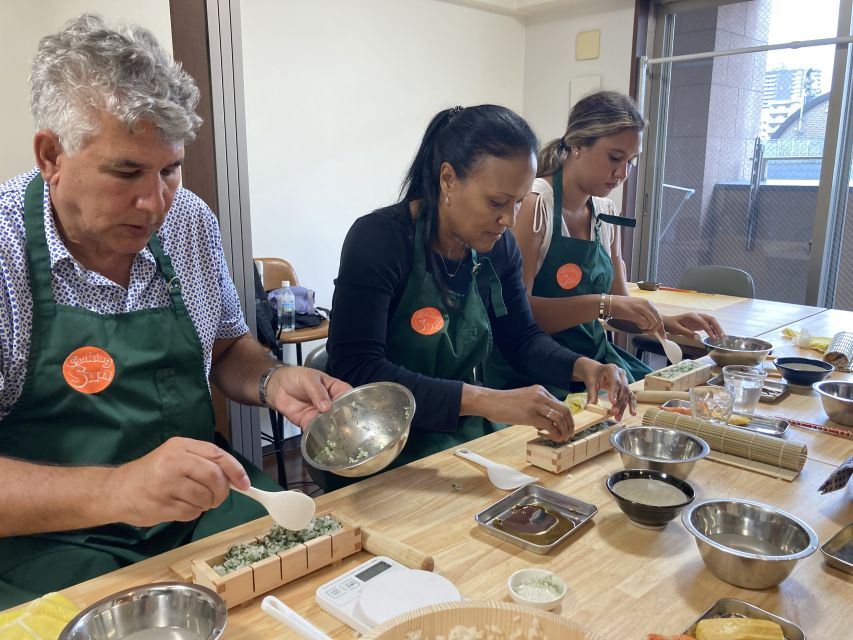
I would choose this for sushi fans who want to understand how different forms are made, not simply order a plate at a restaurant. It is also a strong pick for first-time cooks because the instructors break down each task and work in a small group.
Families and couples can find plenty to do together, and the class suits a honeymoon itinerary as well as a solo food-focused day. It is hands-on without requiring advanced skills. You leave with a better sense of the ingredients and a meal you helped create.
It may be less suitable if you want an advanced chef course centered on filleting fish, knife skills, or restaurant-level presentation. The class is about three accessible sushi techniques, cultural explanation, and eating the finished food.
It is also worth considering your food preferences. The standard salad roll includes crab-flavored kamaboko, tuna mixed with mayonnaise, egg, and nori. Vegetarian and gluten-free arrangements must be requested in advance, so do not wait until you arrive.
Small practical details that make the day easier
Save the address and room number before leaving your hotel. At the entrance, press 202 and the 呼出 call button. If you are using a taxi, show the destination clearly and allow time in case the driver has trouble identifying the building.
Arrive with enough time to find the entrance, but do not expect a long walk through a large attraction. The meeting point is specific, and the hard part is locating the correct doorway rather than navigating a huge venue.
Wear clothing that lets you work comfortably around a kitchen counter. The available information does not specify a dress code, so ordinary travel clothes should be fine, but avoid anything you would worry about around food preparation.
Come hungry. The final meal is a central part of the experience, and the class can produce more food than a light snack. If you are visiting Dotonbori afterward, you may want to leave room for the neighborhood’s other famous foods, but do not count on needing an immediate lunch.
Should you book the Dotonbori sushi class?
I would book it if you want a friendly, practical introduction to Japanese sushi with a clear Osaka connection. The combination of nigiri, salad roll, and oshizushi gives you three different techniques, while the English instruction and eight-person limit keep the lesson approachable.
The best reason to choose it is the pressed sushi. Nigiri is familiar, but oshizushi connects the class to Osaka and gives you something distinctive to take home as a skill. The generous food portions and three-hour schedule also make $67 a fair price for a meal plus instruction.
Think twice only if you are seeking serious fish preparation or a highly advanced culinary course. For everyone else, especially first-time sushi makers, couples, and food-focused visitors, this is a useful and enjoyable way to spend part of an Osaka day. Just leave a note for dietary needs and allow extra time to find room 202.
FAQ
Where does the Osaka sushi class take place?
The class takes place at Cooking Sun Osaka, in room 202. At the entrance, press 202 and then press the button marked 呼出, which is the call button.
How long does the sushi class last?
The activity lasts three hours.
What sushi will I make?
You will make three types: a salad roll, nigiri, and oshizushi, which is Osaka-style pressed sushi or box sushi.
Is the class taught in English?
Yes. The instructor language is English.
How many people can join the class?
The class is limited to eight participants. Some sessions may be smaller.
What is included in the price?
All ingredients for making the sushi are included.
Can I request vegetarian or gluten-free food?
Yes. You should leave a note when booking to request a vegetarian or gluten-free option.
Is the activity wheelchair accessible?
Yes, the activity is listed as wheelchair accessible.
Can I cancel the booking?
You can cancel up to 24 hours in advance for a full refund. The activity also offers a reserve-now-and-pay-later option.
More Workshops in Osaka
- Matcha Making Class in Osaka with Authentic Japanese Sweets Set
★ 5.0 · 509 reviews - Osaka: Ramen and Gyoza Cooking Class in Dotonbori
★ 5.0 · 378 reviews - Osaka Cooking Class: Okonomiyaki &Japanese cuisines experience
★ 5.0 · 261 reviews - Osaka: Cooking Class Ramen & Gyoza Course in Nanba
★ 4.9 · 86 reviews
Just added around Osaka
- Discover Real Osaka: A Cultural Walk with Food & Drink★ 5.0 · 13 reviews
- Private Airport transfer Kansai Intl. Airport(KIX) to OSAKA CITY★ 4.5 · 12 reviews
- From Osaka/Kyoto: Kyoto & Nara Day Trip with Optional Lunch★ 4.5 · 79 reviews
- Osaka 6hr Private Walking Tour with Government Licensed Guide★ 5.0 · 174 reviews
- Osaka: Namba Local Food Walking Tour (Taste 15 Dishes)★ 5.0 · 20 reviews
- Osaka Delights: Traditional Japanese Food Tour★ 4.5 · 33 reviews
- Badminton in Osaka & Kyoto with Locals!★ 5.0 · 15 reviews
- From Osaka or Kyoto: Kyoto and Nara 1-Day Bus Tour★ 3.5 · 141 reviews
Osaka Tours, compared.


Shinsekai Food Tour with 13-15 Dishes at 5 Eateries
Read our review →
Osaka Food Tour: 13 Dishes at 5 Local Eateries
Read our review →
Hungry Osaka Street Food Tour:15 Tastings & 3 Drinks with a Local
Read our review →



Hotspots & Hidden Gems Walking Tour Private or Group
Read our review →Browse the lists this tour appears in