
Reviewed · NAGOYA TOURS
From Nagoya: Hida Takayama & Shirakawa-go Tour w/Opt. Lunch
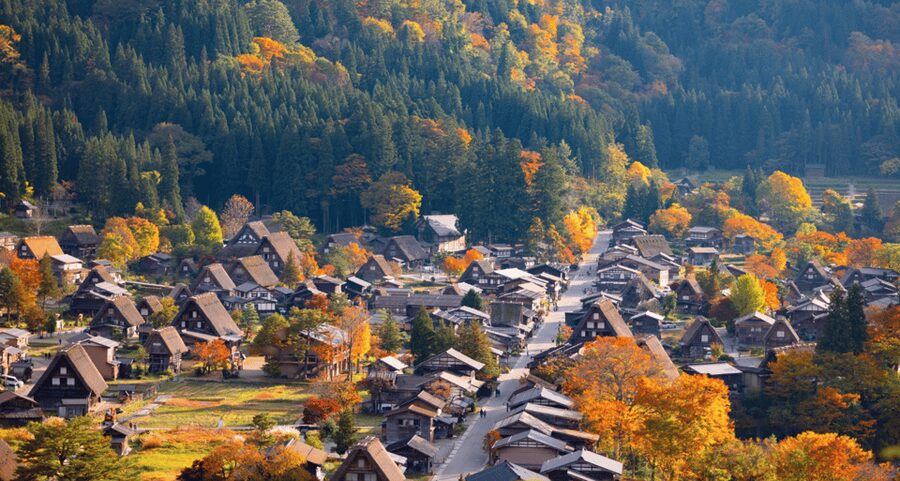
Shirakawa-go is the star here: a mountain village of steep, thatched gassho-zukuri houses surrounded by rice fields and peaks. Pairing it with Takayama gives you two very different glimpses of old Japan in one day, without the bother of arranging rural buses and transfers yourself. I especially like the air-conditioned coach and the free time built into both stops, so you can wander rather than trail behind a flag.
The optional meal at Koshiyama is another plus, especially if you want to try Hida beef without hunting for a restaurant. The main catch is time. Takayama and Shirakawa-go are far from Nagoya, so roughly four hours of the 10-hour day can go to the road, and several visitors would gladly trade a little Shirakawa-go time for more time in Takayama.
Key points at a glance
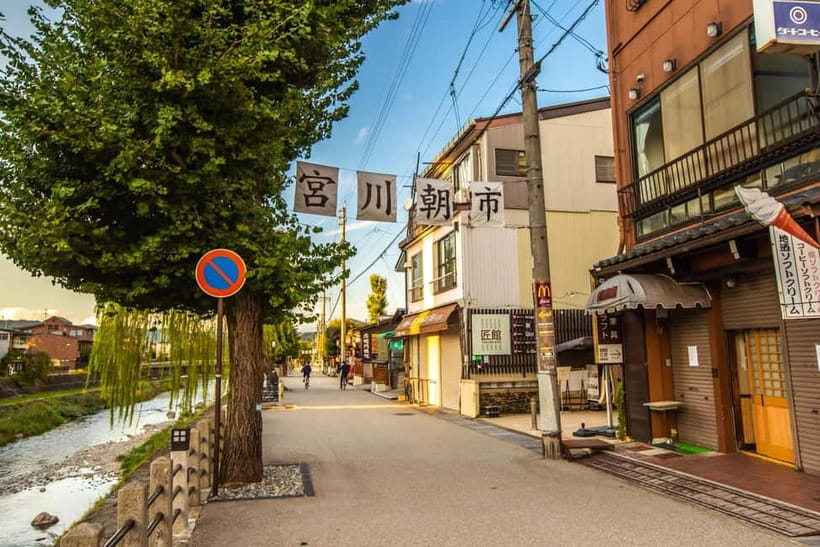
- Two historic destinations in one day: Compare Takayama’s merchant streets with Shirakawa-go’s farmhouses.
- A practical rural transfer: The air-conditioned bus handles a journey that is awkward to organize independently.
- Optional regional lunch: Pick Hida beef steak, Hida pork, Kobe beef shabu-shabu, or tofu oden.
- Useful free time: You get about 90 minutes at each main stop with lunch, or two hours in Shirakawa-go without lunch.
- Helpful guides: English and Chinese guides, including guides such as Alberto, Leo, Bara-san, Akari, Liu, and Xiaoyu, have been praised for maps, reminders, and local suggestions.
- Winter backup plan: If snow closes the road to Shirakawa-go, the day changes to Gujo Hachiman, the Little Kyoto of Gifu.
Why this day trip works from Nagoya
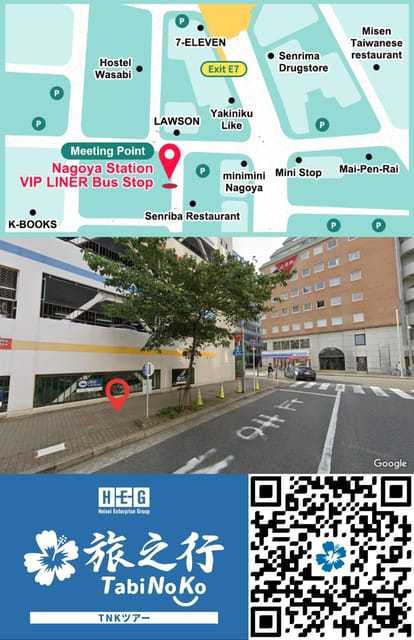
Nagoya is a fine base for central Japan, but Takayama and Shirakawa-go sit well beyond the city. This tour solves the biggest problem: transport. You meet at the VIPLINER Nagoya bus stop at 20-20 Tsubakicho, board an air-conditioned coach, and let someone else handle the long mountain-road journey.
That matters more than it might seem. A self-guided visit requires careful train and bus planning, and the connection to Shirakawa-go can be inconvenient. Here, the bus carries you between the sights and returns you to Nagoya the same day. At $61 per person, the price is attractive for a 10-hour outing that includes transportation and a guide. Add lunch only if the meal suits your plans.
The tradeoff is a long day. You will leave Nagoya, spend much of the morning on the road, walk two destinations, and return after a full day out. The coach has reclining seats, according to several recent experiences, though air conditioning has not always felt strong enough on hot days. Bring water and dress for the conditions at ground level, not just the weather in Nagoya.
More lunch stops in Nagoya:
- Shirakawago & Takayama Bus Tour from Nagoya w/Optional Lunch
★ 4.5 · 37 reviews - Bike Tour Exploring North Kyoto plus Lunch
★ 5.0 · 1,087 reviews - Tokyo: Mt.Fuji & Lake Kawaguchiko 1-Day Bus Tour w/Optional Lunch
★ 4.5 · 839 reviews
Takayama Old Town: wooden streets and a narrow window
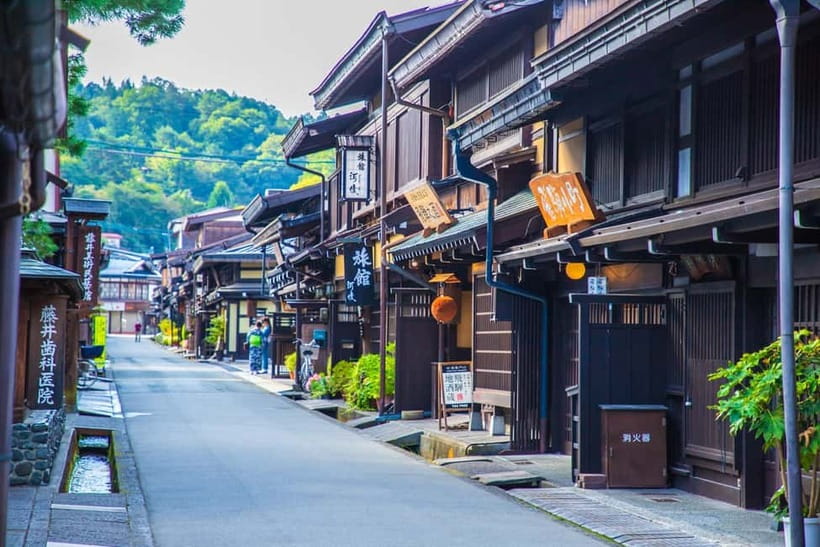
Takayama gives you the first proper walk of the day. Its Old Town is known for dark wooden merchant houses, narrow lanes, small shops, and traditional buildings that recall the Edo period. The setting feels more intimate than a major city attraction. You can browse local products, pause for a snack, or simply walk the preserved streets and look at the carpentry.
The visit also includes the Miyagawa Morning Market, Takayama Jinya, and Furuimachinami Guchi in the planned route. The exact rhythm can change, but these names help you understand the area you are seeing. The market adds a local shopping stop, while Takayama Jinya offers a look at an important historic government building. Furuimachinami Guchi serves as another entry point into the old streets.
Here is the practical warning: 90 minutes is tight. You can get a taste of Takayama, but not comfortably do everything. If you want sake tasting, a full market browse, Hida beef, photographs, and a careful look at the historic buildings, you will need to choose.
I would use the time this way:
- Start with a quick walk through the central old streets.
- Pick one or two shops rather than trying to browse them all.
- Save time for a snack or small regional purchase.
- Return to the meeting point early, since the bus cannot wait.
Some guides provide a marked map with food stops, photo points, and the return location. That can make the short visit much easier. Alberto, Leo, Bara-san, Akari, Liu, and Xiaoyu are among the guides who have been singled out for keeping the schedule clear and helping people find their way. Guide assignments can change, so book this for the structure of the tour rather than a particular person.
Koshiyama lunch: choose local flavor or keep your time
The Koshiyama meal is optional, which is a useful arrangement. With lunch selected, you receive about 45 minutes to eat and around 90 minutes at Shirakawa-go. Without lunch, you get about two hours at Shirakawa-go.
The menu is designed around regional and Japanese specialties:
- Hida beef steak, or yakiniku: Marbled local wagyu grilled on a hot plate.
- Hida pork lunch: Local pork prepared to show its mild sweetness.
- Wagyu Kobe beef shabu-shabu: Thin slices cooked in a light broth.
- Gokayama tofu oden: A vegetarian-friendly dish built around firm local tofu.
The Hida beef option is the most tempting choice if you have not tried it elsewhere in Japan. It also adds cost and uses part of your already limited sightseeing time. The lunch is outside the main Shirakawa-go village, so do not expect to eat while looking at the famous thatched houses.
That location is the main drawback for people who prefer complete freedom. Some diners have found the meal satisfying, while one direct assessment found the included Hida beef lunch underwhelming. My advice is simple: choose lunch if you value convenience, a fixed regional meal, and a chance to try Hida beef. Skip it if you want every available minute in Shirakawa-go or have strong plans for eating there.
Shirakawa-go: the day’s most memorable stop
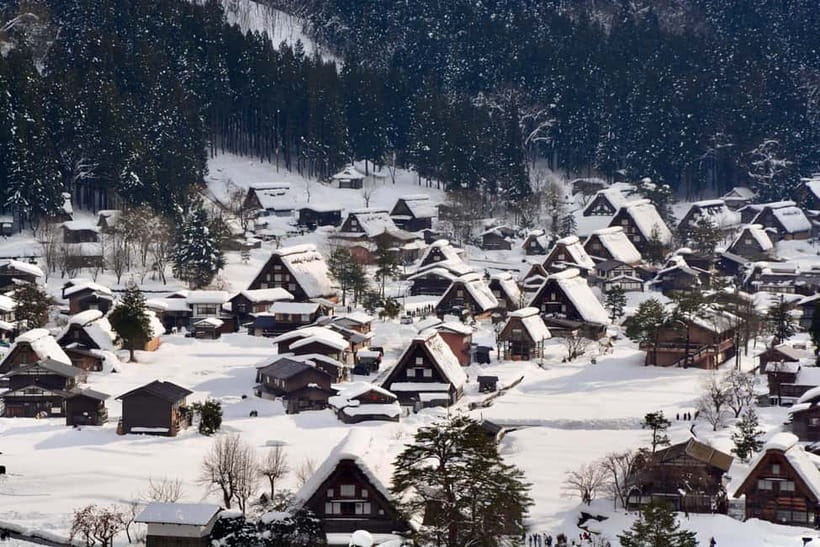
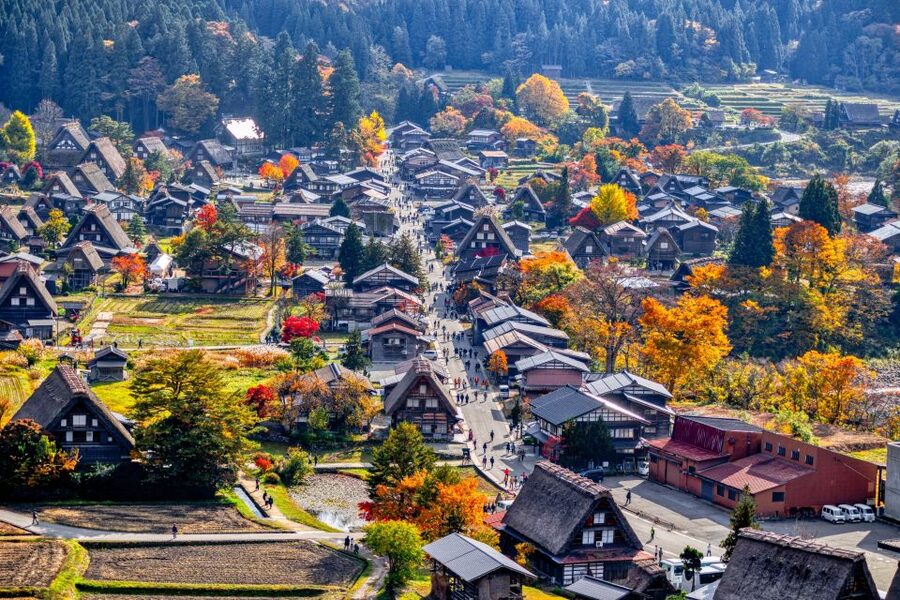
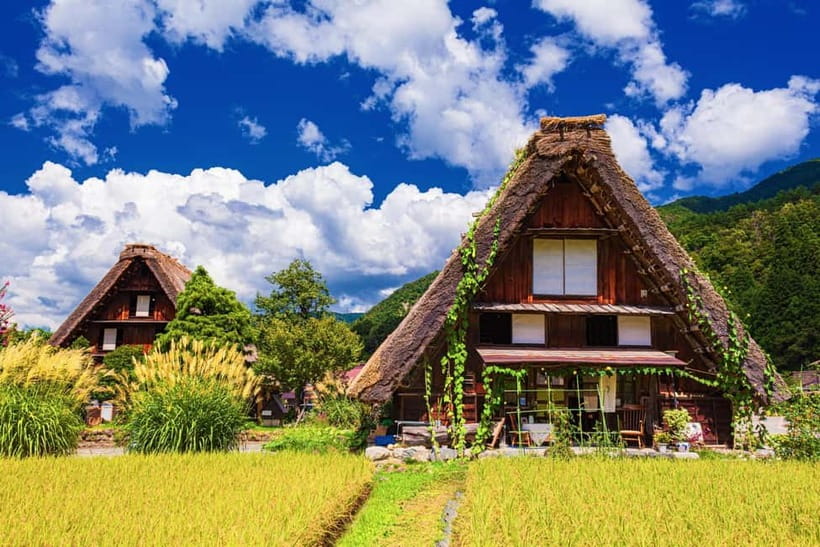
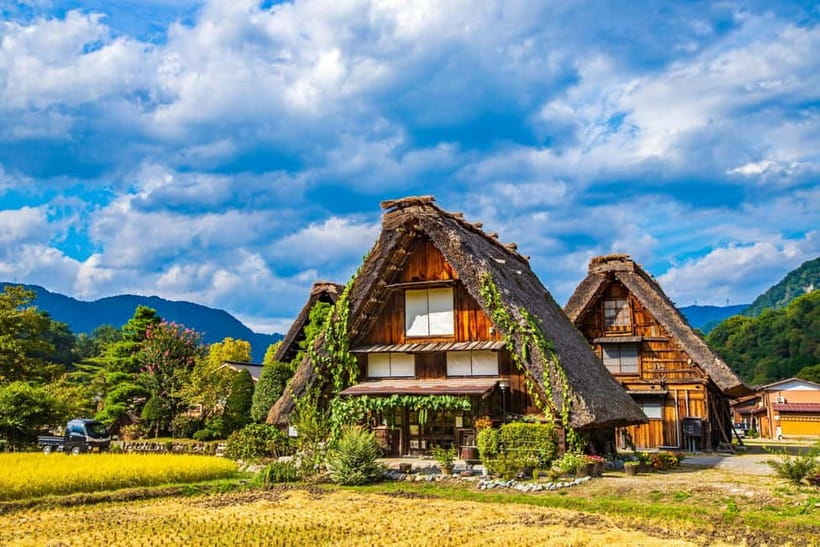
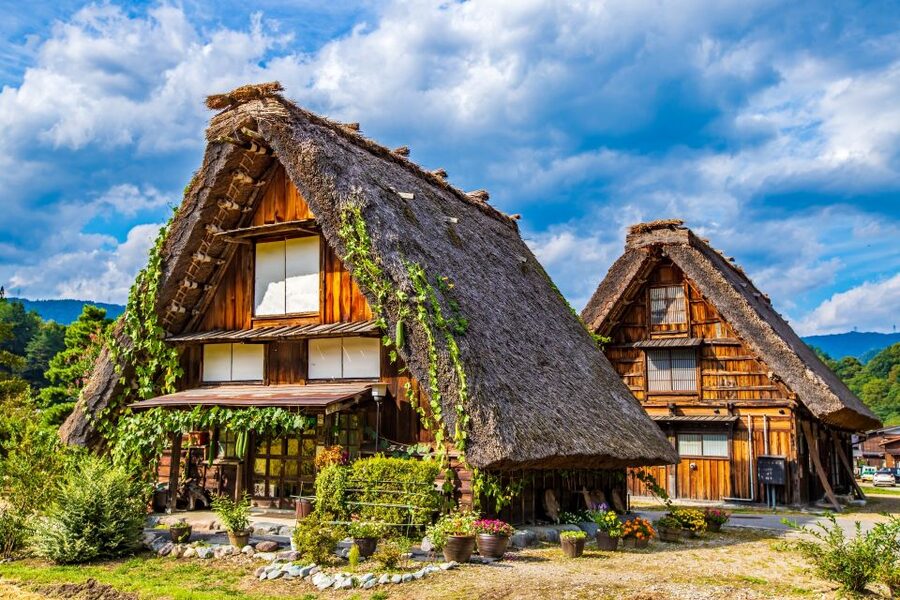
Shirakawa-go is a UNESCO World Heritage Site famous for gassho-zukuri houses. Their sharply pitched thatched roofs were built to handle heavy snow, and the design gives the village its instantly recognizable shape. These are not modern decorations placed for tourists. They are old houses tied to the farming life and climate of the region.
The village is called Ogimachi in the itinerary, and the route includes Wada House and Kanda House Gassho-Zukuri. These preserved homes let you look more closely at the construction and domestic life behind the postcard view. You also have a photo stop at the Ogimachi Castle Observation Deck, where the village spreads below you.
The observation deck is worth prioritizing. From above, the relationship between the houses, rice paddies, river, and surrounding mountains becomes clear. It is also the place most likely to produce the photograph you imagined before booking. Allow time for the climb and for returning to the bus meeting point.
With the lunch option, 90 minutes goes quickly. You can visit the observation deck, walk part of the village, and see one house, but you should not expect a complete visit to every lane and building. Without lunch, two hours is better, though still not enough for a slow, detailed exploration.
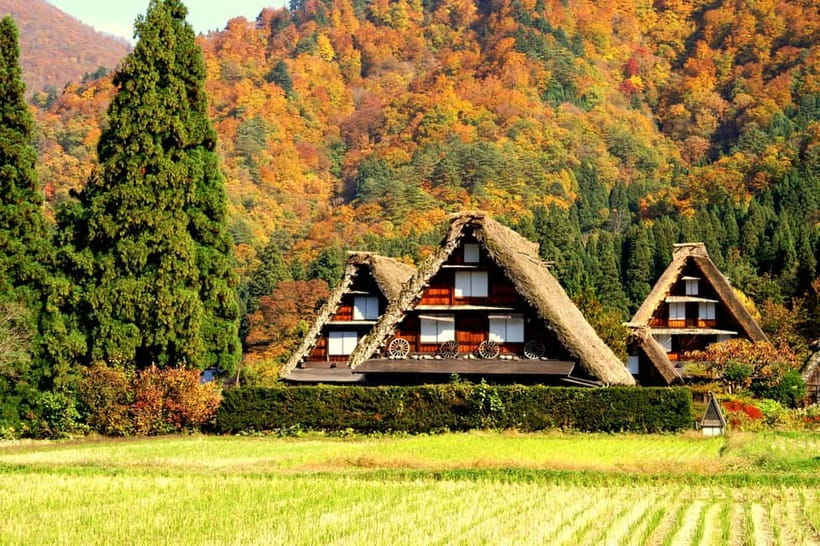
Shirakawa-go changes greatly with the season. Autumn brings colored trees around the dark roofs and fields. Winter can cover the village in snow, creating the storybook scene many people hope to see. Snow also brings a serious practical issue: roads may close. If the route to Shirakawa-go becomes unsafe or impossible, the tour switches to Gujo Hachiman.
A few more Nagoya half-days to weigh up
- From Nagoya: Gujo, Hida Takayama, and Shirakawa-go Day Tour
★ 4.4 · 398 reviews - Ghibli Park 1-Day Bus Tour from Nagoya
★ 4.5 · 277 reviews - Hiking the Historic Nakasendo Trail [1 Day Tour from Nagoya]
★ 5.0 · 104 reviews - Nagoya Highlight Tour guided by a friendly local
★ 5.0 · 86 reviews
Gujo Hachiman is a useful winter alternative
Gujo Hachiman is known as the Little Kyoto of Gifu. If severe snowfall closes the road to Shirakawa-go, you will instead see this castle town with traditional streets, old buildings, small shops, and waterways running through town.
It is not a substitute for the gassho houses. You should book this day knowing that weather can change the destination. Still, it is a sensible backup rather than a simple cancellation. The tour operates in rain and only normally stops for extreme conditions such as typhoons, while road traffic and weather can also shorten visits or delay the return.
Winter conditions are the one case where flexibility matters most. Check the forecast before you go, wear shoes suited to wet or snowy streets, and keep your schedule in Nagoya light that evening.
Guides, maps, and keeping the day on track
The guide’s main job is schedule control, and this tour depends on it. You must return to the bus at the stated time, since late arrivals cannot be accommodated. That rule may feel strict, but it is what allows a distant day trip to fit into 10 hours.
The strongest guide experience combines short explanations with practical help. Guides have handed out maps, marked the best photo spots, suggested places to eat and shop, and sent reminders before departure. Some have used a WhatsApp group to help people who got turned around or were running late. That kind of support is valuable in a village where you may be watching the clock and navigating unfamiliar lanes.
Commentary can be given in both English and Chinese on the same bus. This keeps the tour open to more people, but it can make the spoken information longer or harder to hear. One report also noted that a missing bus microphone made commentary difficult from the back. If hearing every explanation matters to you, sit near the front when possible and treat the guide’s map as an important tool.
The guides named in recent bookings include Alberto, Leo, Bara-san, Akari, Liu, Xiaoyu, Leonardo, and Ms. Guo. Several have been praised for being warm, organized, and generous with local suggestions. English ability can vary by guide, so expect useful direction and cultural context, but not a long lecture at every stop.
What the bus ride is really like
The coach is air-conditioned, and some vehicles have reclining seats. That is welcome because the road time is substantial. Scenic views of the Japanese countryside break up the ride, and rest stops are made along the way, including stops of around 15 minutes roughly every two hours according to one account.
Still, do not mistake this for a short transfer. You are paying for access to places that are far from Nagoya, and the cost is a full day on the road. On hot days, air conditioning may not cool the back of a full bus well enough. On winter days, snow can slow the route or change it entirely.
Bring a small bag with water, snacks, a phone charger, and anything you need for walking. Keep valuables with you during rest stops. One guide even helped a participant recover a wallet left at a stop, but it is better not to rely on that kind of rescue.
Timing, value, and who should book
At $61, this is a strong value if your priority is seeing both Takayama and Shirakawa-go in one day. Transport alone is the key benefit. You also receive a bilingual guide and, if selected, lunch. The cost becomes less compelling if you dislike group schedules or already have an easy way to reach the area independently.
This tour suits you best if:
- You have only one free day from Nagoya.
- You want the major sights without arranging rural transport.
- You like a balance of guided orientation and independent walking.
- You are happy with a quick introduction to Takayama.
- You want a fixed lunch and do not mind eating outside Shirakawa-go.
- You can stay on schedule and manage a long bus day.
It suits you less if Takayama is your main interest. The Old Town has enough shops, food, markets, and historic buildings to fill more than 90 minutes. Several people would prefer two hours there, and I agree. If you want leisurely sake tasting, a full meal, and unhurried photographs, spend a night in the area or choose a trip focused on Takayama alone.
The same is true for Shirakawa-go. Two hours gives you a better look, but the observation deck, Wada House, Kanda House, and village lanes compete for your attention. The tour delivers the highlights, not a slow rural stay.
Small details that make the day easier
The meeting point is at 20-20 Tsubakicho near Nagoya Station, but the exact location can vary by booking option. Check the product photo and QR code carefully before leaving. The stop can be easy to miss because a taxi may drop you nearby but not directly at the bus position.
Plan to arrive early. The operator cannot wait for late arrivals, and the return journey may be delayed by traffic or road conditions. Do not schedule a tight dinner reservation or another major activity immediately after the stated return time.
The tour runs in rain and is canceled only in extreme weather conditions such as typhoons. Free cancellation is available up to 24 hours ahead, and you can reserve now and pay later. Those policies are useful, but the larger point is to keep your day flexible at both ends.
Should you book the Takayama and Shirakawa-go tour?
Book it if convenience is your priority. You will see two beautiful, very different places, get practical guidance, and avoid the transport puzzle that makes this region hard to visit from Nagoya. The price is fair for the distance and included coach.
Choose the lunch option if you want Hida beef or a simple regional meal arranged for you. Skip lunch if Shirakawa-go matters most and you want the full two hours there.
I would not book this expecting a relaxed, in-depth study of Takayama. I would book it as a well-organized first look at the Japanese Alps, with Shirakawa-go as the main prize and Takayama as a tasty, worthwhile introduction.
FAQ
How long does the tour last?
The tour lasts about 10 hours, including travel from Nagoya, sightseeing in Takayama and Shirakawa-go, lunch if selected, and the return journey.
Where does the tour start and end?
The stated meeting and drop-off point is the VIPLINER Nagoya bus stop at 20-20 Tsubakicho near Nagoya Station. The meeting point may vary depending on the option booked, so check the booking information and QR code.
Is lunch included?
Lunch is included only when you select the lunch option. The meal at Koshiyama may include Hida beef steak, Hida pork, Kobe beef shabu-shabu, or Gokayama tofu oden.
How much free time do I get in Shirakawa-go?
With lunch selected, you receive about 90 minutes in Shirakawa-go and about 45 minutes for lunch. Without lunch, you receive about two hours in Shirakawa-go.
What languages are available?
The tour offers live guidance in English and Chinese. Depending on the number of participants, both languages may be used on the same bus.
What happens if snow closes the road to Shirakawa-go?
The tour may switch to Gujo Hachiman, known as the Little Kyoto of Gifu. You can explore its historic streets, traditional buildings, shops, waterways, and castle town setting.
Can I cancel the booking?
You can cancel up to 24 hours in advance for a full refund. The tour also offers a reserve-now-and-pay-later option.
Just added around Nagoya
- Walking Small-Group Nagoya City Tour★ 5.0 · 13 reviews
- Nagoya Endoji Food and Cultural Tour★ 5.0 · 12 reviews
- Pub Crawl in Nagoya★ 5.0 · 15 reviews
- Sumo Tournament Experience in Nagoya★ 5.0 · 12 reviews
- Nagoya Street Food Walking Tour of Osu★ 5.0 · 28 reviews
- Private Full-day Nagoya City Tour★ 5.0 · 22 reviews
- Specialties of Nagoya Food Tour★ 5.0 · 12 reviews
- Nagoya: 2026 Hida Takayama Shirakawa-go Light-up Winter Tour★ 3.5 · 16 reviews
Nagoya Tours, compared.

![Hiking the Historic Nakasendo Trail [1 Day Tour from Nagoya]](https://media3.thejapanesetraveller.com/wp-content/uploads/hiking-the-historic-nakasendo-trail-1-day-tour-from-nagoya-400x267.jpg)
Hiking the Historic Nakasendo Trail [1 Day Tour from Nagoya]
Read our review →
Nagoya Highlight Tour guided by a friendly local
Read our review →
Japanese Traditional Sweets making and Tea Ceremony
Read our review →
Magome-juku, Tsumago-juku & Ena-kyo 1d Bus Tour from Nagoya
Read our review →
Nagoya Full-day Private Custom Tour with National Licensed Guide
Read our review →
Ise’s Sacred Shrines and Captivating Coastlines – From Nagoya
Read our review →Browse the lists this tour appears in