
Reviewed · OSAKA TOURS
Experience Samurai and traditional Culture to the fullest
The most striking part of this Osaka experience is the shift from quiet brushwork to the serious handling of a katana. You begin in a kimono, learn the manners behind calligraphy and tea, then put on armor and pose as a samurai near Osaka Castle. I like the strong change of pace, and I like that the session teaches technique rather than offering only a costume photo.
The private format is another real advantage. The instructors can take time with your brush grip and sword movements, a point that matters when the experience includes a live cutting exercise. The main consideration is the price: at $168 per person for three hours, this is not a quick photo stop. You are paying for several lessons, equipment, instruction, and photography, so it suits visitors who want a full cultural activity.
Key points at a glance
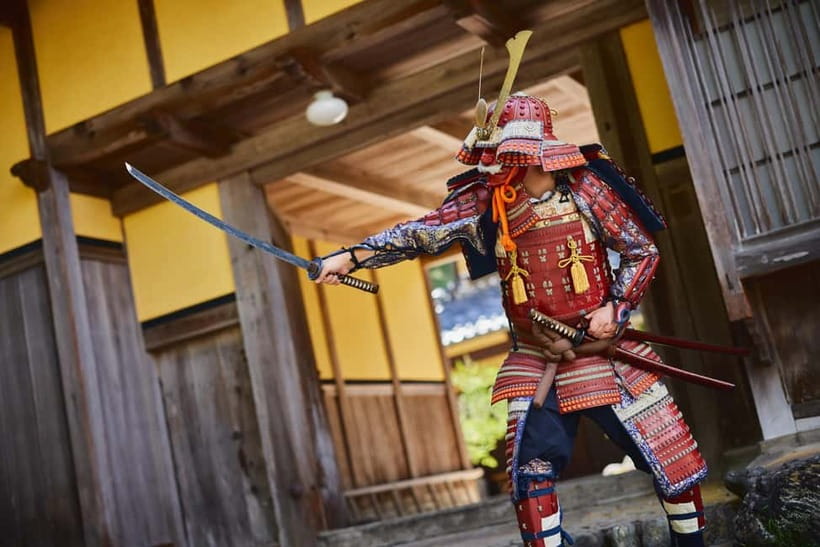
- Katana trial cutting: Learn how to handle a sword and make a supervised cutting attempt.
- Samurai armor near Osaka Castle: Dress for the Osaka Summer Battle theme and receive photographed images.
- Calligraphy with meaning: Practice basic strokes, choose a Kanji character, and write a final samurai-style message.
- Tea ceremony etiquette: Learn gestures, manners, and hospitality while powdered green tea is prepared and served.
- Private three-hour session: The format gives you more room for questions and individual instruction.
- English by default: Other languages may be possible, but you need to check staff availability before booking.
From kimono dressing to a day in the life of a samurai
This activity gives you a guided route through several traditional Japanese arts, rather than placing you in armor at the door and sending you off for a few photographs. You first change into a kimono, then work through calligraphy, tea, sword practice, and armor.
That order makes sense. The early activities slow you down and teach control. The later ones ask you to use your body with more force and focus. I like that contrast because it gives the three hours a story, even if the experience is clearly designed for visitors and not for professional martial arts training.
You should arrive 30 minutes before your reserved start time. That early arrival is needed for instructions and changing clothes, so do not plan to walk in at the exact booking time. The meeting point is Excellence Takayama 1F at 2-3-19 Shiginonishi, Joto-ku, Osaka-shi, Osaka 536-0014.
Look for the wooden sign marked Honor of the Samurai. Pamphlets sit in a rack outside the shop, and kimonos and hakama may be hanging nearby. Those details are more useful than simply searching for a generic storefront, especially if you are arriving in an unfamiliar Osaka neighborhood.
The session is a private group activity. That does not necessarily mean a completely private building, but it does mean your booked group receives the instruction together rather than joining a large public class. If you have questions, this is the format that gives the staff the best chance to answer them without rushing.
More Samurai and Ninja Experiences in Osaka
- Samurai Training Experience KENDO in Osaka
★ 5.0 · 515 reviews - OSAKA NIGHT FUSION Japanese Taiko Kabuki Samurai Dance Show
★ 4.8 · 155 reviews - Osaka: Samurai Training Experience KENDO in Osaka
★ 5.0 · 111 reviews
Calligraphy first: learning control through the brush
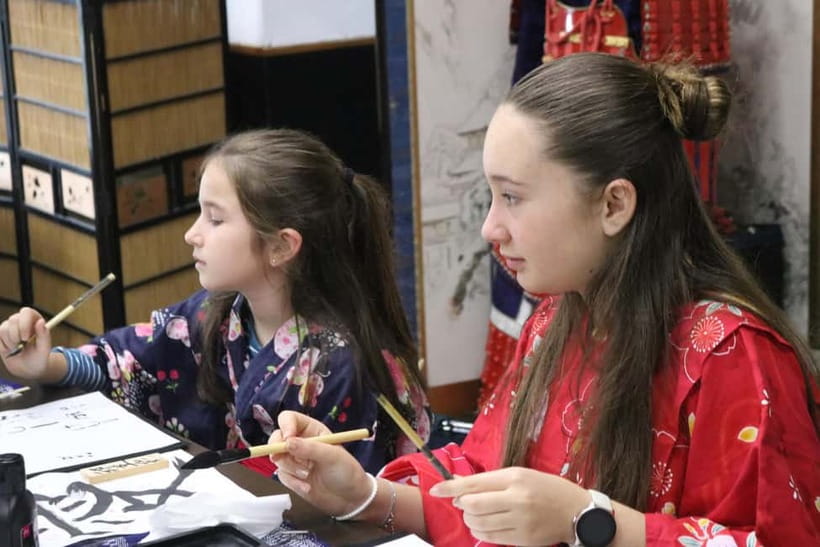
After changing into a kimono, you prepare for calligraphy. The instructor explains how to hold the brush and use the tools, then introduces three basic brush movements: tome, the stopping stroke, hane, the hooked stroke, and harai, the sweeping stroke.
This is a short lesson, listed at about 20 minutes, but it has a useful purpose. Calligraphy is not treated as a quick souvenir craft. You are asked to prepare yourself, follow the order of the strokes, and pay attention to the movement of the brush. The lesson connects Japanese writing with courtesy, posture, and careful gestures.
You choose a Kanji character and practice writing it. Since the activity does not specify a set list of characters, you should expect to make your choice during the session. If you already have a character in mind, you can ask the instructor whether its meaning and form are suitable.
The setting and costume add atmosphere, but the lesson itself is the important part. I would not book this expecting to leave with professional calligraphy. In 20 minutes, you are getting an introduction to basic technique and the chance to create a personal piece in a traditional style.
The samurai calligraphy message
The next calligraphy section takes about 10 minutes and gives your chosen Kanji a more dramatic frame. You write the character again as part of a samurai farewell message, paying close attention to the technique you have just learned.
The activity describes this as words of resignation, meaning final words written before death. That idea reflects the older Bushido theme presented throughout the session: duty, honor, and readiness to accept sacrifice. It is theatrical, but it also shows how writing could carry moral weight in samurai culture.
This is one point where the experience may not suit every visitor. Some people will find the subject fascinating because it connects the brush to samurai ideals. Others may prefer a less intense cultural activity. The optional seppuku section later in the program goes even further in that direction, so read the full plan before booking if you want to avoid death-related themes.
For most people, this short section works best as a continuation of the calligraphy lesson, not as a history lecture. You are practicing the same character with more purpose and concentration.
Tea ceremony and the quiet side of Bushido
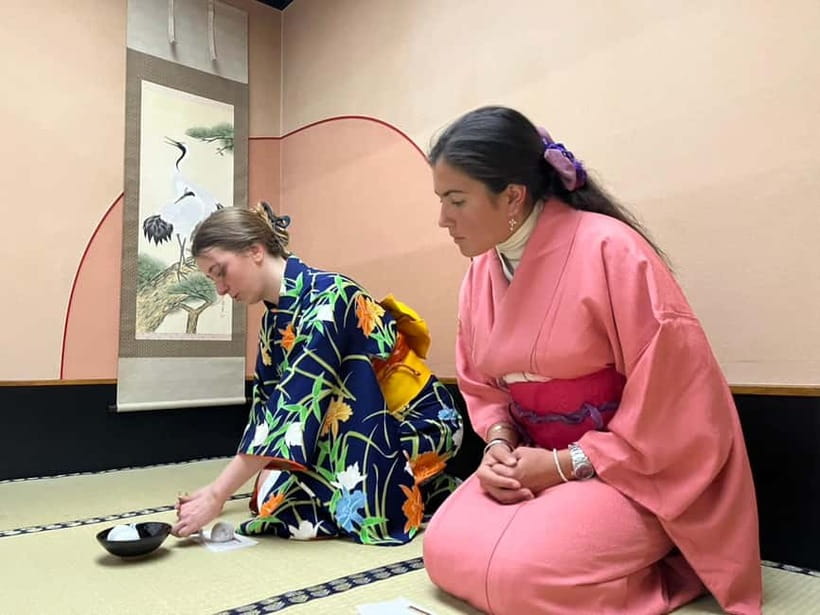
The tea ceremony lasts about 30 minutes. A tea master prepares and serves powdered green tea, while you learn the etiquette and gestures connected with the ceremony.
I like this part because it gives the program a needed pause before sword work. Tea ceremony is not only about drinking tea. The activity presents it as a way to learn hospitality, manners, respect, and controlled movement. Those ideas are linked here with honor, one of the values associated with Bushido.
You should expect instruction in how to behave and move during the ceremony, rather than a long historical presentation. The value is in taking part. Even a short session can help you notice how much attention Japanese traditional arts place on timing, courtesy, and the actions surrounding an ordinary object.
The powdered green tea is prepared and served by the master. If you do not enjoy the taste of green tea, the ceremony still has value as a cultural lesson, but you should not expect a tea tasting designed around a wide range of drinks.
The kimono matters here. Wearing traditional clothing while learning gestures makes the lesson feel more connected to the wider program. It also means you should arrive in a T-shirt underneath, as requested. You will be changing clothes and moving into armor later, so simple clothing is the practical choice.
More samurai and ninja sessions in Osaka:
- Osaka: A Modern Samurai, Kabuki, Taiko, & Dance Show
★ 4.5 · 66 reviews - Osaka: Private Samurai Experience – Train with Sword Master
★ 5.0 · 36 reviews - Osaka: Ninja Experience Cafe in Dotonbori
★ 4.9 · 16 reviews - Samurai Armor & Sword experience with phot near Osaka Castle
★ 4.6 · 16 reviews
Katana training and supervised trial cutting
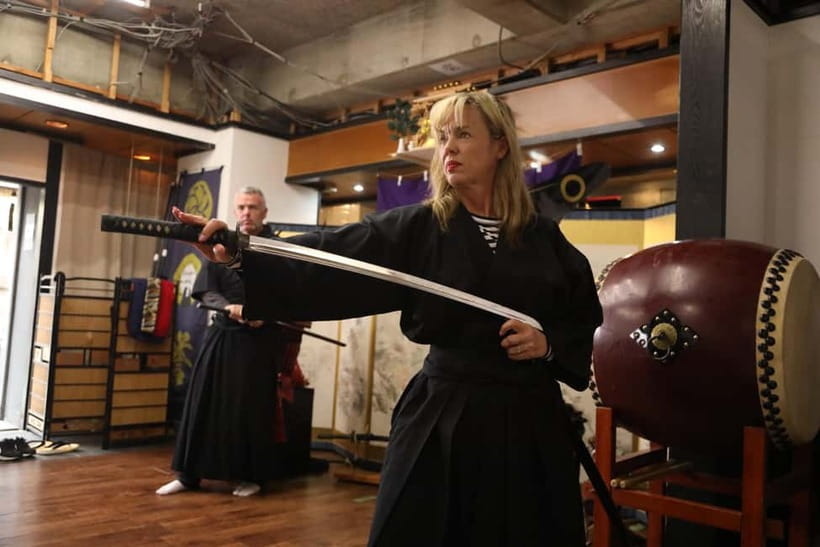
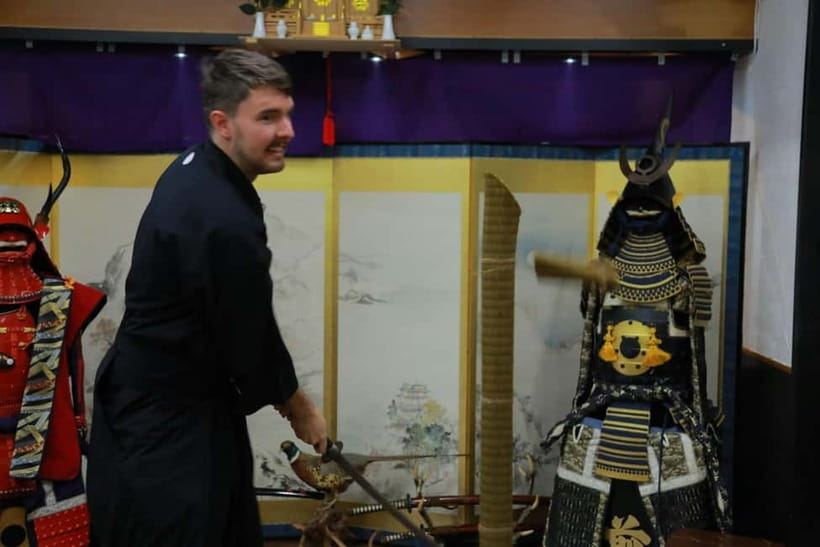
The sword section lasts about 30 minutes and is the activity’s biggest physical draw. You learn how to use a samurai sword, become familiar with the responsibility of carrying a deadly weapon, and make a supervised cutting attempt with a katana.
The language around the sword is serious for a reason. This is not presented as a plastic prop demonstration. The lesson focuses on self-respect, control, and responsibility before you try cutting. A certified professional instructor leads the activity, which is especially important when a live blade is involved.
You should follow the instructor’s movements carefully and avoid treating the exercise like a film stunt. The point is not to show off speed. It is to understand the discipline behind the motion and make one controlled attempt. The activity describes the sword’s cutting edge as among the best in the world, but the practical benefit for you is learning how precision matters more than force.
This section also explains why the private format has value. Participants who need extra guidance can ask questions and repeat instructions without a large group waiting behind them. A verified booking account described the staff as patient while explaining both calligraphy technique and katana use, which matches the kind of attention this activity needs.
The sword lesson may be the strongest reason to choose this experience over a basic kimono rental. It has more responsibility and instruction built into it. At the same time, anyone uncomfortable with weapons should know that the katana exercise is a central part of the three-hour schedule, not a minor add-on.
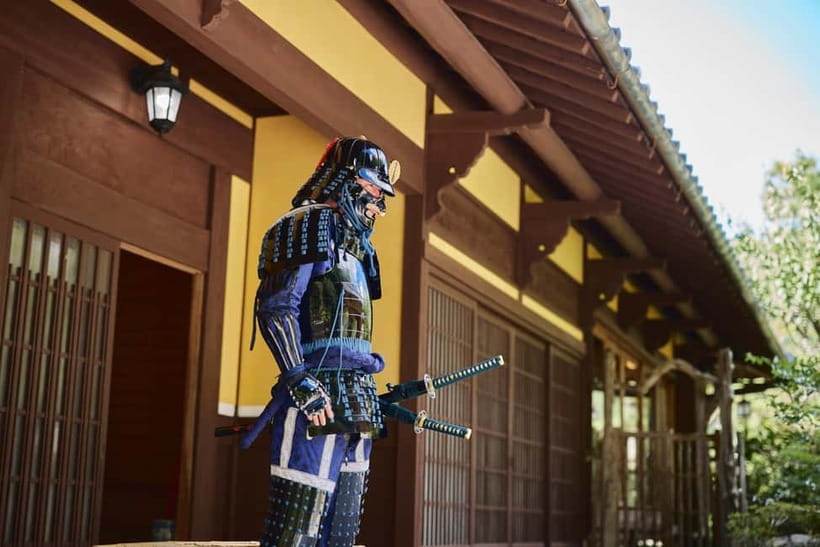
Wearing armor for the Osaka Summer Battle
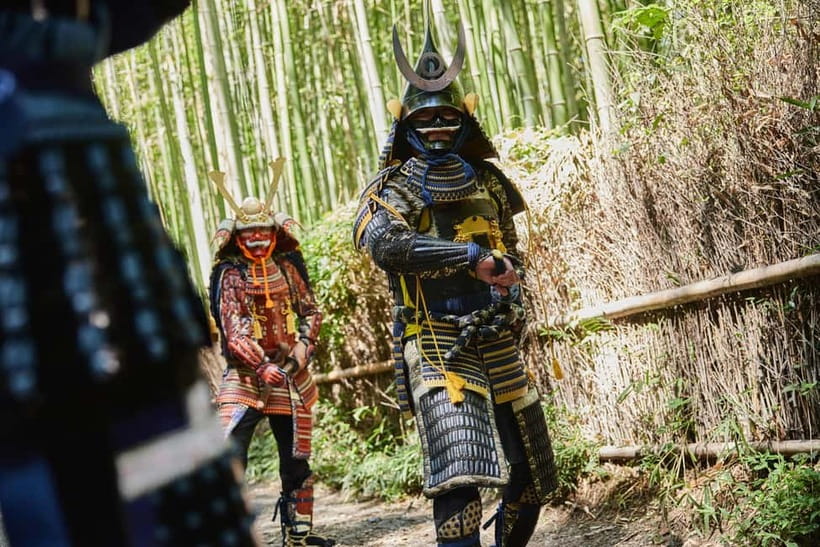
After the quieter arts and sword practice, you put on samurai armor. The program uses the setting of the Osaka Summer Battle in April 1615, with you taking the role of a soldier on the Toyotomi side.
The armor is worn indoors, and the session takes about 30 minutes. You pose as a leading soldier and have photographs taken near Osaka Castle. The supplied description refers to photos on the grounds of Osaka Castle, with the castle in the background, so you should expect the images to connect your costume to one of Osaka’s major landmarks.
The armor is not just a costume change. It gives the final section a historical story and a clear visual goal. You are not simply standing in generic samurai clothing. You are placed into a specific conflict and asked to act the part of a soldier preparing for battle.
Still, keep expectations sensible. This is a themed photo session, not a battlefield reconstruction or a full lesson in the Osaka campaign. The value lies in the combination of costume, setting, and direction. You receive photo shooting as part of the package, with the images sent to a designated email address.
A photographer covers the activities, not only the final armor pose. That is useful because the best memory may be a quieter moment, such as holding the brush or taking part in the tea ceremony. If you want a more produced movie-style result, filming is available only as a paid option.
The optional seppuku and harakiri section
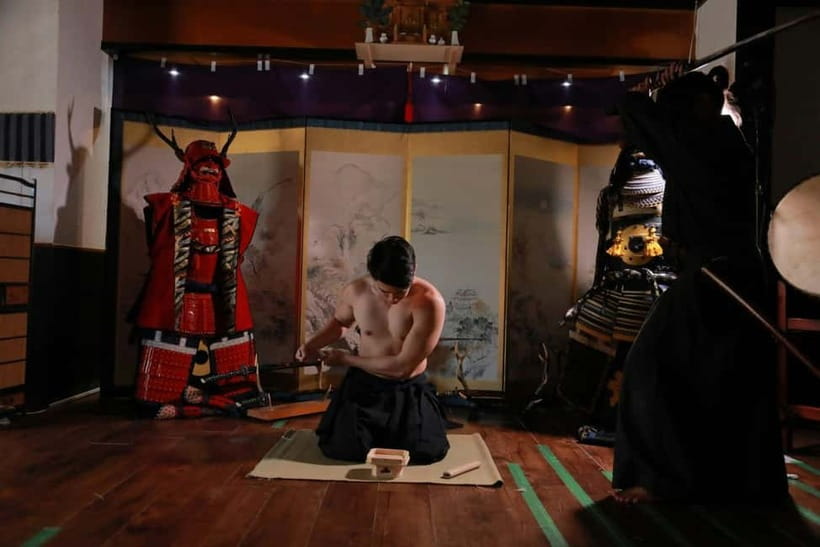
An additional 30-minute section covers seppuku, also called harakiri, and the samurai idea of preparing to die for a lord. The session presents righteousness, honor, and a beautiful death as part of Bushido.
This is an optional activity, so you can decide whether it fits your interests. I would treat it as a serious historical and theatrical discussion, not as a light entertainment add-on. The description uses strong language about pain, battle, and making a name through death, which may be uncomfortable for some people.
The option may appeal to visitors who want the program to examine the darker side of samurai ideals. It is less suitable if your main goal is calligraphy, tea, and family-friendly costume photographs. Children under 10 are not accepted for the main activity, and the subject matter gives another reason to think carefully before adding this section.
Does $168 offer good value?
At $168 per person, this costs more than a short kimono rental or a simple cultural workshop. The price becomes easier to justify when you count what is included: traditional clothing, armor, calligraphy practice, the samurai calligraphy section, tea ceremony, sword trial cutting, a professional instructor, English-speaking staff, and photography.
You are also buying three hours of structured attention in a private group. That matters more here than it would on a simple sightseeing walk. The instructor must explain brush technique, etiquette, clothing, sword handling, and armor posing. A large group would make those activities slower and less personal.
The price is best for you if you want several connected activities in one booking. If you only want an armor photograph, this is probably more time and money than you need. If you want to try Japanese arts while also doing something physical and theatrical, the package offers a fuller day than its individual parts suggest.
The photo service adds practical value. You do not need to rely only on quick phone snapshots, and the images are sent to your designated email address. The paid movie option is separate, so make sure you know which type of visual keepsake you want.
Language, age limits, and practical planning
English is the default language for interpretation. Staff may be available for Spanish, Italian, French, Chinese, Thai, or Indonesian, but you need to ask about the schedule before reserving. Availability in those languages is limited, and a request cannot be guaranteed.
The experience is not suitable for children under 10, babies under 1, or people over 95. Pets, baby strollers, baby carriages, alcohol, and drugs are not allowed. Bring a T-shirt for changing, and wear something easy to take on and off.
Transportation is not included. You must make your own way to the meeting point, and there is no hotel or station pickup. Check the location in advance rather than assuming the activity begins beside Osaka Castle itself. The supplied meeting point is in Joto-ku, and the wooden Honor of the Samurai sign is the useful landmark when you arrive.
Cancellation is flexible up to 24 hours before the start time for a full refund. You can also reserve now and pay later, which helps if your Osaka schedule is still changing. Check the available start times when you book, then allow the extra 30 minutes needed for arrival and changing.
Who will enjoy this most?
I would recommend this to adults and older children who want more than a staged photograph. You should enjoy hands-on instruction, be comfortable handling a sword under direction, and have enough curiosity to appreciate the etiquette behind tea and calligraphy.
It is especially good for:
- First-time visitors looking for a structured introduction to several Japanese traditions
- Couples or families with children aged 10 and above
- Private groups who prefer questions and instruction at their own pace
- Visitors who want professional photographs in samurai armor
- People interested in Bushido and the contrast between quiet discipline and martial training
I would be more cautious if you dislike costume changes, formal manners, weapons, or death-related historical themes. The optional seppuku section can be skipped, but sword trial cutting remains part of the main program.
Should you book the samurai experience near Osaka Castle?
Book it if you want a full, hands-on cultural session rather than a quick costume rental. The best features are the patient instruction, the mix of calligraphy, tea, sword work, and armor, and the photographer who records the day. The private format also makes the $168 price more reasonable.
Skip it if your priority is low cost, independent sightseeing, or a short photo opportunity. You will need to spend three hours at the activity, arrange your own transportation, and take part in a serious sword lesson. For the right visitor, though, the program offers a memorable way to connect quiet Japanese customs with the samurai image most people come to Osaka hoping to see.
FAQ
How long does the samurai experience last?
The experience lasts three hours. You should also arrive 30 minutes before your reserved start time for instructions and changing clothes.
How much does the experience cost?
The listed price is $168 per person.
What activities are included?
The package includes samurai clothing, indoor samurai armor, calligraphy practice, samurai calligraphy, a tea ceremony, samurai sword trial cutting, professional instruction, tax, tips, and photo shooting with the images sent to a designated email address.
Is the activity conducted in English?
English is the default interpretation language. Spanish, Italian, French, Chinese, Thai, and Indonesian may be available, but you must ask about staff schedules before booking, and availability is not guaranteed.
Where is the meeting point?
The meeting point is Excellence Takayama 1F, 2-3-19 Shiginonishi, Joto-ku, Osaka-shi, Osaka 536-0014. Look for the wooden Honor of the Samurai sign, the activity pamphlets, and traditional clothing hanging near the shop.
Is transportation included?
No. Hotel and train station pickup and drop-off are not included, and you must arrange your own transportation to the meeting point.
Can I cancel the booking?
You can cancel up to 24 hours in advance for a full refund. The activity also allows you to reserve now and pay later.
Just added around Osaka
- Discover Real Osaka: A Cultural Walk with Food & Drink★ 5.0 · 13 reviews
- Private Airport transfer Kansai Intl. Airport(KIX) to OSAKA CITY★ 4.5 · 12 reviews
- From Osaka/Kyoto: Kyoto & Nara Day Trip with Optional Lunch★ 4.5 · 79 reviews
- Osaka 6hr Private Walking Tour with Government Licensed Guide★ 5.0 · 174 reviews
- Osaka: Namba Local Food Walking Tour (Taste 15 Dishes)★ 5.0 · 20 reviews
- Osaka Delights: Traditional Japanese Food Tour★ 4.5 · 33 reviews
- Badminton in Osaka & Kyoto with Locals!★ 5.0 · 15 reviews
- From Osaka or Kyoto: Kyoto and Nara 1-Day Bus Tour★ 3.5 · 141 reviews
Osaka Tours, compared.
Shinsekai Food Tour with 13-15 Dishes at 5 Eateries
Read our review →
Osaka Food Tour: 13 Dishes at 5 Local Eateries
Read our review →
Hungry Osaka Street Food Tour:15 Tastings & 3 Drinks with a Local
Read our review →
Hotspots & Hidden Gems Walking Tour Private or Group
Read our review →Browse the lists this tour appears in