
Reviewed · OSAKA TOURS
Osaka: Private Samurai Experience – Train with Sword Master
The most unusual part of this Osaka experience is not simply learning to swing a sword. You enter a restricted temple training area near Minoh, where sword master Tatsuya Watanabe teaches classical techniques tied to Japanese warrior traditions. I like the private setting and the rare performance, and I especially like that the lesson treats swordsmanship as mental discipline, not stage combat. The main consideration is that the program is taught in a traditional style, so you should expect careful posture, control, and repetition rather than a fast action show.
I also like the strong language support. Benoit has translated several sessions into English, while guides are available in English, Japanese, and French. The drawback is that the temple is outside central Osaka, and the advertised timing needs a close look: the experience is described as about three hours, while the booking details also list 270 minutes.
Key points at a glance
- Train with Tatsuya Watanabe: Learn from a school headmaster who has studied kendo, Yagyū Shinkage-ryu, and Suishin-ryu.
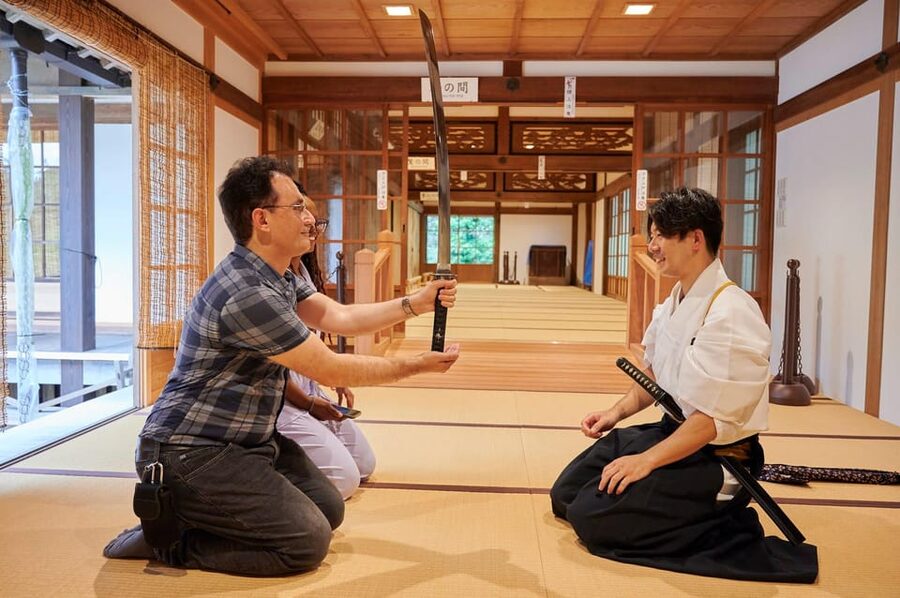
- Enter a restricted temple area: Ryuan-ji, or in some arrangements Saiko-ji, provides a quiet setting normally closed to the public.
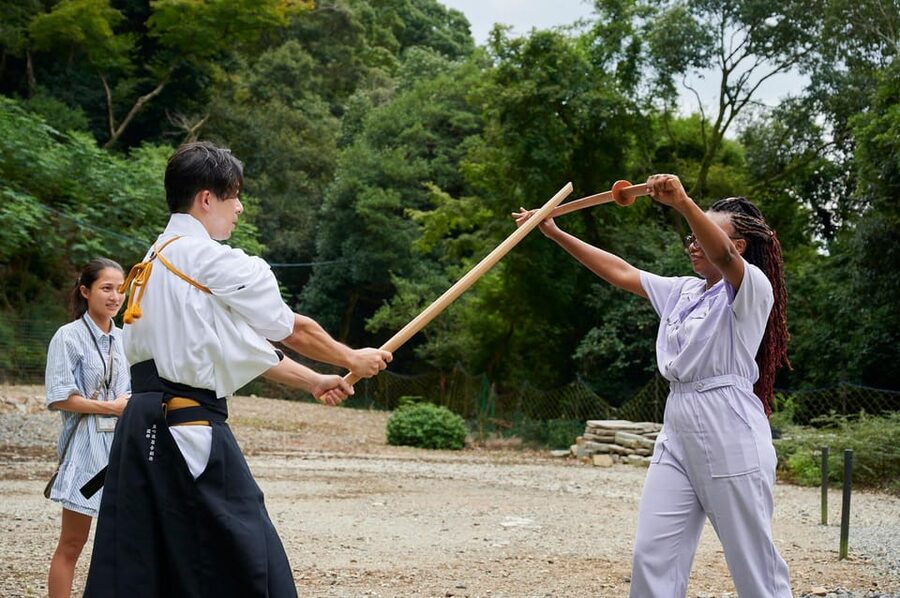
- Expect about 90 minutes of practice: The practical session uses wooden swords for basic strikes, cuts, posture, and handling.
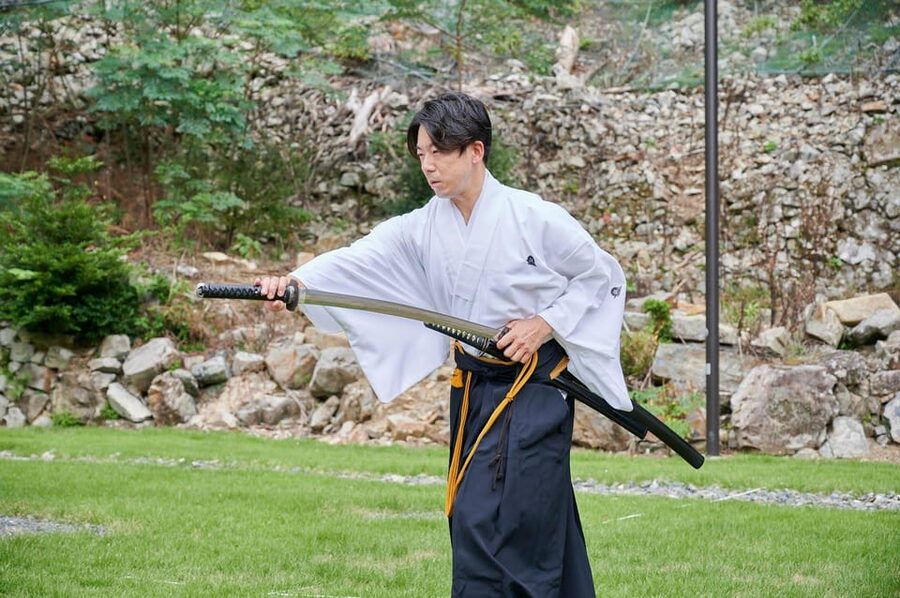
- See a private sword performance: Watanabe demonstrates the precision, restraint, and fluid movement behind the tradition.
- Meet at Minoh Station: The experience begins and ends at the station, with a guide leading you to the temple.
- Best for curious, active visitors: You get cultural context and hands-on instruction, but this is not a theatrical samurai show.
Why this Minoh sword lesson feels different
Many samurai-themed activities in Japan are built around costumes, photo opportunities, or a short demonstration. This one takes a quieter route. You meet at Minoh Station and head toward a temple setting where the training area is opened specially for the program.
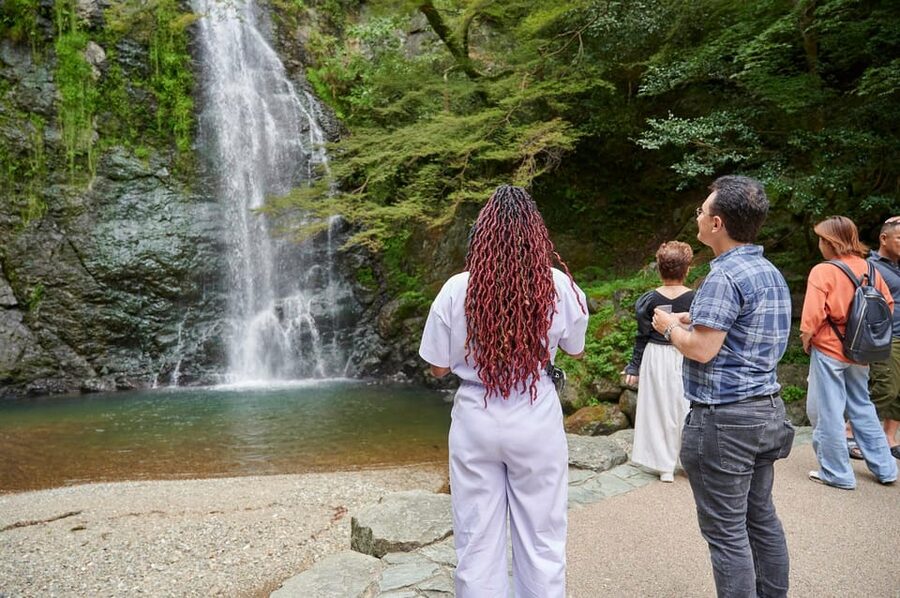
That location changes the mood. Instead of practicing in a generic studio, you work in a place connected to religious tradition and local history. The temple grounds near Minoh give the session a sense of purpose, and the silence helps you notice the small things: how you hold the sword, how you place your feet, and how much control is required to make a simple movement look clean.
I like that the experience does not treat the samurai as a cartoon character. Watanabe’s teaching connects physical technique with concentration, discipline, and the inner attitude of a martial artist. You are not signing up to become a swordsman in three hours, of course. You are getting a compact introduction to the way a classical school approaches movement and character.
More Samurai and Ninja Experiences in Osaka
- Samurai Training Experience KENDO in Osaka
★ 5.0 · 515 reviews - OSAKA NIGHT FUSION Japanese Taiko Kabuki Samurai Dance Show
★ 4.8 · 155 reviews - Osaka: Samurai Training Experience KENDO in Osaka
★ 5.0 · 111 reviews
Meeting at Minoh Station and walking into the temple grounds
Your meeting point is directly in front of Minoh Station. Look for a guide holding the yellow DeepExperience sign. Guides may speak English, Japanese, or French, and Benoit has served as an English-speaking interpreter on several sessions.
The walk from the station is part of the experience rather than dead time. Your guide provides information about the area and the temple as you go. This is useful because the program has two threads running at once: the story of the place and the story of swordsmanship. The temple is not just a backdrop for photographs. It gives the lesson a setting where spiritual practice and physical training make sense together.
You should allow yourself to arrive on time. One session still went ahead after the participants were late, but that is courtesy, not something to count on. Since the program is private, delays can affect the instructor and the temple schedule.
The exact temple may be Ryuan-ji or Saiko-ji, according to the activity details. Ryuan-ji is described as the main setting, with its secluded grounds opened specially for this program. Either way, the important point is access: you are not simply passing through a public temple corridor. You are being brought into a training space that is normally closed to visitors.
Meeting sword master Tatsuya Watanabe
The instructor is Tatsuya Watanabe, a serious practitioner with a long connection to Japanese sword traditions. He began kendo in his early teens, then studied Yagyū Shinkage-ryu, one of Japan’s classical schools of kenjutsu, during university.
His training continued across different lineages. In Suishin-ryu, his commitment was recognized at a young age, and he became soke, or headmaster, in his twenties. That title matters because it means he is responsible for carrying forward more than a set of movements. He also preserves the school’s philosophy, style, and values.
That background gives the lesson weight, but you do not need prior martial arts experience to take part. The instruction focuses on basic techniques and on how the body should work. You learn through demonstration and correction, not through a long lecture.
One thing I appreciate is the chance to see how Watanabe approaches his own practice. The opening performance gives you a visual lesson before you pick up a sword. His controlled movements show why traditional swordsmanship can look almost calm, even when the subject is combat.
The opening performance: watch before you practice
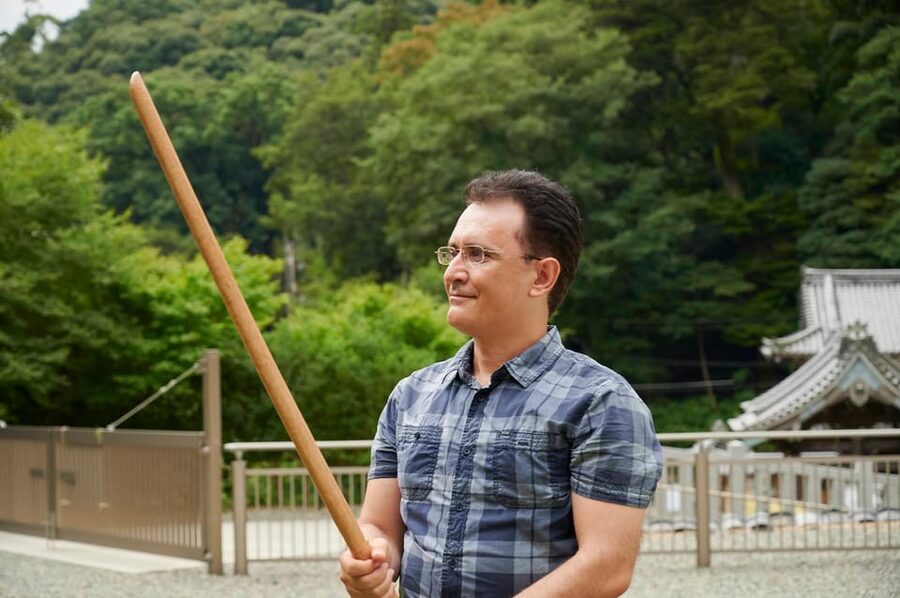
The special sword performance is one of the strongest parts of the program. It is exclusive to this experience, so you are not watching a routine designed for a large public audience.
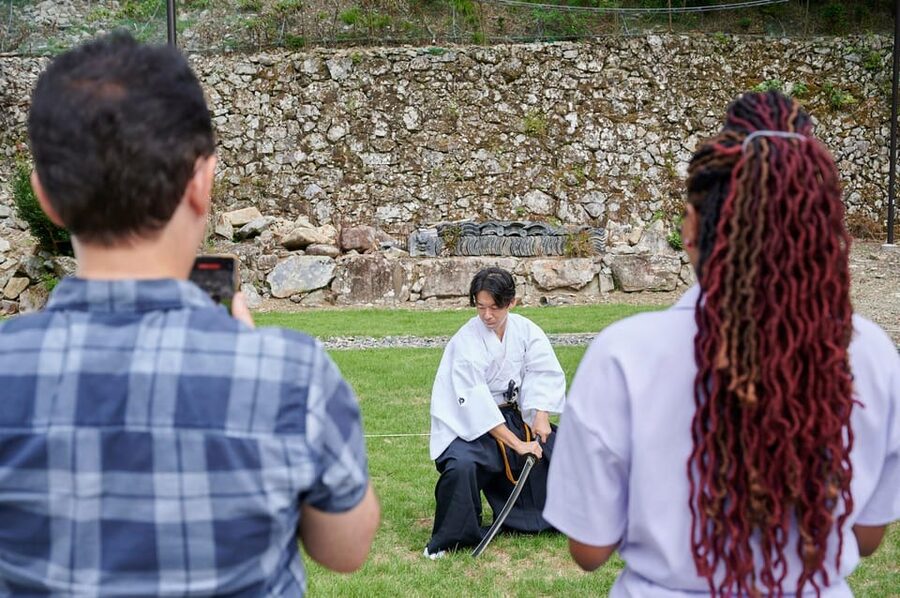
Pay attention to the details rather than waiting for a dramatic flourish. The value is in Watanabe’s precision, timing, balance, and economy of movement. His demonstration shows the difference between waving a sword around and working through a disciplined form.
The performance also helps you understand the lesson that follows. When you try the movements yourself, you can compare your early attempts with the master’s control. That contrast is humbling in a useful way. A basic strike suddenly seems less basic when you notice the posture, breathing, distance, and finishing position involved.
I would set your expectations correctly. This is not a sword fight, and it is not a film stunt workshop. The performance is impressive because it is restrained. The training has the same character.
More samurai and ninja sessions in Osaka:
- Osaka: A Modern Samurai, Kabuki, Taiko, & Dance Show
★ 4.5 · 66 reviews - Experience Samurai and traditional Culture to the fullest
★ 5.0 · 26 reviews - Osaka: Ninja Experience Cafe in Dotonbori
★ 4.9 · 16 reviews - Samurai Armor & Sword experience with phot near Osaka Castle
★ 4.6 · 16 reviews
About 90 minutes with a wooden sword

The hands-on section lasts about an hour and a half, according to the detailed accounts of the schedule. You begin with a wooden sword, or bokken, and learn fundamental handling and movement.
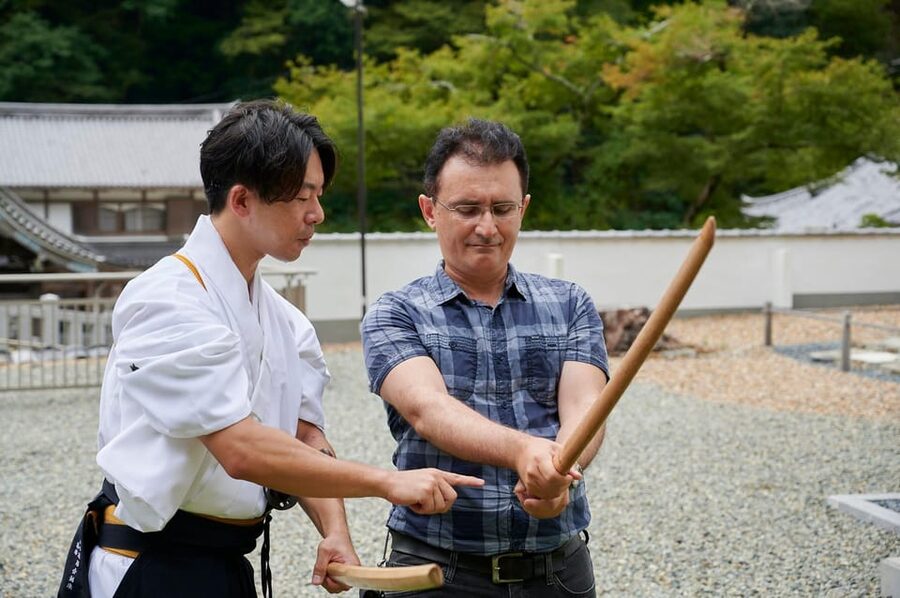
The lesson can include holding the sword, standing correctly, making controlled strikes, and working through cutting motions. Watanabe pays attention to details such as fluidity and posture. The aim is not to swing hard. It is to move with intention and control.
This is where a translator becomes especially useful. Watanabe primarily speaks Japanese, so an interpreter can explain his instructions and pass along individual corrections. Benoit has been praised for translating clearly during the training, which matters when a small change in hand position or stance affects the whole movement.
The private format helps here. You are not lost in a large class, trying to copy an instructor from the back row. The program is designed for a private group, and the teacher can respond to the people in front of him. That does not make the lesson easy. It makes it more personal.
Some sessions have included the chance to handle actual swords and cut paper, but you should treat that as a possible element rather than the central promise of the activity. The stated training uses wooden swords, and the core value is learning safe, basic technique under supervision.
Do not rush this portion. If you focus on making a dramatic strike, you will miss the point. Try to follow the rhythm, keep your movements measured, and listen when the instructor adjusts your form. You will get more from the class by treating it as practice rather than performance.
Seeing swords and learning about the tradition
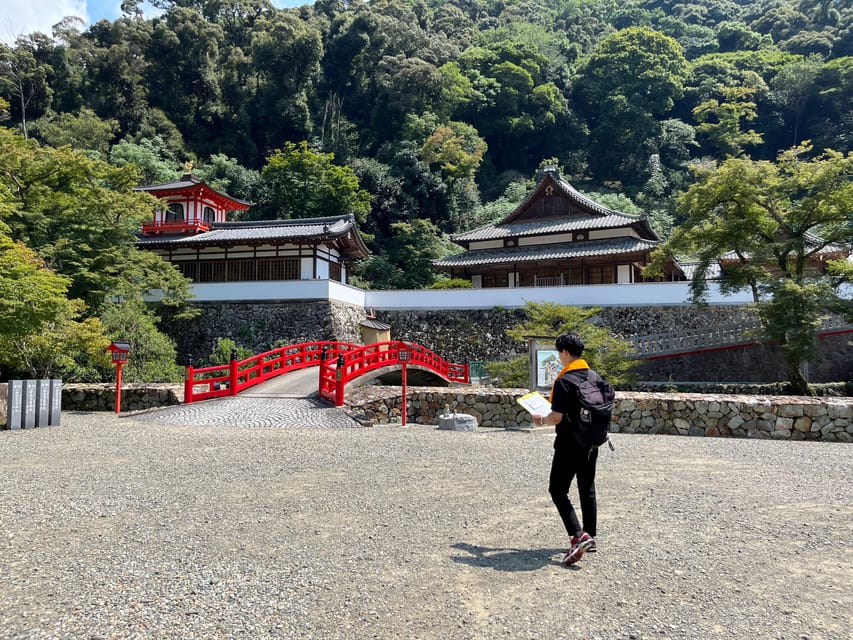
The temple visit can include a closer look at swords and weapons connected to the instructor’s tradition. One account describes seeing Watanabe’s personal sword collection, including a sword dating to 1370.
That kind of detail gives the lesson a physical link to the past. A sword is not only a prop or a museum label here. It is part of a living practice that Watanabe continues to train in and teach.
The program also explains the spiritual side of swordsmanship. Classical training was used to strengthen the body and mind, and Watanabe presents the sword as part of a larger way of living. You hear about practice, discipline, and the mental calm required to perform a movement correctly.
I find this cultural context more valuable than a simple list of samurai facts. You leave with a better sense of why a martial art can survive as a tradition even after its original battlefield purpose has disappeared.
What the three-hour schedule is really like
The experience is described as three hours, though the booking information also lists 270 minutes. The supplied schedule identifies a guided temple visit and class lasting about 1.5 hours, while detailed accounts describe a broader three-hour program that includes the station meeting, walk, temple tour, performance, training, and time with the instructor.
Plan for a half-day commitment rather than trying to squeeze it into a narrow gap between major Osaka sights. You begin and end at Minoh Station, so the activity does not leave you at the temple or in central Osaka.
The pacing should suit you if you prefer a focused cultural visit. You are not spending all day at the temple, but you are given enough time to understand the setting and work through the basic movements. The private format also means the experience may feel more deliberate than a standard group tour.
If you want nonstop action, the lesson may feel slow. If you enjoy learning how a traditional craft is practiced, the pace is a strength.
Is $158 per person good value?
At $158 per person, this is not a budget activity. The price includes the sword experience fee and guide fee, but not transportation, food, or other expenses unless separately arranged.
I see the value in three parts. First, you are paying for access to a restricted temple training area. Second, you receive direct instruction from Watanabe, whose background includes headmaster-level responsibility within Suishin-ryu. Third, the experience combines a private performance, cultural explanation, temple access, translation, and hands-on practice.
That is a strong package for someone who would otherwise pay for several separate activities and still not get this level of personal instruction. It is less compelling if you only want a quick samurai photo or a basic tourist demonstration.
The private group format also affects the price. You are not joining a large class built to move people through quickly. Your money goes toward a smaller, more focused encounter with the instructor and guide.
I would book it for a special day in Osaka, especially if you have already seen the city’s major sights and want something tied to local tradition. I would skip it if your budget is tight or if your main goal is a long, technically serious martial arts course. Three hours can introduce the art, but it cannot replace sustained training.
Who should book this experience?
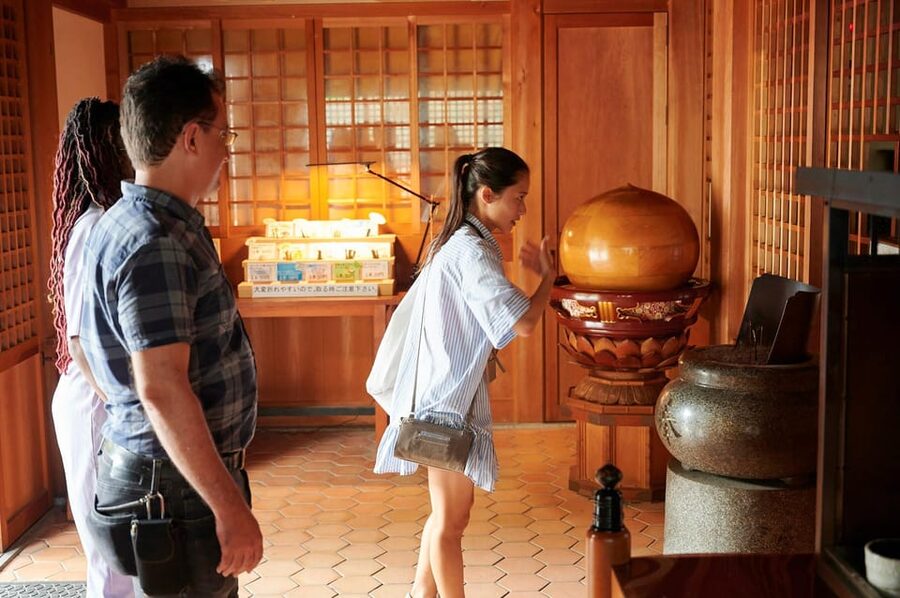
This is a good fit for several types of visitors:
- First-time cultural explorers: You get history, a temple visit, a performance, and practical instruction in one outing.
- Families with older children: A parent and child can train together, as one session did, though the activity still requires attention and respect for the setting.
- Martial arts students: You will appreciate seeing how a classical school emphasizes fluidity, form, and mental focus.
- Japan repeat visitors: The private temple access offers something less standard than another central Osaka attraction.
- Photographers and history fans: The temple, weapons, and demonstration provide memorable visual material, subject to the guide’s instructions.
I would be more cautious about booking for very young children, but the provided information does not set a minimum age. Ask the operator before reserving if that detail matters for your group.
You should also be comfortable with a lesson taught mainly in Japanese if your chosen guide does not speak your preferred language. English, Japanese, and French support is offered, and a translator can make a major difference during the technical instruction.
Practical details before you reserve
Meet in front of Minoh Station and find the yellow sign with the DeepExperience logo. The guide leads the group from there and returns you to the station at the end.
Wear something that lets you move comfortably. The program involves standing, posture work, and repeated sword movements. The information does not list a dress code or equipment requirements, so you should confirm any special needs directly before booking.
The experience is for a private group, which is helpful for families, couples, and small parties who want a more personal lesson. The available languages are English, Japanese, and French.
You can cancel up to 24 hours before the start for a full refund, and the reserve-now, pay-later option allows you to hold a place without paying immediately. Starting times vary, so check availability before building the rest of your day around it.
Should you book the Minoh samurai experience?
I would book this if you want a serious, small-scale cultural activity rather than a flashy show. The combination of a restricted temple setting, Watanabe’s classical training, a private performance, and roughly 90 minutes with a wooden sword gives the outing real substance.
The strongest reason to go is the instructor. You are not simply being handed a costume and told to pose. You are watching a headmaster-level practitioner explain how movement, discipline, and spiritual focus fit together.
The main reasons to hesitate are price, travel time from central Osaka, and the limited length of the lesson. You will not master samurai swordsmanship in one visit, and the activity may feel too measured if you want theatrical excitement.
For a family, a martial arts enthusiast, or anyone looking for an unusual day near Osaka, I think the $158 price can be justified. Book it with enough time in your schedule, arrive at Minoh Station promptly, and approach the sword as a traditional discipline rather than a toy. That is when this experience makes the most sense.
FAQ
Where does the samurai experience begin?
It begins in front of Minoh Station in Osaka. Your guide will hold a yellow sign with the DeepExperience logo.
Where does the experience end?
The activity returns you to Minoh Station.
How long does the experience last?
It is described as about three hours, while the booking details also list 270 minutes. Check the available start time and schedule when reserving.
Which temple do you visit?
The experience takes place in secluded areas of Ryuan-ji or Saiko-ji Temple. Ryuan-ji is identified as the primary setting in the activity description.
Is the temple area open to the public?
The training grounds used for this program are normally closed to the public and open specially for the experience.
Who teaches the sword lesson?
The lesson is led by Tatsuya Watanabe, a sword master and headmaster of Suishin-ryu who has also studied kendo and Yagyū Shinkage-ryu.
What type of sword do you practice with?
The training uses wooden swords. Some sessions have also included handling actual swords and cutting paper, but the main practical lesson is based on wooden swords.
Is a guide or translator included?
Yes. The guide fee is included, and live guidance is available in English, Japanese, and French.
Is this a private group activity?
Yes. The experience is offered for a private group.
Can I cancel for a full refund?
Yes. You can cancel up to 24 hours in advance for a full refund.
More Rail Days in Osaka
- From Osaka: Hiroshima and Miyajima Day Trip by Bullet Train
★ 4.6 · 83 reviews - Mt Fuji and Hakone 1-Day Bus Tour Return by Bullet Train
★ 5.0 · 26,383 reviews - Mt Fuji & Hakone Cruise, Drum Show Bullet Train 1 Day from Tokyo
★ 4.0 · 7,413 reviews - Tokyo Mt Fuji 5th St & Hakone Cruise Bus Tour w/Bullet Train
★ 4.4 · 5,024 reviews
Just added around Osaka
- Discover Real Osaka: A Cultural Walk with Food & Drink★ 5.0 · 13 reviews
- From Osaka/Kyoto: Kyoto & Nara Day Trip with Optional Lunch★ 4.5 · 79 reviews
- Osaka 6hr Private Walking Tour with Government Licensed Guide★ 5.0 · 174 reviews
- Private Airport transfer Kansai Intl. Airport(KIX) to OSAKA CITY★ 4.5 · 12 reviews
- Osaka: Namba Local Food Walking Tour (Taste 15 Dishes)★ 5.0 · 20 reviews
- Osaka Delights: Traditional Japanese Food Tour★ 4.5 · 33 reviews
- Badminton in Osaka & Kyoto with Locals!★ 5.0 · 15 reviews
- From Osaka or Kyoto: Kyoto and Nara 1-Day Bus Tour★ 3.5 · 141 reviews
Osaka Tours, compared.


Shinsekai Food Tour with 13-15 Dishes at 5 Eateries
Read our review →
Osaka Food Tour: 13 Dishes at 5 Local Eateries
Read our review →
Hungry Osaka Street Food Tour:15 Tastings & 3 Drinks with a Local
Read our review →



Hotspots & Hidden Gems Walking Tour Private or Group
Read our review →Browse the lists this tour appears in