
Reviewed · TOKYO TOURS
From Asakusa: Old Tokyo, Temples, Gardens and Pop Culture
East Tokyo tells Tokyo’s story in quick, colorful chapters. You begin at Senso-ji and Asakusa, where temple customs and old shopping streets meet the crowds, then move through Ueno’s market district, Akihabara’s anime world, and a quiet Edo-era garden. I like the way the route connects places that feel very different, and I like that it includes local train rides and standard admissions in the $68 price.
I also like the small-group limit of eight. Guides such as Taka, Takee, Toru, and Michelle have been singled out for being warm, clear, and good with families. The main caution is pace: four hours is not long for five major areas, so this is best for an overview rather than long museum visits or extended shopping.
Key points at a glance
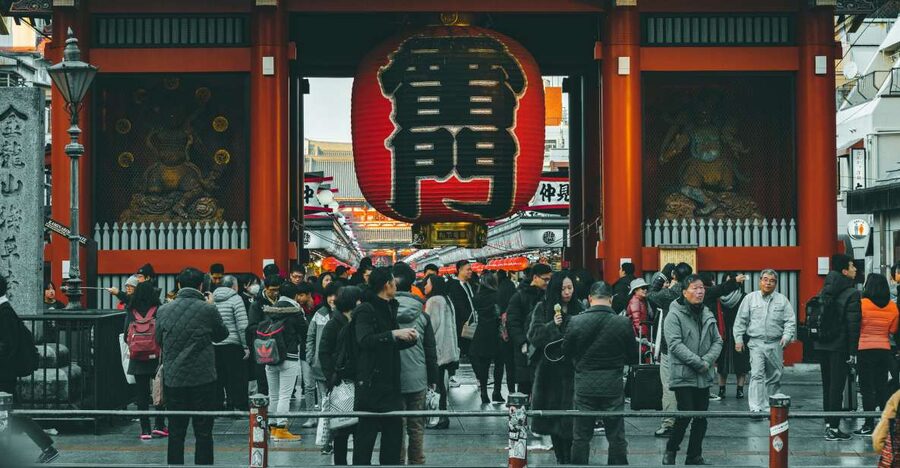
- Senso-ji in Asakusa: Learn how Tokyo’s oldest-feeling district grew around one of Japan’s early Buddhist temples.
- Ueno and Okachimachi: See a working market area with street food, vendors, and everyday shopping rather than a polished mall district.
- Akihabara’s changing identity: Trace the area from pre-war electronics center to anime, manga, gaming, and cosplay hub.
- Koishikawa Korakuen: Trade city noise for an Edo-era garden with seasonal scenery and quiet paths.
- Small-group format: With no more than eight people, it should be easier to ask questions and stay together on city streets.
- Useful inclusions: Guide costs, standard admissions, and local train rides are covered, while food and drinks are not.
One walk, several versions of Tokyo
This is not a temple-only tour, and it is not just a pop-culture outing. It is a four-hour walk through East Tokyo’s changing identity, beginning with old religious and commercial neighborhoods and ending with both modern fantasy culture and a garden shaped in the Edo period.
That range is the point. You can see how Tokyo’s past survives in temple grounds and market lanes, while newer interests have reshaped districts such as Akihabara. The route also gives you a useful city orientation early in a Tokyo visit. You will not master every neighborhood in one morning or afternoon, but you will understand how they fit together.
The tour begins at Kamiya Bar in Asakusa, at 1-chōme-1-1 Asakusa. Wear comfortable shoes. The schedule includes about four hours of sightseeing and walking, with a local train ride included along the way. Since the group is limited to eight people, the experience should feel more personal than a large bus tour, though the compact schedule still requires steady movement.
A few more Tokyo half-days to weigh up
- Mt Fuji and Hakone 1-Day Bus Tour Return by Bullet Train
★ 5.0 · 26,383 reviews - 1-Day Tokyo Bus Tour
★ 5.0 · 14,250 reviews - Tokyo: TOKYO SKYTREE® Admission ticket
★ 4.5 · 11,192 reviews
Asakusa and the first look at old Tokyo
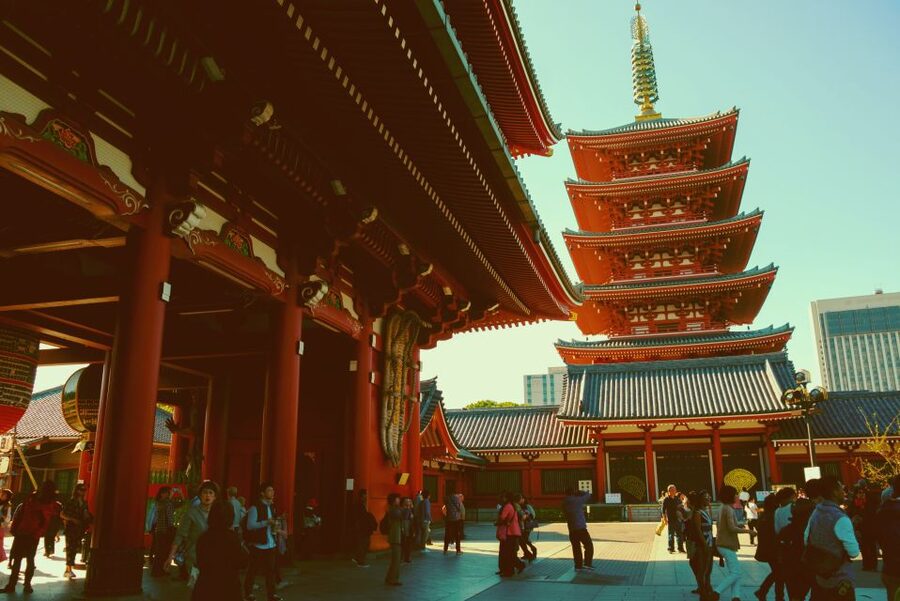
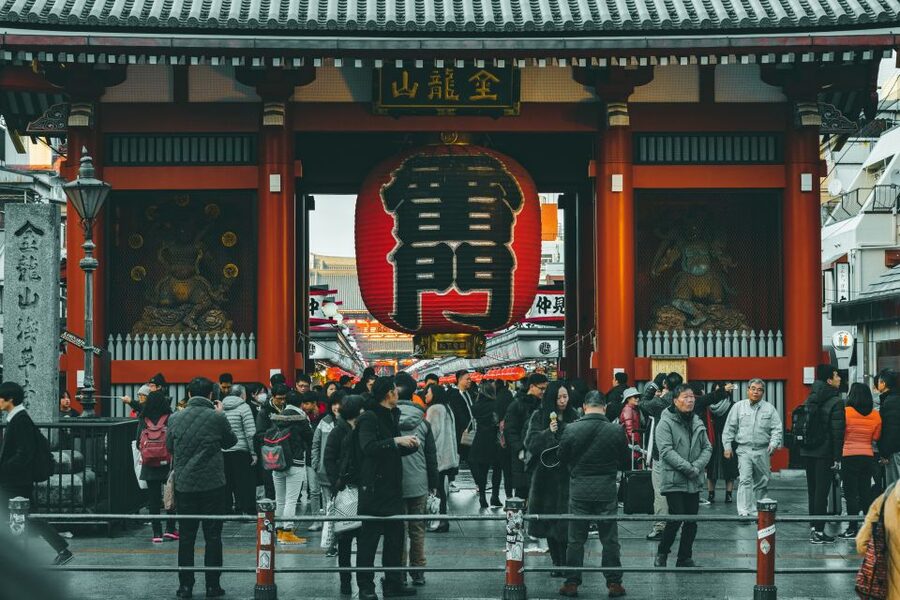
Asakusa is the natural opening chapter. The area is best known for Senso-ji, but the tour treats it as more than a quick temple photo stop. You will walk through the neighborhood and learn how its religious center helped shape the streets around it.
Nakamise-dori leads toward the temple with shops selling snacks, souvenirs, and traditional items. It can be crowded, so your guide matters here. A good guide can help you understand what you are seeing instead of leaving you to push through the crowd, photograph the gate, and move on.
The tour gives Asakusa about 45 minutes, followed by roughly 15 minutes at Senso-ji itself. That split suggests a useful approach: the neighborhood context is nearly as important as the temple. You will have time to hear about the area’s older role and its later development, but not enough time for a slow, independent exploration of every lane.
Senso-ji is a very early Buddhist temple in Japan, and the visit offers a chance to learn about its place in Japanese religious life. Your English-speaking guide can explain the temple’s history and customs as you move through the grounds. I would pay attention to the practical details of how the space is used, not just the large gate and main hall.
Asakusa also helps explain Tokyo’s transport story. About a century ago, Asia’s first subway service ran between Asakusa and Ueno. That link is part of the reason the next part of the tour feels like a continuation rather than a random jump across town.
Ueno and Okachimachi: the city at street level
The route continues to Ueno for about 25 minutes, then Okachimachi for another 25 minutes. These stops offer a change in mood. Instead of temple lanes and souvenir shops, you get an area associated for generations with vendors, food sellers, and practical shopping.
This is one of the more useful parts of the experience for anyone who wants to see Tokyo beyond its famous sights. Okachimachi and the nearby Ameya-Yokocho market area have a rougher, more energetic character than carefully designed commercial districts. Shops and stalls sit close together, and the displays feel aimed at local daily life as much as tourism.
The schedule does not promise a long food tour, and food and drinks are not included. Still, you will have a chance to see the market in action and understand why it has remained an important part of the neighborhood. If you spot something you want to eat or buy, remember that any purchase is your own expense and that the group will need to stay on schedule.
Ueno is also associated with museums and cherry blossoms. The tour does not include admission to the Tokyo National Museum, unless you customize the experience and pay for it separately. That is an important distinction. You will get an introduction to the district, but this four-hour route is not designed for a museum visit.
I like this section because it keeps the tour grounded. Asakusa can feel like a stage set for old Tokyo, while Ueno and Okachimachi show a more ordinary, working side of the city. The contrast makes both areas easier to understand.
Akihabara, from electronics to otaku culture
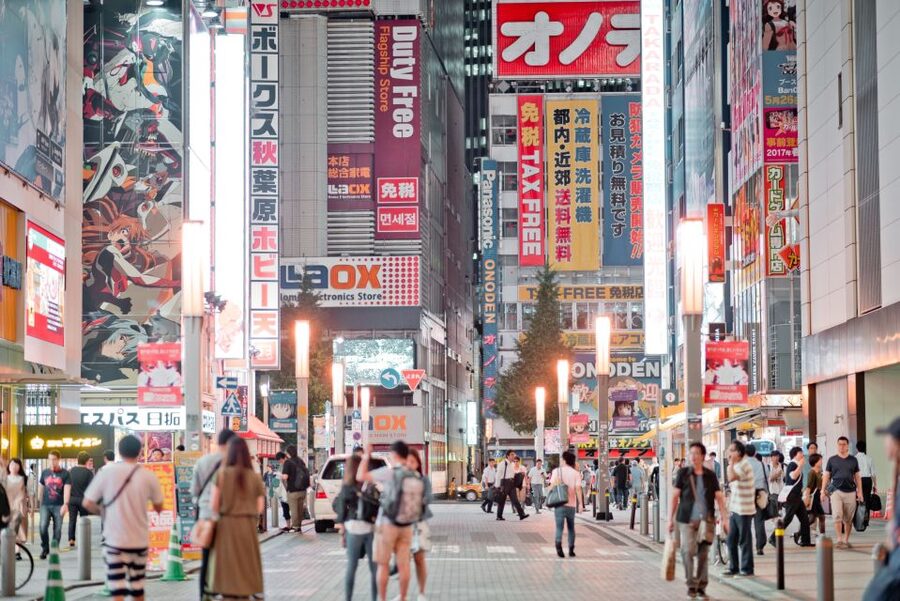
Akihabara receives about 45 minutes, enough for a guided introduction and a look around, but not enough for serious shopping. The district is known as Electric Town and has been connected with electronics since the pre-war era. Its later transformation into a center for anime, manga, gaming, and other pop-culture interests gives the neighborhood its current personality.
You will see a part of Tokyo where ordinary streets and fictional worlds overlap. Bright signs, game centers, anime shops, and cosplayers may all be part of the scene, though the exact street atmosphere can change by day and time. The tour’s value is less about checking off a particular shop and more about understanding how a commercial district changed with public interests.
Your guide can explain the meaning of otaku culture and how Akihabara became a gathering place for people devoted to anime, manga, electronics, and games. That background is helpful if you are curious but do not already know the difference between the district’s many subcultures.
Families may especially appreciate a personable guide here. One guide, Takee, was praised for keeping children engaged, taking the group to a pub, and doing origami together. Those details suggest that the experience can be adapted in a friendly way, although you should not assume every booking will include the same extra stop or activity.
The 45-minute limit is both a strength and a weakness. It keeps the full route possible, but it will leave you wanting more if Akihabara is a main reason for visiting Tokyo. I would treat this stop as an orientation. You can return later for shopping, games, or a more focused pop-culture visit.
Same base, a completely different sort of day:
- Tokyo: teamLab Planets TOKYO Digital Art Museum Entry Ticket
★ 4.6 · 9,779 reviews - Mt Fuji & Hakone Cruise, Drum Show Bullet Train 1 Day from Tokyo
★ 4.0 · 7,413 reviews - Tokyo: Sumo Show Experience with Chicken Hot Pot and a Photo
★ 4.8 · 6,678 reviews - Tokyo: Shinjuku Food Tour (13 Dishes at 4 Local Eateries)
★ 5.0 · 6,603 reviews
Koishikawa Korakuen: a quiet ending
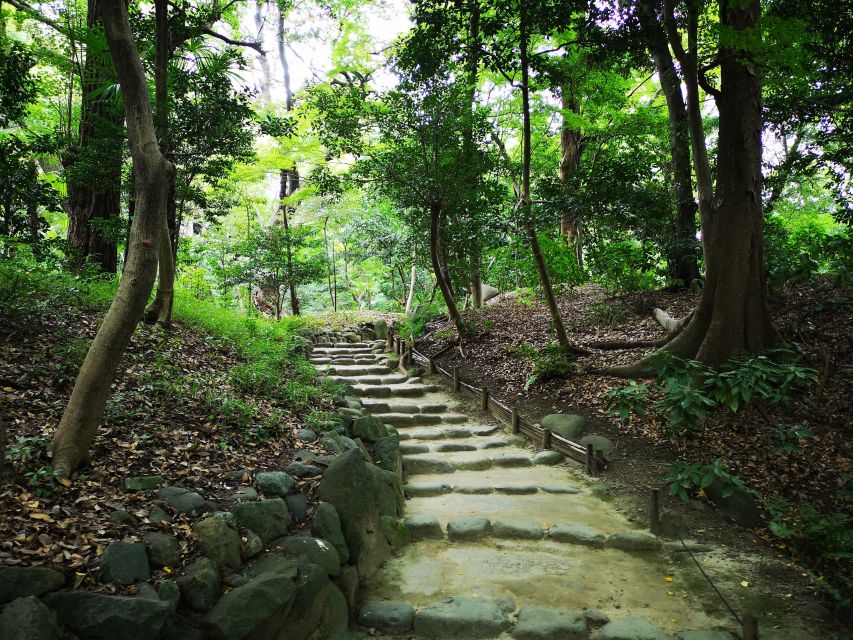
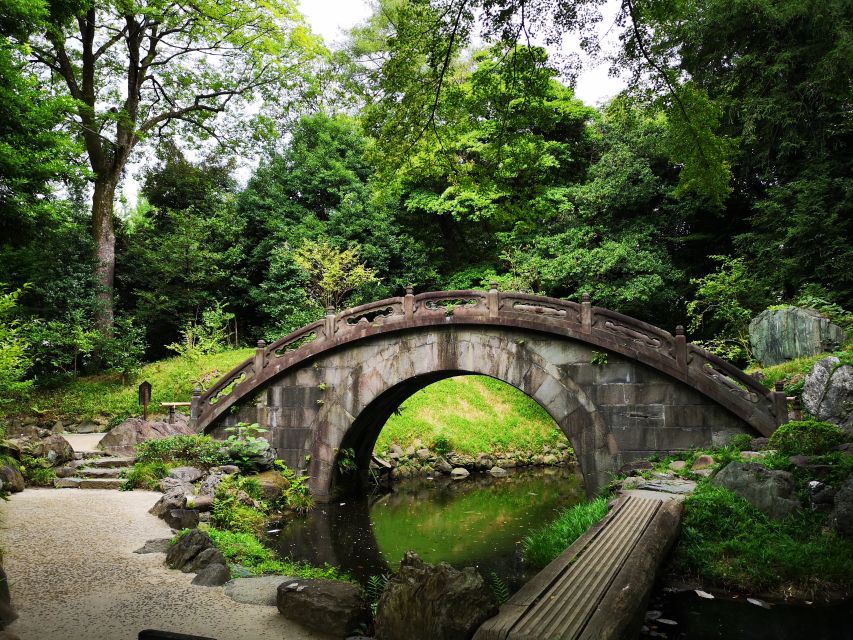
Koishikawa Korakuen gives the tour its sharpest change of pace. After the noise and visual overload of Akihabara, you enter a traditional Japanese garden shaped in the Edo period. The scheduled visit lasts about 45 minutes, including sightseeing and scenic views along the way.
This garden is valuable because it shows another side of urban Tokyo. The city does not simply replace the past with towers and screens. Older spaces remain part of daily life, offering carefully planned paths, water views, and seasonal changes within the modern city.
Spring can bring cherry blossoms, while autumn brings warm red and gold colors. Since the tour operates across seasons, the garden will not look the same each time. You might find the garden especially peaceful after the market and Akihabara, but keep in mind that seasonal conditions and visitor numbers can affect the mood.
The garden stop also gives the route a thoughtful ending. You begin with a temple district that has drawn people for generations and finish in a designed setting that reflects older ideas about beauty and leisure. In between, you see commerce, transport, technology, and pop culture. That sequence gives the tour its strongest educational thread.
What the $68 price really covers
At $68 per person, the tour is priced as a guided small-group experience rather than a simple walking route. The cost includes the guide, standard admissions, and local train rides used during the tour. That matters in Tokyo, where even modest transport costs can add up over a day.
Food and drinks are not included. Neither is admission to the Tokyo National Museum if you choose to add it. You will also pay for anything that results from customizing the route, so ask about changes before agreeing to them.
The value depends on how much help you want. If you are comfortable navigating Tokyo by yourself and prefer to spend an hour in each district, you may find the four-hour format restrictive. If you want someone to connect the neighborhoods, explain cultural details, and manage the basic transport, the price is easier to justify.
The small group is another part of the value. A maximum of eight people is large enough to keep the price below a private tour while still allowing questions. It also makes the experience less cumbersome in crowded Asakusa and market streets.
Guide style and what past bookings suggest
The strongest praise centers on the guides’ personal approach. Taka was described as giving extensive information around Asakusa. Another guide was called attentive and well informed, while Michelle was praised for professionalism, humor, competence, and fluent Italian.
Toru was remembered as exceptionally kind and available, more like an experienced travel companion than someone simply leading a route. These comments point to the feature that can make or break this experience: the guide’s ability to adjust the walk to the people in front of them.
The listed language is English, so English is the safe choice when booking. One guide, Michelle, also speaks Italian fluently, but you should not assume that an Italian-speaking guide will be assigned to your group.
The overall rating is 4.6 from 15 reviews, which is a useful but not enormous sample. I would read that as a strong sign of satisfaction, especially regarding guide quality, while still remembering that a four-hour city tour can feel different depending on weather, crowd levels, and the guide assigned that day.
Who should book this East Tokyo tour
I would recommend this route to first-time visitors who want a broad introduction to East Tokyo. It works well if you are curious about both traditional sites and modern Japanese pop culture, and if you prefer explanations over simply following a map.
Families may like the manageable group size and the possibility of a guide who can keep younger participants interested. The tour can also suit solo visitors who want company without committing to a large group.
You should choose something else if your main goal is extended temple photography, a full museum visit, serious Akihabara shopping, or a long food crawl. The route covers a lot, but each stop is an introduction.
The tour is wheelchair accessible, which is useful information when comparing city walks. Still, the route includes streets, markets, temple areas, and local transport, so it is sensible to confirm any specific mobility needs before booking. Comfortable shoes are essential for everyone.
You can cancel up to 24 hours in advance for a full refund, and you can reserve now while paying later. Those policies give you some flexibility if your Tokyo plans are still shifting.
Should you book it?
Book this tour if you want one compact, guide-led route that explains how old Tokyo, market Tokyo, electronic Tokyo, and garden Tokyo connect. The best reason to choose it is not a single landmark. It is the contrast between the stops, with a friendly guide helping you read the city as you go.
Skip it if you prefer to set your own pace or want long visits inside museums and shops. For most visitors, I would schedule it early in a Tokyo stay, then return independently to whichever area catches your interest most, perhaps Akihabara for shopping or Asakusa for a slower second look.
FAQ
How long is the tour?
The tour lasts four hours.
Where does the tour meet?
The meeting point is Kamiya Bar in Asakusa, at 1-chōme-1-1 Asakusa.
What places are visited?
The route includes Asakusa, Senso-ji Temple, Ueno, Okachimachi, Koishikawa Korakuen, and Akihabara.
Is the tour conducted in English?
Yes. The listed tour language is English.
How large is the group?
It is a small-group tour limited to eight participants.
Are transport and admission fees included?
The guide costs, standard costs during the tour, admissions, and local train rides are included. Tokyo National Museum admission is not included if you choose to visit it.
Are food and drinks included?
No. Food and drinks are not included.
Is the tour wheelchair accessible?
Yes, the activity is listed as wheelchair accessible. Comfortable shoes are recommended.
Can I cancel for a refund?
Yes. You can cancel up to 24 hours in advance for a full refund. You can also reserve now and pay later.
Just added around Tokyo
- Private Arrival Transfer : Narita International Airport to Central Tokyo City★ 4.5 · 12 reviews
- Narita Airport(NRT): Private Transfer to Tokyo/Yokohama 1-9pax★ 5.0 · 47 reviews
- Private Transfer from Narita Airport to Yokohama Port and City★ 4.5 · 17 reviews
- [Narita Airport Terminals 1, 2] 40-60km Sawara Itako Historic Bike Tour★ 5.0 · 13 reviews
- 3 Day Japan Highlights Tour: Tokyo, Mt.Fuji, Nara, Kyoto, Osaka★ 5.0 · 22 reviews
- The 10 Tastings of Tokyo With Locals: Private Street Food Tour★ 5.0 · 48 reviews
- Small Town in the Big City: Tasting Tokyo’s Kichijoji★ 5.0 · 195 reviews
- Small Town in the Big City: Tasting Tokyo’s Kichijoji★ 5.0 · 16 reviews
Tokyo Tours, compared.

Mt Fuji and Hakone 1-Day Bus Tour Return by Bullet Train
Read our review →

teamLab Planets TOKYO Digital Art Museum Entry Ticket
Read our review →
Mt Fuji & Hakone Cruise, Drum Show Bullet Train 1 Day from Tokyo
Read our review →
Sumo Show Experience with Chicken Hot Pot and a Photo
Read our review →
Shinjuku Food Tour (13 Dishes at 4 Local Eateries)
Read our review →
Tokyo Mt Fuji 5th St & Hakone Cruise Bus Tour w/Bullet Train
Read our review →