
Reviewed · HOKKAIDO TOURS
Sapporo Highlights: Golden Route Morning Guided Walking Tour
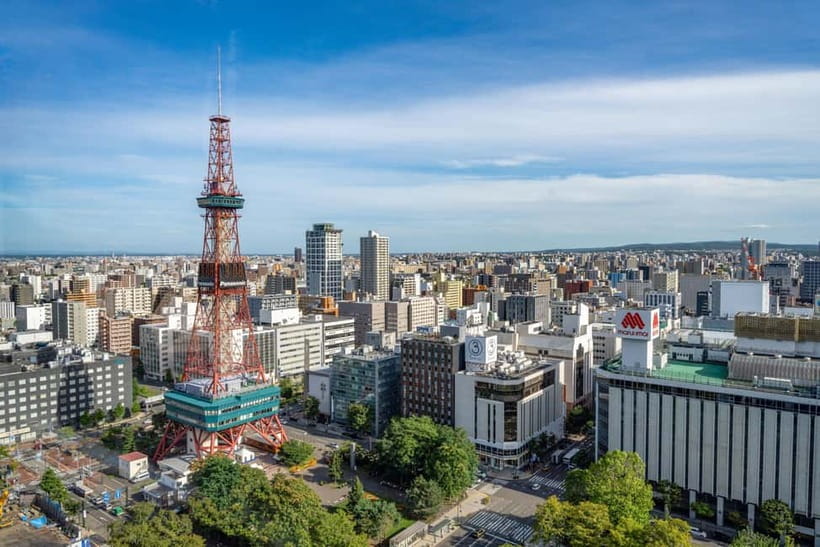
Sapporo’s story makes the most sense when you walk it. This 2-hour morning route links the TV Tower, City Hall, Clock Tower, Kita-1-Jou Dori, and Red Brick Government Building in a compact 3.2-kilometer stroll. You get the city’s main sights, but the guide also points out how roads, trees, and older buildings reveal Sapporo’s unusual beginnings.
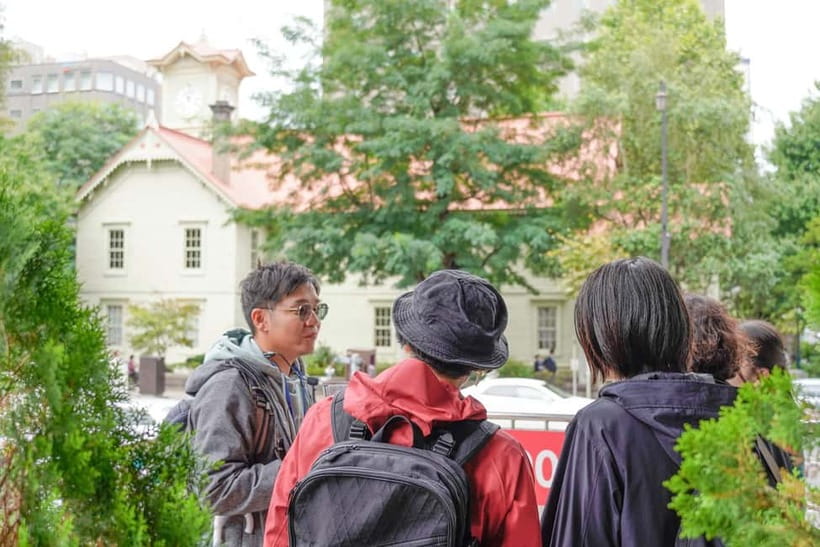
I like the included ride to the top of Sapporo TV Tower, which gives you a quick view before you start walking, and I like the small groups, limited to eight people. Guides Tom and Iku have earned especially warm praise for clear English, friendly pacing, useful food tips, and personal help after the tour. The drawback is simple: this is a walking tour in all weather, and rain, snow, or heavy bags can make the 3.2-kilometer route harder than it sounds.
Key points at a glance
- Top-floor TV Tower visit included: Begin with a broad view of Sapporo before exploring at street level.
- A tidy 10 a.m. to noon route: Cover the central sights without giving up your whole day.
- Small groups of up to eight: The format can feel personal, especially when attendance is low.
- History beyond the postcard views: Hear how Sapporo’s streets, trees, government buildings, and planning reflect the city’s early vision.
- Friendly English guidance: Tom and Iku are praised for clear explanations, good pacing, and practical local suggestions.
- Best with light luggage and good shoes: The tour covers 3.2 kilometers and includes several outdoor stops.
Why this short Sapporo walk works so well
Sapporo is an easy city to like, but its broad streets and orderly blocks can make its story hard to read on your own. This tour gives you a useful framework. You start high above the center, then come down to ground level and connect the city’s major civic sights in a logical order.
That sequence matters. From the TV Tower, you can see how the streets spread out in a grid. Later, the guide relates that planned layout to the ambitions of Sapporo’s founders. You are not simply collecting photographs. You are learning why the city looks the way it does.
The tour begins at 10 a.m. and finishes at noon, so it fits neatly into a first morning in Sapporo. I would use it early in a stay, because the guide’s restaurant suggestions and orientation tips can help you decide what to do next. You finish at the Red Brick Government Building, in a central area where you can continue sightseeing on foot.
The small-group limit of eight is another real advantage. If only a few people book, the walk can feel almost private. That happened for one participant who described the experience as similar to exploring with a friend. A group of four, including older family members, also found the pace comfortable and the outing personal.
More walking tours in Sapporo:
- Sapporo: The Indigenous Ainu People & Jozankei walking tour
★ 4.9 · 25 reviews - Sapporo Walking Tour
★ 4.9 · 17 reviews - Kyoto Geisha Walking Tour: Gion District & Hidden Gems
★ 4.7 · 3,273 reviews
Starting under the Sapporo TV Tower
Meet your guide at ground level, beneath Sapporo TV Tower. Look for the board marked KAPPO SAPPORO. This detail is worth noting because the tower area can be busy, and you do not want to waste the opening minutes searching for the meeting point.
The first stop lasts about 35 minutes and includes admission to the tower. The view gives you a fast lesson in Sapporo’s layout. You can see the clean blocks, broad avenues, and central green spaces that shape the city. The tower is also a useful place for photographs, especially if you want a simple orientation image before the walk begins.
The included admission improves the value of the tour. At $36 per person, you are paying for a guide, a two-hour route, and the tower ticket, rather than just joining a free street walk. One participant specifically found the trip to the top an unexpected bonus.
Do not expect a long tower visit. The point is to look out, get your bearings, hear the first part of the city story, and then continue. If you want extended time at the observation area, you would need to arrange that separately.
City Hall and the question of Sapporo’s original plan
After the tower, you walk for roughly 10 minutes to Sapporo City Hall. The stop lasts about 20 minutes and shifts the focus from views to civic identity.
The guide uses the area to ask whether modern Sapporo became the city its founders imagined about 200 years ago. That is a good question for a walking tour because it encourages you to look at the city rather than simply receive a list of dates. The broad streets, trees, public buildings, and regular blocks become evidence in a larger story.
You might appreciate this stop most if you want context. The tour is not built around entering every major building. Instead, it uses public spaces and exterior views to explain how Sapporo developed. That keeps the morning moving, but it also means you should not book this experience expecting extensive indoor visits.
For me, this is where the route begins to feel more thoughtful than a basic photo walk. The guide links physical details to the city’s past, helping you notice things you could easily pass without a second glance.
The Clock Tower, Sapporo’s slightly odd icon
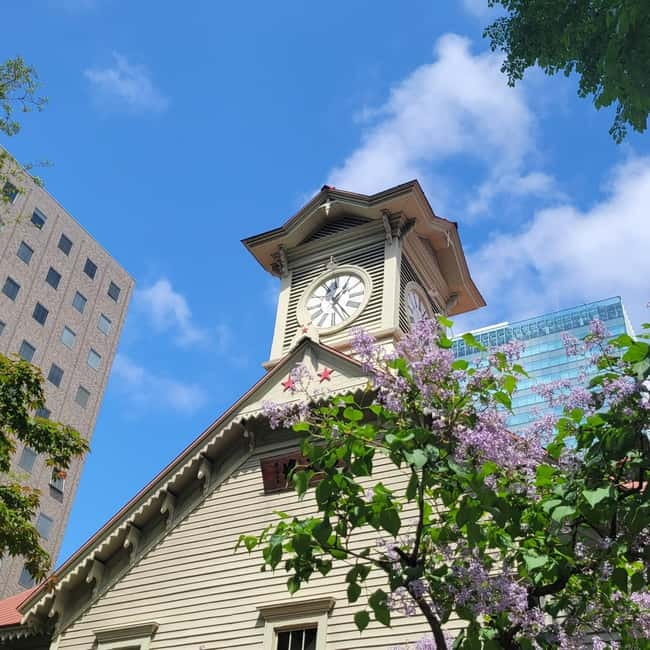
A five-minute walk brings you to the Sapporo Clock Tower, reached at about 10:45. You spend around 15 minutes here for a guided visit and photo stop.
The Clock Tower is one of Sapporo’s best-known symbols, but its history has a quirky side. Your guide invites you to form your own view of the building instead of treating it as a standard postcard stop. That approach suits Sapporo, a city with a different feel from Japan’s older temple and castle centers.
Admission to the Clock Tower is not included. The listed cost is approximately 200 Japanese yen, so budget a small amount if you want to go inside. If you choose not to enter, the exterior visit and explanation still remain part of the route.
This stop is short. You get a look, a story, and perhaps a few photos before moving on. That is efficient, but anyone who enjoys reading every display or lingering inside should plan a separate visit later.
More early starts in Sapporo:
- Kyoto Early Morning Tour with English-Speaking Guide
★ 5.0 · 1,427 reviews - Kyoto: Early Morning Tour with English-Speaking Guide
★ 4.9 · 1,128 reviews - Kanazawa: World Heritage Shirakawa-go Morning Guided Tour
★ 4.9 · 988 reviews - Nara Early Morning Tour (Kyoto or Osaka Departure Available)
★ 5.0 · 676 reviews
Kita-1-Jou Dori and the story written into the streets
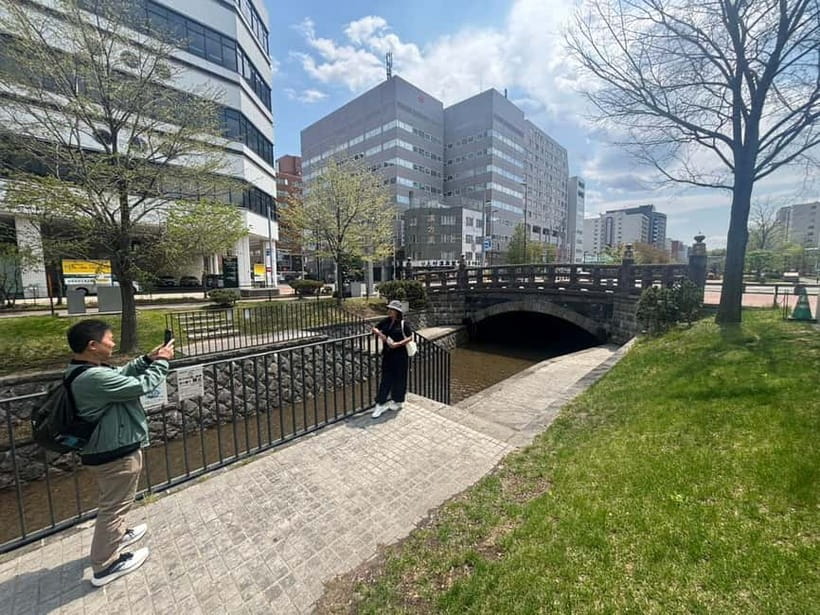
From the Clock Tower, the group walks for about 10 minutes to Kita-1-Jou Dori. This portion is important because the tour moves away from the obvious landmark checklist.
The guide draws attention to the roads and street trees as pieces of Sapporo’s past. That may sound modest, but it is one of the most useful ideas in the whole experience. A city’s character is not stored only in famous buildings. Street width, planting patterns, and the way people move through public space can tell you how a place was planned and how it has changed.
You have about 10 minutes here for a guided walk. The pace gives you time to look around without turning the tour into a long lecture. Keep your eyes open between stops. The best details may be the ones the guide points out while you are walking from one major sight to the next.
This section also explains why comfortable shoes matter. The route is not strenuous in an athletic sense, but you are on your feet for two hours, with several outdoor stops and city crossings.
Aka-Renga Plaza and Hokkaido’s political heart
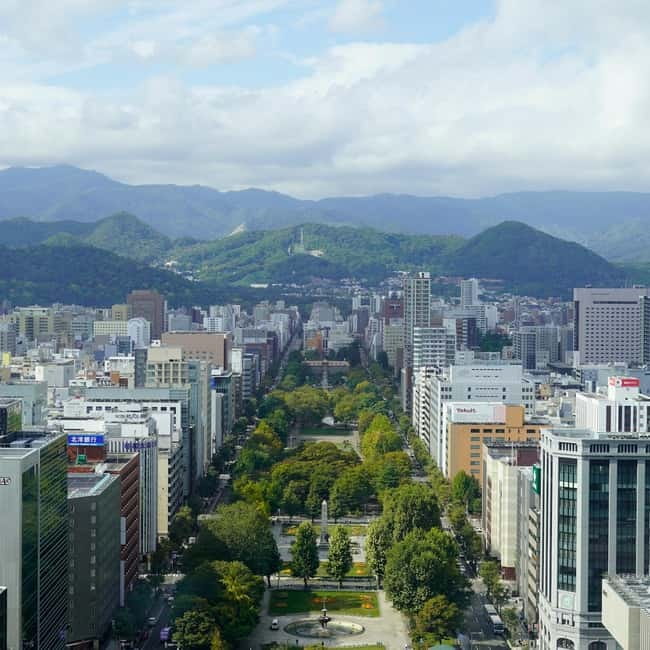
The next walking section takes about 10 minutes and leads to Aka-Renga Plaza. You spend roughly 15 minutes here on a guided visit and photo stop.
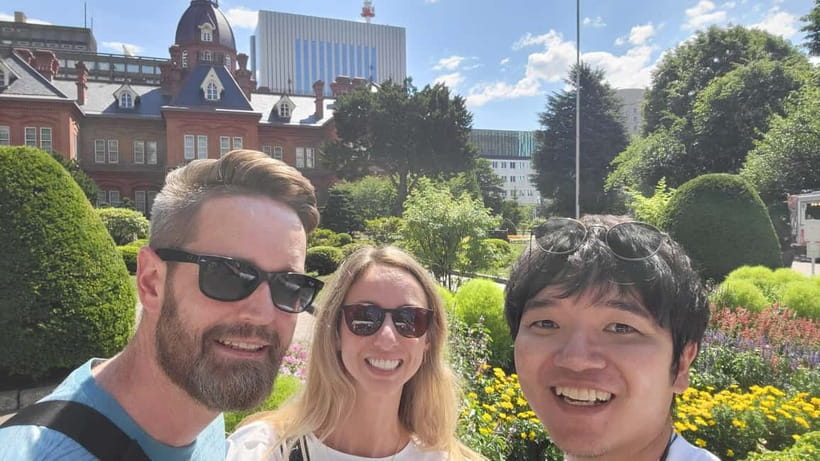
The plaza provides a good approach to the Red Brick Government Building, which is the final destination. The red-brick architecture recalls Hokkaido’s early political and administrative development. Your guide helps connect the building to the pioneer spirit that shaped Sapporo and the wider region.
This is a strong place for photographs because the setting lets you frame the building with surrounding public space rather than seeing it only from a pavement edge. The tour also makes room for personal photos at local spots, so you can ask the guide for help finding a better angle.
The final stop is the Red Brick Government Building, officially the former Hokkaido Government Office. You arrive around noon. The building once served as Hokkaido’s political center, and its bricks give the tour a fitting finish: you move from a modern observation tower to the older civic architecture that carries the region’s early government story.
The provided information does not promise extended interior access here, so think of this as the end point and a major exterior sight. If you want more time with the building, you can continue independently after the group finishes.
What Tom and Iku add to the morning
The guides are central to the tour’s appeal. Tom is repeatedly praised for his friendly manner, strong English, useful explanations, and willingness to help with directions after the walk. He has also guided very small groups, including tours with only one or two participants, which can make the experience relaxed and conversational.
Iku receives similar praise for keeping the walk engaging in difficult weather. She has explained Sapporo’s layout and past in a way that helped even repeat visitors notice something new. Her restaurant suggestions and recommendation for a sento, or public bath, were especially useful on a cold, rainy day.
The languages offered are English and Japanese. If you need a guide who can explain local history in clear English, the feedback gives you good reason to expect that. Still, guide assignments can vary, so you should book the tour for the route and format rather than for a guaranteed individual guide.
The tone sounds informal rather than academic. That is a benefit if you want questions answered and practical advice mixed with history. It may be less suitable if you want a formal lecture with detailed dates at every stop.
Price, pace, and what the $36 buys you
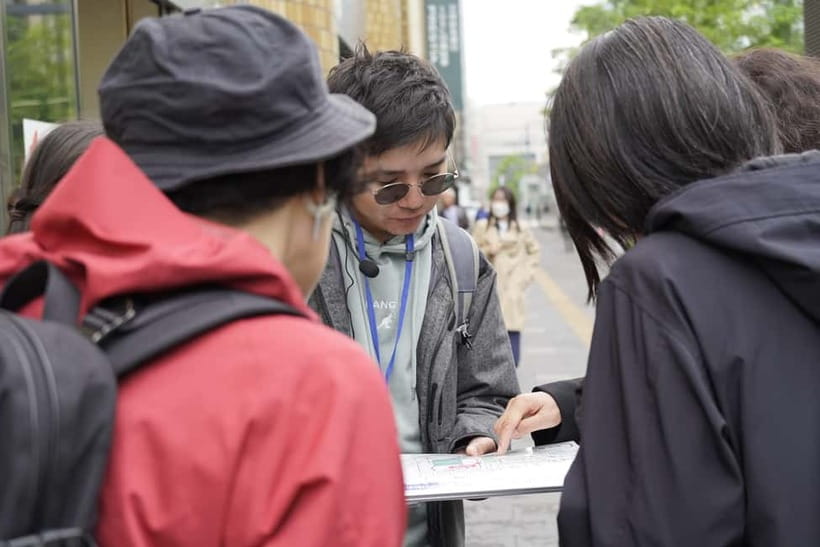
At $36, this tour sits in a reasonable range for a two-hour guided city walk that includes Sapporo TV Tower admission. The value comes from three things: the efficient route, the small group, and the local interpretation.
You could walk past the Clock Tower and Red Brick Government Building by yourself. The hard part is understanding how they fit into Sapporo’s plan and history. You also might miss the smaller clues in the roads and trees, or fail to connect the TV Tower view with the street-level route.
The tour is not a bargain if your goal is simply to take photos at famous buildings. You are paying for the explanations and the structure. I think it is good value for a first visit, especially if you want an orientation morning and practical suggestions for the rest of your stay.
The schedule is brisk but manageable. The route starts at 10 a.m., includes walking sections of five to 10 minutes, and reaches the final building at noon. You should arrive ready to keep moving rather than expecting long breaks for coffee or lunch.
Food and drinks are not included. Bring a drink, particularly in warmer weather, and plan lunch after the tour. Since the route ends near central Sapporo sights, the finish is convenient for continuing your day, though no specific restaurant is included.
Weather, footwear, and who should skip it
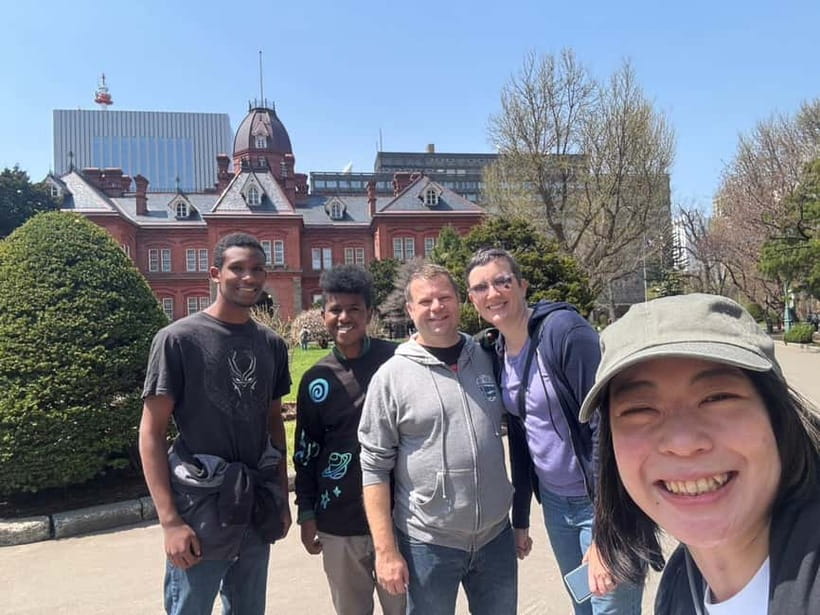
Sapporo’s weather can change the feel of an outdoor tour quickly. The walk has gone ahead in heavy rain, with the guide keeping the explanations lively and the pace comfortable, but you should bring rain gear and dress for the forecast. Comfortable clothes and shoes are essential.
The tour information also suggests bringing a change of clothes. That is sensible in wet conditions, but do not bring a large suitcase or heavy backpack. Oversize luggage and large bags are not allowed, and carrying extra weight for 3.2 kilometers would make the morning less pleasant.
The experience is not suitable for wheelchair users, and a moderate level of fitness is required. It is also not intended for people with a cold or people over 95 years old. Pets are not allowed, though assistance dogs are permitted.
For most people, the main challenge is not speed. It is standing, walking, and being outside for two hours. Families with older relatives should think about the weather and walking distance, although one small group with senior citizens found the pace comfortable.
Booking flexibility and small practical details
You can cancel up to 24 hours before the start for a full refund. The reserve-now, pay-later option also helps if your Sapporo plans are still shifting.
The group size is limited to eight. A smaller group can make it easier to ask about restaurants, neighborhoods, transport directions, or the meaning of a building detail. It can also make photographs more personal, since the guide has more time to help.
Smoking, alcohol, drugs, drones, bikes, party groups, and bare feet are not allowed. Assistance dogs are the stated exception to the pet restriction. These rules are straightforward, but the luggage restriction deserves the most attention.
Should you book the Golden Route walk?
Book this tour if you have just arrived in Sapporo, want the main downtown sights explained clearly, and prefer a friendly walk to a bus tour. It is especially useful for first-time visitors who want to understand the city’s grid, history, and civic buildings before exploring alone.
I would also recommend it to repeat visitors who enjoy local stories. One experienced Sapporo visitor still learned new things about the city’s past and layout, which suggests the guide adds more than basic sightseeing facts.
Skip it if you want a slow museum visit, a food-focused tour, or a fully indoor activity. You should also think twice if the weather is poor and you dislike walking outdoors, or if you need wheelchair access.
For $36, the included TV Tower entry and personal guidance make this a sensible first morning. Bring light luggage, wear proper shoes, and arrive ready to look beyond the postcard views.
FAQ
How long does the Sapporo Highlights walking tour last?
The tour lasts two hours, beginning at 10 a.m. and ending at approximately noon.
How far do you walk?
The route covers about 3.2 kilometers on foot.
Where does the tour begin?
You meet at ground level beneath Sapporo TV Tower. The guide holds a board marked KAPPO SAPPORO.
Where does the tour finish?
The walk ends at the Red Brick Government Building, also called the former Hokkaido Government Office.
Is admission to Sapporo TV Tower included?
Yes. Entry to Sapporo TV Tower is included in the tour price.
Do I need to pay separately to enter the Clock Tower?
Yes. Entry to Sapporo Clock Tower is not included and costs approximately 200 Japanese yen.
What languages does the guide speak?
The tour is offered in English and Japanese.
How large is the group?
The group is limited to eight participants.
What should I bring?
Bring comfortable shoes, comfortable clothes, drinks, rain gear, and possibly a change of clothes. Avoid bringing heavy bags or luggage.
Can I cancel the booking?
You can cancel up to 24 hours in advance for a full refund. The reserve-now, pay-later option is also available.
Just added around Sapporo
- Sapporo Winter : Asahiyama Zoo (Penguin Fun & Snowmobile)★ 5.0 · 28 reviews
- Sapporo: Otaru Asarigawa Ski Resort Day Trip with Gear★ 4.9 · 27 reviews
- Sapporo Walking Tour★ 4.9 · 17 reviews
- Sapporo: Sumo Show Experience with Japanese food & Photo★ 4.9 · 81 reviews
- Sapporo: Furano Flower Sea & Biei Blue Pond Tour w/ Pickup★ 4.0 · 40 reviews
- Sapporo: The Indigenous Ainu People & Jozankei walking tour★ 4.9 · 25 reviews
- Sapporo TV Tower Admission Ticket★ 4.7 · 21 reviews
- Sapporo: Furano Lavender & Biei Blue Pond Tour with Lunch★ 4.6 · 13 reviews
Hokkaido Tours, compared.

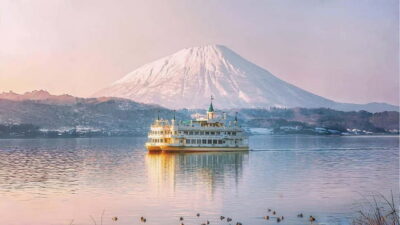
Hokkaido Seasonal: Lake Toya & Noboribetsu Jigokudani Valley
Read our review →
Sapporo Private Tour with a Local – Highlights & Hidden Gems
Read our review →

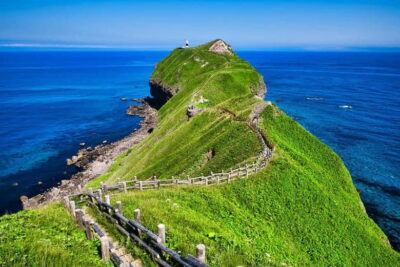

Furano Flower Sea & Biei Blue Pond Tour w/ Pickup
Read our review →
Hokkaido│Noboribetsu & Lake Toya Tour with Ropeway Ticket
Read our review →Browse the lists this tour appears in