
Reviewed · NARA TOURS
Nara Early Morning Tour (Kyoto or Osaka Departure Available)
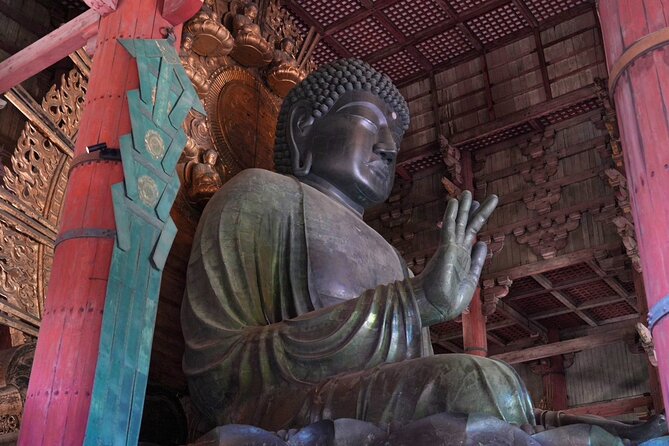
Nara is at its most atmospheric before the tour buses arrive. This 4.5-hour morning walk takes you from Kofuku-ji and its famous pagoda to lantern-filled Kasuga Grand Shrine, through Nara Park’s free-roaming deer, and finally to Todaiji Temple and its huge Buddha.
I like the small maximum of 12 people, which gives the guide room to answer questions and adjust the pace. I also like the practical help: guides such as Momoka, Nana, Haruka, Futaba, and Koichiro have helped visitors understand Japanese history, find photo spots, manage the train trip back, and choose restaurants. The catch is the walking. You cover about 10,000 steps, and the ¥800 Todaiji admission and return transportation are extra.
Key points to know before booking
- Early access matters: You see Nara before the heaviest daytime crowds, especially useful in peak season.
- Four major sights in one route: Kofuku-ji, Kasuga Grand Shrine, Nara Park, and Todaiji each offer a different side of Nara.
- A genuinely small group: The maximum is 12 people, though some departures may be much smaller.
- Deer are part of the experience: You can buy crackers to feed them, and some deer bow when asking for food.
- Expect a full morning of walking: The route covers roughly 10,000 steps and requires moderate physical fitness.
- Check the transport option carefully: Kyoto or Osaka to Nara transport is included only when you select that option. Your return trip is not included.
Why an early start changes Nara
Nara is an easy day trip from Kyoto or Osaka, which is exactly why it can feel crowded later in the day. The early schedule lets you approach the shrines and park while the morning still feels quiet. You get a better chance to hear your guide, take clear photographs, and watch the deer without being surrounded by large groups.
I especially like the rhythm of this tour. It does not rush from one famous building to another. You begin with a Buddhist temple, move to a Shinto shrine, walk through a deer park, and finish with one of Japan’s largest and most impressive temple halls. That mix gives the morning a useful shape.
The guides bring different personalities to the walk. Momoka is praised for clear explanations, local suggestions, and a relaxed pace. Nana focuses on the major events tied to Nara’s buildings. Haruka has helped with train directions and restaurant ideas. Futaba has used quizzes to make Japanese culture easier for families to follow. Koichiro is a good choice for visitors who want more discussion of religion, customs, and folklore, though you cannot necessarily request a specific guide.
The main tradeoff is simple: this is not a gentle ride through Nara. You walk between sites, spend time outdoors, and cover about 10,000 steps. The pace is often described as comfortable rather than hurried, but you still need a moderate level of fitness. Children under six cannot join, and the activity is not recommended for people over 75.
More early starts in Nara:
- Kyoto Early Morning Tour with English-Speaking Guide
★ 5.0 · 1,427 reviews - Kyoto: Early Morning Tour with English-Speaking Guide
★ 4.9 · 1,128 reviews - Kanazawa: World Heritage Shirakawa-go Morning Guided Tour
★ 4.9 · 988 reviews
Kofuku-ji begins the morning with a landmark pagoda
The first stop is Kofuku-ji Temple, founded in Nara in 710, the same year Nara became Japan’s capital. The visit lasts about 30 minutes, and admission is free.
The temple is best known for its five-story pagoda, which is the second-tallest wooden pagoda in Japan. That detail gives you a helpful sense of scale before you move on to Todaiji, where the buildings and Buddha become even more imposing.
This is a good opening stop because your guide can explain how Nara developed as an ancient capital and why Buddhist temples became so important to the city. A guide also helps you notice that the pagoda is not just a photogenic tower. It is part of a wider religious and political story that shaped early Japan.
Thirty minutes is enough for an introduction, photographs, and a short explanation without using up the best part of the morning. If you want extensive time inside every building, though, this route may feel brisk. The tour is designed to give you a broad understanding of Nara rather than a long museum-style visit at one site.
Kasuga Grand Shrine brings you into a lantern-lit forest
Next comes Kasuga Grand Shrine, with about an hour allotted for the visit. Admission is free.
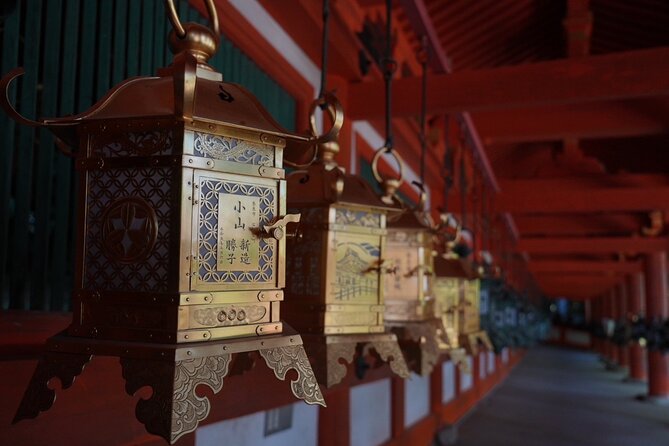
Kasuga is famous for its lanterns, around 3,000 of them in stone and bronze, donated by worshippers over time. The lanterns help give the shrine its distinctive character, especially as you move through the wooded approach. The setting feels different from Kofuku-ji, and that contrast is one of the tour’s strengths.
Here I would pay close attention to the explanation of Shinto practices. The shrine is connected to the belief that one of its four gods came to Nara riding a deer. That story helps explain why the animals in Nara Park are treated as sacred rather than as ordinary city wildlife.
The hour at Kasuga gives the guide room to discuss the lanterns, religious customs, and the link between the shrine and the deer. Some guides add local folklore or invite questions about Japanese culture. If you are traveling with children, Futaba’s quiz-based approach may be especially appealing, while visitors who enjoy detailed questions may prefer a guide such as Koichiro or Itsuku, whose tours have included extended discussion of history and culture.
One practical point: the shrine is an outdoor setting, and the morning can be cool or damp depending on the season. The tour information does not promise a weather adjustment, so wear shoes and clothing suited to a walking tour.
Nara Park is more than a deer photo stop
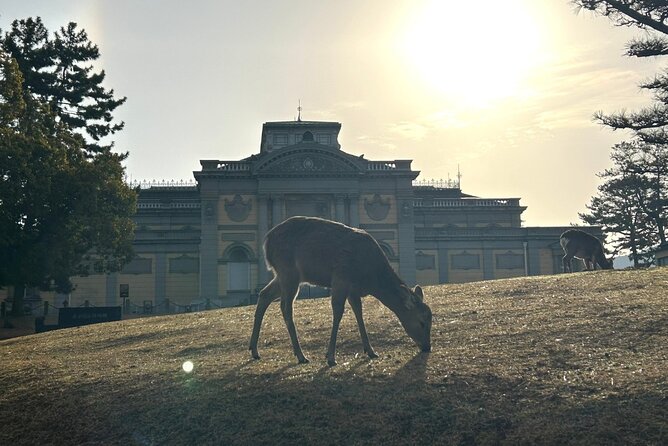
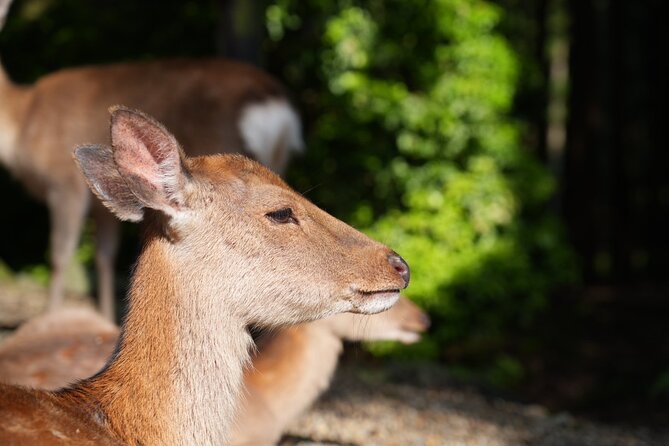
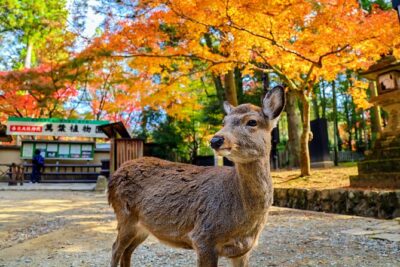
The walk through Nara Park takes about 30 minutes. The park is home to thousands of free-roaming deer, and this is usually the most playful part of the morning.
You can buy crackers to feed the deer. Some of them bow when they want another piece, which is charming and makes for a memorable photo. It is also wise to listen closely to your guide here. The animals may look gentle, but they are eager when food is involved. One guide was even praised for having a knack for handling the deer, a useful reminder that these are living animals, not tame props.
The park also works as a bridge between the formal shrine visit and the grand temple ahead. Your guide can connect the deer to Kasuga’s religious traditions and point out less crowded areas of the park. That is where a small group helps. You can stay together without forming a wide, noisy cluster around the animals.
I like that the park visit is not treated as the entire point of Nara. Feeding deer is fun, but the explanation of why they matter gives the encounter more meaning. If you would rather avoid feeding them, the park is still worthwhile for its open spaces, sacred associations, and walk toward Todaiji.
Be prepared for changing ground and steady walking. The route is not presented as difficult hiking, but the total step count adds up.
A few more Nara half-days to weigh up
- World Heritage Kyoto & Nara Uji Authentic Matcha Experience
★ 5.0 · 1,573 reviews - Nara Half Day Trip Walking Tour (Private Option Available)
★ 5.0 · 937 reviews - Osaka: Nara and Uji Day Trip with Deer Park and Hot Spring
★ 4.4 · 302 reviews - Kyoto/Osaka: Kinkakuji, Bamboo Forest, and Nara Deer Park
★ 4.4 · 265 reviews
Todaiji delivers the morning’s biggest moment
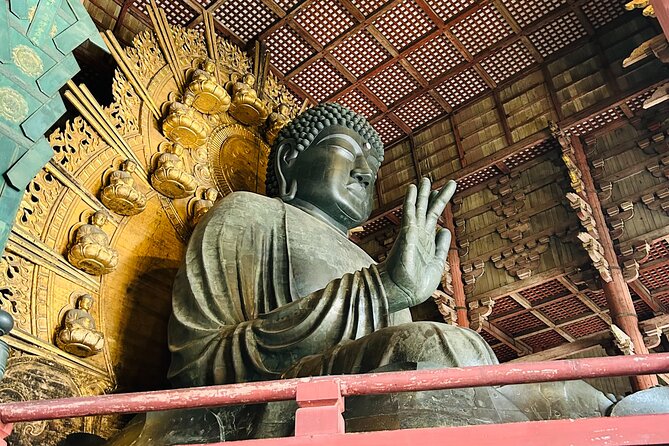
The final stop is Todaiji Temple, with about one hour for the visit. The entrance fee is not included and costs ¥800 per person.
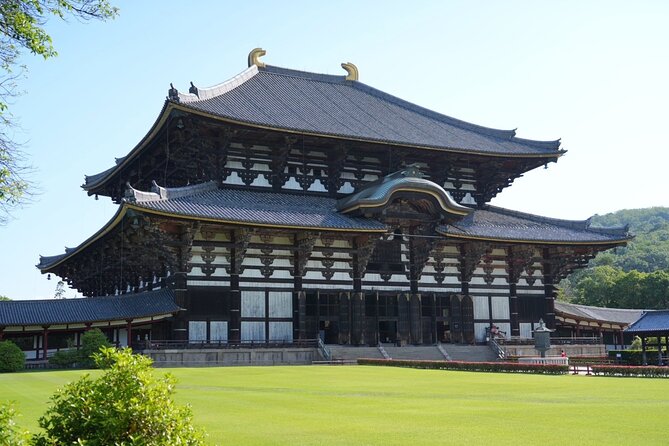
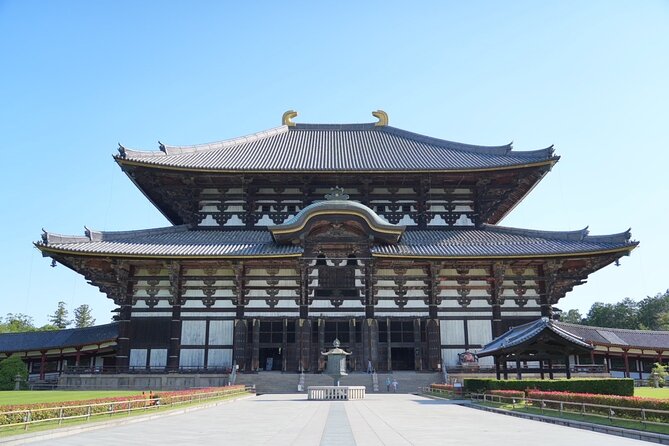
Todaiji is famous for its Great Buddha, described here as the biggest Buddha statue in Japan. Until recently, the temple’s main hall was the world’s largest wooden building. Even before you hear the measurements, the scale is clear. After the smaller details of the lanterns and pagoda, Todaiji gives the morning a powerful finish.
This is the one paid admission on the route, and it is the stop where the guide’s explanation can make the greatest difference. A large wooden hall and a huge Buddha can impress you visually, but the historical and religious context helps you understand why the site matters.
Allow time for photographs, but do not expect to linger as long as you might on a private visit. The group has a schedule, and the entire experience ends back in Nara Park. If Todaiji is your main reason for coming to Nara, you may want to return later on your own for more time. If you want an efficient first look at the city’s main sights, the one-hour stop is well judged.
The order also makes practical sense. You reach Todaiji after the cooler, quieter part of the morning and finish near the same Nara Park area where the tour begins.
What the $61.02 price really covers
At $61.02 per person, the tour is priced as a guided half-day experience rather than a simple sightseeing transfer. Your fee covers the English-speaking guide and, if selected, transportation from Kyoto or Osaka to Nara.
The value is strongest if you want explanation and structure. You are paying to connect four major places, understand the difference between Buddhist and Shinto sites, learn why the deer are sacred, and avoid figuring out the route alone. Several guides have also offered practical help beyond the formal commentary, including restaurant suggestions, train advice, local mochi recommendations, and photo locations during cherry blossom season.
The price is less attractive if you are already comfortable navigating Nara and mainly want admission-free access to the shrines and park. Kofuku-ji, Kasuga Grand Shrine, and Nara Park do not require admission, and you can visit them independently. Todaiji adds ¥800, and you must also pay for your return transportation.
Group discounts are available, though the exact savings are not specified. The group size is capped at 12, but some departures can be much smaller. One reported group had only four people, which makes the experience feel close to a private walk without the private-tour price.
If you select transport from Kyoto or Osaka, read the booking choice carefully. Transportation to Nara is included only with that option. The return trip from Nara to Kyoto or Osaka is always your responsibility, so keep money and time available for the journey home.
The pace, group size, and guide style
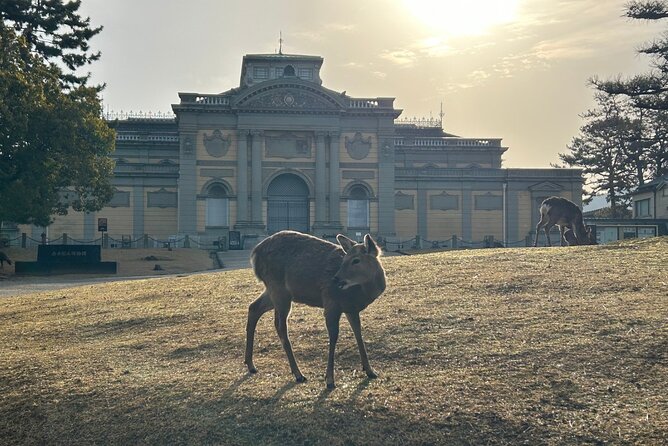
The tour runs for approximately four hours and 30 minutes. It begins and ends in Nara Park, making it easy to continue exploring after the official walk if you still have energy.
The maximum of 12 people is a real advantage. A guide can answer a question without stopping a large crowd, and you can usually hear the explanation near a shrine or temple. The smaller format also makes it easier to keep a family together and adjust the walking pace.
The strongest pattern in the guide feedback is personal attention. Nana, Haruka, Ayame, Natsuho, Shin, Kevin, Momoka, Futaba, Toshiki, and others have been praised for friendliness, clear explanations, patience, and an ability to make people comfortable. That does not mean every guide will use the same style. Some lean toward history and architecture, some toward folklore and culture, and others add games or practical travel advice.
I would choose this tour if you like asking questions. It is not just a head-down march to famous sites. The experience works best when you engage with the guide and tell them what interests you, such as religion, architecture, family-friendly stories, or local food.
Who should book this Nara morning walk
This tour suits first-time visitors who want Nara’s essential sights without spending a full day planning train routes and temple order. It is also a good fit for families with children aged six and older, especially those who enjoy animals and short explanations broken up by outdoor walking.
It works well for visitors staying in Kyoto or Osaka who want an organized morning but do not need a private vehicle all day. The early start is particularly useful during busy periods, when arriving later can mean more people around the deer and temple approaches.
You should think twice if you have trouble walking 10,000 steps, dislike outdoor visits, or want long, unhurried time inside each temple. The tour is not recommended for people over 75, and the moderate fitness requirement is worth taking seriously.
The free cancellation policy gives you some flexibility: cancel at least 24 hours before the local start time for a full refund. Changes or cancellations made within 24 hours are not accepted for a refund.
Should you book the Nara Early Morning Tour?
I would book it if you want a well-paced introduction to Nara, value a small group, and prefer hearing the stories behind the sites instead of simply taking photographs. The early timing, deer encounter, and final visit to Todaiji create a satisfying half-day.
I would skip it if you already know Nara well, want to set your own schedule, or would rather spend several hours at one temple. Before paying, confirm whether your chosen option includes transport from Kyoto or Osaka, then budget separately for the ¥800 Todaiji ticket and your ride back.
For most first visits, the price buys useful context, a sensible route, and a quieter look at Nara than you are likely to get by arriving later.
FAQ
How long does the Nara Early Morning Tour last?
The tour lasts approximately 4 hours and 30 minutes.
Where does the tour start and end?
The listed meeting point and end point are both in Nara Park, Nara, Japan.
Can I join from Kyoto or Osaka?
Yes. Transport from Kyoto or Osaka to Nara is available when you select the applicable option during booking.
Is transportation back to Kyoto or Osaka included?
No. Return transportation from Nara to Kyoto or Osaka is not included.
What sights are included?
The route includes Kofuku-ji Temple, Kasuga Grand Shrine, Nara Park, and Todaiji Temple.
Is the Todaiji entrance fee included?
No. The Todaiji entrance fee is ¥800 per person.
How much walking is involved?
You will walk about 10,000 steps during the tour.
How large is the group?
The tour has a maximum of 12 travelers.
Can children join the tour?
Children under six cannot join. The tour information does not give a general child discount, but group discounts are available.
What happens if I need to cancel?
You can receive a full refund if you cancel at least 24 hours before the experience start time. Cancellations or changes made less than 24 hours before the start are not accepted for a refund.
Just added around Nara
- All must-sees in 3 hours – Nara Park Classic Tour! From JR Nara!★ 5.0 · 108 reviews
- Private Nara Tour and Sake Tasting (Departing from Kyoto/Nara)★ 5.0 · 40 reviews
- Hammer a Pattern on Your Ring Workshop★ 5.0 · 57 reviews
- Nara World Heritage PRIVATE TOUR★ 4.5 · 15 reviews
- Nara Sake Tasting Tour at Local Brewerie(tasting fee included)★ 5.0 · 12 reviews
- Nara Private Tour: Flexible Pickup from Kyoto, Osaka, or Nara★ 5.0 · 17 reviews
- Nara Highlight Walking Tour with Furoshiki Experience with Lunch★ 5.0 · 73 reviews
- Nara – Heart of Nature Cross Bike Tour★ 5.0 · 19 reviews
Nara Tours, compared.
World Heritage Kyoto & Nara Uji Authentic Matcha Experience
Read our review →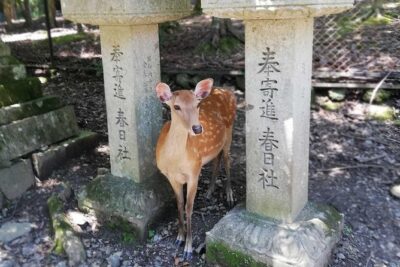
Nara Half Day Trip Walking Tour (Private Option Available)
Read our review →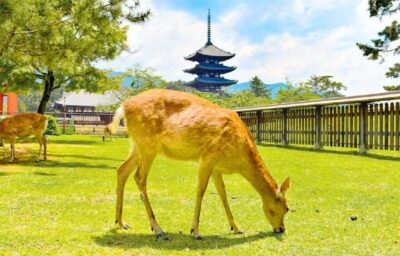
Nara and Uji Day Trip with Deer Park and Hot Spring
Read our review →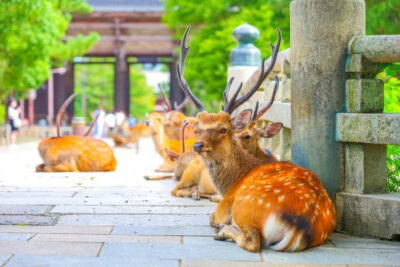
Kyoto/Osaka: Kinkakuji, Bamboo Forest, and Nara Deer Park
Read our review →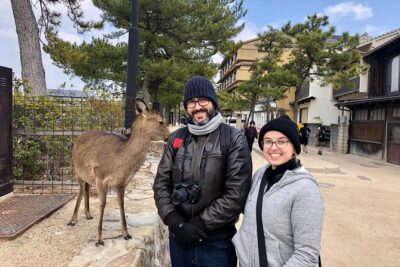
Nara 6hr Private Tour with Government-Licensed Guide
Read our review →
E-Bike Nara Highlights – Todaiji, Knives, Deer, Shrine
Read our review →
Nara Early Bird Tour (Kyoto Departure Option Available)
Read our review →
Nara:Authentic Tea Ceremony(Max 5 ppl) -Master Matcha Making
Read our review →Browse the lists this tour appears in