
Reviewed · BAMBOO GROVE TOURS
Kyoto/Osaka: Kinkakuji, Bamboo Forest, and Nara Deer Park
The sight that stays with you is likely Kinkakuji, the Golden Pavilion, flashing gold above a quiet pond and carefully kept gardens. In the same day, you also walk beneath Arashiyama’s tall bamboo and meet Nara’s free-roaming deer, so this tour packs three very different sides of old Japan into one outing.
I like the comfortable coach, which saves you from piecing together several rail and bus connections. I also like the useful mix of guided context and free time: guides such as Eiko, Yuki, Jewel, and Maki have been praised for clear explanations, photos, and firm meeting instructions. The tradeoff is simple: fitting Kyoto and Nara into one day means the schedule can feel rushed, especially at crowded sites.
Key points to know before booking
- Three major sights in one day: See Arashiyama, Kinkakuji, and Nara Park without arranging several separate journeys.
- The Golden Pavilion includes its gardens: Your Kinkakuji visit is more than a quick photo stop.
- Deer feeding depends on timing: Buy official shika-senbei rice crackers, and give the deer nothing else.
- Lunch is optional: The buffet can be convenient, but food quality and crowded seating have not pleased everyone.
- Early meeting times matter: Departures are at 8:50 AM from Osaka and 9:05 AM from Kyoto.
- The tour is a good value at $69: That price makes the most sense when your option includes transport, lunch, and admission tickets.
Why this Kyoto and Nara day trip works
Kyoto and Nara are close on a map, but their famous sights are spread out. Arashiyama sits on Kyoto’s western edge, Kinkakuji is farther north, and Nara lies south of Kyoto. Seeing all three by public transport is possible, yet it takes planning, transfers, and attention to the clock.
This tour handles the long moves by air-conditioned coach with Wi-Fi. You meet in the morning, visit the sights in a set order, and return to the original meeting point after a full day. That makes it particularly useful if you have limited time in western Japan or would rather spend your energy looking out the window than decoding train platforms.
The package is sold in different options, so check the exact selection before paying. Lunch and admission to Kinkakuji and Todai-ji are included only if chosen. At $69 per person, the basic price is attractive for the transport and guide alone. The value improves if your booking includes both temple tickets and lunch, though the meal is the part I would consider most carefully.
The day can run for about nine hours, and that is a lot of sightseeing. You should expect a group schedule, fixed departure times, and walking at each stop. This is not the right choice if you want to sit quietly in one garden for an hour or stop at every shop.
More Arashiyama and bamboo walks:
- Kyoto: Fushimi Inari, Kinkakuji, Bamboo Grove 1 Day Bus Tour
★ 4.8 · 4,316 reviews - Osaka/Kyoto:Kinkakuji,Arashiyama,FushimiInariShrine,NaraPark
★ 4.1 · 1,596 reviews - Kyoto/Osaka: Nara, Fushimi Inari Taisha, Arashiyama Bus Tour
★ 4.7 · 1,275 reviews
Arashiyama Bamboo Forest and the Katsura River
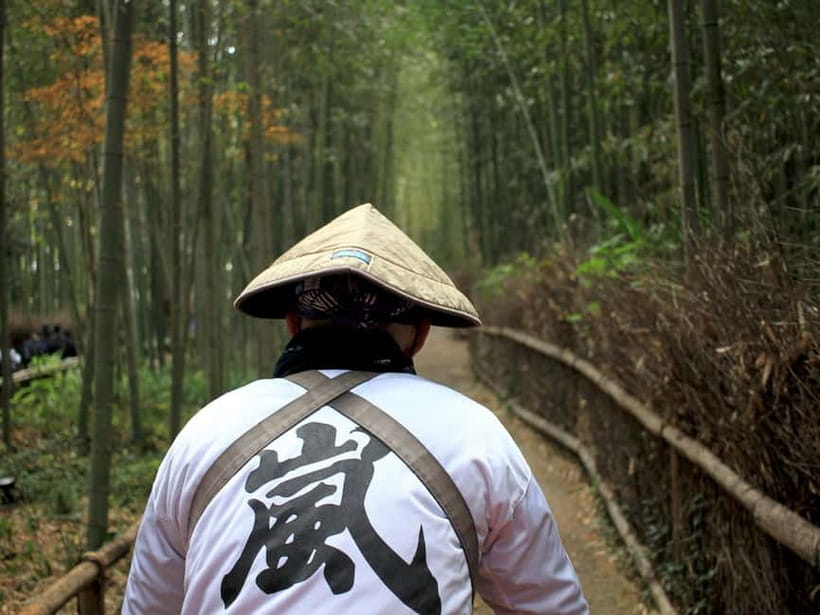
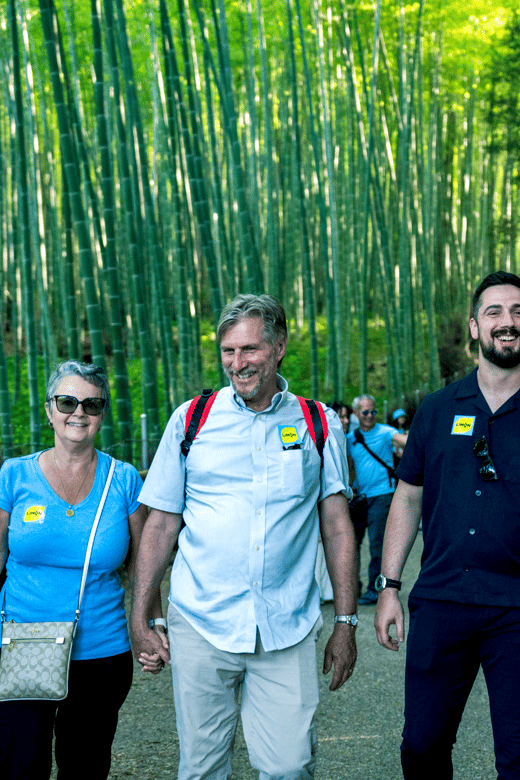
Arashiyama is the first major stop, and it gives you an immediate change of mood. The Sagano Bamboo Forest is a narrow walking path lined with tall green bamboo. When the wind moves through the leaves, the sound is one of the area’s main pleasures.
The grove is beautiful, but do not picture a long, empty forest trail. The path is a well-known sightseeing stop and can be crowded, particularly around the best photo areas. You will get the most from it by paying attention to the height, sound, and filtered light rather than expecting solitude.
The bamboo has been admired since Japan’s Heian Period, when Kyoto was the imperial capital. Your guide may add local stories and explain how to behave at nearby sacred places. Guides including Lydia, Eiko, and Yuki have been praised for being attentive and for offering to take photos, which helps if you are traveling alone.
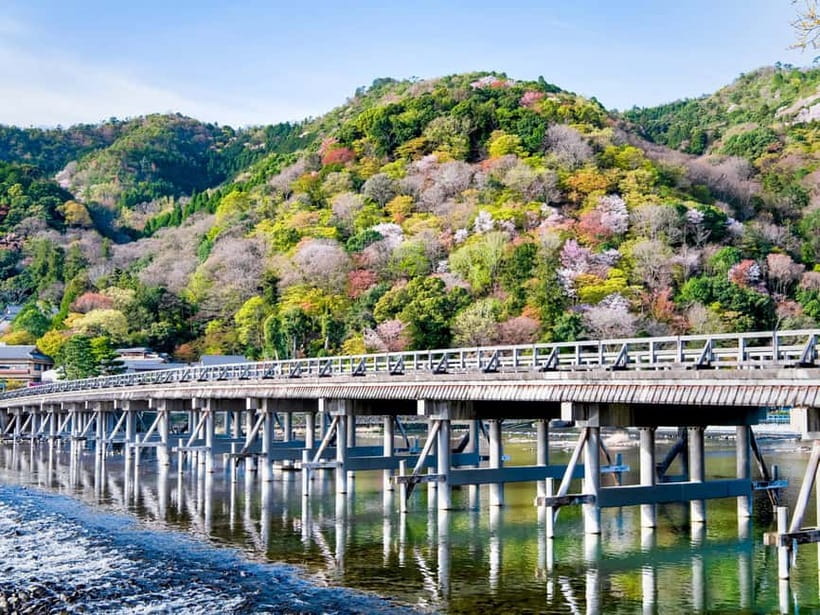
Arashiyama offers more than bamboo. You can also see Togetsukyo, the Moon-Crossing Bridge, along the Katsura River. The bridge and river give the stop a wider view after the close walls of the bamboo path. Depending on the exact schedule and crowds, you may have time to walk near the river and take photographs, but do not count on a long, independent exploration of every corner of Arashiyama.
Wear shoes with good support. The day involves repeated walking, standing, and moving back to the coach at a precise time. Bring water, too. Summer heat, rain, or a crowded path can make this first stop more tiring than it looks in photographs.
Lunch: useful fuel, mixed expectations
The lunch option is designed to keep the group moving. It features seasonal Kyoto specialties, and several people have enjoyed the buffet, noting its range of choices and its ability to refuel you before the afternoon temples.
The experience is not presented as a quiet, intimate meal. One account describes cramped tables and school-dining-room-style food, while others found the buffet very good. That difference may reflect expectations, menu variation, or personal taste, but the practical lesson is clear: add lunch for convenience, not as the main culinary reason to book the tour.
Vegetarian requests must be sent to the activity provider at least three days ahead. Halal and vegan lunches are not available. If you have strict dietary needs, you should contact the provider before booking rather than assume the buffet will work for you.
The meal is included only with the lunch option. If your priority is flexibility, skipping the add-on may suit you better, but the group itinerary means you cannot simply wander off for an unplanned restaurant stop. For many people, a scheduled meal is worth it because it avoids another decision during a packed day.
Kinkakuji, the Golden Pavilion
After Arashiyama, the coach crosses Kyoto to Kinkakuji, officially known as Rokuonji. The pavilion is covered in gold leaf, and its reflection appears in the pond in front of it. Sunlight can make the building look almost unreal, but the pond and gardens keep the scene from feeling like a single-photo attraction.
The present pavilion is a reconstruction, yet the garden design preserves the character of the historic temple grounds. That matters because Kinkakuji is not only a building to photograph. You follow a garden route around the pond, with changing views of the pavilion, water, trees, and stone arrangements.
This stop is often one of the day’s busiest. You may have to share the best viewing area with a large crowd, and the walking route follows a set direction. The visit is therefore more about seeing the central composition and absorbing the setting than quietly studying every garden detail.
Your guide can make the difference here. The strongest guides on this tour have given background while riding between sites, then walked with the group for a while at each location. Others have offered a plan showing where to go and where to meet. That practical help is valuable because the pavilion visit has free-time elements, and it is easy to lose track of the group in a popular temple complex.
Admission to Kinkakuji is included only in selected options, so check before booking. If it is not included, budget for the ticket separately.
A few more Nara half-days to weigh up
- World Heritage Kyoto & Nara Uji Authentic Matcha Experience
★ 5.0 · 1,573 reviews - Nara Half Day Trip Walking Tour (Private Option Available)
★ 5.0 · 937 reviews - Nara Early Morning Tour (Kyoto or Osaka Departure Available)
★ 5.0 · 676 reviews - Osaka: Nara and Uji Day Trip with Deer Park and Hot Spring
★ 4.4 · 302 reviews
Nara Park and the Great Buddha
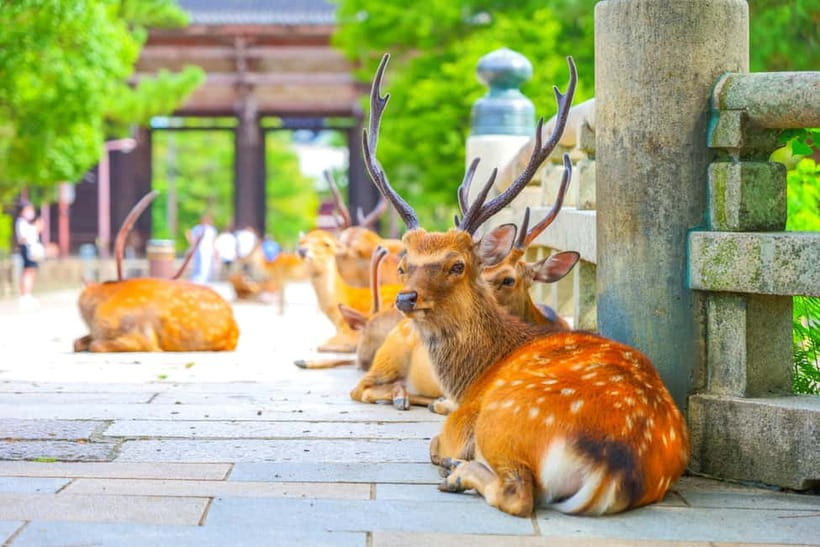
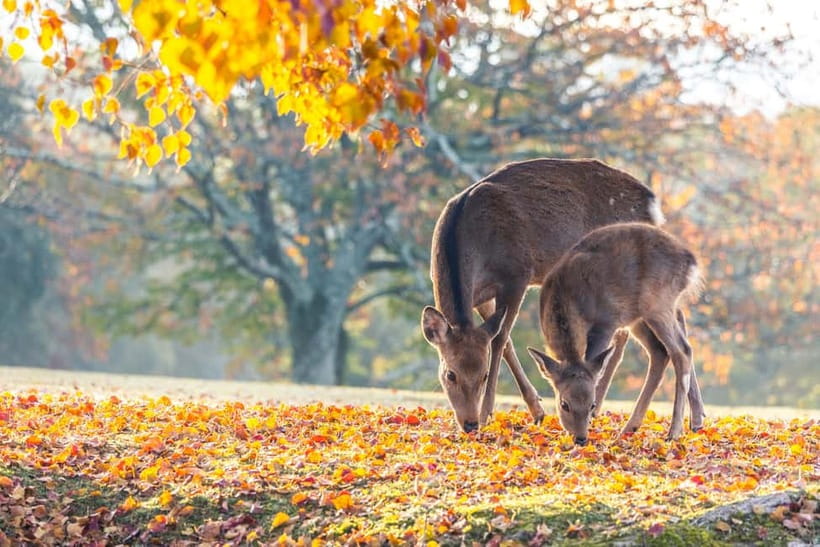
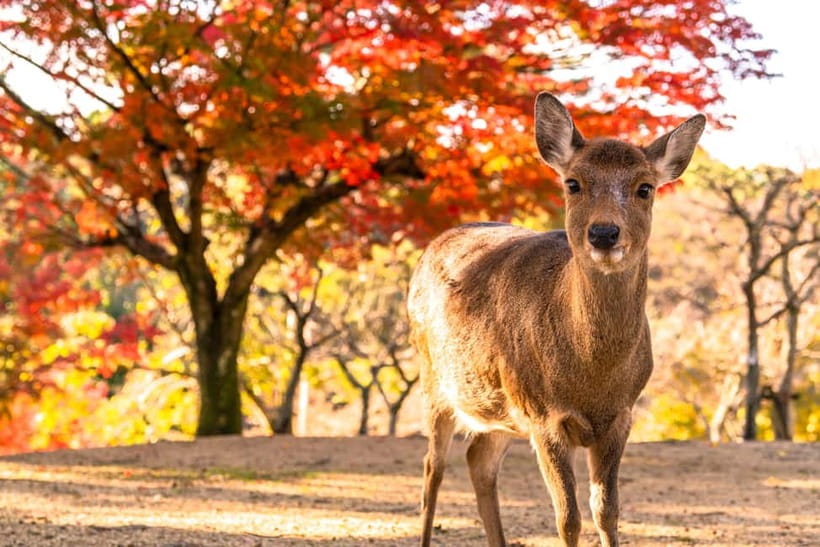
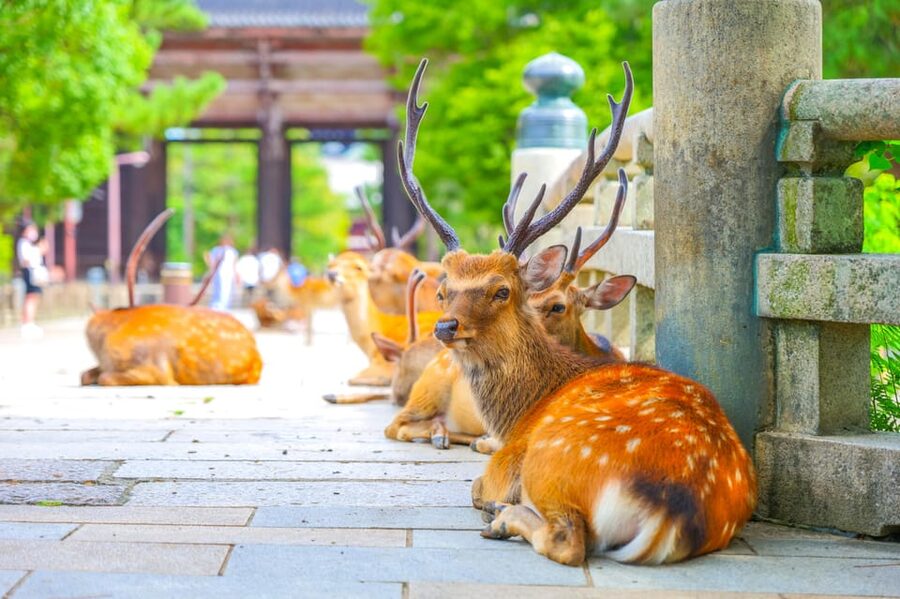
The final major section takes you south to Nara Park. The park is home to roughly 1,200 wild deer that move freely around the grounds. They are accustomed to people and are famous for bowing, though you should treat them as wild animals rather than tame pets.
You can feed them with shika-senbei, the special rice crackers sold for this purpose. Do not feed the deer anything else. Keep the crackers visible, offer them carefully, and expect the deer to become persistent once they realize you have food.
Deer crackers can sell out later in the day. One guide, Eiko, managed to find crackers for the group at around 4 PM, but you should not rely on that kind of luck. If feeding the deer is important to you, ask your guide where to buy the crackers as soon as you reach the park, and keep the food separate from your other belongings.
Nara Park can also be confusing. Paths, temple grounds, deer, and large crowds make it possible to lose sight of the coach or group. A clear meeting instruction is essential, and guides such as Hama, Morgan, and Jewel have received praise for keeping people informed and in the right place.
The key risk is missing the final departure. One person described getting lost with several others and eventually having to make the return journey independently. The bus cannot wait indefinitely, so listen closely to the meeting point and time. Take a photo of the coach, note the guide’s clothing or group sign, and confirm the meeting location before walking away.
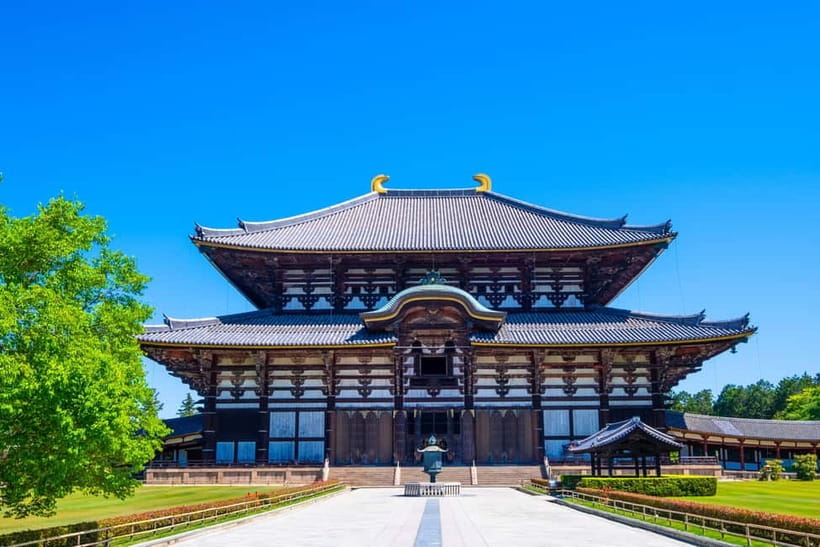
Inside the park, you can visit Todai-ji Temple, a UNESCO World Heritage site and home to one of Japan’s enormous Great Buddha statues. The scale is the point. After the close-up experience of deer feeding, entering the vast temple hall gives the afternoon a more solemn finish.
Todai-ji admission is included only with selected booking options. If you want to enter the temple and see the Great Buddha, choose the option that includes the ticket.
Guides, transport, and the group rhythm

The English-speaking guides are one of the tour’s strongest features. Names associated with especially good days include Eiko, Yuki, Jewel, Maki, Satoshi, Hama, Lydia, and Maki, though your guide will depend on the departure and date. The consistent qualities you should look for are clear English, simple meeting instructions, useful explanations during the drive, and a willingness to help with photographs or small problems.
This is a guided day trip, but it is not a constant lecture. At each site, the guide may walk with the group, explain key points, and then give you time to look around. That structure suits you if you want orientation without having someone speak beside you every minute.
The air-conditioned coach is a real benefit in hot, humid, or rainy weather. Wi-Fi is listed, though you should not make it your only connection plan. The drive also gives your feet a break between stops.
The schedule has to work around Kyoto and Nara traffic. Weather can also change the order or timing for safety. A few people have found the timetable tight, while others felt it was well timed. Both impressions make sense: three famous places in one day is efficient, but efficiency leaves little spare time.
Meeting points and practical planning
The Kyoto departure is at 9:05 AM from the Tourist Bus Parking area at Kyoto Station’s Hachijo Exit. The Osaka departure is at 8:50 AM from the first floor of the OCAT Building in Namba.
The meeting point may vary by booking option, so read your confirmation carefully. One person had trouble identifying the correct group at Kyoto Station, even though the meeting area itself was easy to reach. Arrive early enough to find the bus parking area without rushing.
There is no hotel pickup or drop-off. The tour begins and ends at the meeting point, so plan your journey to and from Kyoto Station or OCAT separately.
Pets, oversized luggage, and smoking in the vehicle are not allowed. Only foldable strollers are accepted, and they are stored under the coach with the luggage. Children aged 0 to 2 can join free, but they do not receive a seat or meal and must sit on an adult’s lap.
The standard preparation is simple:
- Comfortable walking shoes
- Water
- A phone with the meeting details saved
- Space for a small amount of shopping or souvenirs
Rain or traffic may alter the schedule. If you have an important evening reservation, leave a generous buffer after the advertised return time.
Is the $69 price good value?
For a first visit, I think the price is fair. You are paying for a full day of transport between scattered sights, an English-speaking guide, and the convenience of not arranging several connections. If your option includes lunch, Kinkakuji admission, and Todai-ji admission, the package becomes easier to justify.
The price is less compelling if you prefer slow travel. You may spend only a limited amount of time at each stop, and lunch may not match your expectations. Independent visitors can choose their own restaurants, linger in Arashiyama, and decide how long to stay at Kinkakuji or Nara.
The best value comes from seeing this tour as an introduction. You get the major sights, learn how the sites work, and can return later to the place you liked most. It is especially practical for a short Osaka or Kyoto stay when you want a broad first look.
Who should book this day trip?
I would choose it for a first-time visit, a short stay, or anyone who dislikes navigating Japanese transport with a tight schedule. Families may appreciate the coach and clear structure, although young children must manage a long day and the infant seating rule is restrictive.
It also suits solo visitors. Guides have helped with photos, directions, and finding the group again, which removes some of the awkwardness of sightseeing alone.
I would hesitate if your main goal is photography in an empty bamboo grove, a leisurely temple visit, or a carefully chosen Kyoto lunch. The route is popular, the sites can be crowded, and the fixed schedule does not leave much room for detours.
Should you book it?
Book this tour if you want maximum sightseeing with minimum transport planning. Arashiyama, Kinkakuji, and Nara Park each offer something different, and the coach makes a complicated day manageable.
Before paying, confirm three things: your departure city, which admissions are included, and whether lunch fits your diet and expectations. Then arrive early, listen closely to the final Nara meeting instructions, and accept that the day favors breadth over lingering. For that style of sightseeing, $69 is a sensible price.
FAQ
Where does the Kyoto departure begin?
The Kyoto departure begins at the Kyoto Station Hachijo Exit Tourist Bus Parking area. The stated meeting time is 9:05 AM.
Where does the Osaka departure begin?
The Osaka departure begins at the OCAT Building first floor in Namba. The stated meeting time is 8:50 AM.
Does the tour include hotel pickup?
No. Hotel pickup and drop-off are not included. The activity begins and ends at the designated meeting point.
Is lunch included?
Lunch is included only if you choose the lunch option when booking. The meal is described as a buffet featuring seasonal Kyoto specialties.
Are vegetarian, vegan, and halal meals available?
Vegetarian requests may be possible if you contact the activity provider at least three days before the tour. Halal and vegan lunches are not available.
Are Kinkakuji and Todai-ji admission tickets included?
Admission tickets are included only if you select the option that includes them. Check your chosen package before booking.
Can I feed the deer in Nara Park?
Yes. You can feed them with shika-senbei, the special deer crackers. Do not give the deer any other food.
What should I bring?
Bring comfortable shoes and water. You should also keep your meeting details easy to access during the day.
Are children under three free?
Children aged 0 to 2 can join free, but a seat and meal are not included. They must sit on an adult’s lap.
Can I bring a stroller?
Only foldable strollers are allowed. They are stored under the bus with the luggage.
Just added around Nara
- Private Nara Tour and Sake Tasting (Departing from Kyoto/Nara)★ 5.0 · 40 reviews
- Hammer a Pattern on Your Ring Workshop★ 5.0 · 57 reviews
- All must-sees in 3 hours – Nara Park Classic Tour! From JR Nara!★ 5.0 · 108 reviews
- Nara World Heritage PRIVATE TOUR★ 4.5 · 15 reviews
- Nara Sake Tasting Tour at Local Brewerie(tasting fee included)★ 5.0 · 12 reviews
- Nara Private Tour: Flexible Pickup from Kyoto, Osaka, or Nara★ 5.0 · 17 reviews
- Nara – Heart of Nature Cross Bike Tour★ 5.0 · 19 reviews
- Nara Highlight Walking Tour with Furoshiki Experience with Lunch★ 5.0 · 73 reviews
Bamboo Grove Tours, compared.
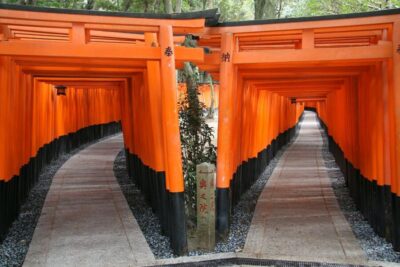
Fushimi Inari, Kinkakuji, Bamboo Grove 1 Day Bus Tour
Read our review →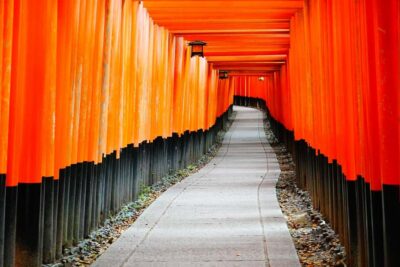
Osaka/Kyoto:Kinkakuji,Arashiyama,FushimiInariShrine,NaraPark
Read our review →
Kyoto/Osaka: Nara, Fushimi Inari Taisha, Arashiyama Bus Tour
Read our review →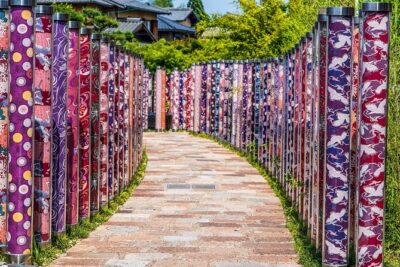
Kyoto Arashiyama Walking Tour: Bamboo, Monkeys, Gardens & Secrets
Read our review →
Arashiyama Bamboo, Temple, Monkeys, or Secret Sake Brewery
Read our review →
Arashiyama Bamboo Forest, Monkeys, Matcha & Temple Tour
Read our review →
Osaka/Kyoto: Arashiyama, Nara & Fushimi Inari Shrine w/Lunch
Read our review →
Nijo, Kinkaku-ji, Arashiyama, Kiyomizu & Fushimi Inari
Read our review →Browse the lists this tour appears in