
Reviewed · NARA TOURS
Nara 6hr Private Tour with Government-Licensed Guide
Nara’s great strength is that it lets you connect Japan’s early capital, Buddhist temples, Shinto shrines, and free-roaming deer in one long day. With a private guide, you choose three or four places instead of following a fixed route, and guides such as Junichi, Ken, Rie, and Toshi have tailored days to suit families, history fans, and first-time visitors.
I like the one-to-one flexibility and the chance to ask real questions about Buddhism, Shinto, architecture, and daily life. I also like the local touches: a noodle shop, sake tasting, a merchant house, mochi, or a sword collection can be added when time and interest allow.
The main caution is physical. This is a walking tour, not a sightseeing ride, and six hours can include hills, stairs, buses, and long transfers if you choose distant places such as Horyu-ji or Yakushiji. Entry fees, transport, lunch, and personal costs are extra.
Key points for planning your Nara day
- Choose three or four sights: Build your day around major temples, quiet gardens, old neighborhoods, museums, or the former imperial palace.
- Meet at Nara Station: The tour begins on foot within the designated Nara area, with no private vehicle included.
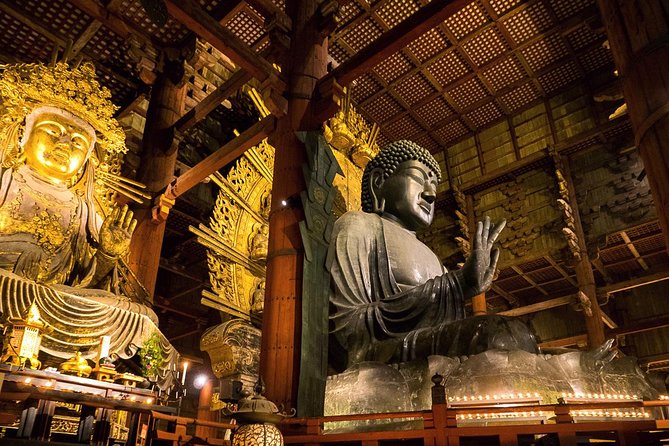
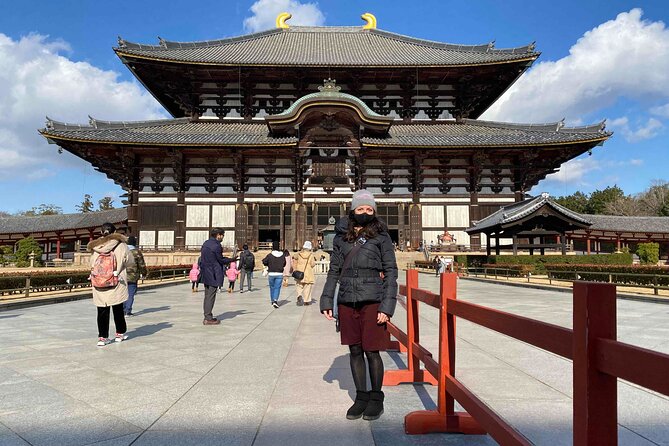
- Todai-ji is the essential anchor: Its enormous wooden temple and Giant Buddha give the day its strongest first impression.
- Your guide shapes the experience: Guides have helped with train directions, restaurant choices, cultural questions, and adjustments for children and teenagers.
- Expect real walking: Wakakusayama Hill, shrine paths, temple grounds, and connections between sites require stamina.
- Pay extra for admissions and transport: The tour price covers the guide, but not your tickets, meals, buses, trains, or other personal spending.
Why a private guide works so well in Nara
Nara can look simple on a map. Nara Park, Todai-ji, Kasuga Taisha, and Kofuku-ji sit close together, and you can reach the city by train from Kyoto or Osaka. Yet the meaning of what you see is layered. A temple may contain both Buddhist and Shinto influences. A deer may be more than a cute photo subject. A garden may use a distant temple gate or mountain as part of its design.
A private guide gives you room to stop and ask why. You can spend more time on ancient religion, Japanese architecture, family-friendly deer etiquette, or the political story of Nara as Japan’s 8th-century capital. If your group has mixed interests, this matters. One family used the day to combine major sights with mochi, a katana collection, and a historic merchant house, while another group focused on four major sites and the links between Japanese and Chinese history.
This is also useful for first-time visitors to Japan. Junichi has helped guests before the tour with practical questions about Suica cards, taxi apps, and exchanging cash. Ken has prepared a handout explaining where Nara fits into Japanese history. Those details do not replace your own trip planning, but they can make the day easier and give the sights a clear order.
The private format means only your group participates. That is especially helpful for families, older relatives, or anyone who wants to move at a personal pace. It also means the quality of your day depends partly on how clearly you tell the guide what matters to you. Share your preferred walking pace, must-see sites, food interests, and tolerance for hills before you arrive.
More licensed-guide days in Nara:
- Tokyo 6hr Private Tour with Government-Licensed Guide
★ 5.0 · 3,902 reviews - Tokyo 4hr Private Tour with Government-Licensed Guide
★ 5.0 · 1,394 reviews - Kyoto 6hr Private Tour with Government-Licensed Guide
★ 5.0 · 1,369 reviews
Todai-ji and Nara Park: the classic half-day core
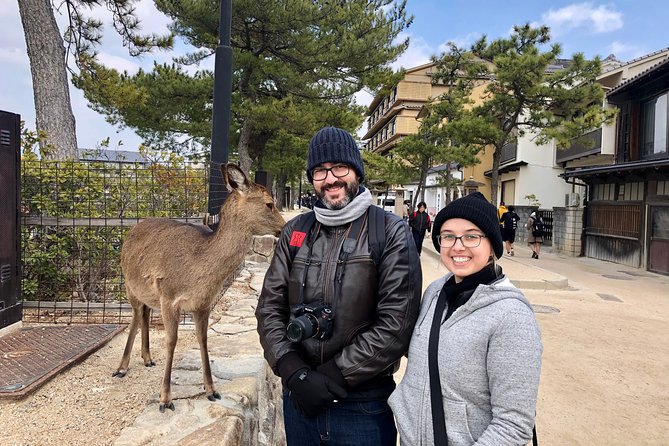
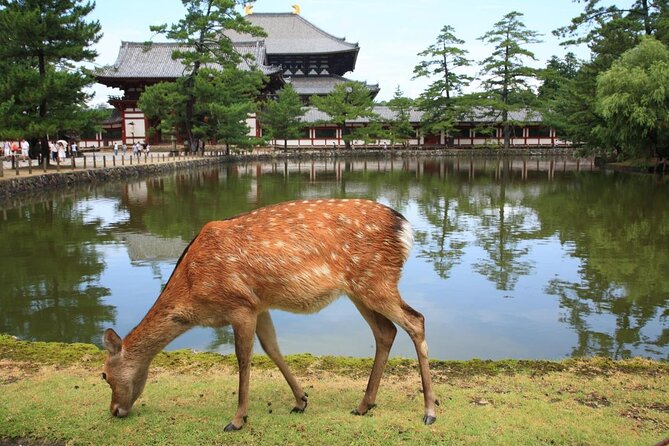
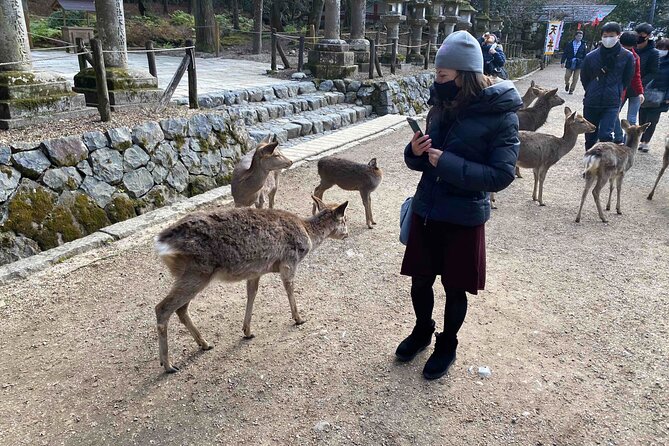
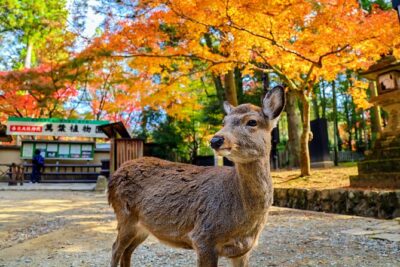
For most first visits, I would make Todai-ji and Nara Park the foundation of the tour. Nara Park is free to enter and spreads across the center of town, linking several major sights. Deer roam through the grounds and around the temple approaches, creating one of Japan’s most unusual city experiences.
The deer are accustomed to people, but do not treat them like tame pets. One family enjoyed teaching a child how to make a deer bow, while another visitor found some deer aggressive. Keep food moving, follow local signs, and give the animals space when they become pushy.
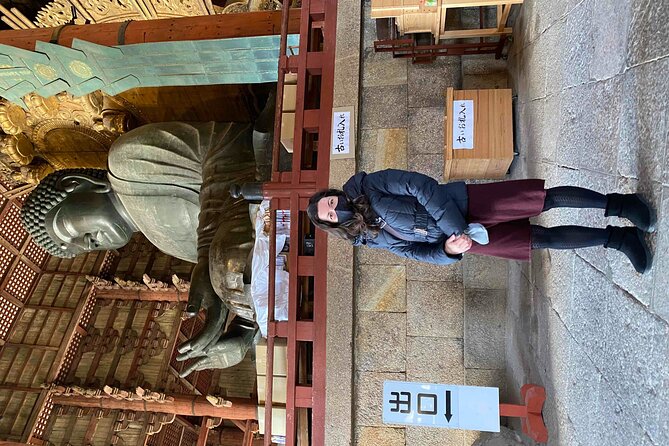
Todai-ji was built in 752 as the head temple for provincial temples across Japan. Its Great Buddha Hall houses the famous bronze Buddha, and the scale is the point: the building, statue, and broad approach make ancient Nara feel much bigger than a quick stop in a park. Allow time to look up, not just walk through.
The supplied schedule gives each listed stop a short block, but that should not be read as a promise of thirty minutes of full explanation at every place. Your exact timing depends on the four sites chosen, crowds, walking speed, and transport. Todai-ji charges admission, and your ticket is extra.
Nara Park itself is not just a green break between temples. It is the setting for Todai-ji, Kasuga Taisha, Kofuku-ji, and the Nara National Museum. A good guide can connect those places instead of presenting them as unrelated photo stops.
Kasuga Taisha and Wakakusayama Hill
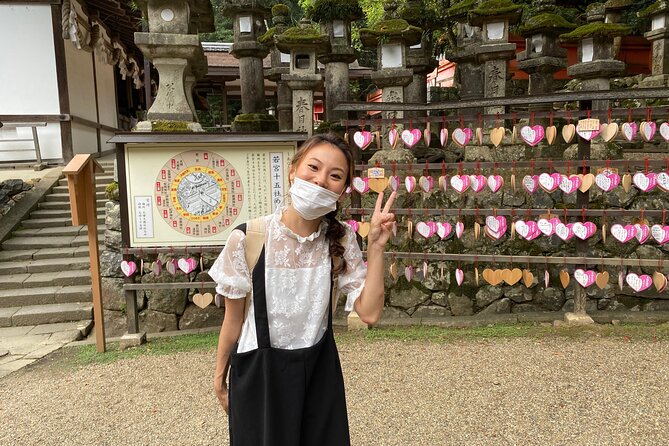
Kasuga Taisha is Nara’s most celebrated Shinto shrine. It was established when the capital was founded and is dedicated to the deity linked with the city’s protection. Its approach through the wooded park gives you a different mood from Todai-ji’s monumental Buddhist architecture.
The shrine is a good choice if you want to understand how Shinto relates to nature, sacred animals, ritual, and place. Ken has used the shrine to explain Shinto’s live and let live approach to nature, while other guides have compared Shinto practices with Buddhism during the day.
Wakakusayama Hill offers a physical change of pace. The grass-covered mountain rises behind Nara Park and provides broad views over Nara. The hill is about 350 meters high, so do not add it casually if your group has already spent hours on temple paths. One participant specifically advised getting ready to climb, while another family tackled part of the hill in hot weather.
You should ask in advance how much of the hill is planned. A short visit near the base is different from a serious climb, and the day’s comfort depends on making that distinction clear.
Kofuku-ji, Isuien, and Yoshikien: smaller stops with plenty of character
Kofuku-ji was the family temple of the Fujiwara clan, a powerful aristocratic family during the Nara and Heian periods. Its location near Nara Park makes it easy to pair with Todai-ji or Kasuga Taisha. Admission is extra for the paid areas.
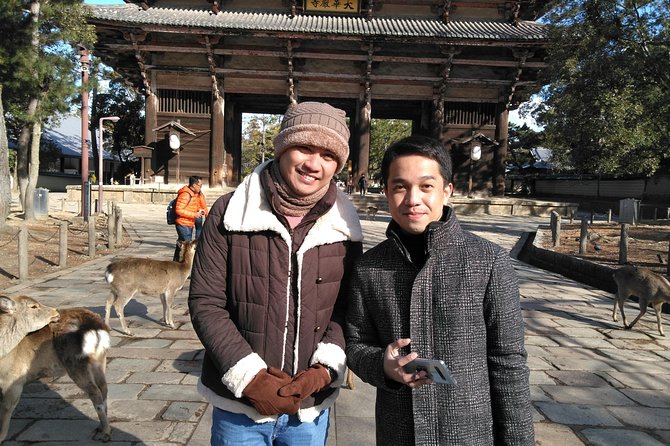
If you prefer gardens to grand halls, Isuien is one of the best choices on the menu. The garden uses borrowed scenery, including Todai-ji’s Nandaimon Gate and Mount Wakakusayama. In plain terms, the garden’s view is designed to include features beyond its own walls. It is a place to slow down and notice water, paths, borrowed views, and quiet spaces.
One guide recalled a guest quietly listening to the stream at Isuien. That is a useful clue about the garden’s appeal. It rewards patience more than speed. If you want a calm break after the crowds and deer, ask for Isuien rather than adding another large temple.
Yoshikien is another pleasant garden beside the Yoshikigawa River. It occupies the site of a former Kofuku-ji priest’s residence and offers a compact garden visit. The schedule allows only fifteen minutes for Yoshikien and Isuien, so ask whether that time is enough for your interests. Garden lovers may prefer fewer total sites and longer visits.
A few more Nara half-days to weigh up
- World Heritage Kyoto & Nara Uji Authentic Matcha Experience
★ 5.0 · 1,573 reviews - Nara Half Day Trip Walking Tour (Private Option Available)
★ 5.0 · 937 reviews - Nara Early Morning Tour (Kyoto or Osaka Departure Available)
★ 5.0 · 676 reviews - Osaka: Nara and Uji Day Trip with Deer Park and Hot Spring
★ 4.4 · 302 reviews
Naramachi and the everyday side of old Nara
Naramachi is Nara’s former merchant district. Traditional homes, storehouses, small shops, cafés, and preserved buildings give you a look at town life beyond imperial and religious monuments.
This is a smart choice for a repeat visitor or anyone who wants variety. After temples and shrines, old lanes and merchant buildings show how people lived and worked. The area also leaves room for food and shopping, though lunch is not included.
Several guides have added local experiences in this part of town, including a historic house, a small sake tasting bar, and a mochi shop. Junichi has taken groups to freshly pounded mochi, and one family missed the famous pounding scene but still enjoyed the warm, freshly made treat. These additions depend on the day, opening hours, and your chosen route, so treat them as possible extras rather than guaranteed stops.
Naramachi also suits groups with different energy levels. Someone interested in architecture can examine the houses, while others can browse shops or pause at a café. Still, you need to tell the guide if you want shopping and food time. A guide trying to fit too many formal sights into six hours may not leave enough time for casual stops.
Horyu-ji: the best choice for serious history fans
Horyu-ji is outside the central Nara Park cluster, so choosing it changes the shape of your day. It was founded in 607 by Prince Shotoku and contains some of the world’s oldest surviving wooden structures. For anyone interested in early Buddhism, ancient construction, or Japan’s ties with continental Asia, this may be the day’s most important stop.
Ken has planned visits to Horyu-ji, Toshodai-ji, the Nara Palace Site Historical Park, and Todai-ji, using trains, buses, and walking connections with careful timing. That kind of planning is where a private guide earns much of the fee. Reaching distant sites on your own is possible, but combining them without wasting time takes more work.
The tradeoff is clear: Horyu-ji means less time for Nara Park, Naramachi, or gardens. Admission is extra, and transportation costs are also yours. I would choose Horyu-ji when ancient history is your priority, not simply because it is another famous name.
Yakushiji, Shin-Yakushiji, and Toshodai-ji
Yakushiji was built by Emperor Tenmu in the late 7th century for the recovery of his ill wife. Its strict symmetry gives it a different visual character from the irregular paths and wooded approaches around Nara Park. The main hall and temple layout are the focus, and admission is extra.
Shin-Yakushiji was founded during the Nara Period for an ailing emperor and is devoted to Yakushi Buddha, the Buddhist patron of medicine. It can appeal to you if you want a smaller religious site with a direct connection to healing and devotion.
Toshodai-ji was founded in 759 by Ganjin, a Chinese priest invited to Japan to train priests and improve Japanese Buddhism. Its story helps explain how much Japan learned from China during the Nara Period. It is another outlying choice, so it works best in a history-focused plan rather than alongside every central Nara sight.
These three temples are not filler stops. They help you see Nara as a center of religious learning and international exchange. But with only six hours, choose one or two at most unless your group is comfortable with a tight schedule.
Nara National Museum and the Heijo Palace Site
The Nara National Museum, founded in 1889, focuses mainly on Japanese Buddhist art. It is a good choice for you if temple buildings leave you wanting to see sculpture, ritual objects, and works displayed indoors. Admission is extra, and a museum visit may need more than the short time assigned in the standard outline.
The Heijo Palace Site Historical Park explains Nara’s role as Heijo-kyo, Japan’s capital for most of the Nara Period from 710 to 794. The palace once covered roughly one kilometer by one kilometer. The site gives you political context, showing that Nara was not simply a collection of temples. It was the center of government.
The planned time here is fifteen minutes, which makes it more of a quick orientation stop than a full archaeological visit. Choose it if you want the capital-city story, but ask how much time you will have and what part of the grounds you will see.
Guides, communication, and the value of local knowledge
The tour uses government-licensed local English-speaking guides, and the named guides in the feedback include Junichi, Ken, Rie, Toshi, Yoshii Kenichi, Hiro, Haru, and Nori. You cannot normally choose a specific guide unless the provider confirms it, but the repeated strengths associated with these guides are useful clues about the service: strong English, historical explanation, flexibility, humor, and help with practical details.
Junichi is a former English professor and teacher, and several families valued his ability to explain history and culture in clear English. Ken has linked Nara’s story to events outside Japan and prepared written material for one group. Toshi has been praised for patient answers and for helping groups find their way through crowded paths.
That does not mean every guide will suit every pace. One dissatisfied couple felt hurried, spent less time than expected at some sites, and found a long final walk tiring. The guide also added places that had not been clearly agreed upon. The lesson is simple: confirm the order, walking distance, optional stops, and lunch plan at the start of the day.
Price, group size, and what you really pay for
The listed price is $155.86 per person. For one or two people, that is a serious cost compared with walking through Nara independently. For a larger private group, the per-person value improves, especially if you want a tailored route and help with transport.
Your payment covers the licensed guide and a customized visit to three or four places. It does not cover a private vehicle, train or bus fares, entrance tickets, lunch, or personal purchases. You should budget for those separately.
The strongest value comes when you use the guide’s time well. Ask questions. Request a route that fits your interests. If you care about ancient history, select Horyu-ji or Toshodai-ji. If you want a relaxed day, focus on Todai-ji, Nara Park, Kasuga Taisha, and one garden. If food and local life matter, reserve time for Naramachi.
The tour has free cancellation up to 24 hours before the start time. Changes or cancellations inside that window are not accepted for a refund.
Who should book this Nara experience
I would recommend it to a family that wants help with deer, temples, food, and pacing. It also suits history fans who want someone to connect Nara’s early capital period with Buddhism, Shinto, China, and the development of Japan.
It is a good match for a group of friends with different priorities because the route can include major sights and personal interests. A teenager might prefer a sword collection or mochi stop, while parents focus on Todai-ji or shrine traditions.
Independent visitors who are comfortable with trains, buses, maps, and temple etiquette may find the price hard to justify. You can visit the central sights on your own. The guide becomes more valuable when you want Horyu-ji and other distant temples in one day, need clear English explanations, or want the route adjusted around your group.
Should you book it?
Book this tour if you want Nara explained, not simply photographed. Tell the guide your priorities before the day begins, and choose three or four sites rather than trying to collect every famous name.
Skip it if you prefer a slow, self-guided day or dislike paying extra for transport and admission. For most first-time visitors who want a focused introduction to Japan’s ancient capital, the private format is worth considering, especially when you choose a thoughtful mix of Todai-ji, deer-filled Nara Park, one shrine, and either Naramachi or a garden.
FAQ
How long does the Nara private tour last?
The tour lasts approximately six hours.
Where do I meet the guide?
You meet the guide at Nara Station or on foot within the designated area of Nara. This is a walking tour and does not include a private vehicle.
How many sights can I choose?
You can customize the day by choosing three or four sites from the provided selection of Nara attractions.
Are entrance tickets included?
No. Entrance fees are not included for you. Transportation, lunch, and other personal expenses are also separate.
Is transportation included?
No. The tour does not include transportation fees or a private vehicle. You may need to pay for trains or buses if your selected sites are outside the central walking area.
Is this a private group tour?
Yes. Only your group participates, and multiple tour groups cannot be combined.
Can I cancel for a refund?
You can cancel up to 24 hours before the experience start time for a full refund. Cancellations or changes made less than 24 hours before the start time are not accepted for a refund.
Just added around Nara
- Hammer a Pattern on Your Ring Workshop★ 5.0 · 57 reviews
- All must-sees in 3 hours – Nara Park Classic Tour! From JR Nara!★ 5.0 · 108 reviews
- Private Nara Tour and Sake Tasting (Departing from Kyoto/Nara)★ 5.0 · 40 reviews
- Nara World Heritage PRIVATE TOUR★ 4.5 · 15 reviews
- Nara Sake Tasting Tour at Local Brewerie(tasting fee included)★ 5.0 · 12 reviews
- Nara Private Tour: Flexible Pickup from Kyoto, Osaka, or Nara★ 5.0 · 17 reviews
- Nara – Heart of Nature Cross Bike Tour★ 5.0 · 19 reviews
- Nara Highlight Walking Tour with Furoshiki Experience with Lunch★ 5.0 · 73 reviews
Nara Tours, compared.
World Heritage Kyoto & Nara Uji Authentic Matcha Experience
Read our review →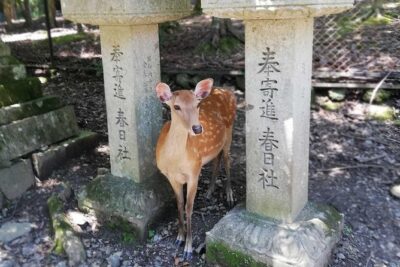
Nara Half Day Trip Walking Tour (Private Option Available)
Read our review →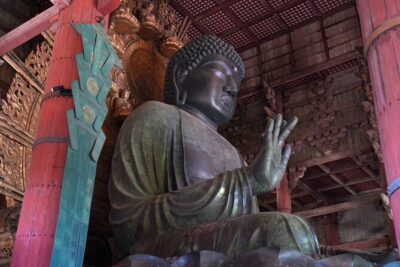
Nara Early Morning Tour (Kyoto or Osaka Departure Available)
Read our review →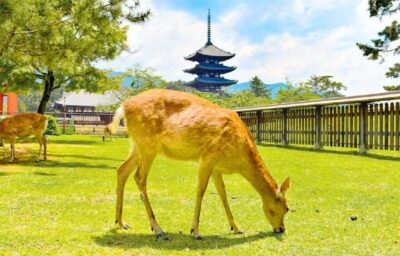
Nara and Uji Day Trip with Deer Park and Hot Spring
Read our review →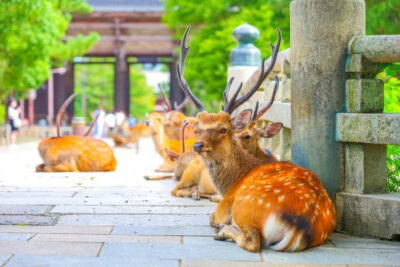
Kyoto/Osaka: Kinkakuji, Bamboo Forest, and Nara Deer Park
Read our review →
E-Bike Nara Highlights – Todaiji, Knives, Deer, Shrine
Read our review →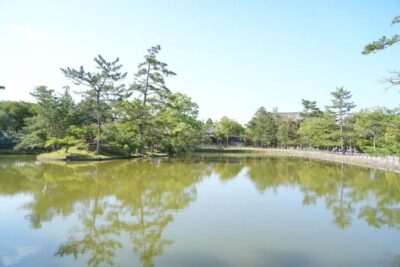
Nara Early Bird Tour (Kyoto Departure Option Available)
Read our review →
Nara:Authentic Tea Ceremony(Max 5 ppl) -Master Matcha Making
Read our review →Browse the lists this tour appears in