

Reviewed · NARA TOURS
E-Bike Nara Highlights – Todaiji, Knives, Deer, Shrine
Nara’s famous sights spread across a large park, and this tour’s best idea is simple: use an e-bike to cover the ground without spending the day on foot. In about three and a half hours, you see deer, Todaiji Temple, Kasuga Taisha Shrine, Ukimido, and a respected Japanese knife shop.
I like the efficient route and the mix of major sights with a practical local stop. I also like that guides such as Chris, Remi, Robert, and Melody add context, take photos at times, and help with knife purchases. The main consideration is pace: the cycling can be fairly brisk, and one report noted bikes that needed better maintenance and were not ideal for taller riders.
Key points at a glance
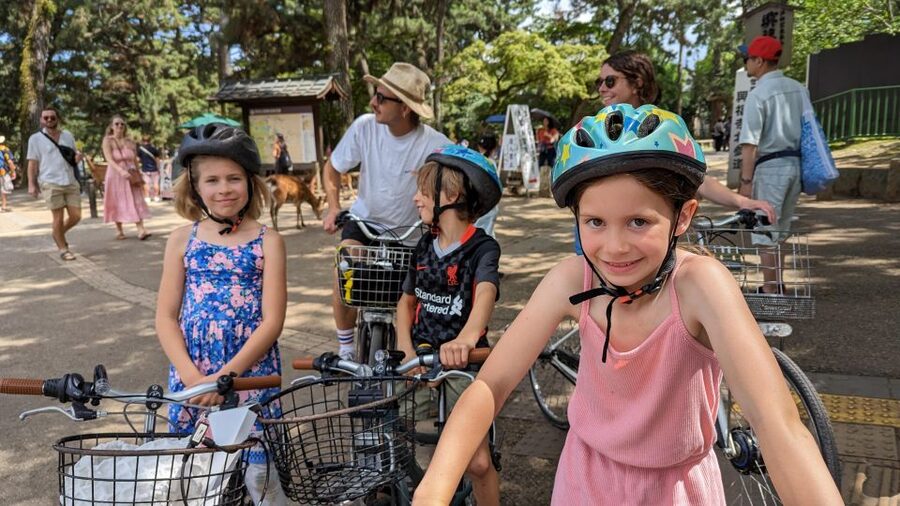
- Cover Nara Park by e-bike: Reach sights that would take much longer to connect on foot.
- See Todaiji and Nandaimon Gate: Temple admission and guided sightseeing at the grand entrance are included.
- Feed deer the Nara way: Deer crackers are provided, with guidance on how to handle the animals.
- Visit a historic knife shop: Kikuichimonjushirokanenaga offers an introduction to Japanese cutlery and shopping help.
- Explore Kasuga Taisha: Walk among the shrine’s famous lanterns and wooded paths.
- Finish at Ukimido: Pause by this picturesque pavilion for a quieter view within the park.
Why an e-bike makes sense in Nara
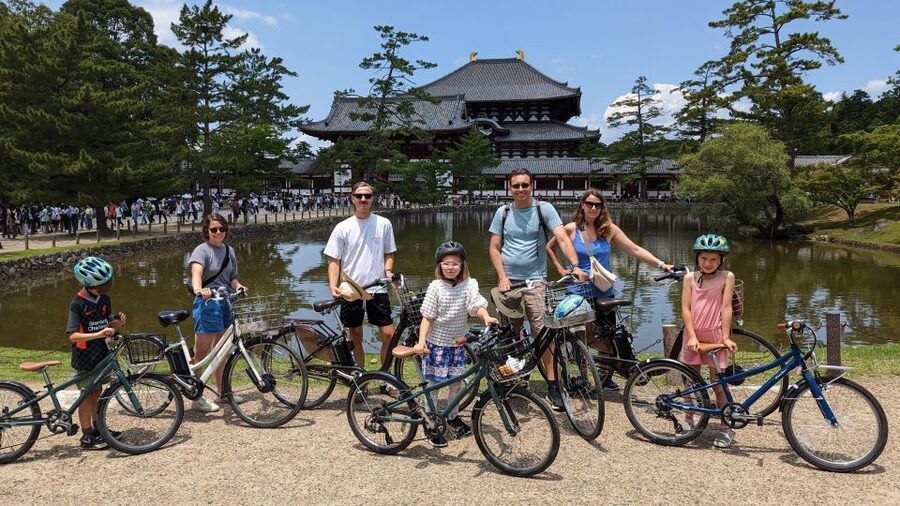
Nara Park is easy to underestimate. On a map, Todaiji, Kasuga Taisha, Mt. Wakakusa, and Ukimido may look close together. In practice, the park covers enough ground that walking between every stop can eat up much of your day, especially in summer heat or after several days of temple visits.
The electric assistance takes the strain out of the longer stretches and helps on the inclines near Mt. Wakakusa and Kasuga Taisha. You still pedal, but you are not using all your energy simply to move from one famous place to the next.
The tour lasts 210 minutes, or three and a half hours. That is a useful length for a short stay in Nara, particularly if you arrive from Kyoto or Osaka and want to see a lot before continuing. You will not have unlimited time at every temple, but the route gives you an organized look at the main sights without requiring a full day.
This is not a slow bicycle outing. The cycling sections generally move at a forward pace. You should be comfortable riding a bike, paying attention around other people, and following the guide through the park. Bicycle insurance is not included, so the operator asks you to book only if you can ride properly.
More bike days around Nara:
- Nara – Highlights Bike Tour
★ 4.5 · 89 reviews - Nara: Bike Tour in Ancient Capital UNESCO World Heritage
★ 5.0 · 43 reviews - E-Bike Nara Highlights – Todaiji, Knives, Deer, Shrine, and Gems
★ 4.5 · 34 reviews
Starting near Kintetsu Nara Station
The meeting point is at 16-1 Takamaichicho, in front of Building LIFE 21, only a few minutes from Kintetsu Nara Station. This is an important detail because the meeting point is not at JR Nara Station.
Arrive 15 minutes early. Look for the guide in a navy cap and red polo shirt with the JTA uniform. The short walk from Kintetsu Station makes this a convenient choice if you are already staying near the station or arriving by the Kintetsu railway.
The guide provides the e-bike and can provide a helmet if one is available and you request it. The bikes have generally been praised for being easy and enjoyable to ride, though you should check your fit before leaving the base, especially if you are tall.
Families can ask for a child seat for a rider under 10. The operator can provide one child seat per e-bike. The information supplied does not promise other child equipment, so ask ahead if your family needs more than that.
Deer, open park, and the Nandaimon Gate
The first major stretch takes you through Nara Park. The ride itself is part of the sightseeing, with deer appearing around the paths and open spaces. The guide supplies deer crackers, known locally as shika senbei, so you can feed the animals in the customary way.
Your guide explains how to do this safely and politely. Deer can be eager once they see the crackers, so keep the feeding controlled and follow instructions. Extra crackers cost extra, as do additional food and drinks.
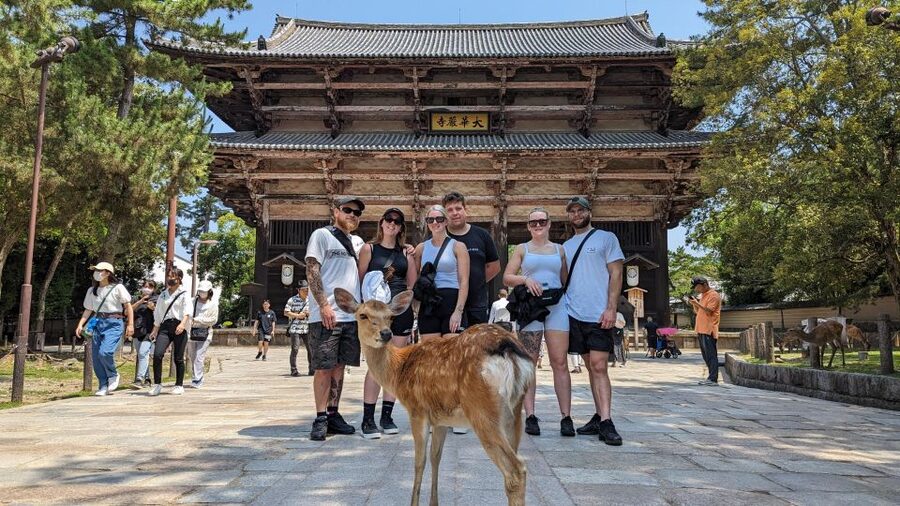
The route then reaches Nandaimon, the huge entrance gate to Todaiji. This is more than a quick photo stop. The gate gives you a sense of the scale of the temple complex before you enter, and the large wooden guardians inside make it one of the most memorable approaches in Nara.
You have about 20 minutes here for guided sightseeing, photographs, walking, and deer viewing. That is enough to appreciate the gate and hear its setting explained, though people who love architectural detail may wish the stop were longer.
Todaiji and the Great Buddha
Todaiji receives about 45 minutes. Temple admission is included, which makes the $90 price easier to assess. You have time for the main hall, photographs, free exploration, and a little shopping around the temple grounds.
Todaiji is the tour’s central cultural stop. Its scale can be difficult to grasp from photographs, and arriving through Nandaimon gives the visit a stronger sense of progression. The guide leads you to the temple area, but the temple portion is described as partly self-guided, so do not expect a continuous lecture inside.
That arrangement suits many people. You receive useful background, then have freedom to look at the building and objects at your own pace. If your priority is a long, detailed temple lesson, this format may feel brief. If you want to see the essential parts and keep moving, 45 minutes works well.
The tour also allows some shopping time here. Keep your schedule in mind if you want a careful look at temple souvenirs, since the route still has several stops ahead.
More e-bike rides in Nara:
- Hidden Kyoto E-Biking tour
★ 5.0 · 1,843 reviews - Tokyo Top Highlights 3h Guided E-bike Tour
★ 5.0 · 714 reviews - 3h Tokyo E-Bike Tour: Hidden Gems, and Local Life with guide
★ 5.0 · 670 reviews - 5 Top Highlights of Kyoto Full Day Bike Tour (E-bike option)
★ 5.0 · 511 reviews
Mt. Wakakusa and the value of electric assistance

After Todaiji, the bikes pass Mt. Wakakusa for around 15 minutes. This is not a mountain hike or a long summit visit. It is a scenic cycling section, with time to see the area and observe deer.
This is one place where the e-bike earns its keep. The electric motor helps you handle the park’s gentle rises without arriving at the next stop overheated. Several riders in their 60s or out of shape have found the bikes manageable, but you still need basic cycling control.
The park can feel quite different depending on season and weather. Summer reports describe hot conditions, when riding is much more pleasant than walking all day. Rain and cold do not stop the tour automatically, so bring comfortable clothes and shoes suited to the forecast.
Japanese knives at Kikuichimonjushirokanenaga
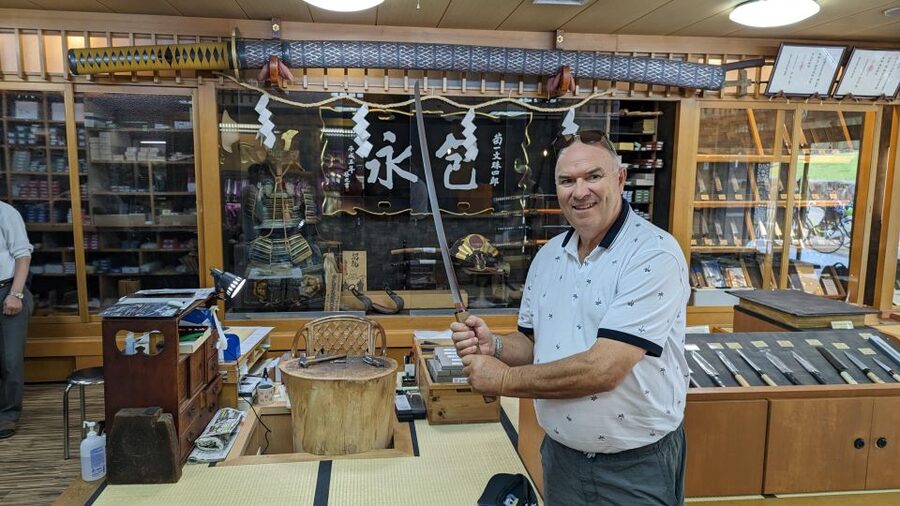
The knife stop adds something different to a standard Nara sightseeing route. At Kikuichimonjushirokanenaga, you have about 30 minutes for a break, local snacks, crafts, and an introduction to Japanese cutlery.
The shop is connected with a family tradition of sword making, and the guide explains how that background relates to Japanese blades and kitchen knives. This is not just a retail interruption. It gives you a look at a working craft tradition and helps explain why Japanese knives attract so much attention.
You can ask for shopping assistance, which is useful if you are unsure about blade types, sharpening, care, or choosing a gift. Guides have been especially helpful here, and the relationship between the tour company and the shop appears to make the visit more personal.
You do not need to buy anything. Still, bring cash because it is listed among the recommended items, and set a budget before you enter. A knife can be a useful souvenir, but it may also create packing and airline questions. Ask the shop about suitable packaging and transport before paying.
A Japanese snack called Kanoko is included for each person. Extra food and drinks are not included, so plan accordingly.
Kasuga Taisha and its lanterns
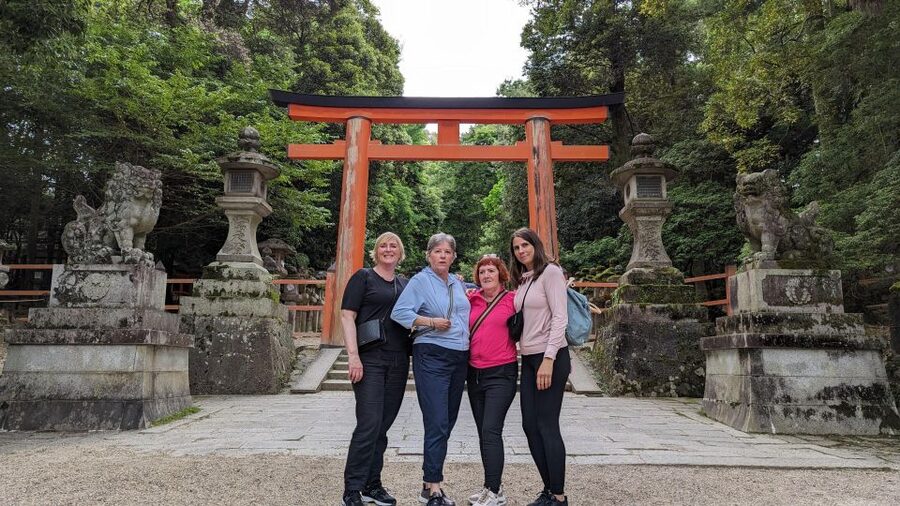
The route continues to Kasuga Taisha, one of Nara’s most atmospheric sites. You have about 30 minutes for photographs, walking, sightseeing, and deer viewing.
The shrine is known for its many stone and bronze lanterns. The guide can place the shrine within the wider story of Shinto practice and explain what you are seeing, while you still have time to walk and look rather than simply follow a lecture.
The cycling route helps here because the shrine sits farther into the park than some first-time visitors expect. Once you park, you walk through the shrine area. Comfortable shoes matter, especially if you want to explore beyond the closest photo point.
Guides have different strengths. Robert is often praised for explaining Shinto, Buddhism, Zen, gardens, and Japanese culture in clear terms. Remi is noted for broad cultural context, while Melody and Elodie have been described as patient and attentive. The exact guide is not guaranteed, but the available tour languages are English and French.
If you specifically need French, contact the operator in advance. A French-speaking guide may not be available on a shared tour with mixed nationalities, where English becomes the main language.
Ukimido and the return through Nara Park
The return section is not merely a ride back to the station. The group passes through Nara Park again and stops at Ukimido for about 15 minutes.
Ukimido is a small pavilion set beside the water, offering a calmer pause after the busier temple and shrine areas. It gives you time for photographs and a change of mood before the final cycling sections.
The remaining route includes another 10-minute pass through the park and a 20-minute bike tour through scenic sections. The tour returns to the same base at 16-1 Takamaichicho.
The exact finish may run slightly longer in some situations. One account described a rainy outing that continued past the planned time, with the group happy to continue. Do not schedule a tight train connection immediately afterward.
Guide quality and group feel
The guide is a major part of the value here. The strongest pattern is a mix of local orientation, Japanese cultural explanation, safety awareness, and flexibility.
Chris has been described as friendly and patient, while Remi is particularly good at connecting Nara’s sights with wider Japanese culture. Robert brings detailed explanations and often helps with questions throughout the day. Melody and Elodie have also been praised for being warm, helpful, and adaptable.
The tour is available as a private or small-group experience. A single person can book, but the operator requires at least two participants for the session to go ahead. If that minimum is not reached, the tour may be cancelled, with rescheduling or a full refund offered.
Small groups make it easier to hear the guide and get help at the knife shop. A private tour gives you more room to shape the pace around your interests, but the price may feel high if you are comparing it with simply renting a bicycle.
Is $90 a fair price?
At $90 per person, this is not the cheapest way to see Nara. The value depends on how much structure and help you want.
The price includes the e-bike, Todaiji admission, deer crackers, a bilingual local guide, the Kanoko snack, and shopping help for knives or souvenirs. You are also paying for route planning, safe navigation, and the ability to connect sights that would be spread across a long walking day.
I think the price is fair for a first visit when your time is limited, especially in hot weather or if you want cultural explanations rather than just transport. It is less compelling for confident cyclists who already know Nara Park and are happy to arrange their own bike rental.
One person considered the tour somewhat expensive compared with similar outings, while another called it good value. Both views make sense. The tour’s value rises when you use the guide actively, ask questions, and want help choosing a knife. It falls if you mainly want a short ride and quick photographs.
Who should book this Nara e-bike tour?
I would choose this experience if you want to see Nara’s main sights in one compact outing, dislike spending hours walking, or are visiting on a tight schedule. It also suits families with older children, couples, first-time visitors, and anyone curious about Japanese knives.
The tour can work well for older riders because the e-bike reduces effort, but it is not suitable for someone who cannot ride confidently. It may not suit you if you want a very slow, quiet bicycle trip, long temple visits, or complete control over every stop.
Book with extra time around the tour, wear comfortable shoes, bring cash and your passport, and request a helmet if you want one. Free cancellation is available up to 24 hours before departure, and you can reserve now and pay later.
My verdict
I recommend this tour for a first Nara visit when you want more than the deer and need to make good use of three and a half hours. The route brings together Todaiji, Kasuga Taisha, Mt. Wakakusa, Ukimido, and a worthwhile knife stop, while the electric assistance keeps the day practical.
Book it if you value a guide, cultural background, and a ready-made route. Skip it if $90 feels high for organized sightseeing or if you prefer wandering at your own pace. For most short stays, the e-bike format gives you a useful amount of Nara without turning the day into a foot race.
FAQ
Where does the tour meet?
Meet at 16-1 Takamaichicho, in front of Building LIFE 21, at the bicycle base. It is less than a five-minute walk from Kintetsu Nara Station, not JR Nara Station.
How early should I arrive?
Arrive 15 minutes before departure to avoid delaying the tour.
How long does the experience last?
The tour lasts 210 minutes, or three and a half hours. Starting times vary, so check availability when booking.
What languages are available?
The listed tour languages are English and French. French cannot be guaranteed on shared tours, so contact the operator ahead of time if you need a French-speaking guide.
Is the tour private?
Private and small-group options are available.
Can one person book?
A single person can book directly, but at least two participants are required for the session to go ahead. If it is cancelled for this reason, rescheduling or a full refund is offered.
Are the e-bikes included?
Yes. E-bike rental is included in the tour price.
Is a helmet provided?
A helmet can be provided if requested, subject to availability.
Can children under 10 join?
Child seats can be provided for young riders under 10, with a maximum of one child seat per e-bike.
What is included at the knife shop?
The tour includes an introduction to Japanese cutlery and its history, plus shopping assistance for a knife or souvenir if you want help. Any purchase is extra.
Just added around Nara
- All must-sees in 3 hours – Nara Park Classic Tour! From JR Nara!★ 5.0 · 108 reviews
- Private Nara Tour and Sake Tasting (Departing from Kyoto/Nara)★ 5.0 · 40 reviews
- Hammer a Pattern on Your Ring Workshop★ 5.0 · 57 reviews
- Nara World Heritage PRIVATE TOUR★ 4.5 · 15 reviews
- Nara Sake Tasting Tour at Local Brewerie(tasting fee included)★ 5.0 · 12 reviews
- Nara Private Tour: Flexible Pickup from Kyoto, Osaka, or Nara★ 5.0 · 17 reviews
- Nara – Heart of Nature Cross Bike Tour★ 5.0 · 19 reviews
- Nara Highlight Walking Tour with Furoshiki Experience with Lunch★ 5.0 · 73 reviews
Nara Tours, compared.
World Heritage Kyoto & Nara Uji Authentic Matcha Experience
Read our review →
Nara Half Day Trip Walking Tour (Private Option Available)
Read our review →
Nara Early Morning Tour (Kyoto or Osaka Departure Available)
Read our review →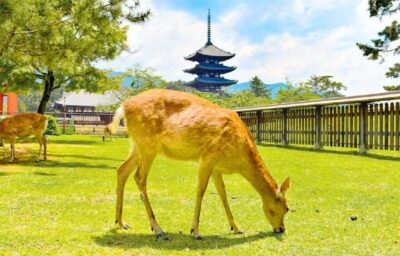
Nara and Uji Day Trip with Deer Park and Hot Spring
Read our review →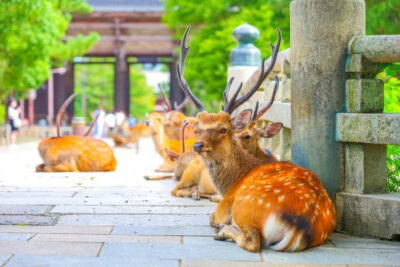
Kyoto/Osaka: Kinkakuji, Bamboo Forest, and Nara Deer Park
Read our review →
Nara 6hr Private Tour with Government-Licensed Guide
Read our review →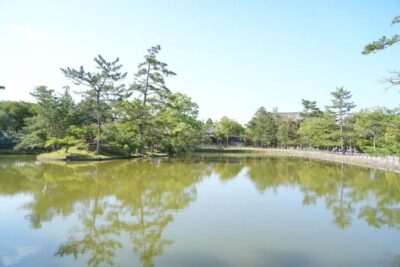
Nara Early Bird Tour (Kyoto Departure Option Available)
Read our review →
Nara:Authentic Tea Ceremony(Max 5 ppl) -Master Matcha Making
Read our review →Browse the lists this tour appears in