
Reviewed · TOKYO TOURS
3h Tokyo E-Bike Tour: Hidden Gems, and Local Life with guide
Tokyo reveals itself best at street level, and this three-hour e-bike ride lets you cover far more ground than you could on foot. You may pass from Kanda’s tiny drinking alleys to Tokyo Station, the Imperial Palace moat, Ginza back streets, or Asakusa’s temple district in one outing.
I like the small groups of no more than six and the help of guides such as Yo, Jenny, Take, Ted, Kazu, Yoshiko, and Ninja. I also like the electric bikes, which make Tokyo’s distance and summer heat much easier to manage. The main thing to consider is that you must be comfortable riding on busy city streets and keeping up with the group.
Key points to know before you ride
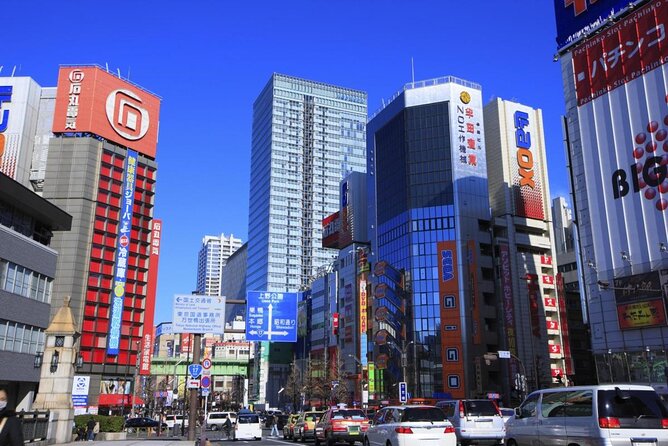
- Two different routes: Morning rides focus on Tokyo Station, the Imperial Palace, Ginza, and Tsukiji. Afternoon rides head toward Akihabara, Kappabashi, Asakusa, Ryogoku, and Nihonbashi.
- A useful first-day activity: The ride gives you a broad sense of Tokyo, helping you decide where to return later by train or on foot.
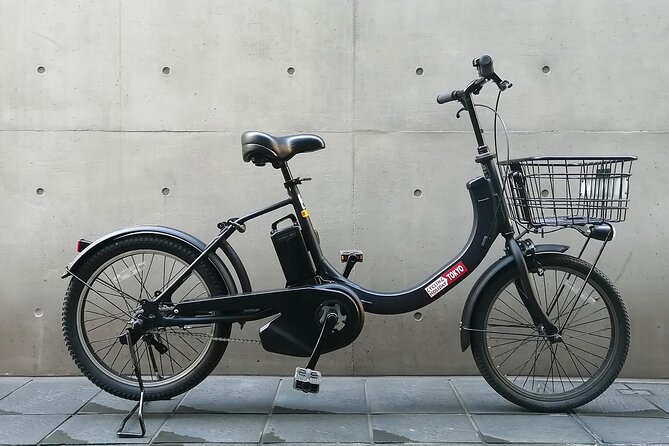
- Easy electric assistance: The e-bikes are simple to operate and include a front basket for water or a small bag.
- Local streets matter: The route includes narrow neighborhood roads and passages that offer a look at ordinary Tokyo life, not just famous monuments.
- A firm riding requirement: You need to know how to ride a bicycle, be at least 147 centimeters tall, and be 12 or older.
- Weather can change plans: Rain or dangerous summer heat may lead to cancellation or an early return.
Why an e-bike is a smart way to see Tokyo
Tokyo is huge, yet many of its most interesting districts sit within a manageable cycling area. The trouble is that walking between them takes time, while trains often whisk you from one major station to another without showing you what lies in between.
An e-bike fills that gap. You still pedal, but the motor takes the sting out of long stretches and hot weather. This is especially useful in July and August, when the city can be hot and muggy. You can see more without arriving at every stop worn out.
The ride also gives you a guide who handles the route. Tokyo’s streets can be confusing, with major roads, tiny lanes, one-way sections, and heavy pedestrian traffic. Following a local cyclist means you can focus on the surroundings instead of stopping every few minutes to check a map.
The tradeoff is simple: this is not a quiet countryside cycle. You will ride through central Tokyo streets, and traffic conditions vary. One direct piece of advice from the experience is important: stay alert and keep the guide in sight, since it is easy to fall behind at intersections or in crowded areas.
More Hidden Gems Walks in Tokyo
- Tokyo: Custom Hidden Gems & Highlights Tour with Local Guide
★ 4.7 · 272 reviews - Tokyo: 3-hour Guided E-Bike Tour of the City’s Hidden Gems
★ 4.8 · 251 reviews - Private Mt Fuji Tour from Tokyo: Scenic BBQ and Hidden Gems
★ 5.0 · 146 reviews
Starting in Kanda, Tokyo’s practical downtown
The meeting point is Cycling Holiday Tokyo, about a one-minute walk from the west exit of JR Kanda Station. The shop has a restroom, waiting area, and luggage storage for nonvaluable items, which is handy if you are carrying shopping bags or a daypack.
Kanda makes a fitting starting point. It is a compact business district with small Japanese-style bars and narrow streets used by office workers. It lacks the postcard fame of Asakusa, but that is part of its appeal. You begin with a glimpse of the city’s everyday rhythm before moving toward the major sights.
The tour runs in the morning or afternoon, and the route changes with the time of day. Locations can also shift because of road conditions, traffic, pedestrian levels, weekdays, weekends, and the season. That flexibility is meant to keep the ride safe and enjoyable, but you should not expect every listed stop to receive exactly the same amount of time.
Morning route: from Tokyo Station to the Imperial Palace
The morning route moves through Tokyo’s financial and business center toward Tokyo Station. Modern office buildings provide a sharp contrast with older streets, and the broad avenues offer some of the ride’s more photogenic city views.
At Tokyo Station’s Marunouchi side, you stop near Gyoko-dori Street for a view of the station building. The guide explains the station’s background, giving the grand red-brick facade more meaning than it would have if you simply photographed it from the plaza.
Next comes the Otemon Gate area of the Imperial Palace. From here, you look across the moat toward Fujimi-yagura Tower. The view is architectural and formal, with stone walls, water, and carefully maintained grounds. The stop is brief, but it gives you a clear sense of how old castle defenses remain part of modern central Tokyo.
The ride continues around the Imperial Palace gardens, a surprisingly open stretch in the middle of the city. The grounds cover roughly 200,000 square meters, and depending on the season, you may see flowers and changing foliage. This is one of the better moments to appreciate the value of the bike. You can circle a broad area without spending your limited touring time walking long distances between entrances.
Sakuradamon is another brief stop, centered on a traditional castle gate. The sequence of Otemon, the palace moat, gardens, and Sakuradamon works well because it presents the Imperial Palace as more than a royal residence. You see the defensive design, formal gates, open parkland, and modern city surrounding it.
Ginza back streets and the old food district at Tsukiji
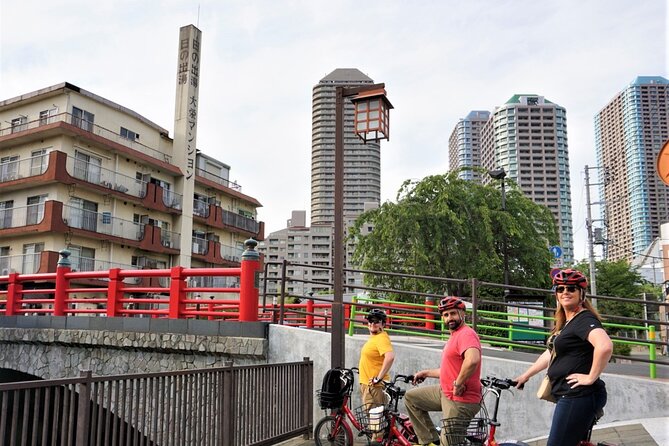
After the palace area, the route may pass through Ginza. You might ride along the main avenues lined with luxury brands, or slip into quieter back streets depending on traffic and conditions.
That change of pace is useful. The main streets show Tokyo’s polished commercial face, while the narrow lanes offer a more intimate look at restaurants, service alleys, and local movement. The guide can also point out food and drink options that are less obvious than the high-end storefronts.
The morning ride then reaches Tsukiji Jogai Market, the outer market area. Small, old-fashioned food shops line the streets, selling ingredients and prepared items. The scheduled stop is short, around ten minutes, so treat it as an introduction rather than a full market visit.
Food is not included, and any snacks or drinks are self-paid at the shop or during the tour. If you want a full meal or serious shopping session, you will need to return later. The advantage of the short stop is that you get a taste of Tsukiji without giving up the rest of the route.
The most distinctive part of the morning course may come between the famous sights. The guide takes you through local streets and connecting passages that are practical for an e-bike. These quieter stretches let you see homes, small businesses, and ordinary city life that a standard bus route would miss.
More off-the-list walks in Tokyo:
- Shibuya & Harajuku: Hidden Gems & Highlights Private Tour
★ 4.7 · 139 reviews - Tokyo: 3-Hour Bike or E-Bike Tour of City’s Hidden Gems
★ 4.7 · 81 reviews - Tokyo: Full Course Tour: Explore 10 Must-Sees & Hidden Gems
★ 5.0 · 35 reviews - Tokyo: Private Customized Hidden Gems Tour with Local Guide
★ 5.0 · 30 reviews
Afternoon route: Akihabara’s subculture and Kappabashi tools
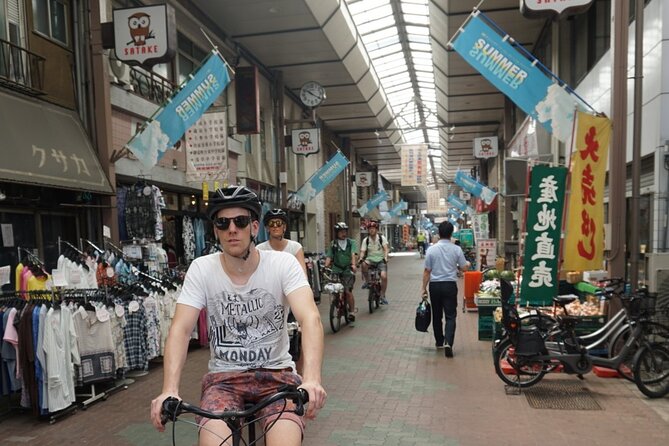
The afternoon route begins in a different mood. Akihabara is Tokyo’s center for youth and geek culture, and the guide introduces the district beyond its most familiar maid-cafe image.
You may not spend long here, but even a short stop helps place Akihabara in the wider story of Tokyo. The area is not simply an electronics district. It is also tied to changing youth culture, specialist shops, and a highly recognizable urban identity.
From there, the ride heads toward Kappabashi Street, also called Kappabashi Dogugai. This is a useful stop for anyone interested in Japanese food culture. Shops sell kitchen utensils, professional cooking tools, Japanese knives, restaurant supplies, and other equipment used by the food trade.
You may have time to look around or shop, although the visit is brief. Kappabashi is more practical than decorative, which makes it a nice counterpoint to Tokyo’s major temples and towers. It shows the working side of the restaurant industry and offers a chance to buy an item with a clear connection to Japanese cooking.
Asakusa and Ryogoku, where tradition takes the lead
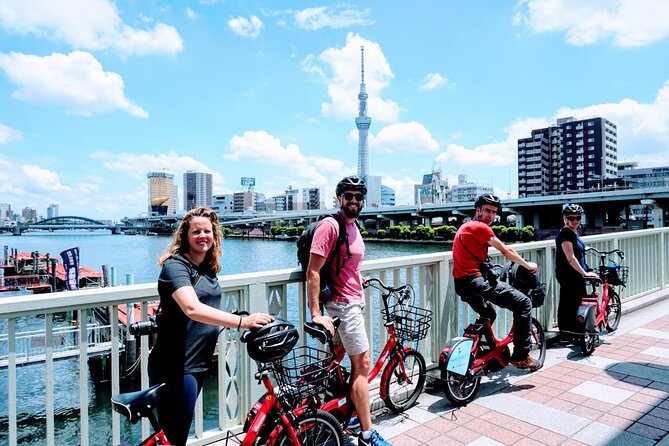
Asakusa is the afternoon route’s major landmark stop. The district is home to Tokyo’s oldest famous temple, and it is one of the city’s essential first-visit sights.
The guide can explain temple customs and rituals, a detail that helps you behave respectfully during the rest of your time in Japan. That practical cultural context is one reason this tour works well early in a Tokyo visit. You are not only taking photos. You are learning what you are looking at and how to approach it.
The stop is only about ten minutes, so do not expect an extended temple visit or shopping session. Think of it as a guided orientation, followed by a longer return visit if you want more time among the temple grounds and surrounding streets.
The route then reaches Ryogoku, Tokyo’s sumo district. If timing is lucky, you might see real sumo wrestlers near the arena area. That possibility is not guaranteed, but the neighborhood itself gives the afternoon ride a clear connection to one of Japan’s best-known sports traditions.
Ryogoku also helps show how different Tokyo districts can feel within a single short ride. Akihabara is built around subculture, Kappabashi around professional food supplies, Asakusa around temple tradition, and Ryogoku around sumo.
Nihonbashi, a bridge at the center of Tokyo
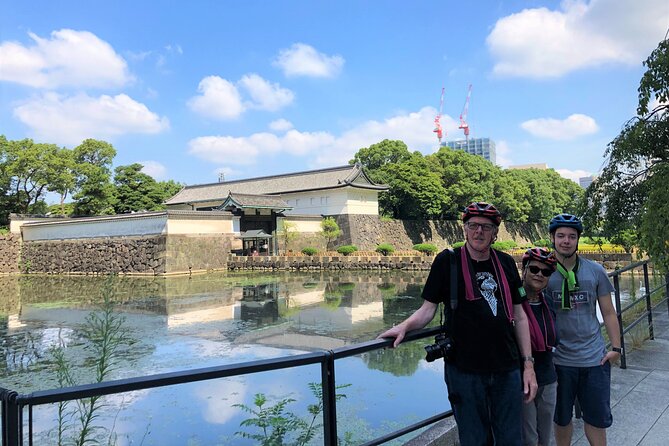
Both morning and afternoon routes include Nihonbashi Bridge. The bridge has long served as a central reference point, and road-distance measurements in Japan traditionally begin here.
It is an efficient final lesson in how Tokyo developed. The city’s modern roads and commercial districts grew around older routes and crossings, and Nihonbashi still marks that connection. The guide’s explanation gives the bridge more weight than a quick photo stop would.
The tour returns to the Kanda shop. Since the ride ends where it begins, you can collect stored luggage and continue your day from Kanda Station. The three-hour length is well judged for an orientation activity: long enough to cross several districts, short enough to leave room for lunch, shopping, or a later reservation.
The guides make the difference
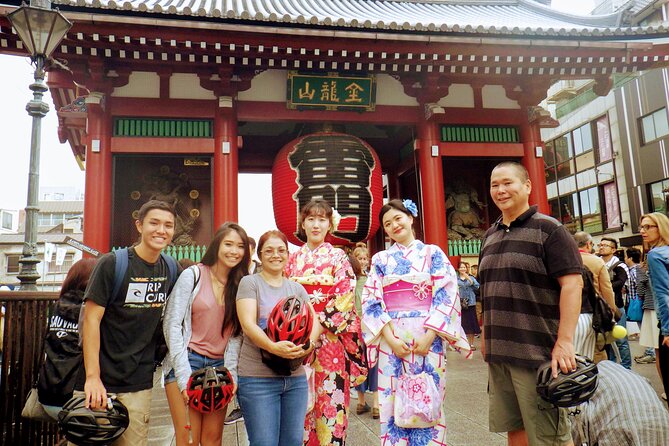
A route through Tokyo is only as useful as the person leading it. The guides named for this experience include Yo, Jenny, Take, Ted, Kazu, Yoshiko, and Ninja. Their styles will naturally differ, but the recurring strengths are clear: safety awareness, patience, local background, and the ability to answer questions.
Jenny has been especially effective with riders who want back streets and food suggestions. She has also been noted for keeping groups together. Take is described as entertaining and able to keep both adults and teenagers interested, while Ted is careful about safety and stops regularly for explanations and photographs.
Yo is known for a friendly, easygoing manner. Ninja has been praised for strong route knowledge and safe-feeling bikes. You should not book expecting one particular guide unless the booking system confirms that person, but the range of guide styles is a positive sign for a small-group operation.
The group limit is six people per booking, though other participants may join. The tour requires at least two participants to operate. If you are alone, you can still contact the operator to see if another booking makes the departure possible.
What the bikes, equipment, and weather rules mean
The rental includes an e-assist bike, helmet, insurance, simple rain gear, and seasonal extras. Winter riders receive simple gloves, while summer equipment may include cooling products. You can also leave luggage at the shop, except for valuables.
Bring sunscreen and a towel in summer, and warm clothing and gloves in winter. Several riders have found the heat tiring even with electric assistance, so water is essential. An electrolyte drink is a sensible choice during hot weather, though drinks and food are not included.
Rain can cancel the tour. The operator checks the forecast the day before, but weather can still change during the ride. If rain begins, the guide decides whether to continue or return. In dangerous summer heat, the tour may be canceled or stopped early, with safety taking priority.
The minimum age is 12, and the minimum height is 147 centimeters. You must already know how to ride a bicycle. The electric motor makes pedaling easier, but it does not remove the need to steer, brake, watch traffic, and follow the group.
Is $63.01 a fair price?
At $63.01 per person, this is not the cheapest way to move around Tokyo. You could use trains and walk for less, especially if your main goal is transportation rather than a guided experience.
The value comes from combining bike rental, helmet, insurance, an English-speaking guide, route planning, luggage storage, and three hours of sightseeing. A train may get you from Tokyo Station to Asakusa quickly, but it will not show you the streets between them or explain why Kanda, Nihonbashi, Ginza, and Ryogoku matter.
I think the price is strongest for a first or second day in Tokyo. You get a city orientation, photo stops, historical context, and practical ideas for places to revisit. It is also good value for families with active teenagers, couples, and small groups who prefer movement to a long walking tour.
The price is less convincing if you dislike cycling in traffic, want extended time inside temples and markets, or prefer a slow food-focused outing. In those cases, a walking tour or self-guided neighborhood visit may fit better.
Who should book this ride?
I would choose this tour for first-time visitors who want to understand Tokyo’s shape quickly. It also suits repeat visitors who have seen the main sights and want more local streets, back lanes, and everyday neighborhoods.
Families can do well here if children meet the age and height rules and are comfortable riding. The guides have been patient with teenagers, and the e-bikes reduce some of the strain. Still, parents should be honest about their children’s ability to manage city traffic.
You should skip it if you cannot ride a bicycle, fall below the 147-centimeter height minimum, or want complete control over your pace. The phrase ride at your own pace should not be read as a private, stop-anywhere excursion. You are part of a group and need to follow the guide.
My verdict: book it for orientation and local streets
I recommend the Tokyo e-bike tour if you want a lively three-hour introduction rather than a deep visit to any one attraction. The strongest reasons to book are the small group, easy electric bikes, capable guides, and the mix of major landmarks with ordinary streets.
Choose the morning route for Tokyo Station, palace gates, Ginza, and Tsukiji. Choose the afternoon route for Akihabara, Kappabashi, Asakusa, and Ryogoku. Arrive ready to ride, bring water and sun protection, and keep your expectations realistic about short stops and changing routes.
For many people, this will be one of the most useful first activities in Tokyo because it shows you where things are before you return on your own. If busy streets make you nervous, book only when you feel confident on a bicycle. The e-bike makes the distance easier, but it does not turn city riding into a theme-park ride.
FAQ
Where does the Tokyo e-bike tour start?
It starts at Cycling Holiday Tokyo, located at 3-chōme-8-6 Uchikanda, Chiyoda City, Tokyo 101-0047. The shop is about a one-minute walk from the west exit of JR Kanda Station.
Where does the tour end?
The tour ends back at the same meeting point in Kanda.
How long does the tour last?
The tour lasts approximately three hours.
What places are visited on the morning route?
The morning route may include Kanda, Tokyo Station, the Imperial Palace area, Otemon Gate, the Imperial Palace gardens, Sakuradamon, Ginza, Tsukiji Jogai Market, local back streets, and Nihonbashi.
What places are visited on the afternoon route?
The afternoon route may include Kanda, Akihabara, Kappabashi Street, Asakusa, Ryogoku, and Nihonbashi.
Is the electric bike included?
Yes. The rental e-assist bike, helmet, and insurance are included.
Is food included?
No. Food and drinks are self-paid.
Can I store my luggage during the ride?
Yes. You can leave luggage at the shop during the tour, but valuables should not be stored there.
What is the minimum age and height?
Participants must be at least 12 years old and at least 147 centimeters tall.
What happens if it rains?
The tour may be canceled if the weather is poor. You may be offered another date or experience, or a full refund. If rain begins during the ride, the guide decides whether to continue or return to the starting point.
More E-Bike Rides in Tokyo
- Tokyo: 3h Private E-bike Tours, Starting at Your Hotel
★ 5.0 · 36 reviews - Hidden Kyoto E-Biking tour
★ 5.0 · 1,843 reviews - 5 Top Highlights of Kyoto Full Day Bike Tour (E-bike option)
★ 5.0 · 511 reviews - E-Bike Tours of the highlights of Kyoto!!!
★ 5.0 · 291 reviews
More Bike Tours in Tokyo
- Tokyo Guided Small-Group Biking Tour
★ 5.0 · 1,250 reviews - Tokyo Great Cycling Tour
★ 5.0 · 811 reviews - Tokyo Top Highlights 3h Guided E-bike Tour
★ 5.0 · 714 reviews - Tokyo: 3-Hour Bike or E-Bike City Highlights Tour
★ 4.8 · 435 reviews
Just added around Tokyo
- Private Arrival Transfer : Narita International Airport to Central Tokyo City★ 4.5 · 12 reviews
- Narita Airport(NRT): Private Transfer to Tokyo/Yokohama 1-9pax★ 5.0 · 47 reviews
- Private Transfer from Narita Airport to Yokohama Port and City★ 4.5 · 17 reviews
- [Narita Airport Terminals 1, 2] 40-60km Sawara Itako Historic Bike Tour★ 5.0 · 13 reviews
- 3 Day Japan Highlights Tour: Tokyo, Mt.Fuji, Nara, Kyoto, Osaka★ 5.0 · 22 reviews
- Small Town in the Big City: Tasting Tokyo’s Kichijoji★ 5.0 · 195 reviews
- Small Town in the Big City: Tasting Tokyo’s Kichijoji★ 5.0 · 16 reviews
- The 10 Tastings of Tokyo With Locals: Private Street Food Tour★ 5.0 · 48 reviews
Tokyo Tours, compared.
Mt Fuji and Hakone 1-Day Bus Tour Return by Bullet Train
Read our review →
teamLab Planets TOKYO Digital Art Museum Entry Ticket
Read our review →
Mt Fuji & Hakone Cruise, Drum Show Bullet Train 1 Day from Tokyo
Read our review →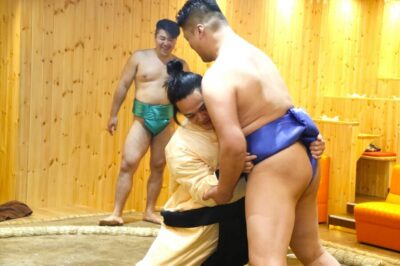
Sumo Show Experience with Chicken Hot Pot and a Photo
Read our review →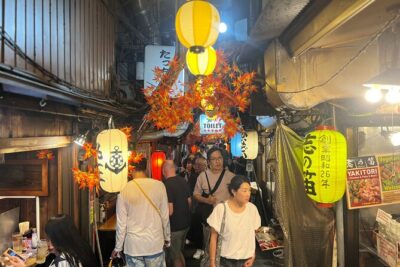
Shinjuku Food Tour (13 Dishes at 4 Local Eateries)
Read our review →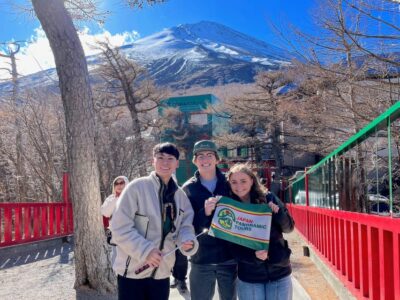
Tokyo Mt Fuji 5th St & Hakone Cruise Bus Tour w/Bullet Train
Read our review →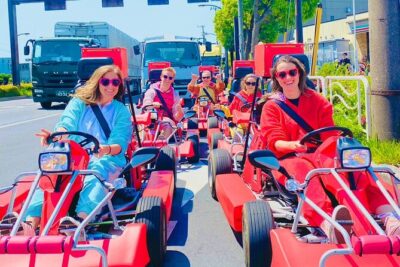
Flagship 2-Hours Official Street Go-Kart Tour – Tokyo Bay Shop
Read our review →Browse the lists this tour appears in