
Reviewed · TOKYO TOURS
Tokyo Great Cycling Tour
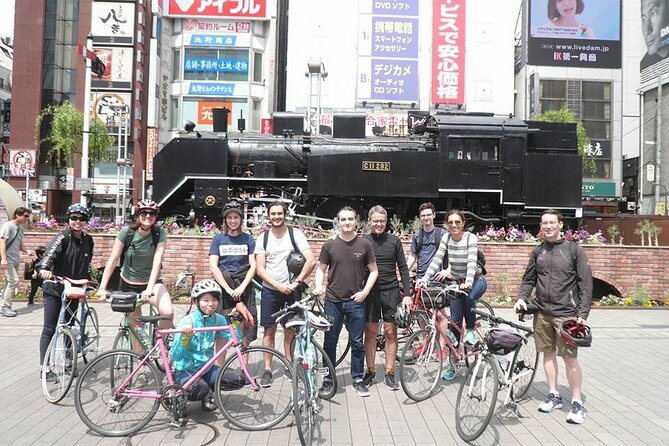
Tokyo reveals itself differently from a bicycle. You can move from the food stalls around Tsukiji to the grand Zojo-ji Temple, then on to Meiji Jingu Shrine and the Imperial Palace without spending half the day underground or waiting in traffic. The route mixes major sights with city streets, apartment districts, shopping areas, offices, and a cemetery tucked into fashionable Tokyo.
I like the small maximum of 12 people, which gives guides such as Toshi, Nick, and Naoko room to watch the group and explain what you are seeing. I also like the practical six-hour route: it covers a lot of ground without trying to turn Tokyo into a blur of photo stops.
The main consideration is physical effort. You need a moderate fitness level, and Tokyo’s heat can change the feel of the day. On one very hot outing, a planned picnic became lunch at an izakaya, so be ready for weather-based changes.
Key points at a glance
- Tsukiji begins the ride with food and city energy: The outer market area remains active even after the inner market moved to Toyosu.
- Zojo-ji gives you Tokyo’s best old-and-new contrast: A traditional Buddhist temple sits with Tokyo Tower rising behind it.
- Meiji Jingu brings a quieter stretch into the day: This is one of Tokyo’s most popular Shinto shrines.
- The Imperial Palace adds national history: You finish the main sightseeing loop at the place where Japan’s emperor and empress live.
- A group of no more than 12 feels manageable: Guides can keep an eye on safety and bike condition without the feel of a mass tour.
- The $99.49 price buys movement as much as sightseeing: You cover more ground than on foot and reach places buses cannot easily serve.
Why a bicycle works so well in Tokyo
Tokyo is huge, and its best sights do not form one tidy walking route. You can use the subway, of course, but the train gets you from station to station, not through the neighborhoods between them. A bicycle gives you that missing middle.
You see the city change as you ride. High-rise offices and expensive apartment buildings give way to a cemetery, then to a temple or shrine. That shift is part of the point. You are not simply collecting famous landmarks. You are watching Tokyo change block by block.
The route lasts about six hours and begins at 9:00 a.m. That early start matters. You get a full day’s worth of sightseeing before evening, and the morning schedule gives the guides time to cover several districts at a steady pace. The tour ends back at the same meeting point, which makes the return simple even if you are still learning Tokyo’s train map.
The group limit of 12 is another practical advantage. It is large enough to have company but small enough for a guide to monitor the group. Naoko, Nick, and Toshi are among the guides named for this experience. The available comments point to careful attention to safety, personal welfare, and bike condition, all useful on a long ride in an unfamiliar city.
More bike days around Tokyo:
- Tokyo Guided Small-Group Biking Tour
★ 5.0 · 1,250 reviews - Tokyo Top Highlights 3h Guided E-bike Tour
★ 5.0 · 714 reviews - 3h Tokyo E-Bike Tour: Hidden Gems, and Local Life with guide
★ 5.0 · 670 reviews
Starting around Tsukiji’s outer market
The first stop is Tsukiji Jogai Market, the outer market area that remains active after the inner market moved to Toyosu. This is a good place to begin because it introduces Tokyo through everyday food culture rather than a grand monument.
You can expect a mix of local shoppers and tourists, with shops and stalls still drawing people to the area. The stop is brief, about 15 minutes, so think of it as an orientation rather than a full market visit. If you want to browse every food counter or sit down for a long breakfast, this schedule will feel tight.
That short pause also keeps the day moving. The tour’s strength is its broad reach, and spending too long at the first stop would cut into the later neighborhoods. I would arrive ready to ride rather than treat Tsukiji as a separate food tour.
The market is also a useful reminder that Tokyo’s famous places keep changing. The inner market has moved, but Tsukiji still matters as a public food district. Your guide can connect the area’s current life with the changes that followed the move to Toyosu.
Zojo-ji and Tokyo Tower in one frame
Zojo-ji Temple offers one of the clearest visual pairings on the route. The old Buddhist temple sits with Tokyo Tower behind it, putting traditional architecture and modern Tokyo in the same view.
You spend about 15 minutes here, with no admission charge listed. That makes the stop easy to fit into a cycling day. You can take in the temple grounds, listen to the guide’s explanation, and see how the surrounding city presses close to the older site.
This is one of the tour’s strongest moments for first-time visitors because it explains Tokyo at a glance. The city has not replaced its older religious places with glass towers. Instead, the two exist side by side, sometimes in a single photograph.
The brief timing has a tradeoff. You will not have the same freedom as you would on a private visit, and anyone hoping to explore every corner of the temple should plan a separate return. Still, as part of a six-hour route, 15 minutes gives you a useful introduction without slowing the group.
Riding through the expensive city districts
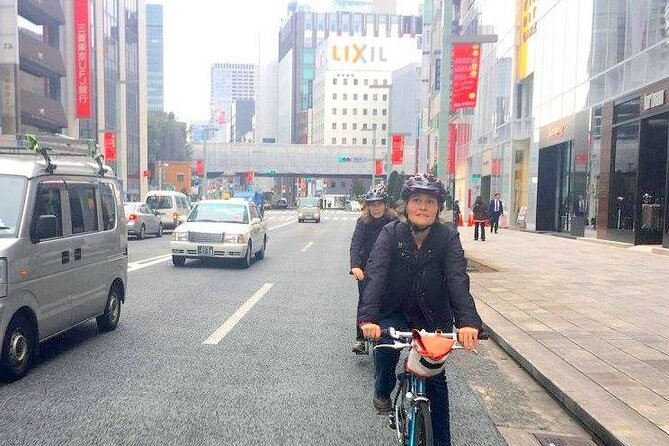
Between the major sights, the route passes high-rise apartment buildings, shopping areas, and office districts. These stretches may not appear on a standard sightseeing list, but they help you understand how Tokyo works as a living city.
A bus would carry you through these areas with the windows closed and the next stop announced. On a bicycle, you move at street level. You can see the scale of the buildings, the price and polish of the districts, and the way commercial and residential life sit close together.
This is also where the ride earns its keep. The price is not only paying for entry to attractions, since the listed stops are free. You are paying for a guide, a maintained bike, a planned route, and the ability to link distant parts of Tokyo in one morning and afternoon.
The route is not a quiet countryside ride. You are cycling through a major capital, so city traffic and the physical task of keeping pace are part of the experience. The tour is best for someone who can ride confidently enough to stay attentive while also taking in the surroundings.
A few more Tokyo half-days to weigh up
- Mt Fuji and Hakone 1-Day Bus Tour Return by Bullet Train
★ 5.0 · 26,383 reviews - 1-Day Tokyo Bus Tour
★ 5.0 · 14,250 reviews - Tokyo: TOKYO SKYTREE® Admission ticket
★ 4.5 · 11,192 reviews - Tokyo: teamLab Planets TOKYO Digital Art Museum Entry Ticket
★ 4.6 · 9,779 reviews
A cemetery in the middle of fashionable Tokyo
One of the more unusual stops is a cemetery located among fashionable areas. It offers a quick change of mood and shows another side of the city’s limited urban space.
Tokyo is often described through its towers, shopping streets, shrines, and neon. A cemetery in a costly district tells you something quieter. Older spaces remain woven into neighborhoods where land is valuable and modern development is close by.
The information provided does not give the cemetery’s name or a longer stopping time, so you should not expect a full historical visit there. Treat it as part of the route’s neighborhood reading, a pause that helps you notice how old and new Tokyo occupy the same city blocks.
This kind of stop is easy to miss when you are rushing between headline attractions. I like its inclusion because it keeps the day from becoming a simple parade of famous buildings.
Meiji Jingu, Tokyo’s major Shinto shrine
Meiji Jingu Shrine is described as Tokyo’s most popular Shinto shrine, and it gives the ride a different sense of place after the dense commercial districts. You spend around 20 minutes here, the longest listed stop.
The shrine is important not only for its scale and popularity but also for the cultural contrast it offers. Zojo-ji represents Buddhism, while Meiji Jingu introduces Shinto, Japan’s native religious tradition. Seeing both in one day gives you a basic framework for understanding Tokyo’s religious life.
Twenty minutes is enough for an introduction, a few photographs, and some explanation from the guide. It is not enough for a slow, private exploration. If you already know you want an extended shrine visit, note the name and consider coming back independently.
The stop also helps break up the physical rhythm of the ride. After city streets and built-up districts, a major shrine gives you a chance to pause and reset. The guide’s comments about Japanese history and culture are especially useful here, since the setting can otherwise feel impressive but hard to place.
The Imperial Palace and the final major stop
The route continues to the Imperial Palace, the residence of Japan’s emperor and empress. The listed stop lasts about 15 minutes and has no admission charge.
For a first visit to Tokyo, this is a useful inclusion. The palace represents the country at a national level, while Tsukiji, Zojo-ji, and Meiji Jingu show daily food culture and religious tradition. Together, the stops create a broader picture than a tour focused only on shopping or modern architecture.
Do not expect a long palace interior visit from this schedule. The information supplied describes the palace as a stop, not an extended entry tour, and the activity returns to its original meeting point. Your time here is best used for the guide’s historical context and the surrounding views.
The palace also gives the ride a clear high point before the return. You have moved through market streets, religious sites, modern districts, and quieter corners, all by bike rather than by a series of separate subway trips.
What the six-hour pace feels like
Six hours is a substantial block of time. You should plan to be active for most of the day, with sightseeing stops breaking up the cycling rather than replacing it.
The route is described as suitable for people with moderate physical fitness. That does not mean you need to be an athlete, but you should be comfortable riding for several hours and staying with a group. If cycling is difficult for you, the tour may feel demanding even though the sightseeing itself is not strenuous.
Weather deserves attention. The activity requires good weather, and strong heat can affect both comfort and the plan. On one especially hot day, the picnic was changed to lunch at an izakaya. That is a sensible adjustment, but it also shows why you should avoid scheduling the ride immediately before a fixed afternoon commitment.
The guides’ attention to safety and welfare is a real benefit. A bike that runs smoothly matters more than it sounds when you are riding for six hours. Still, you remain responsible for judging your own comfort, hydration, and ability to keep going.
Is $99.49 a fair price?
At $99.49 per person, this is not the cheapest way to see Tokyo, especially since the main stops have no admission fee. The value comes from the route and the time saved, not from paid access.
You could visit Tsukiji, Zojo-ji, Meiji Jingu, and the Imperial Palace on your own. Doing so would require planning a sequence of train rides, walks, and transfers, and you would miss the connecting neighborhoods that give the route its character. The bicycle lets you see more in one continuous outing.
The maximum group size of 12 also supports the price. You are not paying for a giant convoy where the guide disappears at the front. The named guides, including Toshi, Nick, and Naoko, are associated with personal attention to safety and smooth bikes, two details worth paying for on an unfamiliar route.
I would consider the price fair if you have limited time in Tokyo and want orientation across several districts. It is less compelling if you already know the city well, dislike group schedules, or want long visits inside each major sight.
Who should book this ride?
I would recommend it most strongly for first-time visitors who want a broad introduction in one day. It is also a good fit for families with older children, couples, and solo riders who prefer company and a guide rather than handling Tokyo’s route planning alone.
The tour suits you if you can ride comfortably, enjoy moving through city streets, and like seeing ordinary districts between famous sights. It is especially useful if you want cultural context along the way instead of simply receiving a list of place names.
I would think twice if you need a slow pace, have limited cycling fitness, or want to spend an hour or more at each shrine and temple. The itinerary favors range. You see many parts of Tokyo, but the stops are generally short.
The mobile ticket is convenient, and the meeting point is near public transportation. Confirmation is sent within 48 hours of booking, subject to availability. The experience can be canceled if the minimum number is not met or if the weather is poor, with a different date or a full refund offered. You can also cancel for a full refund up to 24 hours before the start time.
Final call: book it for range, not lingering
Book the Tokyo Great Cycling Tour if you want to cover a lot of Tokyo in six hours and understand how its markets, temples, shrines, palace grounds, and modern districts fit together. The small group, named guides, and bike-based route give it more personal value than a simple sightseeing transfer.
Skip it if your priority is a leisurely market breakfast, an extended temple visit, or a completely relaxed day indoors. For the right rider, though, this is one of the most efficient ways to get your bearings while still seeing the city at street level.
FAQ
How long is the Tokyo Great Cycling Tour?
The tour lasts approximately six hours and starts at 9:00 a.m.
Where does the tour begin and end?
It begins at Tokyo Great Tours, 1-chōme-3-2 Shinkawa, Chuo City, Tokyo 104-0033, Japan. The activity ends back at the same meeting point.
What places does the cycling tour visit?
The route includes Tsukiji Jogai Market, Zojo-ji Temple, Meiji Jingu Shrine, and the Imperial Palace. It also passes high-rise apartments, shopping and office districts, and a cemetery in a fashionable area.
How large is the tour group?
The activity has a maximum of 12 travelers.
What level of fitness is needed?
You should have a moderate level of physical fitness. The experience involves cycling for much of the six-hour schedule.
Is the tour affected by bad weather?
Yes. The experience requires good weather. If poor weather causes cancellation, you are offered a different date or a full refund.
Can I cancel for a refund?
Yes. You can cancel up to 24 hours before the experience start time for a full refund. Cancellations or changes made less than 24 hours before the start time are not accepted for a refund.
Just added around Tokyo
- Private Arrival Transfer : Narita International Airport to Central Tokyo City★ 4.5 · 12 reviews
- Narita Airport(NRT): Private Transfer to Tokyo/Yokohama 1-9pax★ 5.0 · 47 reviews
- Private Transfer from Narita Airport to Yokohama Port and City★ 4.5 · 17 reviews
- [Narita Airport Terminals 1, 2] 40-60km Sawara Itako Historic Bike Tour★ 5.0 · 13 reviews
- 3 Day Japan Highlights Tour: Tokyo, Mt.Fuji, Nara, Kyoto, Osaka★ 5.0 · 22 reviews
- Small Town in the Big City: Tasting Tokyo’s Kichijoji★ 5.0 · 195 reviews
- Small Town in the Big City: Tasting Tokyo’s Kichijoji★ 5.0 · 16 reviews
- The 10 Tastings of Tokyo With Locals: Private Street Food Tour★ 5.0 · 48 reviews
Tokyo Tours, compared.
Mt Fuji and Hakone 1-Day Bus Tour Return by Bullet Train
Read our review →
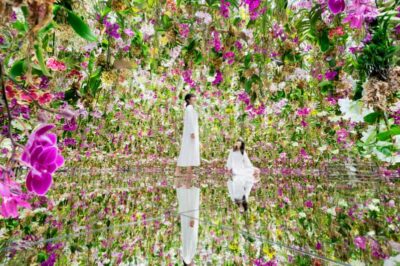
teamLab Planets TOKYO Digital Art Museum Entry Ticket
Read our review →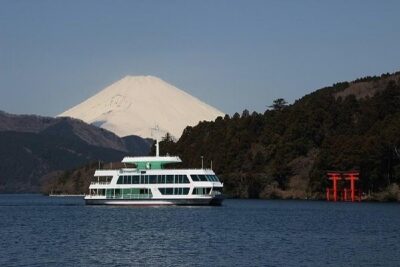
Mt Fuji & Hakone Cruise, Drum Show Bullet Train 1 Day from Tokyo
Read our review →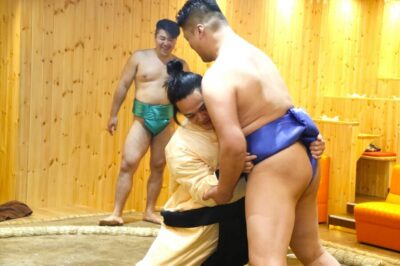
Sumo Show Experience with Chicken Hot Pot and a Photo
Read our review →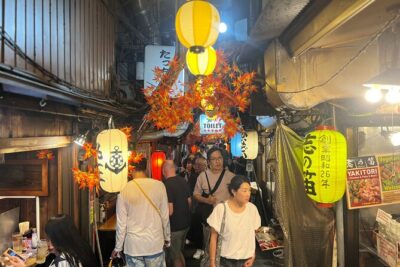
Shinjuku Food Tour (13 Dishes at 4 Local Eateries)
Read our review →
Tokyo Mt Fuji 5th St & Hakone Cruise Bus Tour w/Bullet Train
Read our review →
Flagship 2-Hours Official Street Go-Kart Tour – Tokyo Bay Shop
Read our review →Browse the lists this tour appears in